Baking in Silicone Molds: The Complete Guide to Better Baking Results (2026)
Baking in Silicone Molds: The Complete Guide to Better Baking Results (2026)
Silicone bakeware has transformed home and professional baking over the past decade. From muffins and cupcakes to artisan bread, cheesecakes, chocolates, and frozen desserts, baking in silicone molds has become a preferred choice for millions of bakers thanks to its flexibility, non-stick performance, and ease of cleaning.
Yet many beginners still have questions before making the switch from traditional metal bakeware:
- Are silicone baking molds safe?
- Do silicone molds need to be greased?
- Can silicone molds go directly into the oven?
- Why do cakes sometimes bake differently in silicone?
- Which silicone bakeware is best for everyday baking?
The answers depend on understanding how food-grade silicone behaves during baking. Unlike aluminum or carbon steel, silicone distributes heat differently, flexes when handled, and requires a few simple techniques to produce consistently excellent results.
This comprehensive guide explains everything you need to know about baking with silicone molds, including food safety, temperature limits, baking techniques, common mistakes, maintenance tips, and how to choose high-quality silicone bakeware for home kitchens or commercial use.
Why Silicone Baking Molds Have Become So Popular
Silicone bakeware is no longer a niche kitchen product. It has become one of the fastest-growing categories in modern baking because it combines convenience, durability, and versatility in a single product.
Compared with traditional metal pans, silicone molds offer several practical advantages:
- Excellent non-stick performance without heavy greasing
- Flexible construction for easy food release
- Lightweight and easy to store
- Suitable for ovens, microwaves, freezers, and dishwashers
- Available in hundreds of creative shapes and sizes
- Reusable for thousands of baking cycles
For manufacturers and retailers, silicone bakeware is also attractive because it supports colorful designs, custom branding, and innovative product shapes that appeal to today's consumers.
Global demand for silicone bakeware continues to grow as more consumers seek reusable, non-stick, and easy-to-clean alternatives to disposable baking liners and traditional metal pans. High-quality food-grade silicone has become a standard material for both home kitchens and professional bakeries.
What Are Silicone Baking Molds?
Silicone baking molds are flexible bakeware products made from food-grade silicone rubber. Unlike ordinary plastics, silicone is manufactured from silicon, oxygen, carbon, and hydrogen, creating a material that remains stable across a wide temperature range.
High-quality silicone bakeware is specifically designed for direct food contact and maintains its flexibility even after repeated exposure to high oven temperatures or freezing conditions.
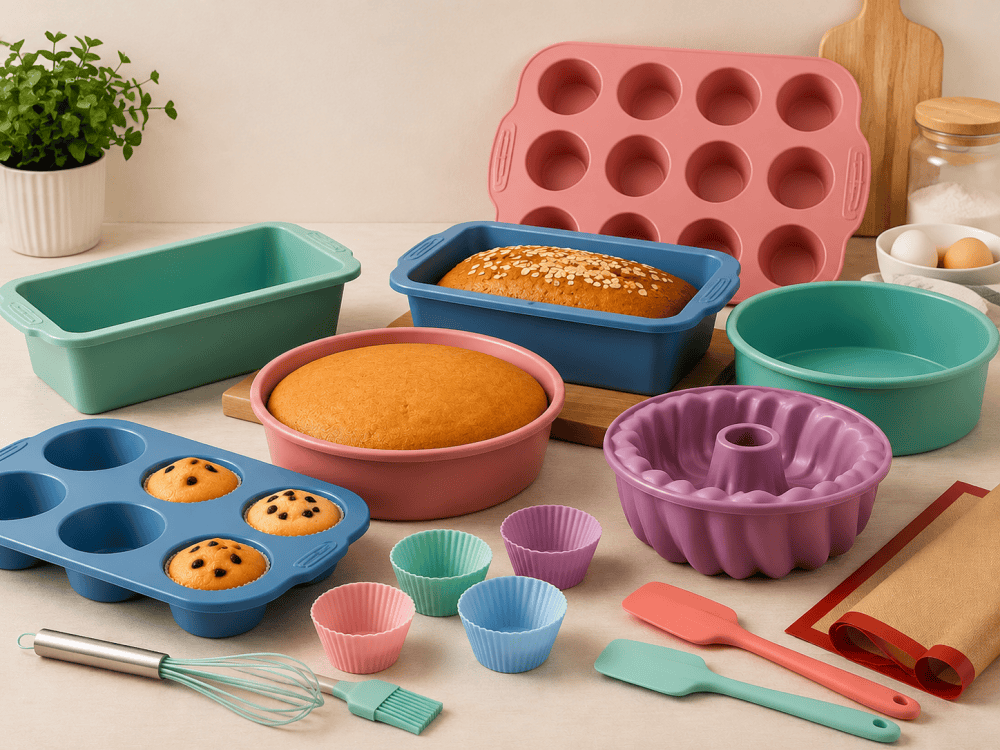
Today, silicone molds are available in countless designs, including:
- Cake pans
- Muffin trays
- Cupcake molds
- Donut pans
- Bread loaf molds
- Bundt cake molds
- Chocolate molds
- Macaron baking mats
- Ice cube trays
- Candy molds
The versatility of silicone allows manufacturers to create intricate shapes that would be difficult to produce using rigid metal bakeware.
Are Silicone Baking Molds Safe?
One of the most frequently searched questions is whether silicone baking molds are safe. The answer is yes—provided they are manufactured using certified food-grade silicone.
Premium silicone bakeware is chemically stable, odorless, BPA-free, and designed specifically for repeated food contact. When used within the recommended temperature range, it does not melt, crack, or release harmful substances into food.
Food-Grade Silicone vs Ordinary Silicone
Not all silicone products are manufactured to the same standard.
Food-grade silicone undergoes stricter testing to ensure it is suitable for cooking and baking applications.
| Feature | Food-Grade Silicone | Low-Quality Silicone |
|---|---|---|
| Food Contact Safe | Yes | Not Always |
| Heat Resistance | Excellent | May Vary |
| Odor-Free | Yes | May Have Chemical Odor |
| BPA-Free | Yes | Not Guaranteed |
| Long-Term Durability | Excellent | Lower |
Look for International Certifications
When purchasing silicone bakeware, choose products that comply with recognized food safety standards.
- FDA food-contact compliance
- LFGB certification (Germany)
- BPA-free materials
- SGS testing reports
- REACH compliance (European market)
These certifications provide greater confidence that the silicone molds have been manufactured using safe materials suitable for long-term baking.
Advantages of Baking in Silicone Molds
1. Outstanding Non-Stick Performance
The biggest reason people choose silicone molds is their naturally non-stick surface.
Unlike many metal baking pans, silicone usually requires little or no grease for everyday baking. Cakes, muffins, brownies, and cupcakes release more easily, reducing breakage and improving presentation.
2. Flexible Design Prevents Damage
Instead of forcing baked goods out with a knife, silicone molds can simply be gently flexed after cooling.
This makes them especially useful for delicate desserts such as:
- Cheesecakes
- Mini cakes
- Chocolate desserts
- Mousse cakes
- Decorative pastries
3. Excellent Temperature Resistance
Food-grade silicone performs well across an exceptionally wide temperature range.
Most premium silicone bakeware can safely withstand temperatures from approximately -40°C to 230°C (-40°F to 446°F), making it suitable for baking, freezing, and microwave cooking.
What Foods Are Best for Silicone Baking Molds?
One of the biggest advantages of silicone bakeware is its versatility. Unlike traditional metal pans that are often designed for a single purpose, silicone molds are available in countless shapes and sizes, making them suitable for a wide variety of baking and food preparation tasks.
Some of the most popular uses include:
| Food Type | Recommended Silicone Mold | Difficulty |
|---|---|---|
| Cupcakes & Muffins | Muffin Tray | ★★★★★ Easy |
| Sponge Cakes | Round Cake Mold | ★★★★★ Easy |
| Brownies | Square Baking Pan | ★★★★★ Easy |
| Cheesecakes | Deep Cake Mold | ★★★★☆ |
| Banana Bread | Loaf Pan | ★★★★★ |
| Chocolate | Chocolate Mold | ★★★★★ |
| Macarons | Silicone Baking Mat | ★★★★☆ |
| Ice Cubes | Ice Mold | ★★★★★ |
| Frozen Desserts | Dessert Mold | ★★★★★ |
Because silicone can safely transition between the freezer and oven, many molds are suitable for both baked and frozen recipes, giving home bakers greater flexibility.
How to Clean Silicone Baking Molds
Proper cleaning helps preserve the non-stick performance and extends the lifespan of silicone bakeware.
Daily Cleaning
- Wash with warm water and mild dish soap.
- Use a soft sponge rather than abrasive scrubbers.
- Rinse thoroughly to remove soap residue.
- Allow the mold to dry completely before storing.
Removing Greasy Residue
Over time, butter, cooking spray, and oils may leave a thin film on silicone surfaces.
To restore the mold:
- Soak it in hot water with dish detergent for 15–20 minutes.
- Use a baking soda paste to gently remove stubborn residue.
- Avoid sharp tools that may damage the silicone surface.
Most premium silicone bakeware is also dishwasher safe, although placing it on the top rack is generally recommended.
How to Store Silicone Bakeware
Proper storage prevents unnecessary wear and helps silicone molds retain their original shape.
Follow these simple storage tips:
- Store molds completely dry.
- Avoid placing heavy cookware directly on top.
- Do not fold sharply for long periods.
- Keep away from open flames and sharp knives.
- Store flat whenever possible.
One major advantage of silicone is that many molds can be lightly folded or nested, saving valuable cabinet space compared with rigid metal bakeware.
How to Choose High-Quality Silicone Baking Molds
Not all silicone bakeware offers the same level of performance. Investing in premium products results in better baking outcomes and a longer service life.
Choose 100% Food-Grade Silicone
Food-grade silicone is odorless, BPA-free, and specifically designed for repeated food contact.
Look for International Certifications
Reliable manufacturers should provide certifications such as:
- FDA Food Contact Compliance
- LFGB Certification
- BPA-Free Declaration
- SGS Testing Reports
Select the Right Thickness
Thicker silicone provides better stability, resists deformation, and generally lasts longer than very thin molds.
Consider Reinforced Designs
Some premium silicone baking pans include reinforced steel rims around the edges, making them easier to carry while retaining the flexibility of silicone.
Evaluate Surface Finish
A smooth, high-quality silicone surface promotes easier food release and simplifies cleaning after baking.
Avoid silicone bakeware with a strong chemical odor, uneven coloring, or excessive softness. High-quality food-grade silicone should feel smooth, flexible, and odorless.
Frequently Asked Questions About Baking in Silicone Molds
Can silicone baking molds go directly into the oven?
Yes. Food-grade silicone bakeware is designed for oven use and is typically safe up to 230°C (446°F). Always follow the manufacturer's temperature recommendations.
Can silicone molds be used in an air fryer?
Yes, provided the mold fits comfortably inside the basket and does not obstruct airflow.
Do silicone baking molds need parchment paper?
No. Most recipes can be baked directly in silicone molds without parchment paper due to the naturally non-stick surface.
How long do silicone baking molds last?
High-quality silicone bakeware can withstand thousands of baking cycles when properly cleaned and stored.
Can silicone molds be used for freezing?
Absolutely. Silicone remains flexible at freezing temperatures, making it ideal for ice cubes, frozen desserts, and mousse cakes.
Are silicone molds better than metal pans?
Each material has advantages. Silicone offers easier release, flexibility, and simple cleaning, while metal provides faster heat transfer and better browning. Many experienced bakers use both depending on the recipe.
Final Thoughts
Baking in silicone molds is one of the easiest ways to improve convenience in the kitchen. Their non-stick surface, flexibility, excellent temperature resistance, and easy maintenance make them suitable for beginners, home bakers, and professional pastry chefs alike.
When paired with proper baking techniques—such as using a support tray, allowing baked goods to cool before unmolding, and selecting certified food-grade silicone—silicone bakeware consistently delivers reliable, high-quality results.
Whether you're baking cupcakes for your family, artisan bread for a café, or launching a private-label bakeware brand, investing in premium silicone molds can significantly enhance both baking performance and user experience.
Looking for a Reliable Silicone Bakeware Manufacturer?
Kitlucy specializes in manufacturing premium food-grade silicone bakeware for global brands, wholesalers, retailers, and distributors. Our product range includes silicone cake molds, muffin trays, loaf pans, baking mats, chocolate molds, and custom baking accessories.
We provide OEM and ODM services, including custom colors, logo printing, packaging design, and private-label solutions. Whether you're developing a new bakeware collection or sourcing high-quality silicone molds in bulk, our experienced team is ready to support your business.
Contact us today to discuss your custom silicone bakeware project and request a free quotation.
Related Blogs