

Best Non-Toxic Bakeware: Safe Materials for Healthy Baking
Choosing the best non-toxic bakeware involves more than looking for a product labeled “chemical-free.” The material, coating, manufacturing quality, and intended baking temperature all influence whether a baking pan is suitable for everyday use. Whether you are baking cookies at home, preparing cakes for a business, or sourcing bakeware for a retail collection, understanding these factors can help you make a more informed decision.

There is no single material that is best for every baking task. Food-contact-compliant silicone, uncoated stainless steel, suitable glass bakeware, and properly manufactured coated pans can all be appropriate choices when used according to their specifications.
Choose based on the complete product: verify the material and coating, intended temperature range, food-contact compliance, cleaning instructions, and suitability for your recipe.
1. What Does Non-Toxic Bakeware Mean?
“Non-toxic bakeware” is a common consumer search term used to describe baking products intended to be suitable for food contact without creating unacceptable chemical exposure under their specified conditions of use.
However, the term does not guarantee that every product made from a particular material is safe in every situation. Food-contact safety depends on the formulation, manufacturing process, product construction, temperature, and conditions in which the bakeware is used.
For example, silicone products may vary in formulation and quality. Metal bakeware may include coatings or surface treatments, while glass products can differ in their intended thermal applications. It is therefore important to evaluate the finished product rather than relying on a material name alone.
What Should You Look For?
- Food-contact suitability: The product should be intended for contact with food and supported by documentation appropriate to its market.
- Temperature limits: The product should be designed for the temperatures and heating methods specified by the manufacturer.
- Material transparency: Product specifications should identify the material and any coatings or additional components.
- Manufacturing quality: Look for consistent construction, sound finishes, and reliable product information.
- Care instructions: Follow guidance for cleaning, storage, and inspection during repeated use.
For more information on food-contact requirements, see the US Food and Drug Administration's guidance on how food-contact substances are regulated.
2. Best Bakeware Materials to Consider
Different bakeware materials have different strengths. The right option depends on what you bake, how you prefer to handle and clean your pans, and whether flexibility, browning, visibility, or durability is most important to you.
Food-Grade Silicone Bakeware
Silicone bakeware is popular for its flexibility and convenient release of many baked goods. It is commonly used for muffin molds, cake molds, loaf molds, baking cups, and other products that benefit from a flexible structure.
Because silicone products vary in composition and construction, choose products intended for food contact and verify their stated temperature range. The quality of the finished product matters more than a general claim that it is silicone.
Potential advantages:
- Flexible construction that can make releasing certain baked goods easier.
- Lightweight designs that are convenient to handle and store.
- Availability in many shapes and sizes for cakes, muffins, and specialty baking.
- Some designs can be folded or nested for compact storage.
Points to consider:
- Very flexible molds may need support from a baking tray when filled.
- Silicone bakeware may produce different browning results from metal pans.
- Check the maximum temperature, cleaning method, and intended oven use.
- Inspect the product for damage, persistent odor, or changes in condition.
Silicone is a practical option when flexibility and easy release are priorities, but it is not automatically the best choice for every recipe.
Uncoated Stainless Steel Bakeware
Stainless steel is known for its strength and corrosion resistance. Depending on its design and finish, stainless steel bakeware may be suitable for particular baking, preparation, or food-handling applications.
One important distinction is that stainless steel bakeware is not interchangeable with every type of baking pan. Product design, thickness, shape, and heat distribution influence how it performs in the oven.
Potential advantages:
- Rigid construction that maintains its shape during normal use.
- Good resistance to corrosion when an appropriate grade is used and maintained correctly.
- No nonstick coating on uncoated products.
- Suitable for selected baking and food-preparation applications.
Points to consider:
- Food may stick more readily than it does in some coated pans or flexible molds.
- Results depend on the steel grade, product thickness, and pan design.
- Check whether the specific product is designed for oven baking.
- Follow the manufacturer's cleaning instructions to maintain the surface.
For buyers, confirm the exact material specification and intended application instead of assuming every stainless steel kitchen product is suitable for baking.
Glass Bakeware
Glass bakeware is often used for casseroles, baked desserts, and dishes where seeing the contents is useful. Glass does not require a nonstick coating to provide its basic cooking surface, but its suitability depends on the type of glass and the product's intended use.
Potential advantages:
- The transparent surface makes it easier to view the food during preparation.
- Suitable products can be useful for baking and serving in the same dish.
- There is no nonstick coating on uncoated glass bakeware.
- Glass surfaces are generally non-porous when intact.
Points to consider:
- Only use glass products specifically designed for oven use.
- Glass can break if dropped, chipped, or subjected to unsuitable thermal conditions.
- Avoid sudden temperature changes unless the product instructions explicitly permit them.
- Check the manufacturer's guidance for preheating, broiling, and direct heat exposure.
Glass may be a good choice for particular baking and serving tasks, but it should not be treated as universally suitable for every oven temperature or heating method.
Coated Metal Bakeware
Many baking sheets, cake pans, and muffin pans are made from metal with a nonstick or other surface coating. These products can offer convenient food release and straightforward cleanup.
A coating is not automatically unsafe simply because it is a coating. The important questions are what the coating contains, whether the finished product complies with applicable food-contact requirements, and how it should be used and maintained.
Potential advantages:
- Convenient release for many baked goods, depending on the coating and recipe.
- A wide selection of shapes and sizes for home and professional baking.
- Metal construction can provide a rigid baking surface.
Points to consider:
- Identify the coating and follow its temperature limitations.
- Avoid metal utensils or abrasive cleaning methods when the manufacturer advises against them.
- Inspect the surface for peeling, deep scratches, or other deterioration.
- Replace products when their condition no longer matches the manufacturer's guidance for continued use.
3. Non-Toxic Bakeware Materials Compared
The table below summarizes practical differences among common bakeware materials. These are general characteristics, not a safety ranking: performance and suitability depend on the exact product and its intended use.
| Material | Main Advantages | Points to Consider | Common Applications |
|---|---|---|---|
| Food-grade silicone | Flexible, lightweight, convenient release for many foods | Verify formulation, temperature range, and support requirements | Muffin molds, cake molds, baking cups |
| Uncoated stainless steel | Rigid, corrosion-resistant when appropriately specified | Food release and baking performance depend on design | Selected baking pans and food-preparation applications |
| Oven-safe glass | Transparent, non-porous when intact, useful for serving | Can break; thermal limits and handling instructions matter | Casseroles, baked desserts, oven dishes |
| Coated metal | Rigid structure and convenient release on suitable products | Coating specifications, care, and surface condition matter | Baking sheets, cake pans, muffin pans |
For most kitchens, there is no need to choose only one material. A combination of bakeware types can cover different recipes, from muffins and cakes to roasted dishes and cookies.
4. Which Bakeware Materials Should You Avoid?
Rather than treating an entire material category as unsafe, focus on products with unclear specifications, unsuitable intended use, or visible deterioration.
- Unidentified materials: Avoid products that provide no reliable information about material composition or intended food-contact use.
- Unclear coating claims: Ask for details about the coating rather than relying only on terms such as “nonstick” or “chemical-free.”
- Damaged coated surfaces: Follow the manufacturer's advice on replacing pans with peeling or deteriorating coatings.
- Non-oven-safe products: Do not place containers or molds in an oven unless the product is designed for that application.
- Products used outside their temperature limits: Excessive heat can affect materials, coatings, and product performance.
- Unclear care instructions: If a product's cleaning or heating requirements are unknown, seek clarification before use.
5. How to Choose the Best Non-Toxic Bakeware
The best bakeware is the product that fits your recipes, oven, maintenance preferences, and intended use. Use the following checklist when comparing options.
Start With Your Baking Needs
- For muffins and specialty shapes: Consider silicone molds if flexibility and convenient release are important.
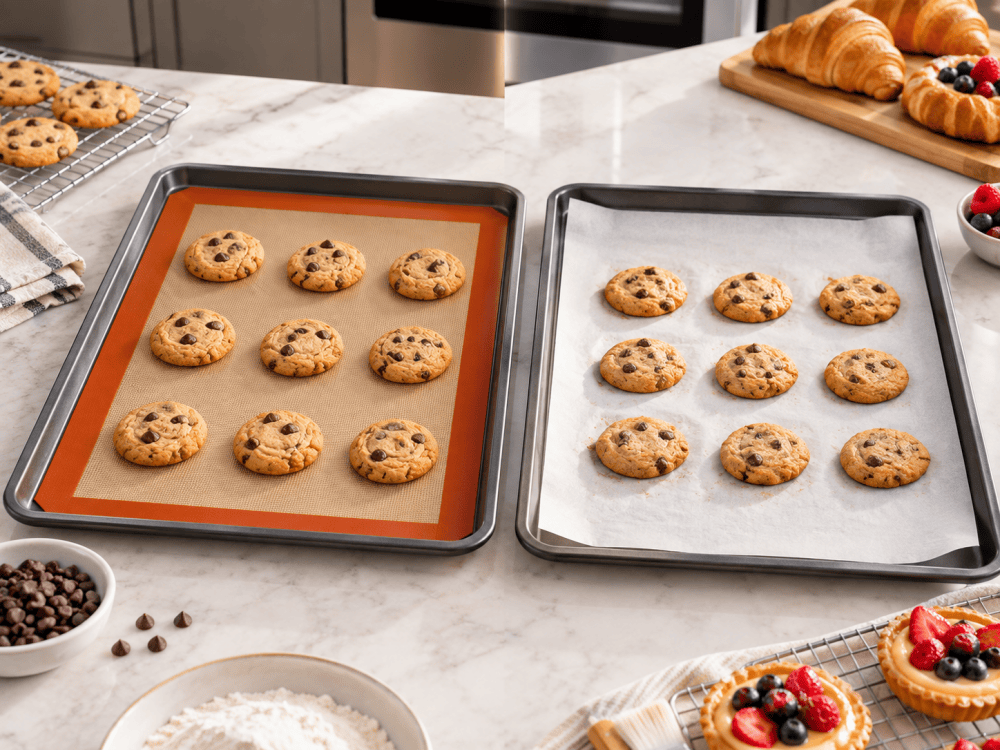
- For cookies and sheet-pan baking: Compare suitable metal baking sheets based on size, thickness, surface finish, and the results you want.
- For casseroles and serving dishes: Consider oven-safe glass products designed for the required temperature conditions.
- For frequent everyday baking: Prioritize durable construction, clear care instructions, and a shape that fits your recipes.
Verify Food-Contact Compliance
For consumer purchases, check the manufacturer's product information. For wholesale and OEM sourcing, request the relevant documentation for the target market and intended conditions of use.
In the United States, applicable food-contact requirements depend on the material and its intended use. For the European market, food-contact materials are subject to applicable EU requirements, with additional material-specific rules or guidance where relevant. Silicone, plastics, metal, glass, and coatings should not automatically be assessed under identical requirements.
The German Federal Institute for Risk Assessment (BfR) provides information on the health assessment of food-contact materials. Buyers should confirm which requirements and tests apply to their specific products and destination markets.
Check Temperature and Care Instructions
Do not rely on a generic temperature range for an entire material category. Confirm the maximum permitted temperature for the finished product, including any coating, handle, reinforcement, or attached component.
Also check whether the product is dishwasher safe, whether it requires special storage, and which cleaning tools are appropriate. Following these instructions can help preserve the condition of bakeware over time.
Evaluate Construction and Finish
Look for consistent dimensions, smooth edges, sound joints, and a finish appropriate to the intended application. For silicone molds, inspect the shape and stability. For metal pans, review thickness and edge construction. For glass, check for visible chips or cracks before use.
6. How to Maintain Bakeware for Long-Term Use
Proper care can help preserve the performance of bakeware and identify products that need replacement.
- Follow product-specific instructions: Cleaning and temperature requirements differ among materials and products.
- Avoid unnecessary abrasion: Use cleaning tools appropriate for the surface, especially on coated pans.
- Inspect before use: Check for cracks, chips, peeling coatings, deformation, or other visible damage.
- Store carefully: Avoid stacking products in ways that may scratch coatings or damage delicate edges.
- Respect temperature limits: Do not exceed the stated temperature range or use the product with an unsupported heating method.
- Replace damaged products when appropriate: Follow the manufacturer's guidance if the surface or structure deteriorates.
7. Non-Toxic Bakeware for Wholesale and OEM Buyers
For retailers, distributors, and private-label brands, bakeware sourcing involves more than selecting a material. Product specifications, compliance requirements, consistency between production batches, packaging, and quality control all affect whether a product is suitable for the intended market.
Key Factors to Evaluate
- Material specification: Confirm the exact material, grade, formulation, and any coatings or additional components.
- Intended use: Specify the baking application, oven conditions, and expected frequency of use.
- Food-contact documentation: Request relevant declarations, test reports, or other supporting documents applicable to the target market.
- Performance consistency: Review dimensions, thickness, shape, surface finish, and other agreed product specifications.
- Care requirements: Confirm cleaning instructions and expected maintenance requirements.
- Packaging and labeling: Check whether product claims, instructions, and labels match the verified product information.
- Quality control: Establish sample approval, inspection criteria, and procedures for addressing nonconforming products.
For OEM and private-label projects, request product samples and confirm the specifications before mass production. Testing should be selected according to the actual material, product construction, intended use, and destination-market requirements.
A clear sourcing process helps buyers evaluate not only marketing claims but also the evidence supporting the product's intended use.
Frequently Asked Questions
What is the best non-toxic bakeware material?
There is no single best material for every baking task. Food-contact-compliant silicone, uncoated stainless steel, suitable glass, and properly manufactured coated metal can all be appropriate when used according to their specifications.
Is silicone bakeware safe for baking?
Silicone bakeware intended for food contact can be suitable when it meets the applicable requirements and is used within its specified temperature range. Check the manufacturer's material and care information rather than relying on the word “silicone” alone.
Is stainless steel bakeware a good choice?
Suitable stainless steel products offer rigid construction and corrosion resistance. However, not every stainless steel kitchen product is designed for oven baking, so verify the product's intended use and specifications.
Is glass bakeware non-toxic?
Suitable glass bakeware can be a practical option because it does not require a nonstick coating. Use only products designed for oven use and follow the manufacturer's instructions for temperature changes and heating methods.
Should I avoid all nonstick bakeware?
No. A nonstick coating is not automatically unsafe. Evaluate the specific coating, applicable food-contact requirements, stated temperature limits, and product condition. Follow the manufacturer's instructions and replace products when their coating deteriorates.
What does food-grade silicone mean?
The term generally describes silicone intended for food-contact applications, but it is not a substitute for product-specific verification. Check applicable compliance information, temperature limits, and instructions for the finished product.
What certifications should I look for when buying bakeware?
The relevant documentation depends on the material, product, and destination market. Ask for applicable food-contact declarations and supporting test reports. FDA-related requirements and EU or German requirements are not interchangeable, and the exact evidence needed depends on the product and its intended use.
How do I know when bakeware should be replaced?
Inspect bakeware for cracks, chips, peeling coatings, deformation, or other deterioration. Follow the manufacturer's replacement guidance, and stop using products that are no longer suitable for their intended use.
Conclusion: Choose Bakeware Based on Materials and Intended Use
The best non-toxic bakeware is not defined by a single material or marketing label. Silicone offers flexibility, stainless steel provides rigid construction, glass is useful for selected baking and serving tasks, and coated metal can offer convenient food release.
To make a more informed choice, evaluate the finished product's material specifications, food-contact suitability, temperature limits, construction, and care instructions. For businesses sourcing bakeware, verify the relevant documentation and quality requirements before committing to a product range.
Looking for Bakeware and Kitchenware Solutions?
Kitlucy supports kitchenware product sourcing for businesses looking to develop their product ranges. Contact our team to discuss your requirements, material specifications, and OEM or private-label projects.
Related Blogs