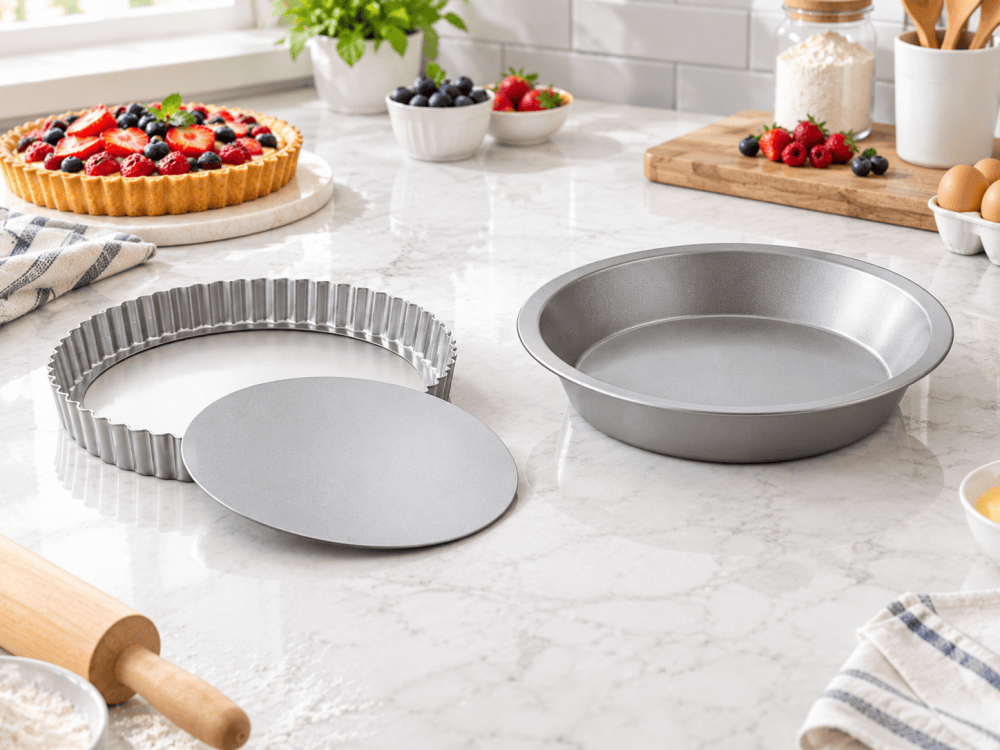
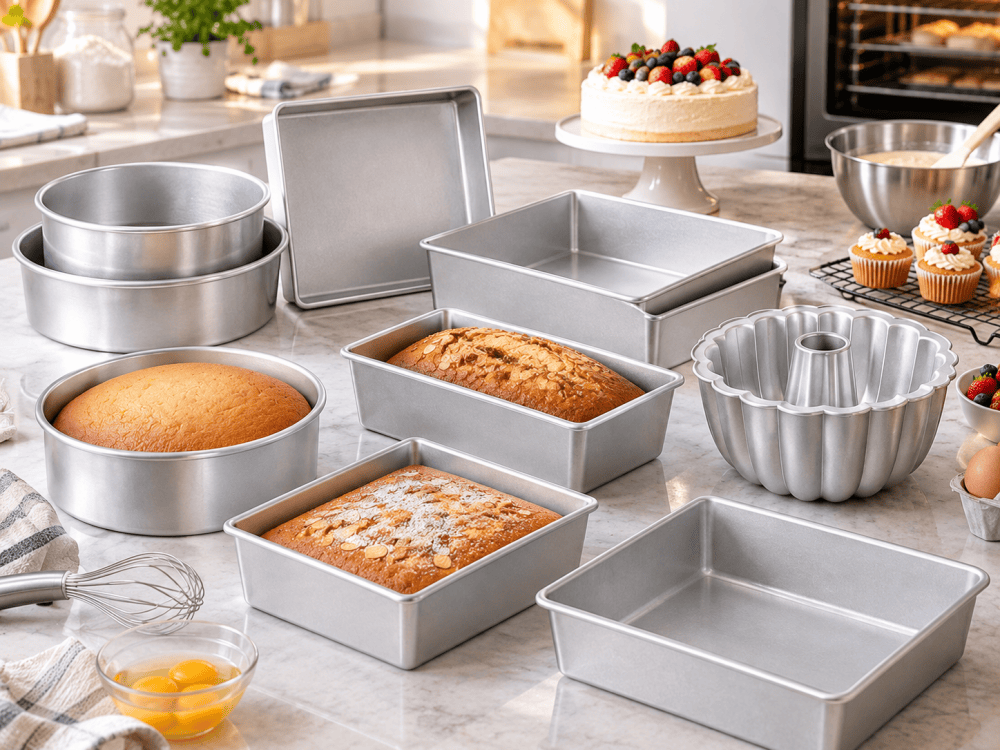
20 Must-Have Kitchen Utensils for Baking: Essential Tools Every Home Baker Needs
20 Must-Have Kitchen Utensils for Baking: Essential Tools Every Home Baker Needs
A complete baking tools list for beginners and home bakers, covering the essential kitchen utensils you need for cakes, cookies, bread, pastries, and everyday baking.
Whether you are baking your first batch of cookies or preparing cakes, bread, pastries, and other homemade treats, having the right tools can make a major difference. A well-equipped kitchen does not require dozens of expensive gadgets, but there are several must have kitchen utensils for baking that make measuring, mixing, shaping, baking, and decorating much easier.
One of the most common mistakes beginner bakers make is buying too many specialized tools before understanding which items they actually need. A better approach is to start with a reliable collection of essential baking tools that can be used for a wide range of recipes.
In this guide, you will find a practical baking tools list covering the most important kitchen utensils for baking, from measuring tools and mixing bowls to silicone spatulas, whisks, rolling pins, baking molds, and other useful baking equipment essentials.
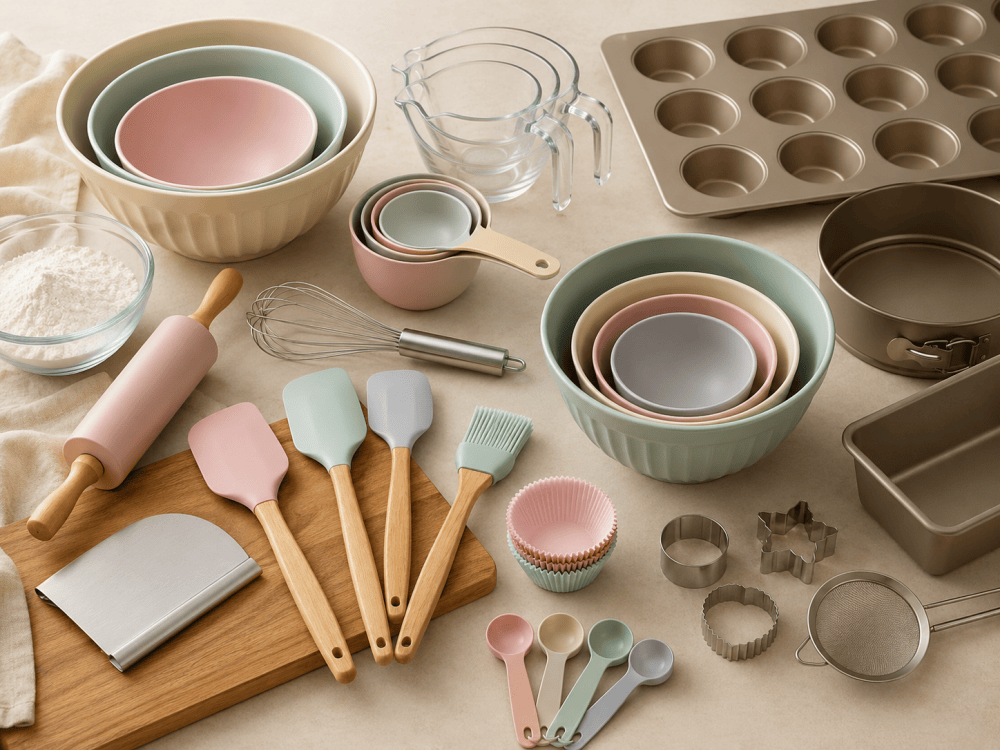
The most important kitchen utensils for baking include measuring cups and spoons, a kitchen scale, mixing bowls, silicone spatulas, whisks, a rolling pin, baking pans or molds, a dough scraper, pastry tools, and reliable oven-safe bakeware.
Quick Baking Tools List: What Do You Really Need?
If you are wondering what kitchen utensils are needed for baking, start with these essentials:
- Measuring cups
- Measuring spoons
- Digital kitchen scale
- Mixing bowls
- Silicone spatula
- Whisk
- Rolling pin
- Baking pans and molds
- Dough scraper
- Pastry brush
- Cookie cutters
- Cooling rack
- Oven mitts
- Baking sheet or baking mat
- Fine mesh sieve
- Cake decorating tools
- Bench scraper
- Heat-resistant mixing tools
- Timer
- Storage containers
You do not necessarily need to buy everything at once. For most beginners, the first priority should be accurate measuring tools, mixing utensils, basic bakeware, and a few versatile preparation tools.
20 Must-Have Kitchen Utensils for Baking
Below is a practical list of the most useful baking utensils for home bakers. These tools cover the main stages of baking, including measuring, mixing, preparing, shaping, baking, and cooling.
1. Measuring Cups
Measuring cups are among the most important essential baking tools. Baking often requires precise ingredient ratios, especially when preparing cakes, cookies, muffins, and bread.
A basic baking kitchen should include measuring cups for both dry and liquid ingredients. Clearly marked measurements make it easier to follow recipes and achieve more consistent results.
Useful options include:
- Dry measuring cup sets
- Liquid measuring cups
- Heat-resistant measuring cups
- Stackable measuring cup sets
2. Measuring Spoons
Small ingredients can significantly affect the final result of a recipe. Measuring spoons are essential for accurately measuring ingredients such as:
- Baking powder
- Baking soda
- Salt
- Vanilla extract
- Spices
- Food coloring
For beginner bakers, a complete measuring spoon set is one of the simplest and most affordable additions to a basic baking tool collection.
3. Digital Kitchen Scale
A digital kitchen scale is particularly useful for bakers who want more accurate results. Measuring ingredients by weight can provide greater consistency than measuring by volume alone.
This is especially important when working with ingredients such as flour, sugar, butter, chocolate, and dough.
A kitchen scale is one of the most useful baking equipment essentials for:
- Bread baking
- Cake recipes
- Pastry preparation
- Recipe scaling
4. Mixing Bowls
Every baker needs several mixing bowls in different sizes. They are used for preparing batter, dough, frosting, fillings, and dry ingredient mixtures.
Popular materials include stainless steel, glass, and food-grade plastic.
| Material | Main Benefit | Best For |
|---|---|---|
| Stainless Steel | Durable and lightweight | General baking and mixing |
| Glass | Heavy and stable | Ingredient preparation |
| Food-Grade Plastic | Lightweight and practical | Everyday home baking |
5. Silicone Spatulas
A silicone spatula is one of the most versatile must have baking tools. It can be used to scrape mixing bowls, fold ingredients, spread frosting, and transfer batter.
High-quality food-grade silicone spatulas are flexible and suitable for working with delicate batters. They can also be designed with heat-resistant properties for use during cooking and baking preparation.
Baking utensil sets can include silicone spatulas, scrapers, pastry brushes, and other practical tools for home bakers.
6. Whisks
Whisks help combine ingredients and incorporate air into mixtures. They are commonly used when preparing eggs, cream, sauces, batters, and other baking ingredients.
A balloon whisk is a useful all-purpose option for most home baking needs.
Whisks can be used for:
- Whipping eggs
- Mixing dry ingredients
- Preparing cake batter
- Combining sauces and liquids
- Whipping cream
7. Rolling Pin
A rolling pin is an essential tool for bakers who regularly prepare dough-based recipes.
It is commonly used for:
- Pie crusts
- Cookie dough
- Pastry dough
- Pizza dough
- Fondant
Wooden rolling pins remain a popular choice, while silicone options may offer easier cleaning and nonstick performance.
8. Dough Scraper or Bench Scraper
A dough scraper is a simple but highly practical baking tool. It helps divide dough, lift sticky ingredients from the work surface, and clean excess flour or dough after preparation.
It is particularly useful for bread and pastry baking.
If you are building your first baking tool collection, focus first on measuring tools, mixing bowls, a silicone spatula, a whisk, a rolling pin, and basic bakeware. These versatile tools can support a wide range of recipes before you invest in more specialized baking gadgets.
Must Have Kitchen Utensils for Different Types of Baking
The kitchen utensils you need can vary depending on what you bake most often. Someone who mainly makes cookies does not necessarily need the same tools as a home baker who frequently makes bread, cakes, or pastries.
Instead of buying a large collection of tools at once, it is more practical to build your baking utensil collection based on your baking habits.
Essential Utensils for Cake Baking
Cake baking usually requires accurate measuring, thorough mixing, and proper batter preparation. The following tools are especially useful:
- Measuring cups and measuring spoons
- Mixing bowls
- Silicone spatulas
- Whisks
- Balloon whisks
- Cake pans or baking molds
- Pastry brushes
- Cake decorating tools
A silicone spatula is particularly useful when folding ingredients together because its flexible edge can scrape batter from the sides and bottom of the bowl.
Essential Utensils for Cookie Baking
Cookie baking requires tools that make it easier to prepare dough, shape cookies, and transfer them safely to and from the oven.
- Measuring cups and spoons
- Mixing bowls
- Silicone spatulas
- Rolling pins
- Cookie cutters
- Dough scrapers
- Baking sheets or baking pans
- Cooling racks
For decorated cookies, additional tools such as pastry brushes, icing spatulas, and decorating accessories may also be useful.
Essential Utensils for Bread Baking
Bread baking often involves more dough handling than other types of baking. Tools that help mix, divide, and shape dough can improve efficiency.
- Large mixing bowls
- Dough scrapers
- Silicone spatulas
- Measuring tools
- Rolling pins
- Pastry brushes
- Baking pans or loaf molds
- Cooling racks
Dough scrapers are particularly useful for handling sticky dough and cleaning work surfaces after preparation.
Essential Utensils for Pastry Baking
Pastry baking often requires more detailed dough preparation and shaping. Useful kitchen utensils include:
- Rolling pins
- Pastry brushes
- Dough scrapers
- Silicone spatulas
- Mixing bowls
- Measuring tools
- Pastry cutters
- Baking molds
A good pastry brush is useful for applying egg wash, butter, oil, or glaze evenly to the surface of pastries.
Best Baking Utensils for Beginners
Beginners do not need to purchase every available baking gadget. A small collection of versatile, high-quality tools is usually enough to prepare a wide range of baked goods.
If you are building your first baking tool collection, start with these essentials:
- Measuring cups and measuring spoons
- Two or three mixing bowls
- One silicone spatula
- One whisk
- One rolling pin
- One dough scraper
- One pastry brush
- Basic baking pans or molds
Start with versatile tools that can be used for multiple recipes. For example, a silicone spatula can be used for mixing, folding, scraping, and spreading, making it one of the most useful utensils in any baking kitchen.
Which Baking Utensil Materials Are Best?
The material of a baking utensil affects its durability, heat resistance, flexibility, cleaning requirements, and suitability for different baking tasks.
There is no single material that is best for every kitchen utensil. The right choice depends on how the tool will be used.
| Material | Advantages | Best For |
|---|---|---|
| Silicone | Flexible, heat resistant, nonstick-friendly | Spatulas, brushes, baking molds |
| Stainless Steel | Strong, durable, corrosion resistant | Whisks, measuring tools, bowls |
| Wood | Natural appearance and comfortable handling | Rolling pins and selected baking tools |
| Nylon | Lightweight and affordable | Basic kitchen utensils |
| Food-Grade Plastic | Lightweight and cost-effective | Measuring tools and selected gadgets |
Silicone Baking Utensils
Silicone is one of the most popular materials for modern baking tools. It is flexible and can be suitable for a wide range of baking applications.
Common silicone baking utensils include:
- Silicone spatulas
- Pastry brushes
- Dough scrapers
- Baking mats
- Silicone baking molds
High-quality food-grade silicone is especially useful for nonstick cookware and bakeware because it helps reduce the risk of scratching the surface.
Stainless Steel Baking Tools
Stainless steel is commonly used for baking tools that require strength and structural stability.
Examples include:
- Whisks
- Measuring spoons
- Measuring cups
- Mixing bowls
- Cooling racks
Stainless steel baking utensils can provide excellent durability and are generally easy to clean.
Wooden Baking Utensils
Wood remains a popular material for traditional baking tools, especially rolling pins.
Wooden handles can also provide a natural appearance and comfortable grip for selected baking utensils.
However, wooden tools may require more careful maintenance compared with silicone or stainless steel products.
How to Choose Must Have Kitchen Utensils for Baking
When choosing baking utensils, it is important to consider more than appearance. A useful baking tool should match the user's needs and provide reliable performance during repeated use.
1. Choose Food-Safe Materials
Food-contact materials should be suitable for kitchen use. Depending on the product category, common choices include food-grade silicone, stainless steel, wood, nylon, and suitable food-grade plastics.
For brands and wholesale buyers, material documentation and relevant food-contact requirements should also be considered when sourcing products for different markets.
2. Check Heat Resistance
Heat resistance is particularly important for utensils that may come into contact with hot ingredients, baking pans, or cookware.
For example, silicone baking tools are commonly designed for high-temperature kitchen applications, but the actual heat resistance can vary depending on the material formulation and product design.
3. Look for Easy-to-Clean Designs
Baking can create sticky dough, thick batter, butter, chocolate, and other residues. Kitchen utensils with smooth surfaces and simple structures are generally easier to clean.
For silicone and stainless steel products, dishwasher-safe designs can also improve convenience for everyday users.
4. Consider Handle Comfort
Comfortable handles can make a significant difference when mixing thick dough or preparing large quantities of ingredients.
Look for:
- Ergonomic shapes
- Comfortable grip sizes
- Non-slip designs
- Stable connections between handles and working heads
5. Choose Multi-Functional Tools When Possible
For smaller kitchens and beginner bakers, multi-functional utensils can provide better value and reduce unnecessary kitchen clutter.
Examples include:
- Silicone spatulas for mixing and scraping
- Dough scrapers for dividing and handling dough
- Pastry brushes for oil, butter, glaze, and egg wash
Must Have Baking Gadgets That Make Baking Easier
In addition to traditional kitchen utensils, useful baking gadgets can help simplify specific preparation tasks.
Dough Scrapers
A dough scraper is useful for dividing dough, lifting sticky ingredients from work surfaces, and cleaning flour or dough residue.
Cookie Cutters
Cookie cutters make it easier to create consistent shapes and are available in a wide range of designs for seasonal and everyday baking.
Pastry Brushes
Pastry brushes are useful for applying:
- Butter
- Oil
- Egg wash
- Glaze
- Sauces
Cooling Racks
Cooling racks allow air to circulate around baked goods, helping cakes, cookies, and bread cool more evenly after baking.
Egg Separators
Egg separators can simplify recipes that require egg whites and egg yolks to be separated.
Baking Tool Sets vs Individual Utensils
Consumers often choose between purchasing a complete baking utensil set or selecting individual tools.
| Option | Main Advantage | Best For |
|---|---|---|
| Baking Tool Set | Convenient and coordinated | Beginners and gift buyers |
| Individual Tools | More flexible selection | Experienced bakers |
| Customized Set | Brand-specific product selection | Retailers and private-label brands |
A well-designed baking utensil set can provide a convenient starting point for consumers while also offering retailers an attractive product bundle for gift, home baking, and seasonal sales markets.
Best Baking Tools for Beginners: A Practical Starter Checklist
If you are just starting to build your baking tool collection, you do not need to buy every gadget available. The best approach is to begin with versatile and frequently used kitchen utensils for baking, then add more specialized tools as your baking skills and needs grow.
A basic beginner baking kit should include:
- Measuring cups and measuring spoons
- Mixing bowls
- Silicone spatula
- Whisk
- Dough scraper
- Rolling pin
- Pastry brush
- Basic baking pan or mold
- Cooling rack
Start with multifunctional baking tools that can be used for cakes, cookies, bread, and pastries. This helps reduce unnecessary purchases while building a practical baking utensil collection.
How to Choose High-Quality Kitchen Utensils for Baking
Not all baking utensils offer the same performance. Material quality, design, heat resistance, durability, and ease of cleaning can all affect the overall baking experience.
1. Choose Food-Safe Materials
Food contact safety should be one of the most important considerations when choosing baking utensils. Common materials include food-grade silicone, stainless steel, nylon, wood, and other approved food-contact materials.
When selecting silicone baking tools, buyers should consider:
- Food-grade silicone materials
- Stable performance at baking temperatures
- Reliable odor resistance
- Easy-to-clean surfaces
2. Check Heat Resistance
Heat resistance is particularly important for spatulas, brushes, scrapers, and other utensils that may come into contact with hot pans or baked foods.
However, the actual heat resistance of a product depends on the material formulation and construction. Always check the manufacturer's product specifications instead of assuming that all silicone or plastic utensils have the same temperature resistance.
3. Look for Comfortable and Practical Handles
Baking often involves repeated mixing, scraping, rolling, and decorating. Ergonomic handles can improve comfort and help users maintain better control.
Popular handle options include:
- Solid silicone handles
- Stainless steel handles
- Wooden handles
- PP or other plastic handles
4. Consider Ease of Cleaning
Easy cleaning is an important factor for home bakers and commercial users. Tools with one-piece construction and smooth surfaces may be easier to clean than utensils with multiple joints where food residue can collect.
5. Choose Tools Based on Actual Baking Needs
The best kitchen utensils for baking depend on what the user actually bakes. A person who mainly makes bread may need different tools from someone who focuses on cakes, cookies, or pastries.
| Baking Type | Recommended Tools |
|---|---|
| Cakes | Spatulas, whisks, mixing bowls, cake pans |
| Cookies | Rolling pins, dough scrapers, cookie cutters, baking sheets |
| Bread | Dough scrapers, mixing bowls, pastry brushes, baking molds |
| Pastries | Rolling pins, pastry brushes, scrapers, cutters |
| Decorating | Spatulas, piping tools, cake scrapers, decorating accessories |
Common Mistakes When Buying Baking Utensils
Many consumers buy baking gadgets based only on appearance or online trends. However, practical performance should usually be more important than buying a large number of unnecessary tools.
Buying Too Many Single-Purpose Gadgets
Some baking gadgets are useful for very specific tasks but may rarely be used. For beginners, it is usually better to invest in multifunctional kitchen utensils first.
Ignoring Material Quality
Low-quality baking utensils may bend, crack, discolor, or lose performance over time. This can affect both product lifespan and user experience.
Choosing Tools Without Checking Compatibility
Some utensils may not be suitable for high-temperature baking or use with nonstick bakeware. Always check whether a product is designed for its intended application.
Overlooking Storage and Organization
Large collections of baking tools can quickly become difficult to organize. Stackable, hanging, or compact designs can improve storage efficiency, especially in smaller kitchens.
Must-Have Baking Utensils for Home Bakers vs. Professional Bakers
Home bakers and professional bakers often have different equipment requirements. While home users may prioritize versatility and easy storage, professional users may focus more on durability, consistency, and efficiency.
| Feature | Home Bakers | Professional Bakers |
|---|---|---|
| Tool Quantity | Basic and multifunctional | More specialized |
| Durability | Moderate to high | High |
| Material Focus | Easy cleaning and storage | Heavy-duty performance |
| Usage Frequency | Occasional to regular | Frequent or daily |
| Buying Priority | Value and versatility | Consistency and long-term durability |
Baking Utensil Sets vs. Buying Individual Tools
One common question is whether it is better to buy a complete baking utensil set or select individual tools separately.
Advantages of Baking Utensil Sets
- Convenient for beginners
- Consistent product design
- Multiple tools purchased together
- Suitable for gift and retail markets
- Can offer better value than buying individual pieces
For consumers who are building a new kitchen or starting a baking hobby, a complete baking utensil set can provide a convenient starting point.
Advantages of Individual Baking Tools
- Greater flexibility
- Allows users to choose preferred materials
- Suitable for replacing worn tools
- Better for specialized baking needs
Kitchen Utensils for Baking: A Complete Category Overview
From a product development and sourcing perspective, baking tools can be divided into several major categories. Understanding these categories can help retailers and kitchenware brands build a more complete product assortment.
Preparation Tools
- Mixing bowls
- Measuring cups
- Measuring spoons
- Whisks
- Spatulas
Dough and Pastry Tools
- Rolling pins
- Dough scrapers
- Pastry brushes
- Cookie cutters
Baking Molds and Bakeware
- Cake molds
- Muffin molds
- Loaf pans
- Cookie sheets
- Silicone baking molds
Specialty Baking Gadgets
- Egg separators
- Cake decorating tools
- Cooling racks
- Dough markers
- Pastry accessories
For buyers developing a complete baking product collection, combining essential tools with selected specialized baking gadgets can help create a more competitive and comprehensive product range.
Baking Tool Trends for Modern Kitchens
The baking tools market continues to develop as consumers look for products that combine functionality, durability, visual appeal, and convenience.
Multifunctional Designs
Consumers increasingly prefer tools that can perform more than one function, reducing the number of items required in the kitchen.
Silicone and Soft-Touch Materials
Flexible silicone tools remain popular because they are suitable for many modern baking applications and are compatible with nonstick surfaces.
Natural Handle Materials
Wood and beech wood handles can add a natural and premium appearance to silicone baking utensils, making them particularly attractive for gift sets and lifestyle-focused kitchenware collections.
Coordinated Baking Tool Sets
Matching colors, coordinated materials, and attractive packaging can increase the appeal of baking utensil sets, especially in retail and gift markets.
Wholesale and OEM Considerations for Baking Utensils
For kitchenware brands, wholesalers, and retailers, choosing the right baking utensil supplier involves more than selecting individual products.
Important considerations include:
- Material options
- Product quality consistency
- Food-contact requirements
- Customization capabilities
- Color and packaging options
- Product set combinations
- Production lead time
Customization Opportunities
OEM and private-label buyers may customize baking utensils through:
- Custom colors
- Logo printing
- Handle materials
- Product combinations
- Retail packaging
For brands looking to create differentiated kitchenware products, customized baking utensil sets can provide stronger visual identity and more flexibility for different market segments.
Learn more about Kitlucy's OEM and customized kitchenware services.
Frequently Asked Questions About Baking Utensils
What kitchen utensils are essential for baking?
The most essential kitchen utensils for baking include measuring cups and spoons, mixing bowls, spatulas, whisks, rolling pins, dough scrapers, and baking molds.
What are the must-have baking tools for beginners?
Beginners should start with versatile tools such as a silicone spatula, whisk, measuring set, mixing bowls, rolling pin, dough scraper, and at least one basic baking pan or mold.
Are silicone baking utensils safe?
Food-grade silicone baking utensils are commonly used for baking and cooking applications. However, buyers should choose products designed for food contact and follow the manufacturer's recommended temperature limits and care instructions.
What is the best material for baking utensils?
There is no single best material for every baking tool. Silicone is useful for flexible spatulas and molds, stainless steel is durable for whisks and measuring tools, and wood remains popular for rolling pins and some handled utensils.
Should I buy a baking utensil set?
A baking utensil set can be a convenient choice for beginners or consumers building a complete kitchen tool collection. Individual tools may be better for users who have specific baking needs or preferred materials.
What should I look for when buying baking utensils?
Consider food-safe materials, heat resistance, durability, cleaning convenience, handle comfort, and whether the tool is suitable for your intended baking tasks.
Conclusion: Build Your Baking Tool Collection Around Practical Needs
The best kitchen utensils for baking are not necessarily the largest collection of tools. A practical baking setup should include reliable essentials that help users measure, mix, shape, bake, and decorate with greater accuracy and efficiency.
For most home bakers, essential tools such as measuring cups, mixing bowls, silicone spatulas, whisks, rolling pins, dough scrapers, and baking molds provide a strong foundation for a wide range of baking activities.
As baking needs become more specialized, additional tools and baking gadgets can be added gradually. By choosing durable, food-safe, and well-designed products, bakers can build a kitchen utensil collection that is both practical and long-lasting.
Looking for Professional Baking Tools & Bakeware?
Kitlucy provides baking utensils, silicone bakeware, baking molds, kitchen gadgets, and customized OEM kitchenware solutions for global wholesalers, retailers, and private-label brands.
Related Blogs