Can Silicone Baking Utensils Melt?
Can Silicone Baking Utensils Melt?
Silicone baking utensils are widely used for mixing, scraping, stirring, and handling food around the oven and stovetop. Because silicone is known for its heat resistance, many people wonder: Can silicone baking utensils melt?
In normal baking applications, properly manufactured silicone utensils are designed to withstand relatively high temperatures without melting like many conventional plastics. However, this does not mean that every silicone product can withstand unlimited heat.
The actual performance of a silicone baking utensil depends on its material formulation, product construction, temperature rating, exposure time, and whether the utensil contains other materials.
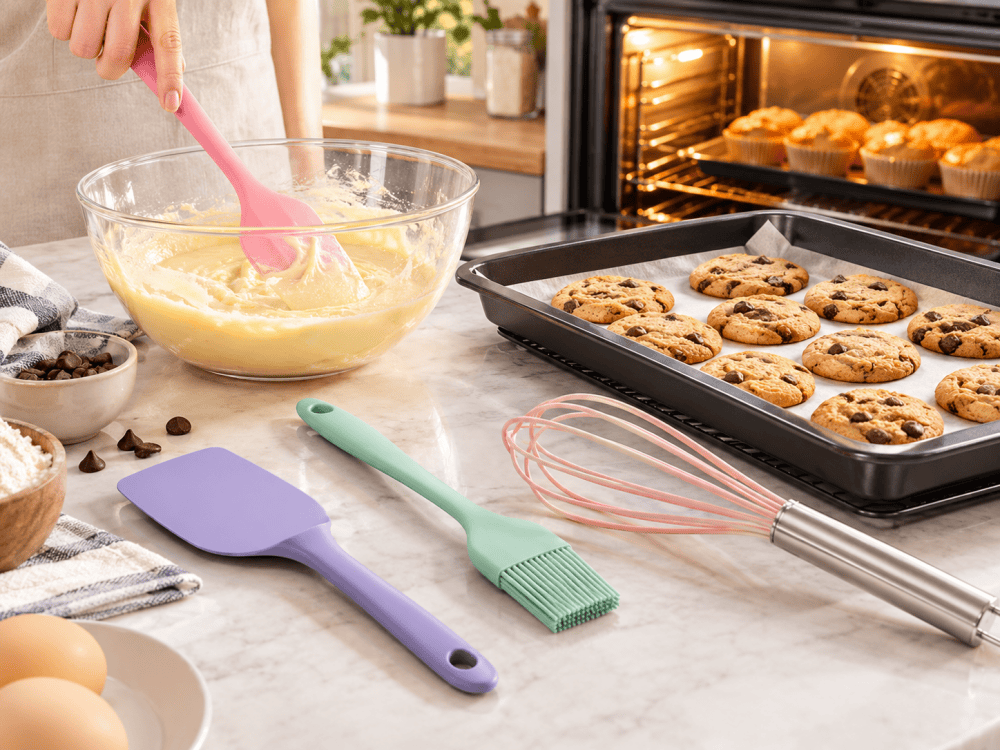
Short answer: Silicone baking utensils generally do not melt under normal baking conditions when they are used within the manufacturer's specified temperature range. However, excessive heat can eventually cause silicone to deteriorate, deform, discolor, or lose its intended performance.
Can Silicone Baking Utensils Melt?
Silicone behaves differently from many common thermoplastics. Instead of simply softening and flowing into a liquid when heated, properly cured silicone is a cross-linked material that generally maintains its structure across a relatively wide temperature range.
This is one reason silicone is commonly used for baking molds, spatulas, scrapers, pastry brushes, and other kitchen tools exposed to heat.
However, silicone should not be considered completely heat-proof. At sufficiently high temperatures or under inappropriate conditions, silicone can undergo thermal degradation and lose its physical properties.
What Happens to Silicone When It Gets Too Hot?
When silicone baking utensils are exposed to temperatures beyond their intended range, several things can happen.
1. Loss of Physical Properties
Excessive heat can cause silicone to lose some of its original flexibility, strength, or elasticity.
A utensil may become harder, softer, brittle, or otherwise different from its original condition depending on the material and exposure conditions.
2. Deformation
Silicone tools can deform when exposed to excessive heat, particularly if the product is thin, unsupported, or pressed against a very hot surface for an extended period.
This is different from the classic melting behavior associated with thermoplastics. The product may lose its intended shape without becoming a flowing liquid.
3. Discoloration
Prolonged exposure to excessive temperatures can sometimes cause discoloration or changes in appearance.
Discoloration alone does not necessarily indicate a safety problem, but significant changes in the material should be treated as a reason to inspect or replace the product.
4. Thermal Degradation
At sufficiently high temperatures, silicone can eventually undergo thermal degradation.
This means the polymer structure begins to break down rather than simply changing from a solid to a liquid.
The temperature at which degradation becomes significant depends on the specific silicone formulation, additives, product design, and exposure conditions.
What Temperature Can Silicone Baking Utensils Withstand?
There is no single temperature rating that applies to every silicone baking utensil.
Different silicone formulations and finished products can have different recommended operating ranges. The actual limit can also depend on whether the product is made entirely from silicone or contains additional components such as stainless steel, nylon, plastic, wood, or adhesives.
Always check the manufacturer's stated temperature rating for the specific product. Do not assume that every silicone baking utensil has the same maximum temperature simply because it is made from silicone.
For example, a silicone spatula designed for stirring food may have different recommended conditions from a silicone baking mold designed specifically for oven use.
Can Silicone Spatulas Go in the Oven?
Whether a silicone spatula can be used inside an oven depends on its product design and manufacturer's instructions.
Some silicone products are designed for direct high-temperature exposure, while others are intended primarily for mixing, scraping, or stovetop use.
A silicone handle or silicone head does not automatically mean that the entire product is suitable for oven use.
If a utensil contains a wooden handle, plastic component, adhesive, or other material, the complete product may have a lower temperature tolerance than the silicone component itself.
Can Silicone Baking Utensils Be Used on the Stovetop?
Many silicone baking and cooking utensils are designed for use around stovetops, particularly spatulas, scrapers, and turners.
However, direct contact with a heating element, open flame, or extremely hot pan surface can create temperatures that exceed the normal operating range of the product.
For this reason, users should avoid leaving silicone utensils directly against a hot burner or exposed flame unless the manufacturer specifically states that the product is designed for that application.
Can Silicone Baking Utensils Burn?
Silicone is generally more heat-resistant than many ordinary plastics, but it is not fireproof.
At sufficiently high temperatures, silicone can degrade and eventually burn or produce decomposition products.
This is why silicone baking utensils should not be placed directly on open flames, heating elements, or other uncontrolled high-temperature sources.
Heat resistant does not mean fireproof. Silicone baking utensils should always be used within their specified temperature range and intended application.
Silicone vs Plastic: Which Handles Heat Better?
Silicone is often selected for baking utensils because it can maintain useful physical properties across a wider range of temperatures than many common household plastics.
| Material | Typical Heat Performance | Common Advantages | Common Applications |
|---|---|---|---|
| Silicone | Generally suitable for relatively high-temperature kitchen applications when properly formulated | Flexible, heat resistant, non-stick friendly | Spatulas, scrapers, baking tools, molds |
| PP Plastic | Suitable for moderate-temperature applications depending on grade | Lightweight, affordable and versatile | Containers, utensils and kitchen accessories |
| Nylon | Temperature performance varies by formulation | Lightweight and relatively rigid | Spatulas, turners and kitchen utensils |
| Stainless Steel | Excellent resistance to high temperatures | Rigid, strong and durable | Whisks, turners and baking tools |
The best material depends on the application. Silicone is particularly useful when flexibility and compatibility with non-stick surfaces are important, while stainless steel is better suited to applications requiring high rigidity and strength.
Can Silicone Baking Utensils Melt in the Dishwasher?
Silicone baking utensils generally do not melt during normal dishwasher use when the products are designed for dishwasher cleaning.
However, dishwasher suitability depends on the complete product construction.
For example, a silicone utensil with a wooden handle, glued component, or certain plastic parts may have different cleaning limitations.
Always follow the manufacturer's dishwasher and cleaning instructions.
Why Does Silicone Become Sticky or Oily?
A silicone baking utensil may sometimes feel sticky, oily, or different after prolonged use.
Possible reasons can include:
- Accumulation of oil or food residue
- Improper cleaning
- Exposure to certain cleaning products
- Material formulation
- Long-term exposure to heat
- Material aging or degradation
A sticky surface does not automatically mean that the silicone has melted. It may instead indicate residue, surface changes, or material degradation.
How to Prevent Silicone Baking Utensils From Overheating
Proper use can significantly extend the service life of silicone baking utensils.
- Follow the manufacturer's temperature rating.
- Do not place silicone tools directly on heating elements.
- Keep silicone away from open flames.
- Do not leave utensils resting against extremely hot cookware for extended periods.
- Check whether the entire product is oven safe, not just the silicone component.
- Follow the manufacturer's cleaning instructions.
- Replace utensils that show significant cracking, deformation, or deterioration.
How to Tell If a Silicone Baking Utensil Has Been Damaged by Heat
Regular inspection is useful, especially for products used frequently at high temperatures.
Signs of excessive heat exposure may include:
- Permanent deformation
- Cracking or tearing
- Severe discoloration
- Loss of elasticity
- Unusual surface changes
- Persistent abnormal odor
- Loose or damaged components
If a silicone baking utensil has experienced obvious material deterioration, it should be replaced rather than continuing to use it.
Do Different Silicone Baking Tools Have Different Heat Limits?
Yes.
Different products can have different temperature requirements because their designs and intended uses are different.
Silicone Spatulas
Silicone spatulas are commonly used for mixing, scraping, stirring, and handling food around cookware. Their suitability for high-temperature applications depends on the specific product.
Silicone Pastry Brushes
Silicone pastry brushes can be useful for applying oil, butter, sauces, and glazes. Their temperature performance depends on the silicone formulation and handle construction.
Silicone Scrapers
Silicone scrapers are often designed for mixing bowls and food preparation. Their flexibility makes them useful for removing batter and dough from surfaces.
Silicone Baking Molds
Silicone baking molds are specifically designed for oven baking in many product applications. Their temperature rating should still be checked before use.
What Should B2B Buyers Check When Sourcing Silicone Baking Tools?
For importers, wholesalers, retailers, and private-label brands, heat resistance should be treated as a product specification rather than a generic material claim.
Before placing an order, buyers should ask suppliers about:
- Silicone material specification
- Recommended operating temperature
- Maximum temperature rating
- Intended application
- Oven suitability
- Dishwasher suitability
- Product construction
- Other materials used in the product
- Relevant testing and documentation
- Quality-control procedures
For private-label products, the agreed temperature rating and intended use should also be reflected consistently in product specifications, packaging, instructions, and marketing materials.
Can Silicone Baking Utensils Be Used for OEM and Private Label?
Yes. Silicone baking utensils are widely suited to OEM and private-label product development because silicone products can be produced in different shapes, sizes, colors, and configurations.
Depending on the product, customization may include:
- Silicone color
- Product size
- Handle design
- Utensil shape
- Logo
- Packaging
- Product sets
- Retail-ready combinations
For B2B buyers, the product specification should clearly define the intended application and temperature requirements before mass production begins.
Final Verdict: Can Silicone Baking Utensils Melt?
So, can silicone baking utensils melt?
Under normal baking conditions, properly manufactured silicone utensils generally do not melt like ordinary thermoplastic kitchen tools when used within their specified temperature range.
However, silicone is not completely heat-proof. Excessive temperatures can eventually cause deformation, discoloration, loss of physical properties, or thermal degradation.
The most important factor is therefore not simply whether a utensil is made from silicone, but whether the specific finished product is designed and rated for the intended temperature and application.
For consumers: Check the product's temperature rating and follow the manufacturer's instructions.
For B2B buyers: Confirm the material specification, temperature range, complete product construction, testing, and documentation before sourcing silicone baking utensils in bulk.
Frequently Asked Questions
Can silicone baking utensils melt?
Properly manufactured silicone baking utensils generally do not melt like ordinary plastics under normal baking conditions. However, excessive heat can cause silicone to deform, degrade, or lose its physical properties.
What temperature can silicone baking utensils withstand?
The temperature range depends on the silicone formulation and finished product. There is no single temperature rating that applies to every silicone baking utensil, so users should follow the manufacturer's specified temperature range.
Can silicone spatulas go in the oven?
Some silicone spatulas are designed for high-temperature applications, but oven suitability depends on the specific product. Check the manufacturer's instructions before placing a silicone spatula in the oven.
Can silicone baking utensils burn?
Silicone is heat resistant but not fireproof. At sufficiently high temperatures, silicone can thermally degrade and eventually burn. It should not be exposed to open flames or uncontrolled high heat.
Can silicone baking utensils be used on the stovetop?
Many silicone cooking and baking utensils are suitable for stovetop use within their specified temperature range. They should not be placed directly on heating elements or exposed to open flames unless specifically designed for that use.
Can silicone baking utensils melt in the dishwasher?
Silicone baking utensils generally should not melt during normal dishwasher use when they are designed to be dishwasher safe. However, the complete product construction and manufacturer's instructions should be checked.
Why does silicone become sticky after heating?
A sticky silicone surface can result from food or oil residue, cleaning products, material formulation, long-term heat exposure, or material aging. A sticky surface does not necessarily mean that the silicone has melted.
How can I prevent silicone baking utensils from overheating?
Use the utensils within the manufacturer's specified temperature range, keep them away from open flames and heating elements, and avoid prolonged contact with extremely hot cookware.
Looking for Silicone Baking Tools?
Kitlucy supplies silicone baking tools and kitchenware products for wholesale, OEM, ODM, and private-label projects. Contact our team to discuss product specifications, temperature requirements, customization, packaging, and sourcing needs.
Contact KitlucyRelated Blogs