How to Clean a Silicone Mold: The Complete Guide to Removing Grease, Odors & Sticky Residue
How to Clean a Silicone Mold: The Complete Guide to Removing Grease, Odors & Sticky Residue
Silicone bakeware has become a favorite among home bakers and professional kitchens thanks to its flexibility, natural non-stick surface, and excellent heat resistance. Whether you're making cakes, muffins, chocolates, bread, or frozen desserts, silicone molds make unmolding easier than traditional metal bakeware.
However, even the highest-quality silicone molds require proper maintenance. After repeated baking, many users notice that their silicone molds become sticky, develop greasy spots, retain food odors, or lose some of their non-stick performance. These problems are usually not caused by the silicone itself—they result from baked-on oils, food residue, and improper cleaning methods.
If you've ever wondered How to Clean a Silicone Moldproperly, this complete guide covers everything you need to know. You'll learn why silicone becomes sticky, the best daily and deep-cleaning methods, common mistakes to avoid, and practical tips to extend the lifespan of your silicone bakeware.
Why Proper Cleaning Matters
Unlike metal or glass bakeware, food-grade silicone has a flexible molecular structure that naturally repels most foods. However, microscopic pores on the silicone surface can gradually trap oils released from butter, cooking sprays, cheese, chocolate, and fatty batters during baking.
If these oils are not completely removed, they slowly polymerize under repeated high temperatures, creating an invisible film that attracts dirt, holds unpleasant odors, and causes the mold to feel sticky even after washing.
Most "sticky silicone molds" are not damaged products. In most cases, the sticky surface is simply caused by baked-on grease that ordinary dishwashing cannot completely remove. Proper deep cleaning can often restore the original non-stick performance.
Why Do Silicone Molds Become Sticky?
One of the most common questions people ask is why silicone molds suddenly feel tacky after months of use. This happens because cooking oils behave differently on silicone than on metal bakeware.
1. Oil Residue Builds Up Over Time
Butter, vegetable oil, shortening, and cooking sprays leave behind microscopic layers of grease after every bake. Although the mold may appear clean, these residues slowly accumulate inside the textured silicone surface.
2. High Baking Temperatures Bake Oils into the Surface
Repeated exposure to temperatures above 180°C (356°F) causes these oils to polymerize—a process similar to seasoning a cast iron pan. Once hardened, the grease becomes much more difficult to remove with ordinary dish soap.
3. Low-Quality Detergents May Leave Residue
Some mild detergents remove visible food particles but fail to dissolve baked-on fats completely. Over time, this creates a greasy layer that attracts dust and makes silicone feel sticky.
4. Improper Drying Encourages Odors
Storing silicone molds before they are fully dry can trap moisture, resulting in unpleasant smells and bacterial growth in enclosed storage areas.
5. Low-Quality Silicone Ages Faster
Premium food-grade silicone is highly resistant to grease absorption. Lower-quality silicone or products containing excessive fillers may discolor, harden, or become sticky much sooner.
Common Signs Your Silicone Mold Needs Deep Cleaning
Daily washing is usually sufficient after normal baking, but certain warning signs indicate it's time for a more thorough cleaning.
| Symptom | Possible Cause | Recommended Solution |
|---|---|---|
| Sticky surface | Grease buildup | Baking soda or oven heat treatment |
| White film | Hard water or detergent residue | Vinegar rinse |
| Persistent food odor | Oil absorbed into the surface | Deep cleaning and oven treatment |
| Food sticks during baking | Grease residue reduces non-stick performance | Complete degreasing |
| Yellow or brown stains | Burned sugar or oils | Baking soda paste |
Daily Cleaning Routine for Silicone Molds
Cleaning silicone bakeware immediately after each use is the easiest way to prevent stubborn grease from forming. A simple daily routine keeps molds hygienic while extending their service life.
Step 1: Let the Mold Cool Completely
Never rinse a hot silicone mold with cold water. Sudden temperature changes can cause unnecessary stress on the material and may shorten its lifespan over time.
Step 2: Rinse Away Loose Food Particles
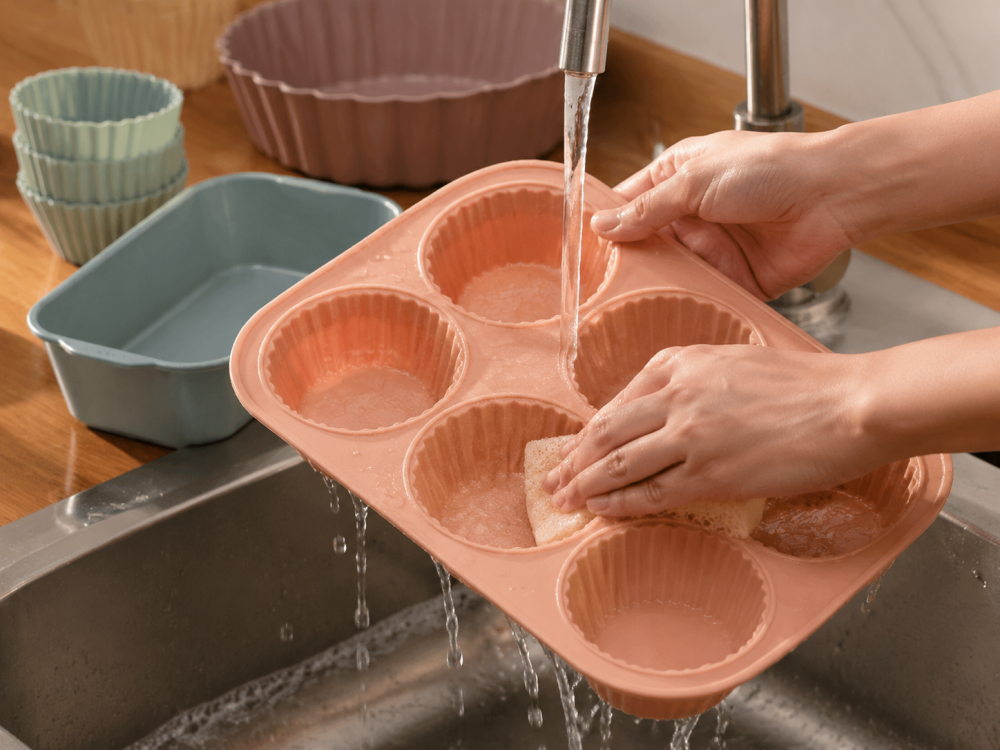
Use warm running water to remove crumbs, batter, chocolate, or other food residue before it dries onto the surface.
Step 3: Wash with Grease-Cutting Dish Soap
Apply a mild but effective grease-cutting dish detergent using a soft sponge or microfiber cloth. Avoid abrasive scrubbers, steel wool, or rough brushes that may scratch the silicone surface.
Step 4: Rinse Thoroughly
Ensure that all detergent has been completely removed, as leftover soap may leave a slippery film after drying.
Step 5: Air Dry Before Storage
Place the mold on a drying rack or towel in a well-ventilated area. Only store silicone molds once they are completely dry to prevent moisture buildup and unpleasant odors.
Deep Cleaning Silicone Molds: The Most Effective Methods
Even with regular washing, silicone bakeware may gradually develop stubborn grease, sticky residue, discoloration, or lingering odors. When daily cleaning is no longer enough, a deep-cleaning routine can restore the mold's non-stick performance and extend its lifespan.
The best cleaning method depends on the type of residue you're trying to remove. Below are several proven techniques used by both home bakers and professional kitchens.
Method 1: Baking Soda Paste (Best for Sticky Grease)
Baking soda is one of the safest and most effective cleaners for food-grade silicone. Its mild abrasive action helps lift baked-on grease without damaging the material.
How to Use:
- Mix baking soda with a small amount of warm water to form a thick paste.
- Spread the paste evenly over greasy or sticky areas.
- Allow it to sit for 20–30 minutes.
- Gently scrub with a soft sponge or soft-bristle brush.
- Rinse thoroughly with warm water and dry completely.
Sticky silicone molds, oily residue, baked-on grease, and reduced non-stick performance.
Method 2: White Vinegar Soak (Best for Removing Odors)
If your silicone molds have absorbed food smells from garlic, onions, spices, or strong-flavored desserts, white vinegar is an excellent natural deodorizer.
Instructions:
- Mix equal parts white vinegar and warm water.
- Soak the mold for approximately 30 minutes.
- Wash with mild dish soap.
- Rinse thoroughly and air dry.
This method also helps remove mineral deposits left by hard water.
Method 3: Low-Temperature Oven Treatment (Best for Burned-On Oils)
Professional bakers often use gentle oven heat to loosen polymerized grease trapped inside silicone.
Steps:
- Preheat the oven to approximately 120°C (250°F).
- Place the empty silicone mold on a baking tray.
- Heat for 15–20 minutes.
- Remove carefully and allow it to cool slightly.
- Wash with hot water and grease-cutting dish soap.
This process softens hardened grease, making it much easier to remove during washing.
Do not exceed the manufacturer's recommended temperature during cleaning. Low heat is sufficient to loosen grease without stressing the silicone.
Method 4: Boiling Water Treatment
Another effective way to loosen stubborn oils is to immerse the silicone mold in boiling water.
Instructions:
- Bring a large pot of water to a gentle boil.
- Submerge the silicone mold for 5–10 minutes.
- Remove carefully with kitchen tongs.
- Wash immediately with dish soap.
Boiling softens grease trapped within microscopic surface pores, making subsequent cleaning much more effective.
Method 5: Dishwasher Cleaning
Most high-quality food-grade silicone molds are dishwasher safe. However, the dishwasher is most effective for routine cleaning rather than removing heavy grease buildup.
For best results:
- Place molds on the top rack.
- Use a quality grease-cutting detergent.
- Avoid overcrowding the dishwasher.
- Allow molds to dry completely before storing.
Which Cleaning Method Works Best?
| Cleaning Method | Grease Removal | Odor Removal | Daily Use | Deep Cleaning |
|---|---|---|---|---|
| Dish Soap | ★★★☆☆ | ★★☆☆☆ | ★★★★★ | ★★☆☆☆ |
| Baking Soda | ★★★★★ | ★★★☆☆ | ★★★☆☆ | ★★★★★ |
| White Vinegar | ★★★☆☆ | ★★★★★ | ★★★★☆ | ★★★★☆ |
| Boiling Water | ★★★★☆ | ★★★☆☆ | ★★☆☆☆ | ★★★★☆ |
| Low-Heat Oven | ★★★★★ | ★★★★☆ | ★☆☆☆☆ | ★★★★★ |
Can Silicone Molds Go in the Dishwasher?
Yes. Most premium food-grade silicone bakeware is dishwasher safe. However, a dishwasher should not be considered a complete replacement for occasional deep cleaning.
Dishwashers are excellent for removing crumbs, batter residue, and everyday food particles, but they may not completely eliminate baked-on oils that accumulate after repeated baking.
If your silicone mold still feels sticky after dishwasher cleaning, use a baking soda treatment or low-temperature oven method for a more thorough clean.
Can You Boil Silicone Molds?
Absolutely. Boiling is a safe and effective maintenance technique for food-grade silicone bakeware.
Immersing silicone molds in boiling water for several minutes helps loosen grease trapped inside the material's microscopic surface texture without damaging the silicone.
Many experienced bakers combine boiling with a baking soda treatment for the best results when restoring older silicone molds.
How to Remove Sticky Residue from Silicone Molds
If your silicone mold feels sticky even after washing, don't assume it's worn out. In most cases, the surface is simply coated with a thin layer of polymerized cooking oil.
To restore the mold:
- Heat the mold in a 120°C (250°F) oven for 15–20 minutes.
- Allow it to cool slightly.
- Apply a thick baking soda paste.
- Scrub gently using a soft sponge.
- Wash with grease-cutting dish soap.
- Rinse thoroughly and air dry.
This combination removes the majority of stubborn grease and often restores the original smooth, non-stick surface.
How to Remove White Film from Silicone Bakeware
A cloudy white film sometimes appears after repeated dishwasher use. This is usually caused by mineral deposits from hard water or detergent residue—not damage to the silicone.
To remove the white film:
- Soak the mold in a mixture of equal parts white vinegar and warm water.
- Leave it for 20–30 minutes.
- Wipe gently with a microfiber cloth.
- Rinse thoroughly with clean water.
This simple treatment restores the mold's clean appearance without using harsh chemicals.
Common Mistakes to Avoid When Cleaning Silicone Molds
Even high-quality food-grade silicone bakeware can lose its performance if cleaned improperly. Avoiding these common mistakes will help preserve the mold's flexibility, non-stick properties, and appearance for years.
Using Abrasive Cleaning Pads
Steel wool, abrasive sponges, and stiff brushes can scratch the silicone surface, making it easier for grease and food particles to accumulate.
Using Harsh Chemical Cleaners
Industrial degreasers, bleach, or highly alkaline cleaners are unnecessary for food-grade silicone and may shorten its service life.
Storing Silicone While Damp
Moisture trapped inside stacked molds can lead to unpleasant odors and mildew in enclosed storage spaces.
Using Cooking Spray Excessively
Although many recipes recommend cooking spray, repeated use actually accelerates grease buildup on silicone surfaces. High-quality silicone molds typically require little or no additional grease.
Ignoring Sticky Residue
If a mold begins feeling sticky, perform a deep cleaning as soon as possible. Waiting too long allows grease to harden further, making removal much more difficult.
How to Maintain Silicone Bakeware
Proper maintenance reduces deep cleaning frequency and keeps silicone molds performing like new.
| Maintenance Task | Recommended Frequency |
|---|---|
| Wash with dish soap | After every use |
| Air dry completely | After every wash |
| Inspect for grease buildup | Weekly |
| Deep clean with baking soda | Monthly (or as needed) |
| Check for damage or deformation | Every 6 months |
Regular cleaning is much easier than removing months of baked-on grease. A simple five-minute cleaning routine after each use can significantly extend the lifespan of your silicone bakeware.
When Should You Replace Silicone Molds?
Food-grade silicone is extremely durable and can last for many years with proper care. However, every baking mold eventually reaches the end of its service life.
Consider replacing your silicone molds if you notice any of the following signs:
| Condition | Replacement Needed? |
|---|---|
| Minor food stains | No |
| Light discoloration | No |
| Persistent sticky surface after deep cleaning | Possibly |
| Deep cracks or tears | Yes |
| Loss of flexibility | Yes |
| Burn marks or melted areas | Yes |
| Strong permanent odors | Recommended |
Replacing worn silicone molds helps maintain food safety, baking consistency, and optimal non-stick performance.
Frequently Asked Questions
Why do silicone molds become sticky?
Sticky silicone molds are usually caused by baked-on cooking oils rather than damage to the silicone itself. Deep cleaning with baking soda or gentle oven heating often restores the surface.
Can silicone molds go in the dishwasher?
Yes. Most food-grade silicone molds are dishwasher safe, although hand washing is generally more effective for removing heavy grease buildup.
Can I boil silicone molds to clean them?
Yes. Boiling food-grade silicone molds for 5–10 minutes is a safe way to loosen grease before washing.
Why do my silicone molds still smell after washing?
Strong food odors can become trapped in grease residue. Deep cleaning with vinegar or low-temperature oven treatment usually eliminates lingering smells.
Does baking soda damage silicone?
No. Baking soda is one of the safest and most effective natural cleaners for food-grade silicone bakeware.
Should I grease silicone molds before baking?
Most high-quality silicone molds have excellent natural non-stick properties and typically do not require greasing. Only certain recipes with very low fat content may benefit from a light coating.
How long do silicone baking molds last?
Premium food-grade silicone molds can last for many years when cleaned properly and used within their recommended temperature range.
Can silicone molds go directly from the freezer to the oven?
Many high-quality silicone molds are designed to withstand a wide temperature range. However, always follow the manufacturer's temperature recommendations and avoid sudden extreme temperature changes whenever possible.
Why is my silicone mold turning white?
A white film is usually caused by mineral deposits from hard water or detergent residue rather than damage to the silicone. A vinegar soak normally removes it.
What's the best way to keep silicone molds non-stick?
Wash them immediately after use, avoid excessive cooking spray, perform regular deep cleaning, and allow them to dry completely before storage.
Final Thoughts
Learning how to clean silicone molds properly is the key to keeping your bakeware hygienic, odor-free, and performing at its best. While silicone is naturally durable and non-stick, regular maintenance prevents grease buildup, restores flexibility, and extends the life of your molds.
Simple daily washing combined with occasional deep cleaning using baking soda, vinegar, or gentle heat can effectively remove sticky residue and preserve the excellent baking performance that food-grade silicone is known for.
Whether you're a home baker, a professional pastry chef, or sourcing bakeware for retail, investing in high-quality silicone molds—and caring for them correctly—will ensure consistent baking results for years to come.
Looking for Premium Food-Grade Silicone Bakeware?
Kitlucy manufactures high-quality food-grade silicone molds, baking mats, cake molds, muffin trays, chocolate molds, and other silicone baking tools for global brands, wholesalers, and distributors.
We offer OEM, ODM, and private-label services with customized colors, shapes, packaging, and branding to help you build a competitive bakeware product line. Contact our team today to discuss your next silicone bakeware project.
Related Blogs