How to Clean Burnt Cookie Trays: Easy Ways to Remove Grease, Burn Marks & Baked-On Stains
How to Clean Burnt Cookie Trays: Easy Ways to Remove Grease, Burn Marks & Baked-On Stains
Cookie trays are one of the most frequently used pieces of bakeware in any kitchen. After repeated baking, however, they often develop stubborn burnt stains, baked-on grease, caramelized sugar, and dark discoloration that ordinary dish soap simply can't remove.
If you're wondering how to clean burnt cookie trays without damaging the surface, you're not alone. Whether you own aluminum, carbon steel, or non-stick cookie trays, using the correct cleaning method can restore their appearance while extending their lifespan.
In this complete guide, you'll learn why cookie trays become burnt, which cleaning methods work best, what products to avoid, and how to prevent heavy buildup in the future.
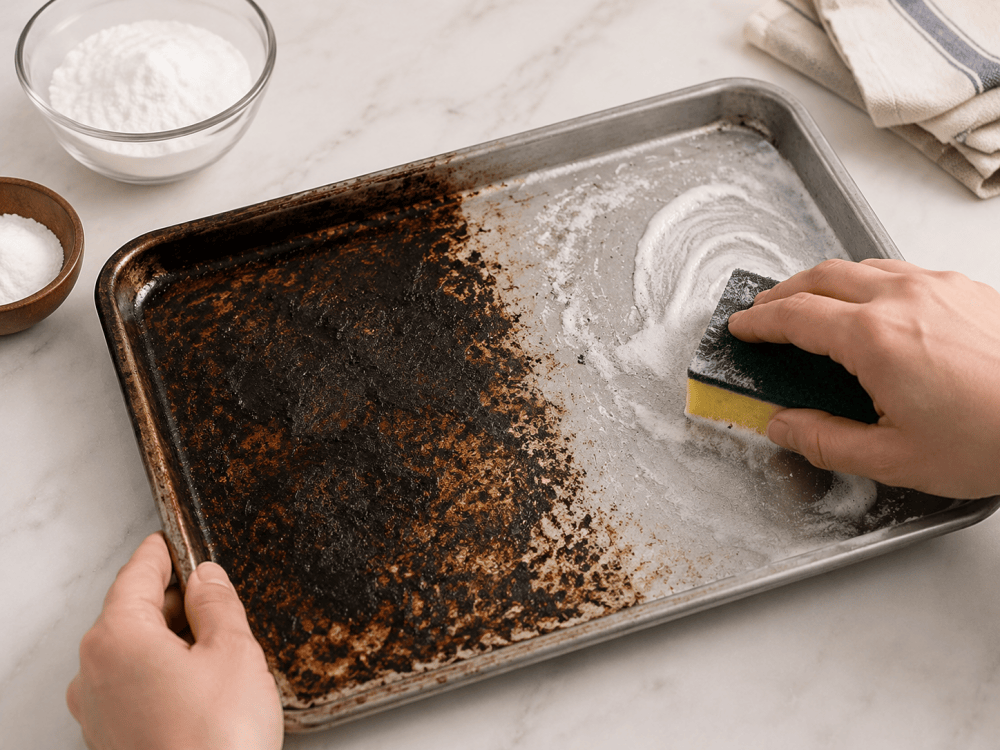
The safest way to clean burnt cookie trays is to soak them in hot water, apply a paste of baking soda and water, allow it to sit for 30–60 minutes, then gently scrub with a non-abrasive sponge. For heavier stains, vinegar or hydrogen peroxide can help loosen baked-on grease without damaging the tray.
Why Do Cookie Trays Become Burnt?
Burn marks don't necessarily mean your cookie tray is damaged. In most cases, the dark stains are layers of baked-on oils, sugars, fats, and food residue that accumulate after repeated use.
Every time cookies bake, tiny amounts of butter, shortening, sugar, and dough remain on the tray. Under high oven temperatures, these residues gradually carbonize, forming difficult-to-remove stains.
Common causes include:
- Repeated baking without deep cleaning
- Burnt butter and cooking oils
- Caramelized sugar residue
- Overheated non-stick coatings
- Using cooking sprays that leave sticky buildup
- Grease accumulating around tray edges
Dark stains on bakeware are often cosmetic rather than harmful. However, thick layers of burnt grease can reduce baking performance by creating uneven heat distribution.
Does a Burnt Cookie Tray Affect Baking?
Light discoloration is normal and usually doesn't affect baking performance.
However, excessive carbon buildup may lead to:
- Uneven heat distribution
- Hot spots during baking
- Inconsistent cookie browning
- Difficulty releasing baked goods
- Reduced effectiveness of non-stick coatings
Keeping cookie trays clean not only improves appearance but also helps maintain consistent baking results.
Know Your Cookie Tray Material Before Cleaning
Before choosing a cleaning method, identify what material your cookie tray is made from. Different materials require different care techniques.
| Material | Cleaning Difficulty | Recommended Method |
|---|---|---|
| Aluminum | Easy | Baking soda, vinegar, mild soap |
| Carbon Steel | Moderate | Gentle scrubbing, dry immediately |
| Non-Stick Coated Steel | Easy | Soft sponge only |
| Stainless Steel | Easy | Baking soda paste or vinegar soak |
Always check the manufacturer's cleaning recommendations before using aggressive cleaning products.
Method 1: Baking Soda Paste (Best Overall)
Baking soda is one of the safest and most effective ways to remove burnt grease from cookie trays.
You'll Need:
- Baking soda
- Warm water
- Soft sponge
- Microfiber cloth
Steps
- Mix baking soda with a small amount of water to form a thick paste.
- Spread the paste over burnt areas.
- Allow it to sit for 30–60 minutes.
- Scrub gently using a soft sponge.
- Rinse thoroughly with warm water.
- Dry completely before storing.
This method works well for both aluminum and carbon steel cookie trays and is safe for most non-stick surfaces.
Method 2: Baking Soda and Vinegar
For heavier burnt stains, combining baking soda with white vinegar creates a mild chemical reaction that helps loosen baked-on residue.
Instructions
- Sprinkle baking soda evenly over the tray.
- Pour white vinegar over the surface.
- Allow the mixture to foam for 15–20 minutes.
- Scrub gently using a non-scratch sponge.
- Rinse thoroughly and dry.
This method is particularly effective for removing stubborn grease and caramelized sugar deposits.
Method 3: Hydrogen Peroxide and Baking Soda
If baking soda alone doesn't remove stubborn burn marks, hydrogen peroxide can provide additional cleaning power. This combination is highly effective at breaking down baked-on grease and dark stains without excessive scrubbing.
You'll Need
- Baking soda
- 3% hydrogen peroxide
- Soft sponge or microfiber cloth
- Warm water
Steps
- Sprinkle a generous layer of baking soda over the burnt areas.
- Slowly pour hydrogen peroxide until a paste forms.
- Leave the mixture on the tray for 1–2 hours.
- Gently scrub with a non-abrasive sponge.
- Rinse thoroughly and dry completely.
This method works particularly well for aluminum and stainless steel cookie trays but should be tested on a small area first if your tray has a decorative or specialty coating.
Method 4: Soaking in Hot Soapy Water
For light to moderate stains, soaking is often enough to loosen grease before scrubbing.
Instructions
- Fill a sink or large basin with hot water.
- Add a grease-cutting dish soap.
- Submerge the cookie tray for 30–60 minutes.
- Wipe clean using a soft sponge.
- Repeat if necessary.
This method is gentle and safe for almost every type of bakeware.
Method 5: Lemon and Salt
If you prefer natural cleaning solutions, lemon juice combined with coarse salt offers mild abrasive action and natural degreasing properties.
Cut a fresh lemon in half, sprinkle coarse salt over the burnt areas, and scrub using the lemon itself. The citric acid helps dissolve grease while the salt gently removes residue.
This eco-friendly method is suitable for routine maintenance but may not remove heavy carbon buildup.
Method 6: Commercial Bakeware Cleaners
Commercial bakeware cleaners are designed specifically for removing baked-on grease from baking sheets and cookie trays.
When using commercial cleaners:
- Follow the manufacturer's instructions carefully.
- Wear gloves if recommended.
- Rinse thoroughly before using the tray again.
- Avoid products that are not food-safe.
Commercial cleaners are often the fastest solution for heavily stained commercial bakeware.
Always test any commercial cleaner on a small, inconspicuous area first, especially if your cookie tray has a non-stick coating.
What NOT to Use on Cookie Trays
Using the wrong cleaning tools can permanently damage your bakeware.
Avoid the following:
- Steel wool on non-stick surfaces
- Metal scrapers or knives
- Strong bleach solutions
- Harsh oven cleaners on coated trays
- Wire brushes
- Highly abrasive scouring powders
These products may scratch the surface, damage protective coatings, or shorten the lifespan of the tray.
Cleaning Different Types of Cookie Trays
Aluminum Cookie Trays
Aluminum responds well to baking soda, vinegar, and hydrogen peroxide. Avoid highly alkaline cleaners that may discolor bare aluminum.
Carbon Steel Cookie Trays
Because carbon steel can rust if left wet, always dry the tray immediately after washing. If the tray has a non-stick coating, use only soft cleaning tools.
Non-Stick Cookie Trays
Never use abrasive scrubbers on non-stick bakeware. Instead, soak the tray and clean with a soft sponge to preserve the coating.
Stainless Steel Cookie Trays
Stainless steel is one of the easiest materials to maintain and can tolerate stronger cleaning methods, including baking soda and vinegar.
How Often Should You Deep Clean Cookie Trays?
Daily washing removes fresh grease, but deep cleaning is still necessary to prevent long-term buildup.
| Usage Frequency | Recommended Deep Cleaning |
|---|---|
| Occasional Home Baking | Every 2–3 months |
| Weekly Baking | Once per month |
| Daily Home Baking | Every 2 weeks |
| Commercial Bakery | Weekly |
Regular maintenance prevents thick carbon deposits from forming and makes cleaning much easier over time.
How to Prevent Burnt Stains on Cookie Trays
Prevention is always easier than restoration. Adopting a few simple baking habits can significantly reduce grease buildup.
- Use parchment paper when appropriate.
- Avoid excessive cooking spray.
- Wipe away grease after each use.
- Wash the tray while residue is still fresh.
- Rotate trays during baking for even heating.
- Choose heavy-gauge bakeware with quality non-stick coatings.
Instead of waiting until your cookie tray looks blackened, perform light cleaning after every use and schedule regular deep cleaning. This approach keeps bakeware looking new while maintaining optimal baking performance.
Can Burnt Cookie Trays Be Restored?
In many cases, yes. Cosmetic stains and baked-on grease can often be removed using the cleaning methods described above.
However, replacement may be the better option if the tray:
- Has severe warping that affects baking.
- Has peeling or flaking non-stick coating.
- Shows deep corrosion or rust.
- Has permanent structural damage.
If the tray is only discolored but remains flat and structurally sound, it can usually continue to deliver excellent baking performance after proper cleaning.
Frequently Asked Questions
How do you remove black burnt stains from cookie trays?
Black stains are usually layers of carbonized grease and baked-on food residue rather than permanent damage to the metal. For most cookie trays, applying a baking soda paste, soaking with white vinegar, or using a hydrogen peroxide solution can effectively loosen these deposits. Allow the cleaning solution to sit for at least 30 minutes before gently scrubbing with a non-abrasive sponge.
Can baking soda damage cookie trays?
No. Baking soda is one of the safest cleaning agents for aluminum, stainless steel, carbon steel, and most non-stick cookie trays. It is mildly abrasive, making it effective at removing grease without scratching the surface when used with a soft sponge.
Can I use oven cleaner on a cookie tray?
It depends on the tray material. Oven cleaners may work well on bare stainless steel or some aluminum trays, but they are generally not recommended for non-stick coated cookie trays because they can damage the coating. Always follow the manufacturer's care instructions before using chemical cleaners.
Why does my cookie tray still look stained after cleaning?
Some discoloration is permanent oxidation rather than food residue. While these cosmetic stains may remain visible, they usually do not affect baking performance as long as the tray is clean, flat, and free from peeling coatings.
How often should I replace a cookie tray?
A high-quality cookie tray can last for many years with proper care. Consider replacing it if:
- The tray is severely warped.
- The non-stick coating is peeling or flaking.
- Rust has spread across the surface.
- Deep scratches expose the underlying metal.
Is it safe to bake on a stained cookie tray?
Yes, light discoloration alone is generally harmless. However, if the tray has accumulated thick layers of burnt grease or has damaged non-stick coatings, cleaning or replacing it is recommended to ensure consistent baking performance and food safety.
Maintenance Tips to Keep Cookie Trays Looking New
Regular maintenance is the easiest way to prevent stubborn burnt stains from forming in the first place.
Follow these best practices:
- Wash cookie trays shortly after they cool.
- Use parchment paper or silicone baking mats when appropriate.
- Avoid excessive cooking sprays that leave sticky residue.
- Dry trays completely before storing.
- Store bakeware carefully to prevent scratches and dents.
- Perform deep cleaning every few weeks if you bake frequently.
These simple habits not only improve the appearance of your bakeware but also help maintain even heat distribution and consistent baking results.
When Should You Replace Instead of Clean?
Although most burnt cookie trays can be restored, cleaning is not always the best solution. Replacement is recommended if the tray shows structural damage or coating failure.
| Condition | Recommendation |
|---|---|
| Light brown stains | Continue using after cleaning |
| Heavy baked-on grease | Deep clean with baking soda or vinegar |
| Warped tray | Replace |
| Peeling non-stick coating | Replace |
| Surface rust on carbon steel | Clean if minor; replace if severe |
| Cracks or deformation | Replace immediately |
If your current cookie tray repeatedly develops burnt stains or warps after baking, upgrading to a heavy-gauge aluminum or carbon steel tray with a premium food-grade non-stick coating can significantly improve baking performance and reduce maintenance.
Conclusion
Burnt cookie trays don't necessarily need to be replaced. In most cases, stubborn grease, baked-on food residue, and dark stains can be removed using safe household ingredients such as baking soda, vinegar, hydrogen peroxide, or warm soapy water.
The best cleaning method depends on the tray's material and the severity of the buildup. Regular maintenance, proper storage, and avoiding harsh cleaning tools will help extend the lifespan of your bakeware while ensuring consistent baking results.
Whether you use aluminum, carbon steel, stainless steel, or non-stick cookie trays, keeping them clean not only improves their appearance but also contributes to better heat distribution, easier food release, and longer-lasting performance.
Looking for High-Quality Cookie Trays?
Kitlucy specializes in premium baking tools designed for home bakers, retailers, and global brands. Our cookie trays are available in aluminum, carbon steel, and non-stick options with OEM and private label services to meet your business needs.
Explore our Baking Tools collection:
//www.kitlucy.com/baking-tools.html
Need OEM or wholesale solutions?
Related Blogs