Muffins Silicone Bakeware: Benefits, Baking Tips & How to Choose the Best Molds
Silicone Muffin Pans: The Complete Guide to Better Baking, Safety & Choosing the Best Molds
Silicone muffin pans have become one of the most popular baking tools for home bakers, professional pastry chefs, and commercial bakeries. Thanks to their flexible design, natural non-stick surface, and excellent heat resistance, silicone muffin molds make it easier to bake perfectly shaped muffins, cupcakes, egg bites, mini cheesecakes, and other baked treats.
Compared with traditional metal muffin tins, food-grade silicone bakeware offers easier food release, faster cleanup, and greater versatility. Modern silicone molds can be used not only in conventional ovens but also in microwaves, freezers, and even air fryers, making them an increasingly popular choice for today's kitchens.
However, not all silicone muffin pans are created equal. The quality of the silicone, mold construction, temperature resistance, and manufacturing standards all influence baking performance, durability, and food safety.
In this complete guide, you'll learn:
- What silicone muffin pans are made of
- Why more bakers are switching from metal to silicone
- The advantages and disadvantages of silicone bakeware
- How to bake perfect muffins in silicone molds
- Common baking mistakes and how to avoid them
- How to choose high-quality food-grade silicone muffin molds
What Is a Silicone Muffin Pan?
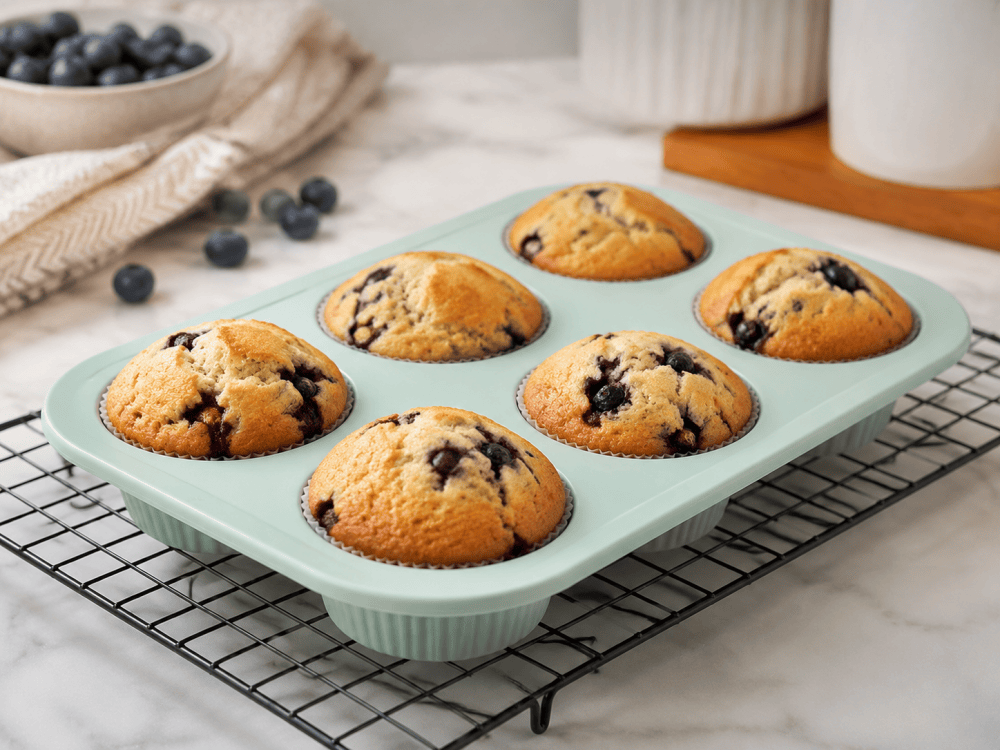
A silicone muffin pan is a baking mold made from food-grade silicone that is designed to bake muffins, cupcakes, egg muffins, mini cakes, and other individual-sized desserts. Unlike rigid metal bakeware, silicone pans are soft and flexible, allowing baked goods to be removed with minimal effort while maintaining their shape.
Most premium silicone muffin molds are manufactured from platinum-cured or FDA/LFGB-certified food-grade silicone, which provides excellent flexibility, durability, and resistance to high temperatures.
Food-grade silicone has become one of the fastest-growing materials in modern bakeware because it combines non-stick performance, temperature resistance, and long service life without requiring chemical coatings.
Why Silicone Muffin Pans Have Become So Popular
The popularity of silicone bakeware has increased significantly over the past decade. Consumers are looking for baking tools that are easier to use, easier to clean, and safer for non-stick baking.
Silicone muffin pans meet these expectations by offering several practical advantages over traditional bakeware.
1. Naturally Non-Stick Surface
One of the biggest benefits of silicone muffin pans is their natural non-stick performance. Unlike some metal pans that require butter, oil, or paper liners, high-quality silicone allows muffins to release easily after baking.
This not only improves presentation but also reduces cleanup time and minimizes food waste caused by sticking.
2. Flexible Design Prevents Damage
The flexibility of silicone allows bakers to gently push muffins out from the bottom without using knives or metal tools.
This makes silicone muffin molds especially useful for delicate baked goods such as:
- Blueberry muffins
- Cupcakes
- Mini cheesecakes
- Chocolate lava cakes
- Egg muffins
- Cornbread muffins
3. Excellent Temperature Resistance
High-quality silicone bakeware performs well under both extremely hot and cold conditions.
| Environment | Typical Temperature Range |
|---|---|
| Freezer | -40°C (-40°F) |
| Refrigerator | 0–5°C (32–41°F) |
| Conventional Oven | Up to 230°C (446°F) |
| Microwave | Safe for normal microwave use |
| Air Fryer* | Suitable if size and airflow permit |
*Always follow the manufacturer's recommended temperature limits.
4. Lightweight Yet Durable
Silicone muffin pans are significantly lighter than cast aluminum or steel bakeware, making them easier to carry, store, and transport. Despite their lightweight design, premium silicone molds can withstand thousands of baking cycles without cracking or deforming when properly cared for.
Are Silicone Muffin Pans Safe?
Yes—high-quality silicone muffin pans are considered safe for baking when they are manufactured from certified food-grade silicone.
Premium silicone does not contain BPA, does not require non-stick chemical coatings, and remains stable across a wide temperature range. This makes it suitable for baking muffins, cupcakes, brownies, and many other recipes.
When shopping for silicone bakeware, look for products that meet recognized food-contact standards, such as:
- FDA food-grade compliance
- LFGB certification
- BPA-free materials
- Food-contact safety testing
- High-temperature resistance up to approximately 230°C (446°F)
High-quality silicone should have little to no odor, feel smooth and flexible, and return to its original shape after bending. Extremely cheap silicone molds may contain fillers that reduce durability and baking performance.
Silicone Muffin Pans vs Metal Muffin Pans
Both silicone and metal bakeware produce excellent muffins, but each material performs differently. Understanding these differences can help you choose the right bakeware for your baking style.
| Feature | Silicone Muffin Pan | Metal Muffin Pan |
|---|---|---|
| Food Release | ★★★★★ Excellent | ★★★★☆ Often requires greasing |
| Flexibility | ★★★★★ | ★☆☆☆☆ |
| Heat Conductivity | Moderate | Excellent |
| Even Browning | Good | Excellent |
| Cleaning | Very Easy | Moderate |
| Dishwasher Safe | Usually Yes | Depends on coating |
| Weight | Lightweight | Heavy |
| Storage | Flexible and space-saving | Requires more storage space |
Many experienced bakers keep both types of bakeware in their kitchen. Metal pans are often preferred for maximum browning, while silicone pans are ideal for easy release, delicate desserts, and convenient cleanup.
How to Bake Perfect Muffins in Silicone Muffin Pans
Baking with silicone muffin pans is straightforward, but a few small adjustments compared to metal bakeware can make a significant difference in texture, browning, and ease of release.
Follow these simple steps for consistently light, evenly baked muffins.
Step 1: Place the Silicone Pan on a Baking Tray
Although silicone bakeware is flexible, that flexibility can make it difficult to carry when filled with batter.
Always place the silicone muffin pan on a sturdy metal baking sheet before filling the cups.
This provides:
- Better stability
- Even heat distribution
- Safer transfer into and out of the oven
- Reduced risk of spilling batter
Professional bakers almost always bake silicone molds on a baking sheet rather than placing them directly on the oven rack.
Step 2: Fill Each Cup About Two-Thirds Full
Overfilling muffin cups is one of the most common baking mistakes.
Most muffin recipes rise significantly during baking, so filling each cavity approximately two-thirds full leaves enough room for expansion while creating an attractive domed top.
| Fill Level | Result |
|---|---|
| 1/2 Full | Small muffins with limited rise |
| 2/3 Full | Ideal height and shape |
| 3/4 Full | Taller muffins with slight overflow risk |
| Completely Full | Batter may overflow during baking |
Step 3: Bake at the Recommended Temperature
Food-grade silicone performs well under normal baking temperatures.
Most muffin recipes bake successfully between:
- 175–190°C (350–375°F)
- 15–25 minutes for standard muffins
- 10–15 minutes for mini muffins
- 25–35 minutes for jumbo muffins
Because silicone transfers heat differently than metal, baking times may increase by 2–5 minutes depending on your oven and recipe.
Step 4: Check for Doneness Properly
Instead of relying only on baking time, use one or more of these methods:
- Insert a toothpick into the center—it should come out clean.
- Lightly press the top of the muffin—it should spring back.
- Check that the internal temperature reaches approximately 95–99°C (203–210°F).
Step 5: Allow Muffins to Cool Before Removing
Freshly baked muffins are delicate and can break apart if removed immediately.
Allow the muffins to cool in the silicone pan for about 5–10 minutes before gently pushing the bottom of each mold to release them.
This helps preserve their shape and prevents tearing.
Do You Need to Grease Silicone Muffin Pans?
One of the most common questions about silicone bakeware is whether greasing is necessary.
For most high-quality food-grade silicone muffin pans, the answer is usually no.
| Situation | Should You Grease? |
|---|---|
| Premium silicone pan | No |
| First-time use | Light coating recommended |
| Very low-fat recipes | Optional |
| Sticky desserts (caramel, cheese-based) | Recommended |
| Older silicone molds | Sometimes helpful |
If you choose to grease the pan, use a very light coating of cooking oil or baking spray. Excess oil may actually reduce the natural non-stick performance of silicone over time.
Why Don't Muffins Brown as Much in Silicone Pans?
Many bakers notice that muffins baked in silicone molds have lighter-colored sides than those baked in metal pans.
This is completely normal.
The reason lies in how each material transfers heat.
| Material | Heat Transfer | Browning |
|---|---|---|
| Silicone | Moderate | Gentle, even browning |
| Aluminum | Very High | Darker crust |
| Carbon Steel | High | Strong browning |
Silicone insulates slightly more than metal, producing muffins with softer edges and a more tender crust.
If you prefer deeper browning, consider:
- Increasing baking time by 2–3 minutes.
- Moving the pan slightly higher in the oven during the final minutes.
- Using convection baking if available.
Common Mistakes When Using Silicone Muffin Pans
| Mistake | Possible Result |
|---|---|
| Placing the mold directly on the oven rack | Spills and uneven baking |
| Removing muffins immediately | Broken or collapsed muffins |
| Overfilling the cups | Overflowing batter |
| Using poor-quality silicone | Uneven baking and odor |
| Using sharp utensils | Damage to the mold |
| Exceeding the maximum temperature | Reduced lifespan of the bakeware |
Professional Tips for Better Muffins
- Use an ice cream scoop for evenly portioned batter.
- Tap the baking tray gently to release large air bubbles.
- Rotate the tray halfway through baking if your oven heats unevenly.
- Allow muffins to cool before removing them from the mold.
- Clean silicone pans thoroughly after each use to maintain their non-stick performance.
- Store silicone bakeware flat or loosely rolled—avoid folding sharply.
Premium platinum-cured silicone typically offers better durability, less odor, and more consistent baking performance than lower-cost silicone containing fillers.
Which Foods Can You Bake in Silicone Muffin Pans?
Although designed for muffins, silicone muffin molds are incredibly versatile.
| Recipe | Suitable? |
|---|---|
| Blueberry muffins | ✅ Excellent |
| Cupcakes | ✅ Excellent |
| Mini cheesecakes | ✅ Excellent |
| Brownie bites | ✅ Excellent |
| Egg muffins | ✅ Excellent |
| Cornbread | ✅ Excellent |
| Frozen yogurt bites | ✅ Excellent |
| Chocolate desserts | ✅ Excellent |
The versatility of silicone bakeware makes it one of the most practical baking tools for both home kitchens and commercial bakeries.
How to Clean Silicone Muffin Pans Properly
One of the biggest advantages of silicone muffin pans is their easy maintenance. However, improper cleaning can cause grease buildup, sticky surfaces, and unpleasant odors over time.
Following the correct cleaning method helps maintain the non-stick performance and extends the lifespan of silicone bakeware.
Daily Cleaning Method
- Allow the silicone pan to cool completely after baking.
- Rinse with warm water to remove loose crumbs.
- Wash with mild dish soap and a soft sponge.
- Rinse thoroughly to remove detergent residue.
- Dry completely before storage.
Deep Cleaning for Grease and Sticky Residue
If your silicone muffin mold becomes sticky after repeated use, normal washing may not remove the invisible oil layer.
Try these methods:
| Cleaning Method | Best For | How It Works |
|---|---|---|
| Baking Soda Paste | Grease buildup | Removes oil residue without damaging silicone |
| Warm Vinegar Soak | Odor removal | Helps eliminate unwanted smells |
| Hot Water Soak | Daily maintenance | Loosens leftover baking residue |
| Dishwasher | Regular cleaning | Convenient option for dishwasher-safe molds |
Avoid sharp brushes, abrasive cleaners, or metal tools because they can damage the silicone surface and reduce its lifespan.
How to Choose the Best Silicone Muffin Pan
With many silicone muffin molds available on the market, choosing the right one requires more than simply looking at color or price. Material quality, construction, and safety standards determine long-term performance.
1. Choose Food-Grade Silicone Material
The most important factor is the silicone quality.
High-quality silicone muffin pans should have:
- Food-grade silicone certification
- BPA-free material
- No strong chemical odor
- Good flexibility and shape recovery
- Stable performance at high temperatures
Premium options often use platinum-cured silicone because it provides better purity, durability, and odor resistance.
2. Check Silicone Thickness
The thickness of the silicone affects stability and baking performance.
| Silicone Thickness | Performance |
|---|---|
| Very Thin | Easy to deform, requires strong support |
| Medium Thickness | Good balance between flexibility and stability |
| Thick Silicone | Better durability and professional performance |
3. Look for Reinforced Structure
Some silicone muffin pans include reinforced edges or internal support rings to improve handling.
These designs are especially useful for:
- Commercial bakeries
- Large-size muffin molds
- High-volume baking operations
- Professional kitchens
4. Consider Mold Size and Capacity
Silicone muffin pans come in different sizes depending on the application.
| Mold Type | Common Uses |
|---|---|
| Mini Silicone Muffin Mold | Mini desserts, snacks, children's baking |
| Standard Muffin Pan | Daily muffins and cupcakes |
| Jumbo Muffin Mold | Large bakery-style muffins |
| Custom Silicone Mold | Brand products and specialty desserts |
Are Silicone Muffin Pans Worth It?
For most home bakers and professional users, silicone muffin pans are worth investing in because they provide excellent convenience, easy release, and long-term usability.
They are especially valuable for users who:
- Bake frequently
- Prefer easy cleanup
- Make delicate desserts
- Need space-saving bakeware
- Want reusable alternatives to paper liners
However, users who prioritize extremely crisp and dark crusts may still prefer traditional metal pans because metal transfers heat more aggressively.
Silicone Muffin Pan Lifespan and Maintenance
A high-quality silicone muffin pan can last many years when properly maintained.
| Factor | Impact on Lifespan |
|---|---|
| Food-grade silicone quality | Major impact |
| Cleaning method | Important |
| Temperature control | Important |
| Storage method | Moderate impact |
| Use of sharp tools | Can shorten lifespan |
Replacing silicone bakeware is recommended when you notice:
- Permanent sticky surface
- Tears or cuts
- Strong odor that cannot be removed
- Loss of shape
- Visible damage
Frequently Asked Questions About Silicone Muffin Pans
Do silicone muffin pans need liners?
No. High-quality silicone muffin pans usually provide enough non-stick performance that paper liners are unnecessary.
Do muffins stick to silicone molds?
Normally they do not. Sticking usually happens because of low-quality silicone, insufficient cooling time, or excessive sugar and oil residue.
Can silicone muffin pans go in the oven?
Yes. Food-grade silicone muffin pans are designed for oven use within the manufacturer's recommended temperature range.
Can silicone muffin pans go in the dishwasher?
Most silicone bakeware is dishwasher safe, but hand washing can provide better grease removal.
Can silicone muffin molds be used in air fryers?
Yes, if the mold size allows proper airflow and the temperature remains within the silicone's rated limit.
Why do my muffins take longer to bake in silicone molds?
Silicone transfers heat more slowly than metal, so baking time may need slight adjustment.
Why are my muffins pale when baked in silicone pans?
Silicone provides gentler heat transfer, resulting in lighter browning compared with metal pans.
How do you remove muffins from silicone molds?
Allow muffins to cool for several minutes, then gently push the bottom of the silicone cavity upward.
What is the best silicone muffin pan material?
Food-grade platinum-cured silicone is considered one of the highest-quality choices for durability, safety, and performance.
How long do silicone muffin pans last?
Premium silicone muffin pans can last 5–10 years or longer with proper care.
Conclusion
Silicone muffin pans provide an excellent combination of convenience, flexibility, durability, and baking performance. Their natural non-stick properties, easy cleaning, and versatility make them a valuable addition to both home kitchens and professional baking environments.
When choosing silicone muffin molds, focus on food-grade materials, safety certifications, proper thickness, and reliable manufacturing quality rather than simply selecting the cheapest option.
For brands, retailers, and distributors, high-quality silicone bakeware also offers strong opportunities for customization, private labeling, and product development.
Looking for Premium Silicone Muffin Pans Manufacturer?
Kitlucy specializes in food-grade silicone bakeware, including silicone muffin molds, cupcake molds, and custom baking solutions for global brands, wholesalers, and retailers.
Our OEM services include:
- Custom mold design
- Logo printing and private label
- Color customization
- Packaging solutions
- Bulk production support
Explore our baking products:
For wholesale inquiries and customization:
Related Blogs