Are Bakeware Coatings Safe? Non-Stick Bakeware Coating Types & Heat Resistance Guide
Are Bakeware Coatings Safe? Non-Stick Bakeware Coating Types & Heat Resistance Guide
Non-stick bakeware has become a popular choice for home kitchens, bakeries, and professional baking brands because it improves food release, reduces cleaning time, and enhances baking efficiency.
However, many consumers and kitchenware buyers still ask: Are bakeware coatings safe?
The safety of a bakeware coating depends on coating material, manufacturing quality, food-contact compliance, and proper usage conditions.
This guide explains different types of bakeware coating, including PTFE coating, ceramic coating, and silicone coating, while covering safety standards, temperature limits, and purchasing considerations.
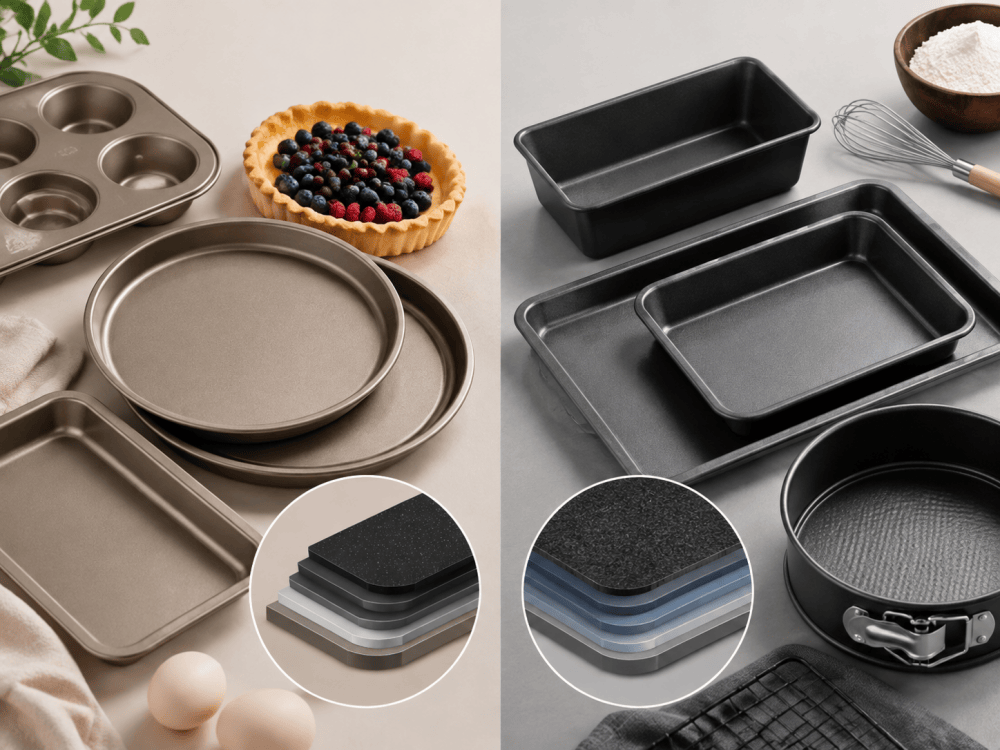
High-quality bakeware coating is generally safe when produced according to food-contact regulations and used within recommended temperature limits. Modern non-stick coatings are designed to provide safe food release and better baking performance.
What Is Bakeware Coating?
Bakeware coating is a protective surface layer applied to baking products such as cake pans, muffin trays, baking sheets, and molds.
The main purpose of a bakeware coating is to create a smoother baking surface that prevents food from sticking while improving cleaning convenience.
Why Is Bakeware Coating Used?
- Improves food release performance
- Reduces the need for excessive oil or grease
- Makes cleaning easier
- Protects the base material from corrosion
- Improves product appearance and durability
Common Types of Bakeware Coating
PTFE Bakeware Coating
PTFE (polytetrafluoroethylene) is one of the most widely used non-stick coatings in bakeware products because of its excellent release performance and durability.
Modern PTFE bakeware coating is typically manufactured without PFOA and is designed for food-contact applications when produced according to safety standards.
Ceramic Bakeware Coating
Ceramic coating is often chosen by brands that focus on natural positioning and eco-friendly product marketing.
It provides good non-stick performance and attractive appearance, although durability can vary depending on coating quality and usage conditions.
Silicone Bakeware Coating
Silicone-based coatings are commonly used in flexible bakeware products because they provide easy release properties and heat resistance.
Are Bakeware Coatings Food Safe?
Yes, high-quality bakeware coating can be food safe when it is manufactured with approved materials, tested according to food-contact regulations, and used within the recommended temperature range.
For consumers and professional buyers, coating safety depends not only on the coating material itself but also on the manufacturing process, raw material quality, and quality control standards.
Food-Grade Standards for Bakeware Coating
Reliable bakeware manufacturers usually follow international food-contact safety requirements to ensure that coated surfaces are suitable for baking applications.
- FDA food-contact compliance for the US market
- LFGB food safety testing for European markets
- Heavy metal migration testing
- Coating adhesion and durability testing
- Temperature resistance testing
A safe bakeware coating should not only provide non-stick performance but also maintain coating stability during normal baking temperatures and daily use.
Is Non-Stick Bakeware Coating Safe Without PFOA?
Many consumers are concerned about PFOA because it was historically associated with older generations of fluoropolymer coating production.
Today, many manufacturers produce PFOA-free non-stick bakeware coating systems that comply with modern safety requirements.
When selecting bakeware products, buyers should confirm:
- Whether the coating is PFOA-free
- Whether the product passes food-contact testing
- Whether the manufacturer provides compliance documents
- Whether coating performance has been verified through quality inspection
Bakeware Coating Heat Resistance Guide
Temperature resistance is one of the most important factors affecting bakeware coating safety and product lifespan.
Using coated bakeware beyond its recommended temperature range may reduce coating performance and shorten product life.
| Bakeware Coating Type | Typical Temperature Resistance | Advantages |
|---|---|---|
| PTFE Bakeware Coating | Up to approximately 260°C / 500°F | Excellent non-stick performance and durability |
| Ceramic Bakeware Coating | Around 230°C / 446°F | Natural appearance and eco-friendly positioning |
| Silicone Bakeware Coating | Around 220°C / 428°F | Flexible, easy release performance |
What Can Damage Bakeware Coating?
1. Excessive Heat Exposure
Overheating is one of the main reasons bakeware coatings lose performance. Always follow the manufacturer's recommended temperature range.
2. Scratching the Surface
Sharp metal tools can damage the coating surface and reduce non-stick performance over time.
Using silicone, nylon, or wooden baking tools can help protect coated surfaces.
3. Improper Cleaning Methods
Abrasive cleaning pads, strong chemicals, and rough handling may gradually wear down the coating layer.
4. Poor Storage Conditions
Stacking bakeware products without protection may create scratches and reduce coating durability.
How Long Does Non-Stick Bakeware Coating Last?
The lifespan of bakeware coating depends on coating quality, usage frequency, cleaning methods, and storage conditions.
High-quality coated bakeware can provide years of reliable performance when properly maintained.
Tips to Extend Bakeware Coating Lifespan
- Avoid exceeding recommended baking temperatures
- Use non-metal utensils
- Wash with soft sponges
- Avoid abrasive cleaners
- Store carefully to prevent scratches
How Buyers Evaluate Bakeware Coating Quality
For wholesalers, distributors, and private label brands, coating quality directly affects customer satisfaction and product reputation.
1. Coating Material Selection
Buyers should understand whether the product uses PTFE, ceramic, silicone, or another coating system and choose according to target market requirements.
2. Coating Thickness and Adhesion
A reliable bakeware manufacturer should control coating thickness and ensure strong adhesion between the coating layer and the metal substrate.
3. Testing and Certification Support
Professional suppliers should be able to provide:
- Food safety testing reports
- Coating performance test results
- Material information
- Production quality documentation
4. OEM Customization Capability
For brands developing private label bakeware collections, manufacturers should support:
- Custom sizes
- Different coating options
- Logo customization
- Retail packaging solutions
- Product development support
PTFE vs Ceramic Bakeware Coating Comparison
| Feature | PTFE Coating | Ceramic Coating |
|---|---|---|
| Non-stick Performance | Excellent | Good |
| Durability | High | Medium |
| Heat Resistance | High | High |
| Market Position | Professional baking products | Eco-friendly lifestyle products |
| Maintenance | Easy | Requires careful use |
How to Choose Safe Bakeware Coating?
Choosing the right bakeware coating requires considering safety, durability, baking performance, and market positioning. Whether for home users or wholesale buyers, coating quality plays an important role in product value.
1. Choose Food-Grade Coating Materials
High-quality bakeware should use food-contact safe coating materials that comply with international regulations.
For kitchenware brands and distributors, verifying coating materials and testing documents before purchasing helps reduce quality risks.
2. Consider the Intended Baking Application
Different baking products may require different coating solutions.
| Application | Recommended Coating Consideration |
|---|---|
| Cake pans | Strong non-stick performance for easy release |
| Baking trays | Durable coating with good scratch resistance |
| Muffin molds | Flexible release performance and easy cleaning |
| Commercial baking | High durability and stable coating performance |
3. Check Temperature Resistance
A suitable bakeware coating should match the expected baking temperature. Buyers should confirm the recommended operating range before selecting products.
4. Evaluate Manufacturer Quality Control
The same coating material can have very different performance depending on manufacturing technology.
Professional bakeware suppliers should control:
- Metal substrate quality
- Surface preparation before coating
- Coating adhesion strength
- Finished product inspection
- Food safety compliance testing
Bakeware Coating Maintenance Tips
Proper maintenance helps preserve non-stick performance and extend product lifespan.
- Allow bakeware to cool before cleaning
- Avoid sharp metal tools
- Use soft cleaning materials
- Avoid strong abrasive detergents
- Store products carefully to prevent surface scratches
Frequently Asked Questions About Bakeware Coating
Is bakeware coating safe for everyday baking?
Yes. Food-grade bakeware coating is generally safe for everyday baking when it meets food-contact safety standards and is used within recommended temperature limits.
What is the safest bakeware coating?
The safest bakeware coating depends on material quality, manufacturing standards, and proper usage. Food-grade PTFE, ceramic, and silicone coating systems can all be safe when properly produced.
Is PTFE bakeware coating safe?
Modern PTFE bakeware coating produced according to current safety standards is widely used in kitchenware applications. Buyers should confirm that products meet food-contact requirements and follow recommended temperature limits.
Is ceramic coating better than PTFE coating?
Ceramic coating is often preferred by consumers seeking eco-friendly positioning, while PTFE coating is known for stronger non-stick performance and durability.
How can I know if bakeware coating is food grade?
Consumers and buyers can check whether the manufacturer provides food safety certifications, compliance documents, and coating material information.
Does non-stick coating peel off?
High-quality bakeware coating should maintain good adhesion during normal use. However, overheating, scratching, and improper cleaning may accelerate coating damage.
Conclusion
So, are bakeware coatings safe?
Yes, high-quality bakeware coating can provide safe, durable, and convenient baking performance when manufactured with food-grade materials and tested according to international safety requirements.
Understanding coating types, heat resistance, certification standards, and proper maintenance helps consumers and kitchenware buyers make better decisions.
For brands and distributors, selecting a reliable bakeware manufacturer is equally important because coating quality directly affects product performance and customer satisfaction.
Looking for Food-Grade Non-Stick Bakeware Solutions?
Kitlucy provides food-grade bakeware products with OEM and private label solutions, supporting global brands, wholesalers, and distributors with reliable baking tools and customized kitchenware solutions.
Related Blogs