

Stainless Steel Bakeware: Benefits, Uses, and How to Choose the Right Products
Stainless steel bakeware is a practical option for kitchens that need durable, reusable baking and food-preparation equipment. From baking trays and sheet pans to specialty molds and preparation containers, stainless steel offers strength, corrosion resistance, and a material choice suited to many everyday kitchen tasks.
However, stainless steel is not automatically the best material for every baking application. Heat distribution, surface release, product thickness, construction, and cleaning requirements all affect performance. Silicone bakeware, for example, offers flexibility that rigid metal pans cannot provide.
This guide explains what stainless steel bakeware is, where it works best, how it compares with silicone, and what home bakers, commercial buyers, and kitchenware brands should evaluate before purchasing.
1. What Is Stainless Steel Bakeware?
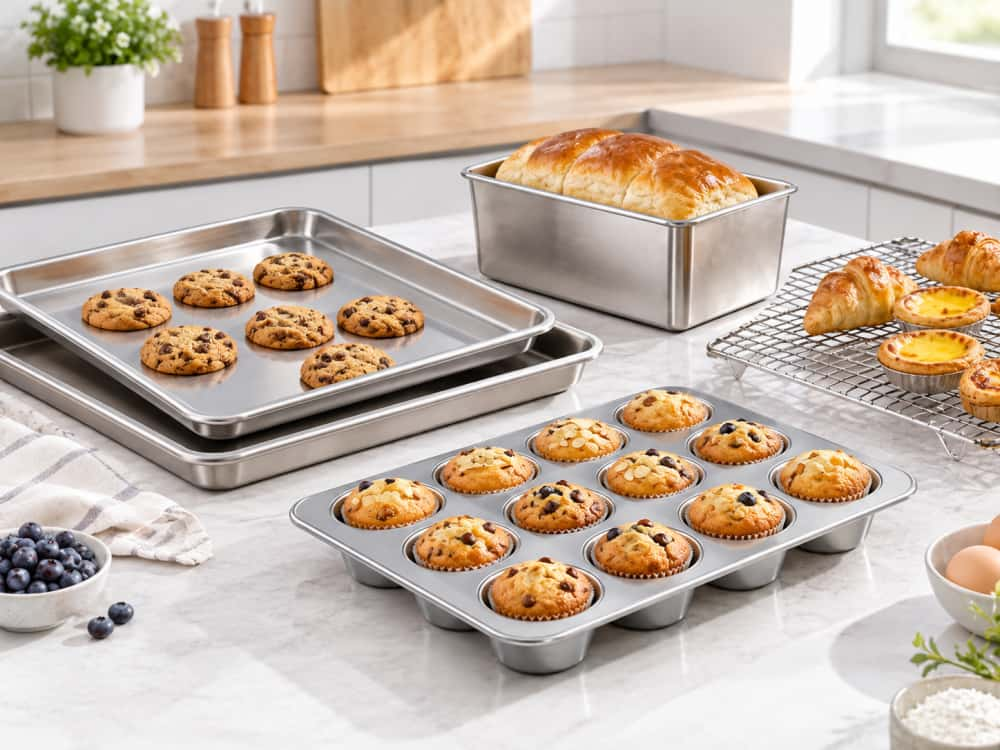
Stainless steel bakeware refers to baking and oven-use products manufactured from stainless steel. Common product types include baking trays, sheet pans, loaf pans, roasting pans, and certain specialty molds or food-preparation accessories.
Stainless steel contains iron and chromium, with other elements included depending on the grade. Chromium helps form a passive surface layer that contributes to corrosion resistance. The exact performance depends on the alloy, manufacturing quality, surface condition, and environment in which the product is used.
Common stainless steel bakeware products
- Baking trays and sheet pans: Used for cookies, pastry preparation, ingredient handling, and other oven tasks when the tray is designed for that purpose.
- Roasting pans: Used for roasting vegetables, meat, and other foods, depending on the pan's construction and oven rating.
- Loaf pans and specialty pans: Used for selected bread, cake, and baked-goods applications where the shape and heat performance are suitable.
- Food-preparation trays: Useful for organizing ingredients, staging products, and supporting preparation workflows.
Not every stainless steel container or tray is designed for oven use. Always confirm the intended application and the manufacturer's temperature and care instructions before using a product for baking.
2. Key Benefits of Stainless Steel Bakeware
Durability for repeated use
Stainless steel is valued for its mechanical strength and resistance to everyday wear. A well-made tray can withstand frequent handling and routine kitchen use. Thickness, edge reinforcement, forming quality, and the product's overall design all influence how well it resists bending or distortion.
For commercial kitchens and high-volume food preparation, durability can be an important purchasing consideration because products may be handled and cleaned repeatedly throughout the day.
Corrosion resistance
Stainless steel generally offers good corrosion resistance when the appropriate grade and care practices are used. This can be beneficial in kitchens where products regularly come into contact with water, food residues, and cleaning agents.
Stainless steel is not completely immune to staining or corrosion. Prolonged contact with salt, certain acidic or chloride-containing substances, harsh cleaners, or unsuitable storage conditions can affect the surface. Rinsing and drying products when appropriate helps maintain their condition.
A rigid, non-porous surface
Stainless steel provides a rigid surface that is generally straightforward to wash. Its non-porous structure does not absorb liquids in the same way as many porous materials. Effective hygiene still depends on removing food residues and following suitable cleaning procedures.
Reusable and versatile
Stainless steel trays can serve multiple roles in a kitchen, from preparing ingredients to baking and roasting. This versatility can simplify equipment selection for home users and professional kitchens.
For buyers evaluating long-term value, consider expected service life, ease of maintenance, replacement frequency, and the product's suitability for its intended tasks rather than focusing only on the initial purchase price.
Suitable for different product designs
Stainless steel products can be manufactured in different shapes, sizes, finishes, and thicknesses. Depending on the product and supplier, buyers may be able to select rim designs, surface finishes, dimensions, and packaging for specific retail or commercial requirements.
3. What Is Stainless Steel Bakeware Used For?
Cookies and pastry preparation
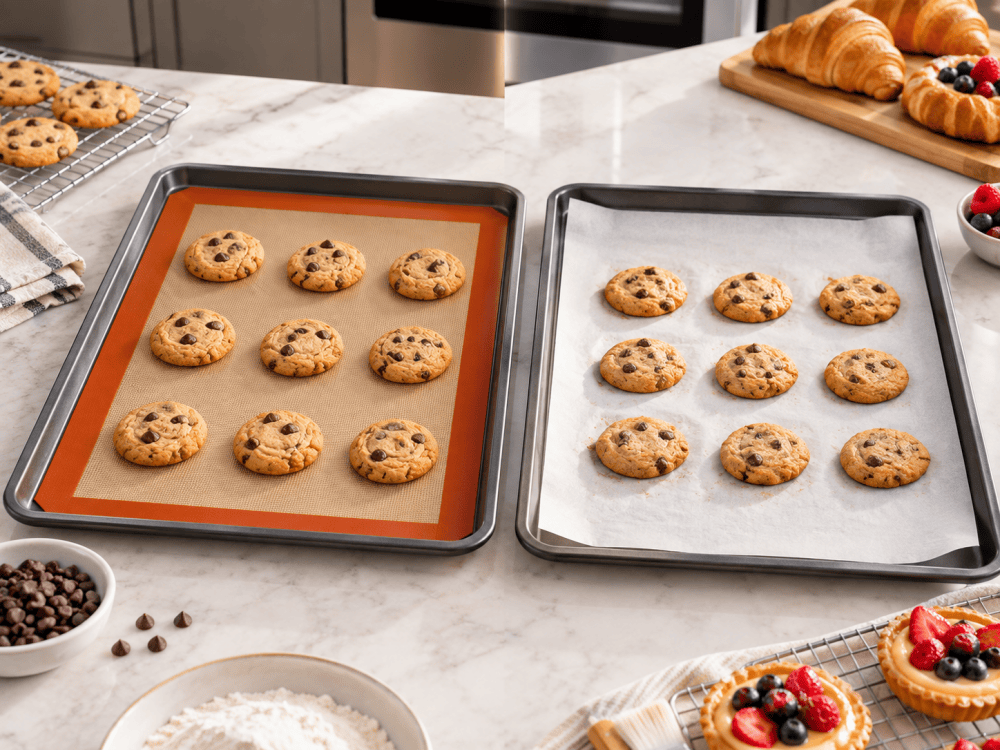
Stainless steel trays can be used for selected cookie and pastry applications. Results depend on the tray's thickness, the oven, the recipe, and the way heat moves through the pan. A thin or highly reflective tray may behave differently from a darker or thicker baking surface.
If consistent browning is a priority, test the tray with the intended recipe before large-scale production or regular use. Parchment paper or an appropriate baking liner can help reduce sticking.
Roasting meat and vegetables
Oven-suitable stainless steel pans are useful for roasting vegetables, poultry, meat, and other foods. Their rigid construction supports heavier ingredients and makes them practical for moving prepared food between workstations.
Choose a pan with suitable dimensions, side-wall height, and construction for the food being prepared. Confirm that handles, welded joints, and any additional components are rated for the intended oven conditions.
Commercial kitchens and food preparation
In restaurants, catering operations, bakeries, and other food-service settings, stainless steel trays can help organize ingredients, separate preparation stages, and support repetitive workflows.
For professional buyers, stackability, storage space, handling comfort, cleaning procedures, and compatibility with existing racks or equipment may be just as important as appearance.
Specialty baking
Stainless steel can be appropriate for some specialty baking applications, but the shape and material should match the recipe. Products that require easy release, precise heat transfer, or a particular crust may perform better with another material or a suitable non-stick finish.
4. Stainless Steel vs. Silicone Bakeware
Stainless steel and silicone serve different purposes. Stainless steel is rigid and durable, while silicone is flexible and can make it easier to release certain molded foods. The right choice depends on the recipe, shape, expected use, and cleaning requirements.
| Feature | Stainless Steel Bakeware | Silicone Bakeware |
|---|---|---|
| Structure | Rigid and supportive; suitable for trays and many pan designs. | Flexible; some molds benefit from additional support when filled. |
| Heat transfer | Metal transfers heat differently from silicone. Results depend on thickness, construction, and oven conditions. | Generally transfers heat less readily than metal, which can affect baking time and browning. |
| Food release | Food may stick without greasing, lining, or a suitable surface treatment. | Often helps release molded foods, although results depend on the recipe and mold design. |
| Shape retention | Maintains a rigid form under normal intended use. | Flexible walls may require a tray or rack for support. |
| Storage | Rigid products require dedicated storage space. | Many designs can be folded or compressed for storage, subject to the manufacturer's guidance. |
| Cleaning | Usually straightforward to wash; care depends on finish and construction. | Can be washed with suitable detergent; some products may retain grease or odors if not cleaned thoroughly. |
| Best suited to | Trays, roasting, food preparation, and applications needing a rigid surface. | Flexible molds, shaped portions, muffins, and selected molded desserts. |
Neither material is universally better. For buyers building a complete bakeware assortment, offering both rigid metal products and flexible silicone molds may address different customer needs.
5. Stainless Steel vs. Aluminum and Carbon Steel Bakeware
Stainless steel is not the only metal used in baking products. Aluminum and carbon steel are also common choices, and each material has different performance characteristics.
| Material | Typical strengths | What to consider |
|---|---|---|
| Stainless steel | Corrosion resistance, mechanical strength, and a rigid surface. | Heat transfer and food release vary by construction; uncoated surfaces may need greasing or lining. |
| Aluminum | Good thermal conductivity and relatively low weight. | Performance and corrosion resistance depend on alloy, thickness, surface treatment, and food contact. |
| Carbon steel | Can provide useful heat response and sturdy construction for baking. | Uncoated products may require seasoning or careful drying to help prevent rust; coatings have their own care requirements. |
| Silicone | Flexible shapes and convenient release for many molded products. | Rigidity, temperature limits, and baking results depend on the specific product design and material quality. |
When comparing bakeware, focus on the task rather than the material name alone. For example, a buyer prioritizing rapid heat transfer may prefer to evaluate aluminum products, while a buyer prioritizing a rigid, corrosion-resistant tray may prefer stainless steel.
6. How to Choose Quality Stainless Steel Bakeware
A useful buying decision starts with the product's intended use. A tray designed for light home baking may have different requirements from equipment used in a busy commercial kitchen.
Check the stainless steel grade
Ask the supplier to identify the grade rather than relying only on a description such as "food-grade stainless steel." Grades such as 304 and 430 have different compositions and corrosion-resistance characteristics.
Grade 304 is widely used in food-related equipment because of its corrosion resistance. Grade 430 may be appropriate for some applications, depending on the environment and product design. The most suitable choice depends on the intended use, cleaning conditions, specifications, and applicable requirements.
Evaluate thickness and rigidity
Material thickness affects weight, handling, stiffness, and resistance to distortion. A heavier product is not automatically better, so assess whether the construction is suitable for the expected load and frequency of use.
Check the tray for sharp edges, uneven rims, visible defects, and excessive flexing. For large orders, agree on measurable specifications rather than relying on a visual sample alone.
Inspect edges, corners, and construction
Rolled edges, reinforced rims, formed corners, and welded components can influence rigidity and handling. Inspect the finish for burrs, rough areas, and defects that could make the product difficult to clean or handle safely.
Understand the surface finish
A smooth finish can make routine cleaning easier, but surface appearance alone does not establish overall hygiene performance. Consider how the finish interacts with food release, cleaning methods, and the intended environment.
Confirm temperature and care requirements
Do not assume that every stainless steel bakeware product has the same oven rating or dishwasher compatibility. Handles, coatings, welded parts, and attached components can affect the product's limitations. Check the supplier's documented instructions for the complete product.
7. Cleaning and Maintaining Stainless Steel Bakeware
Proper cleaning helps maintain appearance and performance. The exact procedure depends on the surface finish, food residues, and manufacturer's care guidance.
- Remove food residues: Allow the product to cool to a safe temperature before removing stuck-on food.
- Wash with suitable detergent: Use warm water and a non-abrasive sponge or cloth for routine cleaning.
- Avoid unsuitable cleaners: Abrasive pads and aggressive chemicals may damage some finishes or affect surface appearance.
- Rinse thoroughly: Remove detergent and remaining food residues.
- Dry when appropriate: Drying can help reduce water spots and avoid prolonged exposure to moisture.
- Inspect regularly: Check edges, joints, coatings, and other components for damage that may affect safe use.
For baked-on grease, use a cleaning method recommended for the product rather than assuming that every stain or residue can be removed with the same treatment. Confirm dishwasher suitability with the manufacturer, especially for products with coatings or attached components.
8. Common Limitations of Stainless Steel Bakeware
Stainless steel has important advantages, but it also has limitations that buyers should understand before selecting products.
- Food can stick: Uncoated surfaces may require greasing, parchment paper, or another suitable liner.
- Browning may differ: Results depend on the material, pan thickness, surface finish, recipe, and oven conditions.
- Rigid storage requirements: Metal trays cannot be compressed like many flexible silicone molds.
- Weight and handling: Heavier constructions may be less convenient for some users or workflows.
- Quality varies: Stainless steel grade, thickness, construction, and finishing quality all affect the finished product.
Understanding these trade-offs helps buyers choose products based on actual use rather than assuming that one material will perform best in every situation.
9. Stainless Steel Bakeware for Wholesale and Private Label
For importers, retailers, distributors, and kitchenware brands, selecting a bakeware supplier involves more than comparing unit prices. Product specifications, consistent manufacturing, packaging, and quality-control procedures all affect the final offer.
Define your target customer and application
Decide whether the product is intended for everyday home baking, premium kitchenware retail, commercial food preparation, or a coordinated bakeware collection. This decision helps determine the appropriate dimensions, thickness, finish, packaging, and price positioning.
Confirm the product specification
Before requesting quotations, prepare a specification that includes:
- Product type, dimensions, and intended application.
- Required stainless steel grade and material thickness.
- Surface finish, edge design, and construction requirements.
- Quantity, packaging format, and any private-label requirements.
- Applicable product testing, documentation, and destination-market requirements.
- Expected delivery schedule and inspection criteria.
Evaluate samples and production consistency
Inspect samples for dimensions, finish, rigidity, edge quality, and compatibility with the intended application. For larger orders, agree on an approved sample and written specifications that can be used during production inspection.
Compare total purchasing cost
A quotation should be evaluated against the complete specification. Material grade, thickness, design complexity, packaging, order quantity, tooling if required, testing, and shipping can all influence the total cost.
Ask suppliers to identify what is included in the quotation and whether any testing, packaging, or customization costs are charged separately.
10. Frequently Asked Questions
Is stainless steel bakeware safe for baking?
Stainless steel bakeware designed for food contact and intended oven use can be suitable for baking. Check the material specification, product construction, and manufacturer's instructions. Do not assume that every stainless steel tray or container is designed for high-temperature oven use.
Is 304 stainless steel better than 430 stainless steel?
Grade 304 generally offers stronger corrosion resistance in many environments, while grade 430 can be suitable for certain applications. The better option depends on the food-contact requirements, cleaning conditions, intended environment, and product specification.
Does stainless steel bakeware need to be greased?
Uncoated stainless steel bakeware may need greasing or parchment paper to reduce sticking. The amount required depends on the recipe, surface finish, and food being prepared.
Can stainless steel bakeware go in the dishwasher?
Some stainless steel bakeware is dishwasher-safe, but this should be confirmed for the specific product. Coatings, attached components, and the manufacturer's care instructions may affect suitability.
Is stainless steel better than silicone bakeware?
Neither is best for every application. Stainless steel offers a rigid structure for trays and selected pans, while silicone is flexible and useful for many molded shapes. Choose according to the recipe, desired release, structure, and care requirements.
What should wholesale buyers check before ordering stainless steel bakeware?
Buyers should confirm the steel grade, thickness, dimensions, construction, finish, intended use, packaging, quality-control process, order quantity, and applicable compliance documentation. Reviewing a sample against a written specification is an important step before mass production.
Conclusion
Stainless steel bakeware is a versatile option for baking, roasting, and food preparation where durability, a rigid structure, and corrosion resistance are important. Its actual performance depends on material grade, thickness, product design, and the intended application.
When comparing stainless steel with silicone, aluminum, or carbon steel, consider the baking task first. For wholesale and private-label projects, clear specifications, sample evaluation, and consistent quality-control requirements help buyers make more informed purchasing decisions.
Explore Bakeware Solutions for Your Product Range
Developing a kitchenware collection for retail, distribution, or private label? Start by defining the product types, materials, dimensions, packaging, and quality requirements that fit your target market.
Kitlucy offers a range of kitchenware products. Contact the team to discuss your product requirements, customization possibilities, and sourcing needs.
Explore Kitlucy kitchenware and learn more about products for your next collection.
Related Blogs