Stainless Steel Kitchen Utensils Guide 2026: Benefits, Steel Grades, Utensil Sets & Buying Tips
Stainless Steel Kitchen Utensils Guide 2026: Benefits, Steel Grades, Utensil Sets & Buying Tips
Stainless steel kitchen utensils have become the preferred choice for professional chefs, commercial kitchens, restaurants, and home cooks worldwide. Known for their durability, food safety, corrosion resistance, and long lifespan, stainless steel cooking tools consistently outperform many plastic, nylon, and wooden alternatives.
Whether you are looking for a complete stainless steel kitchen utensil set, replacing worn cooking tools, or sourcing products for a private-label kitchenware brand, understanding stainless steel materials and performance characteristics is essential.
This complete guide explains everything you need to know about stainless steel kitchen utensils, including steel grades, advantages and disadvantages, cleaning methods, utensil holders, buying considerations, and OEM manufacturing opportunities.
High-quality stainless steel kitchen utensils can last 10–20 years or longer, resist rust, withstand high cooking temperatures, and provide excellent food safety when manufactured from food-grade stainless steel such as 18/8, 18/10, or 304 stainless steel.
Why Stainless Steel Kitchen Utensils Are So Popular
The popularity of stainless steel kitchen utensils continues to grow because they offer an ideal balance of durability, hygiene, appearance, and performance.
- Excellent corrosion resistance
- Highly durable construction
- Food-safe material
- Dishwasher-safe cleaning
- Professional appearance
- High heat resistance
- Suitable for commercial kitchens
- Long-term value
Unlike many plastic utensils that can warp under heat or wooden utensils that require regular maintenance, stainless steel cooking tools maintain their shape and functionality for years.

What Is Food-Grade Stainless Steel?
Food-grade stainless steel refers to stainless steel alloys specifically designed for direct food contact applications. These materials contain chromium, which creates a protective oxide layer that helps prevent corrosion and rust formation.
The most common food-grade stainless steels used in kitchen utensils include:
- 430 Stainless Steel
- 18/8 Stainless Steel
- 18/10 Stainless Steel
- 304 Stainless Steel
Understanding Stainless Steel Grades for Kitchen Utensils
| Steel Grade | Chromium | Nickel | Corrosion Resistance | Typical Applications |
|---|---|---|---|---|
| 430 | 16-18% | 0% | Moderate | Budget kitchen utensils |
| 18/8 | 18% | 8% | High | Home kitchen utensils |
| 18/10 | 18% | 10% | Very High | Premium kitchen utensil sets |
| 304 | 18-20% | 8-10.5% | Excellent | Commercial kitchen tools |
18/8 Stainless Steel
18/8 stainless steel contains approximately 18% chromium and 8% nickel. It offers an excellent balance between corrosion resistance, durability, and affordability, making it one of the most popular choices for stainless steel kitchen utensil sets.
18/10 Stainless Steel
18/10 stainless steel contains slightly more nickel, providing enhanced corrosion resistance and a brighter polished appearance. Premium utensil brands often prefer this grade.
304 Stainless Steel
304 stainless steel is widely considered the gold standard for food-contact kitchen products. Many professional-grade cooking utensils, food processing equipment, and commercial kitchen tools utilize 304 stainless steel.
Advantages of Stainless Steel Kitchen Utensils
1. Exceptional Durability
One of the biggest advantages of stainless steel kitchen utensils is their exceptional lifespan. Unlike plastic utensils that may crack or wooden utensils that can split over time, stainless steel remains structurally stable even after years of daily use.
2. Superior Food Safety
Food-grade stainless steel is non-porous and resistant to bacterial absorption. This makes it one of the safest materials for direct food contact.
3. Excellent Heat Resistance
Stainless steel utensils can tolerate extremely high cooking temperatures without melting, deforming, or releasing harmful substances.
4. Rust Resistance
High-quality stainless steel naturally resists rust through its chromium oxide protective layer.
5. Professional Appearance
The polished metallic finish creates a clean, modern appearance that complements virtually every kitchen design.
Disadvantages of Stainless Steel Kitchen Utensils
Although stainless steel utensils offer many advantages, buyers should also understand potential drawbacks.
| Advantage | Potential Limitation |
|---|---|
| Very durable | Heavier than silicone utensils |
| Heat resistant | Can become hot during extended cooking |
| Long lifespan | Higher upfront cost |
| Rigid construction | May scratch non-stick cookware |
Best Stainless Steel Kitchen Utensils Every Kitchen Should Have
Stainless Steel Cooking Spoon
Ideal for stirring soups, sauces, stews, and large cooking pots.
Stainless Steel Slotted Turner
Perfect for flipping burgers, fish, pancakes, and grilled foods.
Stainless Steel Ladle
Designed for serving soups, sauces, and gravies.
Stainless Steel Whisk
Useful for mixing eggs, sauces, cream, and baking ingredients.
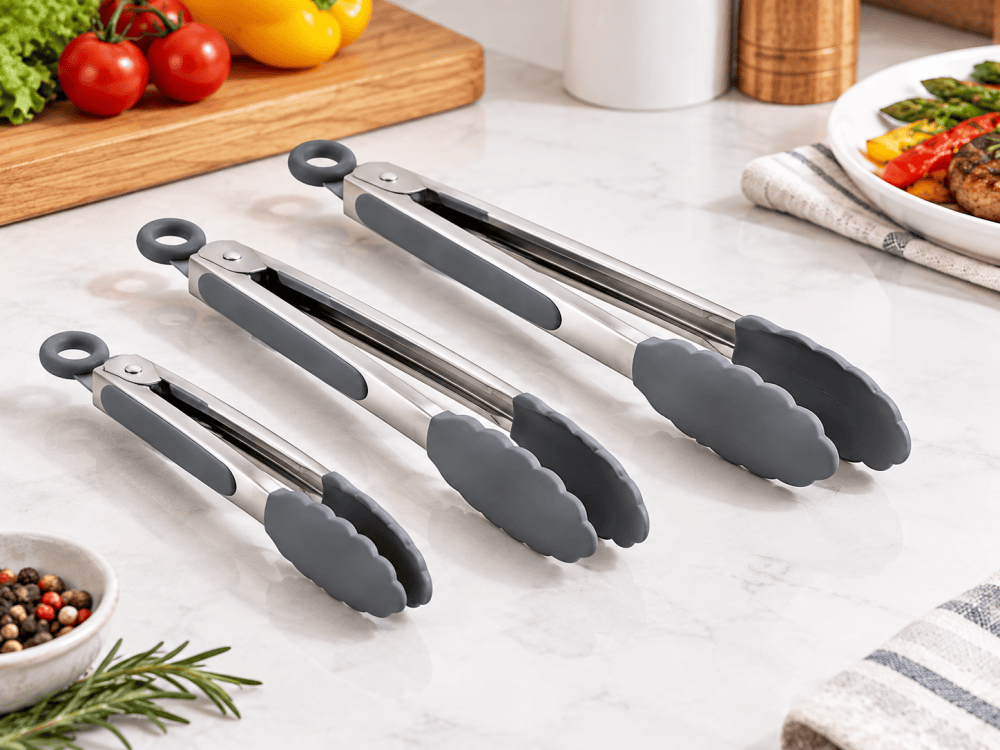
Stainless Steel Kitchen Tongs
Among the most versatile kitchen tools, tongs are ideal for grilling, serving, frying, and food preparation.
Stainless Steel Skimmer
Perfect for deep frying and removing foods from hot liquids.
How Long Do Stainless Steel Kitchen Utensils Last?
One of the biggest reasons consumers choose stainless steel kitchen utensils is their exceptional lifespan. While plastic utensils may crack after a few years and wooden utensils can warp or split if not maintained properly, high-quality stainless steel utensils can remain functional for decades.
Under normal household use, a premium stainless steel kitchen utensil set typically lasts between 10 and 20 years. Commercial-grade utensils used in restaurants often remain in service even longer because stainless steel resists corrosion, staining, moisture damage, and thermal deformation.
| Material | Average Lifespan | Maintenance Required |
|---|---|---|
| Stainless Steel | 10-20+ Years | Low |
| Silicone | 5-10 Years | Low |
| Wood | 3-10 Years | High |
| Nylon | 2-5 Years | Low |
Investing in a high-quality stainless steel kitchen utensil set may cost more initially, but the long service life often results in a lower cost per year compared with replacing plastic utensils repeatedly.
Stainless Steel vs Silicone vs Wood vs Nylon Utensils
Consumers often ask which material is best for kitchen utensils. The answer depends on cookware type, cooking style, and maintenance preferences.
| Feature | Stainless Steel | Silicone | Wood | Nylon |
|---|---|---|---|---|
| Heat Resistance | Excellent | Excellent | Good | Moderate |
| Durability | Excellent | Good | Good | Moderate |
| Dishwasher Safe | Yes | Yes | No | Yes |
| Non-Stick Safe | No | Yes | Yes | Yes |
| Professional Kitchens | Excellent | Good | Moderate | Rare |
| Lifespan | Excellent | Good | Moderate | Short |
When Stainless Steel Is the Best Choice
- High-temperature cooking
- Commercial kitchens
- Outdoor BBQ and grilling
- Heavy-duty food preparation
- Long-term use
When Silicone Is Better
- Non-stick cookware
- Baking applications
- Flexible scraping tasks
- Delicate cookware surfaces
How to Clean Stainless Steel Kitchen Utensils Properly
Proper cleaning helps maintain the appearance and performance of stainless steel utensils for many years.
Daily Cleaning
- Wash with warm water and mild dish soap.
- Remove food residue using a soft sponge.
- Rinse thoroughly.
- Dry immediately using a clean towel.
Removing Water Spots
Mineral deposits can sometimes leave water spots on polished stainless steel surfaces. A mixture of vinegar and water can help restore shine.
Removing Burn Marks
For stubborn discoloration, create a paste using baking soda and water. Apply gently and rinse thoroughly afterward.
What to Avoid
- Steel wool on polished surfaces
- Harsh chlorine bleach
- Long-term soaking in salty water
- Abrasive cleaning powders
Do Stainless Steel Kitchen Utensils Rust?
A common question among buyers is whether stainless steel utensils rust. The short answer is that quality food-grade stainless steel is highly rust resistant but not completely rust-proof.
Rust can occur if:
- The steel quality is poor.
- The chromium layer becomes damaged.
- The utensil remains exposed to moisture for extended periods.
- Harsh chemicals are used repeatedly.
Premium 18/8, 18/10, and 304 stainless steel utensils rarely develop rust under normal kitchen conditions.
What Is Included in a Stainless Steel Kitchen Utensil Set?
Modern stainless steel kitchen utensil sets vary in size and configuration. Most complete sets include the essential cooking tools needed for everyday meal preparation.
| Utensil | Purpose |
|---|---|
| Solid Spoon | Mixing and stirring |
| Slotted Spoon | Draining liquids |
| Ladle | Serving soups |
| Turner | Flipping foods |
| Tongs | Grilling and serving |
| Whisk | Mixing ingredients |
| Skimmer | Deep frying |
| Pasta Server | Serving pasta |
Many premium kitchen utensils set stainless steel collections also include measuring spoons, kitchen shears, and storage solutions.
Do You Need a Stainless Steel Kitchen Utensil Holder?
A stainless steel kitchen utensil holder is often overlooked, but it plays an important role in kitchen organization and efficiency.
Benefits include:
- Easy access to frequently used utensils
- Cleaner countertops
- Improved kitchen organization
- Professional kitchen appearance
- Better utensil drying and airflow
| Holder Type | Advantages |
|---|---|
| Stainless Steel Holder | Durable, hygienic, modern appearance |
| Plastic Holder | Lightweight and inexpensive |
| Wooden Holder | Natural aesthetic |
| Ceramic Holder | Decorative appearance |
How to Choose the Best Stainless Steel Kitchen Utensil Set
1. Verify Steel Grade
Look for 18/8, 18/10, or 304 stainless steel whenever possible. These materials offer superior corrosion resistance and long-term durability.
2. Examine Construction Quality
One-piece stainless steel construction generally provides better durability than multi-piece welded designs.
3. Evaluate Handle Comfort
Ergonomic handles improve comfort during prolonged cooking sessions.
4. Check Dishwasher Compatibility
Most premium stainless steel utensils are fully dishwasher safe, making cleanup quick and convenient.
5. Consider Storage Options
Many consumers prefer utensil sets that include a matching stainless steel kitchen utensil holder.
Why Professional Chefs Prefer Stainless Steel Kitchen Utensils
Walk into almost any professional restaurant kitchen and you will notice one thing immediately: stainless steel utensils dominate the workspace. From Michelin-starred restaurants to hotel kitchens and catering operations, chefs rely on stainless steel because it delivers consistent performance under demanding conditions.
Unlike many household kitchen tools, professional cooking environments require utensils that can withstand continuous use, high temperatures, aggressive cleaning procedures, and strict food safety standards.
- Excellent durability during intensive daily use
- Safe for high-temperature cooking
- Resistant to staining and corrosion
- Easy to sanitize and maintain
- Suitable for commercial dishwashers
- Long service life with minimal maintenance
Professional kitchens prioritize reliability over trends. Stainless steel cooking utensils remain the industry standard because they consistently perform in demanding food preparation environments.
How Stainless Steel Kitchen Utensils Are Manufactured
Understanding the manufacturing process helps buyers identify high-quality products and reliable suppliers.
Step 1: Raw Material Selection
Production begins with food-grade stainless steel sheets, rods, or tubing. Most premium manufacturers use 304, 18/8, or 18/10 stainless steel to ensure durability and food safety.
Step 2: Cutting and Forming
Advanced machinery cuts and shapes the stainless steel into spoons, ladles, turners, tongs, whisks, and other utensil components.
Step 3: Welding and Assembly
Depending on the design, components may be welded, riveted, or formed as a single-piece construction.
Step 4: Surface Finishing
The utensils are polished, brushed, or mirror-finished to improve appearance and corrosion resistance.
Step 5: Quality Inspection
Each product undergoes inspection for dimensions, weld quality, surface defects, and food-contact compliance.
Step 6: Packaging and Shipment
Products are packaged according to customer requirements, including retail packaging, gift boxes, private-label branding, or bulk wholesale cartons.
Quality Standards for Stainless Steel Kitchen Utensils
Global buyers increasingly require kitchenware products to comply with international food-contact regulations.
| Standard | Region | Purpose |
|---|---|---|
| FDA | United States | Food-contact safety compliance |
| LFGB | Germany / EU | Food safety testing |
| REACH | European Union | Chemical safety regulation |
| BSCI | Global | Social compliance audits |
| ISO 9001 | Global | Quality management systems |
For importers and distributors, selecting suppliers that meet these standards helps reduce compliance risks and improve consumer trust.
Stainless Steel Kitchen Utensils Market Trends in 2026
The global kitchenware industry continues to experience strong demand for stainless steel cooking tools due to increasing consumer awareness of food safety, durability, and sustainability.
Several trends are driving market growth:
- Growing preference for plastic-free kitchens
- Demand for premium kitchen utensil sets
- Expansion of home cooking and meal preparation
- Increased interest in sustainable kitchen products
- Growth of e-commerce kitchenware brands
- Rising demand for OEM private-label products
Consumers increasingly prefer buying fewer, higher-quality kitchen tools that offer long-term value rather than frequently replacing low-cost alternatives.
OEM & Private Label Stainless Steel Kitchen Utensils
For distributors, retailers, Amazon sellers, supermarket chains, and kitchenware brands, stainless steel kitchen utensils represent one of the most stable and scalable product categories.
Modern OEM manufacturers provide extensive customization options that allow brands to develop unique product collections without investing in their own factories.
Available Customization Options
- Custom logo engraving
- Laser marking
- Custom packaging
- Gift box solutions
- Color coating options
- Customized utensil holder designs
- Product bundle development
- Private-label branding
Learn more about Kitlucy's OEM services here: Customized Kitchenware Manufacturing Solutions
Why Global Buyers Choose Stainless Steel Kitchen Utensil Sets
Compared with single-item purchases, complete utensil sets provide better value and a more consistent cooking experience.
- Unified appearance
- Cost savings
- Improved retail presentation
- Higher perceived value
- Convenient kitchen organization
- Strong gifting potential
This is why stainless steel kitchen utensil sets remain one of the most successful kitchenware categories across Amazon, Walmart, supermarket chains, and specialty kitchen stores.
Frequently Asked Questions
Are stainless steel kitchen utensils safe?
Yes. Food-grade stainless steel is one of the safest materials available for direct food contact and is widely used throughout the food service industry.
What is the best stainless steel for kitchen utensils?
18/8, 18/10, and 304 stainless steel are generally considered the best choices due to their corrosion resistance and durability.
Can stainless steel utensils go in the dishwasher?
Most high-quality stainless steel utensils are dishwasher safe. Always follow the manufacturer's care instructions.
Do stainless steel utensils rust?
Premium stainless steel is highly rust resistant but should still be cleaned and dried properly to maximize lifespan.
Can stainless steel utensils scratch cookware?
Yes. Stainless steel utensils may scratch non-stick coatings. Silicone utensils are often recommended for non-stick cookware.
How long do stainless steel kitchen utensils last?
With proper care, high-quality stainless steel kitchen utensils can easily last 10–20 years or longer.
Are stainless steel utensils environmentally friendly?
Yes. Stainless steel is highly recyclable and significantly reduces replacement frequency compared with disposable or short-lifespan alternatives.
Related Kitchenware Categories
Final Thoughts
Stainless steel kitchen utensils continue to be the benchmark for durability, food safety, and professional cooking performance. Whether you are building a home kitchen, equipping a commercial restaurant, or sourcing products for a retail brand, investing in high-quality stainless steel utensils offers long-term value and dependable results.
From stainless steel kitchen utensil sets and utensil holders to premium 304 stainless steel cooking tools, today's market offers solutions for every kitchen style and cooking need.
Looking for Premium Stainless Steel Kitchen Utensils?
Kitlucy specializes in manufacturing high-quality stainless steel kitchen utensils, kitchen utensil sets, cooking tools, food tongs, and customized OEM kitchenware solutions for global distributors, retailers, wholesalers, and e-commerce brands.
Explore our product collection: Kitchen Utensil Sets
Need a private-label solution? OEM & Custom Manufacturing
Questions about your project? Contact Our Team
Related Blogs