

Is Silicone Bakeware Safe? What You Need to Know Before Baking
Silicone bakeware is popular for its flexibility, nonstick performance, and easy storage. But is silicone bakeware safe for everyday cooking? The answer depends on the quality of the material, its intended use, its temperature rating, and how it is handled.
Quick answer: Silicone bakeware made from suitable food-contact materials and used according to the manufacturer's instructions can be a practical option for baking. However, not every silicone product has the same composition, quality, or heat resistance. Check the product's intended use, temperature limits, and relevant food-contact compliance documentation before using it.
This guide explains how to assess food-grade silicone bakeware, understand oven temperature limits, recognize potential warning signs, and choose baking molds that suit your kitchen or product requirements.
1. Is Silicone Bakeware Safe for Everyday Use?
Silicone bakeware is generally considered suitable for baking when it is manufactured for food contact, designed for the intended heating conditions, and used as directed. The word "silicone" alone, however, does not guarantee the safety or performance of a finished product.
Food-contact safety depends on more than the name of a material. Relevant factors include the formulation, manufacturing process, finished-product quality, possible transfer of substances into food, and the conditions under which the product is used.
For consumers, the most useful approach is to assess the finished product rather than rely on a broad claim that silicone is always safe.
What makes silicone bakeware suitable for baking?
- Appropriate material: The silicone formulation is intended for food contact and the product's specified application.
- Suitable heat resistance: The product is designed for the oven temperatures and baking durations stated by its manufacturer.
- Reliable manufacturing: Material selection, curing, production controls, and quality checks are appropriate for the intended use.
- Supporting documentation: Relevant food-contact compliance or test documents are available for the product and target market.
- Correct use: The bakeware is not exposed to temperatures, appliances, or conditions outside its intended application.
In the United States, the FDA regulates food-contact substances according to their specific uses and applicable regulatory pathways. In the European Union, food-contact materials must meet the applicable general safety requirements, with additional rules depending on the material and product category.
For background, see the FDA's guide to food-contact substance regulation and the European Commission's overview of food-contact materials.
2. What Is Food-Grade Silicone Bakeware?
Food-grade silicone is silicone formulated and manufactured for an intended food-contact application. It is not simply a visual description or a guarantee that every product made from silicone is suitable for baking.
Two silicone products can look almost identical while differing in formulation, manufacturing quality, intended use, and supporting test evidence. This is why buyers should evaluate the finished bakeware and its documentation instead of relying on appearance alone.
How can you identify quality food-grade silicone?
- Check the intended use. Confirm that the product is specifically designed for baking or the relevant food-contact application, not merely for crafts or general household use.
- Review the temperature rating. Look for a clearly stated operating range and instructions for oven use.
- Ask about compliance. Request relevant declarations, test reports, or other supporting documents for the destination market and intended application.
- Inspect the finished product. Look for inconsistent surfaces, damaged areas, poor finishing, or other visible manufacturing defects.
- Consider traceability. For wholesale orders, confirm the supplier, product specifications, batch identification where applicable, and quality-control process.
Important: "Food-grade," "BPA-free," and "FDA compliant" are not interchangeable claims. BPA-free alone does not establish overall food-contact safety. Likewise, a supplier's general statement about FDA compliance is not a substitute for verifying the applicable requirements and evidence for the specific product.
Does 100% silicone automatically mean a product is safe?
Not by itself. A "100% silicone" claim may describe the material composition, but it does not independently demonstrate that the finished article meets every relevant food-contact requirement or is suitable for every oven temperature.
For a more reliable assessment, combine material information with intended-use specifications, manufacturing controls, and appropriate compliance evidence.
3. What Is the Temperature Limit for Silicone Bakeware?
There is no single maximum oven temperature that applies to every silicone baking mold, mat, or pan. The permitted temperature depends on the specific product's formulation, construction, design, and manufacturer's validated instructions.
Some products are marketed for use at temperatures around 220–230°C (428–446°F), while others may have different limits. These figures are examples, not universal safety thresholds. Always follow the rating for the exact product you own or intend to purchase.
| What to check | Why it matters | Recommended action |
|---|---|---|
| Maximum oven temperature | Heat tolerance varies by product. | Follow the stated maximum; do not assume all silicone bakeware has the same rating. |
| Baking duration | Heat exposure involves both temperature and time. | Use the product within its intended operating conditions. |
| Oven type | Different appliances can expose products to different heating conditions. | Confirm compatibility with conventional, convection, or other ovens as applicable. |
| Direct heat exposure | Grill elements, open flames, and direct heat may exceed the intended conditions. | Do not use silicone bakeware on a stovetop, over a flame, or under a broiler unless the manufacturer explicitly permits that use. |
| Product condition | Damage can affect usability and performance. | Stop using products that show significant deterioration or other warning signs. |
Can silicone bakeware go directly into a hot oven?
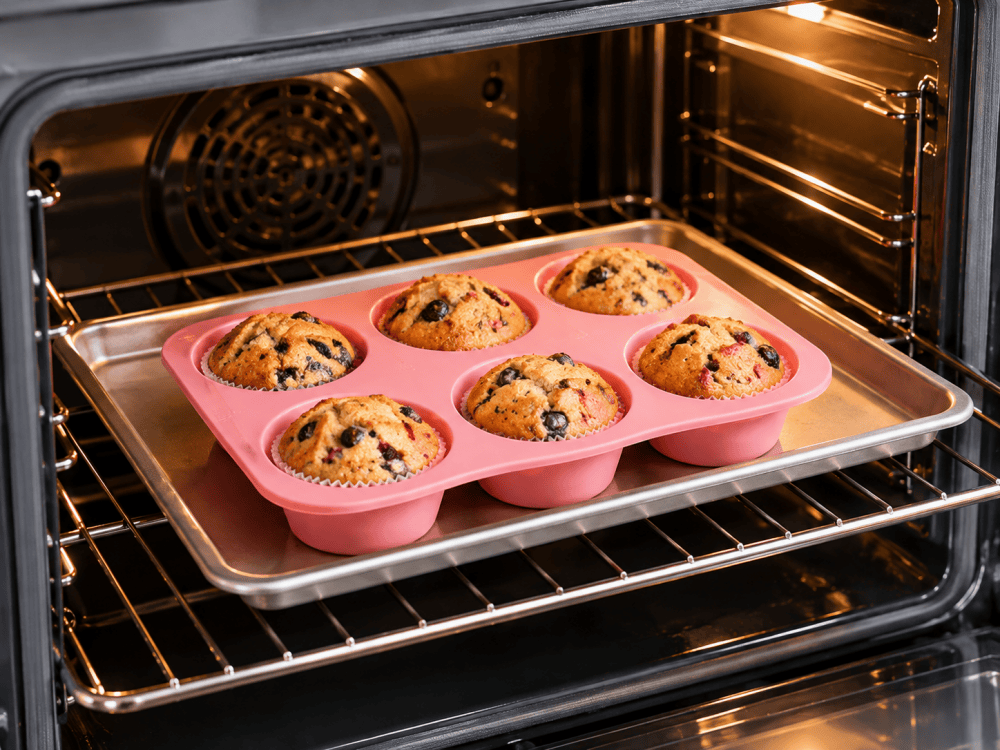
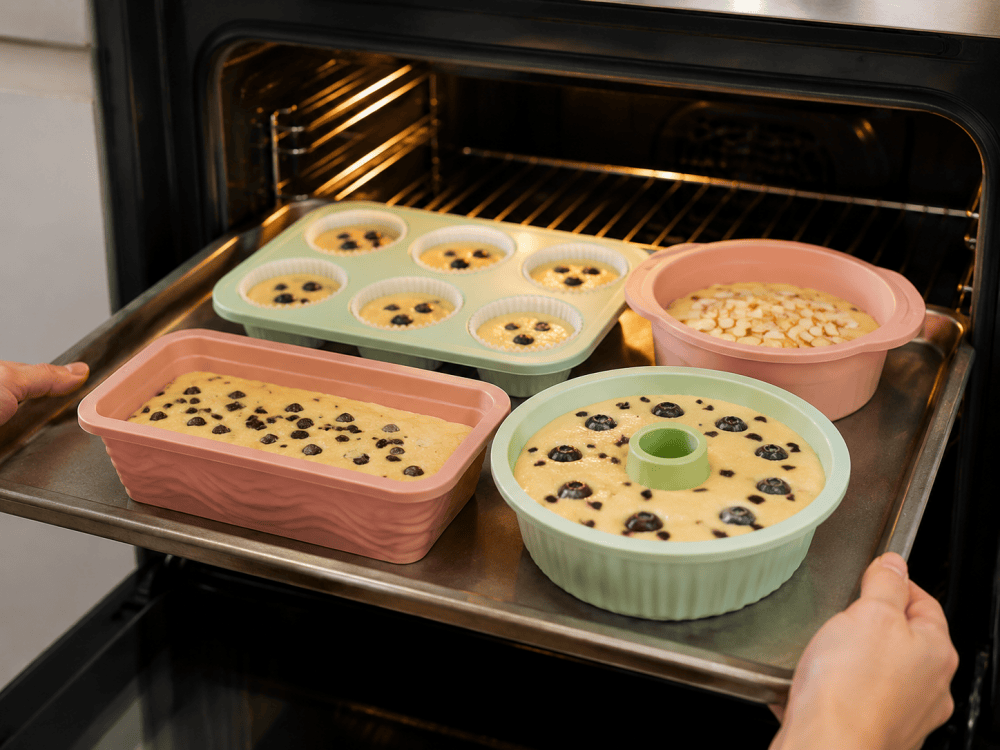
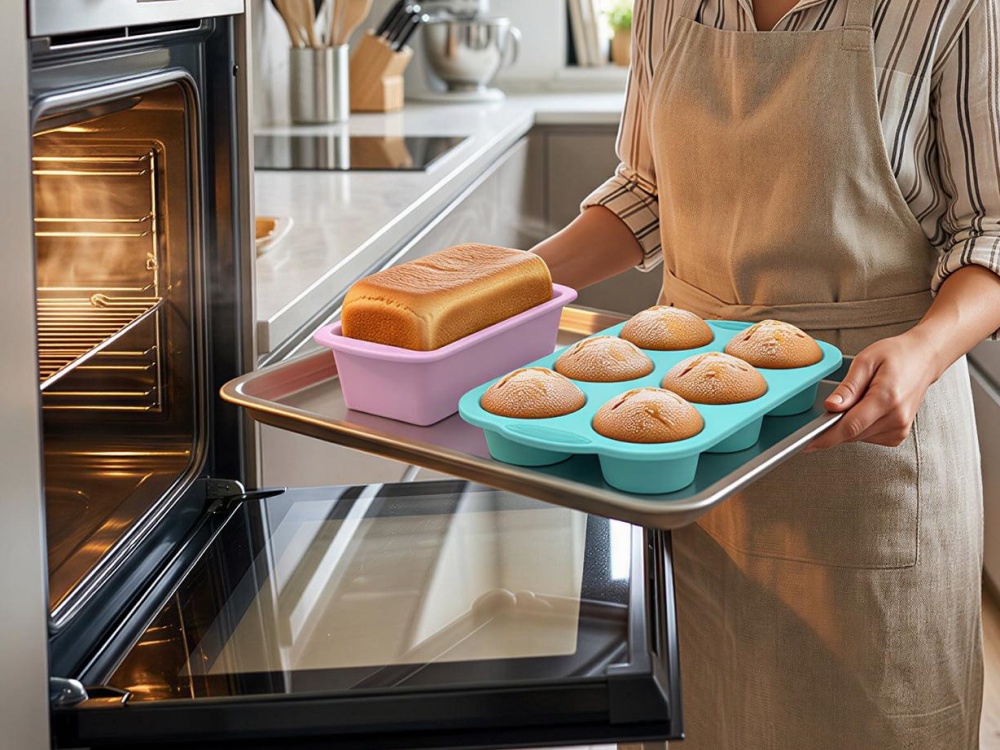
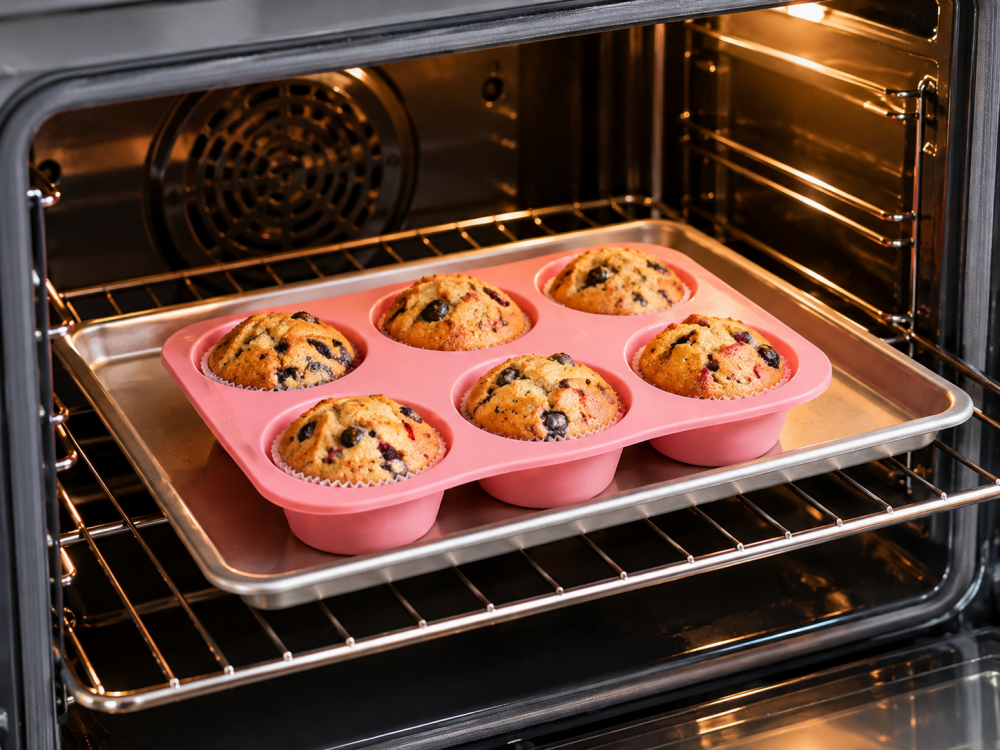
It can be placed in a preheated oven when the product instructions allow it and the oven temperature remains within the specified range. For flexible molds containing batter, place the mold on a rigid baking tray before filling or transferring it to the oven. This helps prevent spills and makes handling easier.
Can silicone bakeware go in the microwave?
Only use a product in a microwave if its manufacturer identifies it as microwave-safe. Oven-safe and microwave-safe are different use claims; one should not automatically be inferred from the other.
Can silicone bakeware go in an air fryer?
Some silicone molds may be compatible with an air fryer, but compatibility depends on the product's temperature rating, size, airflow requirements, and the appliance manufacturer's instructions. Do not allow the mold to touch a heating element or obstruct required airflow.
4. Does Silicone Bakeware Release Chemicals or Toxic Fumes?
Silicone bakeware safety should be assessed in terms of the particular material and its intended conditions of use. It is not accurate to conclude that all silicone bakeware releases harmful chemicals during normal baking, nor is it appropriate to guarantee that every silicone product is free from migration or unwanted emissions under every condition.
Food-contact assessments consider whether substances can transfer from a material into food under foreseeable conditions of use. Temperature, contact time, food type, and product composition can all be relevant to the assessment.
The European Commission's Joint Research Centre has published technical guidance on testing kitchenware, including silicone and rubber articles. Its approach highlights the importance of selecting test conditions that reflect foreseeable use. Read the publication on testing conditions for kitchenware in contact with food.
What if a new silicone mold has an odor?
A noticeable smell is not, by itself, a reliable chemical safety test. Odor alone cannot establish whether a product is safe or unsafe, and a product that has little or no smell is not automatically compliant.
If a new mold has a strong, persistent, or unusual odor:
- Check the manufacturer's cleaning and first-use instructions.
- Wash it as directed before use.
- Do not use it if the odor persists, becomes stronger when heated, or is accompanied by visible deterioration.
- Contact the manufacturer or seller for product-specific guidance.
Do not try to eliminate an unexplained persistent odor by repeatedly heating the product at high temperatures. Replace or return the item if its condition or suitability remains uncertain.
5. What Are the Advantages and Limitations of Silicone Bakeware?
Silicone bakeware offers several practical benefits, but it does not outperform metal bakeware in every situation. Choosing the right material depends on the recipe, desired result, and handling requirements.
| Feature | Potential advantage | Limitation to consider |
|---|---|---|
| Flexibility | Helps release many cakes, muffins, and shaped desserts. | Flexible molds can be difficult to carry when filled unless supported by a tray. |
| Nonstick performance | Can reduce sticking and simplify food release. | Results vary by recipe and mold design; some recipes still benefit from greasing. |
| Storage | Many silicone molds are lightweight and easy to store. | Flexible products may need support to retain their shape during filling and transport. |
| Cleaning | Many products are easy to wash and have no rigid seams. | Greasy residue can remain on the surface if cleaning is insufficient. |
| Heat performance | Suitable products can be used for a range of baking applications. | Temperature ratings vary; silicone does not suit every high-heat application. |
| Browning and crispness | Works well for many cakes, muffins, and soft baked goods. | Metal bakeware may be preferable when stronger browning or a crisp crust is the priority. |
Silicone bakeware vs. metal bakeware
Silicone and metal serve different baking needs. Silicone is valued for flexibility and easy release, while metal pans often provide more rigid support and efficient heat transfer for browning.
For muffins, shaped desserts, and many cakes, silicone molds can be convenient. For cookies, pastries, bread, or recipes that rely on a crisp exterior, metal bakeware may provide more predictable results. The best choice depends on the recipe rather than a universal ranking of materials.
6. How to Use Silicone Bakeware Safely
Even a suitable product needs to be used correctly. These practical steps help reduce handling problems, avoid misuse, and maintain the bakeware in good condition.
Before the first use
- Read the product instructions and confirm its intended food-contact use.
- Check the stated temperature range and appliance compatibility.
- Wash the bakeware according to the manufacturer's directions.
- Inspect it for tears, damaged surfaces, or manufacturing defects.
- Place flexible molds on a rigid tray if they will contain liquid batter.
During baking
- Keep the oven within the specified temperature range.
- Avoid direct contact with heating elements, open flames, or broiler heat unless explicitly permitted.
- Use a baking tray to support flexible molds when needed.
- Use oven mitts when handling hot bakeware.
- Follow the manufacturer's guidance on greasing, filling, and food release.
After baking
- Allow the mold to cool sufficiently before removing baked goods or washing it.
- Clean away grease and food residue using a suitable detergent.
- Avoid sharp tools and aggressive cleaning methods that could damage the surface.
- Dry and store the product according to its care instructions.
- Inspect it periodically for deterioration or damage.
7. How to Clean and Maintain Silicone Bakeware
Grease can accumulate on silicone surfaces after repeated baking, especially when recipes contain butter or oil. Regular cleaning helps maintain the product and reduces the chance of residue affecting later baking.
How to remove greasy residue
- Allow the bakeware to cool completely or until safe to handle.
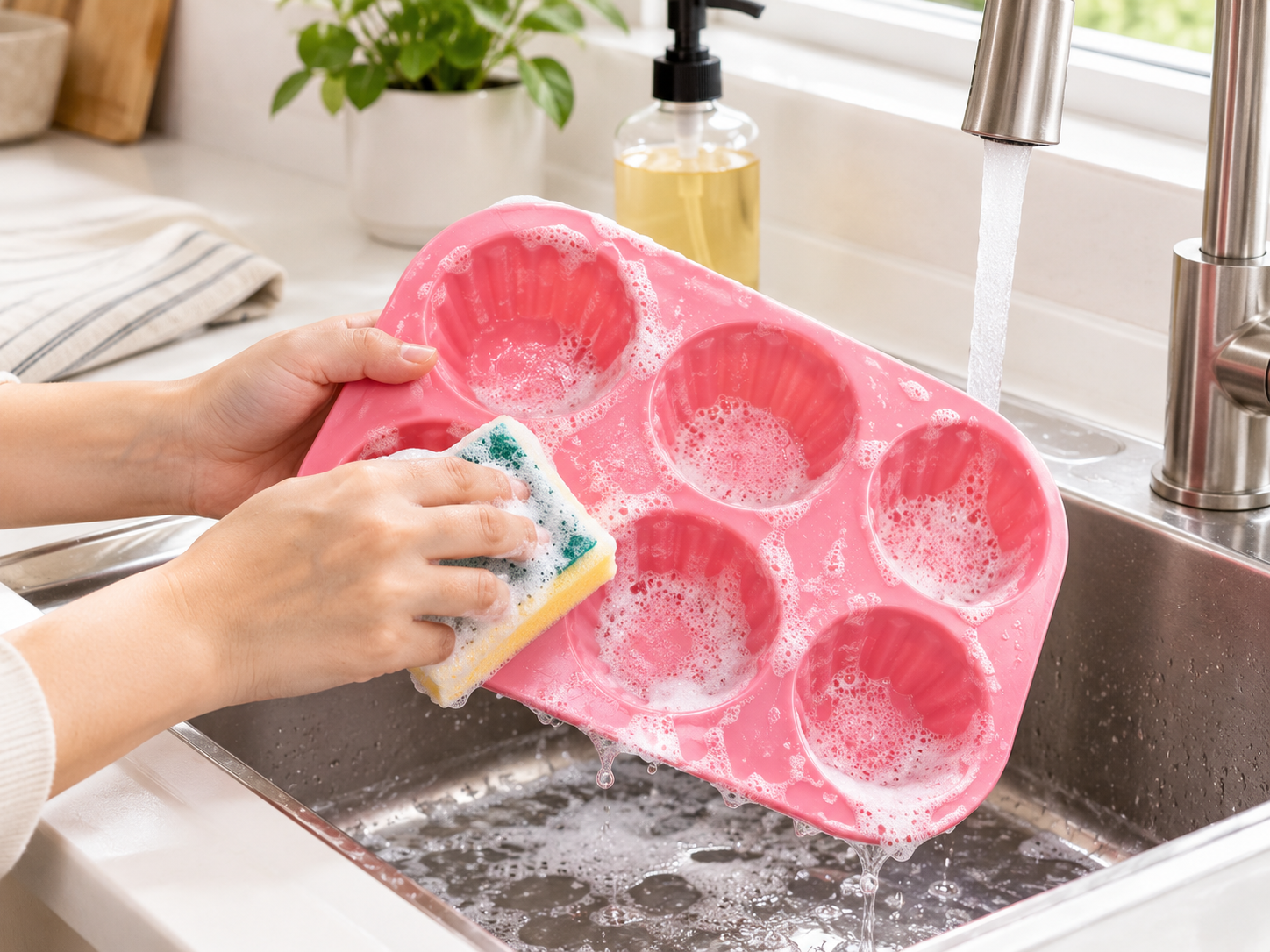
- Wash it with warm water and dishwashing detergent suitable for kitchenware.
- Use a soft sponge or cloth to remove remaining residue.
- Rinse thoroughly and allow the product to dry before storing it.
- If residue persists, follow the manufacturer's recommended deep-cleaning method rather than experimenting with harsh chemicals or excessive heat.
Dishwasher use depends on the specific product. Do not assume every silicone mold is dishwasher-safe simply because it is made from silicone.
When should silicone bakeware be replaced?
There is no single replacement schedule that applies to every product. Frequency of use, care, construction, and storage conditions all affect service life.
Consider discontinuing use if you notice:
- Tears, cuts, or significant physical damage.
- A sticky or deteriorated surface that does not improve with appropriate cleaning.
- Persistent unusual odors or other unexplained changes during normal use.
- Changes in shape or performance that make the product unsuitable for its intended application.
- Damage or deterioration that conflicts with the manufacturer's care guidance.
When in doubt, contact the manufacturer for product-specific advice or replace the item rather than continue using bakeware whose condition is uncertain.
8. How to Choose Quality Silicone Bakeware
Whether you are buying a single baking mold for home use or sourcing a product line for retail, the key is to evaluate the product against its actual application. A low price or attractive appearance cannot establish food-contact compliance or long-term performance.
For home bakers
- Choose the right design: Select molds that fit your recipes, oven, and storage space.
- Check the instructions: Confirm temperature limits, cleaning requirements, and appliance compatibility.
- Evaluate the product: Look for consistent construction, clear product information, and a reliable seller.
- Consider support: Flexible molds may need a rigid tray for filling, moving, and baking.
For retailers, importers, and private-label buyers
For commercial sourcing, evaluating silicone bakeware requires more than checking a sample's appearance. Product specifications, documentation, production consistency, and the destination market all matter.
- Material specification: Confirm the silicone formulation and intended food-contact application.
- Temperature requirements: Define the expected baking temperatures, duration, and appliance use.
- Compliance documentation: Request applicable declarations and test reports for the product and target market. Verify their scope, test conditions, and relevance to the finished article.
- Sample evaluation: Assess dimensions, flexibility, surface finish, release performance, cleaning, and fit for the intended recipes.
- Quality control: Discuss material consistency, production inspection, traceability, and procedures for handling nonconforming products.
- Packaging and labeling: Confirm that care instructions, temperature information, and product claims are accurate for the final market.
Compliance requirements differ by market and product category. For example, EU food-contact rules include general requirements for materials intended to contact food, while the specific legislation applicable to a product depends on its material and intended use. Silicone should not automatically be treated as though every rule for plastic materials applies to it in exactly the same way.
Before placing a large order, work with your supplier to identify the relevant regulatory requirements and obtain evidence that addresses the actual finished product and its intended conditions of use.
9. Frequently Asked Questions About Silicone Bakeware Safety
Is silicone bakeware safe to use in the oven?
It can be safe when the product is designed for food contact and oven use, its temperature rating covers the intended application, and it is used according to the manufacturer's instructions. Not every silicone product is oven-safe.
Is silicone bakeware toxic when heated?
Silicone bakeware should not be described as universally toxic or universally risk-free. Safety depends on the material, finished-product quality, intended use, and heating conditions. Choose products intended for baking and do not exceed their specified temperature limits.
Does silicone bakeware contain BPA?
BPA is commonly associated with certain plastics and resins, and it is not an inherent defining ingredient of silicone itself. However, a BPA-free claim alone does not demonstrate that a finished silicone product meets all food-contact safety requirements.
Can silicone bakeware be used at 450°F (232°C)?
Only if the specific product is rated for that temperature and the manufacturer's instructions permit the intended use. Some products have lower limits. Do not use a general temperature claim as a substitute for checking the exact product rating.
Should silicone bakeware be greased before use?
Not always. Many silicone molds offer nonstick performance, but results depend on the mold and recipe. Follow the manufacturer's instructions and the recipe's requirements. Greasing may help with certain baked goods or detailed molds.
Why does my silicone baking mold smell?
An odor can have different causes, and smell alone cannot establish whether a product is safe. Wash the mold as directed and follow the manufacturer's first-use instructions. If a strong or unusual odor persists, especially when heated, stop using the product and contact the supplier.
Is silicone bakeware better than metal bakeware?
Neither material is best for every recipe. Silicone is flexible and can make food release easier, while metal often provides more rigid support and is useful when stronger browning or crispness is desired. Choose based on the recipe and baking result.
How do I know whether silicone bakeware meets food-contact requirements?
Check the intended use, product specifications, and relevant documentation. For commercial purchases, request applicable compliance declarations and test reports, and verify that they cover the actual product, target market, and foreseeable conditions of use.
Conclusion: Is Silicone Bakeware Safe?
Silicone bakeware can be a convenient option for everyday baking when it is designed for food contact, suitable for the intended temperature, and used and maintained correctly. Its flexibility, nonstick performance, and ease of storage make it useful for many cakes, muffins, and shaped desserts.
The most important safety checks are straightforward: verify the intended use, follow the manufacturer's temperature limits, look for relevant food-contact evidence, clean the product properly, and stop using it if significant damage or unexplained changes occur.
For buyers and businesses, a reliable decision also requires attention to documentation, manufacturing consistency, and the regulatory requirements of the destination market. Evaluating the finished product is more meaningful than relying on a single marketing claim.
Looking for Kitchenware Products for Your Market?
Explore Kitlucy's kitchenware range for product selection and sourcing ideas. For wholesale or private-label projects, define your product requirements, intended market, and compliance needs before confirming specifications.
Explore Kitlucy Contact UsThis article is for general product-selection and educational purposes. It does not replace the manufacturer's instructions, product-specific test reports, or regulatory advice for a particular market.
Related Blogs