What Are Plastic Cutting Boards Made Of? HDPE, PP & Food Grade Materials Guide
What Are Plastic Cutting Boards Made Of? HDPE, PP & Food Grade Materials Guide
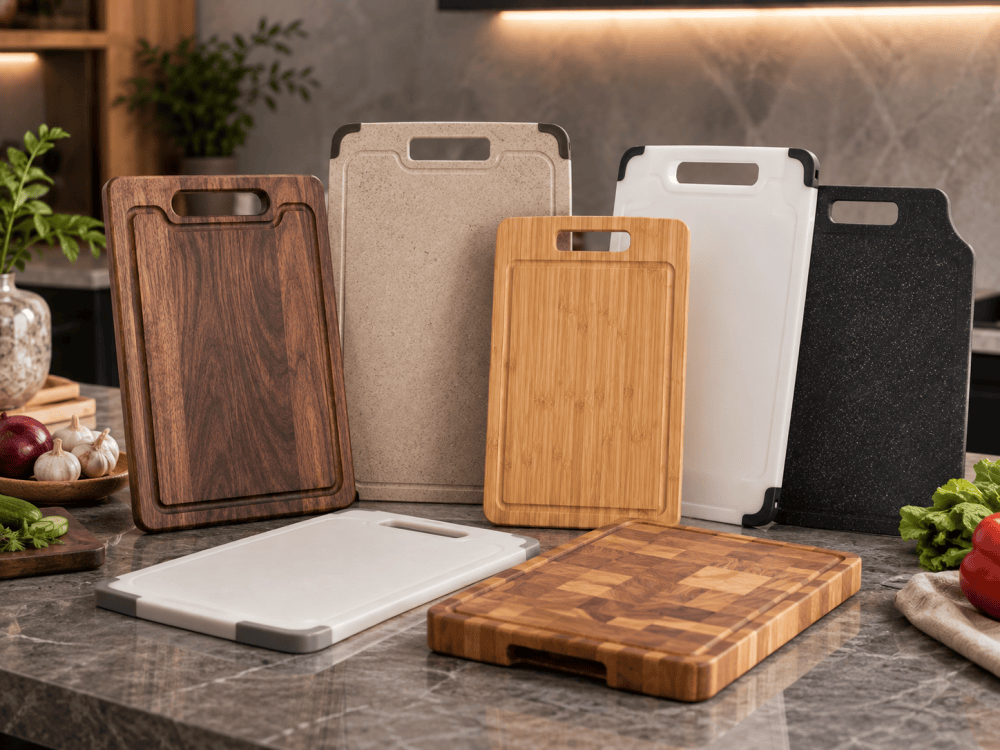
Plastic cutting boards are among the most widely used kitchen tools in households, restaurants, and commercial food preparation environments. They are lightweight, durable, affordable, and available in different sizes, colors, and designs.
However, many buyers and consumers often ask: what are plastic cutting boards made of? Understanding the materials behind plastic cutting boards helps you choose safer, more durable, and better-performing products for daily food preparation.
The most common plastic cutting board materials include HDPE (High-Density Polyethylene), PP (Polypropylene), TPU (Thermoplastic Polyurethane), and composite plastic materials. Each material offers different advantages in durability, flexibility, hygiene, and application.

Most plastic cutting boards are made from food-grade HDPE or PP plastic. HDPE is commonly used for commercial cutting boards because of its durability and hygiene performance, while PP is popular for lightweight household cutting boards. Modern products may also use TPU and recycled composite materials for improved flexibility and sustainability.
Why Plastic Cutting Board Material Matters
The material of a cutting board directly affects its safety, durability, knife performance, cleaning requirements, and overall user experience.
A high-quality food grade plastic cutting board should provide:
- Food-contact safety and reliable material performance
- Resistance to moisture absorption and odors
- Easy cleaning and maintenance
- Good protection for kitchen knives
- Long service life under daily cutting conditions
For wholesalers, retailers, and kitchenware brands, choosing the correct plastic cutting board material is also important because it influences product positioning, target customers, and market competitiveness.
What Materials Are Plastic Cutting Boards Made Of?
Plastic cutting boards are manufactured using different polymer materials depending on their intended application, price level, and performance requirements.
1. HDPE (High-Density Polyethylene) Cutting Boards
HDPE is one of the most widely used materials for plastic cutting boards, especially in commercial kitchens, restaurants, and professional food preparation environments.
Because HDPE has a dense molecular structure, it provides excellent durability, moisture resistance, and chemical stability.
HDPE cutting boards are popular because they offer:
- Non-porous surface structure
- Excellent moisture resistance
- High impact strength
- Easy sanitation and cleaning
- Suitable performance for heavy daily use
For commercial food preparation, HDPE is considered one of the preferred materials because of its balance between durability, hygiene, and cost efficiency.
2. PP (Polypropylene) Cutting Boards
Polypropylene (PP) is another common food-grade plastic used in modern kitchen cutting boards.
Compared with HDPE, PP usually provides a slightly harder surface while maintaining lightweight characteristics and good chemical resistance.
PP cutting boards are widely used in household kitchens because they are easy to handle, moisture-resistant, and suitable for everyday food preparation.
- Lightweight design
- Good durability
- Easy maintenance
- Suitable for modern kitchen applications
3. TPU (Thermoplastic Polyurethane) Cutting Boards
TPU cutting boards are flexible plastic cutting solutions designed for consumers who prefer lightweight and space-saving kitchen products.
Unlike rigid plastic boards, TPU materials provide flexibility, allowing users to bend the board slightly for easier ingredient transfer.
TPU cutting boards are commonly used for:
- Compact kitchens
- Small apartments
- Portable cooking solutions
- Modern lifestyle kitchen products
4. Composite Plastic Cutting Board Materials
Some modern plastic cutting boards combine different materials, recycled plastics, or natural fibers to improve sustainability, appearance, and product performance.
Composite plastic cutting boards are increasingly used in eco-friendly kitchenware collections because they can provide a balance between durability, design flexibility, and environmental positioning.
Common composite materials include:
- Recycled plastic materials for sustainable product lines
- Plastic and natural fiber combinations
- Multi-layer structures for improved strength
- Custom material solutions for private label products
HDPE vs PP vs TPU Cutting Boards: Material Comparison
Different plastic cutting board materials have different characteristics. Selecting the right material depends on the target application, customer requirements, and market positioning.
| Material | Main Features | Advantages | Common Applications |
|---|---|---|---|
| HDPE | Dense, durable food-grade plastic | Excellent durability, moisture resistance, knife-friendly surface | Commercial kitchens, restaurants, professional food preparation |
| PP | Lightweight and chemical-resistant plastic | Easy handling, affordable, suitable for household use | Home kitchens, retail cutting board sets |
| TPU | Flexible and soft-touch material | Foldable design, easy ingredient transfer, space-saving | Modern kitchens, compact living spaces |
| Composite Plastic | Mixed material structure | Sustainable positioning and customized designs | Premium kitchenware collections |
For professional kitchens and heavy-duty food preparation, HDPE cutting boards are usually the preferred choice. For household retail markets, PP cutting boards offer a good balance between cost, weight, and performance.
Are Plastic Cutting Boards Safe?
Food-grade plastic cutting boards are generally considered safe for food preparation when they are manufactured using approved materials and maintained properly.
The safety of a plastic cutting board depends mainly on:
- Material quality
- Food-contact compliance
- Manufacturing standards
- Surface condition after long-term use
Food Grade Plastic Materials
High-quality plastic cutting boards are usually made from food-contact approved materials such as HDPE and PP.
These materials are selected because they are:
- Non-toxic and stable for food contact
- Moisture-resistant
- Easy to clean
- Suitable for repeated kitchen use
Are BPA-Free Plastic Cutting Boards Better?
Many consumers and buyers prefer BPA-free plastic cutting boards because BPA-free materials provide additional confidence for food preparation applications.
When sourcing plastic cutting boards, buyers should confirm:
- Food-contact safety documentation
- Material specifications
- Quality inspection standards
- Supplier manufacturing experience
Why Commercial Kitchens Prefer HDPE Cutting Boards
Professional kitchens, restaurants, and food processing environments often choose HDPE cutting boards because they require products that can withstand frequent cutting, cleaning, and sanitization.
The advantages of HDPE cutting boards in commercial applications include:
- Strong resistance to moisture absorption
- Durable surface for repeated cutting
- Easy cleaning and sanitation
- Suitable for color-coded food preparation systems
- Available in different thicknesses and sizes
Color-Coded Plastic Cutting Boards for Food Safety
Many commercial kitchens use color-coded cutting boards to separate different food categories and reduce cross-contamination risks.
| Color | Typical Application |
|---|---|
| Red | Raw meat |
| Blue | Seafood |
| Green | Vegetables and fruits |
| White | Bakery and dairy products |
How Plastic Cutting Boards Are Manufactured
Understanding the manufacturing process helps buyers evaluate plastic cutting board quality.
Professional plastic cutting board production usually includes:
- Food-grade plastic material selection
- Plastic sheet forming or molding process
- Cutting and edge finishing
- Surface polishing
- Quality inspection
- Packaging and customization
For OEM buyers, manufacturing capability is an important factor because it affects product consistency, delivery time, and customization options.
Plastic Cutting Boards vs Wood Cutting Boards: Which Is Better?
Plastic and wood cutting boards are two of the most popular choices in modern kitchens. Each material has different advantages depending on cooking habits, maintenance requirements, and market positioning.
| Feature | Plastic Cutting Board | Wood Cutting Board |
|---|---|---|
| Material | HDPE, PP, TPU, Composite Plastic | Acacia, Maple, Bamboo, Walnut |
| Maintenance | Easy to clean and maintain | Requires regular oiling |
| Moisture Resistance | Excellent | Medium |
| Knife Friendliness | Good | Excellent |
| Commercial Use | Very Common | Less Common |
| Eco-Friendly Image | Improving with recycled materials | Strong natural material positioning |
For commercial kitchens and high-volume food preparation, plastic cutting boards are often preferred because of their easy maintenance and consistent performance. For premium home kitchens, wooden cutting boards remain popular because of their natural appearance.
How to Choose a High-Quality Plastic Cutting Board
Choosing the right plastic cutting board requires evaluating material quality, product design, and manufacturing standards.
1. Select Food-Grade Materials
High-quality plastic cutting boards should use food-contact approved materials such as HDPE or PP. Material transparency and supplier documentation are important for buyers.
2. Check Board Thickness and Durability
Thickness directly affects cutting stability and product lifespan. Thicker boards are usually more suitable for restaurants and professional kitchens.
- Thin boards: Suitable for lightweight household use
- Medium thickness boards: Ideal for daily kitchen applications
- Heavy-duty boards: Designed for commercial food preparation
3. Consider Anti-Slip and Functional Designs
Modern cutting boards often include additional features such as:
- Non-slip edges
- Juice grooves
- Handle designs
- Storage-friendly shapes
- Color-coded options
4. Evaluate Cleaning Performance
A good plastic cutting board should have a smooth surface that is easy to clean and resistant to food stains and odors.
OEM & Wholesale Buying Guide for Plastic Cutting Boards
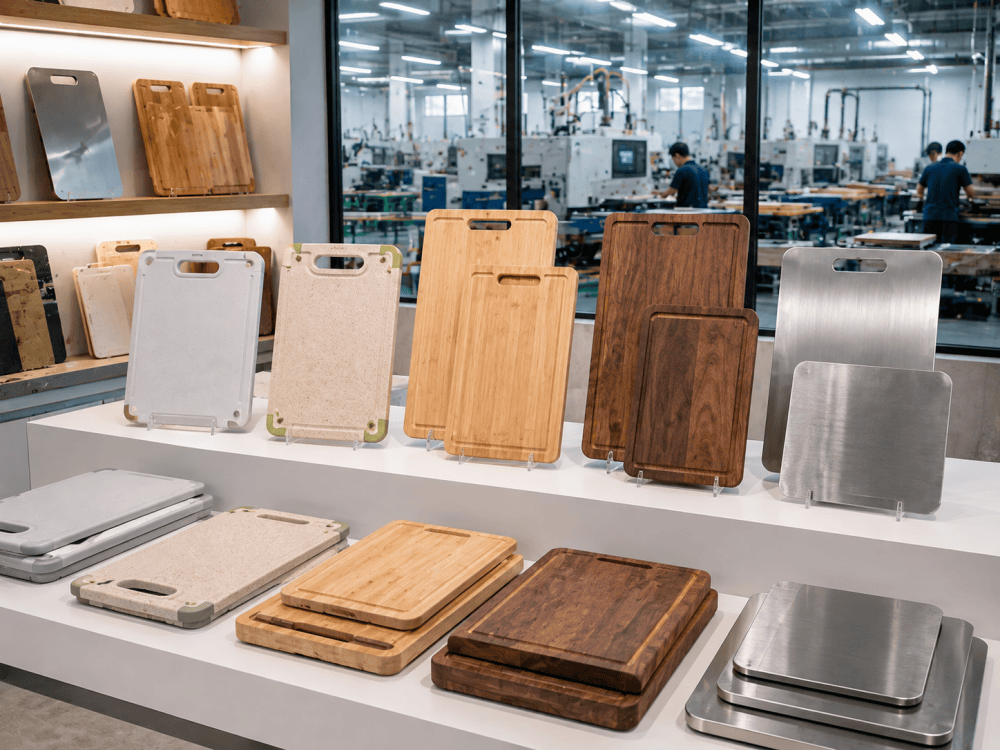
For importers, wholesalers, and kitchenware brands, plastic cutting boards are popular products because they offer flexible customization options and stable production scalability.
When sourcing plastic cutting boards, buyers should consider:
- Food-grade material certification
- OEM color customization
- Size and thickness options
- Packaging customization
- Private label support
- Production capacity and quality control
Professional suppliers can provide different solutions including:
- PP cutting boards for household retail markets
- HDPE cutting boards for commercial kitchens
- Flexible TPU cutting boards for modern lifestyle products
- Customized cutting board sets for private brands
Kitlucy provides various cutting board solutions for global kitchenware buyers, including food-grade plastic cutting boards, customized designs, and OEM kitchenware services.
Explore our plastic cutting board collections for more product solutions.
Frequently Asked Questions About Plastic Cutting Board Materials
What are plastic cutting boards made of?
Most plastic cutting boards are made from food-grade HDPE (High-Density Polyethylene) or PP (Polypropylene). Some modern products also use TPU and composite plastic materials.
What is the safest plastic for a cutting board?
Food-grade HDPE and PP are among the most commonly used plastic materials for safe food preparation applications because they are durable, moisture-resistant, and suitable for food contact.
Is HDPE better than PP for cutting boards?
HDPE is often preferred for commercial kitchens because of its durability and impact resistance, while PP is popular for household cutting boards because it is lightweight and cost-effective.
Are plastic cutting boards BPA free?
Many food-grade plastic cutting boards made from HDPE and PP are BPA-free. Buyers should confirm material specifications and supplier compliance documents before purchasing.
Are plastic cutting boards dishwasher safe?
Many plastic cutting boards can be cleaned in dishwashers, especially HDPE and PP models designed for household use. However, users should follow the manufacturer's cleaning recommendations.
How long do plastic cutting boards last?
The lifespan of a plastic cutting board depends on material quality, usage frequency, and maintenance. High-quality HDPE boards used correctly can provide long-term performance.

Conclusion
Plastic cutting boards are mainly made from food-grade HDPE and PP materials, with TPU and composite plastics becoming increasingly popular for specialized kitchen applications.
HDPE remains one of the best choices for professional food preparation because of its durability, hygiene performance, and reliability. PP provides a lightweight and affordable solution for household kitchens, while TPU offers flexibility for modern kitchen designs.
Understanding what plastic cutting boards are made of helps consumers, retailers, and wholesale buyers choose safer, more durable, and better-performing kitchen products.
Looking for Professional Plastic Cutting Board Solutions?
Kitlucy supplies food-grade plastic cutting boards made from PP, HDPE, TPU, and customized materials for global wholesalers, retailers, and private label brands.
Related Blogs