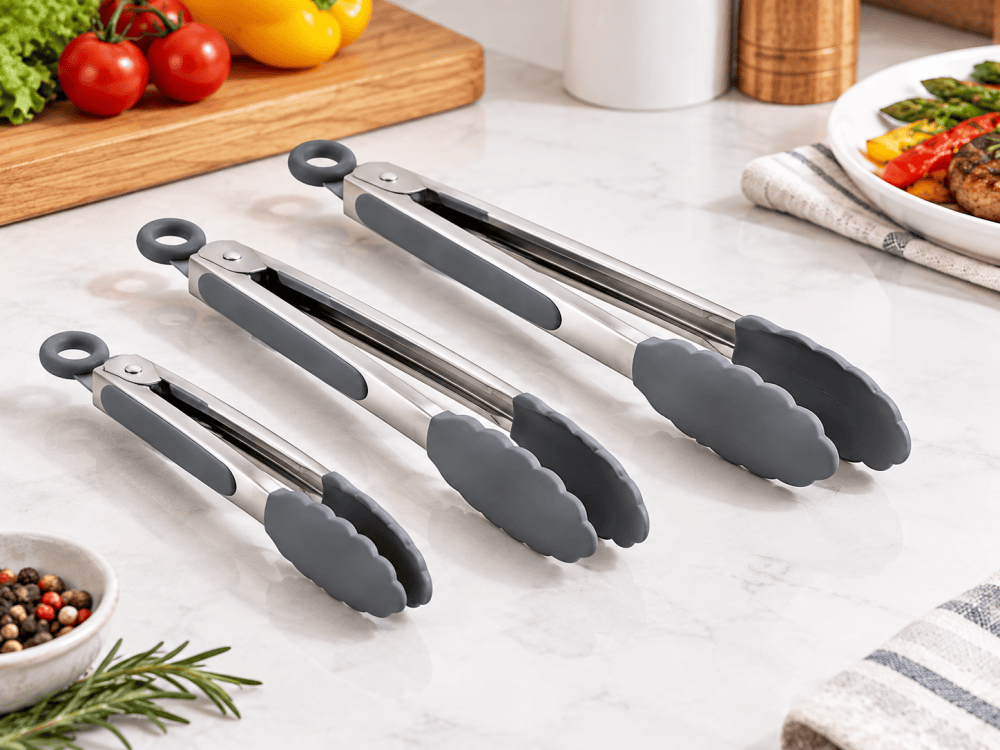
Is China Kitchenware Safe? Understanding Quality Standards and Certifications
Is Kitchenware Made in China Safe? The Truth About Materials, Certifications & Reliable Suppliers
Walk into almost any kitchen around the world, and there's a good chance you'll find products manufactured in China. From stainless steel utensils and silicone spatulas to cutting boards, baking tools, and food storage containers, China dominates the global kitchenware supply chain.
Yet despite their popularity, many consumers, importers, and retailers continue to ask an important question:
Is kitchenware made in China safe?
The short answer is yes—but only when products are manufactured using food-grade materials, tested according to international standards, and sourced from reliable suppliers with transparent quality controls.
Unfortunately, there are many misconceptions surrounding Chinese-made products. Some people assume all kitchenware made in China is unsafe, while others believe that a simple "food-grade" label guarantees quality.
The reality is more nuanced.
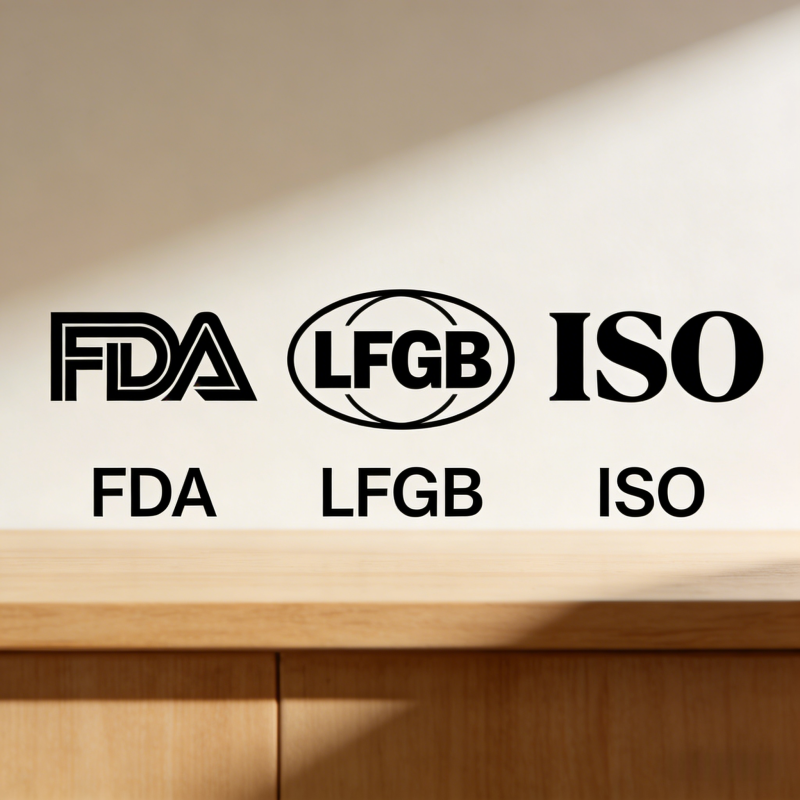
In this comprehensive guide, we'll explain how kitchenware safety actually works, explore the materials commonly used in Chinese manufacturing, compare major international certifications, and show buyers how to identify trustworthy suppliers for both household use and OEM sourcing.
Kitchenware made in China can be completely safe for food contact when it complies with standards such as FDA, LFGB, and EU regulations. Safety depends on the manufacturer's materials, testing procedures, and quality management systems—not simply the country of origin.
Why Do Some Consumers Worry About China Kitchenware Safety?
Concerns about Chinese kitchenware did not arise without reason. Over the years, isolated incidents involving low-cost imports have attracted widespread media attention and contributed to consumer skepticism.
Some products sold through unofficial channels lacked proper documentation, used inferior materials, or failed to meet importing countries' regulatory requirements. These cases created a perception that all Chinese-made kitchen products are unsafe.
However, this assumption overlooks an important fact:
China produces kitchenware across every quality level, from inexpensive mass-market goods to premium products manufactured for internationally recognized brands.
Many of the world's leading kitchenware companies rely on Chinese factories because of their advanced manufacturing capabilities, skilled labor, and mature supply chains.
The difference lies in choosing manufacturers that prioritize quality and compliance.
Factors that determine product safety include:
- Food-grade raw materials
- Compliance with international standards
- Third-party testing and certifications
- Factory quality management systems
- Supplier transparency
- Routine inspections and audits
The biggest safety risk isn't that a product was made in China. The real risk is sourcing from suppliers that cannot provide certifications, test reports, or evidence of consistent quality control.
Is Kitchenware Made in China Safe?
Yes. Kitchenware made in China can be safe for both household and commercial use when produced responsibly.
Modern Chinese manufacturers export millions of kitchen products every year to North America, Europe, Australia, and other highly regulated markets. To access these markets, suppliers must meet strict food-contact requirements.
Three major factors determine whether a kitchen product is safe:
1. Food-Grade Materials
The safest products begin with safe materials. Manufacturers should use food-contact materials specifically designed to withstand heat, moisture, acids, oils, and repeated use without releasing harmful substances.
2. Compliance Testing
Testing verifies that materials do not migrate dangerous chemicals into food and that products meet the regulations of the destination market.
3. Reliable Manufacturing Processes
Even high-quality materials can become problematic if production lacks consistency. Reliable factories implement quality inspections throughout the manufacturing process.
When these three elements work together, Chinese kitchenware can deliver outstanding safety, durability, and value.
What Materials Are Commonly Used in China Kitchenware?
Understanding kitchenware materials is one of the easiest ways to assess product safety.
| Material | Generally Safe? | What to Verify |
|---|---|---|
| 304 Stainless Steel | Yes | Food-grade certification |
| 430 Stainless Steel | Usually | Application suitability |
| Food-Grade Silicone | Yes | FDA or LFGB compliance |
| PP Plastic | Yes | BPA-free status |
| Bamboo | Yes | Food-safe finishes |
| Natural Wood | Yes | Proper treatment and drying |
| Ceramic | Depends | Lead-free glaze |
Let's take a closer look at the most common materials used in kitchenware manufacturing.
Is Chinese Stainless Steel Kitchenware Safe?
Stainless steel remains one of the safest and most widely used materials in modern kitchens.
Chinese manufacturers produce a broad range of stainless steel products, including cooking utensils, mixing bowls, food tongs, cookware, and kitchen gadgets.
304 Stainless Steel
304 stainless steel is considered the gold standard for food-contact applications.
- Excellent corrosion resistance
- Contains chromium and nickel for durability
- Resists staining and rust
- Suitable for acidic foods
- Commonly used in premium kitchenware
When sourced from reputable suppliers, 304 stainless steel products manufactured in China are widely accepted in the United States and European markets.
430 Stainless Steel
430 stainless steel is another common option.
- Nickel-free composition
- More affordable than 304
- Good corrosion resistance for many applications
- Often used for handles and accessories
Although 430 stainless steel may not offer the same corrosion resistance as 304, it remains a safe and practical choice when used appropriately.
If you're purchasing stainless steel kitchenware, ask suppliers to specify the steel grade and provide supporting test documentation. Knowing whether a product uses 304 or 430 stainless steel can help you make more informed purchasing decisions.
Is Chinese Silicone Kitchenware Safe?
Food-grade silicone has become one of the fastest-growing materials in the kitchenware industry. From spatulas and baking molds to oven mitts and baby feeding products, silicone is valued for its flexibility, durability, and heat resistance.
However, many consumers still wonder:
Is silicone kitchenware made in China safe?
The answer is yes—provided the silicone meets food-contact standards and is manufactured by reputable suppliers.
High-quality food-grade silicone offers several advantages:
- Heat resistance up to approximately 230°C (446°F)
- Flexible and durable structure
- Non-stick surface
- BPA-free composition
- Suitable for repeated food contact
- Safe for baking and cooking applications
Most premium silicone kitchen products exported from China are tested according to FDA or LFGB requirements before entering international markets.
How Can You Tell If Silicone Is Safe?
Look for manufacturers that can provide:
- FDA food-contact reports
- LFGB testing certificates
- Third-party laboratory reports
- Material specifications
LFGB-certified silicone is generally considered stricter than FDA-approved silicone because LFGB testing evaluates odor, taste transfer, and broader migration requirements.
Are Chinese Plastic Kitchen Products Toxic?
Not necessarily.
Plastic safety depends largely on the type of plastic used and whether it complies with food-contact regulations.
Unfortunately, consumers often assume that all plastics are unsafe, which is not accurate.
Many modern food-grade plastics are specifically designed for kitchen applications.
Safe Plastics Commonly Used in Kitchenware
| Plastic Material | Food Safe? | Common Uses |
|---|---|---|
| PP (Polypropylene) | Yes | Cutting boards, containers, utensils |
| HDPE | Yes | Commercial cutting boards |
| Tritan | Yes | Drinkware, food storage |
| Low-Quality PVC | Not Recommended | Avoid food contact use |
Consumers should prioritize products labeled as:
- BPA-free
- Food-grade
- FDA compliant
- EU compliant
Which Certifications Matter Most?
Certifications provide evidence that kitchen products have undergone testing and meet specific regulatory requirements.
Understanding these standards can help buyers avoid unnecessary risks.
| Certification | Region | Purpose |
|---|---|---|
| FDA | United States | Food-contact compliance |
| LFGB | Germany / EU | Migration, odor, taste testing |
| EU 10/2011 | European Union | Plastic food-contact regulation |
| REACH | European Union | Restricted substances control |
| BPA-Free | Global | Plastic safety claims |
| SGS Testing | Global | Independent verification |
| ISO 9001 | Global | Quality management systems |
FDA vs LFGB: Which Standard Is Better?
This is one of the most common questions among importers and kitchenware brands.
Both FDA and LFGB standards are respected internationally, but they focus on slightly different requirements.
| Feature | FDA | LFGB |
|---|---|---|
| Main Market | United States | Germany / Europe |
| Food Contact Safety | Yes | Yes |
| Migration Testing | Yes | Yes |
| Taste Testing | No | Yes |
| Odor Testing | No | Yes |
| Testing Strictness | High | Very High |
Neither standard is inherently "better."
The appropriate certification depends on the market where products will be sold.
For European buyers, LFGB often provides stronger consumer confidence. For U.S. distribution, FDA compliance is generally sufficient.
Many leading exporters choose to obtain both FDA and LFGB certifications, allowing them to serve both North American and European markets simultaneously.
How Can Buyers Verify a China Kitchenware Supplier?
One of the biggest mistakes buyers make is assuming that every supplier listed online maintains the same quality standards.
Verification is essential.
Before placing orders, especially large OEM orders, ask suppliers the following questions:
- Can you provide FDA or LFGB reports?
- Which food-grade materials are used?
- Can I review recent SGS testing reports?
- Do you have ISO-certified quality systems?
- Can you provide production photos or videos?
- Can samples be tested independently?
- How many years of export experience do you have?
How to Source Safe Kitchenware From China
Whether you're an importer, retailer, Amazon seller, or private-label brand, following a structured sourcing process can dramatically reduce risks.
Step 1: Define Your Requirements
- Target market regulations
- Material specifications
- Packaging needs
- Logo requirements
Step 2: Request Certifications
Ask suppliers for FDA, LFGB, EU, or SGS documentation relevant to your market.
Step 3: Order Samples
Evaluate:
- Build quality
- Finish consistency
- Material feel
- Packaging presentation
Step 4: Conduct Third-Party Inspections
Independent inspections help verify production quality before shipment.
Step 5: Confirm Production Capacity
Ensure suppliers can consistently support your order volumes.
If you're seeking customized kitchenware solutions, explore our OEM capabilities:
OEM & Customized Kitchenware Services
The safest China kitchenware suppliers combine certified materials, transparent documentation, consistent manufacturing processes, and a willingness to support third-party testing.
Red Flags to Avoid When Buying China Kitchenware
Price should never be the only deciding factor.
Be cautious if a supplier:
- Refuses to provide test reports
- Cannot identify material grades
- Offers prices far below market averages
- Declines sample requests
- Has no export experience
- Lacks communication transparency
- Cannot explain quality control procedures
Avoiding these warning signs can significantly reduce sourcing risks and improve long-term business outcomes.
Can Chinese OEM Kitchenware Manufacturers Be Trusted?
Absolutely—but trust should be earned through verification rather than assumptions.
Today, China is home to some of the world's most advanced kitchenware manufacturing facilities. Many factories produce products not only for their own brands but also for internationally recognized retailers, supermarkets, and private-label companies.
Successful OEM partnerships are built on transparency, communication, and shared quality expectations.
Reliable OEM manufacturers typically offer:
- Clear material specifications and traceability
- FDA, LFGB, and EU food-contact testing support
- Customized logo and packaging solutions
- Prototype and sampling services
- Production updates and inspection reports
- Flexible MOQ options
- Experience exporting to global markets
Rather than asking, "Can Chinese manufacturers be trusted?" a better question is:
"How do I identify the manufacturers that deserve my trust?"
Why Do Global Brands Manufacture Kitchenware in China?
China remains the preferred sourcing destination for many kitchenware brands because of its unique combination of manufacturing advantages.
| Advantage | Benefit to Buyers |
|---|---|
| Mature Supply Chain | Faster sourcing and production |
| Material Availability | Wide range of food-grade materials |
| Manufacturing Expertise | Consistent production quality |
| Customization Capability | OEM and private-label flexibility |
| Competitive Pricing | Better cost efficiency |
| Large Production Capacity | Ability to handle bulk orders |
From silicone baking tools and stainless steel utensils to bamboo cutting boards and plastic food containers, Chinese factories continue to support the growth of kitchenware businesses worldwide.
Many premium kitchen brands source from China—not because it's the cheapest option, but because experienced manufacturers can deliver quality, scalability, and innovation simultaneously.
Frequently Asked Questions About China Kitchenware Safety
Is kitchenware made in China safe?
Yes. Kitchenware made in China can be completely safe when manufactured using food-grade materials and tested according to international standards such as FDA and LFGB.
Is Chinese stainless steel toxic?
No. Food-grade stainless steel such as 304 stainless steel is widely considered safe, durable, and suitable for food contact.
Is silicone kitchenware from China safe?
Yes. FDA- or LFGB-certified silicone products are safe for cooking, baking, and repeated food contact.
What is the safest material for kitchen utensils?
Food-grade stainless steel, certified silicone, properly treated wood, bamboo, and BPA-free plastics are all considered safe options when sourced responsibly.
Is LFGB better than FDA?
LFGB testing is often viewed as stricter because it includes odor and taste assessments in addition to migration testing. However, both standards provide strong food-contact safety assurance.
How can I verify a Chinese kitchenware supplier?
Request certifications, review SGS reports, inspect samples, verify export experience, and conduct third-party inspections whenever possible.
Are bamboo utensils from China safe?
Yes. Bamboo utensils are safe when treated with food-safe finishes and manufactured under proper hygiene standards.
Is BPA-free plastic from China safe?
Generally, yes. BPA-free food-grade plastics such as PP are commonly used in safe kitchen applications.
Can Chinese factories provide OEM kitchenware safely?
Yes. Many experienced factories provide OEM and ODM services while maintaining strict quality control and international compliance.
Should I avoid all cheap kitchenware products?
Not necessarily. However, extremely low prices combined with missing certifications or unclear material information should be treated as warning signs.
The Future of Safe Kitchenware Manufacturing in China
Consumer awareness of food safety continues to increase, encouraging manufacturers to adopt higher standards and more transparent practices.
Factories that invest in:
- Food-grade raw materials
- Third-party testing
- Quality management systems
- Sustainable production methods
- Product innovation
will continue to shape the future of the global kitchenware industry.
For buyers, this means greater access to safe, reliable, and customizable products than ever before.
Conclusion
So, is kitchenware made in China safe?
Yes—but safety depends on informed purchasing decisions.
The country of manufacture alone does not determine whether a product is safe. What truly matters is the manufacturer's commitment to quality, the use of certified food-grade materials, compliance with international regulations, and the transparency of their production processes.
By understanding certifications such as FDA and LFGB, verifying suppliers carefully, and requesting supporting documentation, both consumers and businesses can confidently choose China-made kitchenware that meets the highest standards of safety and performance.
For importers, retailers, and private-label brands, China remains one of the most capable and efficient sourcing destinations for high-quality kitchen products.
Explore Safe Kitchenware Solutions
If you're looking for food-safe kitchen products backed by professional manufacturing expertise, explore our collection of cooking tools and OEM services designed for global brands and distributors.
Explore our cooking tools: Food-Grade Cooking Tools Collection
Need customized kitchenware solutions? OEM & Private Label Kitchenware Services
Have questions about materials, certifications, or sourcing? Contact Our Team
Looking for Safe and Certified China Kitchenware?
Kitlucy works with carefully selected manufacturing partners to deliver kitchenware that meets international food-contact standards. From stainless steel utensils and silicone tools to bamboo and plastic kitchen products, we help brands bring reliable, compliant products to market.
Whether you're launching a new product line or expanding an existing collection, our team supports OEM customization, packaging development, quality inspections, and global shipping solutions.
Related Blogs