Cookie Sheet vs Baking Tray: What's the Difference and Which One Should You Choose?
Cookie Sheet vs Baking Tray: What's the Difference and Which One Should You Choose?
When shopping for bakeware or following a recipe, you've probably encountered the terms cookie sheet, baking tray, sheet pan, baking pan, and oven tray. Many people use these names interchangeably, but are they actually the same?
The short answer is no.
Although cookie sheets and baking trays may appear similar at first glance, they are designed for different baking tasks. Their edge design, depth, airflow, heat distribution, and intended applications all influence how food bakes. Using the wrong type of tray can lead to uneven browning, soggy cookies, burnt bottoms, or food spills.
Whether you're a home baker searching for the best bakeware or a retailer sourcing products for your customers, understanding the differences between a cookie sheet and a baking tray will help you make smarter decisions.
In this comprehensive guide, we'll compare cookie sheets and baking trays in detail, explain their advantages and disadvantages, discuss the best materials, and help you choose the right bakeware for every baking project.
Quick Answer: Cookie Sheet vs Baking Tray
If you're looking for a quick explanation, here's the main difference:
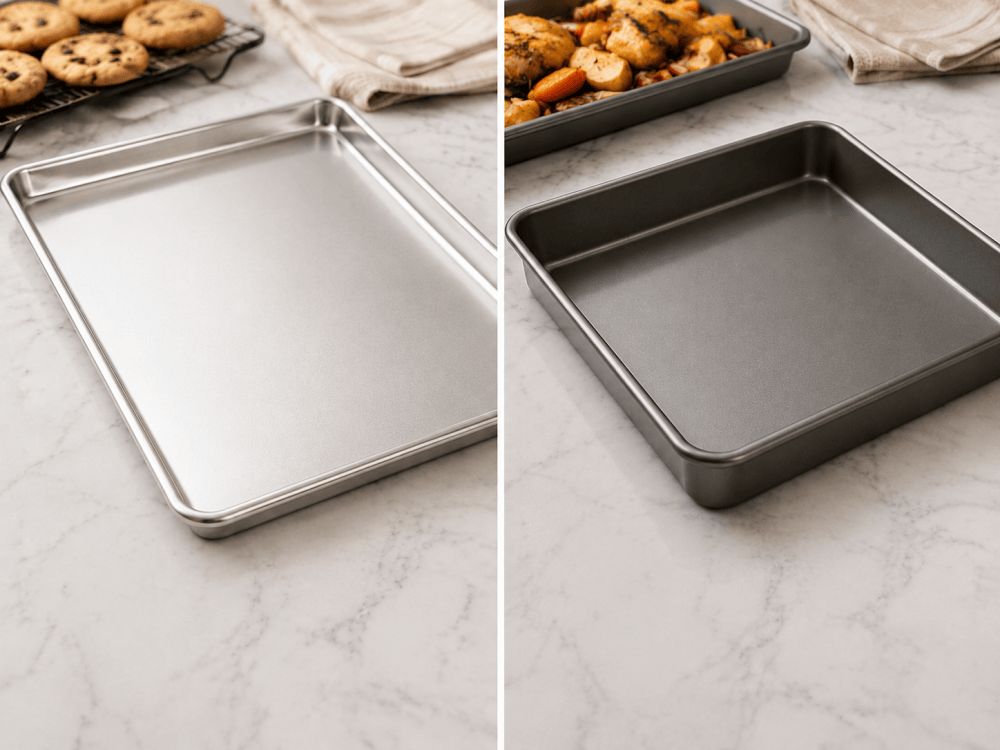
A cookie sheet usually has one or two raised edges with the remaining sides open, allowing better airflow for crisp, evenly browned cookies. A baking tray has four raised sides, making it more versatile for baking pastries, roasting vegetables, and cooking foods that release juices or batter.
Although both can often be used for similar purposes, their designs affect baking performance significantly.
Why People Confuse Cookie Sheets and Baking Trays
The confusion mainly comes from regional language differences and marketing terminology.
Depending on where you live, manufacturers may use different names for nearly identical products.
| Country/Region | Common Name |
|---|---|
| United States | Cookie Sheet |
| United States | Baking Sheet |
| Canada | Cookie Tray |
| United Kingdom | Baking Tray |
| Australia | Oven Tray |
| Europe | Baking Tray |
| Commercial Kitchens | Sheet Pan |
Some online retailers also use multiple names to improve search visibility, making the distinction even less clear.
As a result, shoppers often purchase the wrong product, only realizing the difference after baking.
What Is a Cookie Sheet?
A cookie sheet is a flat baking surface specifically designed for baking cookies, biscuits, pastries, and other foods that benefit from maximum airflow.
Its defining feature is its edge design.
Unlike traditional baking trays, most cookie sheets have:
- One raised edge for easy handling
- Two raised edges
- Or no raised edges at all
The open sides allow hot air to circulate more efficiently around the food.
Typical Features
- Flat surface
- Low-profile rim
- Lightweight construction
- Fast heat circulation
- Easy cookie removal
Because cookies don't produce much liquid during baking, they don't require deep walls to contain juices.
Instead, better airflow helps create:
- Crisp edges
- Even browning
- Uniform baking
- Better texture
This design has made cookie sheets the preferred choice for baking:
- Chocolate chip cookies
- Sugar cookies
- Butter cookies
- Macarons
- Shortbread
- Scones
- Puff pastry
Advantages of Cookie Sheets
Better Air Circulation
The partially open sides allow heated air to flow freely around the dough.
This airflow helps moisture escape more quickly, resulting in:
- Crisp bottoms
- Golden edges
- Even color
- Better texture
For cookies, this is a major advantage.
Faster Browning
Because hot air reaches more of the cookie surface, cookie sheets generally produce:
- Better caramelization
- More consistent browning
- Crispier bottoms
Many professional bakers prefer cookie sheets for exactly this reason.
Easier Cookie Removal
Since one or more sides are flat, sliding a spatula underneath baked cookies becomes much easier.
There's no tall rim blocking the spatula, reducing the chance of broken cookies or damaged edges.
Lighter Weight
Most cookie sheets are slightly lighter than baking trays because they use less material around the edges, making them easier to handle when baking multiple batches.
Disadvantages of Cookie Sheets
Not Suitable for Foods with Liquids
Since the edges are low or partially open, foods that release grease, juices, or sauces can easily spill into the oven.
Avoid using cookie sheets for:
- Chicken wings
- Roasted vegetables with oil
- Lasagna
- Brownies
- Cakes
- Casseroles
Limited Versatility
A cookie sheet excels at baking flat foods but isn't designed for recipes requiring deep batter, sauces, or high-moisture ingredients.
What Is a Baking Tray?
A baking tray is a more versatile piece of bakeware designed to handle a wider variety of cooking and baking tasks.
Unlike cookie sheets, baking trays feature four raised sides, creating a shallow container that keeps food and liquids contained during cooking.
Although the walls are usually only 1–3 cm high, they make a significant difference.
A baking tray can safely hold:
- Oil
- Butter
- Meat juices
- Cake batter
- Vegetables
- Sauces
without spilling.
This makes baking trays suitable for both baking and roasting.
Typical Features
- Four raised sides
- Rigid construction
- Larger capacity
- Better liquid retention
- Greater versatility
They're available in numerous sizes for home kitchens, restaurants, bakeries, and commercial food production.
Advantages of Baking Trays
Extremely Versatile
One baking tray can prepare many different foods, including:
- Roasted vegetables
- Chicken
- Fish
- Brownies
- Sheet cakes
- Cinnamon rolls
- Frozen foods
- Pizza
- Garlic bread
For many households, a baking tray becomes the most frequently used piece of bakeware.
Prevents Spills
The raised edges help keep melted butter, marinades, vegetable juices, meat drippings, and cake batter inside the tray, reducing oven mess and making cleanup much easier.
Better for One-Pan Meals
Baking trays are perfect for sheet pan dinners, roasted vegetables, salmon, chicken breasts, and mixed vegetables.
Better Structural Strength
Because all four sides are reinforced, baking trays tend to be more rigid and resistant to twisting, bending, and warping, especially when manufactured from heavy-gauge carbon steel or aluminized steel.
Disadvantages of Baking Trays
Slightly Reduced Airflow
The raised sides partially block air circulation, which can sometimes produce softer cookie edges and slightly less browning.
Heavier Weight
Additional sidewalls increase the overall weight, especially for commercial-grade baking trays.
Slightly Harder to Remove Cookies
The raised edges can make it more difficult to slide a spatula underneath delicate cookies.
Cookie Sheet vs Baking Tray: Side-by-Side Comparison
| Feature | Cookie Sheet | Baking Tray |
|---|---|---|
| Raised Sides | One or Two | Four |
| Air Circulation | Excellent | Good |
| Cookie Performance | Excellent | Very Good |
| Roasting Vegetables | Fair | Excellent |
| Cooking Meat | Poor | Excellent |
| Holding Liquids | Poor | Excellent |
| Ease of Cleaning | Excellent | Very Good |
| Food Capacity | Moderate | High |
| Versatility | Moderate | Excellent |
| Best For | Cookies & Pastries | General Baking & Roasting |
Which One Should You Buy?
If you primarily bake cookies every weekend, a cookie sheet will usually deliver slightly better results thanks to improved airflow and easier cookie removal.
However, if you want one pan that can bake cookies, roast vegetables, cook meats, bake brownies, and prepare sheet-pan dinners, a baking tray is the more versatile investment.
Many experienced home bakers and professional kitchens keep both on hand, using each where it performs best.
Cookie Sheet vs Baking Tray: Performance Comparison in Real Baking
Although cookie sheets and baking trays look similar, their performance can vary noticeably depending on what you're baking. Factors such as airflow, heat retention, moisture evaporation, and pan rigidity all affect the final results.
Below is a comparison of how each type performs in common baking scenarios.
| Baking Task | Cookie Sheet | Baking Tray | Recommended Choice |
|---|---|---|---|
| Chocolate Chip Cookies | ★★★★★ | ★★★★☆ | Cookie Sheet |
| Sugar Cookies | ★★★★★ | ★★★★☆ | Cookie Sheet |
| Macarons | ★★★★★ | ★★★★☆ | Cookie Sheet |
| Brownies | ★☆☆☆☆ | ★★★★★ | Baking Tray |
| Roasted Vegetables | ★★☆☆☆ | ★★★★★ | Baking Tray |
| Chicken Wings | ★☆☆☆☆ | ★★★★★ | Baking Tray |
| Pizza | ★★★★☆ | ★★★★☆ | Either |
| Frozen Snacks | ★★★★☆ | ★★★★★ | Baking Tray |
If your recipe contains butter, oil, cheese, marinades, or any ingredient that may release liquid during cooking, always choose a baking tray with raised edges to avoid spills and improve safety.
How Airflow Affects Baking Results
One of the biggest structural differences between cookie sheets and baking trays is airflow.
Cookie sheets have one or more open sides that allow hot air to circulate around the food more freely.
This improves moisture evaporation, helping baked goods develop:
- Crispier edges
- Golden bottoms
- More even browning
- Better texture
Baking trays, on the other hand, have four raised sides that slightly restrict airflow.
While this may reduce crispness for cookies, it provides an advantage when roasting foods that should retain moisture, such as vegetables or meats.
Heat Distribution: Why It Matters
Heat distribution is another important factor when selecting bakeware.
Uneven heating can cause:
- Burnt bottoms
- Undercooked centers
- Uneven browning
- Warping pans
The material and thickness of the pan have a much greater impact on baking performance than whether it's called a cookie sheet or baking tray.
High-quality bakeware distributes heat evenly across the entire surface, producing more consistent baking results.
Best Materials for Cookie Sheets and Baking Trays
Not all bakeware materials perform the same. Choosing the right material is just as important as choosing the right pan style.
Carbon Steel
Carbon steel is one of the most popular materials for premium bakeware.
Advantages include:
- Excellent heat distribution
- Fast heating
- High durability
- Resists warping
- Affordable price
Many professional bakeries use heavy-gauge carbon steel baking trays because they provide reliable, repeatable baking performance.
Aluminum
Aluminum is known for its outstanding thermal conductivity.
Benefits include:
- Heats quickly
- Cools quickly
- Even baking
- Lightweight
However, thin aluminum pans may warp at very high temperatures if not reinforced.
Aluminized Steel
Aluminized steel combines the strength of steel with the heat conductivity of aluminum.
Many premium bakeware brands choose this material because it offers:
- Excellent durability
- Uniform heating
- Rust resistance
- Long service life
Stainless Steel
Stainless steel is extremely durable and corrosion-resistant.
However, it doesn't conduct heat as efficiently as aluminum or carbon steel.
It's often used for commercial kitchens where durability is more important than baking precision.
Material Comparison
| Material | Heat Conductivity | Durability | Weight | Best For |
|---|---|---|---|---|
| Carbon Steel | ★★★★★ | ★★★★★ | Medium | General Baking |
| Aluminum | ★★★★★ | ★★★★☆ | Light | Cookies & Pastries |
| Aluminized Steel | ★★★★★ | ★★★★★ | Medium | Professional Baking |
| Stainless Steel | ★★★☆☆ | ★★★★★ | Heavy | Commercial Kitchens |
Non-Stick vs Uncoated Bakeware
Another important decision is whether to choose non-stick coated bakeware or uncoated metal bakeware.
Non-Stick Coating
Modern non-stick coatings make baking easier by preventing food from sticking to the surface.
Advantages include:
- Easy food release
- Less oil or butter required
- Quick cleaning
- Ideal for cookies and pastries
High-quality non-stick coatings are generally safe when used within the manufacturer's recommended temperature range.
Uncoated Metal
Professional bakers sometimes prefer uncoated aluminum or steel because it produces exceptional browning.
However, uncoated bakeware usually requires:
- Parchment paper
- Silicone baking mats
- Greasing before use
Dark Pans vs Light Pans
The color of your bakeware also affects baking performance.
| Pan Color | Heat Absorption | Typical Result |
|---|---|---|
| Light Silver | Moderate | Even Baking |
| Dark Gray | High | Faster Browning |
| Black | Very High | Crispier Bottoms |
Dark-colored pans absorb more heat and often shorten baking time by several minutes.
When switching from a light pan to a dark pan, many bakers reduce the oven temperature by approximately 10–15°C (25°F) to prevent over-browning.
How Thickness Affects Bakeware Performance
The thickness of a cookie sheet or baking tray has a direct impact on durability and baking consistency.
Thin pans tend to:
- Warp more easily
- Create hot spots
- Brown unevenly
- Cool rapidly
Heavy-gauge bakeware offers significant advantages:
- Superior heat retention
- More even baking
- Reduced warping
- Longer product lifespan
If you're purchasing bakeware for long-term use, choose heavy-gauge carbon steel or aluminized steel with reinforced rolled edges. These designs resist warping and provide the most consistent baking performance.
How to Choose Between a Cookie Sheet and Baking Tray
The best choice depends on what you plan to bake most often. There is no single bakeware option that is perfect for every application.
Before purchasing, consider the following factors:
- Type of food you usually prepare
- Required baking temperature
- Kitchen space and oven size
- Cleaning requirements
- Frequency of use
- Commercial or home application
For Cookies and Biscuits
If your main purpose is baking cookies, biscuits, or delicate pastries, a cookie sheet is usually the better option.
The open design provides better airflow, allowing moisture to escape faster and creating:
- Crispy edges
- Soft centers
- Even golden color
- Consistent texture
Professional bakeries often prefer flat cookie sheets because they can produce more consistent results when baking large batches.
For Cakes, Brownies, and Desserts
A baking tray is usually the better choice for recipes containing liquid batter.
The raised edges help:
- Prevent batter from overflowing
- Maintain shape during baking
- Reduce oven mess
- Support heavier foods
For brownies, sheet cakes, and dessert bars, a baking tray provides much better control.
For Roasting and Cooking Meals
When preparing savory foods, a baking tray is the clear winner.
The four-sided design safely contains:
- Cooking oils
- Meat juices
- Marinades
- Seasonings
- Vegetable moisture
This makes baking trays ideal for:
- Roasted chicken
- French fries
- Vegetables
- Fish
- One-pan dinners
Common Mistakes When Choosing Bakeware
Choosing Based Only on Appearance
Many buyers choose bakeware because of appearance or price, but design features directly affect baking performance.
A beautiful pan with poor heat distribution may produce disappointing results.
Buying the Wrong Size
The size of your bakeware should match your oven and cooking needs.
| Size | Common Use |
|---|---|
| Small Tray | Home baking, small batches, desserts |
| Medium Tray | Daily baking and family meals |
| Large Sheet Pan | Commercial baking and large batch production |
A tray that is too large may restrict airflow inside the oven, while one that is too small may limit productivity.
Ignoring Edge Design
The edge structure affects both safety and performance.
Consider:
- Open edges for cookie baking
- Raised edges for liquid foods
- Reinforced edges for commercial durability
Selecting Low-Quality Materials
Cheap bakeware may warp, develop uneven heating, or lose its coating after repeated use.
For better long-term performance, choose bakeware made from:
- Heavy-gauge carbon steel
- Premium aluminum
- Aluminized steel
- Food-safe non-stick materials
How to Maintain Cookie Sheets and Baking Trays
Proper maintenance extends the lifespan of bakeware and keeps baking performance consistent.
Cleaning Tips
- Allow the tray to cool before washing
- Use warm water and mild detergent
- Avoid harsh abrasive cleaners
- Remove baked-on residue with soaking
Preventing Scratches on Non-Stick Bakeware
If your bakeware has a non-stick coating:
- Avoid metal utensils
- Use silicone or wooden tools
- Do not stack pans without protection
- Avoid high-temperature misuse
Preventing Warping
Sudden temperature changes can cause metal bakeware to deform.
Avoid:
- Placing hot trays into cold water
- Using temperatures beyond the recommended range
- Heating empty thin pans at high temperatures
Cookie Sheet and Baking Tray for Commercial Buyers
For wholesalers, distributors, and private label brands, choosing the right bakeware design is important for meeting different market demands.
Commercial buyers should evaluate:
- Material quality
- Thickness specification
- Surface coating performance
- Stacking efficiency
- Packaging requirements
- OEM customization options
Professional bakeries typically prefer bakeware that offers:
- High durability
- Consistent heating
- Easy cleaning
- Long service life
For brands and distributors, customized cookie sheets and baking trays can be developed with different sizes, coatings, colors, packaging designs, and structures to meet specific market requirements.
Frequently Asked Questions About Cookie Sheets and Baking Trays
Can I use a baking tray instead of a cookie sheet?
Yes. A baking tray can be used for cookies, but the results may be slightly different. The raised edges reduce airflow, which may affect crispness and browning.
Can I use a cookie sheet instead of a baking tray?
Sometimes. Cookie sheets work well for dry foods such as cookies and pastries, but they are not suitable for foods containing liquids or sauces.
Are cookie sheets better for cookies?
Yes. Cookie sheets are specifically designed for cookies because their open edges improve airflow and make cookie removal easier.
What is the best material for baking trays?
Carbon steel, aluminized steel, and aluminum are among the most popular materials because they provide good heat distribution and durability.
Do professional bakers use cookie sheets?
Yes. Many professional bakeries use commercial cookie sheets and sheet pans because they allow consistent results when producing large quantities.
Are non-stick baking trays better?
Non-stick trays are easier to clean and provide excellent food release, while uncoated metal trays may provide better browning for certain baking applications.
How long do cookie sheets and baking trays last?
High-quality bakeware can last for many years when properly maintained. Heavy-gauge materials generally provide longer service life than thin pans.
Should I buy a cookie sheet or baking tray first?
If you mainly bake cookies, choose a cookie sheet. If you want a multi-purpose option for baking and cooking, a baking tray is the better first purchase.
Conclusion: Cookie Sheet or Baking Tray?
Cookie sheets and baking trays may look similar, but their designs serve different purposes.
A cookie sheet is the better choice for cookies, biscuits, and pastries because it provides excellent airflow and easy food release.
A baking tray is more versatile and better suited for cakes, roasted foods, one-pan meals, and recipes that contain liquids.
For most kitchens, owning both provides the greatest flexibility. However, choosing the right material, thickness, and design is equally important for achieving reliable baking results.
Looking for High-Quality Cookie Sheets and Baking Trays?
Kitlucy provides durable baking trays, cookie sheets, and custom bakeware solutions for global brands, wholesalers, and distributors. With OEM and private label services, we support customized sizes, materials, coatings, packaging, and product designs.
Explore our bakeware solutions:
Related Blogs