Dry vs. Liquid Measuring Cups: What's the Difference?
Dry vs. Liquid Measuring Cups: What's the Difference?
Accurate measurements are essential for successful cooking and baking. However, dry measuring cups and liquid measuring cups are designed with different features to make measuring ingredients easier. Understanding their differences can help you choose the right tool, reduce measuring errors, and prepare recipes more consistently.
In this guide, we'll compare dry vs. liquid measuring cups, explain when to use each type, and share practical tips for choosing and using the right measuring cups for your kitchen.
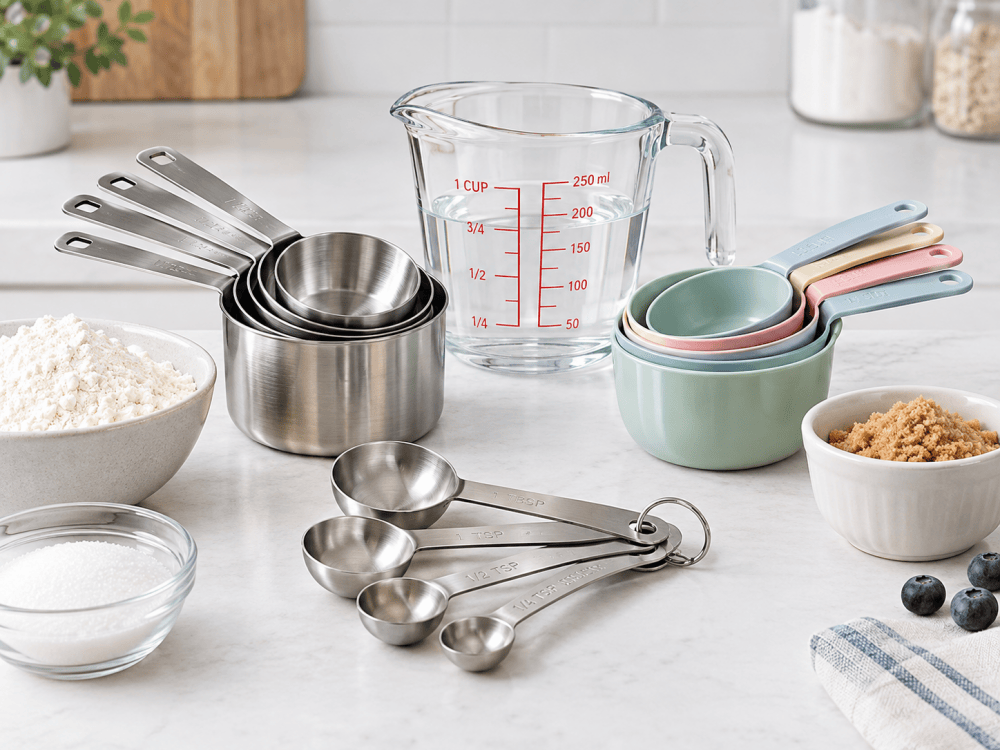
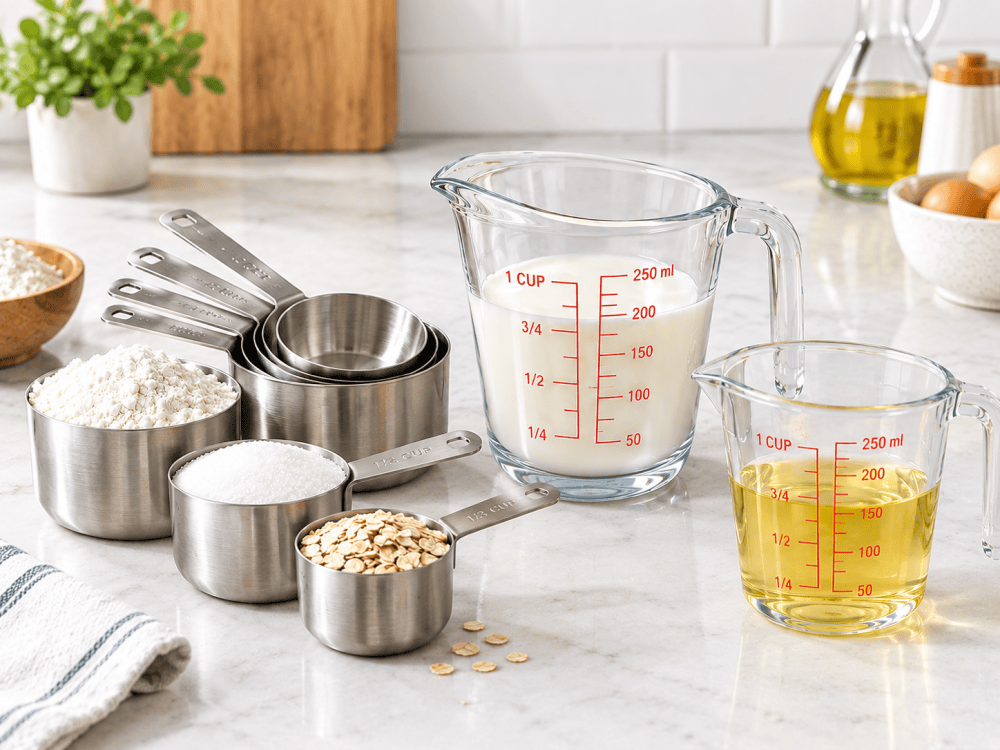
Dry measuring cups typically have fixed capacities and flat rims, making them convenient for measuring ingredients such as flour, sugar, oats, and rice.
Liquid measuring cups usually feature graduated markings, a pouring spout, and extra space above the measurement lines. They are designed for measuring water, milk, oil, and other pourable ingredients.
Both types can measure volume, but choosing the appropriate design makes measuring and transferring ingredients more convenient.
1. What Are Dry Measuring Cups?
Dry measuring cups are kitchen tools designed primarily for measuring dry ingredients by volume. They are commonly sold in sets containing several individual cups, each representing a specific capacity.
Typical sets include 1-cup, 1/2-cup, 1/3-cup, and 1/4-cup sizes. These fixed-capacity cups allow you to measure common recipe quantities without estimating the amount between graduated lines.
Common Features of Dry Measuring Cups
- Fixed capacities: Each cup represents a specific volume.
- Flat rims: The top edge makes it easy to level dry ingredients.
- Nesting designs: Many sets fit together to save storage space.
- Durable materials: Stainless steel and food-contact-safe plastics are common options.
What Are Dry Measuring Cups Used For?
Dry measuring cups are commonly used for:
- All-purpose flour and bread flour
- Granulated sugar and brown sugar
- Oats and breakfast cereals
- Rice, beans, and grains
- Chocolate chips, nuts, and other solid ingredients
For flour, spoon it loosely into the cup and level the top with a straight edge. Avoid pressing the flour down unless the recipe specifically instructs you to do so. Brown sugar is a common exception because many recipes call for it to be firmly packed.
2. What Are Liquid Measuring Cups?
Liquid measuring cups are designed for measuring ingredients that can be poured. They typically feature graduated markings along the side of the container, allowing you to check the required volume without filling the cup to the rim.
Many liquid measuring cups are made from transparent glass or plastic. A handle and pouring spout make it easier to hold the container and transfer liquids into mixing bowls, pots, and other cookware.
Common Features of Liquid Measuring Cups
- Graduated markings: Help you identify different liquid volumes.
- Pouring spouts: Make transferring liquids easier and help reduce spills.
- Transparent walls: Allow you to see the liquid level.
- Extra capacity: Provides space above the measurement line.
What Are Liquid Measuring Cups Used For?
Common applications include measuring:
- Water
- Milk and cream
- Cooking oil
- Broth and stock
- Juice and other pourable ingredients
To measure a liquid accurately, place the cup on a level surface and read the measurement line at eye level. Looking down from above or viewing the markings from below can cause reading errors.
3. Dry vs. Liquid Measuring Cups: Key Differences
The most noticeable differences are the cup design, measurement method, and ease of handling different ingredients.
| Feature | Dry Measuring Cups | Liquid Measuring Cups |
|---|---|---|
| Primary purpose | Measuring dry or solid ingredients | Measuring pourable liquids |
| Typical design | Individual cups with flat rims | Graduated container, often with a spout |
| Measurement method | Fill and level the top | Fill to the desired measurement line |
| Common materials | Stainless steel and plastic | Glass and transparent plastic |
| Storage | Often nest together | Usually stored as individual containers |
| Typical ingredients | Flour, sugar, oats, and rice | Water, milk, oil, and broth |
| Main advantage | Convenient for leveling dry ingredients | Easy to read and pour liquids |
Important: The distinction is primarily about design and convenience. Both types can hold different ingredients, but the right measuring technique is important for reliable results.
4. Can You Use Dry Measuring Cups for Liquids?
Yes. A dry measuring cup can hold and measure liquids. However, its fixed-capacity design means you generally need to fill it close to the rim to measure the intended quantity.
This can make the cup harder to carry without spilling, especially when measuring water, milk, or oil. A liquid measuring cup usually offers more room above the liquid and a spout for controlled pouring.
For small quantities, a dry measuring cup may still be practical. For larger quantities of liquids, a graduated liquid measuring cup is usually more convenient.
5. Can You Use Liquid Measuring Cups for Dry Ingredients?
Yes, but the design may make some dry ingredients harder to measure consistently. A deep liquid measuring cup can be difficult to fill and level, especially when measuring flour or other fine ingredients.
If a recipe requires a precise amount of flour or sugar by volume, a dry measuring cup is often easier to use. For more consistent baking results, weighing ingredients with a kitchen scale is often preferable because ingredient volume can vary with packing and measuring technique.
6. How to Measure Ingredients Accurately
Choosing the right measuring cup is only part of the process. Using the correct measuring technique can also help reduce errors.
How to Measure Dry Ingredients
- Choose the cup size that matches the quantity required.
- Fill the cup with the ingredient using a spoon or scoop.
- Avoid compressing flour unless the recipe specifies packing.
- Use a straight edge to level the ingredient across the rim.
- Transfer the measured ingredient to your mixing bowl.
How to Measure Liquid Ingredients
- Place the measuring cup on a flat, level surface.
- Pour the liquid into the cup slowly.
- Allow the liquid to settle before reading the markings.
- Position your eyes at the same height as the measurement line.
- Check the level before pouring the liquid into your recipe.
7. Does the Material of a Measuring Cup Matter?
Yes. Material affects durability, visibility, weight, maintenance, and the overall measuring experience. The best option depends on how you use your measuring cups.
Stainless Steel Measuring Cups
Stainless steel measuring cups are valued for their sturdy construction and durability. Many sets feature nesting designs that save storage space, making them practical for everyday cooking and baking.
Plastic Measuring Cups
Plastic measuring cups are generally lightweight and easy to handle. They can be produced in different colors, sizes, and designs. When choosing plastic cups, check that the material is suitable for the intended food-contact application and follow the manufacturer's care instructions.
Glass Measuring Cups
Glass measuring cups are especially useful for liquids because their transparent walls make it easy to see the contents and measurement markings. Many models also feature handles and pouring spouts. However, glass can break if dropped.
| Material | Main Advantages | Considerations |
|---|---|---|
| Stainless Steel | Durable, sturdy, often nestable | Contents are not visible through the material |
| Plastic | Lightweight, easy to handle, versatile | Check food-contact suitability and care requirements |
| Glass | Transparent, convenient for reading liquid levels | Can break if dropped |
8. Which Measuring Cups Should You Choose?
The right measuring cups depend on your cooking habits, preferred materials, storage space, and the ingredients you measure most often.
Choose Dry Measuring Cups If You:
- Bake frequently and measure flour, sugar, and oats.
- Prefer individual cups with clearly defined capacities.
- Want a set that nests together for convenient storage.
- Need to fill and level dry ingredients quickly.
Choose Liquid Measuring Cups If You:
- Frequently measure water, milk, oil, or broth.
- Prefer to see the liquid level through a transparent container.
- Want a pouring spout to help reduce spills.
- Often measure larger quantities of liquid.
Should You Own Both Types?
For many kitchens, having both types is the most practical solution. A dry measuring cup set covers common quantities of solid ingredients, while a liquid measuring cup makes reading and pouring liquids easier.
If you bake regularly, you may also want a kitchen scale. Weight measurements can provide greater consistency for ingredients such as flour, whose volume changes depending on how it is scooped or packed.
9. How Many Measuring Cups Do You Need?
For everyday cooking and baking, a dry measuring cup set containing 1 cup, 1/2 cup, 1/3 cup, and 1/4 cup is a useful starting point. A liquid measuring cup with clear graduations can cover common liquid measurements.
If you regularly cook for a family, prepare large batches, or bake in larger quantities, you may benefit from additional sizes and a higher-capacity liquid measuring cup.
When comparing sets, look beyond the number of pieces. Consider the capacity range, marking readability, handle design, storage method, and ease of cleaning.
10. Buying Considerations for Kitchenware Brands and Wholesale Buyers
For retailers, distributors, and kitchenware brands, dry and liquid measuring cups offer different product-positioning opportunities. A well-planned assortment should balance usability, materials, capacity, and target-market requirements.
- Product assortment: Consider dry measuring cup sets, liquid measuring cups, or coordinated collections.
- Material selection: Compare stainless steel, plastic, and glass based on intended use, appearance, and target price.
- Capacity range: Select sizes suited to everyday home cooking and baking.
- Usability: Evaluate handle comfort, pouring performance, marking readability, and storage convenience.
- Packaging: Consider nesting arrangements, protective packaging, and clear presentation of the set contents.
- Quality requirements: Verify material suitability, dimensional consistency, measurement accuracy, and applicable food-contact requirements.
Frequently Asked Questions
1. What is the main difference between dry and liquid measuring cups?
Dry measuring cups typically have fixed capacities and flat rims for leveling ingredients. Liquid measuring cups usually have graduated markings and a pouring spout for measuring and transferring liquids.
2. Are dry and liquid measuring cups the same size?
They can represent the same volume, but their physical designs differ. A properly calibrated 1-cup dry measuring cup and a liquid measuring cup filled to its 1-cup line are intended to measure the same volume.
3. Can I use a liquid measuring cup for flour?
Yes, but a dry measuring cup is generally easier to fill and level. For greater consistency in baking, weighing flour with a kitchen scale is often preferable.
4. Why should you read a liquid measuring cup at eye level?
Reading the markings at eye level helps reduce errors caused by viewing the liquid level from above or below the measurement line.
5. Are stainless steel or plastic measuring cups better?
Neither material is universally better. Stainless steel is valued for durability, while plastic is lightweight and versatile. The best choice depends on your intended use and care preferences.
6. Do I need both dry and liquid measuring cups?
Having both is useful for most kitchens. Dry measuring cups are convenient for leveling solid ingredients, while liquid measuring cups make it easier to read and pour liquids.
7. Are measuring cups accurate enough for baking?
Measuring cups can work well when used correctly, but volume measurements may vary with ingredient density and measuring technique. A kitchen scale is often preferable when a recipe requires greater consistency.
Final Thoughts
Dry and liquid measuring cups may look similar, but their designs serve different practical needs. Dry measuring cups make it easier to fill and level solid ingredients, while liquid measuring cups help you read liquid volumes and pour with greater control.
For everyday cooking and baking, choosing the appropriate measuring tools can make preparation more convenient and help you follow recipes consistently. Consider your most frequently measured ingredients, preferred materials, storage needs, and desired capacity range when selecting a measuring cup set.
Explore Kitchenware Solutions with Kitlucy
Discover kitchenware designed to support everyday cooking, food preparation, and baking needs. Explore Kitlucy's product range to find solutions for your kitchenware collection.
Explore KitlucyRelated Blogs