Measuring Cups: Types, Uses, and How to Choose the Right Set
Measuring Cups: Types, Uses, and How to Choose the Right Set
Measuring cups are essential kitchen tools for preparing recipes with consistent ingredient quantities. From measuring flour for cookies to portioning milk for pancakes, the right measuring cup can make everyday cooking and baking easier and more repeatable.
However, not all measuring cups are designed for the same purpose. Dry measuring cups, liquid measuring cups, and adjustable measuring cups differ in shape, reading method, materials, and convenience. Choosing a set also means considering capacity markings, storage, cleaning, and how often you cook.
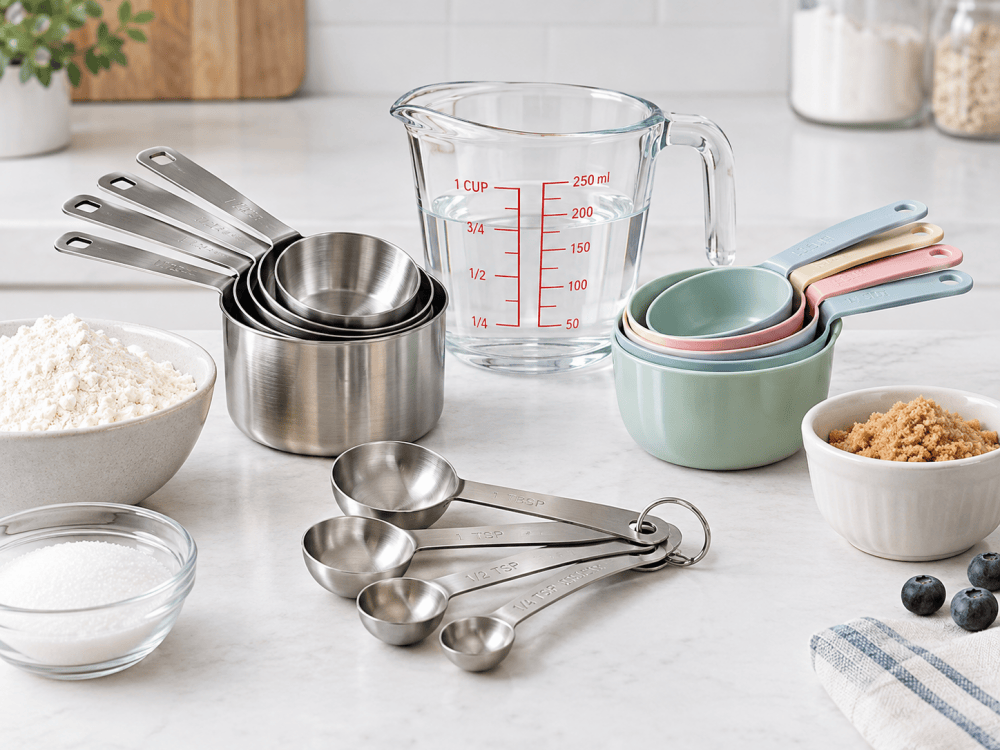
Dry measuring cups are generally designed for ingredients such as flour, sugar, and oats that can be filled and leveled. Liquid measuring cups usually feature graduated markings and a pouring spout. For most kitchens, a practical setup includes a set of dry measuring cups and a clearly marked liquid measuring cup. The best material and set configuration depend on your cooking habits, storage space, and care preferences.
This guide explains the main types of measuring cups, what they are used for, how common materials compare, and what to look for when choosing a measuring cup set for your kitchen or product range.
What Are Measuring Cups?
Measuring cups are kitchen tools used to portion ingredients by volume. They are commonly used in cooking, baking, meal preparation, and recipe testing. Many sets include several fixed capacities, while liquid measuring cups may use graduated markings on the side of a single container.
Measuring cups are especially useful when a recipe specifies quantities in cups, milliliters, or fluid ounces. However, volume is not the same as weight: a cup of flour and a cup of sugar do not weigh the same amount. Ingredient density and the way an ingredient is packed can affect the final quantity.
For recipes where precision is particularly important, especially baking, a kitchen scale can complement measuring cups by measuring ingredients by weight.
Common Types of Measuring Cups
1. Dry Measuring Cups
Dry measuring cups are typically sold as a set of individual cups in different capacities. They are designed for ingredients that can be scooped or poured into the cup and leveled at the rim, such as flour, granulated sugar, oats, rice, and many other dry ingredients.
Common set capacities include 1 cup, 1/2 cup, 1/3 cup, and 1/4 cup, although configurations vary by brand and market. Some sets include additional smaller sizes or metric markings.
Best for: Measuring dry ingredients and other ingredients for which a recipe specifies a volume measurement.
2. Liquid Measuring Cups
Liquid measuring cups are often made as a transparent jug or container with graduated markings and a pouring spout. The extra space above the measurement line helps users carry and pour liquids with less risk of spilling.
To read a liquid measurement, place the cup on a level surface and check the liquid level at eye height. Looking down at the markings from an angle can lead to an inaccurate reading.
Best for: Water, milk, stock, oil, and other pourable liquids.
3. Adjustable Measuring Cups
Adjustable measuring cups use a movable base or plunger-style mechanism to set a desired volume. Depending on the design, the ingredient can be pushed out of the cup after measuring, which may be helpful for sticky ingredients such as honey, syrup, or nut butter.
Because mechanisms and measurement ranges vary, check the manufacturer's instructions to understand how to set, read, disassemble, and clean the cup properly.
Best for: Cooks who frequently measure sticky or semi-solid ingredients and prefer a tool designed for easier release.
4. Measuring Cups with Multiple Units
Some measuring cups feature more than one measurement system, such as cups and milliliters or fluid ounces and milliliters. Dual-unit markings can be convenient in kitchens where recipes use different systems.
Before buying, check that the markings are easy to read and that the units are clearly identified. A product's available units and maximum capacity vary by model.
Best for: Users who follow recipes from different regions or prefer having more than one unit on the same tool.
Dry Measuring Cups vs. Liquid Measuring Cups
Although both types measure volume, their shapes and recommended reading methods serve different practical needs. A dry measuring cup is usually filled to its rim, while a liquid measuring cup is read at a marked line below the rim.
| Feature | Dry Measuring Cups | Liquid Measuring Cups |
|---|---|---|
| Typical design | Individual cups in fixed capacities | Graduated container or jug, often with a spout |
| Common ingredients | Flour, sugar, oats, grains, and similar ingredients | Water, milk, oil, stock, and other pourable liquids |
| How to measure | Fill according to the recipe method and level the top when appropriate | Place on a level surface and read the liquid line at eye height |
| Pouring | May require transferring ingredients from the cup | A spout can make pouring easier |
| Storage | Many sets nest together | Usually stored as one larger item |
| What to check | Capacity range, handle comfort, and clear size identification | Marking visibility, capacity, stability, and spout design |
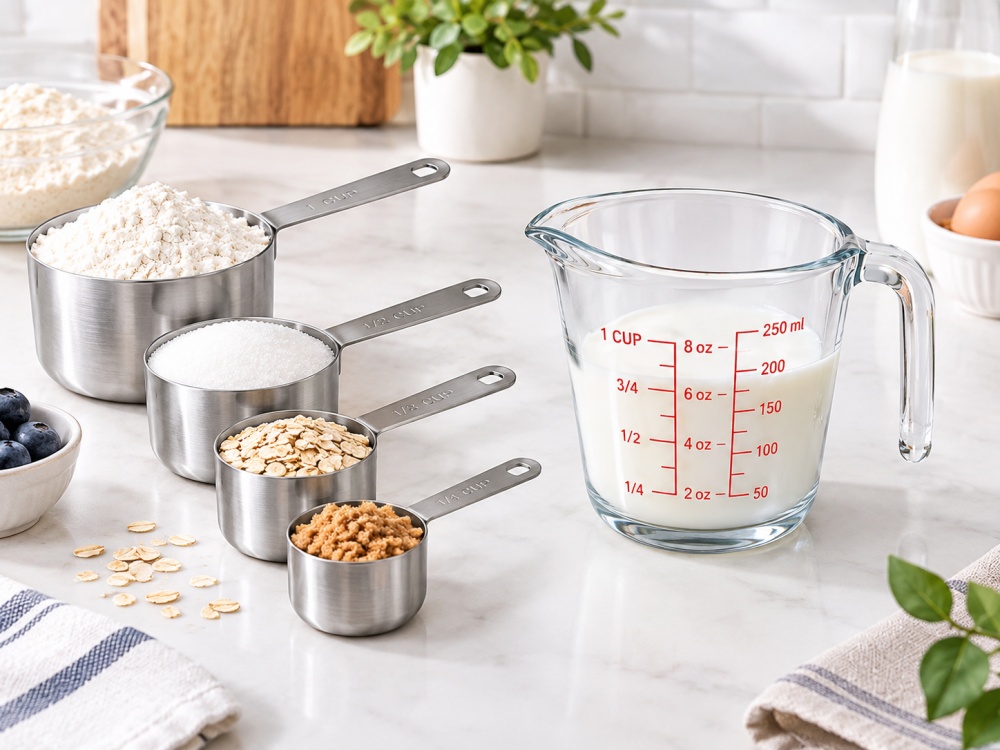
Important: The distinction is mainly about design and measuring technique, not an absolute rule that a cup can only measure one ingredient type. Follow the recipe's measuring method and use the tool that lets you measure the quantity clearly and consistently.
Common Measuring Cup Materials
Measuring cups are available in several materials. Each has different handling characteristics, appearance, care needs, and price positioning. Product quality and construction matter as much as the material name.
1. Stainless Steel Measuring Cups
Stainless steel measuring cups are popular for their sturdy feel and resistance to breakage during normal handling. They are often sold as nested sets and may suit kitchens that prefer a durable, simple-looking tool.
Check the finish, handle attachment, edge smoothness, capacity markings, and care instructions. Some stainless steel cups use engraved or stamped markings, while others use different marking methods.
2. Plastic Measuring Cups
Plastic measuring cups are often lightweight and available in a variety of colors and designs. Transparent plastic liquid measuring cups can make the liquid level visible, while opaque dry measuring cups may use contrasting markings or molded size indicators.
Performance depends on the specific plastic, construction, and product design. If heat exposure or dishwasher cleaning matters, confirm that the selected product is designed for those conditions rather than assuming all plastic cups have the same capabilities.
3. Glass Measuring Cups
Glass measuring cups are commonly used for liquids and often feature visible graduated markings and a pouring spout. Their transparency makes it easier to see the liquid level, and some products are designed for particular heating applications.
Glass is heavier than many plastic alternatives and can break if dropped or subjected to unsuitable temperature changes. Do not assume every glass measuring cup is safe for a microwave, stovetop, oven, or sudden temperature change; check the product's specific instructions.
Material Comparison at a Glance
| Factor | Stainless Steel | Plastic | Glass |
|---|---|---|---|
| Weight | Usually moderate, depending on thickness and size | Often lightweight | Usually heavier than comparable plastic designs |
| Visibility | Usually opaque unless specially designed | Can be transparent or opaque | Transparent |
| Breakage considerations | Does not shatter like glass, but can dent or deform | May scratch, crack, or deform depending on material and use | Can break if dropped or mishandled |
| Storage | Many sets nest together | Depends on design; many sets nest or stack | Usually stored individually |
| Key checks | Edges, handles, finish, and marking legibility | Material specification, marking durability, and care limits | Spout, handle, scale visibility, and stated heat-use limits |
There is no single best material for every kitchen. Consider the type of ingredients being measured, how the cups will be stored, how frequently they will be used, and the care instructions for the actual product.
How to Choose the Right Measuring Cup Set
1. Start with Your Main Use
If you bake frequently, a set of dry measuring cups is useful for measuring ingredients such as flour and sugar. If you often prepare sauces, drinks, soups, or batters, a liquid measuring cup with clear markings and a practical spout may be more useful. Many kitchens benefit from having both types.
2. Check the Capacity Range
Look for capacities that match the recipes you use most often. A common dry measuring cup set includes 1 cup, 1/2 cup, 1/3 cup, and 1/4 cup, while liquid measuring cups are available in a range of sizes. Larger and smaller capacities may be useful for batch cooking or more specialized recipes.
For liquid measuring cups, consider whether the maximum capacity is sufficient while leaving enough room to carry and pour the liquid safely.
3. Make Sure the Markings Are Easy to Read
Clear capacity markings help users select the correct cup quickly. Consider contrast, font size, placement, and whether the markings are likely to remain legible through normal use and cleaning.
If a cup includes multiple units, check that each unit is clearly identified. Do not rely on color alone to distinguish measurements.
4. Consider Handles and Pouring Design
Handles should be comfortable to grip and proportionate to the cup. For liquid measuring cups, a well-designed spout can help control pouring. Smooth edges and stable construction can also improve the everyday user experience.
5. Think About Storage
Nesting measuring cups can help keep a set together and reduce drawer clutter. Some sets use a ring or clip to hold the cups together, while other designs store separately. Check how easily the cups nest and whether the handles make the set awkward to store.
6. Review Cleaning and Care Instructions
Cleaning suitability depends on the specific material and construction. If you prefer dishwasher cleaning, confirm that the product is labeled or documented as dishwasher-safe. For cups with printed markings, moving parts, or special finishes, care instructions are particularly important.
7. Choose a Set That Fits Your Budget and Needs
Price can reflect material, construction, number of pieces, marking method, packaging, and brand positioning. Instead of comparing price alone, consider the capacities included, ease of use, expected service life, and whether the set meets your actual cooking needs.
How to Use Measuring Cups More Accurately
Choosing the right cup is only part of accurate measurement. The technique used to fill and read the cup can also affect recipe results.
- Follow the recipe's measuring method. If a recipe specifies a weight, use a kitchen scale where possible. If it specifies volume, use the stated cup or unit.
- Measure dry ingredients consistently. For flour, avoid compressing it unless the recipe specifically calls for that method. Fill and level the cup according to the recipe instructions.
- Read liquids at eye level. Set the measuring cup on a flat surface and check the liquid line straight on, rather than from above.
- Check the unit before pouring. Make sure you are reading cups, milliliters, or fluid ounces as intended.
- Use an appropriate size. Avoid filling a liquid cup to the brim if doing so makes it difficult to carry or pour without spilling.
- Clean the cup between ingredients when needed. Residue from oils, syrups, or other ingredients can affect the next measurement.
Measurement reminder: A US customary cup is commonly defined as 236.6 milliliters, while many recipes round it to 240 mL. Metric cup conventions can differ by country. When precision matters, follow the unit standard used by the recipe rather than assuming all cups have exactly the same capacity.
How Many Measuring Cups Do You Need?
The right number depends on your cooking habits and how much you prepare at one time.
- For occasional cooking: A basic dry measuring cup set and one liquid measuring cup may cover many everyday recipes.
- For frequent baking: A set with several dry capacities, a clearly marked liquid cup, and a kitchen scale can make ingredient preparation more consistent.
- For batch cooking: Larger-capacity liquid measuring cups and multiple sets can reduce the need to stop and wash tools between ingredients.
- For small kitchens: Nesting cups or a compact set can help save drawer space.
- For mixed recipe systems: Cups with clearly identified metric and customary units can be convenient, provided the conversions match the intended standard.
What Should Retailers and B2B Buyers Look For?
For retailers, importers, wholesalers, and private-label brands, selecting measuring cups involves more than choosing a material or color. Product configuration, usability, consistency, packaging, and the requirements of the target market all matter.
Product Configuration
Decide whether the range should include dry measuring cup sets, liquid measuring cups, or coordinated sets with measuring spoons. Consider which capacities and units suit the intended market and sales channel.
Material and Construction
Request clear material specifications for the actual product. Review handle attachment, edge finish, dimensional consistency, stability, spout design, and overall workmanship using representative samples.
Measurement Markings
Check the accuracy, legibility, placement, and durability of capacity markings. If products include more than one measurement system, confirm the units and capacities before approving production.
Quality and Compliance Documentation
Identify the requirements that apply to the product and destination market. Request relevant material information, test reports, and supporting documentation where applicable. Requirements can differ depending on the product's materials, intended use, and sales destination.
Customization and Packaging
Depending on supplier capabilities, potential project details may include colors, set combinations, branding, labels, retail packaging, and carton configuration. Confirm which options are available for the selected product rather than assuming every customization is supported.
Commercial Details
Before placing a bulk order, clarify sample availability, minimum order quantity, production lead time, packaging specifications, inspection arrangements, and shipping terms. Evaluate quotations on a like-for-like basis so that differences in product specifications and packaging are understood.
Purchasing tip: Approve a production-representative sample and a written specification before bulk production. This helps align the agreed capacity, markings, material, appearance, packaging, and quality expectations.
Frequently Asked Questions
What are measuring cups used for?
Measuring cups are used to measure ingredients by volume for cooking, baking, drinks, and meal preparation. Different designs may be better suited to dry ingredients or liquids.
What is the difference between dry and liquid measuring cups?
Dry measuring cups are commonly designed to be filled and leveled at the rim. Liquid measuring cups usually have graduated markings and extra space above the measurement lines, often with a spout for pouring.
Which material is best for measuring cups?
It depends on your needs. Stainless steel is often chosen for its sturdy construction, plastic for lightweight handling and design variety, and glass for transparency when measuring liquids. Check the actual product's construction and care instructions before choosing.
Are plastic measuring cups dishwasher-safe?
Some are, but not all. Dishwasher suitability depends on the plastic, design, markings, and manufacturer's instructions. Check the product-specific care guidance.
Can I use a liquid measuring cup for dry ingredients?
You can measure many dry ingredients in a liquid measuring cup, but it may be harder to level ingredients such as flour accurately. For recipes that depend on consistent dry-ingredient measurements, a dry measuring cup or kitchen scale may be more suitable.
How do I read a liquid measuring cup accurately?
Place the cup on a level surface, pour in the liquid, and read the marking at eye height. Make sure you are reading the correct unit and measurement line.
Do measuring cups and measuring spoons come as a set?
Some products combine measuring cups and measuring spoons, while others are sold separately. A combined set can be convenient for recipes that require both larger and smaller volume measurements.
What should I check before buying measuring cups wholesale?
Review the material specification, capacity range, unit markings, construction quality, packaging, sample availability, order quantity, production lead time, and applicable market requirements. Confirm these details with the supplier before placing a bulk order.
Final Thoughts: How to Choose the Right Measuring Cup Set
The right measuring cup set should fit the way you cook, the ingredients you prepare, and the level of precision your recipes require. Dry measuring cups are useful for many dry ingredients, while liquid measuring cups make it easier to read and pour measured liquids. Material, capacity, markings, storage, and cleaning requirements are all worth considering.
For home kitchens, a practical starting point is a set of dry measuring cups paired with a clearly marked liquid measuring cup. For retailers and B2B buyers, the selection process should also consider product configuration, quality consistency, packaging, market requirements, and commercial terms.
Exploring Kitchenware Products for Your Range?
Kitlucy provides kitchenware product information for buyers exploring options for their product collections. If you are sourcing measuring cups or related kitchen tools, define your preferred material, capacities, measurement units, set configuration, and packaging requirements before comparing suppliers.
Product availability, customization options, minimum order quantities, and project details should be confirmed directly for the specific item.
Visit KitlucyRelated Blogs