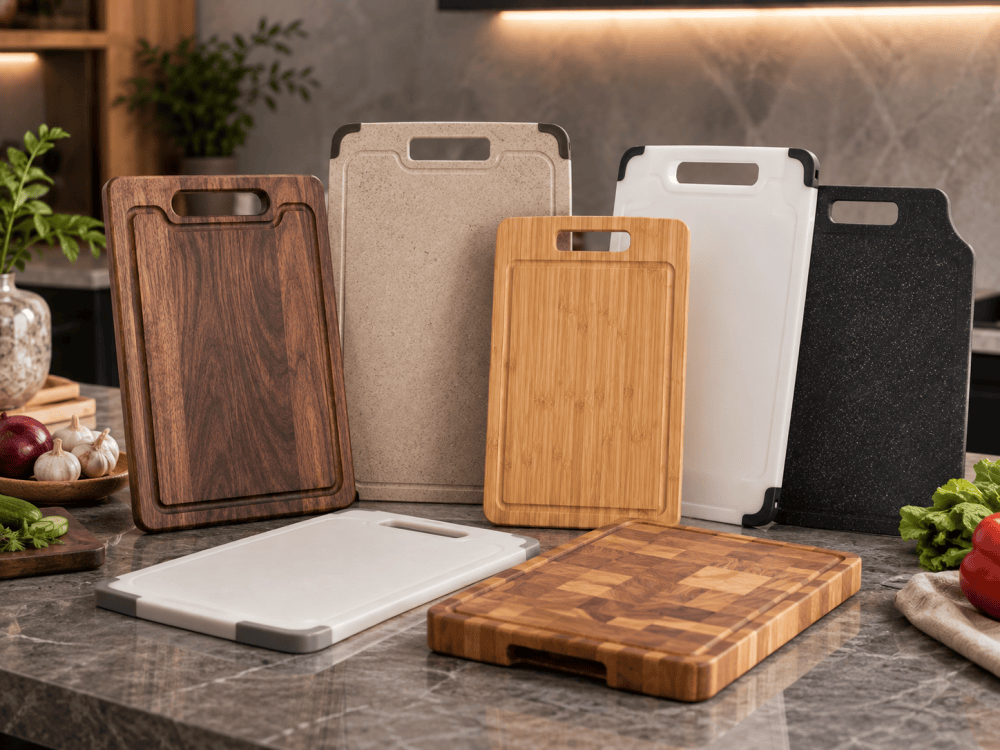
FDA & LFGB Certified Cutting Boards: Export Compliance Guide for Global Buyers (2026)
FDA & LFGB Certified Cutting Boards: Export Compliance Guide for Global Buyers (2026)
Food safety compliance has become one of the most important factors when sourcing cutting boards for international markets. For wholesalers, distributors, retailers, and private-label brands, choosing a supplier that can provide FDA and LFGB certified cutting boards helps reduce import risks and build stronger consumer trust.
As kitchenware regulations become stricter worldwide, buyers are paying more attention to food-contact material safety, migration testing, and production compliance. A cutting board may look simple, but the materials, manufacturing process, and certifications behind it directly affect whether the product can successfully enter global markets.
This guide explains the differences between FDA and LFGB requirements, which cutting board materials are easier to certify, what international buyers should check before placing orders, and how manufacturers ensure compliance for export markets.
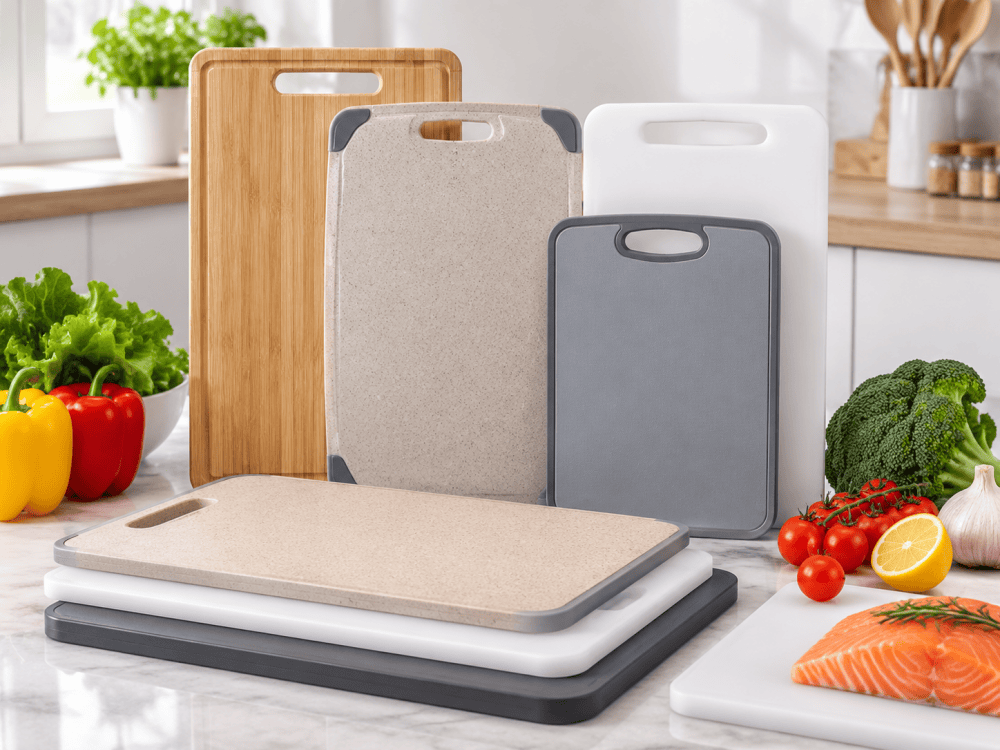
For export cutting boards, certification is not only a legal requirement but also a competitive advantage. Products with reliable food-contact compliance are easier to sell through supermarkets, online marketplaces, and professional kitchen channels.
Why Food Safety Certification Matters for Export Cutting Boards
Cutting boards are direct-contact food preparation products. During daily use, materials may come into contact with raw meat, vegetables, fruits, seafood, and other ingredients.
If the material contains unsafe substances or fails migration requirements, harmful components may transfer into food. Therefore, international buyers usually require suppliers to provide evidence that their cutting boards meet recognized food safety standards.
Benefits of Certified Cutting Boards
- Meet import requirements in target markets
- Reduce customs and compliance risks
- Increase retailer acceptance
- Improve consumer confidence
- Support private label and OEM projects
What Is FDA Certification for Cutting Boards?
FDA compliance refers to meeting food-contact material requirements established by the U.S. Food and Drug Administration. For cutting boards sold in the United States, materials must be suitable for repeated contact with food and must not release harmful substances under normal conditions of use.
FDA Requirements Focus On
- Material safety
- Chemical migration limits
- Food-contact suitability
- Production quality consistency
Common FDA-Compliant Cutting Board Materials
| Material | Application | Certification Consideration |
|---|---|---|
| PE Plastic | Commercial cutting boards | Common FDA food-contact material |
| PP Plastic | Household cutting boards | Widely used for food-grade products |
| Bamboo | Eco-friendly cutting boards | Requires additional material evaluation |
| Wood | Premium cutting boards | Depends on treatment and processing |
What Is LFGB Certification for Cutting Boards?
LFGB stands for the German Food and Commodities Act and is one of the most recognized food-contact safety standards in Europe, especially in Germany.
Many European buyers consider LFGB testing a higher-level requirement because it includes stricter evaluations related to migration, odor, and taste transfer.
Why European Buyers Prefer LFGB Certified Cutting Boards
- Higher consumer confidence in European markets
- Strict food-contact safety evaluation
- Suitable for premium kitchenware channels
- Helps brands meet EU market expectations
FDA vs LFGB: Main Differences
| Feature | FDA | LFGB |
|---|---|---|
| Main Market | United States | Germany and European Union markets |
| Main Focus | Food-contact safety | Migration, odor, taste, chemical safety |
| Common Buyers | US retailers and distributors | European brands and importers |
| Testing Level | High | Generally considered more comprehensive |
Do Export Cutting Boards Need Both FDA and LFGB?
Whether a cutting board requires FDA, LFGB, or both depends on the target market and buyer requirements.
- USA market: FDA food-contact compliance is commonly requested.
- European market: LFGB certification is frequently required by German and EU buyers.
- Global brands: Many companies prefer suppliers that can provide both certifications to simplify international distribution.
Cutting Board Material Compliance: Which Materials Are Easier to Certify?
When sourcing export cutting boards, buyers should understand that certification compliance is closely related to the raw materials used. Different materials have different testing requirements, durability characteristics, and food-contact safety considerations.
Choosing the right material not only affects product performance but also determines how smoothly the product can pass FDA, LFGB, and other international food-contact safety evaluations.
PE Cutting Boards: A Popular Choice for Commercial Export Markets
High-density polyethylene (PE) is one of the most commonly used materials for professional and commercial cutting boards. It is widely accepted because of its excellent durability, moisture resistance, and easy cleaning properties.
Advantages of PE Cutting Boards
- Excellent chemical stability
- Low moisture absorption
- Easy to clean and sanitize
- Suitable for repeated food contact
- Long service life in commercial kitchens
PE cutting boards are commonly used in restaurants, hotels, catering businesses, and food-processing environments. For export buyers, food-grade PE materials with proper testing documentation are often easier to introduce into global markets.
PP Cutting Boards: Lightweight and Consumer-Friendly
Polypropylene (PP) is another popular food-grade plastic material used for household cutting boards. It is lightweight, affordable, and suitable for colorful designs, foldable structures, and multifunctional kitchen products.
Why Buyers Choose PP Cutting Boards
- Lightweight and easy to handle
- Good heat resistance
- Suitable for modern kitchen designs
- Available in different colors and shapes
- Cost-effective for retail products
For brands targeting supermarkets, online retailers, and household kitchen markets, PP cutting boards are a practical option because they combine safety compliance with attractive product design.
Bamboo Cutting Boards: Eco-Friendly but Require Careful Processing
Bamboo cutting boards have gained popularity because of growing demand for sustainable kitchen products. However, bamboo requires stricter control during manufacturing because adhesives, coatings, and processing methods can affect food-contact safety.
Key Compliance Considerations
- Food-grade adhesive selection
- Safe surface treatment
- Moisture control during production
- Proper finishing process
For European markets, buyers often pay close attention to LFGB testing results for bamboo products because consumers place high importance on environmentally friendly and safe kitchen materials.
Wood Cutting Boards: Premium Appearance with Higher Requirements
Wooden cutting boards are popular in premium kitchenware markets because of their natural appearance and high perceived value. Materials such as acacia, maple, walnut, and beech are commonly used.
Important Factors for Certified Wooden Cutting Boards
- Wood species selection
- Moisture content control
- Food-safe coating or oil treatment
- Surface finishing quality
- Absence of harmful chemical residues
Compared with plastic cutting boards, wooden products require more attention during production to ensure consistency and long-term safety.
Stainless Steel Cutting Boards: High Hygiene Performance
Stainless steel cutting boards are becoming increasingly popular among buyers who prioritize hygiene and durability. They are especially suitable for professional kitchens and premium product lines.
Advantages of Stainless Steel Cutting Boards
- Excellent corrosion resistance
- Very easy to sanitize
- Long lifespan
- Suitable for high-temperature cleaning
- Premium market positioning
Many modern designs combine stainless steel with PP or silicone layers to create double-sided cutting boards, offering both hygiene and knife protection.
Material Comparison: Certification Difficulty and Application
| Material | Certification Difficulty | Main Advantages | Common Markets |
|---|---|---|---|
| PE | Low to Medium | Durable, hygienic, commercial use | USA, Europe, Food Service |
| PP | Low to Medium | Lightweight, affordable, versatile | Retail, Household |
| Bamboo | Medium | Eco-friendly appearance | Europe, Premium Retail |
| Wood | Medium to High | Natural premium value | Home Kitchen, Gift Market |
| Stainless Steel | Medium | High hygiene and durability | Professional Kitchen |
What Tests Are Required for FDA and LFGB Cutting Boards?
Before exporting cutting boards, manufacturers usually work with third-party laboratories to verify food-contact safety. The exact testing items depend on the material and target market.
Common Food Safety Tests
- Overall migration testing
- Specific migration testing
- Heavy metal testing
- Odor and taste evaluation
- Chemical composition analysis
- Material identification testing
FDA & LFGB Certification Process for Manufacturers
Professional cutting board manufacturers usually follow a structured compliance process to ensure stable quality from raw material selection to final shipment.
Step 1: Select Food-Grade Raw Materials
Manufacturers must choose approved materials that are suitable for direct food contact. Raw material suppliers should provide relevant compliance documents.
Step 2: Control Production Processes
Injection molding, cutting, polishing, assembly, and packaging processes must be controlled to prevent contamination or material inconsistency.
Step 3: Conduct Laboratory Testing
Samples are sent to professional testing organizations for FDA, LFGB, or other required compliance evaluations.
Step 4: Maintain Quality Documentation
Export suppliers should keep technical documents, test reports, material information, and production records for buyer verification.
A reliable cutting board manufacturer should not only provide certification reports but also demonstrate stable production capability, quality control systems, and experience with international markets.
Documents International Buyers Should Request
Before placing bulk orders, buyers should ask suppliers for necessary compliance documents to reduce sourcing risks.
- FDA food-contact compliance report
- LFGB test report (for European markets)
- Material safety documentation
- Factory quality inspection records
- Product specification sheets
- OEM customization information
Common Certification Problems During Export
Using Low-Quality Raw Materials
Some suppliers reduce costs by using inconsistent or unverified materials, which may cause testing failures and quality problems.
Changing Materials Without Retesting
Even small changes in suppliers, additives, coatings, or production processes may affect certification results.
Lack of Production Control
Certification is not only about passing one test. Consistent manufacturing quality is necessary to maintain compliance for long-term export business.
How Buyers Choose Certified Cutting Board Suppliers
For international buyers, certification is only one part of supplier evaluation. A reliable cutting board manufacturer should have not only FDA and LFGB compliance capabilities but also stable production, quality control systems, and experience serving global markets.
Before starting cooperation, buyers usually evaluate suppliers from several important aspects, including material control, manufacturing capability, customization service, and export experience.
1. Certification Capability
The first consideration is whether the supplier can provide valid food-contact safety documentation. Buyers should check whether test reports match the actual product material, model, and production process.
- FDA food-contact compliance reports
- LFGB certification reports for European markets
- Material safety documentation
- Third-party laboratory testing records
2. Manufacturing Experience
Experienced manufacturers understand international regulations and can provide more reliable products. They usually have better control over raw materials, production processes, and quality inspection.
For cutting board buyers, suppliers with long-term export experience can help reduce communication costs and avoid compliance problems during mass production.
3. OEM and Private Label Capability
Many global brands require customized cutting boards with unique designs, colors, packaging, and branding. Therefore, OEM capability has become an important factor when selecting suppliers.
Common OEM Services Include:
- Custom cutting board sizes
- Customized colors and materials
- Logo printing or engraving
- Custom packaging design
- Retail-ready solutions
- Product structure improvements
Why Certified Cutting Boards Are Important for Different Markets
| Market | Main Buyer Concerns | Recommended Compliance |
|---|---|---|
| United States | Food safety, retailer requirements, consumer trust | FDA compliance |
| Germany | Strict food-contact regulations | LFGB certification |
| European Union | Migration safety and chemical restrictions | LFGB / EU food-contact standards |
| Global Retail Brands | Multi-market distribution | FDA + LFGB preferred |
Risks of Exporting Cutting Boards Without Proper Certification
Selling kitchen products without proper food-contact compliance may create significant risks for brands, importers, and distributors.
Import and Customs Problems
Products without required documentation may face customs delays, additional inspections, or rejection during import procedures.
Retail Channel Restrictions
Large supermarkets and online platforms often require suppliers to provide safety documentation before approving products.
Brand Reputation Damage
Food-contact safety issues can negatively affect consumer trust and create long-term damage to a brand image.
Higher Business Costs
Correcting non-compliant products after shipment may result in additional testing, recalls, replacement costs, and logistics expenses.
For kitchenware brands, choosing a certified cutting board supplier at the beginning of product development is usually more cost-effective than solving compliance problems after mass production.
2026 Trends in Certified Cutting Board Markets
The global kitchenware market is moving toward safer, smarter, and more sustainable products. Cutting boards are no longer viewed as simple kitchen accessories but as functional products with strong design and compliance requirements.
Trend 1: Food Safety Becomes a Key Selling Point
Consumers increasingly pay attention to material safety, hygiene, and product transparency. Certified food-grade cutting boards are gaining stronger market advantages.
Trend 2: Eco-Friendly Materials Continue Growing
Sustainable materials such as bamboo, recycled plastics, and environmentally friendly composites are becoming more popular among global buyers.
Trend 3: Multifunctional Cutting Boards Are Increasing
Modern consumers prefer products that combine multiple functions, including:
- Double sided cutting boards
- Cutting boards with juice grooves
- Foldable cutting boards
- Cutting boards with storage features
- Anti-slip and ergonomic designs
Trend 4: Private Label Kitchenware Demand Is Growing
More retailers and brands are developing exclusive kitchenware collections. Suppliers with certification support and customization ability have stronger competitive advantages.
Frequently Asked Questions
What certification does a cutting board need for export?
The required certification depends on the destination market. FDA compliance is commonly required for the US market, while LFGB certification is frequently requested by European buyers.
Are FDA certified cutting boards safe?
Yes. FDA-compliant cutting boards are made from materials suitable for food contact and are tested to meet safety requirements.
Is LFGB certification mandatory in Europe?
Requirements vary by country and buyer. However, many European brands prefer LFGB-certified products because of its strict food-contact testing standards.
Which cutting board material is easiest to certify?
Food-grade PE and PP plastic cutting boards are generally easier to standardize because of their stable material properties and widespread use in food-contact applications.
Do bamboo cutting boards need FDA or LFGB testing?
Yes. Bamboo products may require food-contact safety testing depending on the market, especially regarding adhesives, coatings, and migration performance.
Can manufacturers provide custom certified cutting boards?
Yes. Professional OEM manufacturers can customize materials, sizes, colors, structures, packaging, and provide certification support for private-label projects.
How long does FDA or LFGB testing take?
Testing time depends on the product material and laboratory process. Most projects require several days to several weeks depending on test items.
What documents should buyers request from suppliers?
Buyers should request certification reports, material information, product specifications, quality inspection records, and export documentation.
Are certified cutting boards more expensive?
Certified products may have slightly higher production costs, but they provide better market access, lower compliance risks, and stronger brand value.
Why should brands work with experienced cutting board manufacturers?
Experienced suppliers understand international regulations, maintain stable quality control, and can provide better OEM support for global markets.
Conclusion
FDA and LFGB certifications are essential considerations when sourcing cutting boards for international markets. For buyers, certification represents more than a document—it reflects product safety, manufacturing reliability, and supplier professionalism.
Whether sourcing PE cutting boards, PP cutting boards, bamboo cutting boards, wooden cutting boards, or stainless steel cutting boards, choosing a manufacturer with strong compliance capabilities can help brands enter global markets more successfully.
As food safety standards continue to evolve in 2026, certified cutting boards with reliable materials, functional designs, and OEM customization options will become increasingly important for retailers, distributors, and kitchenware brands worldwide.
Looking for FDA & LFGB Certified Cutting Board Manufacturers?
Kitlucy provides food-grade cutting boards with FDA and LFGB compliant material options, supporting OEM, ODM, and private-label solutions for global kitchenware buyers.
Our cutting board solutions include PP cutting boards, PE cutting boards, double sided cutting boards, foldable cutting boards, and customized kitchen accessories.
Explore our cutting board collection:
//www.kitlucy.com/cutting-boards.html
Contact us for wholesale and OEM solutions:
//www.kitlucy.com/contact-us.html
Related Blogs