

How to Choose the Best Pizza Cutter for Your Kitchen
A good pizza cutter should do more than simply divide a pizza into slices. It should cut through the crust cleanly, handle toppings without excessive dragging, feel comfortable in your hand, and be easy to clean after use. With different blade styles, materials, sizes, and handle designs available, choosing the right one can be harder than it looks. This guide explains the key features to consider so you can find a pizza cutter that suits your cooking habits and kitchen needs.
Quick Answer: What Should You Look for in a Pizza Cutter?
The best pizza cutter for your kitchen depends on the type of pizza you prepare and how you prefer to cut it. For most households, a stainless steel wheel pizza cutter with a comfortable, stable handle and smooth blade rotation is a practical everyday choice.
Before buying, evaluate these six factors:
- Blade material: Look for suitable stainless steel with good corrosion resistance and a properly finished cutting edge.
- Blade size: Choose a wheel diameter that provides enough cutting clearance for your usual pizza styles.
- Handle design: A comfortable, secure grip makes cutting easier to control.
- Blade movement: The wheel should rotate smoothly without excessive wobbling or resistance.
- Safety: Consider blade protection, storage, and secure construction.
- Cleaning: Check whether food residues can be removed easily, especially around the axle and blade guard.
1. Choose the Right Type of Pizza Cutter
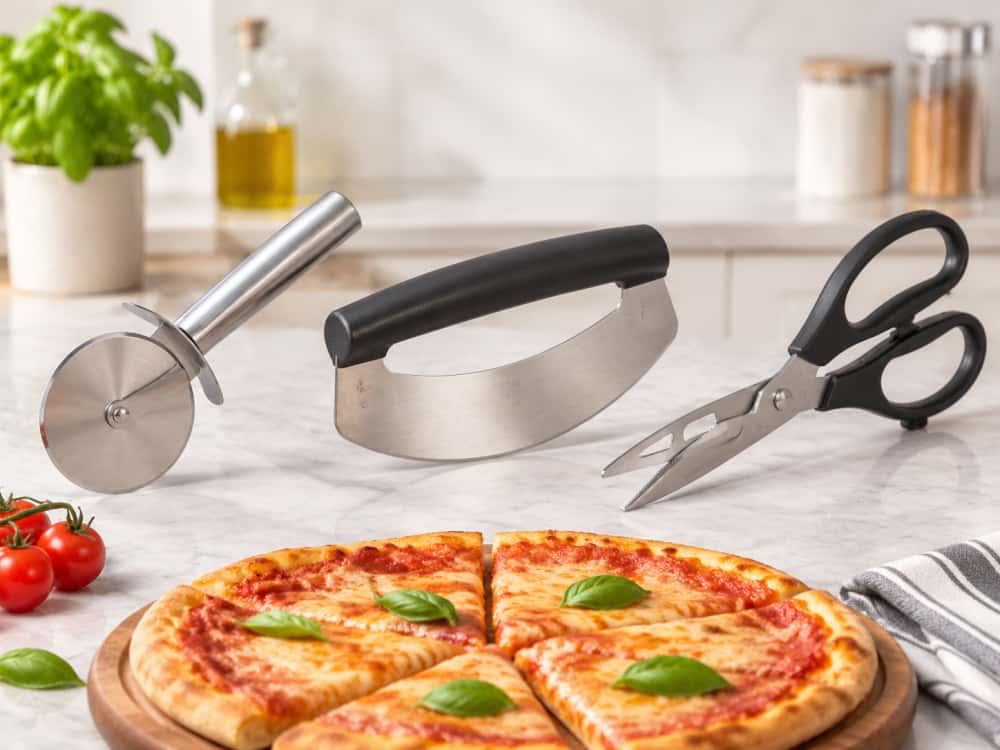
The first step is deciding which cutting mechanism best suits your needs. The three common designs are wheel pizza cutters, rocker pizza cutters, and pizza scissors. Each uses a different cutting motion and offers a different user experience.
Wheel Pizza Cutter: A Versatile Everyday Option
A wheel pizza cutter features a circular blade that rotates as it rolls across the pizza. Its straightforward operation makes it a popular choice for home kitchens and many food-service environments.
It is particularly convenient for making continuous cuts through regular pizza crusts. When choosing one, pay attention to blade diameter, rotation smoothness, handle clearance, and the construction around the central axle.
Rocker Pizza Cutter: Designed for Long Cutting Movements
A rocker pizza cutter uses a long, curved blade. Instead of rolling the blade, the user presses it down and rocks it across the pizza.
This design can be useful when cutting larger pizzas because the extended blade covers a longer section in one movement. However, it takes up more storage space and requires careful handling because of its exposed cutting edge.
Pizza Scissors: An Alternative Cutting Method
Pizza scissors use two pivoting blades to cut through pizza with a scissor-like action. Some models include a supporting base that helps lift or serve individual slices.
They can be useful for people who prefer controlled, shorter cutting movements. Their pivot and blade connection, however, need to be considered when evaluating cleaning and maintenance.
| Pizza Cutter Type | Main Advantage | Potential Limitation | Best Suited For |
|---|---|---|---|
| Wheel Cutter | Easy rolling action and compact design | Food can collect around the axle | Everyday home pizza cutting |
| Rocker Cutter | Long cutting path across the pizza | Requires more storage space | Large pizzas and rocking cuts |
| Pizza Scissors | Controlled scissor-style cutting | Pivot area may require extra cleaning | Alternative cutting and slice handling |
If you want a closer comparison of these designs, read our guide to pizza cutter types: wheel vs. rocker vs. pizza scissors.
2. Check the Blade Material and Cutting Edge
The blade is the most important working component of a pizza cutter. Its material, thickness, edge geometry, and surface finish all influence cutting performance and long-term maintenance.
Why Is Stainless Steel Commonly Used?
Stainless steel is widely used for pizza cutter blades because it offers corrosion resistance and is suitable for repeated kitchen use when the correct grade and manufacturing processes are selected.
It is a practical material for products that come into contact with moisture, tomato sauce, cheese, oil, and other food residues. However, not all stainless steel blades have the same properties. The specific grade, thickness, finishing process, and quality of construction matter.
What Should You Check on a Pizza Cutter Blade?
- Material: Check the stated stainless steel grade or other specified blade material.
- Edge quality: The cutting edge should be consistent and free from visible defects.
- Blade thickness: The blade should provide suitable stability without making the product unnecessarily heavy.
- Surface finish: A properly finished surface is easier to inspect and maintain.
- Corrosion resistance: Consider the material specification and care instructions for the intended kitchen environment.
Does a Sharper Blade Always Mean a Better Pizza Cutter?
Not necessarily. A sharp edge is important, but the overall cutting experience also depends on blade geometry, wheel rotation, alignment, and how the user applies pressure.
A blade that is poorly aligned or difficult to rotate may still perform badly even if its edge is sharp. For this reason, it is important to evaluate the complete cutting mechanism rather than focusing on sharpness alone.
3. Choose the Right Pizza Cutter Wheel Size
Pizza cutter wheel size is another important buying consideration. The diameter affects the cutting path, clearance between the handle and pizza surface, and the overall proportions of the tool.
A small wheel may be compact and easy to store, while a larger wheel can provide greater clearance when cutting thicker crusts or pizzas with substantial toppings. The best size depends on the intended use and the complete product design.
Small vs. Large Pizza Cutter Wheels
| Feature | Smaller Wheel | Larger Wheel |
|---|---|---|
| Storage | Usually easier to store | May require more drawer space |
| Handling | Can feel compact and lightweight | May offer more clearance depending on handle design |
| Cutting application | Suitable for many everyday pizza portions | Can be useful for thicker crusts and larger cutting paths |
| Design considerations | Axle strength and handle clearance | Blade stability, weight, and balance |
There is no universal wheel diameter that works best for every pizza cutter. Instead of choosing the largest available blade, consider whether its size matches your typical pizza thickness, handle clearance, and storage preferences.
4. Look for a Comfortable and Secure Handle
A pizza cutter handle affects how comfortably and confidently the user can control the blade. Even a well-made stainless steel wheel may feel awkward if the handle is too small, slippery, poorly balanced, or difficult to grip.
Handle Materials to Consider
Plastic Handles
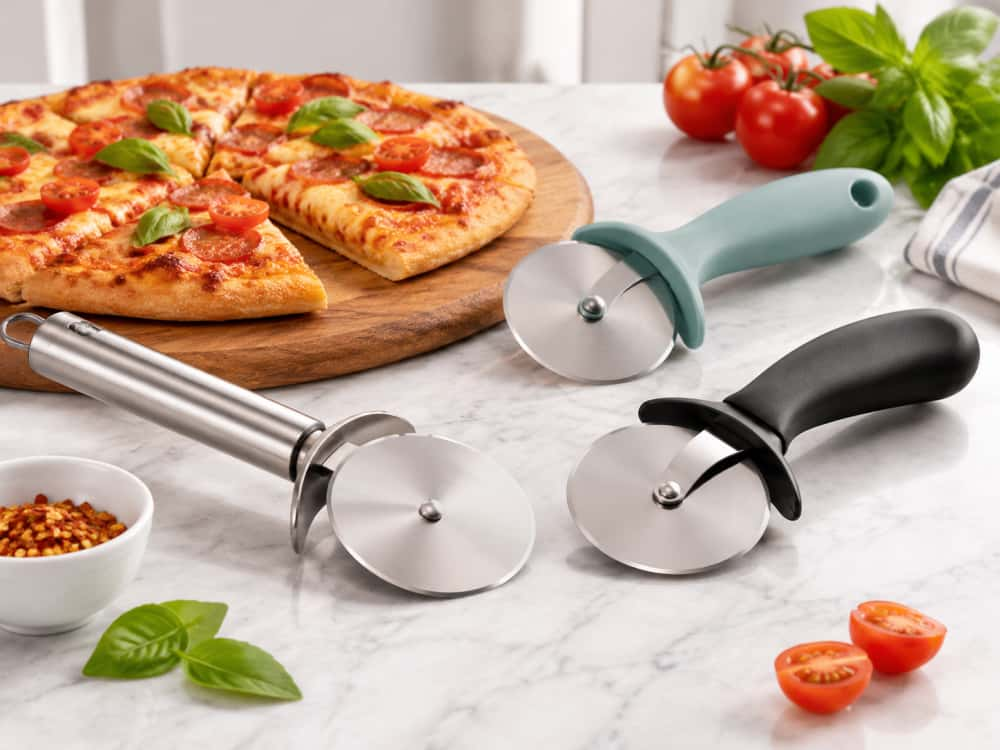
Plastic handles are common in everyday pizza cutters. Materials such as polypropylene (PP) can be molded into different shapes, sizes, and colors, giving manufacturers flexibility in product design.
They can also support lightweight construction and a wide range of retail price points. When evaluating a plastic handle, check its strength, surface finish, connection to the blade assembly, and resistance to the intended cleaning conditions.
TPR and Soft-Touch Handles
TPR and other soft-touch materials can provide a more cushioned grip. They may be used on handle surfaces or as part of a multi-material handle design.
For products with combined materials, the bonding or assembly between components should be secure. Buyers should also confirm that all food-contact components are appropriate for their intended use.
Stainless Steel Handles
Stainless steel handles can create a clean, modern appearance and provide a durable structural option. However, grip comfort depends on shape, surface treatment, weight, and whether the design includes a non-slip feature.
What Makes a Handle Comfortable?
- A shape that fits naturally in the hand.
- Enough grip area for stable control.
- A surface that is comfortable and not excessively slippery.
- Balanced weight distribution between the handle and blade.
- A secure connection that does not loosen during normal use.
5. Pay Attention to Blade Rotation and Construction
For a wheel pizza cutter, smooth blade rotation is essential. The wheel should move freely around its axle while remaining stable during cutting.
Poor construction can lead to wobbling, uneven movement, excessive friction, or difficulty cleaning the product. These issues may affect the user's control and the overall cutting experience.
Key Construction Features to Inspect
- Axle stability: The central connection should hold the blade securely.
- Rotation: The wheel should rotate smoothly without unnecessary resistance.
- Blade alignment: The wheel should sit correctly within the handle or guard structure.
- Handle assembly: Connections should be secure, with no obvious looseness or sharp defects.
- Surface quality: Inspect the blade, handle, and joints for burrs, scratches, or poor finishing.
For rocker cutters and pizza scissors, the corresponding inspection points are blade stability, handle construction, and pivot movement rather than wheel rotation.
6. Consider Safety Features and Storage
Pizza cutters have sharp edges, so safe handling and storage should be part of the buying decision. A practical design should allow users to control the tool comfortably while reducing unnecessary contact with the cutting edge.
Useful Safety Features
- Blade guards: Some wheel cutters include a guard that helps reduce accidental contact with part of the blade.
- Protective covers: A removable cover can protect the blade during storage when designed securely.
- Stable handles: A secure grip helps users maintain control while cutting.
- Safe storage: A drawer organizer, utensil holder, or dedicated storage solution can help keep sharp edges away from other kitchen tools.
A blade guard does not make a pizza cutter completely safe to handle. Users should always keep fingers away from the cutting edge and store the tool out of children's reach.
7. Choose a Pizza Cutter That Is Easy to Clean
Pizza cutting can leave behind cheese, oil, tomato sauce, and other food residues. If these materials collect around the blade assembly or handle connections, cleaning may become more difficult.
Cleaning Considerations by Design
| Pizza Cutter Type | Areas to Check | Cleaning Consideration |
|---|---|---|
| Wheel Cutter | Axle, blade guard, handle connection | Food residue may collect around the rotating assembly. |
| Rocker Cutter | Both sides of the blade, handle joints | The exposed blade needs careful cleaning and drying. |
| Pizza Scissors | Pivot, blade surfaces, handle connection | The pivot area may require extra attention. |
Are Pizza Cutters Dishwasher Safe?
Some pizza cutters are designed for dishwasher cleaning, but this should never be assumed based on appearance or blade material alone.
Dishwasher suitability depends on the complete product construction, including the blade, handle, coatings, adhesives, and assembled components. High temperatures, detergent exposure, and repeated washing may affect certain materials or connections.
Always check the manufacturer's care instructions for the specific model. If dishwasher use is not confirmed, hand washing and thorough drying are the safer default.
8. Match the Pizza Cutter to Your Cooking Habits
The right pizza cutter is not necessarily the most expensive or the one with the largest blade. It is the tool that best matches how often you prepare pizza, the crust styles you prefer, and the amount of storage space available.
| Your Needs | Recommended Design | Why It May Suit You |
|---|---|---|
| Occasional homemade pizza | Basic wheel cutter | Simple operation and compact storage. |
| Regular family pizza nights | Wheel cutter with ergonomic handle | Practical for repeated everyday use. |
| Large homemade pizzas | Rocker cutter or suitable large wheel | Offers an alternative cutting path for larger pizzas. |
| Alternative cutting and serving method | Pizza scissors | Provides scissor-style control and may support slice handling. |
| Frequent food preparation | Well-constructed wheel or rocker cutter | Allows buyers to prioritize stable construction and maintenance. |
9. Pizza Cutter Buying Checklist
Before making a purchase, use this checklist to compare different products. It can also help retailers and kitchenware buyers create a more consistent product evaluation process.
- Is the cutter type suitable for your preferred pizza styles?
- Is the blade made from a suitable, clearly specified material?
- Is the cutting edge evenly finished?
- Does the wheel rotate smoothly, if it is a rotary design?
- Is the handle comfortable and secure to hold?
- Is the overall weight balanced and easy to control?
- Can food residue be cleaned from the blade assembly and joints?
- Are the storage and blade protection features appropriate?
- Are the cleaning instructions clear?
- Does the product offer good value for its intended use?
10. What Should Retailers and Wholesale Buyers Look for?
For kitchenware retailers, distributors, importers, and private-label brands, choosing a pizza cutter involves additional considerations beyond the consumer buying checklist. Product consistency, manufacturing quality, packaging, and customization options can all influence sourcing decisions.
Evaluate Product Specifications
Before placing a bulk order, buyers should confirm the following details with the supplier:
- Blade material, thickness, diameter, and finish.
- Handle material, dimensions, and color options.
- Axle or pivot construction, depending on the cutter type.
- Product weight and overall dimensions.
- Cleaning and maintenance instructions.
- Packaging design and protection for sharp components.
- Applicable food-contact compliance documentation for relevant components and intended use.
Consider OEM and Private-Label Customization
Pizza cutters can be developed in different styles to suit a brand's target market and retail positioning. Customization may include handle colors, material combinations, blade dimensions, surface finishes, logo placement, and packaging.
For a private-label project, buyers should review product samples, confirm approved specifications, and establish quality-control requirements before mass production. Any changes to materials, components, or design should be evaluated against the agreed product requirements.
If you are building a broader kitchen accessory range, explore Kitlucy's kitchen gadgets and customized kitchenware solutions.
Frequently Asked Questions About Choosing a Pizza Cutter
What is the best type of pizza cutter for home use?
A wheel pizza cutter is a practical choice for most home kitchens because it is easy to operate, compact, and suitable for many everyday pizza styles. A rocker cutter or pizza scissors may be better for users who prefer those specific cutting methods.
Is a stainless steel pizza cutter better?
Stainless steel is a popular blade material because it offers corrosion resistance and is suitable for repeated kitchen use when properly specified and maintained. However, overall performance also depends on blade geometry, edge quality, construction, and handle design.
What size pizza cutter wheel is best?
The best wheel diameter depends on the pizza size, crust thickness, and handle clearance. A larger wheel may provide more clearance for some applications, while a smaller wheel can be easier to store. There is no single ideal diameter for every kitchen.
Why does my pizza cutter drag instead of cutting?
A pizza cutter may drag because its blade is dull, the wheel does not rotate smoothly, or the pizza has a thick crust or dense toppings. Check the blade edge, axle movement, and overall construction. Applying controlled pressure and using a suitable cutting surface can also help.
Are larger pizza cutters always better?
No. A larger wheel can offer greater clearance and a longer cutting path, but it may also increase the product's size and weight. The best design balances blade dimensions, handling, cutting performance, and storage convenience.
Can I use a pizza cutter on a wooden or plastic cutting board?
A suitable cutting board can provide a stable surface for pizza cutting. However, repeated cutting may leave marks on the board, and some materials may be more susceptible to damage than others. Check the cutting board manufacturer's care guidance and avoid cutting directly on surfaces that can be easily damaged.
How often should I replace a pizza cutter?
There is no fixed replacement schedule. Replace a pizza cutter when its blade becomes damaged, the wheel or pivot no longer functions properly, the handle becomes loose, or the product cannot be cleaned and maintained adequately.
What should I look for when buying pizza cutters wholesale?
Wholesale buyers should review material specifications, blade dimensions, construction quality, handle design, product consistency, packaging, and supplier quality-control procedures. For private-label projects, customization options and sample approval are also important.
Conclusion: Choose a Pizza Cutter That Fits Your Needs
Choosing the best pizza cutter means looking beyond its appearance. Blade material, wheel size, cutting mechanism, handle comfort, construction quality, safety, and cleaning requirements all influence the product's performance.
For most households, a well-designed stainless steel wheel pizza cutter is a practical starting point. If you prefer a long rocking motion or a different way to portion pizza, a rocker cutter or pizza scissors may be worth considering.
By understanding these features before buying, you can select a pizza cutter that suits your cooking habits and offers a better everyday kitchen experience.
Develop Your Kitchenware Product Collection with Kitlucy
Kitlucy works with kitchenware brands, distributors, and retailers on product sourcing and customized kitchenware projects. If you are planning to expand your kitchen gadget range or develop private-label products, contact our team to discuss your product specifications and OEM requirements.
Contact KitlucyRelated Blogs