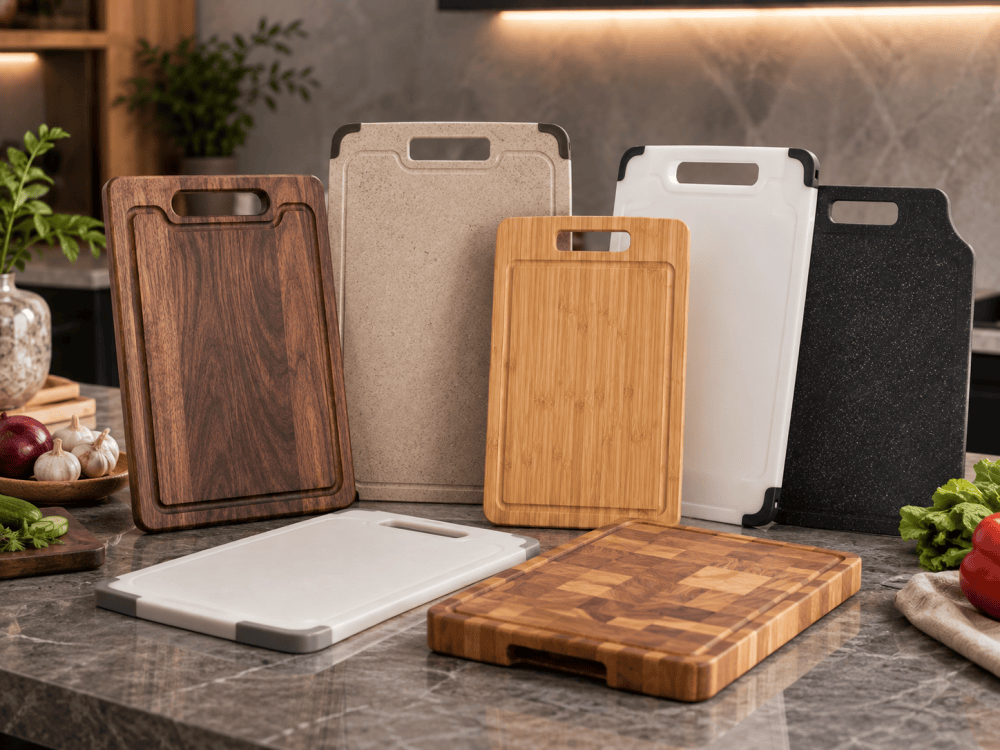
How to Prevent Cutting Boards from Slipping: 12 Proven Ways for a Safer Kitchen (2026 Guide)
How to Prevent Cutting Boards from Slipping: 12 Proven Ways for a Safer Kitchen (2026 Guide)
A slipping cutting board is one of the most common—and most overlooked—kitchen safety hazards. Whether you're slicing vegetables, carving meat, or chopping herbs, a cutting board that moves unexpectedly can cause knife injuries, uneven cuts, and food contamination.
Fortunately, preventing a cutting board from sliding is simple once you understand why it happens. From using a damp towel to choosing a non-slip cutting board with rubber feet, there are several proven solutions that make food preparation safer and more efficient.
In this complete guide, you'll learn why cutting boards slip, the best methods to stabilize them, how different countertop materials affect grip, and how to choose a cutting board that stays securely in place.
Why Does a Cutting Board Keep Slipping?
If your cutting board keeps slipping, the problem usually isn't the board itself—it's the combination of the board, countertop surface, moisture, and cutting force. Every time you apply pressure with a knife, horizontal force pushes the board across the countertop. Without enough friction underneath, even a heavy chopping board can slide.
Several factors contribute to this problem:
- Smooth countertops such as granite, quartz, marble, or stainless steel.
- Lightweight plastic cutting boards.
- Water, oil, or food residue trapped underneath the board.
- Warped or uneven cutting boards.
- Aggressive chopping motions using chef's knives or cleavers.
According to professional chefs, a moving cutting board is one of the leading causes of accidental knife slips. Stabilizing the board before cutting is considered a basic food preparation safety practice in both commercial and home kitchens.
Why a Sliding Cutting Board Is Dangerous
Many people underestimate how dangerous a moving cutting board can be. Even slight movement during chopping can redirect a knife toward your hand instead of the food you're cutting.
Besides increasing the risk of injury, a sliding board can also reduce kitchen efficiency and create unnecessary mess.
Common Safety Risks
- Knife slipping toward your fingers.
- Food falling off the board.
- Uneven slicing and poor cutting accuracy.
- Spilled juices contaminating countertops.
- Cross-contamination between raw and cooked foods.
For commercial kitchens, unstable cutting boards may also violate food safety procedures if they interfere with proper food handling practices.
Which Cutting Boards Slip the Most?
Not all cutting boards behave the same way. Material, weight, thickness, and surface texture all affect how much grip a board has during use.
| Cutting Board Material | Slip Resistance | Typical Use |
|---|---|---|
| Thin HDPE Plastic | Low | Budget household boards |
| Thick HDPE with Rubber Feet | Excellent | Commercial kitchens |
| Polypropylene (PP) | Moderate | General home cooking |
| Bamboo | Good | Home kitchens |
| Solid Hardwood | Very Good | Premium home kitchens |
| Glass Cutting Boards | Poor | Serving and display only |
Heavy wooden chopping boards naturally stay in place better because of their weight, while lightweight plastic boards often require additional anti-slip support.
How Your Countertop Affects Board Stability
The countertop material beneath your cutting board plays a surprisingly important role in preventing movement.
| Countertop Material | Grip Level | Likelihood of Sliding |
|---|---|---|
| Granite | Low | High |
| Quartz | Low | High |
| Marble | Very Low | Very High |
| Stainless Steel | Very Low | Very High |
| Laminate | Moderate | Medium |
| Wood Butcher Block | High | Low |
Smooth stone countertops look beautiful, but they provide very little friction. That's why many professional kitchens add non-slip mats or rubber feet underneath their cutting boards, especially on stainless steel preparation tables.
The classic damp kitchen towel trick used by professional chefs works by increasing friction between the countertop and the cutting board, making it one of the fastest and most effective ways to stop a cutting board from moving.
Signs It's Time to Improve Your Cutting Board Stability
If you notice any of the following issues, your cutting board probably needs additional support:
- The board moves every time you chop.
- One corner lifts off the countertop.
- The board rocks because it has warped.
- You constantly need to reposition the board.
- Your countertop becomes wet during food preparation.
- The board slides while carving meat.
Fortunately, most of these problems can be solved without replacing your cutting board. In the next section, we'll explore 12 proven methods to prevent cutting boards from slipping, from simple household hacks to professional kitchen solutions used by chefs every day.
12 Proven Ways to Prevent Cutting Boards from Slipping
If you're wondering how to keep a cutting board from sliding, the good news is that there are many effective solutions. Some require no additional tools at all, while others involve inexpensive accessories that can dramatically improve kitchen safety.
Below are the most reliable methods used by both home cooks and professional chefs.
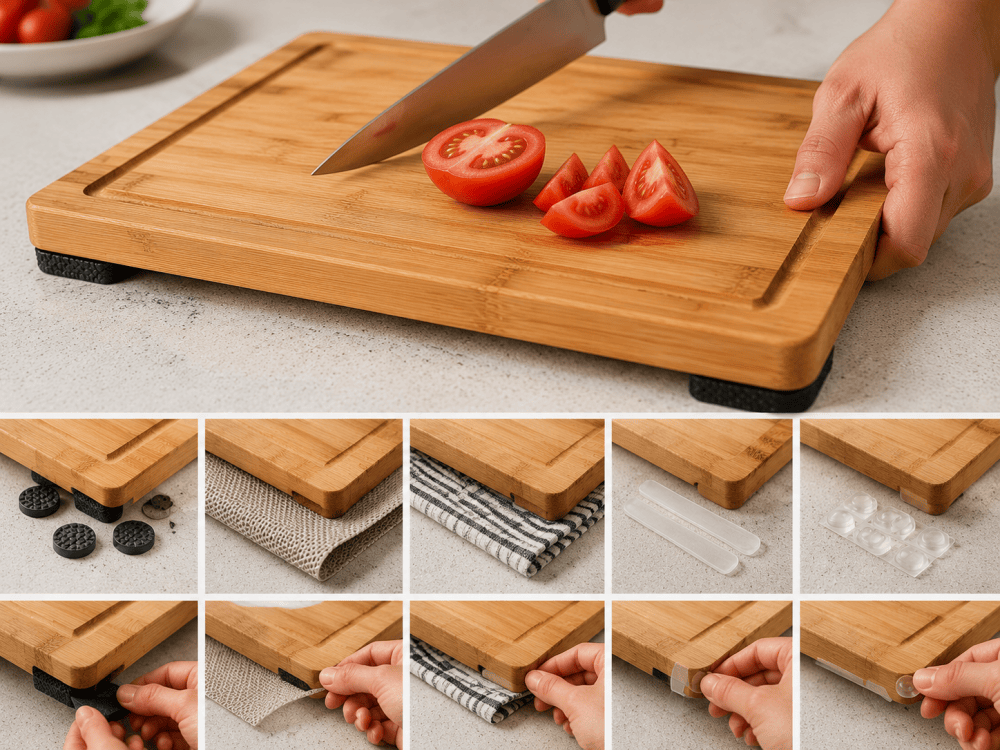
1. Place a Damp Kitchen Towel Under the Board
This is the most widely recommended technique in professional kitchens.
Simply wet a clean kitchen towel or paper towel, wring out the excess water, and place it flat beneath the cutting board. The moisture creates friction between the countertop and the towel, preventing the board from sliding.
Best for:
- Granite countertops
- Quartz countertops
- Marble surfaces
- Stainless steel worktops
The towel should be damp—not soaking wet. Excess water may create instability instead of improving grip.
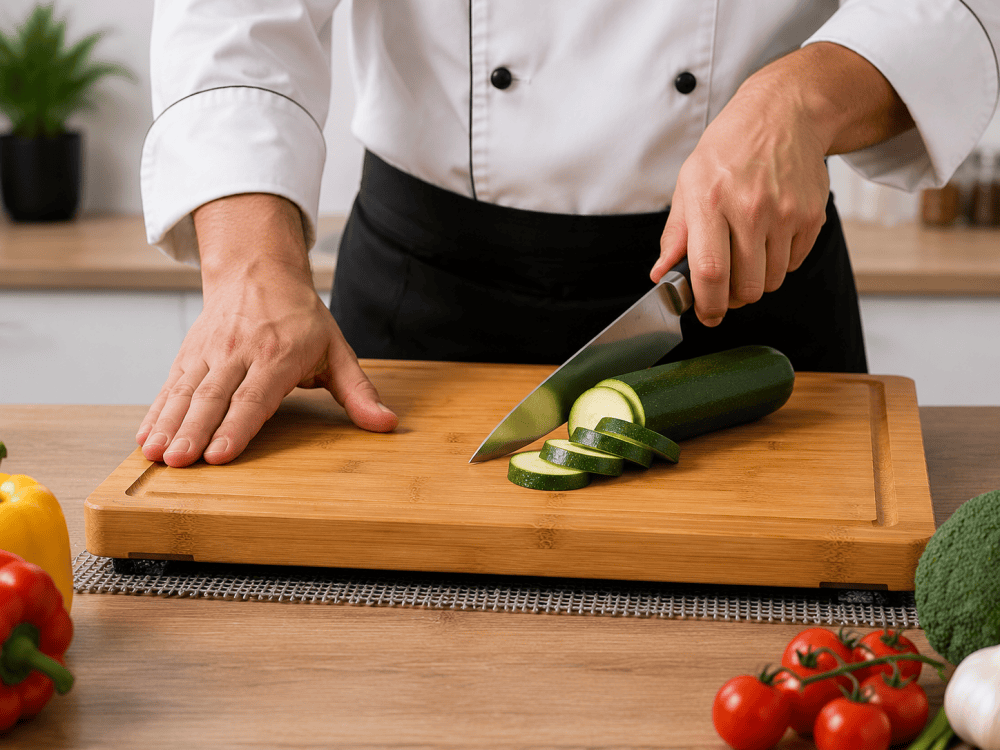
2. Use a Non-Slip Silicone Mat
A silicone cutting board mat provides one of the best long-term solutions. Unlike towels, silicone mats remain dry, reusable, and easy to clean.
They work especially well with lightweight HDPE and polypropylene cutting boards.
- Excellent grip
- Reusable for years
- Dishwasher safe
- Suitable for all countertop materials

3. Choose a Cutting Board with Rubber Feet
Many premium cutting boards include integrated non-slip rubber feet or TPR edges. These features increase friction and keep the board securely in place during heavy chopping.
Rubber feet are particularly popular on commercial HDPE cutting boards because they provide stability without requiring additional accessories.
4. Use Shelf Liner or Drawer Liner
Non-slip shelf liner is an inexpensive alternative to silicone mats.
Simply cut a piece slightly smaller than your cutting board and place it underneath whenever you're preparing food.
Benefits include:
- Low cost
- Easy to trim to size
- Reusable
- Good grip on smooth countertops
5. Add Silicone Corner Grips or Rubber Pads
If your cutting board doesn't already have non-slip feet, adhesive silicone pads are a simple upgrade.
Attach one pad to each corner to increase stability while keeping the board level.
This solution works well for:
- Wooden cutting boards
- Bamboo boards
- Plastic chopping boards
6. Choose a Heavier Cutting Board
Weight naturally improves stability. Thick hardwood boards and commercial-grade HDPE boards are much less likely to slide than thin, lightweight plastic boards.
| Board Type | Average Stability |
|---|---|
| Thin Plastic Board | ★★☆☆☆ |
| Medium PP Board | ★★★☆☆ |
| Thick HDPE Board | ★★★★☆ |
| Hardwood Board | ★★★★★ |
7. Keep the Countertop Completely Dry
Many people assume water helps prevent slipping, but water trapped directly between the board and countertop can actually reduce friction.
Before placing the board:
- Wipe away water.
- Remove grease or oil.
- Clean food residue.
- Dry the countertop completely.
Then add a damp towel or silicone mat if needed.
8. Use a Cutting Board with Non-Slip Edges
Modern cutting boards often feature soft TPR or silicone edges molded directly into the frame.
Compared with standard plastic boards, these designs provide:
- Improved stability
- Better shock absorption
- Reduced countertop scratching
- Greater comfort during chopping
9. Replace Warped Cutting Boards
Over time, exposure to heat, moisture, and repeated dishwasher cycles can warp plastic boards.
If your board rocks when placed on a flat countertop, no anti-slip solution will completely eliminate movement.
Signs your board should be replaced include:
- Uneven corners
- Visible bending
- Deep knife grooves
- Cracks or splits
10. Install Suction Cups for Dedicated Workstations
Commercial food preparation areas sometimes use removable suction cups underneath large chopping boards.
This method is especially useful for:
- Restaurant prep stations
- Butcher shops
- Seafood processing tables
Although highly effective, suction cups are generally unnecessary for everyday home cooking.
11. Use a Damp Paper Towel in a Pinch
No kitchen towel available?
A folded damp paper towel works surprisingly well for temporary stability. It's a quick solution when traveling, camping, or cooking outside your usual kitchen.
12. Upgrade to a Professional Non-Slip Cutting Board
If you cook frequently, investing in a purpose-built non-slip cutting board is the safest long-term solution.
Look for features such as:
- Food-grade HDPE construction
- Integrated rubber feet
- Juice grooves
- Double-sided design
- BPA-free certification
- NSF, FDA, or LFGB compliance
Professional cutting boards combine stability, durability, and hygiene, making them ideal for serious home cooks as well as commercial kitchens.
Which Method Works Best?
Each anti-slip method has different strengths depending on your kitchen setup.
| Method | Effectiveness | Cost | Best For |
|---|---|---|---|
| Damp kitchen towel | ★★★★★ | Free | Quick everyday use |
| Silicone mat | ★★★★★ | Low | Long-term home use |
| Rubber feet | ★★★★★ | Included on many premium boards | Daily cooking |
| Shelf liner | ★★★★☆ | Low | Budget-friendly solution |
| Heavy wooden board | ★★★★☆ | Medium | Frequent chopping |
| Suction cups | ★★★★★ | Medium | Commercial kitchens |
For most households, combining a food-grade cutting board with rubber feet and a silicone anti-slip mat offers the safest and most reliable solution. Professional chefs often rely on the classic damp towel method because it's fast, inexpensive, and highly effective.
How to Maintain a Stable Cutting Board
Preventing a cutting board from slipping isn't just about choosing the right anti-slip solution—it also depends on regular maintenance. Over time, cutting boards can warp, develop deep knife grooves, or lose their non-slip components, reducing both stability and food safety.
Clean the Board After Every Use
Wash your cutting board with warm water and mild dish soap after each use. Remove food particles, grease, and moisture from both the top and bottom surfaces before storing it.
A clean underside provides better contact with your countertop or anti-slip mat.
Inspect Rubber Feet Regularly
If your cutting board has rubber feet or TPR edges, check them periodically for signs of wear.
Replace worn or damaged feet if they become loose or flattened, as they can significantly reduce grip.
Replace Deeply Worn Cutting Boards
Knife grooves not only trap bacteria but can also reduce the board's stability. If your board rocks on a flat countertop or has deep cuts that cannot be cleaned properly, it's time to replace it.
A high-quality HDPE cutting board typically lasts several years under normal home use. Commercial kitchens, however, often replace heavily used boards every 6–12 months to maintain hygiene and safety.
Common Mistakes That Make Cutting Boards Slip
Even experienced home cooks sometimes make simple mistakes that reduce stability.
| Mistake | Why It's a Problem | Better Solution |
|---|---|---|
| Using a lightweight board on polished stone | Too little friction | Add a silicone mat or damp towel |
| Using a warped cutting board | Uneven contact with the counter | Replace the board |
| Leaving water underneath the board | Reduces grip | Dry the surface first |
| Using glass cutting boards | Very slippery and hard on knives | Choose HDPE or wood instead |
| Ignoring worn rubber feet | Poor stability | Replace the non-slip pads |
Professional Kitchen Tips for Maximum Stability
Commercial kitchens prioritize speed, consistency, and safety. Professional chefs rarely rely on luck—they use proven techniques to ensure cutting boards remain secure throughout busy service.
- Use color-coded HDPE cutting boards for different food categories.
- Place a damp towel or silicone mat under every cutting board.
- Select thick commercial-grade boards that resist warping.
- Replace damaged boards before they become safety hazards.
- Keep countertops clean and dry throughout food preparation.
- Use separate cutting boards for raw meat, seafood, vegetables, and cooked foods to minimize cross-contamination.
These simple practices improve both kitchen safety and food hygiene while extending the lifespan of cutting boards.
Frequently Asked Questions
Why does my cutting board slide on a granite countertop?
Granite is extremely smooth, providing very little friction. Using a damp towel or silicone anti-slip mat underneath the board is the easiest solution.
What is the best way to keep a cutting board from sliding?
For most kitchens, the combination of a damp kitchen towel and a cutting board with rubber feet provides excellent stability.
Do wooden cutting boards slip less than plastic boards?
Generally, yes. Wooden cutting boards are usually heavier and naturally generate more friction, making them less likely to move during chopping.
Are non-slip cutting boards worth buying?
Absolutely. Cutting boards with integrated rubber feet or TPR edges improve stability, enhance safety, and eliminate the need for temporary solutions like towels.
Can I use a silicone baking mat under my cutting board?
Yes. A food-grade silicone baking mat works similarly to a dedicated anti-slip cutting board mat and provides excellent grip.
Why does my plastic cutting board warp?
Warping is often caused by exposure to excessive heat, dishwasher drying cycles, or improper storage. Once warped, the board should be replaced.
Are glass cutting boards safe?
Glass cutting boards are hygienic but generally not recommended for food preparation because they are slippery and quickly dull knife edges.
Should I use different cutting boards for raw meat and vegetables?
Yes. Using separate cutting boards helps reduce the risk of cross-contamination and is recommended by food safety professionals worldwide.
How often should I replace a cutting board?
Replace your cutting board when it becomes warped, cracked, or develops deep knife grooves that cannot be cleaned effectively.
What is the best material for a non-slip cutting board?
Food-grade HDPE is widely regarded as one of the best materials because it is durable, non-porous, dishwasher safe, and commonly paired with non-slip rubber feet.
Final Thoughts
A cutting board that slides across the countertop isn't just inconvenient—it can become a serious safety hazard. Fortunately, preventing movement is easy with the right combination of board design, countertop preparation, and anti-slip accessories.
Whether you use a simple damp towel, a reusable silicone mat, or invest in a professional non-slip HDPE cutting board, improving stability will make food preparation safer, faster, and more enjoyable.
When choosing your next cutting board, prioritize food-grade materials, adequate thickness, non-slip features, and durable construction. These small details make a significant difference in everyday kitchen performance.
Looking for High-Quality Non-Slip Cutting Boards?
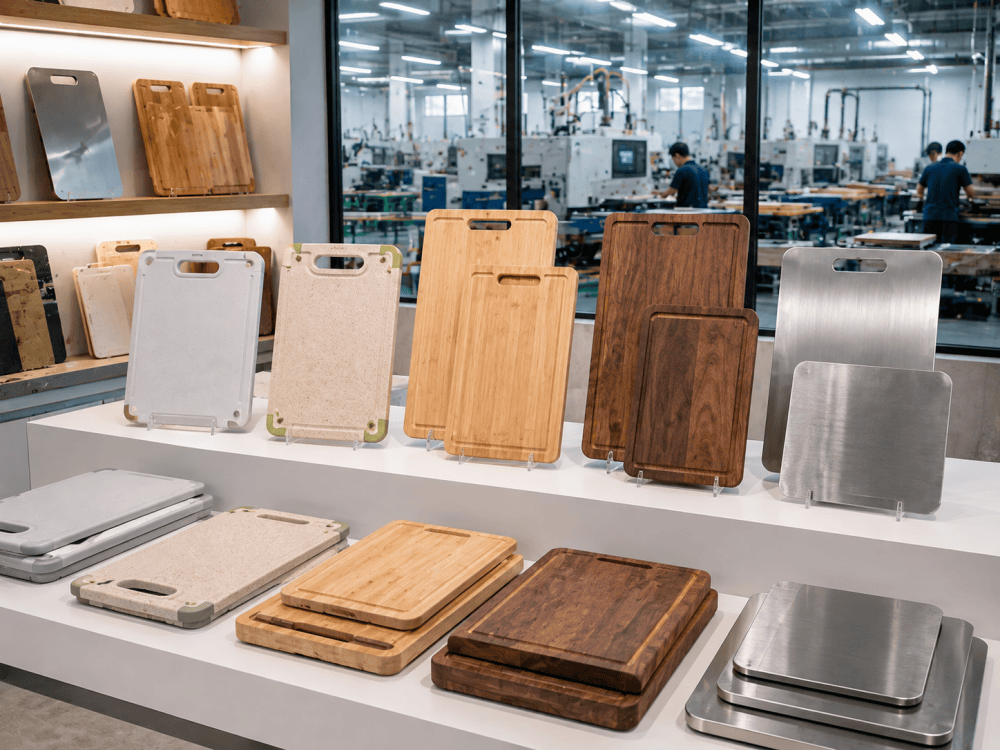
Kitlucy manufactures premium food-grade cutting boards designed for stability, durability, and food safety. Our collection includes HDPE, PP, wheat straw, stainless steel, and composite cutting boards with non-slip edges, juice grooves, and OEM/private label customization.
Whether you're a distributor, retailer, brand owner, or commercial kitchen supplier, we provide reliable bulk manufacturing, custom branding, and flexible production solutions to help you grow your kitchenware business.
Related Blogs