Is BPA-Free Plastic Really Safe? The Complete Guide for Food Containers & Kitchen Tools
Is BPA-Free Plastic Really Safe? The Complete Guide for Food Containers & Kitchen Tools
If you've shopped for food containers, cutting boards, water bottles, measuring cups, or kitchen utensils in recent years, you've probably noticed the words "BPA-Free" printed on product packaging. For many consumers, this label has become a symbol of safety. But what does BPA-Free actually mean? Does it automatically make a plastic product safe for food contact?
The short answer is not always. While BPA-free products eliminate one specific chemical of concern, the overall safety of a plastic kitchen product depends on many factors, including the type of plastic, manufacturing quality, food-contact certifications, intended use, and proper care.
As governments continue to strengthen food safety regulations and consumers become more health-conscious, understanding the science behind food-grade plastics has become increasingly important. Whether you're buying a lunch box, selecting a cutting board, sourcing kitchen utensils, or developing your own private-label kitchenware brand, knowing how BPA-free plastics work can help you make smarter decisions.
In this comprehensive guide, we'll explain:
- What BPA is and why it has become controversial
- What the BPA-Free label actually means
- Which plastics are considered safest for food contact
- The difference between BPA-Free and food-grade plastics
- How to identify high-quality kitchen products that meet international safety standards
What Is BPA?
BPA, short for Bisphenol A, is an industrial chemical that has been used in plastics manufacturing since the 1950s. It is primarily used to produce polycarbonate (PC) plastics and epoxy resins, materials valued for their strength, transparency, and impact resistance.
For decades, BPA-containing plastics were widely used in products such as:
- Reusable water bottles
- Food storage containers
- Baby bottles (before regulations changed)
- Kitchen appliances
- Can linings made with epoxy resin
- Food processing equipment
Because BPA-based plastics are lightweight, durable, and inexpensive, they became common in both household products and commercial food applications around the world.
Millions of tons of BPA have been used globally over the past several decades. Today, however, many kitchenware manufacturers have shifted toward alternative food-grade plastics such as polypropylene (PP) and high-density polyethylene (HDPE), both of which are naturally BPA-free.
Why Is BPA Controversial?
The concern surrounding BPA began when scientific studies suggested that small amounts of the chemical could migrate from certain plastic products into food and beverages, particularly when the plastic is exposed to:
- High temperatures
- Boiling water
- Microwave heating
- Strong acidic foods
- Repeated wear and aging
Because BPA has been studied for its potential interaction with hormone systems, researchers and regulatory agencies have spent years evaluating its safety under different exposure conditions.
It's important to understand that scientific opinions and regulations continue to evolve. Rather than concluding that all BPA-containing products are unsafe, today's food safety recommendations focus on minimizing unnecessary exposure, especially for infants and young children.
As consumer awareness increased, manufacturers responded by introducing BPA-free alternatives across many categories of kitchenware.
What Does "BPA-Free" Actually Mean?
The term BPA-Free simply means that a product has been manufactured without intentionally using Bisphenol A (BPA) in the plastic material.
However, this label is often misunderstood.
Many consumers assume that BPA-Free automatically means a product is healthier, safer, or made from premium materials. In reality, BPA-Free only tells you that one specific chemical has been excluded. It does not guarantee:
- Food-grade certification
- Superior durability
- Heat resistance
- Chemical resistance
- Long service life
- Compliance with international food-contact regulations
BPA-Free is only one part of food safety. A truly safe kitchen product should also be manufactured from certified food-grade materials and comply with recognized standards such as FDA, LFGB, or EU food-contact regulations.
BPA-Free Does Not Mean Every Plastic Is the Same
Different plastics have very different physical properties, heat resistance, durability, and intended applications. Two products may both carry a BPA-Free label while performing very differently in everyday kitchen use.
For example, a food storage container made from polypropylene behaves differently from a transparent drinking bottle made from Tritan, even though both are BPA-free.
This is why professional buyers, kitchenware brands, and manufacturers evaluate plastics based on:
- Material composition
- Mechanical strength
- Temperature resistance
- Chemical stability
- Food-contact certification
- Application suitability
Instead of asking only whether a product is BPA-Free, a better question is:
"Which food-grade plastic is best for this specific kitchen application?"
Common BPA-Free Plastics Used in Kitchen Products
Today's kitchenware industry relies on several food-safe plastics that naturally do not contain BPA. Each material has unique advantages depending on how the product will be used.
| Material | BPA-Free | Food Safe | Common Applications | Heat Resistance |
|---|---|---|---|---|
| PP (Polypropylene) | ✔ Yes | ✔ Excellent | Food containers, measuring cups, kitchen gadgets, microwave-safe products | High |
| HDPE (High-Density Polyethylene) | ✔ Yes | ✔ Excellent | Cutting boards, food bins, commercial kitchen equipment | Moderate |
| LDPE (Low-Density Polyethylene) | ✔ Yes | ✔ Good | Food packaging, squeeze bottles, storage bags | Moderate |
| Tritan™ Copolyester | ✔ Yes | ✔ Excellent | Water bottles, pitchers, transparent containers | High |
| Silicone | ✔ Naturally BPA-Free | ✔ Excellent | Baking molds, spatulas, kitchen utensils | Very High |
| PET | ✔ Yes | ✔ Good | Disposable beverage bottles and food packaging | Low |
Among these materials, PP and HDPE remain the two most widely used plastics for kitchenware manufacturing because they combine excellent food safety, affordability, durability, and large-scale production compatibility.
Is BPA-Free Plastic Really Safe?
The answer is yes—provided the product is made from high-quality, food-grade materials and used as intended. Contrary to popular belief, the safety of a plastic kitchen product is determined by much more than the "BPA-Free" label.
Several factors influence whether a plastic product is suitable for food contact:
- The type of plastic resin used
- Whether the material complies with food-contact regulations
- The quality of the manufacturing process
- The temperatures it is exposed to
- How long the product has been in use
- Whether the surface has become heavily damaged or worn
Premium kitchenware manufacturers select materials specifically designed for repeated food contact and conduct migration testing to ensure the plastic remains stable during normal household use.
Instead of asking only "Is this BPA-Free?", ask whether the product is made from food-grade PP, HDPE, Tritan™, or silicone and whether it complies with FDA, LFGB, or EU food-contact regulations. These standards provide a much more complete picture of product safety.
Food-Grade Plastic vs BPA-Free Plastic: What's the Difference?
One of the biggest misconceptions in the kitchenware industry is assuming that BPA-Free and food-grade mean the same thing. In reality, they describe two completely different concepts.
| Feature | BPA-Free Plastic | Food-Grade Plastic |
|---|---|---|
| Definition | Contains no Bisphenol A | Approved for direct food contact |
| Focus | One specific chemical | Overall material safety |
| Certification Required | Not necessarily | Usually FDA, LFGB, or EU compliant |
| Suitable for Food? | Possibly | Yes, when certified |
| Guarantees Heat Performance? | No | Depends on material specification |
| Guarantees Long-Term Durability? | No | Depends on design and material quality |
A product can technically be BPA-Free but still be manufactured from a lower-quality plastic that isn't ideal for repeated food contact. Likewise, a certified food-grade plastic product may provide excellent safety because it has passed rigorous migration and material testing.
For consumers and buyers, food-grade certification is generally a more meaningful indicator than a BPA-Free label alone.
FDA, LFGB & EU Food Contact Standards Explained
Professional kitchenware manufacturers don't rely solely on marketing claims. Instead, they verify product safety through internationally recognized food-contact regulations.
FDA Food Contact Compliance
In the United States, many food-contact plastics comply with regulations established by the U.S. Food and Drug Administration (FDA). These regulations specify which materials may safely come into contact with food under intended conditions of use.
LFGB Certification
LFGB is one of Europe's most respected food-contact standards, especially in Germany. Compared with many international requirements, LFGB testing is often considered more stringent because it evaluates odor, taste transfer, and chemical migration.
EU Food Contact Regulations
Manufacturers exporting to European markets must also comply with applicable EU regulations governing materials intended to contact food.
If you're purchasing kitchenware for long-term use or sourcing products for your own brand, choose products that clearly state compliance with FDA, LFGB, or relevant EU food-contact standards rather than relying only on "BPA-Free" printed on the packaging.
Which BPA-Free Plastic Is Best for Kitchen Products?
Not every plastic performs equally in the kitchen. Different applications require different materials.
Polypropylene (PP)
Polypropylene is considered one of the safest and most versatile plastics for food-contact applications. It offers excellent chemical stability, good heat resistance, and durability.
Common PP kitchen products include:
- Food storage containers
- Measuring cups
- Mixing bowls
- Kitchen gadgets
- Microwave-safe containers
Advantages:
- BPA-Free by nature
- Excellent fatigue resistance
- Microwave compatible (when designed for microwave use)
- Lightweight and affordable
High-Density Polyethylene (HDPE)
HDPE is another highly trusted food-grade plastic used extensively in commercial kitchens and food-processing environments. It combines toughness, moisture resistance, and excellent hygienic performance.
Typical HDPE products include:
- Cutting boards
- Commercial food bins
- Ingredient storage containers
- Food processing equipment
Advantages:
- Non-porous surface
- Excellent impact resistance
- Highly durable
- Naturally BPA-Free
- Widely approved for commercial food preparation
Tritan™ Copolyester
Tritan has become increasingly popular as a premium BPA-Free plastic because it combines exceptional clarity with high impact resistance.
It is commonly used for:
- Reusable water bottles
- Blenders
- Drink pitchers
- Premium food containers
Tritan provides the appearance of glass while remaining lightweight and resistant to breaking.
Food-Grade Silicone
Although technically not a plastic, food-grade silicone deserves mention because many consumers compare it with BPA-Free plastics.
Silicone is naturally BPA-Free and performs exceptionally well in high-temperature environments.
Common applications include:
- Baking molds
- Spatulas
- Whisks
- Baby feeding products
- Kitchen utensils
Does BPA-Free Plastic Release Chemicals?
This is one of the most frequently searched questions online.
Under normal household conditions, certified food-grade BPA-Free plastics are designed to remain chemically stable and suitable for repeated food contact.
However, like almost all materials, plastics can gradually degrade if exposed to extreme conditions, including:
- Very high temperatures beyond their design limits
- Open flames or direct heating
- Years of heavy wear
- Deep scratches or cracks
- Strong industrial chemicals
As plastics age, their physical properties may deteriorate. This is one reason experts recommend replacing heavily worn kitchen products instead of continuing to use damaged items indefinitely.
Can BPA-Free Plastic Go in the Microwave?
Not all BPA-Free plastics are microwave-safe.
The BPA-Free label only indicates that the material does not contain Bisphenol A—it does not automatically mean the product is designed for microwave heating.
Before microwaving any plastic container, always check whether it is labeled:
- Microwave Safe
- Food Grade
- Suitable for reheating
Polypropylene (PP) is one of the most commonly used plastics for microwave-safe food containers because of its relatively high heat resistance. In contrast, PET containers and some disposable plastics are generally not intended for microwave use.
BPA-Free Plastic vs Glass vs Stainless Steel
Many consumers wonder whether BPA-free plastic is the best choice or whether they should switch to glass or stainless steel. The truth is that each material has its own strengths depending on how the product will be used.
| Feature | BPA-Free Plastic (PP/HDPE) | Glass | Stainless Steel |
|---|---|---|---|
| Food Safety | ★★★★★ | ★★★★★ | ★★★★★ |
| Weight | Very Light | Heavy | Moderate |
| Break Resistance | Excellent | Poor | Excellent |
| Heat Resistance | Good (depends on material) | Excellent | Excellent |
| Microwave Compatibility | Only microwave-safe products | Usually Yes | No |
| Dishwasher Safe | Most products | Yes | Yes |
| Cost | Low | Medium | Medium–High |
| Commercial Kitchen Use | Very Common | Limited | Very Common |
For everyday kitchen tools such as cutting boards, measuring cups, mixing bowls, food storage containers, and kitchen gadgets, high-quality BPA-free plastics remain one of the most practical solutions because they combine safety, durability, and affordability.
How to Choose Safe BPA-Free Kitchen Products
Not every product labeled "BPA-Free" offers the same level of quality. Use the following checklist before purchasing kitchenware.
1. Check the Material
Look for plastics that are widely recognized for food-contact applications, including:
- Polypropylene (PP)
- High-Density Polyethylene (HDPE)
- Tritan™ Copolyester
- Food-grade Silicone (for baking tools and utensils)
2. Look for Food-Contact Certifications
Reliable manufacturers should clearly indicate compliance with internationally recognized standards, such as:
- FDA Food Contact Compliance
- LFGB Certification
- EU Food Contact Regulations
- BPA-Free labeling
3. Buy from Trusted Manufacturers
Established manufacturers typically maintain stricter quality control, better traceability of raw materials, and more consistent production processes than unknown suppliers.
4. Replace Damaged Plastic Products
Even high-quality food-grade plastics have a service life. Replace kitchen products if you notice:
- Deep scratches
- Cracks
- Warping
- Persistent odors
- Surface deterioration
5. Use Products According to Their Intended Purpose
Always follow the manufacturer's recommendations regarding microwave use, dishwasher cleaning, freezer storage, and maximum temperature limits.
The safest kitchen product isn't necessarily the most expensive one—it's the one made from the right food-grade material, certified for food contact, and used according to its intended purpose.
Common Marketing Claims Explained
Kitchenware packaging often includes several safety-related claims. Here's what they actually mean.
| Claim | Meaning |
|---|---|
| BPA-Free | No Bisphenol A is intentionally used. |
| Food Grade | Material is suitable for food contact when manufactured according to applicable regulations. |
| BPA & Phthalate Free | Free from BPA and commonly restricted phthalates. |
| FDA Compliant | Material complies with applicable FDA food-contact requirements. |
| LFGB Certified | Product has passed food-contact testing under Germany's LFGB standards. |
| Microwave Safe | Suitable for microwave use under specified conditions. |
| Dishwasher Safe | Designed to withstand dishwasher cleaning. |
Understanding these labels helps consumers compare products based on objective safety standards instead of relying solely on marketing language.
Frequently Asked Questions
Is BPA-free plastic completely safe?
High-quality BPA-free plastics that comply with recognized food-contact standards are generally considered safe for their intended use. However, product quality, proper use, and material selection remain important.
Is BPA-free better than regular plastic?
BPA-free products eliminate Bisphenol A, but overall safety also depends on the plastic type, manufacturing quality, and certifications.
Which BPA-free plastic is considered the safest?
Food-grade polypropylene (PP), high-density polyethylene (HDPE), Tritan™ copolyester, and food-grade silicone are among the most widely trusted materials used in modern kitchenware.
Can BPA-free plastic still absorb food odors?
Some plastics may retain odors after repeated use, especially when storing strongly flavored foods. Proper cleaning and timely replacement help minimize this issue.
Can BPA-free plastic be recycled?
Many BPA-free plastics, including PP and HDPE, are recyclable where local recycling facilities accept them.
Is BPA-free plastic suitable for hot food?
Only if the product is specifically designed for hot food or microwave use. Always check the manufacturer's instructions.
Is BPA-free plastic safe for children?
Many baby products today are made from BPA-free, food-grade materials. Choose products from reputable manufacturers that comply with relevant safety regulations.
How long does BPA-free plastic last?
Its lifespan depends on the material, frequency of use, cleaning methods, and exposure to heat. Replace products that become cracked, heavily scratched, or warped.
What plastic is commonly used for cutting boards?
HDPE (High-Density Polyethylene) is widely used because it is durable, non-porous, and approved for commercial food preparation in many regions.
Should I choose plastic, glass, or stainless steel?
The best choice depends on the application. BPA-free plastic offers lightweight convenience, glass provides excellent chemical stability, and stainless steel offers exceptional durability for many kitchen tasks.
Final Thoughts
The phrase "BPA-Free" is an important indicator, but it should never be the only factor you consider when evaluating kitchen products.
True food safety comes from a combination of high-quality raw materials, certified food-contact compliance, responsible manufacturing, and proper everyday use. Materials such as PP, HDPE, Tritan™, and food-grade silicone have become the preferred choices for modern kitchenware because they deliver an excellent balance of safety, durability, and performance.
Whether you're purchasing kitchen tools for your home or sourcing products for a retail brand, focusing on certified food-grade materials and trusted manufacturers will help ensure long-term safety and reliability.
Looking for High-Quality BPA-Free Kitchenware?
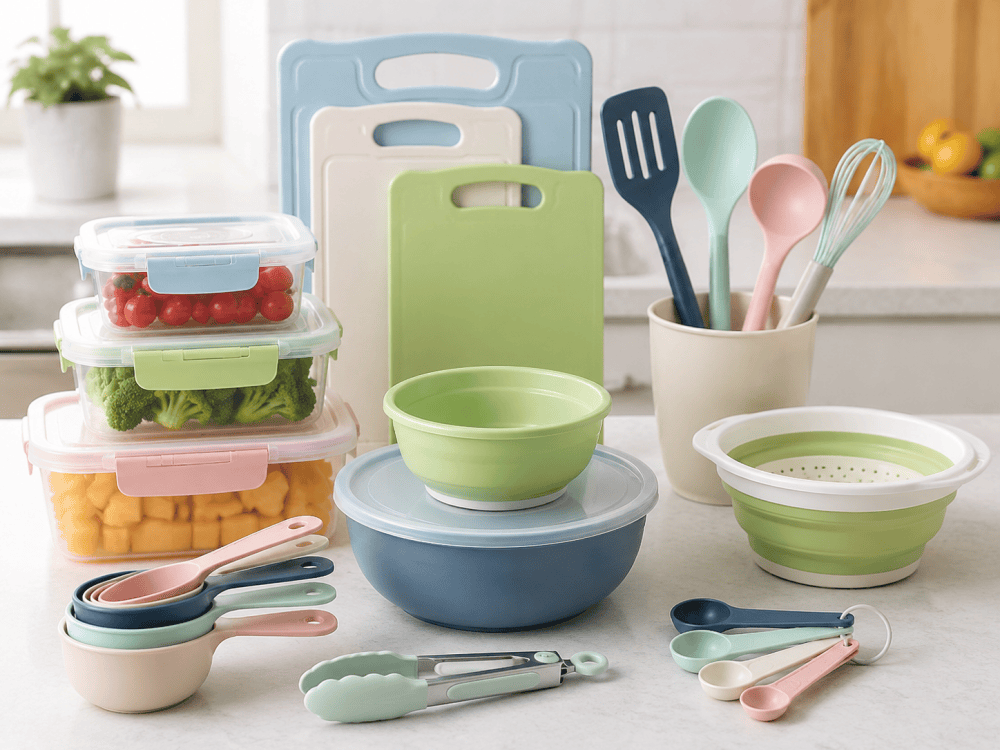
Kitlucy specializes in manufacturing BPA-free kitchen products, including cutting boards, measuring cups, food containers, kitchen gadgets, baking tools, and cooking utensils. All products are made from carefully selected food-grade materials and support OEM, ODM, and private-label customization for global brands, wholesalers, and distributors.
Contact our team today to discuss bulk orders, custom designs, and reliable manufacturing solutions tailored to your market.
Related Blogs