Is Teak Wood Good for Cooking Utensils? Complete Buyer’s Guide
Is Teak Wood Good for Cooking Utensils? Complete Buyer’s Guide
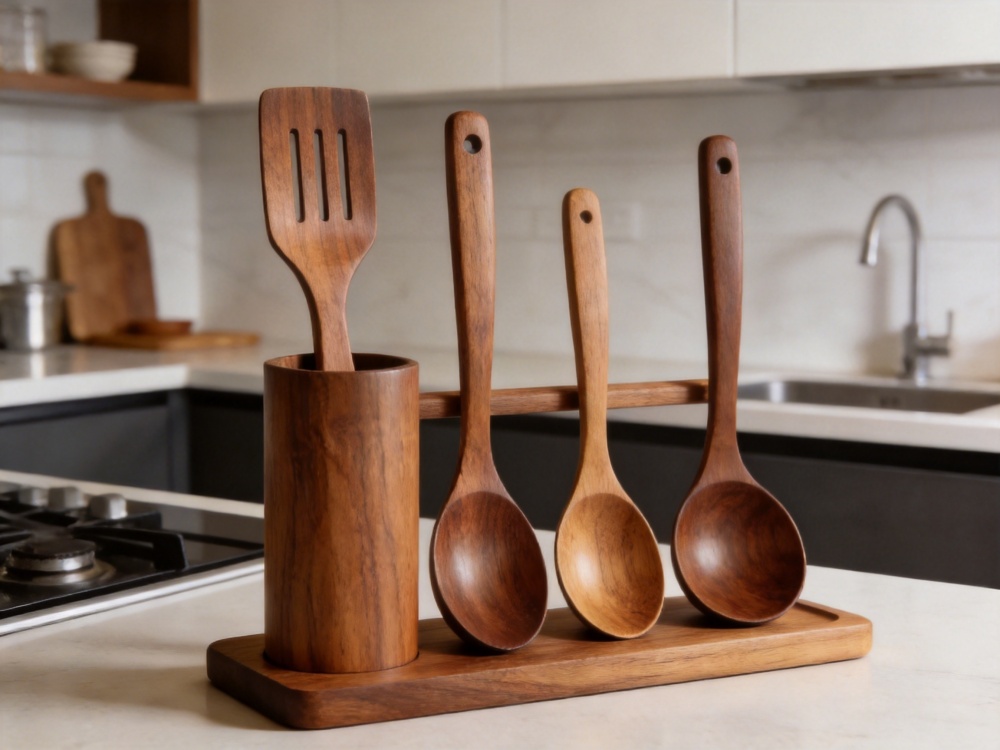
Teak wood cooking utensils have become increasingly popular in modern kitchens due to their natural appearance, durability, and heat resistance. From spatulas and spoons to ladles and turners, teak utensils are widely used by both home cooks and professional chefs.
But is teak wood really good for cooking utensils? In this guide, we explore the advantages, disadvantages, food safety factors, maintenance tips, and how teak compares with other wooden kitchen utensil materials.
What Is Teak Wood?
Teak is a tropical hardwood known for its exceptional durability, moisture resistance, and natural oil content. Originally used in shipbuilding and outdoor furniture, teak wood is now widely used in premium kitchenware products including cutting boards, serving trays, and cooking utensils.
The natural oils inside teak help the wood resist moisture absorption and cracking, making it especially suitable for daily kitchen use.
Why Teak Wood Is Popular for Cooking Utensils
1. Excellent Durability
Teak is one of the most durable hardwoods used in kitchen tools. Compared with softer woods, teak utensils resist cracking, splitting, and warping even after long-term use.
- Long service life
- Strong resistance to daily wear
- Suitable for high-frequency cooking environments
2. Natural Water Resistance
One of teak wood’s biggest advantages is its high natural oil content. This helps protect utensils from absorbing water too quickly.
Compared with ordinary wooden utensils, teak utensils are less likely to develop mold, swelling, or deformation when exposed to moisture.
Teak wood contains natural oils and dense grain structures that improve moisture resistance, making it one of the most stable hardwood choices for kitchen utensils and cutting boards.
3. Gentle on Cookware
Teak utensils are safe for nonstick cookware because the wood surface is softer than metal kitchen tools.
- Won’t scratch nonstick pans
- Safe for ceramic cookware
- Suitable for coated baking tools
4. Heat Resistance
Teak wood handles high cooking temperatures better than many plastic utensils.
Unlike nylon utensils that may soften at around 400°F (204°C), wooden utensils do not melt during normal cooking use.
Are Teak Wood Cooking Utensils Food Safe?
Yes, properly manufactured teak wood utensils are considered food safe. High-quality teak utensils are usually made with food-grade finishes or natural oil treatments.
Because teak is naturally dense and less porous than some softer woods, it can help reduce excessive moisture absorption when maintained correctly.
However, buyers should choose utensils from reliable manufacturers that comply with food-contact safety standards such as FDA or LFGB requirements.
Teak vs Bamboo vs Acacia Cooking Utensils
| Material | Durability | Water Resistance | Appearance | Knife/Cookware Friendly |
|---|---|---|---|---|
| Teak Wood | Very High | Very High | Premium Dark Brown | Excellent |
| Bamboo | High | Moderate | Light Natural Color | Good |
| Acacia Wood | High | High | Rich Wood Grain | Excellent |
Potential Disadvantages of Teak Utensils
Higher Cost
Teak wood is considered a premium hardwood, so teak kitchen utensils are usually more expensive than bamboo or plastic utensils.
Regular Maintenance Required
Although teak is durable, occasional oil treatment helps maintain its appearance and prevents drying over time.
Color Variations
Natural teak wood may show grain and color variations, which some buyers love but others may consider inconsistent.
How to Maintain Teak Wood Cooking Utensils
- Hand wash with mild soap and warm water
- Avoid soaking utensils for long periods
- Dry immediately after washing
- Apply food-grade mineral oil periodically
- Do not place wooden utensils in dishwashers
Best Kitchen Uses for Teak Utensils
- Cooking with nonstick cookware
- Mixing sauces and soups
- Serving salads or pasta
- High-temperature stir frying
- Daily household cooking
Why Buyers and Brands Choose Teak Kitchen Utensils
Global kitchenware buyers increasingly prefer teak utensils because consumers now value natural materials, premium appearance, and sustainable kitchen products.
Teak utensils also fit well into modern kitchen aesthetics, especially Scandinavian, minimalist, and eco-friendly kitchen designs.
For wholesalers and private-label brands, teak utensils offer strong market appeal in both retail and online marketplaces.
Wholesale & OEM Teak Kitchen Utensils
Kitlucy provides professional kitchen utensil manufacturing solutions for global distributors, wholesalers, and private-label brands.
We support customized kitchen utensil production including wooden utensils, silicone utensils, nylon cooking tools, and multifunction kitchen gadgets.
You can explore our complete kitchen utensil set collection for wholesale and OEM projects.
We also offer flexible OEM & customized kitchenware services for global brands seeking private-label kitchen utensil solutions.
To learn more about wooden and silicone utensil trends, read our related blog: Wooden Kitchen Utensil Set Guide.
Looking for Premium Wooden Kitchen Utensils?
Contact Kitlucy today for wholesale teak kitchen utensils, OEM cooking tools, and customized kitchenware solutions designed for modern global markets.
Related Blogs