The Complete Guide to Kitchen Utensil Sets: What Should Be Included, Materials, Buying Tips & Care Guide
The Complete Guide to Kitchen Utensil Sets: What Should Be Included, Materials, Buying Tips & Care Guide
A kitchen utensil set is one of the most important investments for any modern kitchen. Whether you're setting up a new home, upgrading your cooking tools, or sourcing products for retail or wholesale, choosing the right set can significantly improve cooking efficiency, food safety, and overall kitchen organization.
Today's consumers expect more than just a collection of spoons and spatulas. They look for durable materials, ergonomic designs, heat resistance, dishwasher-safe construction, and compatibility with non-stick cookware. As a result, manufacturers now offer a wide variety of kitchen cooking utensil sets in silicone, stainless steel, nylon, bamboo, and hybrid materials to suit different cooking styles and budgets.
For retailers, distributors, and private-label brands, understanding what should be included in a kitchen utensil set is equally important. A well-designed set not only meets customer expectations but also creates higher perceived value and stronger sales potential.
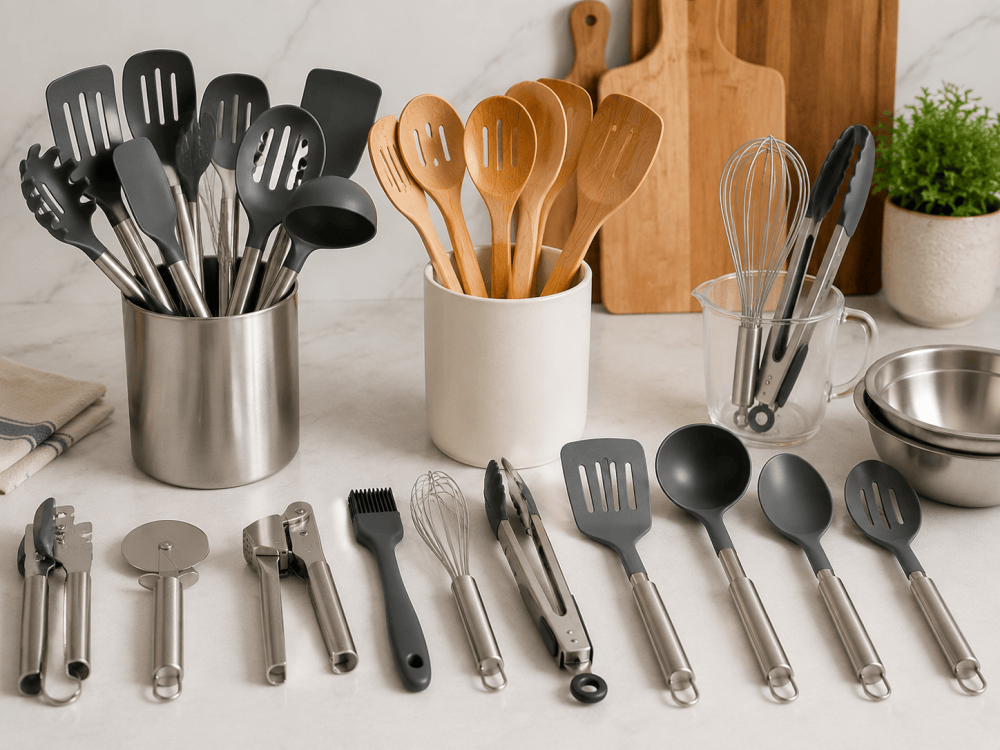
In this guide, you'll learn what every kitchen utensil set should include, compare the most popular materials, discover how to choose the right set for different cooking needs, and learn practical maintenance tips to maximize product lifespan.
What Is a Kitchen Utensil Set?
A kitchen utensil set is a collection of essential cooking tools designed to handle everyday food preparation, cooking, serving, and baking tasks. Rather than purchasing each utensil separately, consumers can buy a coordinated set that includes the most commonly used kitchen tools in matching materials and designs.
Depending on the manufacturer and target market, a utensil set may contain anywhere from five basic tools to more than twenty specialized accessories.
Typical kitchen utensil sets include:
- Cooking spatulas
- Solid and slotted spoons
- Soup ladles
- Pasta servers
- Kitchen tongs
- Whisks
- Turners
- Skimmers
- Basting brushes
- Measuring cups and spoons
- Kitchen scissors
- Storage holders or utensil crocks
Premium sets often include additional accessories such as peelers, pizza cutters, bottle openers, garlic presses, or digital measuring tools, providing a complete cooking solution for modern households.
Why Buying a Complete Kitchen Utensil Set Makes Sense
Many first-time buyers wonder whether they should purchase utensils individually or invest in a complete set. In most cases, a well-designed kitchen utensil set offers better value, greater convenience, and a more consistent cooking experience.
1. Better Value for Money
Buying utensils as a complete set is usually more economical than purchasing each tool separately. Manufacturers can bundle multiple products together, reducing packaging and production costs while offering consumers better overall pricing.
This makes complete sets particularly attractive for:
- New homeowners
- Apartment renters
- College students
- Wedding gifts
- Housewarming presents
2. Consistent Design and Appearance
Matching kitchen utensils create a cleaner, more organized kitchen aesthetic. Modern consumers often prefer coordinated colors, handles, and materials that complement contemporary kitchen interiors.
Popular design styles include:
- Matte black silicone
- Natural wooden handles
- Brushed stainless steel
- Soft pastel colors
- Minimalist Scandinavian designs
3. Everything You Need from Day One
A complete utensil set eliminates the need to purchase additional cooking tools one at a time. Whether you're frying eggs, serving soup, mixing cake batter, or cooking pasta, every essential tool is readily available.
4. Better Kitchen Organization
Many modern kitchen utensil sets include a matching storage holder or rotating utensil crock that keeps tools neatly organized and within easy reach while cooking.
This not only improves convenience but also reduces countertop clutter.
What Should Every Kitchen Utensil Set Include?
The ideal kitchen utensil set contains tools that cover the majority of everyday cooking tasks. While specialty gadgets may be useful occasionally, the following utensils are considered essential in almost every home kitchen.
Cooking Spatula
A cooking spatula is one of the most frequently used utensils in any kitchen. It is ideal for stirring, mixing, scraping bowls, folding ingredients, and cooking delicate foods.
Silicone spatulas are especially popular because they are:
- Heat resistant
- Flexible
- Safe for non-stick cookware
- Easy to clean
Solid Spoon
A solid serving spoon is perfect for stirring sauces, serving vegetables, mixing ingredients, and transferring cooked foods.
Its versatility makes it an indispensable kitchen tool.
Slotted Spoon
A slotted spoon allows liquids to drain while lifting food from boiling water, soups, or frying pans.
It is commonly used for:
- Boiled vegetables
- Pasta
- Poached eggs
- Fried foods
Soup Ladle
A deep soup ladle is designed for serving soups, stews, chili, curry, and sauces without spilling.
Larger ladles are especially useful for family meals and buffet-style serving.
Turner (Spatula Turner)
A turner, sometimes called a flipper, is essential for flipping foods during cooking.
Typical uses include:
- Pancakes
- Eggs
- Burgers
- Fish fillets
- Grilled sandwiches
Thin, flexible silicone turners are ideal for non-stick cookware, while stainless steel versions work well on grills and cast iron pans.
Pasta Server
The unique teeth on a pasta server make it easy to lift and serve spaghetti, linguine, fettuccine, and noodles while allowing excess water to drain away.
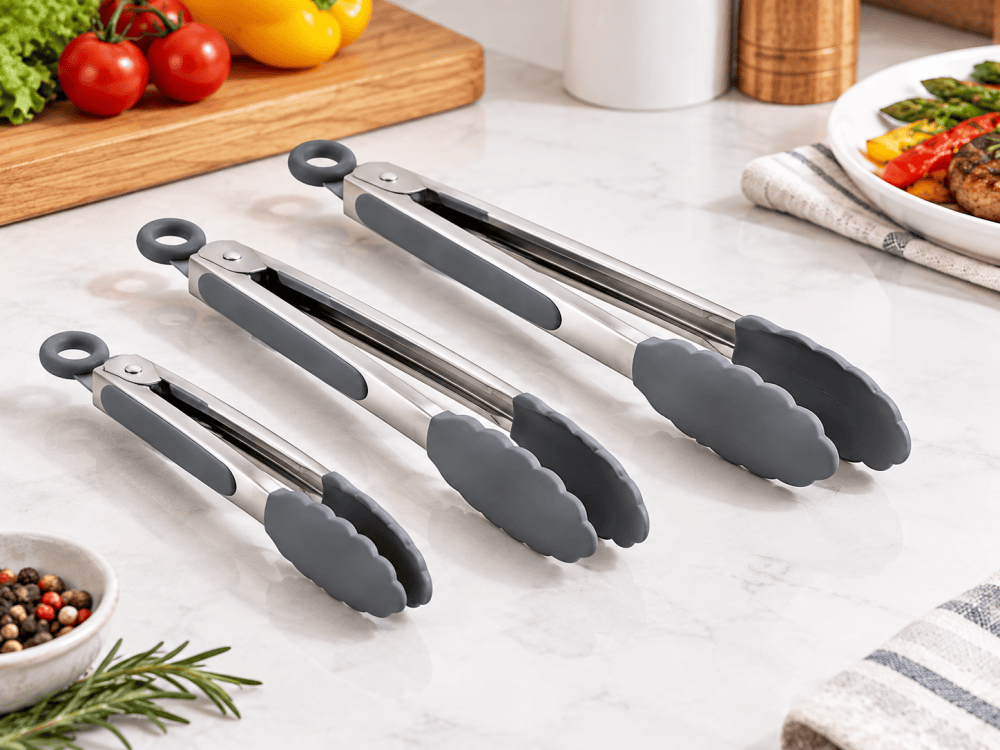
Kitchen Tongs
Tongs provide excellent control when turning, lifting, serving, or grilling food.
They are useful for:
- Grilling meat
- Serving salads
- Cooking vegetables
- Handling hot food safely
Many premium utensil sets now include locking stainless steel tongs with silicone tips for improved storage and non-stick compatibility.
Whisk
A whisk is essential for blending ingredients smoothly and incorporating air into mixtures.
Common applications include:
- Eggs
- Cake batter
- Pancake mix
- Cream sauces
- Whipped cream
Skimmer
A skimmer is designed to remove foam, floating food particles, or fried foods from hot oil while allowing excess liquid to drain away.
It is especially useful for deep frying and preparing soups.
Essential Kitchen Utensils Checklist
| Utensil | Main Purpose | Essential? |
|---|---|---|
| Cooking Spatula | Mixing & scraping | ★★★★★ |
| Solid Spoon | Cooking & serving | ★★★★★ |
| Slotted Spoon | Draining liquids | ★★★★★ |
| Soup Ladle | Serving soup | ★★★★★ |
| Turner | Flipping food | ★★★★★ |
| Pasta Server | Serving pasta | ★★★★☆ |
| Kitchen Tongs | Grilling & serving | ★★★★★ |
| Whisk | Mixing ingredients | ★★★★★ |
| Skimmer | Frying & boiling | ★★★★☆ |
Basic Kitchen Utensil Set vs Complete Kitchen Utensil Set
Kitchen utensil sets are available in many different sizes, ranging from compact starter kits to comprehensive collections designed for enthusiastic home cooks and professional chefs.
| Type | Typical Pieces | Best For |
|---|---|---|
| Basic Set | 5–8 Pieces | Students, apartments, small kitchens |
| Standard Set | 10–15 Pieces | Most households |
| Complete Set | 16–25 Pieces | Large families & cooking enthusiasts |
| Professional Set | 20+ Pieces | Restaurants, chefs, OEM buyers |
For most families, a 12–15 piece kitchen utensil set provides the best balance between versatility, convenience, and value. Larger sets are ideal for people who cook frequently or want a complete collection of matching kitchen tools.
Kitchen Utensil Materials Compared: Which Is the Best Choice?
The material of a kitchen utensil directly affects its performance, durability, safety, and compatibility with different types of cookware. While the design of a utensil is important, choosing the right material often has a greater impact on everyday cooking.
Today's kitchen utensil sets are commonly made from food-grade silicone, stainless steel, nylon, natural wood, bamboo, and high-quality plastics. Each material offers unique advantages and limitations depending on the cooking task.
There is no single "best" material for every kitchen. The ideal kitchen utensil set combines food safety, heat resistance, durability, ease of cleaning, and compatibility with your cookware.
Food-Grade Silicone Kitchen Utensils
Silicone has become one of the most popular materials for modern kitchen utensil sets. Premium food-grade silicone combines flexibility with excellent heat resistance, making it especially suitable for non-stick cookware.
Advantages of Silicone Utensils
- Heat resistant up to approximately 230°C (446°F)
- Won't scratch non-stick cookware
- Flexible edges scrape bowls efficiently
- Soft-touch ergonomic grip
- Quiet during cooking
- Dishwasher safe
- Available in many colors
Limitations
- Less rigid than stainless steel
- May stain when used with curry or tomato-based sauces
- Low-quality silicone may tear over time
Silicone utensil sets are ideal for:
- Non-stick cookware
- Home kitchens
- Baking
- Daily cooking
- Families with children
Stainless Steel Kitchen Utensils
Stainless steel has long been the preferred material in commercial kitchens because of its strength, durability, and excellent resistance to corrosion.
High-quality utensil sets commonly use 304 stainless steel, which offers outstanding food safety and long service life.
Advantages
- Extremely durable
- Excellent heat resistance
- Corrosion resistant
- Professional appearance
- Long service life
- Easy to sanitize
Limitations
- Can scratch non-stick cookware
- Handles may become hot if placed near heat
- Usually heavier than silicone
Best applications include:
- Cast iron cookware
- Stainless steel cookware
- Professional kitchens
- Outdoor cooking
- BBQ grilling
Nylon Kitchen Utensils
Nylon utensils are affordable, lightweight, and commonly included in entry-level kitchen utensil sets.
Modern reinforced nylon performs much better than traditional plastic and is generally safe for coated cookware.
Advantages
- Affordable
- Lightweight
- Won't scratch non-stick pans
- Easy to clean
- Good everyday performance
Limitations
- Lower heat resistance than silicone
- Can warp under high temperatures
- May discolor after extended use
Wooden Kitchen Utensils
Wooden utensils have been used for centuries because they are naturally attractive, comfortable to hold, and gentle on cookware.
Hardwoods such as beech, teak, maple, and acacia are common choices for premium kitchen utensils.
Advantages
- Natural appearance
- Comfortable grip
- Won't scratch cookware
- Quiet during cooking
- Excellent durability when maintained
Limitations
- Requires regular oil treatment
- Can crack if left soaking in water
- May absorb food odors
- Not dishwasher safe
Bamboo Kitchen Utensils
Bamboo has become increasingly popular due to its sustainability and attractive appearance.
Compared with many hardwoods, bamboo grows rapidly, making it an environmentally friendly material.
Advantages
- Renewable resource
- Lightweight
- Natural appearance
- Safe for cookware
- Affordable
Limitations
- Can become brittle over time
- Requires hand washing
- Needs occasional conditioning
Plastic Kitchen Utensils
Food-grade plastic utensils remain common because they are inexpensive and lightweight.
However, premium manufacturers increasingly replace standard plastic with silicone or reinforced nylon due to improved durability and heat resistance.
Advantages
- Low cost
- Lightweight
- Wide variety of colors
- Easy to manufacture
Limitations
- Lower heat resistance
- Can warp
- May discolor
- Shorter lifespan
Kitchen Utensil Material Comparison
| Material | Heat Resistance | Durability | Non-Stick Safe | Dishwasher Safe |
|---|---|---|---|---|
| Silicone | ★★★★★ | ★★★★★ | ★★★★★ | Yes |
| 304 Stainless Steel | ★★★★★ | ★★★★★ | No | Yes |
| Nylon | ★★★★☆ | ★★★★☆ | ★★★★★ | Usually |
| Wood | ★★★★☆ | ★★★★★ | ★★★★★ | No |
| Bamboo | ★★★★☆ | ★★★★☆ | ★★★★★ | No |
| Plastic | ★★★☆☆ | ★★★☆☆ | ★★★★★ | Usually |
Which Material Is Best for Non-Stick Cookware?
One of the most common questions buyers ask is which kitchen utensil material is safest for non-stick cookware.
The answer is simple: avoid hard metal edges whenever possible.
The best options include:
- Food-grade silicone
- Reinforced nylon
- Wood
- Bamboo
These materials prevent scratches that can shorten the lifespan of non-stick coatings.
If your cookware includes ceramic, granite, or PTFE-coated pans, choose a silicone kitchen utensil set. Silicone combines excellent heat resistance with maximum protection for delicate cooking surfaces.
Heat Resistance Comparison
Heat resistance is especially important when utensils remain inside cookware during cooking.
| Material | Approximate Heat Resistance |
|---|---|
| Food-grade Silicone | 230°C / 446°F |
| 304 Stainless Steel | 800°C+ |
| Reinforced Nylon | 180–210°C |
| Wood | 200°C (Indirect Heat) |
| Bamboo | 180–200°C |
| Standard Plastic | 100–120°C |
For frying, grilling, or high-temperature cooking, silicone and stainless steel remain the most reliable options.
Food Safety Certifications to Look For
When buying a kitchen utensil set, especially for international markets, product certifications are just as important as appearance.
Look for manufacturers that comply with recognized food-contact standards.
FDA Compliance
FDA-compliant materials meet U.S. food-contact safety requirements and are widely accepted in North American markets.
LFGB Certification
LFGB is one of Europe's strictest food-contact testing standards and is commonly requested by buyers in Germany and other EU countries.
BPA Free
If a utensil contains plastic components, ensure they are BPA-free to reduce consumer concerns regarding chemical migration.
Food-Grade Silicone
Premium silicone should be odorless, flexible, durable, and certified for direct food contact.
How to Choose the Best Kitchen Utensil Set
Before purchasing a kitchen utensil set, consider the following factors:
- Number of pieces included
- Material quality
- Heat resistance
- Compatibility with cookware
- Comfortable ergonomic handles
- Dishwasher safety
- Storage holder included
- Warranty and brand reputation
For most households, a 12–15 piece silicone utensil set with a storage holder offers the best balance between functionality, durability, and value.
How to Clean and Maintain a Kitchen Utensil Set
Even the highest-quality kitchen utensil set requires proper care to maintain its appearance, performance, and food safety. Different materials require different cleaning methods, and following the manufacturer's recommendations can significantly extend the lifespan of your utensils.
Regular cleaning not only keeps utensils looking new but also prevents food residue, grease, bacteria, and odors from accumulating over time.
Cleaning your kitchen utensils immediately after cooking is one of the simplest ways to prevent stains, discoloration, and permanent food residue.
Cleaning Silicone Kitchen Utensils
Food-grade silicone is one of the easiest materials to maintain.
For everyday cleaning:
- Wash with warm water and mild dish soap.
- Use a soft sponge to remove grease.
- Rinse thoroughly.
- Allow to air dry or wipe with a clean towel.
If silicone utensils become stained by tomato sauce, curry, or other strongly pigmented foods, soak them in warm water with baking soda before washing.
Cleaning Stainless Steel Utensils
Stainless steel utensils are highly resistant to rust and corrosion, making them suitable for frequent use.
To maintain their polished finish:
- Wash after each use.
- Dry immediately to prevent water spots.
- Avoid steel wool or abrasive cleaners.
- Use vinegar to remove mineral deposits if necessary.
Cleaning Wooden and Bamboo Utensils
Wood and bamboo require more careful maintenance because they absorb moisture.
Best practices include:
- Hand wash only.
- Never soak in water.
- Dry immediately after washing.
- Apply food-grade mineral oil every few weeks.
Proper conditioning helps prevent cracking, warping, and moisture absorption.
Are Kitchen Utensil Sets Dishwasher Safe?
Not every utensil is suitable for dishwasher cleaning. Always check the manufacturer's care instructions before placing utensils in the dishwasher.
| Material | Dishwasher Safe? |
|---|---|
| Silicone | Yes |
| 304 Stainless Steel | Yes |
| Nylon | Usually Yes |
| Wood | No |
| Bamboo | No |
| Plastic | Usually Yes |
Hand washing is generally recommended for premium utensil sets because it helps preserve colors, finishes, and handle materials for a longer period.
How to Store Kitchen Utensils Properly
Proper storage improves kitchen organization while protecting utensils from unnecessary wear.
Popular storage solutions include:
- Countertop utensil holders
- Rotating storage caddies
- Drawer organizers
- Wall-mounted hanging rails
- Magnetic storage systems (for metal tools)
Avoid storing wet utensils inside enclosed drawers, as trapped moisture can encourage bacterial growth and unpleasant odors.
Common Mistakes People Make When Using Kitchen Utensils
Even high-quality utensils can wear out prematurely if they are used incorrectly.
Using Metal Tools on Non-Stick Cookware
Metal spatulas and spoons can scratch non-stick coatings, reducing the lifespan of expensive cookware.
Leaving Utensils in Hot Pans
Although silicone is heat resistant, prolonged exposure to extremely high temperatures can shorten its service life.
Using Damaged Utensils
Cracked plastic, loose handles, or damaged silicone heads should be replaced immediately to maintain food safety.
Ignoring Manufacturer Temperature Limits
Every material has a recommended operating temperature. Exceeding those limits may cause deformation or discoloration.
Improper Storage
Piling heavy utensils together can scratch surfaces and damage delicate silicone edges.
When Should You Replace Kitchen Utensils?
Kitchen utensils do not last forever. Replacing worn or damaged tools helps maintain cooking performance and food safety.
Replace utensils if you notice:
- Cracked or split handles
- Torn silicone heads
- Loose construction
- Persistent odors
- Warping from heat
- Deep discoloration that cannot be removed
- Rust on stainless steel components
With proper care, a premium kitchen utensil set can provide many years of reliable daily use.
Frequently Asked Questions
What is included in a kitchen utensil set?
Most kitchen utensil sets include a spatula, solid spoon, slotted spoon, soup ladle, turner, whisk, tongs, pasta server, skimmer, and a storage holder. Larger sets may also include measuring cups, peelers, kitchen scissors, and other accessories.
How many utensils do I really need?
For most households, a 10–15 piece kitchen utensil set provides all the essential tools required for everyday cooking.
What is the best material for kitchen utensils?
Food-grade silicone is widely considered the best all-around material because it combines heat resistance, flexibility, and compatibility with non-stick cookware. Stainless steel is preferred for heavy-duty cooking and professional kitchens.
Are silicone kitchen utensils safe?
Yes. High-quality food-grade silicone is BPA-free, non-toxic, odorless, and suitable for direct food contact when manufactured according to FDA or LFGB standards.
Can stainless steel utensils scratch cookware?
Yes. Stainless steel utensils may scratch non-stick coatings but are excellent for stainless steel cookware, cast iron, and outdoor grilling.
Should wooden utensils be oiled?
Yes. Applying food-grade mineral oil every few weeks helps prevent cracking and extends the lifespan of wooden utensils.
Can kitchen utensils go in the dishwasher?
Silicone, stainless steel, and many nylon utensils are dishwasher safe, while wooden and bamboo utensils should always be hand washed.
How long does a kitchen utensil set last?
A high-quality utensil set can last anywhere from five to ten years or longer, depending on the material, usage frequency, and maintenance.
What size kitchen utensil set should I buy?
A 12–15 piece set is ideal for most families, while professional kitchens or enthusiastic home cooks may prefer larger 20-piece collections.
Are kitchen utensil sets good gifts?
Yes. Complete kitchen utensil sets are popular gifts for weddings, housewarmings, newlyweds, college students, and first-time homeowners.
Conclusion
A complete kitchen utensil set is much more than a collection of cooking tools—it is an essential investment that improves efficiency, protects cookware, and enhances the overall cooking experience. By choosing the right combination of utensils and high-quality materials, you can prepare meals more comfortably while extending the life of both your cookware and kitchen accessories.
For most households, a silicone kitchen utensil set offers the best balance of safety, durability, and compatibility with modern non-stick cookware. Stainless steel remains the preferred choice for professional kitchens and heavy-duty cooking, while wooden and bamboo utensils provide a timeless, natural aesthetic for everyday use.
When purchasing a kitchen utensil set, focus on material quality, heat resistance, ergonomic design, food-grade certifications, and the number of essential tools included. Investing in a well-designed set today will provide years of reliable cooking performance.
Looking for Premium Kitchen Utensil Sets?
Kitlucy offers a wide range of food-grade kitchen utensil sets, including silicone, stainless steel, nylon, and wooden collections designed for retailers, wholesalers, and private-label brands worldwide.
Browse our Kitchen Utensil Collection:
//www.kitlucy.com/kitchen-utensils.html
Need OEM or Custom Kitchen Utensil Solutions?
Related Blogs