Large Chopping Board Guide: How to Choose the Best Size, Material & Thickness (2026)
Large Chopping Board Guide: How to Choose the Best Size, Material & Thickness (2026)
A large chopping board is one of the most valuable kitchen tools for both home cooks and professional chefs. Whether you're slicing vegetables, carving meat, preparing seafood, or organizing ingredients for meal prep, having enough cutting space improves efficiency, cleanliness, and safety.
Compared with standard cutting boards, a large cutting board offers a more stable work surface, reduces food spilling onto the countertop, and makes handling larger ingredients much easier. As a result, large chopping boards have become increasingly popular in restaurants, commercial kitchens, catering businesses, and modern home kitchens.
However, choosing the right board involves more than simply buying the biggest size available. Material, thickness, food safety, maintenance requirements, and intended use all play an important role in determining which board will perform best over the long term.
In this comprehensive guide, you'll learn:
- What size is considered a large chopping board
- How large cutting boards compare with standard boards
- The pros and cons of HDPE, wood, bamboo, and stainless steel
- How thick your cutting board should be
- Which type is best for meat, vegetables, bread, and commercial kitchens
- How to extend the lifespan of your chopping board
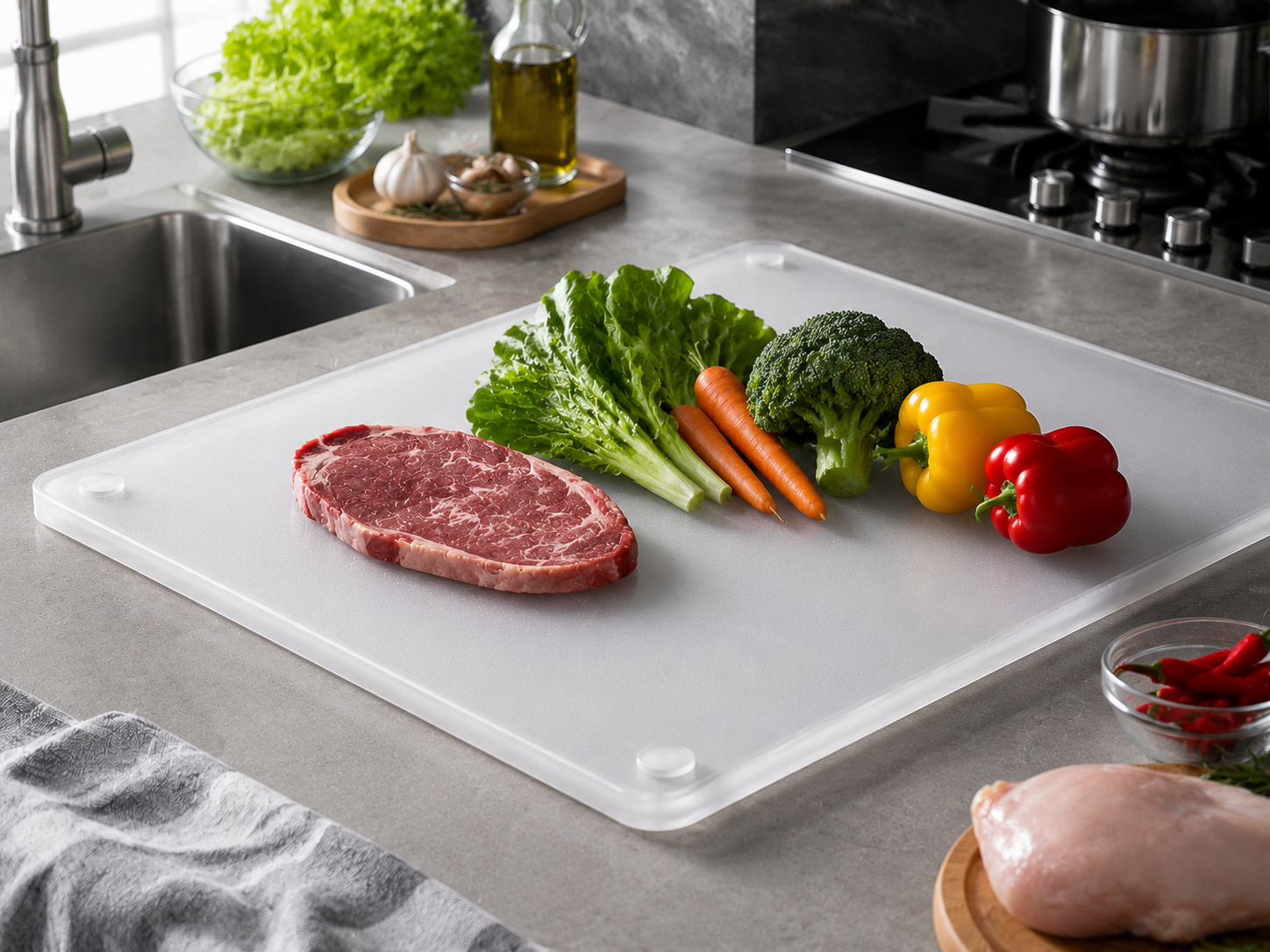
Professional chefs rarely use small cutting boards for daily prep. A larger working surface improves knife control, keeps ingredients organized, reduces countertop mess, and increases overall kitchen efficiency.
Why More People Are Choosing Large Chopping Boards
Kitchen workflows have changed significantly over the past decade. More families prepare meals in advance, restaurants process larger volumes of fresh ingredients, and consumers increasingly prefer versatile kitchen tools that improve efficiency.
These trends have made the large chopping board one of the fastest-growing categories in kitchen accessories.
More Working Space
A larger board provides enough room to chop multiple ingredients without constantly transferring food into bowls.
For example, when preparing stir-fries or salads, vegetables can remain separated on the board until cooking begins, reducing unnecessary movement around the kitchen.
Improved Food Safety
More space also helps reduce cross-contamination.
Instead of overcrowding raw meat, vegetables, herbs, and cooked foods on a small surface, a large cutting board allows ingredients to remain separated during preparation.
This becomes even more effective when paired with double-sided or color-coded cutting boards.
Better Knife Control
One overlooked benefit of larger boards is improved knife safety.
Because ingredients remain comfortably inside the cutting area, users spend less time repositioning food near the board's edges, reducing accidental slips and improving cutting accuracy.
Cleaner Countertops
Few things are more frustrating than chopped onions or herbs falling onto the countertop.
A large chopping board naturally contains food debris, helping maintain a cleaner kitchen throughout meal preparation.
Ideal for Meal Prep
Meal-prep enthusiasts often prepare ingredients for several meals simultaneously.
An extra large chopping board makes it easy to dice vegetables, trim meat, and organize ingredients before transferring them into storage containers.
What Size Is Considered a Large Chopping Board?
There is no universal standard for cutting board sizes, but manufacturers generally classify boards according to their dimensions.
| Board Size | Typical Dimensions | Best For |
|---|---|---|
| Small | Under 12 × 8 in (30 × 20 cm) | Fruit, cheese, quick slicing |
| Medium | 14 × 10 in (36 × 25 cm) | Daily home cooking |
| Large Chopping Board | 16–18 × 12 in (40–46 × 30 cm) | Family cooking, vegetables, meat |
| Extra Large Cutting Board | 20–24 × 15 in (50–60 × 38 cm) | Meal prep, BBQ, large families |
| Commercial Board | 24 in+ (60 cm+) | Restaurants and food processing |
For most households, a board measuring approximately 18 × 12 inches offers an excellent balance between workspace and storage convenience.
Professional kitchens, however, often use extra large chopping boards measuring over 20 inches wide to accommodate continuous food preparation.
Large Chopping Board vs Standard Cutting Board
Many buyers wonder whether upgrading to a larger cutting board is truly worthwhile.
The following comparison highlights the practical differences.
| Feature | Large Chopping Board | Standard Cutting Board |
|---|---|---|
| Working Area | ★★★★★ | ★★★☆☆ |
| Meal Prep Efficiency | ★★★★★ | ★★★☆☆ |
| Large Meat Preparation | ★★★★★ | ★★☆☆☆ |
| Countertop Cleanliness | ★★★★★ | ★★★☆☆ |
| Storage Convenience | ★★★☆☆ | ★★★★★ |
| Professional Kitchen Use | ★★★★★ | ★★☆☆☆ |
If your cooking routine regularly involves preparing family meals, roasting meat, baking, or batch cooking, investing in a larger board typically provides noticeable improvements in both comfort and efficiency.
Best Materials for Large Chopping Boards
Choosing the right material is just as important as selecting the correct size.
Different materials offer different advantages in durability, hygiene, knife friendliness, maintenance, and overall cost.
The four most common materials are:
- HDPE (High-Density Polyethylene)
- Natural hardwood
- Bamboo
- Stainless steel
Each material performs differently depending on the kitchen environment and intended application.
In the next section, we'll compare these materials in depth, including hygiene, knife protection, maintenance requirements, commercial kitchen suitability, and long-term durability to help you determine which type of large chopping board best fits your needs.
Best Materials for a Big Chopping Board
Choosing the right material is just as important as selecting the right size. A large chopping board should withstand repeated knife impacts, remain stable during heavy-duty food preparation, and be easy to clean. The best material depends on whether you're prioritizing food safety, knife protection, durability, or aesthetics.
Below is a comparison of the most common materials used for large chopping boards.
| Material | Best For | Advantages | Limitations |
|---|---|---|---|
| HDPE Plastic | Commercial kitchens | Food-grade, dishwasher safe, moisture resistant, affordable | Can develop knife grooves over time |
| Wood (Maple, Walnut, Beech) | Home kitchens | Gentle on knives, attractive appearance, durable with maintenance | Requires regular oiling and hand washing |
| Bamboo | Eco-conscious users | Sustainable, lightweight, affordable | Harder surface may dull knives slightly faster |
| Composite Fiber | Premium kitchens | Heat resistant, dishwasher safe, highly durable | Higher cost |
| Stainless Steel | Raw meat & seafood processing | Extremely hygienic, non-porous, corrosion resistant | Very hard on knife edges |
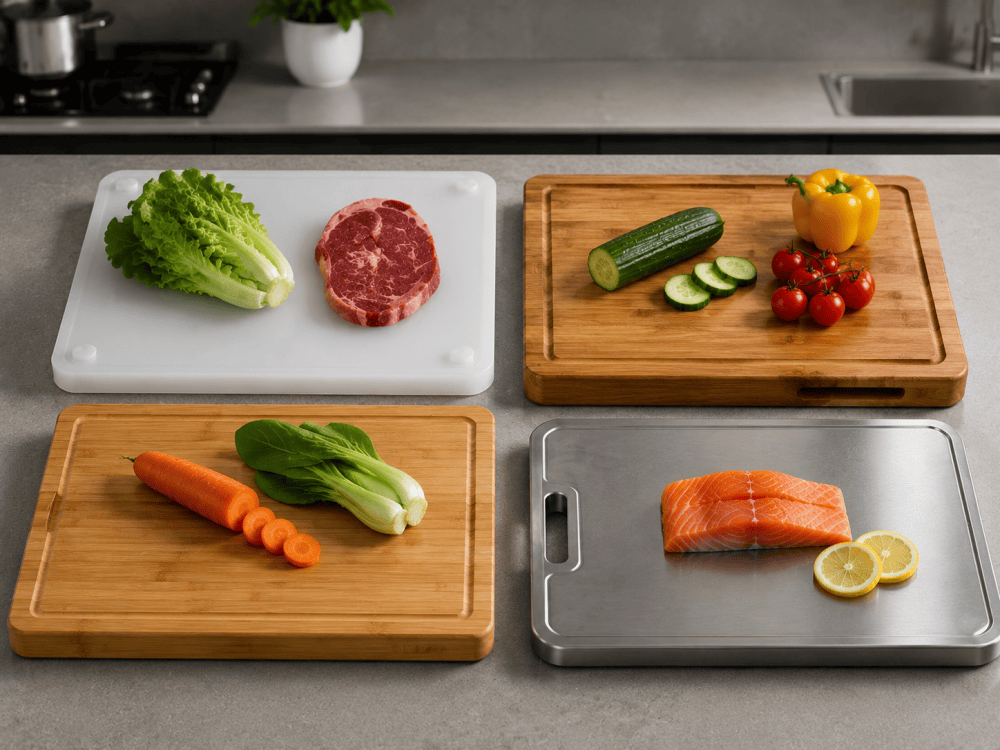
If you're purchasing a big chopping board for everyday cooking, a thick HDPE board (15–20 mm) or an end-grain wooden board offers the best balance between durability, hygiene, and knife protection.
How to Choose the Right Large Chopping Board
With hundreds of options available, choosing the best large chopping board involves more than simply buying the biggest board you can find. Consider your cooking habits, available workspace, preferred material, and maintenance routine.
1. Choose the Right Size
The board should provide enough cutting space without overwhelming your countertop.
| Kitchen Type | Recommended Size |
|---|---|
| Apartment Kitchen | 40 × 30 cm (16 × 12 in) |
| Family Kitchen | 45 × 35 cm (18 × 14 in) |
| Large Home Kitchen | 50 × 40 cm (20 × 16 in) |
| Restaurant Kitchen | 60 × 45 cm or larger |
2. Consider Thickness
A thicker board offers better stability and a longer service life.
- 10–12 mm — Lightweight, easy to store
- 15–20 mm — Best for most home users
- 25 mm+ — Professional kitchens and butcher blocks
3. Look for Useful Features
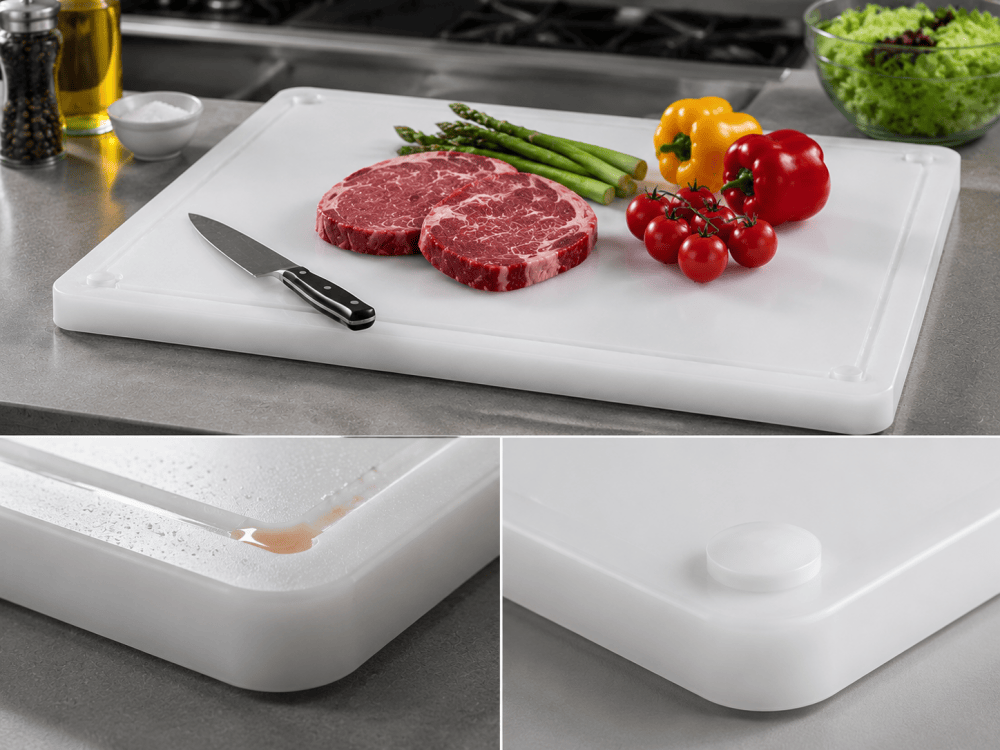
- Deep juice grooves for carving meat
- Non-slip silicone feet
- Integrated handles for carrying
- Double-sided cutting surfaces
- Built-in food collection areas
- Hanging holes for storage
4. Match the Board to Your Cooking Style
| If You Usually... | Recommended Board |
|---|---|
| Prepare vegetables daily | Large HDPE board |
| Carve roasted meat | Wood board with juice groove |
| Process raw meat frequently | Color-coded HDPE chopping board |
| Host BBQ parties | Extra-large carving board |
| Need an elegant serving board | Premium walnut or acacia board |
Commercial Kitchens Prefer Large HDPE Chopping Boards
Restaurants, hotels, butcher shops, and catering businesses overwhelmingly choose large HDPE chopping boards because they comply with food safety standards while remaining affordable and durable.
Commercial food preparation often requires cutting large volumes of ingredients throughout the day. HDPE boards are lightweight enough to move easily, resistant to moisture, and can withstand repeated sanitizing without cracking or warping.
Many food service operations also use color-coded chopping boards to reduce the risk of cross-contamination.
| Board Color | Food Category |
|---|---|
| Red | Raw meat |
| Blue | Raw fish |
| Green | Fruits & vegetables |
| Yellow | Cooked poultry |
| Brown | Cooked meat |
| White | Bakery & dairy |
Many commercial kitchens replace plastic chopping boards every 12–24 months depending on usage intensity. Once deep knife grooves appear, resurfacing or replacement is recommended to maintain optimal hygiene.
Common Mistakes When Buying a Big Chopping Board
Many buyers focus only on dimensions while overlooking other important factors that affect long-term performance.
- Buying a board that's too large for available countertop space
- Choosing decorative acrylic boards for heavy chopping
- Ignoring thickness, resulting in warping or instability
- Selecting boards without non-slip features
- Using one board for every type of food, increasing cross-contamination risk
- Purchasing low-quality plastic without food-grade certification
Spending slightly more on a high-quality, food-grade board usually results in a longer lifespan, better cutting performance, and improved food safety.
How to Choose the Best Big Chopping Board
Not every oversized cutting board is the right choice. The best big chopping board depends on your available countertop space, cooking habits, preferred material, and cleaning routine. Whether you're a home cook preparing family dinners or a commercial kitchen sourcing equipment in bulk, selecting the right board will improve efficiency, food safety, and long-term durability.
1. Choose the Right Size for Your Kitchen
One of the biggest mistakes buyers make is choosing the largest board available without considering workspace. A cutting board that is too large may be difficult to clean and store, while one that's too small defeats the purpose of buying a large chopping board.
| Board Size | Recommended Dimensions | Best For |
|---|---|---|
| Large | 40 × 30 cm (16 × 12 in) | Daily home cooking |
| Extra Large | 45 × 35 cm (18 × 14 in) | Large families and meal prep |
| Professional | 50 × 40 cm (20 × 16 in) or larger | Restaurants, butcher shops, catering |
If you frequently prepare multiple ingredients simultaneously, an extra-large chopping board can save time by keeping vegetables, meat, herbs, and prepared ingredients organized on one surface.
2. Select the Right Material
The material of a big chopping board determines its durability, hygiene, maintenance requirements, and how it affects your knives.
| Material | Advantages | Potential Drawbacks |
|---|---|---|
| HDPE Plastic | Food-safe, dishwasher safe, moisture-resistant, affordable | May develop knife grooves over time |
| Wood | Beautiful appearance, gentle on knife edges | Requires oiling and hand washing |
| Bamboo | Renewable, lightweight, attractive | Harder than wood, may dull knives faster |
| Stainless Steel | Highly hygienic, extremely durable | Not ideal for preserving knife sharpness |
| Composite Materials | Balanced durability and easy maintenance | Usually higher price |
For commercial kitchens, food-grade HDPE remains the most popular material because it combines excellent hygiene, durability, affordability, and compliance with international food safety regulations. For premium home kitchens, hardwood boards are often preferred for their appearance and knife-friendly surface.
3. Look for Practical Design Features
Today's premium chopping boards offer far more than a flat cutting surface. Small design improvements can significantly enhance safety and convenience.
- Non-slip rubber feet to prevent movement during chopping.
- Deep juice grooves for carving meat and catching liquids.
- Built-in handles for easier lifting and carrying.
- Double-sided surfaces for separating different food types.
- Rounded corners for improved durability and easier cleaning.
- Hanging holes for convenient storage.
Commercial buyers may also consider color-coded chopping boards to reduce cross-contamination by assigning separate boards for raw meat, seafood, poultry, vegetables, and cooked foods.
Maintenance Tips for Large Chopping Boards
Proper care extends the lifespan of your chopping board while maintaining food safety.
Plastic Chopping Boards
- Wash with hot water and dish soap after every use.
- Sanitize regularly using diluted food-safe sanitizer.
- Most HDPE boards are dishwasher safe.
- Replace the board when knife grooves become excessively deep.
Wooden Chopping Boards
- Hand wash only.
- Dry immediately after washing.
- Apply food-grade mineral oil every few weeks.
- Avoid prolonged soaking in water.
Stainless Steel Boards
- Clean using non-abrasive detergents.
- Dry thoroughly to prevent water spots.
- Avoid steel wool that may scratch the surface.
Frequently Asked Questions
What size is considered a big chopping board?
Most cutting boards measuring 18 inches (45 cm) or larger are considered big chopping boards. Commercial kitchens often use boards exceeding 20 inches for handling large quantities of ingredients.
Is a bigger chopping board better?
Generally, yes. A larger surface provides more room for chopping, improves ingredient organization, and reduces spills. However, it should still fit comfortably on your countertop and be easy to clean.
What is the best material for a large chopping board?
HDPE is the preferred choice for commercial kitchens due to its hygiene and durability. Hardwood is often favored in home kitchens because it is gentle on knives and offers an attractive appearance.
Are thick chopping boards better?
Thicker boards are typically more stable, less likely to warp, and better suited for heavy-duty chopping tasks. Boards with a thickness of 12–20 mm provide an excellent balance between durability and weight.
Should I have more than one chopping board?
Yes. Using separate chopping boards for raw meat, seafood, vegetables, fruit, and cooked foods is one of the most effective ways to prevent cross-contamination and improve kitchen hygiene.
Conclusion
A big chopping board is more than simply a larger cutting surface—it is an investment in kitchen efficiency, safety, and comfort. Whether you choose an HDPE plastic board for commercial food preparation or a premium hardwood board for home cooking, selecting the appropriate size, material, and features will significantly improve your cooking experience.
As more consumers embrace batch cooking, meal prepping, and spacious kitchen workstations, demand for oversized chopping boards continues to grow. Choosing a high-quality, food-grade board ensures years of reliable performance while protecting both your knives and your food.
Looking for a Reliable Large Chopping Board Manufacturer?
Kitlucy manufactures premium big chopping boards and oversized cutting boards in HDPE, PP, wheat straw composite, bamboo, and other food-grade materials. We offer OEM & ODM services, custom sizes, logo printing, private label packaging, and bulk production for distributors, wholesalers, retailers, supermarkets, and commercial kitchen suppliers worldwide. Contact our team today to discuss your custom project and receive a competitive quotation.
Related Blogs