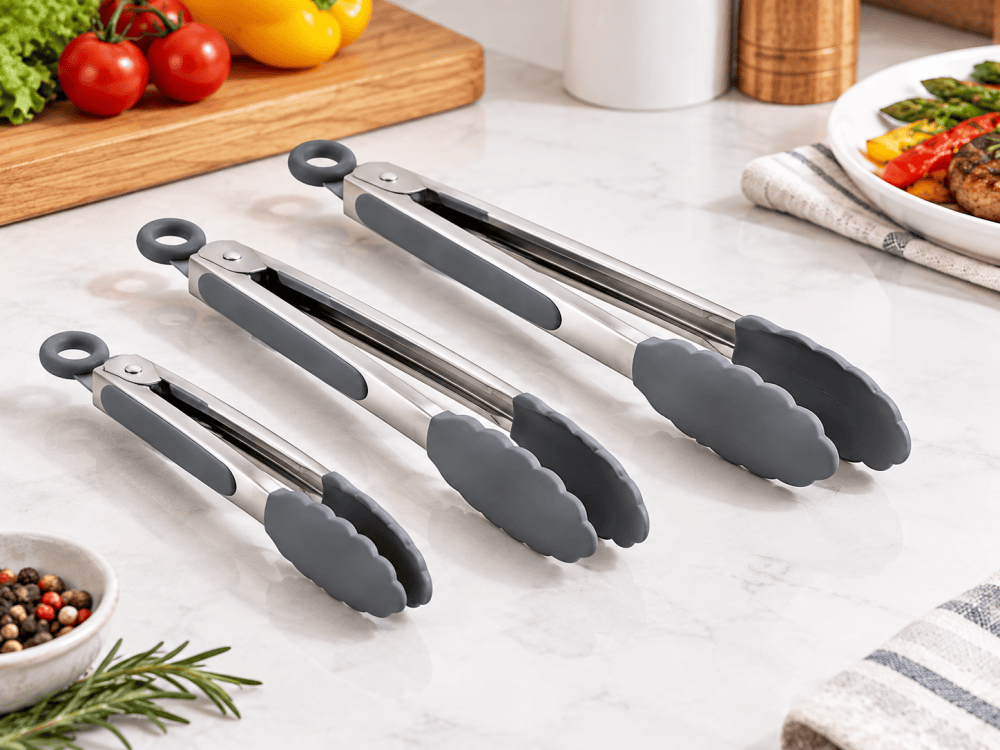
Locking Tongs vs Non-Locking Tongs: Which Kitchen Tongs Should You Choose?
Locking Tongs vs Non-Locking Tongs: Which Kitchen Tongs Should You Choose?
Kitchen tongs are one of the most versatile tools in any kitchen. Whether you're grilling steaks, tossing salads, frying foods, or serving pasta, the right pair of tongs can improve safety, efficiency, and precision.
One of the biggest decisions buyers face is choosing between locking tongs and non-locking tongs. Although they may appear similar, these two designs differ significantly in storage, usability, durability, and cooking performance.
For home cooks, professional chefs, retailers, and kitchenware buyers, understanding these differences helps ensure the right product is selected for every application.

Locking tongs are ideal for most kitchens because they save storage space, remain closed when not in use, and are easier to organize. Non-locking tongs offer slightly faster operation and are commonly used in commercial kitchens where speed is more important than compact storage.
What Are Locking Tongs?
Locking tongs feature a built-in locking mechanism that keeps the handles closed when not in use. The mechanism is typically activated by pulling or pushing a small ring at the end of the handle.
This simple feature makes locking tongs one of the most popular kitchen tools in modern households because they occupy less storage space and remain neatly organized inside drawers or utensil holders.
How the Locking Mechanism Works
- Pull ring = Unlock
- Push ring = Lock
- Spring automatically opens handles
- Some models lock automatically when squeezed closed
Common Materials
- 304 Stainless Steel
- 430 Stainless Steel
- Food-grade Silicone Tips
- Nylon Tips
- TPR Anti-slip Handles
What Are Non-Locking Tongs?
Non-locking tongs have a permanently open spring design without any storage lock.
They are extremely simple, with fewer moving parts, making them popular in restaurant kitchens where utensils remain within easy reach during continuous cooking.
Because there is no locking mechanism, these tongs are always ready for immediate use, eliminating one extra step during busy food preparation.
Major Structural Differences
| Feature | Locking Tongs | Non-Locking Tongs |
|---|---|---|
| Storage | Compact | Requires more space |
| Locking Mechanism | Yes | No |
| Moving Parts | More | Fewer |
| Operation Speed | Slightly slower | Instant use |
| Drawer Organization | Excellent | Poor |
| Commercial Kitchens | Good | Excellent |
Advantages of Locking Tongs
Easy Storage
The biggest advantage of locking tongs is compact storage. Locked handles take up significantly less space inside kitchen drawers.
Cleaner Organization
Since the tongs stay closed, utensil organizers remain neat and clutter-free.
Safer Transportation
For catering companies, outdoor BBQ events, or mobile kitchens, locked tongs are easier to transport.
Ideal for Retail Products
Many premium kitchen utensil brands prefer locking tongs because they offer better shelf presentation and consumer appeal.
Advantages of Non-Locking Tongs
Faster During Cooking
Professional chefs appreciate being able to pick up and use tongs immediately without unlocking them.
Simpler Construction
Without a locking mechanism, there are fewer components that may wear over time.
Lower Manufacturing Cost
Non-locking tongs generally cost less to produce, making them attractive for economy product lines.
Performance Comparison: Locking Tongs vs Non-Locking Tongs
Although both types of kitchen tongs perform the same basic function, their real-world performance varies depending on cooking style, storage needs, and frequency of use.
The table below summarizes the key differences that matter most to home cooks, chefs, and commercial buyers.
| Feature | Locking Tongs | Non-Locking Tongs |
|---|---|---|
| Storage Efficiency | ★★★★★ | ★★☆☆☆ |
| Ease of Use | ★★★★☆ | ★★★★★ |
| Portability | ★★★★★ | ★★★☆☆ |
| Durability | ★★★★☆ | ★★★★★ |
| Professional Kitchen Use | ★★★★☆ | ★★★★★ |
| Home Kitchen Use | ★★★★★ | ★★★★☆ |
Heat Resistance
The heat resistance of kitchen tongs depends primarily on the material used rather than whether they feature a locking mechanism.
| Material | Typical Heat Resistance | Recommended Applications |
|---|---|---|
| 304 Stainless Steel | 800°C+ (1472°F+) | Grilling, frying, BBQ |
| Food-Grade Silicone Tips | 230–315°C (446–600°F) | Non-stick cookware, baking |
| Nylon Tips | 180–210°C (356–410°F) | General cooking |
If you frequently cook over high heat or use outdoor grills, stainless steel tongs provide the highest level of heat resistance. Silicone-tipped locking tongs are a better choice for protecting coated cookware.
The locking mechanism itself has little impact on heat resistance. Instead, pay close attention to the material of the tong tips and handles.
Grip and Comfort
Comfort becomes increasingly important during extended cooking sessions.
- Locking Tongs: Often feature ergonomic handles with silicone or TPR grips for improved comfort.
- Non-Locking Tongs: Usually have a simpler design, making them lightweight and quick to operate.
Premium locking tongs often combine stainless steel construction with soft-touch grips, providing better control when handling heavy foods.
Storage and Organization
Storage is one of the biggest reasons consumers choose locking tongs.
| Storage Feature | Locking | Non-Locking |
|---|---|---|
| Fits Kitchen Drawer Easily | ★★★★★ | ★★☆☆☆ |
| Utensil Holder Organization | ★★★★★ | ★★★☆☆ |
| Travel & BBQ Portability | ★★★★★ | ★★★☆☆ |
| Easy Hanging Storage | ★★★★★ | ★★★★☆ |
For households with limited kitchen space, locking tongs offer a clear advantage by remaining compact when stored.
Durability Comparison
The addition of a locking mechanism introduces extra moving parts, but modern locking systems are highly reliable when manufactured from quality materials.
| Durability Factor | Locking | Non-Locking |
|---|---|---|
| Spring Lifespan | ★★★★☆ | ★★★★★ |
| Mechanical Simplicity | ★★★★☆ | ★★★★★ |
| Long-Term Reliability | ★★★★☆ | ★★★★★ |
| Daily Household Use | ★★★★★ | ★★★★★ |
For normal household cooking, both styles can last many years. Commercial kitchens, however, often favor non-locking tongs because they contain fewer moving components.
Food Safety and Hygiene
Whether locking or non-locking, kitchen tongs should always be manufactured from certified food-contact materials.
| Material | Food Safety | Recommended Certification |
|---|---|---|
| 304 Stainless Steel | Excellent | FDA / LFGB |
| Food-Grade Silicone | Excellent | FDA / LFGB |
| BPA-Free Nylon | Very Good | FDA |
For buyers sourcing OEM kitchen tongs, certifications such as FDA, LFGB, and BPA-Free compliance are important indicators of product quality and consumer safety.
Cleaning and Dishwasher Safety
Kitchen tongs are exposed to oils, sauces, and food residue during cooking, so easy cleaning is essential.
| Cleaning Feature | Locking Tongs | Non-Locking Tongs |
|---|---|---|
| Dishwasher Safe | ★★★★★ | ★★★★★ |
| Easy Hand Washing | ★★★★☆ | ★★★★★ |
| Grease Removal | ★★★★☆ | ★★★★★ |
| Maintenance | Occasionally clean locking mechanism | Minimal maintenance |
Although locking tongs require occasional cleaning around the locking ring, maintenance is generally simple and does not affect everyday usability.
Best Cooking Scenarios
| Cooking Scenario | Recommended Type | Reason |
|---|---|---|
| Outdoor BBQ | Locking Tongs | Portable and easy to store |
| Professional Restaurant | Non-Locking Tongs | Instant operation during busy service |
| Home Kitchen | Locking Tongs | Compact storage |
| Salad Serving | Locking Tongs | Easy handling and storage |
| Deep Frying | Non-Locking Tongs | Quick access during continuous cooking |
| Baking | Locking Silicone Tongs | Protect bakeware and non-stick surfaces |
For most households, locking tongs provide the best balance of convenience, storage efficiency, and versatility. Non-locking tongs remain the preferred option in fast-paced commercial kitchens where every second counts.
How to Choose the Right Kitchen Tongs
When selecting kitchen tongs, don't focus solely on whether they have a locking mechanism. Material quality, tong length, grip comfort, and intended cooking tasks all play an equally important role.
| Buying Factor | Recommendation |
|---|---|
| Home Cooking | Choose locking tongs for easier storage. |
| Professional Kitchens | Non-locking tongs provide faster operation. |
| BBQ & Outdoor Grilling | Long stainless steel locking tongs (16–18 inches). |
| Non-Stick Cookware | Silicone-tipped locking tongs. |
| Heavy Foods | 304 stainless steel construction with reinforced spring. |
| Cleaning Convenience | Dishwasher-safe models with removable grease-resistant joints. |
Choosing the Right Tong Length
The ideal tong length depends on how and where you cook.
| Length | Best For |
|---|---|
| 7–9 inches | Salads, pastries, buffets, serving food |
| 9–12 inches | Everyday kitchen cooking |
| 12–14 inches | Pan frying and sautéing |
| 16–18 inches | Outdoor BBQ and grilling |
Longer tongs help protect hands from heat, while shorter tongs provide better precision when plating or serving.
Which Materials Make the Best Kitchen Tongs?
| Material | Advantages | Best Applications |
|---|---|---|
| 304 Stainless Steel | Rust-resistant, durable, food-safe | Professional kitchens, BBQ |
| 430 Stainless Steel | Affordable, durable | Household use |
| Silicone Tips | Protects non-stick cookware | Daily cooking |
| Nylon Tips | Lightweight and economical | General cooking |
| TPR Handle | Comfortable anti-slip grip | Extended cooking sessions |
For most consumers, the ideal combination is 304 stainless steel + food-grade silicone tips + locking mechanism + ergonomic anti-slip handles. This design delivers excellent durability, cookware protection, and storage convenience.
What Do Professional Chefs Recommend?
Professional chefs rarely rely on a single pair of tongs. Instead, they choose different designs for different cooking tasks.
- Restaurant kitchens: Non-locking stainless steel tongs for continuous use.
- BBQ chefs: Long locking stainless steel tongs for improved safety.
- Pastry chefs: Small silicone-tipped locking tongs for delicate handling.
- Home cooks: Medium-length locking tongs for everyday versatility.
Many commercial kitchens also color-code tongs to reduce the risk of cross-contamination between raw meat, cooked food, and vegetables.
How to Care for Kitchen Tongs
Proper maintenance extends the lifespan of both locking and non-locking tongs.
- Wash thoroughly after each use.
- Remove grease around the spring and hinge.
- Dry completely before storage.
- Avoid soaking for extended periods.
- Inspect silicone tips for signs of wear.
- Store locking tongs in the closed position to reduce spring tension.
When Should You Replace Kitchen Tongs?
| Problem | Replace? |
|---|---|
| Weak spring tension | Yes |
| Loose hinge | Yes |
| Cracked silicone tips | Yes |
| Corrosion or rust | Yes |
| Minor scratches | No |
| Normal discoloration | No |
High-quality stainless steel kitchen tongs can easily last more than 10 years with proper care.
Frequently Asked Questions
Are locking tongs better than non-locking tongs?
For most home kitchens, yes. Locking tongs save storage space and are easier to organize. Professional kitchens may prefer non-locking models for faster operation.
Do locking mechanisms wear out?
Quality locking mechanisms made from stainless steel are designed for thousands of opening and closing cycles and typically last for many years.
Are locking tongs dishwasher safe?
Most premium stainless steel and silicone locking tongs are dishwasher safe. Always check the manufacturer's instructions.
Which tongs are best for BBQ?
Long (16–18 inch) locking stainless steel tongs provide excellent reach and help protect hands from high grill temperatures.
Are silicone-tipped tongs heat resistant?
Yes. Most food-grade silicone tips withstand temperatures between 230°C and 315°C (446°F–600°F).
Can stainless steel tongs scratch cookware?
Yes. Bare stainless steel tips may damage non-stick coatings. Silicone-tipped models are recommended for coated cookware.
Which tongs are best for restaurants?
Many restaurants prefer non-locking stainless steel tongs because they are always ready for immediate use during busy service.
What is the ideal tong length?
9–12 inches is suitable for everyday cooking, while 16–18 inches is ideal for grilling and outdoor BBQ.
Are locking tongs worth buying?
Absolutely. Their compact storage, portability, and versatility make them one of the most practical kitchen tools for home use.
Can I customize kitchen tongs for my brand?
Yes. Most OEM manufacturers offer custom logos, colors, handle materials, packaging, and private-label services.
Final Thoughts
Both locking and non-locking tongs have their strengths. Locking tongs are the preferred choice for most households thanks to their compact storage, portability, and user-friendly design. Non-locking tongs remain popular in commercial kitchens where speed and simplicity are priorities.
When choosing kitchen tongs, consider more than just the locking mechanism. High-quality materials, ergonomic handles, food-safe certifications, and the right tong length all contribute to better cooking performance and a longer product lifespan.
If you're sourcing kitchen tongs for retail, wholesale, or private-label projects, selecting premium stainless steel construction with food-grade silicone tips and reliable locking mechanisms will provide the best balance of durability, safety, and consumer satisfaction.
Looking for Premium Locking or Non-Locking Kitchen Tongs?
Whether you're sourcing locking tongs for compact home kitchens or durable non-locking tongs for professional food service, Kitlucy offers a wide selection of high-quality stainless steel and silicone kitchen tongs designed for global brands, wholesalers, and distributors. We provide OEM and ODM services, including custom sizes, colors, logos, packaging, and private-label solutions to help you build a competitive product line.
👉 Explore our complete collection of kitchen food tongs here:
Kitchen Food Tongs Collection →
Need a custom quotation or want to discuss your OEM project?
Contact the Kitlucy Team →
Our experienced product specialists are ready to help you choose the right materials, designs, and customization options for your target market.
Related Blogs