

Measuring Spoons: Sizes, Uses, and How to Choose the Right Set
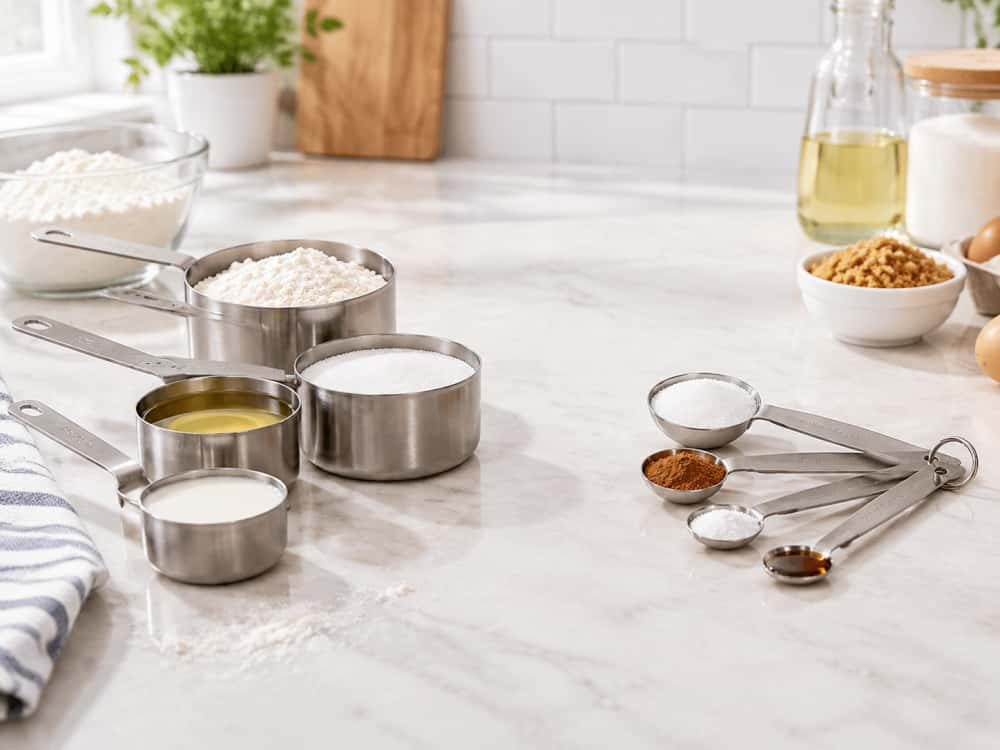
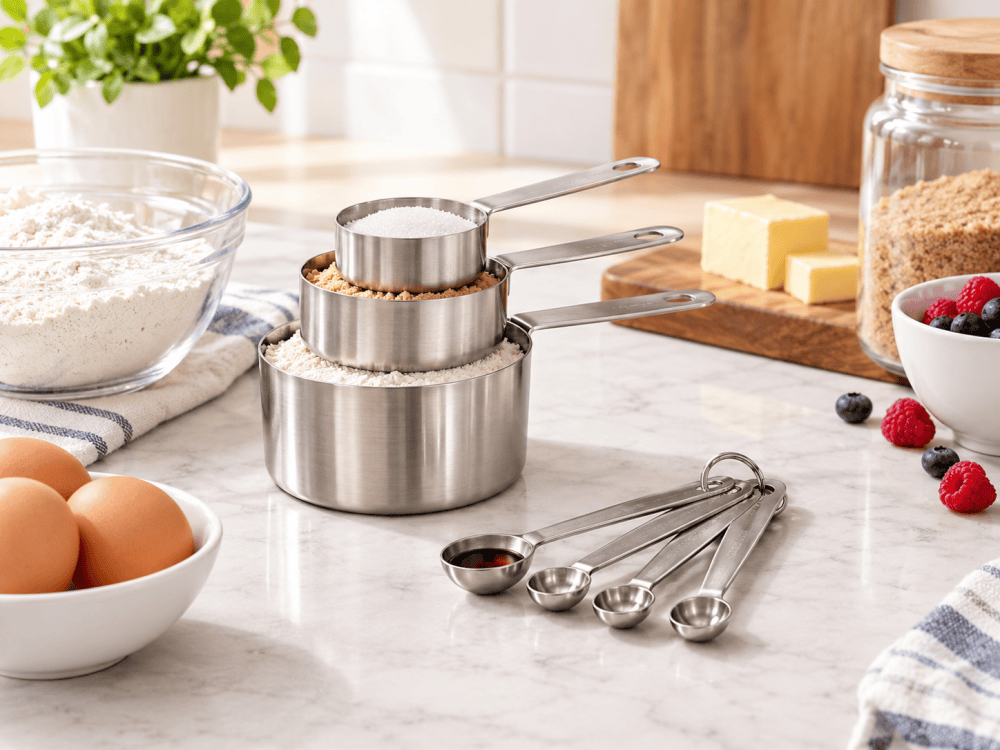
Measuring spoons are small kitchen tools that make a big difference in cooking and baking. From measuring baking powder for a cake to adding a few milliliters of vanilla extract, the right spoon helps you follow recipes more accurately and achieve consistent results. But measuring spoon sets come in different sizes, materials, shapes, and designs. Understanding these differences makes it easier to choose a set that fits your kitchen and cooking habits.
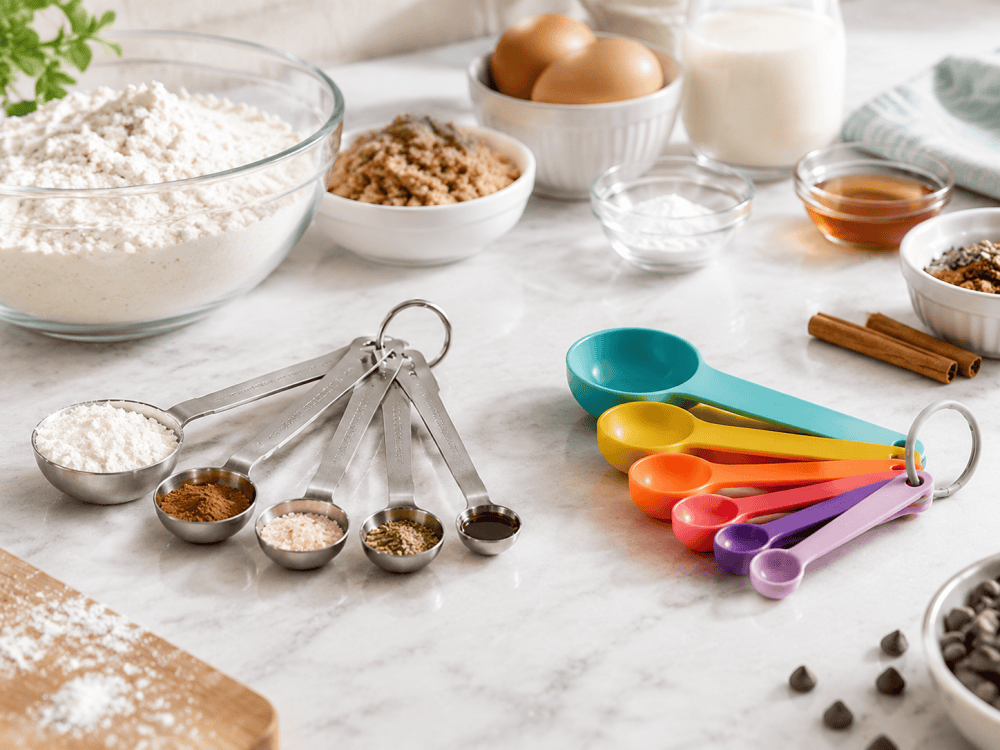
A common US measuring spoon set includes 1 tablespoon, 1 teaspoon, 1/2 teaspoon, and 1/4 teaspoon. Some sets also include 1/2 tablespoon, 1/8 teaspoon, or other sizes for more precise measuring.
For most kitchens, choose a set with clearly marked measurements, durable materials, easy-to-clean surfaces, and spoon shapes that fit the containers you use regularly.
1. What Are Measuring Spoons Used For?
Measuring spoons are designed to measure small quantities of ingredients. They are especially useful when a recipe calls for teaspoons or tablespoons rather than larger volumes measured with a measuring cup.
They are commonly used in baking, everyday cooking, beverage preparation, and seasoning. Because small ingredient quantities can have a noticeable effect on flavor and texture, measuring spoons are particularly helpful when a recipe requires consistency.
Common Uses of Measuring Spoons
- Baking: Measure baking powder, baking soda, salt, vanilla extract, and small quantities of spices.
- Cooking: Portion seasonings, herbs, sauces, and other ingredients.
- Marinades and dressings: Measure vinegar, oils, mustard, honey, and flavorings in small quantities.
- Coffee and beverages: Measure sugar, flavorings, and other recipe ingredients.
- Recipe consistency: Repeat ingredient quantities more reliably when making the same dish again.
Although measuring spoons are useful for many ingredients, they measure volume rather than weight. A teaspoon of flour and a teaspoon of honey occupy the same nominal volume but have different weights. For recipes that require precise ingredient mass, a kitchen scale may be more appropriate.
2. Measuring Spoon Sizes and Their Uses
Measuring spoon sizes are commonly expressed in teaspoons, tablespoons, and milliliters. In the United States, a standard teaspoon is generally 5 mL, and a standard tablespoon is 15 mL. However, spoon sets and measurement conventions can vary by market, so check the markings and specifications of the set you purchase.
| US Measuring Spoon | Approximate Metric Volume | Common Uses |
|---|---|---|
| 1 tablespoon (1 tbsp) | 15 mL | Oil, sauces, larger seasoning quantities, and recipe ingredients |
| 1/2 tablespoon | 7.5 mL | Intermediate quantities when included in a set |
| 1 teaspoon (1 tsp) | 5 mL | Vanilla extract, spices, salt, and leavening ingredients |
| 1/2 teaspoon | 2.5 mL | Smaller amounts of spices, baking soda, or flavorings |
| 1/4 teaspoon | 1.25 mL | Small quantities of salt, spices, and concentrated ingredients |
| 1/8 teaspoon | About 0.625 mL | Very small amounts of spices or other concentrated ingredients |
Not every set contains all these sizes. Four-piece sets commonly cover everyday needs, while larger sets may offer additional measurements for baking, seasoning, or more specialized recipes.
3. How to Use Measuring Spoons Correctly
Choosing the correct spoon size is only part of accurate measuring. How you fill, level, and handle the spoon can also affect the amount of an ingredient used.
For Dry Ingredients
- Select the correct size. Use the spoon marked with the measurement specified in the recipe.
- Fill the spoon. Add the dry ingredient without compressing it unless the recipe specifically instructs you to pack it.
- Level the surface. For ingredients that should be measured level, remove the excess with a straight edge.
- Check the ingredient instructions. Brown sugar, for example, may be measured packed when a recipe says so.
For Liquid Ingredients
- Place the spoon over a stable surface or hold it level.
- Pour the liquid slowly until it reaches the spoon's intended capacity.
- Avoid spilling or overfilling the spoon while moving it to the mixing bowl.
- For sticky ingredients such as honey or syrup, use a spoon that is easy to empty and clean.
Measuring spoons work for both dry and liquid ingredients when used correctly. However, deep spoon bowls, narrow handles, and difficult-to-clean connections can affect convenience during everyday preparation.
4. Measuring Spoons vs. Measuring Cups
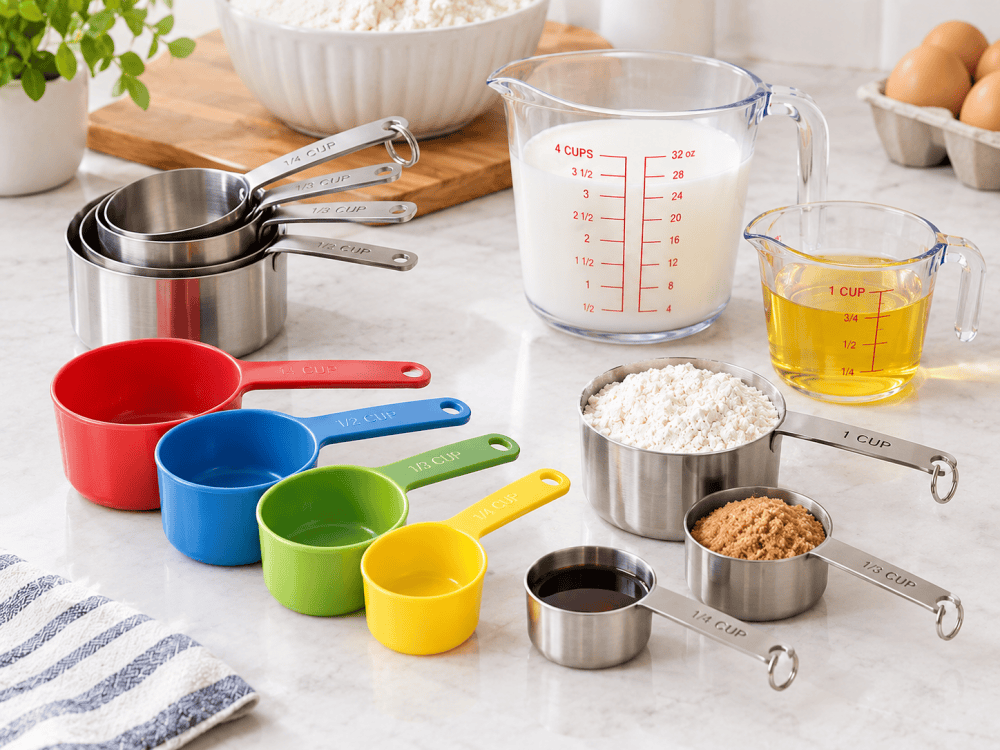
Measuring spoons and measuring cups serve related but different purposes. A measuring spoon is designed for small volumes, while measuring cups are more practical for larger quantities.
| Feature | Measuring Spoons | Measuring Cups |
|---|---|---|
| Best for | Small ingredient quantities | Larger volumes of ingredients |
| Typical ingredients | Spices, salt, extracts, baking powder, small amounts of liquids | Flour, sugar, rice, milk, water, and other larger quantities |
| Storage | Compact and easy to store together | Usually require more storage space |
| Precision considerations | Useful for measuring small recipe volumes | Useful for measuring larger recipe volumes |
For a well-equipped kitchen, measuring spoons and measuring cups complement each other. If you frequently bake, prepare sauces, or follow detailed recipes, having both can make ingredient preparation more convenient.
5. Which Material Is Best for Measuring Spoons?
Measuring spoons are available in stainless steel, plastic, and other materials. The best option depends on how often you cook, the type of ingredients you measure, your storage preferences, and your budget.
Stainless Steel Measuring Spoons
Stainless steel measuring spoons are popular for their sturdy construction and resistance to everyday wear. Many designs have a smooth surface that is easy to rinse and clean. They are a practical option for frequent cooking and baking.
- Durable construction for routine use.
- A rigid spoon bowl that maintains its shape during normal handling.
- Often available in nesting sets for compact storage.
- Suitable for many dry and liquid ingredients, depending on the design.
When comparing stainless steel sets, examine the finish, edge quality, handle strength, measurement markings, and cleaning instructions. The exact grade and product construction should be confirmed from the manufacturer's specifications.
Plastic Measuring Spoons
Plastic measuring spoons are often lightweight and available in a wide range of colors and shapes. Color-coded designs can help users distinguish spoon sizes quickly, while plastic sets can be an economical option for everyday kitchens.
- Lightweight and convenient to handle.
- Available in a variety of colors and designs.
- Can be suitable for everyday dry and liquid ingredient measuring.
- May offer an accessible price point for basic kitchen sets.
Plastic products vary in material quality and heat tolerance. Check whether the set is intended for food contact and follow the manufacturer's instructions for washing, storage, and any temperature limitations.
Other Design Considerations
Beyond material, the shape and construction of a measuring spoon affect its usefulness. Narrow spoon heads may fit small spice jars, while wider bowls may be easier to fill with larger ingredients. Handles should be comfortable to hold and easy to separate when the set is nested together.
6. How to Choose the Right Measuring Spoon Set
The right set should match your recipes, kitchen habits, and preferred cleaning and storage methods. Before buying, consider the following factors rather than choosing a set based on appearance alone.
1. Check the Size Range
For general cooking and baking, look for a set that includes the common tablespoon, teaspoon, half-teaspoon, and quarter-teaspoon sizes. If you often work with small amounts of concentrated spices or specialty recipes, an additional eighth-teaspoon measure may be useful.
2. Choose a Suitable Material
Stainless steel is worth considering if you prioritize a rigid, durable feel. Plastic may suit users who prefer lightweight, color-coded tools. Compare the complete product specifications, including food-contact suitability and care instructions.
3. Look for Clear Measurement Markings
Measurement labels should be easy to identify during food preparation. Depending on the design, markings may be engraved, stamped, molded, or printed. Check whether the markings are readable and intended to withstand normal cleaning and use.
4. Consider Spoon Shape and Depth
The spoon bowl should suit the ingredients you measure most often. A narrow design may fit into spice jars more easily, while a broader opening can simplify scooping from larger containers. Deep bowls can hold ingredients securely but may take more effort to empty or clean.
5. Evaluate Storage and Organization
Nesting spoons connected by a ring are convenient for keeping the set together. Individual spoons may offer more flexibility when several measurements are needed at once. Consider whether the set can be separated easily and whether it fits your drawer or utensil organizer.
6. Review Cleaning Requirements
Check whether the complete set is dishwasher safe before purchasing. Cleaning suitability can vary by material, construction, and markings. If the instructions do not clearly confirm dishwasher compatibility, follow the manufacturer's recommended handwashing method.
7. Consider Value and Intended Use
A basic four-piece set may be sufficient for everyday recipes. A larger set may be more practical for frequent baking, recipe testing, or kitchens where several people prepare ingredients at the same time. The most useful set is one that offers the measurements you actually need and is easy to maintain.
7. Common Measuring Spoon Mistakes to Avoid
Even a well-designed measuring spoon set cannot guarantee accurate results if it is used incorrectly. These common mistakes are worth avoiding.
- Using a regular eating spoon: Tableware spoons are not necessarily calibrated to standard measuring spoon volumes.
- Using the wrong spoon size: Check the marking instead of estimating a quantity by eye.
- Overfilling dry ingredients: Level ingredients when the recipe calls for a level measurement.
- Packing ingredients without instructions: Only pack ingredients when the recipe specifies it.
- Ignoring unit differences: Confirm whether a recipe uses US customary or another measurement convention, especially when following international recipes.
- Leaving residue behind: Sticky ingredients may remain in the spoon and affect subsequent measurements if it is not cleaned properly.
- Assuming volume equals weight: Different ingredients have different densities, so a spoonful does not have a universal weight.
8. Measuring Spoon Sets for Retail and Wholesale Buyers
For retailers, distributors, and private-label kitchenware brands, measuring spoon sets are compact products that can complement measuring cups, kitchen scales, baking tools, and other food-preparation accessories.
When evaluating a product range, buyers should look beyond the number of spoons included in a set. Product design, material consistency, measurement readability, packaging, and quality control can all influence the suitability of a product for its target market.
Key Factors for Product Sourcing
- Set configuration: Confirm the included sizes and the measurement units used on the products.
- Material specification: Verify the material and relevant food-contact requirements for the intended market.
- Manufacturing quality: Check dimensions, shape consistency, surface finish, edge quality, and connection strength.
- Marking durability: Evaluate the readability and durability of measurement labels during normal use and cleaning.
- Packaging: Consider storage rings, nesting arrangements, retail packaging, and labeling needs.
- Market positioning: Match the material, design, and set size to the intended customer and price segment.
- Compliance documentation: Request applicable product specifications and supporting documents for the destination market.
For OEM and private-label projects, product requirements should be confirmed with the supplier before production. Sample review and appropriate product testing can help verify that the finished set matches the agreed specifications.
Frequently Asked Questions
What sizes are included in a standard measuring spoon set?
A common US set includes 1 tablespoon, 1 teaspoon, 1/2 teaspoon, and 1/4 teaspoon. Some sets include additional sizes, such as 1/2 tablespoon or 1/8 teaspoon.
How many milliliters are in one teaspoon?
A standard US teaspoon is generally 5 mL. Always check the measurement convention used by your recipe and the markings on your spoon set.
How many teaspoons are in one tablespoon?
In the US customary system, 1 tablespoon equals 3 teaspoons. This conversion is useful when a recipe calls for a quantity that is not included in your measuring spoon set.
Can measuring spoons be used for both dry and liquid ingredients?
Yes. Measuring spoons can measure small volumes of both dry and liquid ingredients. Fill and level dry ingredients as directed by the recipe, and fill liquid ingredients carefully to avoid spills.
Are stainless steel measuring spoons better than plastic ones?
Neither material is best for every user. Stainless steel offers a rigid, durable feel, while plastic sets are often lightweight and may offer color-coded designs. Compare the product's construction, markings, intended use, and care instructions.
Are measuring spoons dishwasher safe?
Some measuring spoon sets are dishwasher safe, but compatibility depends on the material, construction, and markings. Check the manufacturer's care instructions before placing the set in a dishwasher.
What should I look for in a measuring spoon set for baking?
Choose a set with the common measurement sizes, clear markings, suitable material, easy-to-clean surfaces, and a convenient storage design. Additional small measurements can be helpful for recipes that use concentrated ingredients in very small quantities.
Do measuring spoons measure weight?
No. Measuring spoons measure volume. The weight of an ingredient depends on its density, so a spoonful of one ingredient may weigh much more or less than a spoonful of another.
Conclusion: Choose Measuring Spoons That Fit Your Kitchen
Measuring spoons are simple tools, but the right set can make cooking and baking more organized and consistent. Understanding common spoon sizes, using the correct measuring technique, and choosing a suitable material will help you get more from your kitchen tools.
For most households, a set with the essential sizes, clear markings, convenient storage, and straightforward care instructions is a practical starting point. If you bake frequently or follow detailed recipes, additional sizes may offer more flexibility.
For kitchenware retailers and wholesale buyers, evaluating the full product specification—including material, dimensions, markings, packaging, and quality requirements—helps ensure that a measuring spoon set meets the needs of its intended market.
Explore Kitchenware Solutions with Kitlucy
Looking for kitchen tools for your product range? Explore Kitlucy's kitchenware collections and contact the team to discuss product specifications, set configurations, and OEM or private-label requirements.
Related Blogs