Which Is Safer: Nylon or Silicone Cooking Utensils?
Which Is Safer: Nylon or Silicone Cooking Utensils?
Kitchen utensils are essential tools for everyday cooking, but choosing the right material can significantly affect cooking safety, cookware protection, and long-term durability. Among modern kitchen utensil materials, nylon and silicone are two of the most popular options.
Many consumers ask whether nylon or silicone cooking utensils are safer, more heat-resistant, and better suited for nonstick cookware. Understanding the differences between these materials can help buyers choose the right utensils for modern kitchens.
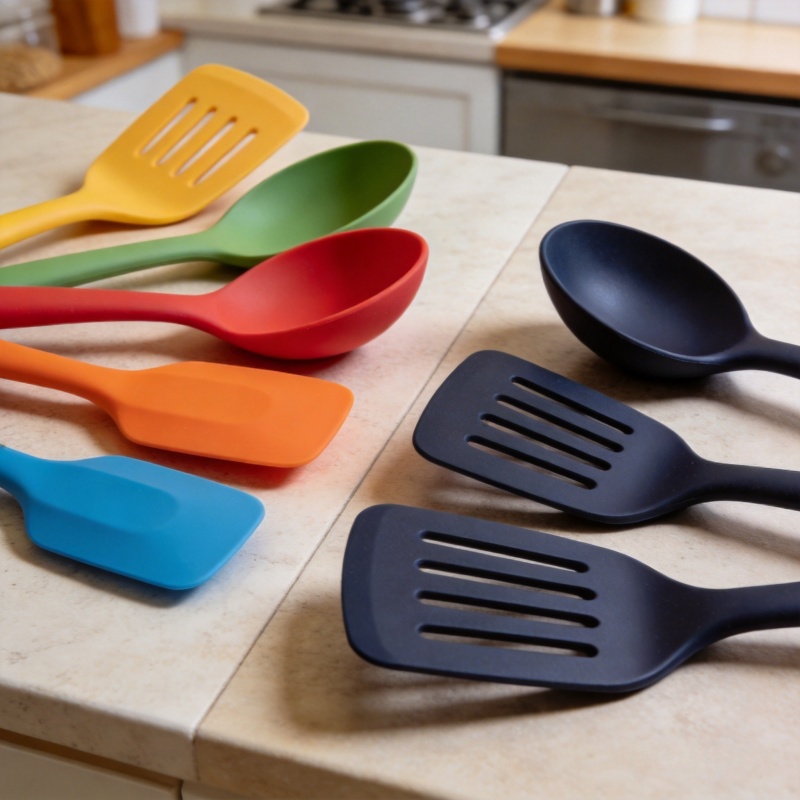
Silicone cooking utensils are generally considered safer for high-heat cooking and nonstick cookware because they offer better heat resistance and softer surfaces. Nylon utensils remain popular because they are lightweight, affordable, and durable for daily cooking tasks.
What Are Nylon Cooking Utensils?
Most nylon cooking utensils are designed for moderate cooking temperatures and may begin softening when exposed to temperatures above 400°F (204°C).
Nylon cooking utensils are made from heat-resistant synthetic plastic materials commonly used in spatulas, ladles, turners, and serving spoons.
Nylon utensils are widely used because they are lightweight, affordable, and compatible with most cookware surfaces.
Advantages of Nylon Utensils
- Affordable and budget-friendly
- Lightweight for daily cooking
- Firm structure for flipping and stirring
- Safe for most nonstick cookware
- Commonly used in kitchen utensil sets
Limitations of Nylon Utensils
- Lower heat resistance than silicone
- Can soften or deform under excessive heat
- May discolor over time
What Are Silicone Cooking Utensils?
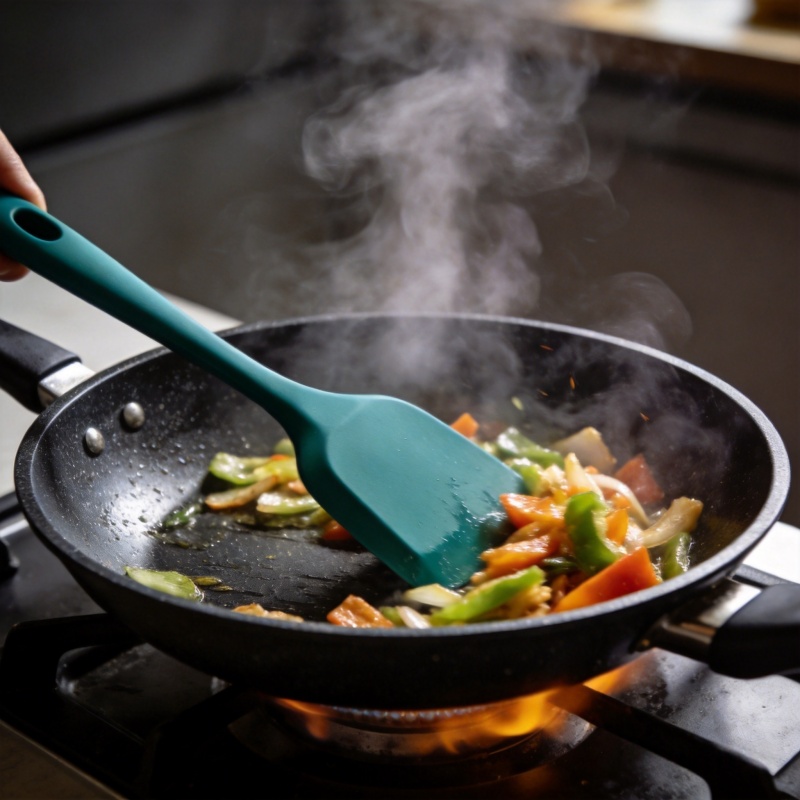
Food-grade silicone cooking utensils typically resist temperatures up to 446°F (230°C), making them suitable for high-heat cooking and nonstick cookware applications.
Silicone cooking utensils are made from food-grade silicone materials designed for heat resistance, flexibility, and cookware protection.
Modern silicone kitchen utensil sets are increasingly popular in modern kitchens because they combine durability, nonstick safety, and stylish designs.
Advantages of Silicone Utensils
- Excellent heat resistance
- Soft surface protects cookware coatings
- Flexible for scraping and mixing
- Dishwasher safe and easy to clean
- Modern appearance and color options
Limitations of Silicone Utensils
- Premium silicone products may cost more
- Very soft utensils may feel less rigid
- Low-quality silicone may absorb odors
Nylon vs Silicone Cooking Utensils Comparison
| Feature | Nylon | Silicone |
|---|---|---|
| Heat Resistance | Medium | High |
| Flexibility | Low | High |
| Cookware Protection | Good | Excellent |
| Durability | Medium | High |
| Dishwasher Safe | Yes | Yes |
| Risk of Melting | Higher | Lower |
| Price Range | Lower | Medium to High |
Which Material Is Safer for Cooking?
Both nylon and silicone utensils can be safe for cooking when made from food-grade materials and used properly. However, silicone is generally considered safer for high-temperature cooking.
Nylon Cooking Safety
Nylon utensils are designed for moderate cooking temperatures, but prolonged exposure to high heat may cause softening or edge deformation.
High-quality nylon utensils remain widely used in home kitchens because of their lightweight and affordable design.
Silicone Cooking Safety
Food-grade silicone utensils offer stronger heat resistance and better stability during cooking.
Many modern silicone kitchen utensils are manufactured to meet FDA and LFGB food-contact safety standards for kitchenware products.
Which Utensils Are Better for Nonstick Cookware?
Silicone utensils are often preferred for nonstick cookware because their softer surface reduces the risk of scratching pan coatings.
Nylon utensils are also commonly used with nonstick cookware, although firmer edges may create more pressure on delicate surfaces over long-term use.
When Nylon Utensils Are Better
- Everyday low-temperature cooking
- Budget-friendly kitchen setups
- Lightweight utensil preferences
- Firm flipping and stirring tasks
Nylon kitchen utensil sets remain popular in households because they provide practical functionality at affordable pricing.
When Silicone Utensils Are Better
- High-heat cooking applications
- Nonstick cookware protection
- Baking and mixing tasks
- Modern premium kitchen designs
- Flexible scraping performance
Common Problems Users Experience
Nylon Utensil Problems
- Melting edges from direct heat exposure
- Surface discoloration over time
- Reduced rigidity after long-term use
Silicone Utensil Problems
- Low-quality silicone may absorb odors
- Very soft utensils may feel less stable
- Inferior products may contain filler
How to Choose High-Quality Kitchen Utensils
Consumers and buyers should focus on material quality, food-contact safety, and product construction when selecting cooking utensils.
- Choose food-grade silicone materials
- Look for FDA or LFGB compliance
- Select BPA-free kitchen utensils
- Prefer seamless designs for easier cleaning
- Consider stainless steel reinforced handles for durability
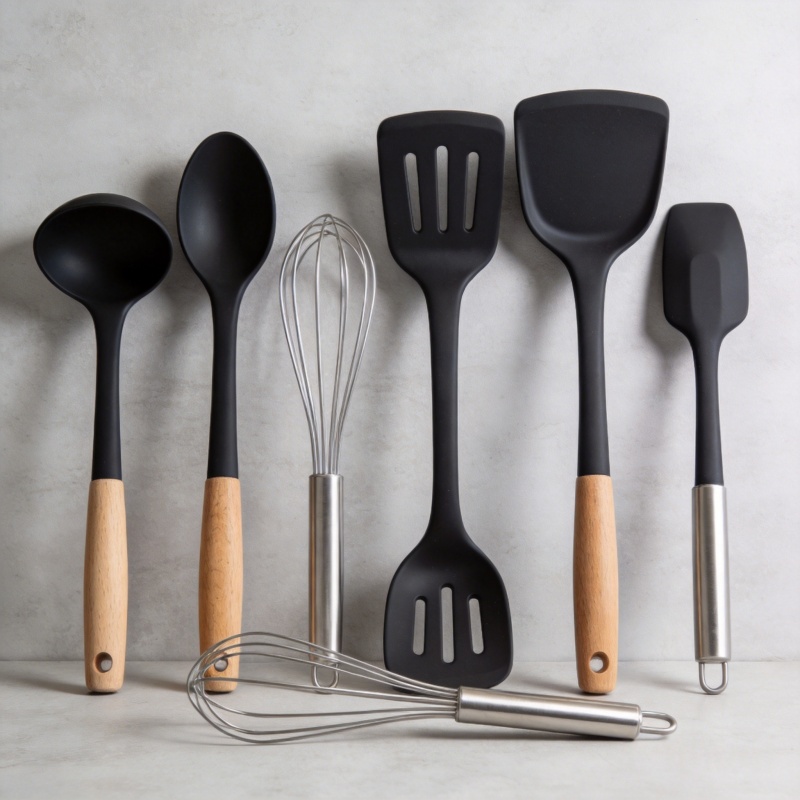
Modern kitchen utensil sets increasingly combine silicone heads with stainless steel handles for improved performance and appearance.
Frequently Asked Questions
Are nylon utensils toxic?
High-quality food-grade nylon utensils are generally considered safe for cooking when used within recommended temperatures.
Is silicone safer than nylon?
Silicone is generally preferred for higher heat resistance and better nonstick cookware protection.
Can nylon utensils melt?
Yes, nylon utensils can soften or melt if exposed to excessive heat for extended periods.
Are silicone utensils dishwasher safe?
Most food-grade silicone utensils are dishwasher safe and easy to maintain.
Which utensils last longer?
High-quality silicone utensils often provide better long-term durability compared to standard nylon utensils.

Conclusion
Both nylon and silicone cooking utensils offer practical advantages for modern kitchens. Nylon utensils are lightweight, affordable, and suitable for everyday cooking, while silicone utensils provide better heat resistance, cookware protection, and premium performance.
For consumers focused on high-temperature cooking and nonstick cookware safety, food-grade silicone utensils are often the preferred choice. Nylon utensils remain an excellent option for budget-friendly daily kitchen use.

Looking for Professional Kitchen Utensil Solutions?
Kitlucy provides silicone and nylon kitchen utensil sets with OEM and private label services for global brands, wholesalers, and retailers.
Related Blogs