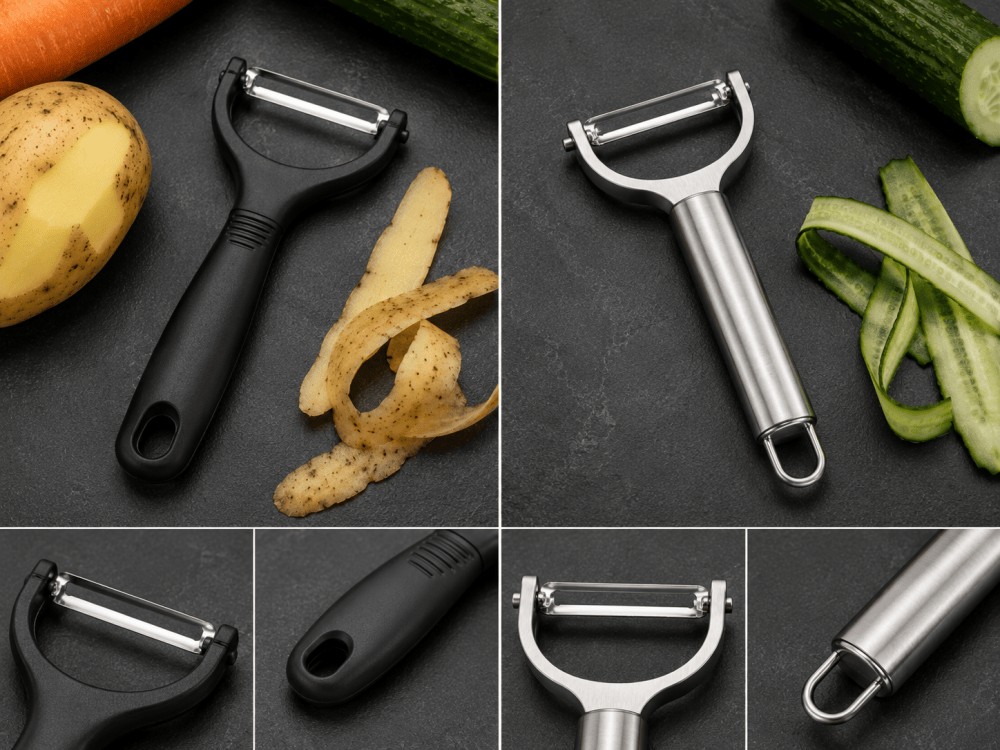
Plastic Handle vs Stainless Steel Handle Vegetable Peeler: Which Handle Is Better?
Plastic Handle vs Stainless Steel Handle Vegetable Peeler: Which Handle Is Better?
When choosing a vegetable peeler, most people focus on the blade. However, the handle material plays an equally important role in comfort, durability, hygiene, and overall user experience. Whether you're buying a peeler for home cooking, a professional kitchen, or retail distribution, selecting the right handle can significantly affect product performance.
Among the many options available today, plastic handle vegetable peelers and stainless steel handle vegetable peelers are the two most common types found in the global kitchenware market. Each offers distinct advantages depending on cooking habits, budget, target consumers, and product positioning.
For wholesalers, distributors, and private label brands, understanding the differences between plastic and stainless steel handles is also essential when developing product lines that meet different market segments.
Why Handle Material Matters
The blade determines how well a peeler cuts, but the handle determines how comfortable, safe, and enjoyable it is to use. A poorly designed handle can cause hand fatigue, reduce peeling efficiency, and even increase the risk of slipping.
Consumers increasingly evaluate vegetable peelers based not only on blade sharpness but also on ergonomic design, grip comfort, durability, and appearance. Handle material has become a key purchasing factor in both online and retail markets.
Modern kitchenware buyers expect peelers that offer:
- Comfortable grip during long periods of use
- Excellent slip resistance
- Easy cleaning and maintenance
- Long service life
- Stylish appearance that matches modern kitchens
- Food-safe construction
Overview of Plastic Handle Vegetable Peelers
Plastic handle peelers are the most widely used models worldwide. They are affordable, lightweight, and available in countless colors and ergonomic shapes, making them popular in supermarkets, online marketplaces, and promotional product programs.
Common Materials
Manufacturers typically use food-grade engineering plastics such as:
- PP (Polypropylene)
- ABS
- Nylon
- TPR soft-touch rubber overmolding
Many premium plastic peelers combine a rigid PP frame with soft TPR grips to improve comfort and slip resistance.
Main Advantages
- Lightweight for comfortable daily use
- Lower manufacturing cost
- Available in multiple colors
- Easy to match brand identity
- Comfortable ergonomic shapes
- Suitable for non-slip soft-touch designs
- Excellent for private label customization
Potential Disadvantages
- May discolor after years of use
- Less premium appearance than metal
- Lower structural strength under heavy impact
- Quality varies greatly depending on plastic grade
Overview of Stainless Steel Handle Vegetable Peelers
Stainless steel handle peelers have become increasingly popular in premium kitchenware collections. Their modern appearance, exceptional durability, and hygienic properties make them attractive to consumers seeking long-lasting kitchen tools.
Most high-end models use food-grade 304 stainless steel for both the handle and frame.
Main Advantages
- Premium modern appearance
- Exceptional durability
- Excellent corrosion resistance
- Easy to sanitize
- Long service life
- Professional kitchen appearance
Possible Disadvantages
- Higher manufacturing cost
- Heavier than plastic models
- May become slippery when completely wet unless textured
- Cold metallic feel in winter climates
Plastic Handle vs Stainless Steel Handle: Quick Comparison
| Feature | Plastic Handle | Stainless Steel Handle |
|---|---|---|
| Weight | ★★★★★ Very Light | ★★★☆☆ Moderate |
| Comfort | ★★★★★ Excellent | ★★★★☆ Good |
| Durability | ★★★★☆ Good | ★★★★★ Excellent |
| Premium Appearance | ★★★☆☆ | ★★★★★ |
| Corrosion Resistance | ★★★★☆ | ★★★★★ |
| Customization | ★★★★★ | ★★★☆☆ |
| Production Cost | Low | Higher |
| Retail Position | Mass Market | Premium Market |
How Handle Design Influences User Experience
Material alone does not determine performance. The overall handle design—including shape, balance, texture, and grip size—also has a major impact on comfort and usability.
Many leading kitchenware brands now combine ergonomic engineering with high-quality materials to reduce hand fatigue and improve peeling efficiency.
Key ergonomic features include:
- Soft-touch grip zones
- Rounded edges for comfort
- Finger support contours
- Balanced weight distribution
- Non-slip textures
- Suitable handle diameter for different hand sizes
Plastic Handle vs Stainless Steel Handle Vegetable Peeler: A Detailed Comparison
While blade quality determines how efficiently a vegetable peeler removes skins, the handle has an equally important impact on comfort, durability, hygiene, and long-term performance. The choice between a plastic handle and a stainless steel handle depends on how the peeler will be used, who will use it, and the price positioning of the product.
For home users, comfort and affordability are often the top priorities. Professional kitchens, however, usually focus more on durability, sanitation, and resistance to heavy daily use. Understanding these differences helps retailers, importers, and OEM buyers choose the right products for their target markets.
Plastic Handle vs Stainless Steel Handle Comparison Table
| Feature | Plastic Handle Peeler | Stainless Steel Handle Peeler |
|---|---|---|
| Weight | Lightweight | Heavier and more solid |
| Comfort | Excellent ergonomic grip | Firm grip, premium feel |
| Durability | Good for everyday use | Excellent for long-term heavy-duty use |
| Water Resistance | Excellent | Excellent |
| Corrosion Resistance | Not affected by rust | 304 stainless steel offers outstanding corrosion resistance |
| Cleaning | Dishwasher safe (most models) | Very easy to sanitize |
| Appearance | Available in colorful designs | Modern, premium, professional |
| Manufacturing Cost | Lower | Higher |
| Typical Retail Price | Budget to mid-range | Mid-range to premium |
| Best For | Home kitchens, supermarkets, promotional products | Professional kitchens, premium brands, restaurants |
Advantages of Plastic Handle Vegetable Peelers
1. Lightweight and Comfortable
Plastic handles significantly reduce the overall weight of the peeler, making them easier to use for extended periods. This is especially beneficial for elderly users or people with weaker grip strength.
2. Ergonomic Design Flexibility
Injection molding allows manufacturers to create ergonomic shapes that fit naturally in the hand. Soft-touch TPR coatings can also be added to improve comfort and reduce hand fatigue.
3. Lower Manufacturing Cost
Plastic handles require less material cost and simpler production processes, making them ideal for high-volume retail markets and promotional products.
4. Wide Variety of Colors
Plastic handles are available in virtually unlimited color combinations, making them attractive for modern kitchen collections and private-label branding.
Plastic handle peelers dominate supermarkets, discount retailers, and online marketplaces because they offer an excellent balance between affordability, comfort, and attractive appearance.
Advantages of Stainless Steel Handle Vegetable Peelers
1. Exceptional Durability
304 stainless steel handles resist cracking, deformation, and wear much better than plastic after years of daily use.
2. Premium Appearance
The polished metal finish creates a professional look that appeals to consumers seeking modern, minimalist kitchen tools.
3. Superior Hygiene
Metal handles have fewer seams and are easier to sanitize thoroughly, making them popular in commercial kitchens and food-service environments.
4. Better Structural Strength
Many stainless steel peelers feature a one-piece construction, reducing weak connection points between the blade and handle.
Which Handle Performs Better for Different Foods?
| Food Type | Recommended Handle | Reason |
|---|---|---|
| Potatoes | Plastic | Comfortable for repetitive peeling |
| Carrots | Plastic | Lightweight for continuous use |
| Apples | Either | Both perform well |
| Pumpkins | Stainless Steel | Better stability and durability |
| Sweet Potatoes | Stainless Steel | Handles higher peeling force |
| Commercial Food Prep | Stainless Steel | Designed for intensive daily operation |
What Wholesale Buyers Should Consider
Target Customer Group
Budget retailers generally prefer colorful plastic-handle peelers, while premium kitchenware brands often choose stainless steel models that emphasize quality and longevity.
Product Positioning
If the goal is to create an affordable everyday kitchen tool, plastic handles provide excellent value. For premium collections or professional cookware lines, stainless steel handles better support higher pricing.
Brand Identity
Many OEM customers customize handle colors, logos, and packaging for plastic peelers, while stainless steel models often focus on laser engraving, brushed finishes, and minimalist packaging.
Production Cost and MOQ
Plastic-handle peelers generally have lower production costs and are suitable for large-volume retail orders. Stainless steel handle peelers require higher material costs but offer greater perceived value and higher retail margins.
Many manufacturers now offer hybrid designs that combine a stainless steel frame with ergonomic PP or TPR handles. These products provide the durability of stainless steel while maintaining the comfort of plastic grips, making them increasingly popular in European and North American markets.
Frequently Asked Questions
Which vegetable peeler handle lasts longer?
In general, stainless steel handles offer a longer service life because they resist moisture, corrosion, and impact. High-quality plastic handles can also last for years under normal household use, but they may show wear or discoloration more quickly in demanding environments.
Are plastic handle peelers food safe?
Yes. Food-grade PP, ABS, and TPR plastics that comply with FDA or LFGB standards are completely safe for food contact. When sourcing peelers, buyers should always request documentation proving material compliance.
Which handle is more comfortable for everyday use?
For most home users, plastic handles with ergonomic soft-grip coatings provide greater comfort, especially during extended peeling sessions. Stainless steel handles are often preferred by professional chefs who value durability and hygiene.
Do stainless steel handles rust?
Quality peelers made from 304 stainless steel are highly resistant to rust under normal kitchen conditions. Proper cleaning and drying further extend their lifespan.
Which handle type is better for OEM customization?
Plastic handles offer more flexibility for OEM projects because they can be produced in custom colors, textures, shapes, and branded with logos through molding or printing. Stainless steel handles can also be customized through laser engraving, polishing, or surface finishing for premium branding.
Final Thoughts: Which Vegetable Peeler Handle Should You Choose?
There is no single "best" vegetable peeler handle—the ideal choice depends on your target market, product positioning, and customer expectations.
If your customers prioritize affordability, comfort, colorful designs, and everyday cooking convenience, plastic handle vegetable peelers remain the most practical option.
If your focus is on premium cookware collections, commercial kitchens, or long-term durability, stainless steel handle peelers provide superior strength, hygiene, and professional appearance.
Many successful kitchenware brands actually offer both styles to satisfy different consumer segments. Combining ergonomic design, high-quality blades, and food-safe materials creates a stronger product portfolio that appeals to a wider range of buyers.
For wholesale and private-label projects, consider offering multiple handle materials within the same product series. This allows retailers to build complete product lines targeting both budget-conscious consumers and premium kitchen enthusiasts.
Related Products
Looking for high-quality vegetable peelers for your brand or wholesale business? Explore our complete collection of durable peelers and slicers designed for home kitchens, professional chefs, and private-label projects.
Looking for OEM Vegetable Peeler Manufacturers?
Kitlucy specializes in manufacturing high-quality vegetable peelers with plastic handles, stainless steel handles, ergonomic grips, and customized blade designs. We provide OEM, ODM, private labeling, custom packaging, and wholesale solutions for distributors, retailers, supermarkets, and kitchenware brands worldwide.
Related Blogs