

Safest Cutting Board Materials: How to Choose the Best Option
Kitlucy Kitchen Guide · Food Safety
Choosing a cutting board is about more than material. Learn how plastic, wood, bamboo, and stainless steel compare, what makes a board safe for food preparation, and how to keep it clean over time.
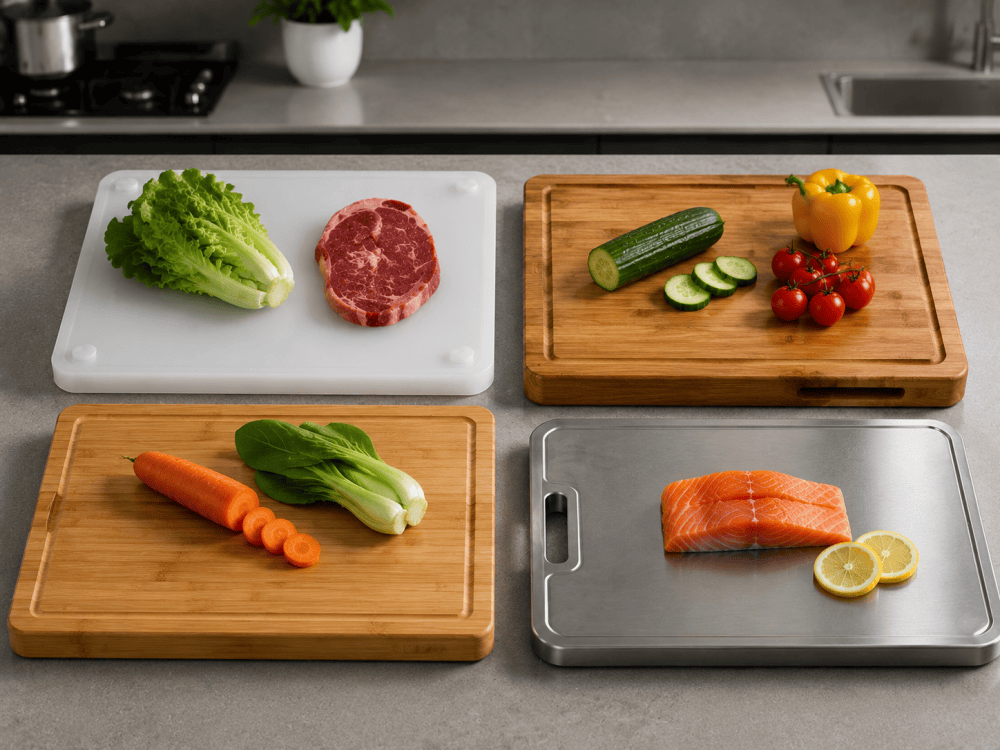
What is the safest cutting board to use? A food-grade plastic board or a properly maintained wooden board can both be suitable for safe food preparation. The most important factors are preventing cross-contamination, cleaning the board thoroughly, and replacing it when deep grooves or cracks make it difficult to clean. No single material guarantees food safety on its own.
01 — THE BASICS
What Makes a Cutting Board Safe?
A safe cutting board should be suitable for food contact, durable enough for its intended use, and easy to clean and maintain.
When comparing the safest cutting boards, it is easy to focus on whether a material is porous, nonporous, natural, or synthetic. These characteristics matter, but they do not tell the whole story. A board's condition, cleaning routine, and the way different foods are handled all affect food safety.
Look for four practical qualities:
- Food-contact suitability: The material and any coatings should be intended for the board's food-contact use and meet applicable requirements in the market where it will be sold.
- Cleanability: The board should be possible to wash thoroughly according to its care instructions.
- Structural integrity: A board with deep grooves, cracks, or damaged surfaces can be harder to clean effectively.
- Appropriate use: A board used for raw meat should not be used for ready-to-eat foods without proper cleaning and sanitizing.
The goal is not simply to find a material marketed as antibacterial. It is to choose a board that supports consistent, safe food preparation.
02 — MATERIAL COMPARISON
Which Cutting Board Material Is Safest?
Plastic, wood, bamboo, and stainless steel each have different advantages. The best choice depends on the foods you prepare, your cleaning routine, knife preferences, and how frequently the board will be used.
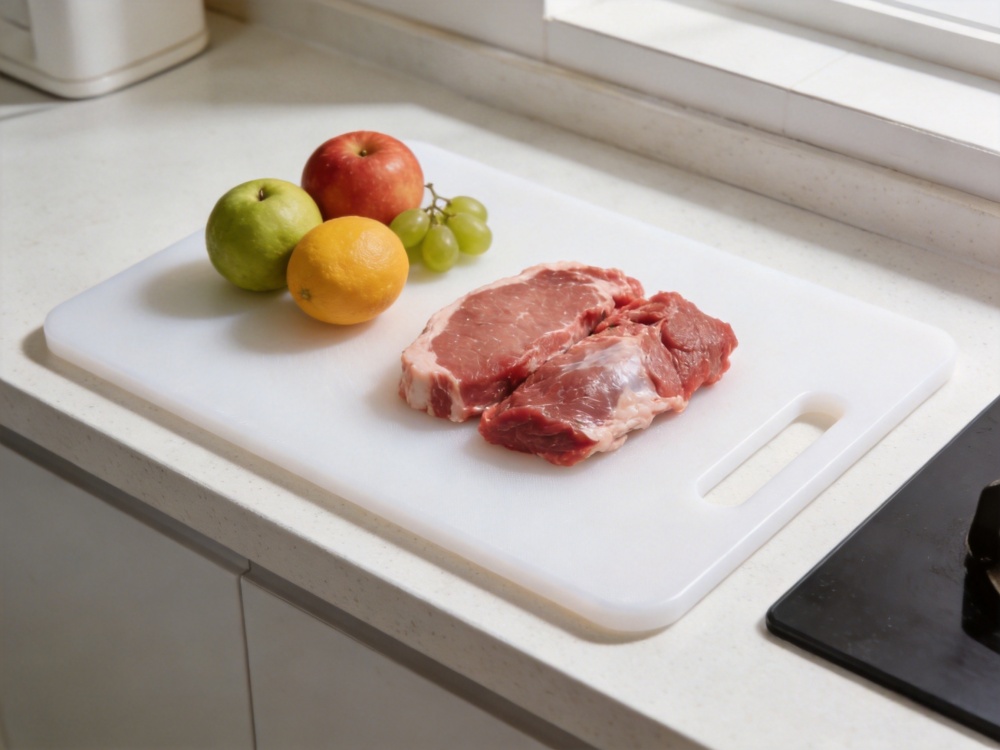
Plastic
Practical for everyday food preparation and convenient when a board needs frequent washing. Deep knife marks can become difficult to clean.
PRACTICAL & EASY TO MAINTAIN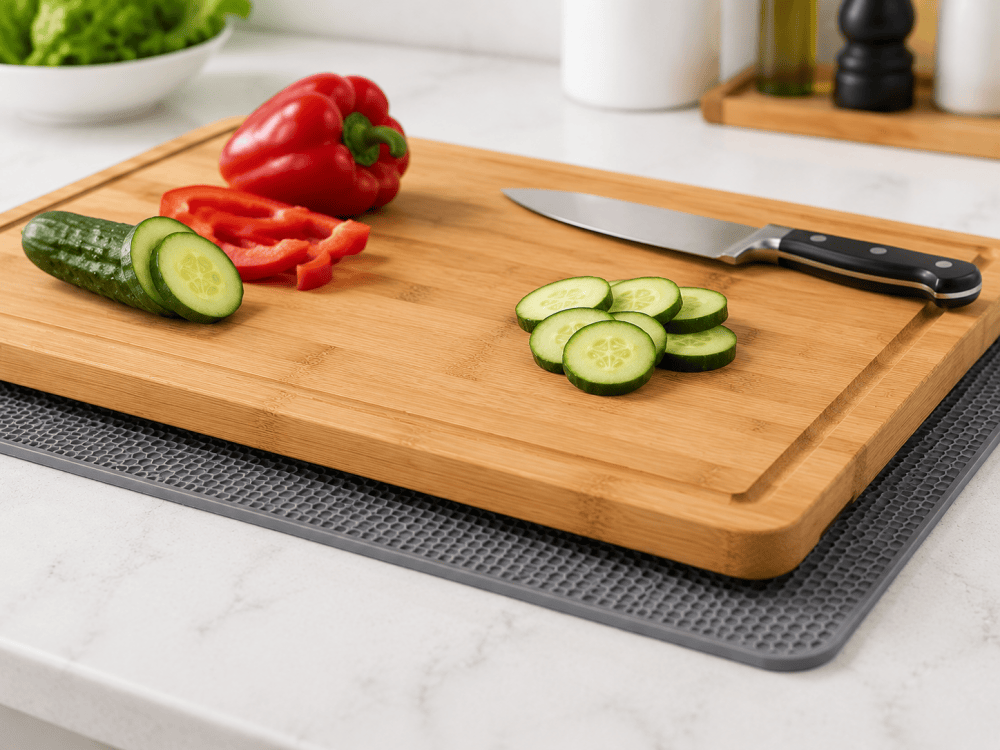
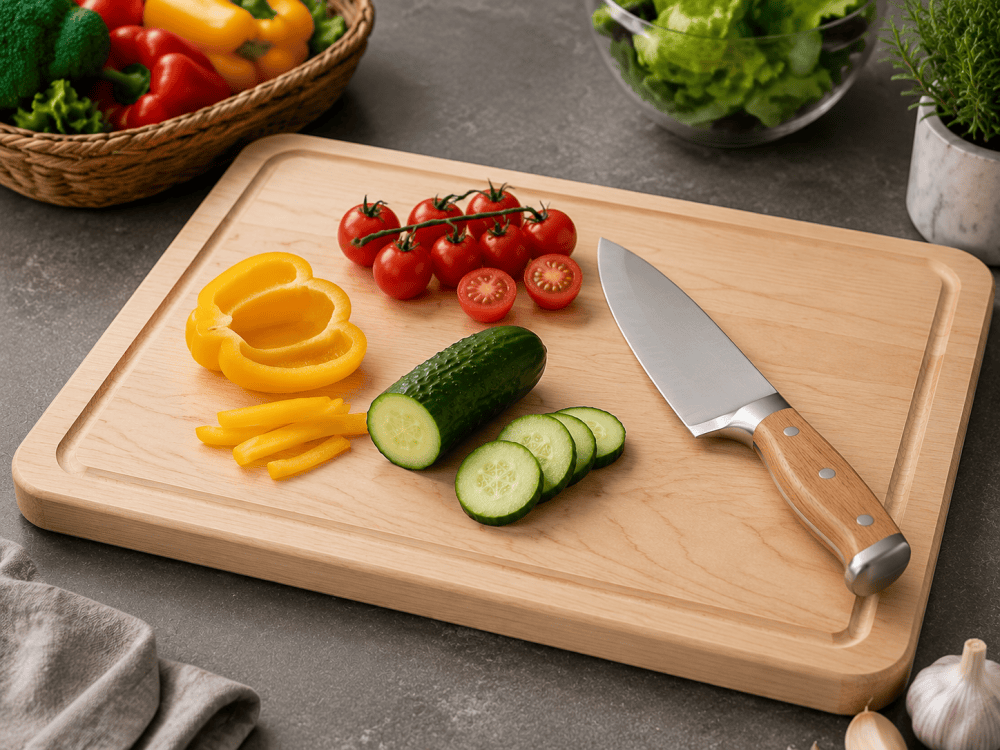
Wood
A popular choice for home kitchens, with a natural appearance and a surface many cooks prefer. It needs suitable cleaning and drying to maintain its condition.
NATURAL LOOK & KNIFE FRIENDLY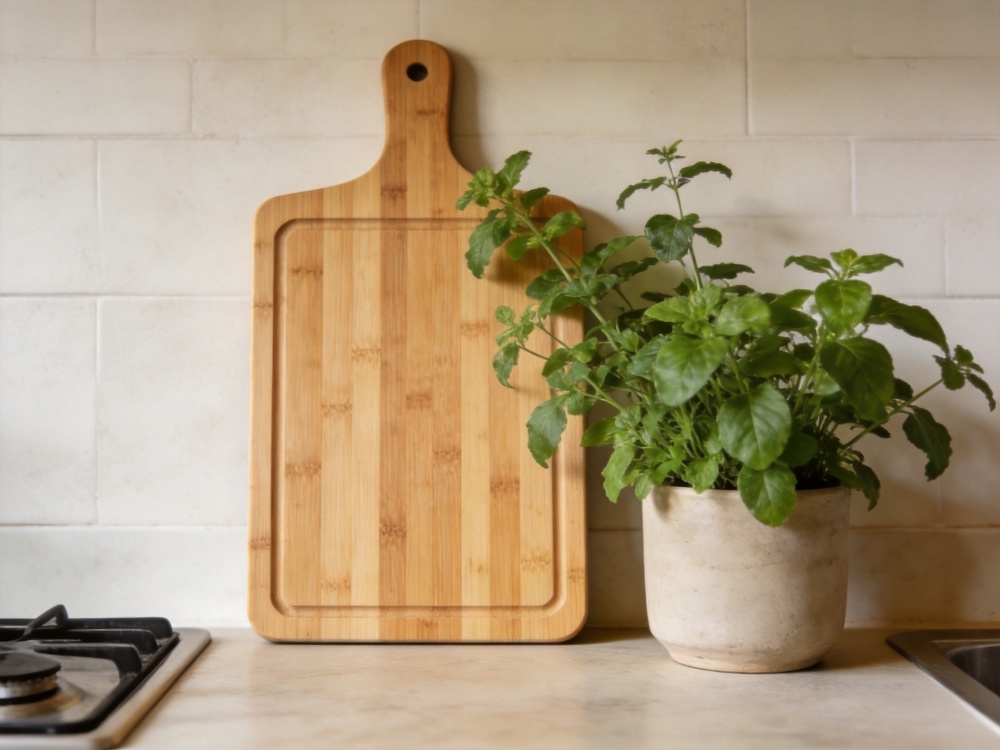
Bamboo
Lightweight and visually appealing. Construction, adhesives, finish, and care instructions vary, so check the specific product rather than assuming every bamboo board performs the same way.
LIGHTWEIGHT & NATURAL STYLE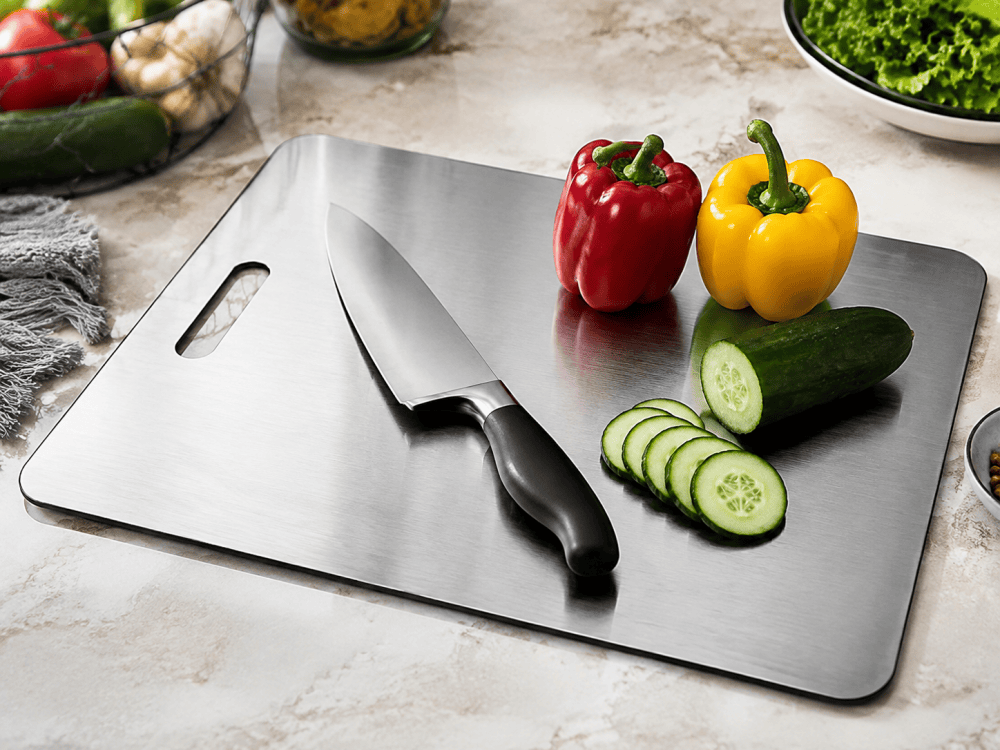
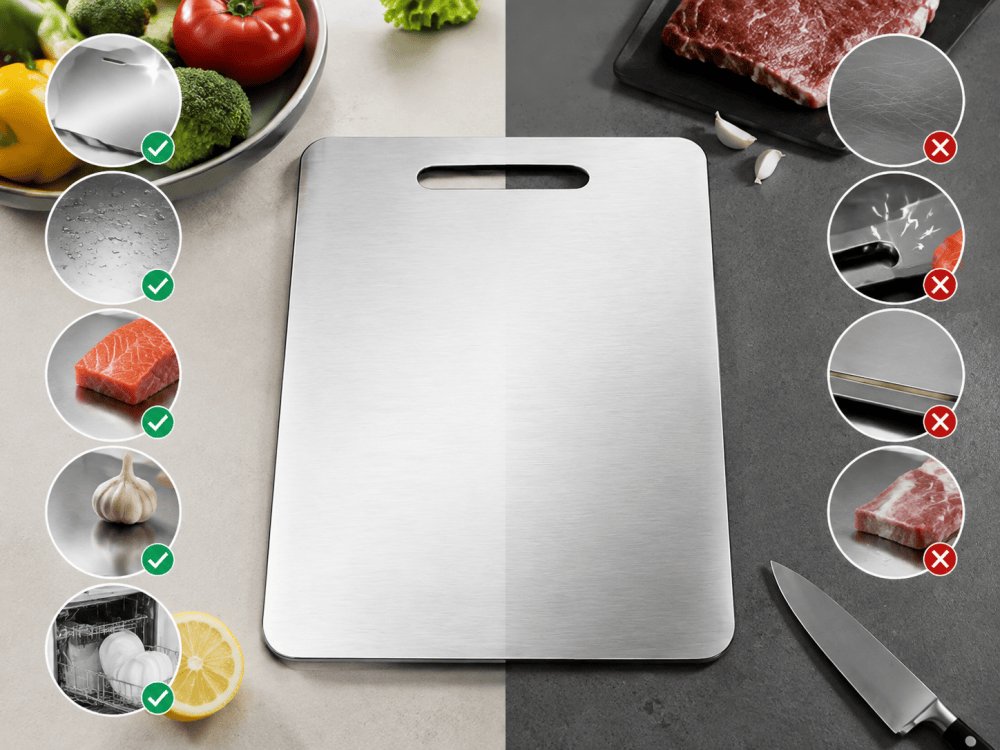
Stainless Steel
A nonporous surface that can be convenient to wipe down, depending on the design. It is much harder than typical cutting surfaces and can be less comfortable for knife work.
NONPOROUS SURFACECutting Board Material Comparison at a Glance
| Material | Main advantages | Considerations | Best suited for |
|---|---|---|---|
| Food-grade plastic | Practical, lightweight, often easy to wash | Deep cuts may be difficult to clean | Everyday preparation and frequent washing |
| Wood | Traditional appearance and knife-friendly feel | Needs careful drying and material-specific care | Home cooking and general preparation |
| Bamboo | Lightweight and natural appearance | Quality and maintenance depend on construction | Everyday kitchen use when properly maintained |
| Stainless steel | Nonporous surface and easy wipe-down | Hard on knife edges and may be less comfortable for chopping | Specific preparation needs where the design is suitable |
Important: This is a general comparison, not a universal safety ranking. Product construction, food-contact suitability, surface condition, and cleaning practices all matter.
03 — EVERYDAY USE
Are Plastic Cutting Boards Safe?
Food-grade plastic cutting boards, including polyethylene-based options, are widely used for everyday food preparation. Their practical advantage is that many designs are easy to wash and maintain.
Plastic can be a convenient option for households that prepare raw meat, poultry, seafood, vegetables, and other foods regularly. A separate board for raw animal products and another for ready-to-eat foods can help reduce cross-contamination risks.
What to look for in a plastic board
- A material intended for food contact in the board's intended market.
- A stable surface that does not slide easily during preparation.
- A thickness and size suited to the type of food being prepared.
- Clear care instructions, including whether the board is dishwasher-safe.
- A surface that can be inspected and replaced when it becomes excessively worn.
One limitation is wear. Repeated chopping can leave grooves in plastic boards. If cuts become deep enough that the board is difficult to clean thoroughly, replacement is the sensible choice.
04 — NATURAL MATERIALS
Are Wooden Cutting Boards Safe?
Properly maintained wooden cutting boards can be suitable for food preparation. Many cooks value wood for its appearance and its feel under a knife.
However, wood should not be treated as automatically safer than plastic. Different wood species, grain structures, finishes, and manufacturing methods affect the finished product. Good maintenance is essential.
How to care for a wooden cutting board
- Wash it promptly after use with suitable cleaning methods.
- Do not leave it soaking in water.
- Dry it thoroughly, including both sides, before storing it.
- Follow the manufacturer's recommendations for conditioning and maintenance.
- Replace it if cracks, splits, or excessive wear prevent effective cleaning.
Wood may be a good choice for users who appreciate a traditional cutting surface and are willing to maintain it. For anyone prioritizing minimal upkeep, a suitable plastic board may be more convenient.
05 — ANOTHER NATURAL OPTION
Are Bamboo Cutting Boards Safe?
Bamboo boards are popular because they are lightweight and have a clean, natural appearance. They can be suitable for food preparation when properly manufactured and maintained.
The term "bamboo cutting board" covers products with different construction methods. Some are made from bonded strips, so the adhesives, finishes, workmanship, and care instructions should be considered alongside the bamboo itself.
As with wood, avoid prolonged soaking and follow the product's cleaning instructions. Check the surface regularly for splitting, cracks, or other damage that could make the board harder to clean.
06 — A DIFFERENT SURFACE
Are Stainless Steel Cutting Boards the Safest?
Stainless steel is nonporous, which can make the surface convenient to wipe down. However, that characteristic alone does not prove that a stainless steel cutting board is the safest choice for every kitchen.
Stainless steel is much harder than conventional wood and plastic cutting surfaces. Chopping directly on it can feel harsh and may dull knife edges more quickly. It may therefore be less suitable for users who regularly perform detailed knife work.
When considering a stainless steel board, evaluate the product's intended use, construction, surface finish, stability, edge design, and cleaning instructions. Confirm that the material and finished product are suitable for the intended food-contact application.
Bottom line: Stainless steel is one option, not an automatic winner. The safest choice is the board that can be maintained properly and used appropriately for the task.
07 — CLEANING & CARE
How to Keep a Cutting Board Safe
Even a suitable cutting board can become a food-safety concern if it is not cleaned correctly or is used to transfer contamination between foods.
- Wash after every use Clean the board with hot, soapy water and follow its care instructions. Clean utensils and work surfaces that have contacted raw food as well.
- Separate raw and ready-to-eat foods Use separate cutting boards for raw meat, poultry, and seafood, and for foods such as fruit, vegetables, bread, and other ready-to-eat items.
- Sanitize when appropriate After preparing raw animal products, follow public food-safety guidance and the board manufacturer's instructions for sanitizing with a method suitable for food-contact surfaces.
- Dry and store properly Allow the board to dry thoroughly. Follow specific storage guidance for wood, bamboo, plastic, or other materials.
- Inspect the surface regularly Deep grooves, cracks, splits, or other damage may prevent thorough cleaning. Replace a board when it can no longer be maintained safely.
When should you replace a cutting board?
There is no single replacement interval that fits every board. Frequency of use, material, care, and the depth of surface damage all matter. Replace a board when it has excessive knife scars, deep cracks, splitting, or other damage that makes thorough cleaning difficult.
08 — BUYING GUIDE
How to Choose the Best and Safest Cutting Board
The best and safest cutting boards are not necessarily the most expensive or the ones advertised with the strongest antibacterial claims. Start with how the board will be used, then assess its construction and care requirements.
For home kitchens
- Choose a food-contact-suitable material from a reliable manufacturer.
- Consider keeping separate boards for raw animal products and ready-to-eat foods.
- Pick a size and thickness that provide a stable, practical cutting surface.
- Check whether the board is dishwasher-safe or requires hand washing.
- Choose a product that you can clean, dry, inspect, and replace when necessary.
For retailers, importers, and private-label buyers
For businesses sourcing cutting boards, safety and usability should be evaluated alongside price, packaging, and product design. A consistent sourcing process can help buyers assess whether a product suits its intended market.
- Material documentation: Request specifications for the board material, coatings, and any other food-contact components.
- Intended-market requirements: Confirm the applicable food-contact requirements for the country or region where the product will be sold.
- Product construction: Review dimensions, thickness, edges, handles, grooves, stability, and surface finish.
- Care instructions: Ensure the cleaning and maintenance guidance matches the actual product.
- Quality consistency: Evaluate samples, production tolerances, inspection procedures, packaging, and traceability.
- Private-label readiness: Confirm artwork, packaging specifications, labeling responsibilities, and order requirements before production.
Avoid relying on broad claims such as "100% bacteria-free" or "the safest material" without appropriate evidence. Specific, verifiable product information is more useful to buyers and end users.
09 — COMMON QUESTIONS
Frequently Asked Questions
1. What is the safest cutting board to use?
A properly maintained food-grade plastic board or wooden board can be suitable. Choose a board that is easy to clean for its intended use, keep raw and ready-to-eat foods separate, and replace excessively worn boards.
2. What is the safest cutting board material?
There is no single material that is safest in every situation. Food-grade plastic and properly maintained wood are both common choices. The right option depends on the product's condition, intended use, and cleaning routine.
3. Are plastic cutting boards safer than wood?
Not in every circumstance. Both can be suitable when maintained properly. Plastic can be convenient to wash, while wood requires appropriate care and thorough drying. Surface damage and cleaning practices are important for both.
4. Are stainless steel cutting boards safer than plastic?
Stainless steel has a nonporous surface, but that alone does not make it universally safer. It is also harder on knife edges and may not suit every cutting task. Consider the complete product and how it will be used.
5. Should I use separate cutting boards for meat and vegetables?
Yes. Using separate boards for raw meat, poultry, and seafood and for ready-to-eat foods helps reduce cross-contamination. Clean and sanitize boards as appropriate after use.
6. When should a cutting board be replaced?
Replace it when deep knife grooves, cracks, splits, or other damage make it difficult to clean thoroughly. Inspect the board regularly instead of relying only on its age.
7. How can I choose a safe cutting board for wholesale or private-label sales?
Check the material specifications, intended-market requirements, product construction, cleaning instructions, quality-control process, and labeling. Request appropriate supporting documentation rather than relying on unverified safety claims.
TRUSTED GUIDANCE
Food Safety Resources
For additional guidance on cleaning cutting boards and preventing cross-contamination, consult these public food-safety resources:
KITLUCY · KITCHENWARE
Looking for Cutting Boards for Your Product Range?
If you are a retailer, distributor, or private-label buyer, evaluate cutting boards based on material specifications, product design, care requirements, and the needs of your target market.
Explore Kitlucy's kitchenware range to learn more about our product offering.
Explore KitlucyRelated Blogs