Stainless Steel Cutting Board Pros and Cons: Are They Worth Buying?
Stainless Steel Cutting Board Pros and Cons: Are They Worth Buying?
A cutting board is one of the most frequently used tools in every kitchen. From preparing vegetables and fruits to cutting meat and seafood, the material of a cutting board directly affects food safety, cleaning convenience, durability, and knife performance.
In recent years, the stainless steel cutting board has attracted increasing attention because of its modern appearance, excellent durability, and easy-clean surface.
However, many consumers still have questions:
- Are stainless steel cutting boards good?
- Are stainless steel cutting boards safe?
- Do stainless steel cutting boards dull knives?
- Are stainless steel cutting boards bad for knives?
This guide explains the complete stainless steel cutting board pros and cons, including hygiene performance, durability, knife impact, maintenance, and how stainless steel compares with other cutting board materials.

Stainless steel cutting boards are extremely durable, hygienic, and easy to clean. However, because stainless steel is a hard surface, it may cause faster knife edge wear compared with softer materials such as wood or plastic.
What Is a Stainless Steel Cutting Board?
A stainless steel cutting board is a food preparation surface made primarily from stainless steel, usually designed with a flat metal surface for chopping, slicing, and ingredient preparation.
Compared with traditional wood or plastic boards, stainless steel boards offer a non-porous surface that does not easily absorb liquids, odors, or food particles.
Common features include:
- Food-grade stainless steel construction
- Rust and corrosion resistance
- Smooth non-porous surface
- Easy cleaning and maintenance
- Long service life
Why Are Stainless Steel Cutting Boards Becoming Popular?
The growing popularity of stainless steel cutting boards is closely related to modern kitchen trends.
Consumers are increasingly looking for:
- Plastic-free kitchen products
- Low-maintenance materials
- Premium kitchen designs
- Long-lasting products
- Easy-to-sanitize surfaces
Stainless steel is already widely used in professional kitchens because of its durability and hygiene advantages. Today, it is also entering residential kitchen markets as a premium cutting board option.
Advantages of Stainless Steel Cutting Boards
1. Excellent Durability and Long Lifespan
One of the biggest advantages of stainless steel cutting boards is their outstanding durability.
Unlike wood or plastic boards, stainless steel does not easily crack, warp, or develop deep cutting grooves.
A high-quality stainless steel board can maintain its appearance and performance for many years with proper care.
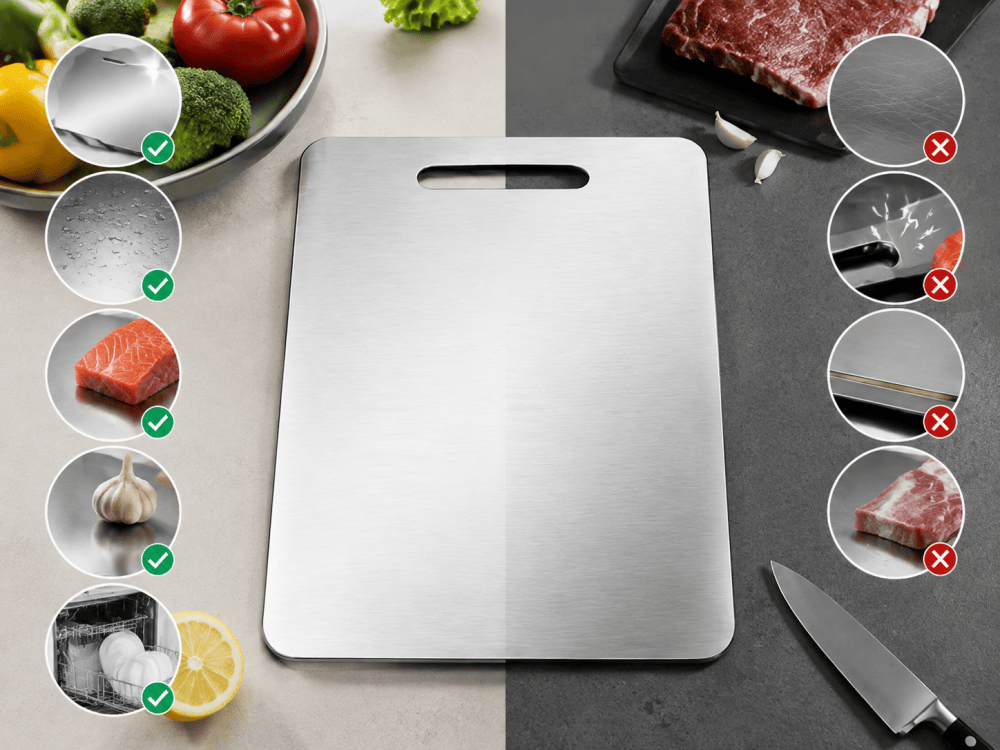
2. Non-Porous and Hygienic Surface
Food safety is one of the main reasons consumers choose stainless steel cutting boards.
Because stainless steel is non-porous, it does not absorb:
- Meat juices
- Fish odors
- Garlic and onion smells
- Food stains
This makes stainless steel easy to clean and suitable for users who prioritize hygiene.
3. Easy to Clean and Maintain
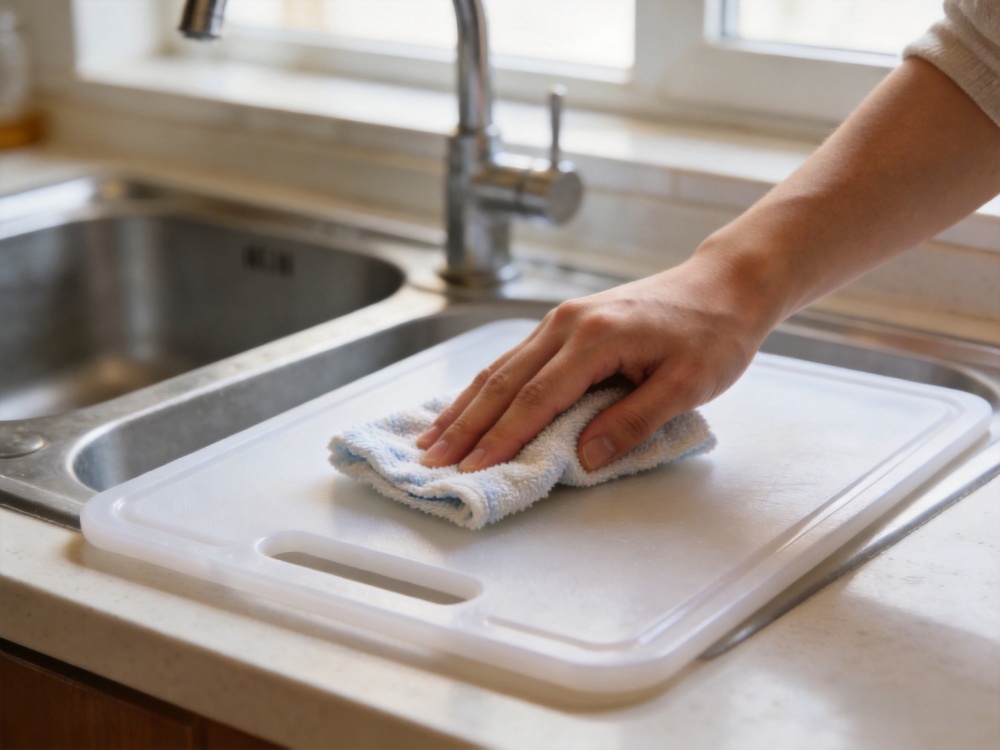
Another major advantage of stainless steel cutting boards is their simple maintenance.
Unlike wooden cutting boards that require regular oiling, stainless steel boards only need basic washing after use.
- Can be cleaned with water and detergent
- Does not require mineral oil treatment
- Resistant to stains and odors
- Suitable for frequent daily use
4. Excellent Resistance to Heat and Moisture
Stainless steel has excellent resistance to moisture, temperature changes, and corrosion.
Unlike bamboo or wood boards, stainless steel does not absorb water and is less likely to warp or swell.
This makes stainless steel a suitable choice for kitchens where durability and easy maintenance are important.
5. Modern Premium Appearance
Stainless steel cutting boards provide a clean and professional appearance that matches modern kitchen designs.
Many consumers choose stainless steel because it creates a premium, minimalist look similar to professional restaurant kitchens.
Disadvantages of Stainless Steel Cutting Boards
1. Hard Surface Can Affect Knife Sharpness
The biggest concern about stainless steel cutting boards is their impact on knives.
Many users ask:
Do stainless steel cutting boards dull knives?
The answer is yes, stainless steel surfaces can contribute to faster knife edge wear compared with softer cutting board materials.
Because stainless steel is harder than wood or plastic, repeated cutting may cause more pressure on the knife edge.
Stainless steel cutting boards are highly durable, but users who frequently use premium chef knives may prefer softer surfaces such as end-grain wood or high-quality plastic boards to better preserve blade sharpness.
2. Hard Cutting Feel
Some users find stainless steel cutting boards feel harder during chopping.
Compared with wood boards that provide slight cushioning, stainless steel creates a firm cutting experience that may not feel as comfortable during long preparation sessions.
3. More Noticeable Cutting Noise
Because stainless steel is a solid metal surface, chopping sounds may be louder compared with wood or plastic boards.
For users who prefer a quieter kitchen environment, this may be a consideration.
4. Higher Purchase Cost
High-quality stainless steel cutting boards are usually more expensive than standard plastic cutting boards.
The higher cost comes from:
- Premium stainless steel material
- Manufacturing process
- Surface finishing quality
- Longer product lifespan
Are Stainless Steel Cutting Boards Safe?
One of the most searched questions is:
Are stainless steel cutting boards safe?
Yes, food-grade stainless steel cutting boards are generally considered safe for food preparation.
Stainless steel is widely used in food processing equipment because it is:
- Non-toxic
- Corrosion resistant
- Non-porous
- Easy to sanitize
However, safety depends on the quality of the stainless steel material and manufacturing process.
For food-contact applications, buyers should look for:
- Food-grade stainless steel materials such as SS304
- Smooth surface finishing
- Reliable manufacturing standards
- Proper quality inspection
Are Stainless Steel Cutting Boards Bad for Knives?
The answer depends on the type of knife and usage purpose.
Are stainless steel cutting boards bad for knives?
They are not necessarily bad, but they are not the most knife-friendly option.
| Cutting Board Material | Knife Friendliness | Durability |
|---|---|---|
| Stainless Steel | Medium-Low | Excellent |
| Hardwood | Excellent | High |
| Bamboo | Medium | High |
| HDPE Plastic | Good | High |
For restaurants, commercial kitchens, and users who prioritize hygiene and durability, stainless steel can be a practical choice.
For professional chefs who use expensive Japanese knives, softer cutting surfaces may provide better blade protection.
Stainless Steel vs Other Cutting Board Materials
Stainless Steel vs Wood Cutting Board
The comparison between stainless steel and wood cutting boards is one of the most common buying decisions.
| Feature | Stainless Steel | Wood |
|---|---|---|
| Durability | Excellent | High |
| Maintenance | Very Easy | Requires Oil Care |
| Knife Protection | Medium | Excellent |
| Water Resistance | Excellent | Medium |
| Appearance | Modern | Natural |
Stainless Steel vs Plastic Cutting Board
Compared with plastic cutting boards, stainless steel offers stronger durability and a more premium appearance.
| Feature | Stainless Steel | Plastic |
|---|---|---|
| Lifespan | Very Long | Medium |
| Cleaning | Easy | Easy |
| Knife Friendliness | Medium-Low | Good |
| Price | Higher | Lower |
Titanium vs Stainless Steel Cutting Board: Which Is Better?
With the popularity of metal cutting boards increasing, many buyers are comparing titanium vs stainless steel cutting board options.
Both materials offer excellent durability and hygiene advantages, but they have different performance characteristics.
| Feature | Titanium Cutting Board | Stainless Steel Cutting Board |
|---|---|---|
| Durability | Excellent | Excellent |
| Corrosion Resistance | Excellent | Excellent |
| Weight | Lightweight | Heavier |
| Price | Higher | More Affordable |
| Knife Protection | Medium-Low | Medium-Low |
| Commercial Availability | Limited | More Common |
Titanium cutting boards are usually positioned as premium products because titanium offers high strength, lightweight performance, and excellent corrosion resistance.
However, stainless steel remains more widely used because it provides a better balance between performance, cost, and manufacturing availability.
For most kitchenware buyers, stainless steel cutting boards are a more practical choice for daily kitchen applications.
Best Stainless Steel Cutting Board Buying Guide
Choosing the best stainless steel cutting board requires evaluating material quality, design, and usability.
1. Choose Food-Grade Stainless Steel Material
A high-quality stainless steel cutting board should use food-contact safe stainless steel.
Common options include:
- 304 Stainless Steel
- 316 Stainless Steel for premium applications
These materials provide excellent corrosion resistance and are commonly used in food-related applications.
2. Check Surface Finishing Quality
The surface finish directly affects cleaning performance and user experience.
A good stainless steel cutting board should have:
- Smooth polished surface
- No sharp edges
- Easy-to-clean design
- Stable countertop support
3. Consider Anti-Slip Design
Because stainless steel has a smooth surface, some designs include:
- Silicone edges
- Rubber feet
- Anti-slip bottom layers
These features improve safety during food preparation.
Stainless Steel Cutting Board Made in USA: What Buyers Should Know
The keyword stainless steel cutting board made in USA is commonly searched by consumers looking for locally manufactured kitchen products.
When purchasing stainless steel cutting boards, buyers should focus less on the country of origin alone and more on:
- Material certification
- Manufacturing standards
- Food-contact safety
- Product quality inspection
Whether produced in the USA or internationally, a reliable stainless steel cutting board manufacturer should provide consistent quality and safe food-contact materials.
Who Should Choose a Stainless Steel Cutting Board?
Stainless steel cutting boards are suitable for users who prioritize:
- Maximum durability
- Easy cleaning
- Modern kitchen design
- Low maintenance
- Food preparation hygiene
They are especially suitable for:
- Commercial kitchens
- Restaurants
- Outdoor cooking spaces
- Modern home kitchens
- Users who prefer plastic-free kitchen products
Who Should Avoid Stainless Steel Cutting Boards?
Although stainless steel boards have many advantages, they may not be ideal for everyone.
Users who should consider other materials include:
- Professional chefs using premium Japanese knives
- Users who want the most knife-friendly surface
- People who prefer quiet chopping experiences
For these users, wood or bamboo cutting boards may provide a better balance between cutting comfort and knife protection.
Frequently Asked Questions About Stainless Steel Cutting Boards
Are stainless steel cutting boards good?
Yes. Stainless steel cutting boards are good for users who value durability, hygiene, easy cleaning, and long service life. However, they are less gentle on knives compared with wood or plastic boards.
Are stainless steel cutting boards safe?
Yes. Food-grade stainless steel cutting boards are generally considered safe because stainless steel is non-porous, corrosion resistant, and easy to sanitize.
Do stainless steel cutting boards dull knives?
Yes. Stainless steel surfaces are harder than wood and plastic, so they can accelerate knife edge wear over time.
Are stainless steel cutting boards bad for knives?
They are not dangerous for knives, but they are not the most knife-friendly cutting surface. Users with expensive chef knives may prefer softer materials.
What is the best stainless steel cutting board?
The best stainless steel cutting board should combine food-grade stainless steel, smooth finishing, stable design, and easy maintenance features.
Titanium vs stainless steel cutting board, which is better?
Titanium offers lighter weight and premium performance, while stainless steel provides better affordability and wider availability. For most kitchens, stainless steel offers better overall value.
Conclusion: Are Stainless Steel Cutting Boards Worth Buying?
The answer depends on your priorities.
Stainless steel cutting boards offer outstanding durability, hygiene, easy maintenance, and a premium modern appearance.
However, the main trade-off is knife performance. Because stainless steel is a hard cutting surface, it may dull knives faster than wood, bamboo, or plastic alternatives.
For users who prioritize cleanliness, durability, and long-term value, stainless steel cutting boards can be an excellent choice.
For professional knife enthusiasts who prioritize blade preservation, softer cutting boards may be more suitable.
Looking for Stainless Steel Cutting Board Solutions?
Kitlucy provides customized kitchenware solutions including cutting boards, kitchen tools, and OEM products for global wholesalers, retailers, and brands.
Related Blogs