Is Maple Good for Cutting Boards? Pros, Cons & Buying Guide
Is Maple Good for Cutting Boards? Pros, Cons & Buying Guide
Choosing the right cutting board material can make a noticeable difference in everyday food preparation. A good cutting board should provide a stable cutting surface, protect knife edges, resist moisture, and remain hygienic after repeated use.
Among traditional hardwood options, maple has long been used for kitchen cutting boards and butcher blocks. Its combination of hardness, fine grain, durability, and relatively smooth cutting surface makes it an attractive option for both home kitchens and professional food preparation.
But is maple good for cutting boards? And is a maple cutting board better than bamboo, acacia wood, or plastic?
The short answer is yes. Maple is one of the most practical hardwood choices for cutting boards, especially when users want a balance between durability and knife friendliness. However, the type of maple, board construction, and maintenance routine all affect its performance.
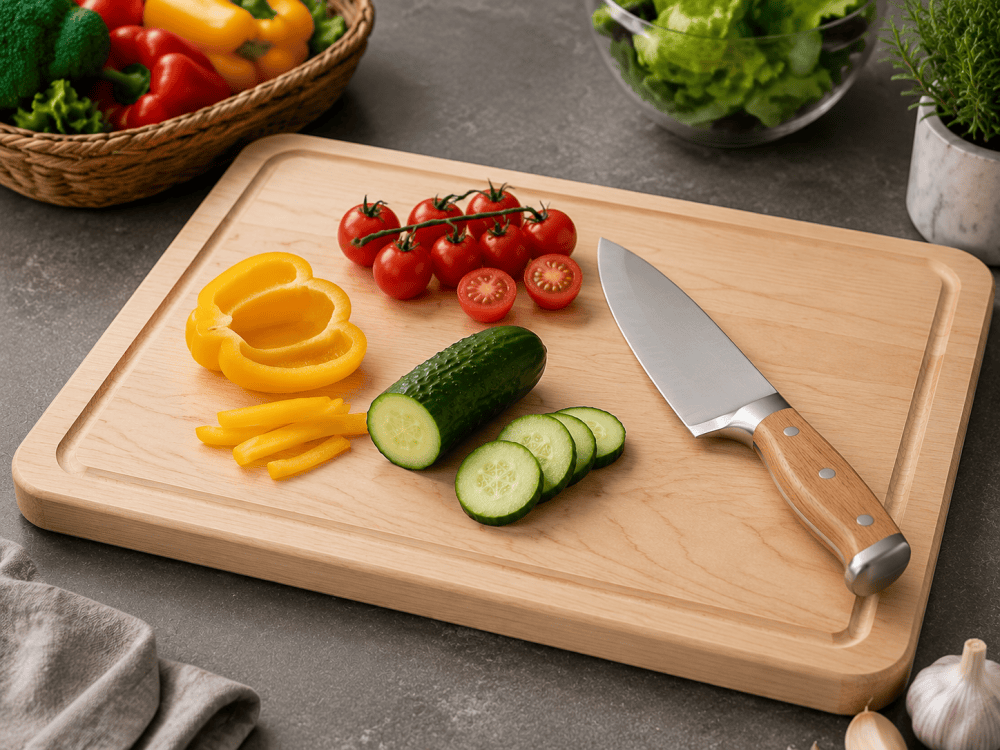
Maple is an excellent cutting board material because it is durable, relatively knife-friendly, has a fine grain structure, and provides a stable surface for food preparation. Hard maple is particularly popular for premium cutting boards and butcher blocks. The main drawback is that maple requires regular cleaning, drying, and occasional oiling to maintain its condition.
What Is Maple Wood?
Maple is a hardwood commonly used in furniture, flooring, butcher blocks, and kitchenware. For cutting boards, hard maple is one of the most recognized choices because of its combination of strength and workable hardness.
Maple has a relatively fine and closed grain structure compared with many other woods. This gives a properly finished maple cutting board a smooth surface that is comfortable for food preparation.
Maple is also commonly associated with butcher blocks and professional food preparation surfaces because it can withstand repeated cutting and chopping.
Hard Maple vs Soft Maple
Not all maple wood has exactly the same characteristics. Hard maple, often associated with sugar maple and closely related species, is harder and denser than many soft maple varieties.
| Feature | Hard Maple | Soft Maple |
|---|---|---|
| Hardness | Higher | Lower |
| Durability | Excellent | Good |
| Cutting Board Use | Highly Suitable | Suitable for Some Applications |
| Knife Friendliness | Good | Very Good |
| Premium Positioning | High | Medium |
For buyers looking for a durable premium hardwood cutting board, hard maple is generally the more suitable option.
Is Maple Good for Cutting Boards?
Yes. Maple is considered a strong choice for cutting boards because it offers a useful balance between hardness, durability, stability, and knife compatibility.
Unlike very hard surfaces such as glass, stone, or metal, maple provides some natural resilience under the knife edge. At the same time, it is hard enough to withstand regular chopping without becoming excessively soft or easily damaged.
This makes maple particularly suitable for:
- Daily home food preparation
- Chef-style cutting boards
- Butcher blocks
- Premium kitchenware collections
- Serving and food preparation boards
Advantages of Maple Cutting Boards
1. Good Balance Between Durability and Knife Friendliness
One of the biggest advantages of a maple cutting board is its balance between strength and knife protection.
A cutting board that is too soft may develop deep knife marks quickly, while a surface that is extremely hard can contribute to faster knife edge wear. Maple sits between these extremes.
For consumers who use quality chef knives regularly, this balance is one of the main reasons to consider maple.
2. Fine Grain Structure
Maple typically has a fine, relatively uniform grain structure. When properly sanded and finished, the surface feels smooth and comfortable during food preparation.
The fine grain also contributes to the clean, understated appearance associated with premium hardwood kitchen products.
3. Strong and Durable for Daily Use
A properly constructed maple cutting board can withstand repeated chopping, slicing, and food preparation.
Its durability makes maple suitable for both residential kitchens and premium kitchenware product lines.
4. Natural Premium Appearance
Maple has a light, clean appearance that works well with modern and traditional kitchen designs.
Unlike dark hardwoods such as walnut, maple provides a brighter visual style. This can be particularly attractive for kitchenware brands looking to create a clean, natural, or Scandinavian-inspired product range.
5. Suitable for Butcher Block Construction
Maple is commonly used for butcher blocks because it combines durability with a workable cutting surface.
End-grain maple boards are particularly valued because their construction can provide a durable cutting surface while helping distribute the impact of knife cuts.
Potential Disadvantages of Maple Cutting Boards
1. Requires Regular Maintenance
Although maple is durable, a maple cutting board is not completely maintenance-free. Like most natural wood cutting boards, maple can absorb moisture if it is repeatedly exposed to water or left wet for long periods.
Regular care helps reduce the risk of drying, cracking, and surface deterioration. For this reason, maple boards generally require more maintenance than plastic cutting boards.
- Wash promptly after use
- Dry thoroughly before storage
- Avoid prolonged soaking
- Apply food-grade mineral oil when the surface becomes dry
2. Not Usually Dishwasher Safe
A major limitation of a maple cutting board is that it generally should not be placed in a dishwasher.
High temperatures, prolonged exposure to water, and rapid drying can cause natural wood to expand and contract. Over time, this may contribute to warping, splitting, or cracking.
For consumers who prioritize dishwasher convenience, plastic cutting boards may be a more practical alternative.
3. Can Develop Knife Marks Over Time
Even though maple is a relatively hard hardwood, repeated chopping will eventually leave knife marks on the surface.
This is normal for a wooden cutting board and does not necessarily mean the product has poor quality. However, deep grooves should be monitored because heavily worn surfaces are more difficult to clean effectively.
4. Heavier Than Plastic Cutting Boards
A thick maple cutting board can be substantially heavier than a plastic board of similar dimensions.
This can be an advantage when stability is important, but it may be less convenient for consumers who frequently move or store their cutting boards.
Are Maple Cutting Boards Good for Knives?
One of the most important questions for buyers is whether maple is gentle enough for kitchen knives.
In general, maple is considered a knife-friendly cutting board material when compared with very hard surfaces such as glass, stone, ceramic, or metal.
The natural structure of wood provides a degree of resilience when the knife contacts the surface. This can help reduce unnecessary impact on the knife edge during normal cutting.
Maple is a good choice for users who want a durable hardwood cutting surface without the extreme hardness of glass, stone, or metal. However, knife sharpness also depends on blade material, cutting technique, sharpening frequency, and the condition of the board.
Does Maple Dull Knives?
A properly maintained maple cutting board is unlikely to dull kitchen knives as aggressively as extremely hard cutting surfaces.
However, no cutting board completely eliminates knife wear. Repeated contact between a knife edge and any cutting surface will gradually affect sharpness.
Compared with stainless steel, glass, or stone surfaces, maple generally provides a more forgiving cutting environment for kitchen knives.
Are Maple Cutting Boards Hygienic?
Properly maintained maple cutting boards can be suitable for food preparation. However, hygiene depends on more than the material itself.
The condition of the cutting surface, cleaning routine, drying process, and frequency of replacement or resurfacing all affect food preparation hygiene.
A maple board should be cleaned after every use and allowed to dry completely before storage.
How to Keep a Maple Cutting Board Clean
- Remove food residue immediately after use
- Wash the surface with warm water and mild dish soap
- Do not leave the board submerged in water
- Dry both sides thoroughly
- Store the board in a dry, ventilated location
For raw meat, poultry, seafood, vegetables, and ready-to-eat foods, using separate or properly cleaned cutting surfaces can also help reduce cross-contamination risks.
How to Clean a Maple Cutting Board
Cleaning a maple cutting board is relatively simple, but the board should be treated differently from dishwasher-safe plastic products.
Step 1: Remove Food Residue
Use a scraper or soft brush to remove food particles from the cutting surface.
Step 2: Wash with Mild Soap
Wash the board with warm water and a mild dishwashing detergent. Avoid aggressive soaking because excessive moisture can affect natural wood.
Step 3: Dry Immediately
Use a clean towel to remove excess water and allow the board to dry completely in an upright or well-ventilated position.
Step 4: Condition the Surface
When the surface begins to look dry or rough, applying a food-grade mineral oil can help maintain the wood and reduce excessive moisture absorption.
Do not use cooking oils such as olive oil or vegetable oil as a substitute for food-grade mineral oil. Some edible oils can oxidize or become rancid over time.
Maple vs Bamboo Cutting Board
The comparison between maple and bamboo is especially relevant for consumers choosing between natural cutting board materials.
| Feature | Maple | Bamboo |
|---|---|---|
| Durability | High | High |
| Knife Friendliness | Very Good | Good |
| Maintenance | Medium | Medium |
| Water Resistance | Medium | Medium |
| Appearance | Light Natural Wood | Natural Bamboo Grain |
| Sustainability Positioning | Good | Very Strong |
| Typical Market Position | Mid to Premium | Entry to Mid Range |
Bamboo can be attractive for buyers who prioritize renewable materials and competitive pricing, while maple is often preferred when knife performance and traditional hardwood positioning are more important.
Maple vs Acacia Cutting Board
Both maple and acacia are popular hardwood options, but they offer different visual and performance characteristics.
| Feature | Maple | Acacia |
|---|---|---|
| Hardness | High | High |
| Grain Appearance | Fine and Uniform | More Varied and Decorative |
| Knife Friendliness | Very Good | Good |
| Water Resistance | Moderate | Good |
| Premium Appearance | Classic | Highly Decorative |
Maple is often a strong choice for users who want a classic butcher-block appearance and a consistent cutting surface. Acacia can be more attractive for lifestyle-oriented products where natural grain variation is an important selling point.
Maple vs Plastic Cutting Board
Plastic cutting boards and maple boards serve different consumer needs.
| Feature | Maple | Plastic |
|---|---|---|
| Knife Friendliness | Very Good | Good |
| Dishwasher Safe | Usually No | Often Yes* |
| Moisture Resistance | Medium | High |
| Maintenance | Higher | Lower |
| Weight | Medium to Heavy | Light to Medium |
| Natural Appearance | Excellent | Limited |
*Dishwasher suitability depends on the specific plastic material and product design. Always follow the manufacturer's instructions.
Plastic is generally more convenient for consumers who prioritize easy cleaning, while maple is better suited to buyers who value natural materials, knife-friendly performance, and premium kitchen aesthetics.
How to Choose the Best Maple Cutting Board
Not every maple cutting board offers the same performance. Board construction, thickness, wood quality, surface finishing, and overall design can all affect durability and user experience.
When choosing a maple cutting board for home use, professional kitchens, or retail products, consider the following factors.
1. Choose the Right Maple Wood
For buyers looking for a durable hardwood cutting surface, hard maple is generally a preferred option. It provides a strong combination of hardness, stability, and knife-friendly performance.
The quality of the raw wood also matters. Consistent grain structure, proper drying, and controlled moisture content can help reduce the risk of warping and cracking.
2. Consider the Board Thickness
Thickness affects both stability and durability. Thicker boards are generally heavier and more stable during chopping, while thinner boards are easier to move and store.
For premium kitchenware collections, thicker maple boards can also create a stronger visual impression and support a more substantial product positioning.
3. Look at the Board Construction
Maple cutting boards can be produced using different grain orientations, including edge-grain and end-grain construction.
End-grain boards are constructed with the wood fibers oriented vertically toward the cutting surface. This construction is often associated with premium butcher blocks because of its durability and distinctive appearance.
Edge-grain boards can provide a good balance between performance, weight, and cost, making them suitable for a wider range of household and retail applications.
4. Check the Surface Finish
A high-quality maple cutting board should have a smooth, evenly finished surface without excessive roughness, sharp edges, or visible manufacturing defects.
A well-finished surface improves the overall user experience and can also make routine cleaning easier.
5. Consider Functional Features
Modern maple cutting boards can include additional features designed for convenience and retail differentiation.
- Juice grooves for meat and fruit preparation
- Integrated handles for carrying
- Non-slip feet for improved stability
- Reversible cutting surfaces
- Serving-board functionality
- Custom engraving or branding
Who Should Choose a Maple Cutting Board?
Maple is particularly suitable for consumers who value natural materials and long-term kitchen performance.
- Home cooks who prepare food regularly
- Consumers who use quality kitchen knives
- Professional or semi-professional cooking enthusiasts
- Buyers looking for premium wooden kitchenware
- Consumers who prefer natural materials over plastic
- Retail customers interested in classic butcher-block designs
For Home Kitchens
A maple cutting board can be an excellent everyday kitchen tool for chopping vegetables, slicing fruit, preparing meat, and general food preparation.
Its natural appearance also allows it to function as both a cutting surface and a serving board.
For Professional Kitchens
Maple has a long history of use in butcher blocks and food preparation surfaces. However, professional kitchens should always select cutting boards according to their specific sanitation procedures, local regulations, and food safety requirements.
For Premium Retail Markets
Maple has strong potential in premium kitchenware because consumers often associate natural hardwood with craftsmanship, durability, and long-term value.
Brands can further differentiate maple products through custom shapes, thicknesses, engraving, packaging, and private-label branding.
Maple Cutting Board Care Guide
Proper maintenance can significantly extend the useful life of a maple cutting board.
| Care Practice | Recommended Approach |
|---|---|
| Cleaning | Hand wash with warm water and mild soap |
| Drying | Dry immediately and completely |
| Soaking | Avoid prolonged soaking |
| Dishwasher | Generally not recommended |
| Conditioning | Use food-grade mineral oil when needed |
| Storage | Keep dry and well ventilated |
Over time, a wooden cutting board may develop knife marks and surface wear. Depending on the board's construction and thickness, sanding or professional resurfacing may help restore a worn surface.
Maple Cutting Board vs Other Materials: Which Is Best?
There is no single cutting board material that is best for every kitchen. The right choice depends on the user's priorities.
| Material | Best For | Main Advantage | Main Limitation |
|---|---|---|---|
| Maple | Premium home kitchens | Durability + knife friendliness | Requires maintenance |
| Bamboo | Eco-focused markets | Renewable material positioning | Can be relatively hard on knife edges |
| Acacia | Lifestyle kitchenware | Decorative grain and durability | Requires regular care |
| Plastic | Convenience-focused kitchens | Easy cleaning | Surface can develop deep grooves |
| Stainless Steel | Specialized applications | High moisture resistance | Hard on knife edges |
If your priority is a natural, durable, and relatively knife-friendly cutting surface, maple is one of the strongest hardwood options to consider. If easy cleaning and dishwasher convenience are more important, a suitable plastic cutting board may be more practical.
Is Maple Good for Cutting Boards? Final Verdict
So, is maple good for cutting boards? For most home kitchens and many premium kitchenware applications, the answer is yes.
Maple offers a strong combination of durability, a smooth grain structure, attractive natural appearance, and relatively good knife friendliness. Hard maple is particularly well suited to cutting boards and butcher blocks where a stable and long-lasting surface is required.
The main disadvantages are maintenance requirements, weight, and the fact that maple should generally not be placed in a dishwasher. Users must also keep the board dry and properly conditioned to reduce the risk of warping or cracking.
Ultimately, the best cutting board depends on how the product will be used. Maple is an especially good option for consumers who value traditional hardwood craftsmanship, knife performance, and premium kitchen aesthetics.
Frequently Asked Questions About Maple Cutting Boards
Is maple good for cutting boards?
Yes. Maple is a durable hardwood that provides a good balance between strength, stability, and knife friendliness. Hard maple is particularly suitable for cutting boards and butcher blocks.
Is a maple cutting board good for knives?
Yes. Maple is generally more knife-friendly than extremely hard surfaces such as glass, stone, or metal. However, all cutting surfaces contribute to some degree of knife wear over time.
Does maple wood make a good cutting board?
Yes. Maple is widely used for cutting boards because of its durability, fine grain, smooth surface, and traditional hardwood appearance.
Is hard maple better than soft maple for cutting boards?
Hard maple is generally preferred when durability and long-term cutting performance are priorities. Soft maple can also be used for certain applications but has a lower hardness.
Can you put a maple cutting board in the dishwasher?
Generally, no. High heat and prolonged exposure to water can cause natural wood to expand, contract, warp, or crack. Hand washing is normally recommended.
How do you clean a maple cutting board?
Wash the board by hand with warm water and mild dish soap, then dry it immediately and completely. Avoid prolonged soaking and apply food-grade mineral oil periodically when the wood becomes dry.
How often should you oil a maple cutting board?
There is no universal schedule because usage and climate affect the wood. A practical approach is to apply food-grade mineral oil whenever the surface begins to look dry or feels rough.
Is maple better than bamboo for a cutting board?
It depends on the application. Maple is often preferred for knife friendliness and premium hardwood positioning, while bamboo can be attractive for buyers looking for renewable materials and competitive pricing.
Is maple better than plastic for cutting boards?
Maple offers a more natural appearance and a traditional knife-friendly cutting surface, while plastic is generally easier to clean and may be dishwasher compatible depending on the material and design.
B2B Buying Considerations for Maple Cutting Boards
For wholesalers, importers, distributors, and kitchenware brands, selecting a maple cutting board requires more than evaluating the wood species alone.
Product developers should also consider the following specifications:
- Wood species and grade
- Board thickness
- Edge-grain or end-grain construction
- Moisture content
- Surface finishing
- Handle and groove design
- Packaging requirements
- Custom dimensions and shapes
- Private-label branding
For premium markets, details such as wood grain consistency, edge finishing, packaging design, and sustainable sourcing can have a significant impact on perceived product value.
Conclusion
A maple cutting board is a strong choice for consumers and brands looking for a durable natural wood cutting surface. Its combination of hardness, fine grain, stability, and relatively good knife friendliness makes maple one of the most practical hardwood materials for kitchen cutting boards.
While maple requires more maintenance than plastic and should generally be hand washed, proper care can help preserve its appearance and performance for years.
For consumers who prioritize natural materials, knife-friendly performance, and premium kitchen aesthetics, maple remains a reliable option worth considering.
Looking for Custom Wooden Cutting Boards?
Kitlucy provides wooden and plastic cutting board solutions for wholesalers, distributors, retailers, and kitchenware brands. Custom materials, sizes, shapes, designs, packaging, and private-label solutions can be developed according to different market requirements.
Related Blogs