Silicone vs Nylon vs 304 Stainless Steel Kitchen Utensils: Complete Material Comparison Guide
Silicone vs Nylon vs 304 Stainless Steel Kitchen Utensils: Complete Material Comparison Guide
Choosing the right kitchen utensil material is important for product safety, cooking performance, durability, and customer satisfaction. Among the most popular options in today’s kitchenware market are food-grade silicone, nylon, and 304 stainless steel.
Each material has different advantages depending on heat resistance, cookware compatibility, lifespan, and price positioning. For consumers, retailers, and wholesale buyers, understanding the differences between silicone, nylon, and stainless steel kitchen utensils helps make better purchasing decisions.
Why Kitchen Utensil Material Matters
Kitchen utensils are tools that directly contact food every day. The material affects not only cooking performance but also food safety, durability, maintenance, and user experience.
For kitchenware brands and distributors, material selection also determines product positioning, target customers, and market competitiveness.
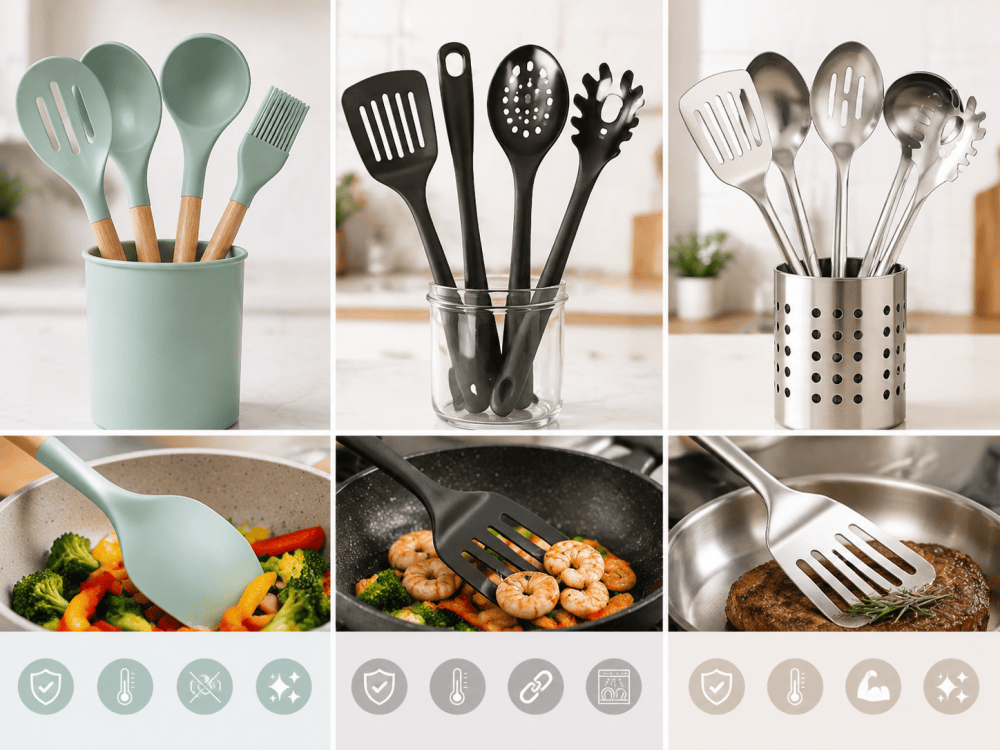
The best kitchen utensil material depends on the application. Silicone is preferred for non-stick cookware, nylon is popular for affordable everyday tools, while 304 stainless steel is chosen for premium durability and professional kitchens.
Food-Grade Silicone Kitchen Utensils
Food-grade silicone kitchen utensils have become increasingly popular because of their flexibility, heat resistance, and compatibility with modern cookware.
Advantages of Silicone Utensils
- High heat resistance: Quality silicone utensils can typically withstand temperatures around 230°C / 446°F, making them suitable for cooking and baking applications.
- Safe for non-stick cookware: Soft silicone heads help prevent scratches on coated pans and pots.
- Food-safe and odor resistant: High-quality silicone does not easily absorb food smells or colors.
- Flexible design options: Available in various colors, shapes, and modern kitchen styles.
Disadvantages of Silicone Utensils
- Lower rigidity compared with stainless steel.
- Low-quality silicone may affect durability and performance.
- Not suitable for heavy-force applications.
Nylon Kitchen Utensils
Nylon kitchen utensils are widely used in mass-market kitchenware because they provide a balance between affordability, lightweight design, and cookware protection.
Advantages of Nylon Utensils
- Lightweight and easy to handle.
- Affordable for large-volume retail products.
- Suitable for non-stick cookware.
- Easy to produce in different colors and designs.
Disadvantages of Nylon Utensils
- Lower heat resistance compared with silicone and stainless steel.
- May deform when exposed to excessive heat.
- Shorter lifespan under heavy commercial use.
304 Stainless Steel Kitchen Utensils
304 stainless steel kitchen utensils are widely used in professional kitchens and premium household markets because of their excellent durability, strength, and corrosion resistance.
Compared with silicone and nylon, stainless steel provides a more rigid structure and longer service life, making it suitable for heavy-duty cooking applications.
Advantages of 304 Stainless Steel Utensils
- Excellent durability: Stainless steel utensils can withstand long-term daily use without easily breaking or deforming.
- High heat resistance: Suitable for high-temperature cooking environments such as frying, grilling, and professional food preparation.
- Corrosion resistance: 304 stainless steel provides strong resistance against rust and oxidation.
- Premium appearance: The polished metal finish creates a modern and professional kitchen look.
- Easy maintenance: Stainless steel surfaces are easy to clean and maintain.
Disadvantages of Stainless Steel Utensils
- May scratch non-stick cookware surfaces.
- Heavier compared with silicone and nylon alternatives.
- Higher manufacturing cost and retail price.
- May become hot when exposed to high temperatures.
Silicone vs Nylon vs 304 Stainless Steel: Material Comparison
Different materials offer different advantages. The best choice depends on cooking applications, target customers, and product positioning.
| Feature | Silicone | Nylon | 304 Stainless Steel |
|---|---|---|---|
| Heat Resistance | High (around 230°C / 446°F) | Medium (around 200°C / 392°F depending on grade) | Very High |
| Durability | High | Medium | Very High |
| Non-Stick Cookware Safety | Excellent | Good | Limited |
| Weight | Lightweight | Very Lightweight | Heavier |
| Appearance | Modern and colorful | Simple and practical | Premium and professional |
| Price Level | Medium | Low | High |
Which Kitchen Utensil Material Is Best for Different Uses?
For Non-Stick Cookware
Silicone and nylon utensils are usually the best choices for non-stick cookware because their soft surfaces reduce the risk of scratching coatings.
Popular products include:
- Silicone spatulas
- Silicone turners
- Nylon cooking spoons
- Nylon kitchen tool sets
For High-Temperature Cooking
304 stainless steel utensils are ideal for high-temperature cooking tasks that require strength and rigidity.
Common applications include:
- Grilling tools
- Professional kitchen utensils
- Heavy-duty cooking tools
- Restaurant kitchen equipment
For Everyday Home Kitchens
Silicone kitchen utensil sets are becoming increasingly popular for everyday home cooking because they combine safety, appearance, and convenience.
Many consumers prefer silicone utensil sets because they are:
- Safe for modern cookware
- Easy to clean
- Available in attractive colors
- Suitable for different cooking tasks
How Wholesale Buyers Choose Kitchen Utensil Materials
For distributors, retailers, and kitchenware brands, choosing the right material is not only about product performance but also about market positioning.
| Target Market | Recommended Material | Reason |
|---|---|---|
| Budget Retail Market | Nylon | Affordable pricing and mass production advantages |
| Modern Household Market | Silicone | Safe, colorful, and compatible with non-stick cookware |
| Premium Kitchen Market | 304 Stainless Steel | Long lifespan and professional appearance |
| Commercial Kitchens | Stainless Steel / High-performance Silicone | Durability and frequent-use performance |
Food Safety and Certification Considerations
For kitchen utensils, food safety compliance is a key concern for international buyers. Manufacturers should use food-grade materials and follow relevant regulations for different markets.
Common Compliance Requirements
- FDA food-contact compliance for the US market
- LFGB testing for European markets
- Material safety testing reports
- Quality control documentation
For brands and importers, working with manufacturers that understand international compliance requirements helps reduce product risks and improve customer trust.
How to Select the Right Kitchen Utensil Material for Your Brand
For kitchenware brands, wholesalers, and retailers, selecting the right utensil material requires balancing performance, cost, market demand, and customer expectations.
Consider Your Target Customers
Different customer groups have different expectations for kitchen utensils. Understanding your target market helps determine the best material choice.
- Entry-level markets: Nylon utensils provide affordable solutions for large-volume retail.
- Mid-range markets: Silicone utensils offer better appearance, safety, and functionality.
- Premium markets: 304 stainless steel utensils provide durability and professional value.
Consider Product Positioning
Material selection directly affects product image and pricing strategy.
| Product Positioning | Recommended Material | Market Advantage |
|---|---|---|
| Economy Kitchen Tool Sets | Nylon | Competitive pricing and large-volume sales |
| Modern Kitchen Utensil Sets | Silicone | Better design flexibility and consumer appeal |
| Professional Kitchen Tools | 304 Stainless Steel | Premium quality and long service life |
OEM and Wholesale Kitchen Utensil Material Selection
For wholesale buyers, material selection is closely connected with customization requirements, production capability, and market strategy.
A professional kitchen utensil manufacturer should provide flexible solutions including:
- Custom silicone colors and designs
- Different handle materials and structures
- Customized kitchen utensil sets
- Private label packaging solutions
- Product development based on market trends
The best kitchen utensil supplier should not only provide products but also help buyers select suitable materials based on target markets, price levels, and application scenarios.
Common Mistakes When Choosing Kitchen Utensil Materials
Choosing Only Based on Price
The lowest-cost option may not always provide the best value. Poor material quality can lead to durability issues, customer complaints, and brand damage.
Ignoring Heat Resistance
Different cooking environments require different temperature resistance levels. Selecting unsuitable materials may affect product performance.
Overlooking Cookware Compatibility
Using hard materials on non-stick cookware may cause scratches and reduce customer satisfaction.
Not Considering Market Preferences
Different regions have different expectations. For example, European markets often focus on safety certifications, while premium markets may prioritize durability and design.
Frequently Asked Questions
Is silicone better than nylon for kitchen utensils?
In many applications, silicone offers better heat resistance and flexibility than nylon. It is especially suitable for non-stick cookware and modern kitchen utensil sets.
Are 304 stainless steel utensils safe for cooking?
Yes. 304 stainless steel is widely used for food-contact applications because of its corrosion resistance, durability, and hygiene properties.
Which kitchen utensil material lasts the longest?
304 stainless steel usually has the longest lifespan because of its strength and resistance to wear. However, high-quality silicone utensils can also provide excellent long-term performance.
Are silicone kitchen utensils safe at high temperatures?
Yes, food-grade silicone utensils are designed for cooking applications and can typically withstand temperatures around 230°C / 446°F depending on product quality and manufacturer specifications.
Which material is best for non-stick cookware?
Silicone and nylon are generally recommended because they are softer and less likely to damage non-stick coatings.
Can kitchen utensil manufacturers provide custom materials?
Yes. Professional manufacturers can usually provide OEM solutions including silicone colors, handle designs, material combinations, packaging, and customized kitchen utensil sets.
Conclusion
Food-grade silicone, nylon, and 304 stainless steel kitchen utensils each have unique advantages. There is no single material that is perfect for every application. The best choice depends on cooking needs, target customers, product positioning, and market requirements.
Silicone is an excellent choice for modern kitchens because of its flexibility, heat resistance, and cookware protection. Nylon provides an affordable solution for mass-market products, while 304 stainless steel delivers premium durability and professional performance.
For kitchenware brands, wholesalers, and distributors, selecting the right material and partnering with an experienced manufacturer can help create competitive products that meet global consumer demand.
Looking for High-Quality Kitchen Utensils?
We provide food-grade silicone, nylon, and stainless steel kitchen utensils with OEM and private label solutions for global brands, wholesalers, and distributors.
From material selection and product design to customized packaging, we help partners develop reliable kitchenware products for different markets.
Related Blogs