Silicone vs Plastic Ice Cube Trays: Which Is Better?
Silicone vs Plastic Ice Cube Trays: Which Is Better?
Ice cube trays are an essential kitchen accessory for making cold drinks, cocktails, and frozen treats. With the growing demand for convenient and stylish kitchen products, silicone ice cube trays and plastic ice cube trays have become two of the most common choices in modern households.
But which type of ice cube tray is better? The answer depends on several factors, including flexibility, ice removal difficulty, durability, food safety, and cleaning convenience.
For consumers, retailers, and kitchenware buyers, understanding the differences between silicone and plastic ice cube trays helps select the right product for different markets and applications.

Silicone ice cube trays are usually better for flexibility, easy ice removal, and premium kitchen markets, while plastic ice cube trays remain popular because they are affordable, lightweight, and practical for everyday use.
Why Material Matters for Ice Cube Trays
The material of an ice cube tray directly affects user experience, product lifespan, and food safety. Since ice cubes come into direct contact with beverages, choosing safe and durable materials is important.
- Easy ice release and convenience
- Resistance to cracking and deformation
- Food-contact safety performance
- Cleaning and maintenance requirements
- Overall product value
For kitchenware brands and wholesalers, material selection also influences product positioning, pricing strategy, and customer satisfaction.
Silicone Ice Cube Trays
Silicone ice cube trays have become increasingly popular because of their flexibility, modern designs, and user-friendly features. They are widely used for standard ice cubes, large ice molds, whiskey ice balls, and creative ice shapes.

Advantages of Silicone Ice Cube Trays
1. Excellent Flexibility
One of the biggest advantages of silicone ice cube trays is their flexibility. Users can easily twist or press the tray to release ice cubes without applying excessive force.
Unlike rigid plastic trays, silicone designs can bend slightly, making them especially suitable for large ice cubes and creative shapes.
2. Easier Ice Removal
Silicone material allows ice cubes to be removed more easily because the tray can be folded or pushed from the bottom.
- Less effort required to remove ice
- Reduced risk of breaking ice cubes
- Suitable for large cube and sphere molds
3. Better Durability
High-quality food-grade silicone can withstand repeated freezing and temperature changes without easily cracking or breaking.
Compared with low-quality plastic trays, silicone products usually have a longer service life and better resistance to daily use.
4. Food Safety Advantages
Food-grade silicone ice cube trays are widely used because they are BPA-free, odor-resistant, and suitable for freezer applications.
Premium silicone materials can maintain stability under low temperatures and are commonly used for food-contact kitchen products.
5. Easy Cleaning
The smooth silicone surface makes cleaning easier. Many silicone ice cube trays are dishwasher safe and do not easily retain stains or odors.
Plastic Ice Cube Trays
Plastic ice cube trays have been widely used for many years because they are affordable, lightweight, and easy to manufacture. They remain a popular choice for supermarkets, household retailers, and mass-market kitchenware products.
Advantages of Plastic Ice Cube Trays
1. Affordable and Cost-Effective
One of the main benefits of plastic ice cube trays is their lower production cost. This makes them suitable for budget-friendly kitchen products and large-volume retail markets.
For wholesalers and distributors, plastic ice cube trays provide competitive pricing advantages, especially for promotional products and entry-level kitchen accessories.
2. Lightweight Design
Plastic ice cube trays are lightweight and easy to store. Their rigid structure allows users to stack multiple trays efficiently inside freezers.
3. Wide Variety of Designs
Plastic materials can be molded into different shapes, sizes, and colors, making them suitable for various product concepts.
- Standard square ice cube trays
- Stackable freezer trays
- Colorful household ice trays
- Simple everyday kitchen designs
4. Easy Manufacturing and Customization
Plastic ice cube trays are relatively easy to produce with different colors, packaging designs, and private label options.
This makes them attractive for brands looking for customized kitchen accessories with controlled costs.
Disadvantages of Plastic Ice Cube Trays
1. Harder Ice Removal
Because plastic trays are rigid, removing ice cubes can require more effort. Users may need to twist the tray strongly or run it under water to release the cubes.
2. Risk of Cracking
Low-quality plastic may become brittle after repeated freezing and temperature changes, which can shorten product lifespan.
3. Limited Flexibility
Compared with silicone trays, plastic designs cannot bend or deform, making them less convenient for large ice cubes and creative shapes.
Silicone vs Plastic Ice Cube Trays: Complete Comparison
| Feature | Silicone Ice Cube Tray | Plastic Ice Cube Tray |
|---|---|---|
| Flexibility | Highly flexible, easy to bend and twist | Rigid structure with limited flexibility |
| Ice Removal | Very easy, push or twist to release ice | Requires more force to remove ice cubes |
| Large Ice Cube Performance | Excellent for large cubes and ice spheres | Better for standard small cubes |
| Durability | High resistance to cracking and temperature changes | Depends on plastic quality, may become brittle |
| Food Safety | Food-grade silicone is BPA-free and odor resistant | Food-grade plastic is safe but quality varies |
| Cleaning | Easy cleaning, many are dishwasher safe | Easy to clean but may retain odors over time |
| Design Options | Suitable for creative shapes and premium designs | Suitable for basic shapes and mass-market products |
| Cost | Higher cost with premium positioning | Lower cost for budget markets |
Which Ice Cube Tray Is Better for Different Uses?
For Everyday Household Drinks
Both silicone and plastic ice cube trays can work well for daily beverages such as water, juice, and soft drinks.
Plastic trays are suitable for consumers who prioritize affordability, while silicone trays provide better convenience and user experience.
For Cocktails and Whiskey
Silicone ice cube trays are usually the better choice for premium beverages because they are ideal for large ice cubes and slow-melting ice molds.
Large silicone molds help maintain drink flavor by reducing melting speed and limiting dilution.
For Creative Ice Shapes
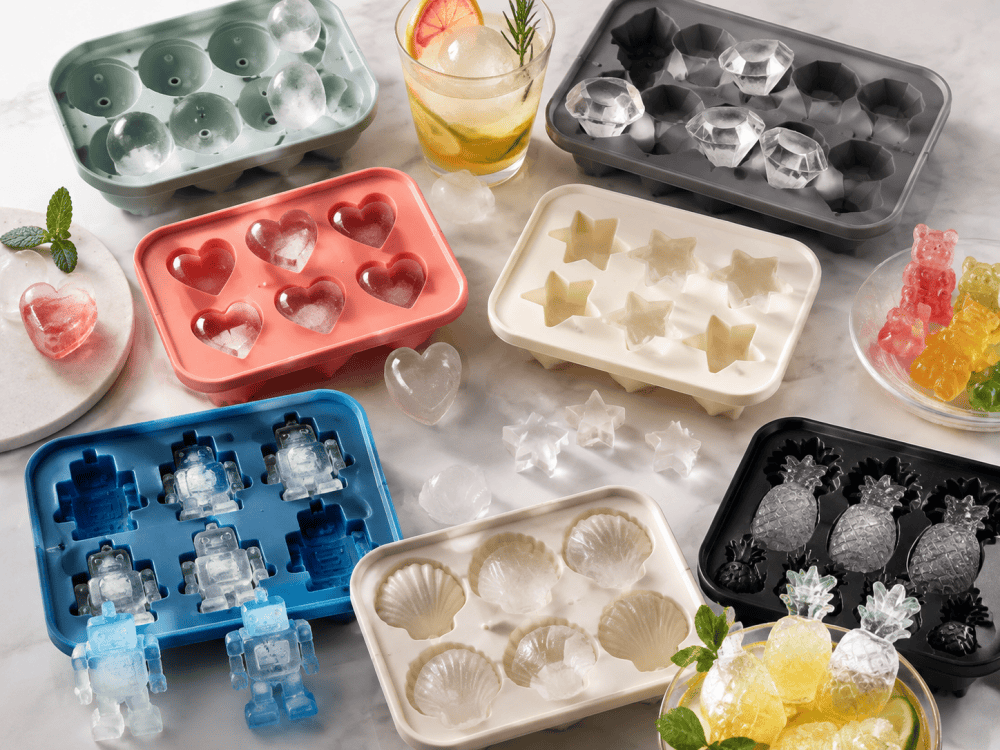
Silicone is preferred for creative designs such as heart shapes, animal shapes, flowers, and decorative ice cubes because the flexible material makes demolding easier.
For Commercial and Promotional Products
Plastic ice cube trays may be more suitable for large-volume orders because they offer lower costs and efficient production.
How Wholesale Buyers Choose Between Silicone and Plastic Ice Cube Trays
For kitchenware brands and distributors, choosing the right ice cube tray material depends on target customers, market positioning, and product strategy.
Target Market
- Premium kitchenware markets → silicone ice cube trays
- Mass retail markets → plastic ice cube trays
- Gift and lifestyle markets → creative silicone molds
Product Positioning
Silicone trays can create higher perceived value because of their premium appearance and better user experience.
Plastic trays remain competitive for affordable kitchen accessories and large-volume retail programs.
Customization Requirements
Brands should consider whether they need customized colors, unique shapes, packaging, and private label solutions.
Both silicone and plastic materials can support customization depending on product design and manufacturing capability.
For premium kitchen accessory brands, silicone ice cube trays provide stronger differentiation. For price-sensitive markets, plastic ice cube trays remain a practical and competitive choice.
Food Safety: Silicone vs Plastic Ice Cube Trays
Food safety is one of the most important factors when choosing ice cube trays because ice directly contacts beverages and food ingredients.
Food-Grade Silicone Ice Cube Trays
High-quality food-grade silicone ice cube trays are widely used in kitchen products because silicone is stable at freezing temperatures and does not easily release odors or harmful substances.
- BPA-free and food-contact safe
- Odor-resistant material performance
- Suitable for repeated freezing use
- Stable performance under temperature changes
Food-Grade Plastic Ice Cube Trays
Plastic ice cube trays can also be safe when manufactured with food-grade materials. However, buyers should pay attention to material quality and compliance standards.
- Choose BPA-free plastic materials
- Confirm food-contact safety compliance
- Avoid low-quality recycled plastic products
- Check supplier quality control systems
For international kitchenware markets, certifications and material documentation are important factors when selecting reliable ice cube tray suppliers.
How to Choose the Right Ice Cube Tray Material?
The best ice cube tray depends on the user's needs, product positioning, and market expectations.
| Customer Need | Recommended Material |
|---|---|
| Easy ice removal and premium experience | Silicone ice cube tray |
| Affordable everyday kitchen use | Plastic ice cube tray |
| Large ice cubes for cocktails | Silicone mold |
| Creative ice shapes | Silicone ice mold |
| Large-volume retail programs | Plastic ice tray |
Latest Market Trends in Ice Cube Trays
The global kitchen accessory market is moving toward products that combine functionality, design, and convenience. Ice cube trays are no longer limited to simple square shapes.
Modern consumers are increasingly interested in:
- Large ice cube molds for cocktails
- Whiskey ice ball makers
- Creative silicone ice molds
- Stackable freezer storage designs
- Reusable food-grade kitchen accessories
For kitchenware brands and retailers, offering innovative ice cube tray designs can help improve product competitiveness and attract different consumer groups.
Frequently Asked Questions
Are silicone ice cube trays better than plastic trays?
In most cases, silicone ice cube trays provide better flexibility, easier ice removal, and longer durability. However, plastic trays remain a good choice for affordable everyday products.
Are silicone ice cube trays safe?
Yes. Food-grade silicone ice cube trays are generally considered safe for food contact applications when produced according to quality standards.
Do silicone ice cube trays last longer than plastic?
Generally, silicone trays have better resistance to cracking and temperature changes, which can provide a longer service life compared with lower-quality plastic trays.
Why is ice difficult to remove from plastic trays?
Plastic trays have a rigid structure, so users need to twist or bend the tray manually. Silicone trays are more flexible and allow easier demolding.
Which ice cube tray is better for cocktails?
Silicone ice cube trays are usually preferred for cocktails because they are suitable for large ice cubes and slow-melting ice designs.
Can ice cube trays be customized for wholesale orders?
Yes. Many kitchenware manufacturers provide OEM and private label services, including customized shapes, colors, packaging, and branding options.
Conclusion
Both silicone and plastic ice cube trays have their own advantages. Silicone trays offer better flexibility, easier ice removal, premium appearance, and stronger durability, making them ideal for modern kitchens and premium markets.
Plastic ice cube trays remain a practical option for customers who prioritize affordability, lightweight design, and large-volume purchasing.
For brands, wholesalers, and distributors, selecting the right material depends on target customers, product positioning, and market demand. A reliable kitchenware supplier can help develop customized ice cube trays that balance quality, cost, and consumer expectations.
Looking for Custom Ice Cube Trays?
Kitlucy provides food-grade silicone and plastic ice cube trays with OEM and private label solutions for global kitchenware brands, wholesalers, and retailers.
Related Blogs