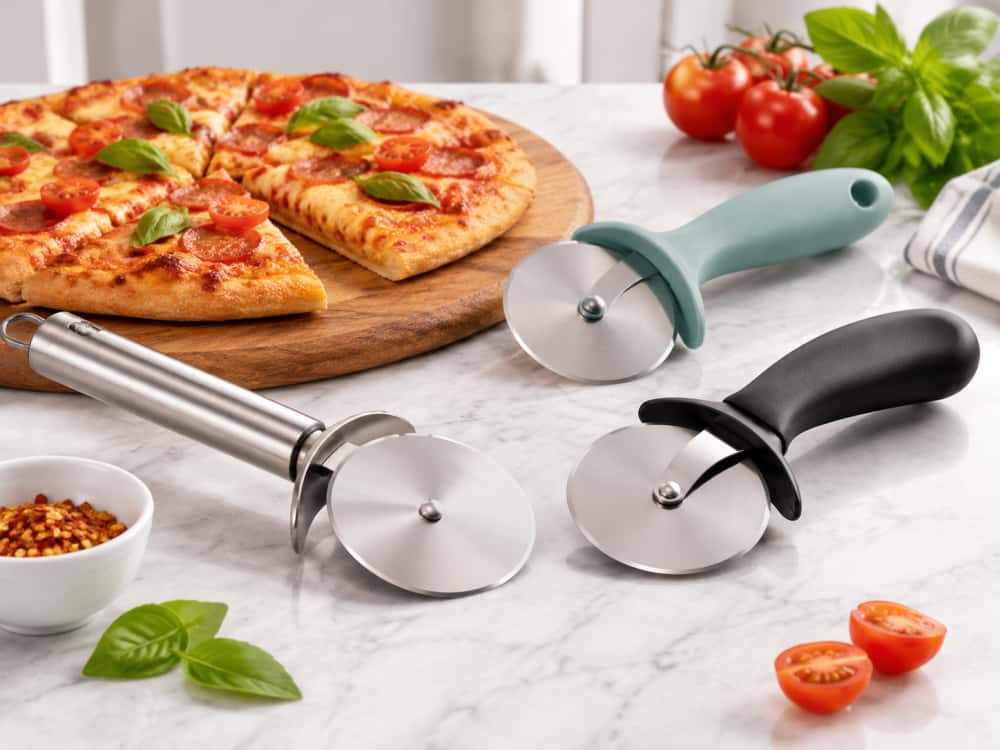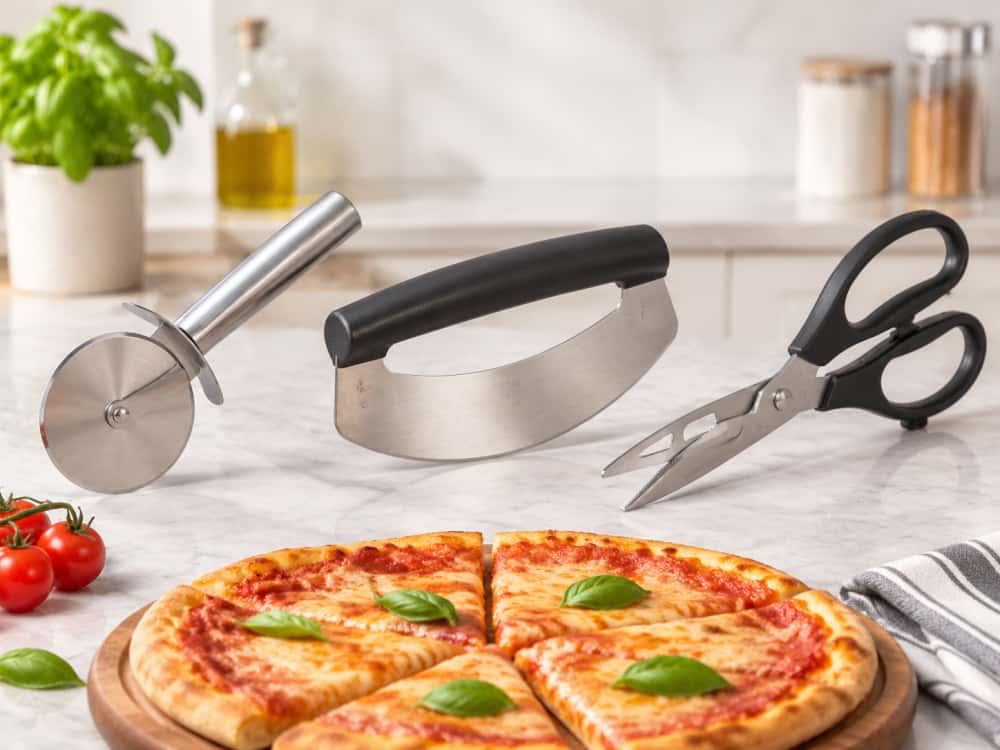


Stainless Steel vs. Carbon Steel Pizza Cutter Blades: Which Is Better?
A pizza cutter may look like a simple kitchen tool, but its blade material has a direct impact on cutting performance, corrosion resistance, durability, and maintenance. When comparing stainless steel vs. carbon steel pizza cutter blades, which material offers the better balance for everyday kitchens and professional pizza operations?
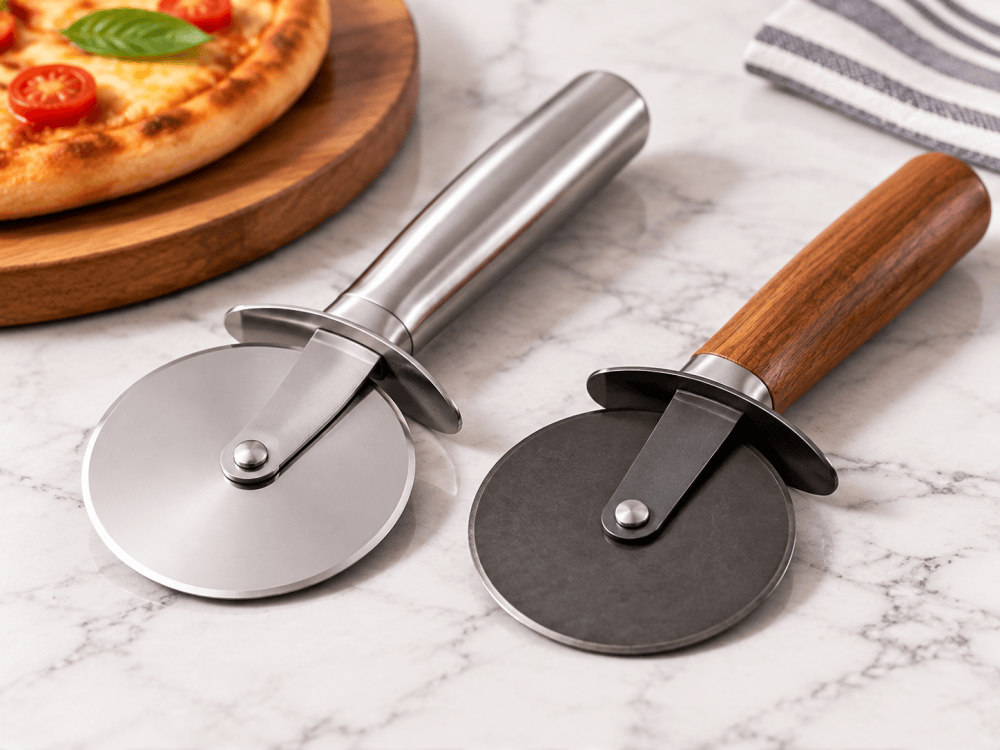
The blade material influences corrosion resistance, edge performance, and long-term care.
Quick Answer: Stainless steel is generally the more practical choice for most pizza cutters because it offers good corrosion resistance and requires less maintenance. Carbon steel can be sharpened to a fine edge and is valued for its sharpening response, but it needs more careful cleaning and drying to reduce the risk of rust.
However, neither material is automatically sharper or more durable. Steel grade, heat treatment, blade thickness, edge geometry, and manufacturing quality all influence the finished product.
1. Understanding Stainless Steel and Carbon Steel
Before comparing pizza cutter blades, it helps to understand what makes these two steel categories different. Both are iron-based materials, but their alloy compositions influence how they respond to moisture, sharpening, wear, and everyday kitchen use.
What Is a Stainless Steel Pizza Cutter Blade?
Stainless steel contains chromium, which helps form a thin protective oxide layer on the metal surface. This layer improves resistance to rust and corrosion, making stainless steel a popular material for kitchen tools that regularly come into contact with water, food, and cleaning products.
For pizza cutters, stainless steel offers several practical advantages:
- Corrosion resistance: It is generally less vulnerable to rust than ordinary carbon steel.
- Lower maintenance: It is more forgiving when users occasionally leave the blade damp for a short period.
- Everyday practicality: It suits kitchens where tools are used and cleaned frequently.
- Appearance: It can maintain a clean metallic finish with appropriate care.
Different stainless steel grades have different properties. For example, some martensitic stainless steels are designed to be hardened for cutting applications, while other stainless grades prioritize corrosion resistance. A higher grade number does not automatically mean a better pizza cutter blade.
What Is a Carbon Steel Pizza Cutter Blade?
Carbon steel contains iron and carbon, with relatively little chromium compared with stainless steel. Its composition can support high hardness and a fine cutting edge when the steel is properly heat-treated and ground.
Carbon steel is valued in some cutting tools because it can be sharpened effectively and offers a responsive sharpening experience. However, it is more susceptible to oxidation when exposed to moisture, salt, and acidic food residues.
- Sharpening: Carbon steel can be relatively easy to sharpen.
- Edge potential: It can achieve a fine cutting edge with suitable blade geometry and finishing.
- Corrosion risk: It generally requires more careful drying and storage.
- Maintenance: Users need to pay closer attention to cleaning and moisture removal.
It is also important to distinguish ordinary carbon steel from high-carbon stainless steel. High-carbon stainless steel contains chromium and is engineered to combine cutting performance with improved corrosion resistance. Product descriptions should identify the actual material rather than using these terms interchangeably.
2. Stainless Steel vs. Carbon Steel Pizza Cutter Blades: Key Differences
The following comparison summarizes the main considerations when choosing between stainless steel and carbon steel pizza cutter blades.
| Comparison Factor | Stainless Steel | Carbon Steel |
|---|---|---|
| Rust Resistance | Generally high, depending on the grade and surface condition | Lower; more vulnerable to rust when exposed to moisture |
| Sharpness Potential | Can achieve an effective cutting edge with proper grinding | Can achieve a fine, sharp edge with proper grinding |
| Edge Retention | Depends on grade, hardness, heat treatment, and edge geometry | Depends on carbon content, hardness, heat treatment, and edge geometry |
| Sharpening | Varies by grade and hardness; some grades can be more demanding to sharpen | Often responds well to sharpening |
| Maintenance | Relatively easy to maintain | Requires prompt drying and more careful storage |
| Daily Kitchen Use | Well suited to frequent use and regular washing | Better suited to users willing to follow careful maintenance routines |
| Typical Advantage | Corrosion resistance and convenience | Sharpening response and fine-edge potential |
Important: This is a general material comparison, not a guarantee of performance. A well-designed stainless steel pizza cutter can outperform a poorly manufactured carbon steel model. Buyers should evaluate the finished blade rather than relying on the material name alone.
3. Cutting Performance: Which Blade Cuts Pizza Better?
Pizza cutter performance is not determined by steel composition alone. A good cutter needs to roll smoothly through the crust while keeping toppings in place and producing clean, consistent portions.
Sharpness and Cutting Efficiency
A sharp pizza cutter blade helps reduce the pressure needed to cut through pizza. This matters when slicing thick crusts, crisp bases, melted cheese, and toppings that might otherwise shift during cutting.
Carbon steel can take a fine edge and is often appreciated for its sharpening characteristics. However, stainless steel can also achieve excellent sharpness. The final cutting result depends on:
- Blade steel grade and composition
- Heat treatment and finished hardness
- Blade thickness and wheel profile
- Edge angle and grinding consistency
- Blade alignment and wheel rotation
Edge Retention and Wear
Edge retention describes how well a blade maintains its cutting performance during repeated use. A pizza cutter used occasionally at home has different requirements from one used continuously in a busy pizzeria.
Hardness can contribute to edge retention, but increasing hardness without considering toughness can make a blade more vulnerable to chipping or damage. The ideal balance depends on the cutter's intended use and blade design.
For commercial buyers, repeated cutting tests are more useful than simply comparing steel labels. Test the cutter on different crust styles and evaluate whether it continues to roll smoothly and make clean cuts after repeated use.
4. Rust Resistance and Maintenance
Corrosion resistance is one of the clearest practical differences between stainless steel and carbon steel pizza cutter blades.
Why Stainless Steel Is Easier to Maintain
Stainless steel is generally more resistant to rust because of its chromium content. This makes it a practical option for kitchen tools that are washed frequently or used in environments with regular exposure to moisture.
However, stainless steel is not completely rust-proof. Salt, acidic residues, prolonged moisture, harsh cleaning conditions, and surface damage can still contribute to staining or corrosion.
Why Carbon Steel Needs More Attention
Carbon steel is more reactive to moisture and can develop rust if it is not cleaned and dried properly. Food residues, especially salty or acidic ingredients, should not be left on the blade for extended periods.
Users who choose carbon steel should follow a consistent care routine:
- Clean the blade promptly after use.
- Remove food particles from both sides of the cutting wheel.
- Rinse away detergent and food residues.
- Dry the blade thoroughly, including the area around the axle.
- Store the cutter in a dry place.
For both materials, follow the manufacturer's cleaning instructions. Do not assume that every pizza cutter is dishwasher-safe. Heat, detergents, and moisture trapped around the wheel or handle may affect the product over time.
5. Which Material Is Better for Different Pizza Cutter Applications?
The best blade material depends on who will use the pizza cutter, how often it will be used, and how much maintenance the user is willing to perform.
For Home Kitchens
Stainless steel is usually the more convenient choice for household pizza cutters. Home users often prioritize easy cleaning, corrosion resistance, and dependable performance over specialized sharpening characteristics.
A stainless steel wheel cutter with a comfortable handle and smooth rotation is a practical option for cutting homemade pizza, frozen pizza, and takeaway pizza.
For Restaurants and Pizzerias
Commercial kitchens need tools that can withstand frequent use and repeated cleaning. Stainless steel is often a practical option because it offers a useful balance of corrosion resistance and maintenance convenience.
However, the blade material is only one part of commercial suitability. Buyers should also consider:
- Cutting consistency during repeated use
- Wheel diameter and blade thickness
- Handle grip and operator comfort
- Ease of cleaning around the axle and fasteners
- Replacement blade availability
- Compatibility with the kitchen's cleaning procedures
For Premium or Specialty Products
Carbon steel may be considered for specialty products aimed at users who value sharpening performance and are comfortable with additional maintenance. It can also provide a distinct product position when supported by suitable material specifications and manufacturing quality.
For most general-purpose pizza cutter ranges, stainless steel remains an easier material to position because its corrosion resistance and care requirements are more familiar to everyday buyers.
6. Other Factors That Matter When Choosing a Pizza Cutter
Even when the blade material is selected, several other design details influence the overall quality and user experience.
Blade Diameter
A larger cutting wheel can be useful for cutting wider pizzas and thicker crusts. A smaller wheel may be easier to control for personal pizzas or compact kitchen tools. The right diameter depends on the product's intended application.
Blade Thickness and Edge Geometry
Blade thickness affects rigidity and overall feel. Edge geometry influences how easily the wheel moves through the crust. A blade that is too thick or poorly ground may require more pressure, while an overly thin edge may be less resistant to damage.
Wheel Rotation and Axle Design
A pizza cutter wheel should rotate smoothly without excessive wobbling or friction. The axle and attachment structure should hold the blade securely while allowing consistent movement.
For sourcing teams, it is worth checking whether the wheel can be disassembled for cleaning or whether the product uses a sealed or fixed assembly. The design should balance cleanability, safety, and durability.
Handle Material and Ergonomics
Common handle materials include polypropylene (PP), thermoplastic rubber (TPR), wood, and stainless steel. Each offers a different balance of cost, grip, appearance, and cleaning requirements.
A comfortable handle should provide enough control to guide the wheel across the pizza without putting unnecessary pressure on the user's hand. Textured surfaces and ergonomic contours may improve grip, especially during repeated use.
7. What Should Buyers Check When Sourcing Pizza Cutters?
For importers, wholesalers, retailers, and private-label brands, choosing a pizza cutter manufacturer involves more than selecting stainless steel or carbon steel. A sourcing decision should cover material verification, product performance, construction, quality control, and compliance documentation.
Material and Manufacturing Specifications
Ask the supplier to identify the exact steel grade or material specification used for the blade. Broad descriptions such as "premium stainless steel" or "high-carbon steel" are not enough to evaluate a product consistently.
Where relevant, request information about:
Product Testing and Quality Control
A reliable pizza cutter should be evaluated as a complete product. Material certificates alone cannot confirm that the finished cutter will perform well.
Consider testing the following:
- Cutting test: Check whether the wheel cuts through thin, thick, and crispy crusts without dragging toppings excessively.
- Rotation test: Check for smooth rolling, wobbling, and unusual friction.
- Durability test: Evaluate the wheel, axle, handle, and connection points after repeated use.
- Cleaning test: Check whether food residues can be removed from the blade and assembly.
- Corrosion evaluation: Assess the blade under the cleaning and storage conditions specified for the product.
Food-Contact and Market Requirements
For products sold in international markets, buyers should confirm that the materials and finished product meet the applicable food-contact requirements in the destination market.
Do not rely on a generic statement such as "food-grade stainless steel" as proof of compliance. Request product-specific documentation and clarify which components may contact food during normal use.
OEM and Private Label Options
Brands developing their own pizza cutter range may also need customization options, including:
- Different blade diameters and shapes
- Stainless steel grade and surface finish options
- PP or TPR handle designs
- Custom handle colors and logo placement
- Retail packaging and gift-box solutions
- Product sets combining pizza cutters with other kitchen gadgets
Before mass production, confirm the approved sample, material specifications, packaging details, and inspection criteria. These details help ensure that repeat orders remain consistent.
8. How to Care for Pizza Cutter Blades
Proper maintenance helps preserve cutting performance and extends the useful life of a pizza cutter. The exact care routine should follow the product manufacturer's instructions.
Cleaning
- Clean the cutter soon after use to prevent cheese, sauce, and food residues from drying on the blade.
- Use warm water and mild dish soap unless the manufacturer specifies another method.
- Pay attention to the wheel, axle, and areas where food particles may collect.
- Rinse thoroughly and dry the product before storage.
Storage
Store the pizza cutter in a dry location where the cutting edge is protected from impact. Avoid placing heavy kitchen tools directly on top of the blade.
Carbon steel blades require particular attention to moisture. Stainless steel blades are more corrosion-resistant, but they should also be cleaned and dried properly.
When Should You Replace a Pizza Cutter Blade?
Consider replacing the blade if it becomes visibly damaged, develops persistent corrosion, wobbles excessively, or no longer cuts effectively after appropriate maintenance. A dull blade that requires excessive pressure can make cutting less controlled.
9. Stainless Steel vs. Carbon Steel: Final Recommendation
There is no single material that is best for every pizza cutter. The right choice depends on the intended market, product positioning, maintenance expectations, and the quality of the finished blade.
| Your Priority | Suggested Direction |
|---|---|
| Easy cleaning and everyday convenience | Stainless steel |
| Better general corrosion resistance | Stainless steel |
| Fine-edge sharpening characteristics | Carbon steel may be worth considering |
| Frequent use in kitchens with regular washing | Stainless steel is often more practical |
| Specialty product for users who accept higher maintenance | Carbon steel may be suitable |
For most household and commercial pizza cutter applications, stainless steel is a practical starting point because of its corrosion resistance and relatively simple care requirements. Carbon steel can still be a suitable choice for specific product concepts, provided that users understand its maintenance needs.
Ultimately, a well-made pizza cutter depends on the complete design: suitable steel, proper heat treatment, consistent edge grinding, reliable wheel rotation, and a comfortable handle.
10. Frequently Asked Questions
Is stainless steel better than carbon steel for pizza cutters?
Stainless steel is generally more practical for most pizza cutters because it resists corrosion better and is easier to maintain. Carbon steel can offer good sharpening characteristics, but it needs more careful cleaning and drying.
Are carbon steel pizza cutter blades sharper?
Not necessarily. Carbon steel can be sharpened to a fine edge, but stainless steel can also be very sharp. Actual sharpness depends on the steel grade, heat treatment, blade geometry, and grinding quality.
Do stainless steel pizza cutter blades rust?
Stainless steel is corrosion-resistant, not completely rust-proof. Prolonged moisture, salt, food residues, harsh detergents, and surface damage can still cause staining or corrosion.
Is high-carbon stainless steel the same as carbon steel?
No. High-carbon stainless steel contains chromium to improve corrosion resistance, while ordinary carbon steel generally has much less chromium. They are different material categories and should be specified separately.
Which pizza cutter blade material is best for commercial kitchens?
Stainless steel is often a practical choice for commercial kitchens because it offers good corrosion resistance and relatively easy maintenance. Buyers should also evaluate cutting performance, cleaning access, wheel rotation, and durability under repeated use.
Can pizza cutter blades be sharpened?
Some pizza cutter blades can be sharpened, but the process depends on the blade design and manufacturer instructions. Because pizza cutter wheels have circular edges and moving assemblies, replacement may be more practical for certain products.
What should I look for when buying a pizza cutter in bulk?
Check the exact blade material, wheel diameter, thickness, edge finish, rotation performance, handle construction, cleaning requirements, packaging, and product-specific compliance documentation. Always evaluate a production sample before confirming a large order.
Looking for a Pizza Cutter Supplier for Your Brand?
Choosing the right pizza cutter involves more than selecting a blade material. Product design, material consistency, handle options, manufacturing quality, and retail packaging all influence the final product.
Kitlucy supports kitchenware product development and customization for brands, wholesalers, and distributors. If you are planning to develop a pizza cutter or expand your kitchen gadget collection, contact our team to discuss your product requirements.
Contact KitlucyExplore more products: Kitchen Gadgets.
Related Blogs