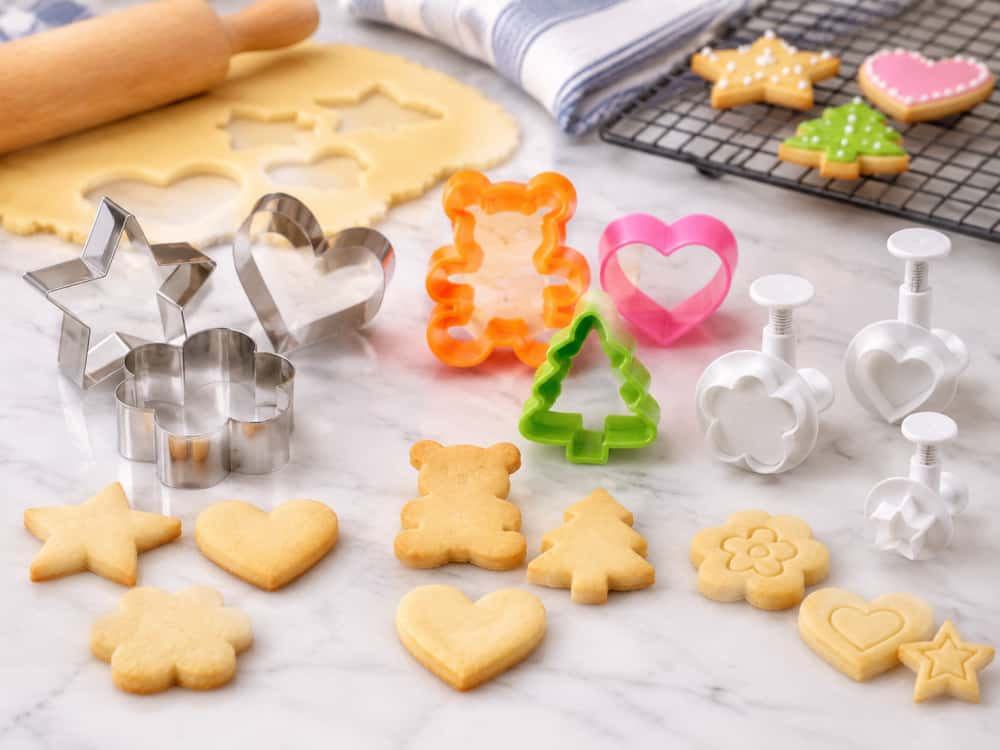


Stainless Steel vs. Plastic Cookie Cutters: Key Differences and How to Choose
Choosing between stainless steel and plastic cookie cutters may seem like a small decision, but the material can affect how cleanly a cutter shapes dough, how comfortable it is to use and how well it holds up over time. Both options are widely used in home baking, but they serve slightly different needs.
Stainless steel cookie cutters are often chosen for their thin cutting edges, structural rigidity and long-term durability. Plastic cookie cutters are lightweight, available in many colors and designs, and can be more comfortable for casual or family baking activities.
So, are stainless steel cookie cutters better than plastic ones? The answer depends on the dough, cutter design, frequency of use and the person using it. This guide compares both materials in detail to help home bakers, retailers and wholesale buyers make an informed choice.
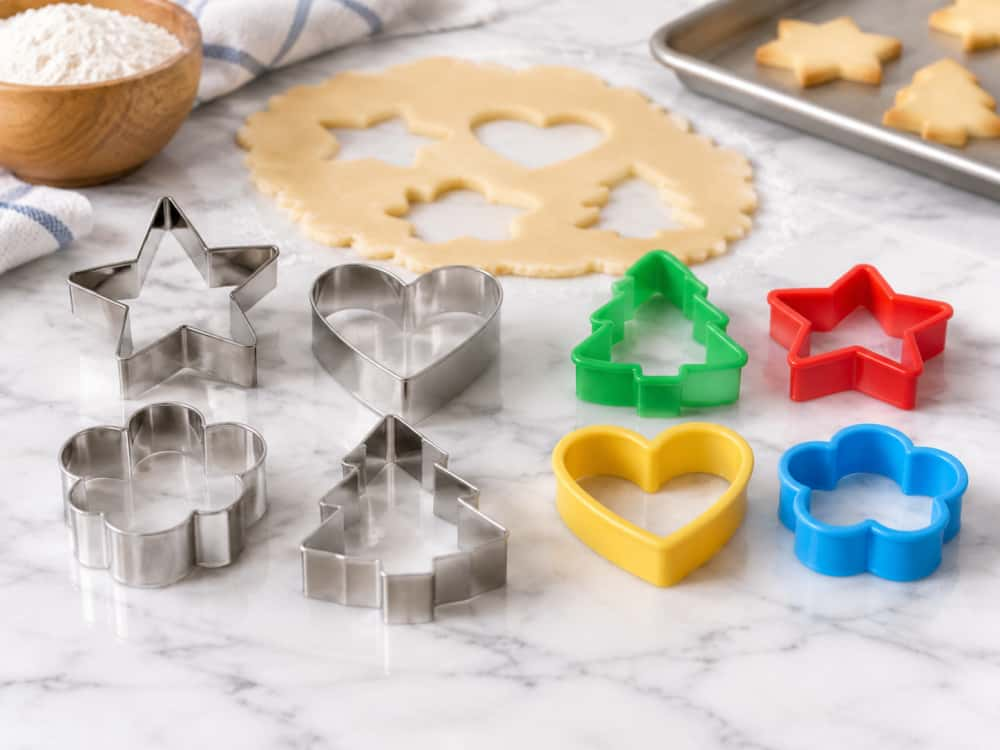
Choose stainless steel cookie cutters if you prioritize clean cutting edges, structural rigidity and repeated use. They are particularly useful for chilled cookie dough, detailed shapes and frequent baking.
Choose plastic cookie cutters if you prefer lightweight tools, colorful designs and comfortable handling for casual baking or family activities. Their performance depends on the plastic material, edge design and product construction.
For most frequent bakers, a well-made stainless steel cutter is a practical long-term option. For themed sets, children's baking activities and colorful retail collections, plastic cutters can be a useful alternative.
1. What Is the Difference Between Stainless Steel and Plastic Cookie Cutters?
The main difference is how each material is manufactured and how its physical properties affect the cutting edge and overall construction.
Stainless steel cookie cutters are commonly formed from thin metal sheets into specific shapes. The edges can be relatively narrow, allowing the cutter to pass through dough with less compression. Their rigid structure also helps maintain the intended shape when sufficient material thickness and suitable construction are used.
Plastic cookie cutters are typically produced through molding. They can be made in different colors, shapes and thicknesses. Their cutting edges are often wider than those of metal cutters, although well-designed plastic cutters can still provide good cutting performance.
It is important to remember that material alone does not determine quality. A poorly finished metal cutter may be uncomfortable or easy to deform, while a well-designed plastic cutter can perform reliably for its intended application.
2. Stainless Steel Cookie Cutters: Advantages and Disadvantages
Stainless steel is a popular material for baking tools because it combines strength, formability and corrosion resistance. In cookie cutters, these properties make it suitable for both simple shapes and more detailed designs.
Advantages of Stainless Steel Cookie Cutters
1. Clean and Defined Cutting Edges
One of the main advantages of stainless steel cookie cutters is their ability to create clear outlines. A thin, properly finished cutting edge can slice through firm or chilled dough without compressing it as much as a thicker edge might.
This is especially useful for shapes with narrow points, small curves or detailed outlines. Clean cuts can help cookies retain their intended shape during baking, although dough temperature and recipe formulation also play important roles.
2. Good Structural Rigidity
Stainless steel cutters generally maintain their shape well when made with suitable material thickness and construction. This is useful for people who bake regularly or need consistent shapes across multiple batches.
However, very thin metal can still bend or become dented under excessive pressure. Material thickness, seams and overall design should be considered when evaluating quality.
3. Suitable for Repeated Use
Well-made stainless steel cookie cutters can withstand repeated handling and washing when properly cared for. Unlike some lower-quality metal finishes, stainless steel generally offers better resistance to corrosion.
It is not completely rust-proof, however. Steel grade, surface condition, cleaning practices and exposure to corrosive substances all affect its long-term performance.
4. Suitable for Different Dough Types
Stainless steel cutters are useful for many rolled cookie doughs, including sugar cookies, gingerbread and shortbread. Their relatively thin edges can be particularly helpful when cutting chilled or firmer dough.
Disadvantages of Stainless Steel Cookie Cutters
- Potentially sharp edges: Thin metal cutting edges require careful handling, especially around children.
- Higher initial cost in some designs: Stainless steel products may cost more than basic plastic alternatives, depending on thickness, construction and finish.
- Possible corrosion: Poor-quality material, damaged surfaces or improper storage can contribute to rust or staining.
- Limited color choices: Stainless steel typically offers a metallic appearance rather than the wide range of colors available with molded plastic.
Overall, stainless steel cookie cutters are a strong choice for buyers who value precise cutting, durability and repeated use.
3. Plastic Cookie Cutters: Advantages and Disadvantages
Plastic cookie cutters are popular for casual home baking, themed baking kits and children's activities. Their molded construction allows manufacturers to create colorful products in a wide variety of shapes and sizes.
Advantages of Plastic Cookie Cutters
1. Lightweight and Easy to Handle
Plastic cutters are generally lightweight, making them easy to hold, carry and store. Many designs include wide pressing surfaces or rounded edges that provide a comfortable grip.
This can be helpful for occasional baking and supervised family baking activities, where ease of handling is an important consideration.
2. More Color and Design Options
Plastic can be molded into different shapes and produced in many colors. This makes it suitable for themed collections, seasonal baking kits and retail gift sets.
Common designs include animals, letters, numbers, flowers, geometric shapes and holiday characters.
3. Convenient for Casual Baking
For simple shapes and occasional use, plastic cookie cutters can be practical and affordable. They are also commonly used with fondant and other soft decorative materials, depending on the cutter's design.
4. Comfortable Designs for Family Baking
Many plastic cutters have thicker, rounded edges that are easier to grip than exposed metal cutting edges. This can make them a convenient option for supervised baking activities with children.
Disadvantages of Plastic Cookie Cutters
- Potentially less precise cutting: Thick or rounded edges may compress soft dough rather than slice cleanly.
- Heat sensitivity: Some plastic materials can warp or deform when exposed to temperatures beyond their intended limits.
- Variable durability: Thin sections or poorly molded areas may crack under pressure.
- Material-dependent performance: Different polymers have different strength, flexibility and temperature characteristics.
- Cleaning limitations: Not every plastic cutter is suitable for dishwasher cleaning.
Plastic cookie cutters are not automatically low quality. A well-designed product made from an appropriate food-contact material can be a reliable choice for its intended use.
4. Stainless Steel vs. Plastic Cookie Cutters: Side-by-Side Comparison
The following comparison summarizes the main differences between the two materials. Actual performance will vary with product thickness, edge geometry, manufacturing quality and intended use.
| Feature | Stainless Steel Cookie Cutters | Plastic Cookie Cutters |
|---|---|---|
| Material | Stainless steel | Food-contact-suitable plastic, depending on specifications |
| Cutting edge | Can be thin and precise | Often thicker and more rounded |
| Cutting performance | Generally effective for clean outlines and firmer dough | Suitable for many simple shapes and softer doughs, depending on design |
| Structural rigidity | Good when material thickness and construction are suitable | Depends on polymer, thickness and molded structure |
| Weight | Generally lightweight, but varies by gauge and size | Generally lightweight |
| Color options | Usually metallic finishes | Wide range of colors |
| Handling | Requires care around cutting edges | Often has rounded and comfortable pressing surfaces |
| Corrosion resistance | Generally good, but depends on steel grade and care | Does not rust, but may be affected by heat, chemicals or wear |
| Cleaning | Wash and dry according to the material and finish instructions | Follow the manufacturer's cleaning and temperature instructions |
| Typical applications | Frequent baking, firm dough and defined outlines | Casual baking, colorful sets and family activities |
| Cost | Varies with steel grade, thickness and construction | Varies with polymer, design and manufacturing complexity |
Independent product testing has also shown that both stainless steel and well-constructed plastic cutters can perform effectively. Edge design and material thickness matter as much as the material category itself. Thin, flimsy products of either material can deform during use.
5. Which Cookie Cutter Is Better for Different Baking Needs?
The right cookie cutter depends on how often you bake, the type of dough you use and the level of detail you want to achieve.
For Frequent Home Baking: Stainless Steel
If you regularly make sugar cookies, gingerbread or shortbread, stainless steel is often a practical choice. Its rigid construction and thin cutting edge can help produce consistent outlines across multiple batches.
Look for smooth seams, suitable material thickness and a comfortable top edge to make repeated pressing easier.
For Children's Baking Activities: Consider Plastic
Plastic cutters with rounded pressing surfaces can be convenient for supervised family baking. Their colorful appearance and variety of shapes can also make baking more engaging.
However, no cookie cutter should be treated as completely risk-free for children. Consider the product's size, construction, age suitability and the manufacturer's handling guidance.
For Intricate Cookie Shapes: Stainless Steel
Detailed shapes such as snowflakes, stars, small flowers and animal outlines can benefit from a thin cutting edge. Stainless steel cutters are often useful when the design includes narrow points or small curves that need to remain clearly defined.
For the best results, use properly chilled dough and press straight down without twisting the cutter.
For Colorful Baking Sets: Plastic
Plastic cutters are a good option for themed collections where color coordination and product variety are important. They can be used in holiday sets, children's baking kits and seasonal retail collections.
For brands developing a colorful baking range, molded plastic also provides flexibility in shape and appearance.
For Commercial or Repeated Use: Well-Made Stainless Steel
For frequent production, consistency and structural stability are important. A well-constructed stainless steel cutter is often a suitable choice for bakeries, baking studios and commercial kitchen supply ranges.
Plastic cutters can still be appropriate for specific applications, but buyers should evaluate their resistance to repeated pressure, cleaning conditions and expected service life.
6. How to Choose High-Quality Cookie Cutters
Whether you choose stainless steel or plastic, several product details can make a significant difference in everyday use.
1. Check the Cutting Edge
The cutting edge should be even and properly finished. It should separate dough without excessive tearing or compression.
For metal cutters, check for rough seams, burrs and exposed sharp areas. For plastic cutters, check whether the molded edge is sufficiently defined and consistent around the shape.
2. Evaluate Material Thickness and Construction
Very thin metal cutters may bend under pressure, while poorly designed plastic products may crack or lose their shape.
Check whether the cutter retains its shape during normal pressing. For metal designs, inspect the joint or seam. For molded products, pay attention to thin corners, narrow sections and uneven walls.
3. Consider the Shape Complexity
Simple shapes such as circles, squares and hearts are generally easy to manufacture in either material. More detailed designs may require a carefully designed cutting edge and sufficient structural support.
For very small or intricate outlines, consider how easily dough can be released without damaging the shape.
4. Look at the Pressing Surface
A comfortable top edge can make a noticeable difference when cutting many cookies. Rounded or folded upper edges can reduce discomfort during repeated pressing, while plastic designs may use wider molded surfaces for gripping.
5. Check Cleaning and Storage Requirements
Choose a design that can be cleaned thoroughly, including its seams, corners and decorative details. Plunger-style cutters require additional attention around moving components.
Do not assume that all stainless steel or plastic cookie cutters are dishwasher-safe. Follow the care instructions for the specific product.
7. Are Stainless Steel and Plastic Cookie Cutters Food-Safe?
Food-contact suitability depends on the actual material, manufacturing process, surface finish and conditions of use. The words "stainless steel" or "food-grade plastic" alone are not enough to establish that a finished product meets every regulatory requirement.
Food-Contact Considerations for Stainless Steel
For stainless steel cutters, buyers should confirm the specified steel grade, surface finish and suitability for the intended food-contact conditions. The finished product should have a smooth, cleanable surface without damaged coatings, exposed contaminants or problematic burrs.
Stainless steel is generally corrosion-resistant, but the exact performance depends on its composition and the environment in which it is used.
Food-Contact Considerations for Plastic
For plastic cutters, the specific polymer, additives, colorants and manufacturing conditions should be considered. Buyers should request relevant food-contact declarations or test documentation for the target market and intended conditions of use.
A plastic material's general name does not automatically prove compliance. Temperature, food type and repeated-use conditions may affect which requirements apply.
What Should Importers and Brands Request?
- Exact material specifications for the finished product.
- Relevant food-contact declarations and supporting test reports.
- Documentation appropriate for the destination market.
- Information about coatings, colorants and other product components where applicable.
- Cleaning and use instructions supported by product specifications or testing.
For products sold in the United States, food-contact substances are subject to applicable FDA requirements and authorizations for their intended use. In the European Union, food-contact materials are covered by Regulation (EC) No 1935/2004 and applicable good manufacturing practice requirements under Regulation (EC) No 2023/2006. Additional material-specific rules may also apply.
8. Stainless Steel vs. Plastic Cookie Cutters for Wholesale and OEM/ODM Buyers
For importers, wholesalers, retailers and private-label kitchenware brands, choosing between stainless steel and plastic is also a product-positioning decision.
Stainless steel cutters can support collections focused on durability, repeated use and clean cutting performance. Plastic cutters offer more opportunities for colorful designs, themed sets and family-oriented baking products.
Key Sourcing Factors
- Target customer: Decide whether the product is intended for home bakers, children, professional bakers or gift buyers.
- Material specification: Confirm the exact stainless steel grade or plastic polymer rather than relying on general material descriptions.
- Product consistency: Evaluate dimensions, thickness, edge quality, shape accuracy and color consistency.
- Construction quality: Check seams, pressing surfaces, molding details and potential weak points.
- Food-contact documentation: Request suitable declarations and testing for the intended sales market.
- Packaging: Consider individual packaging, multi-piece sets, storage containers, retail boxes and seasonal gift packaging.
- Cost and order quantity: Compare tooling requirements, unit cost, packaging cost and minimum order quantities.
Private-Label and Customization Opportunities
Both stainless steel and plastic cookie cutters offer customization possibilities, depending on manufacturing capabilities and order requirements.
Common OEM/ODM options include:
- Custom shapes based on brand themes or seasonal collections.
- Different sizes and coordinated multi-piece sets.
- Custom colors for molded plastic designs.
- Retail packaging and private-label branding.
- Product combinations with baking tools and other accessories.
For buyers developing a new baking accessories range, it is useful to confirm design feasibility, material specifications, sample approval, testing requirements and packaging details before mass production.
9. Frequently Asked Questions
1. Are stainless steel cookie cutters better than plastic ones?
Stainless steel cutters are often better for clean cutting edges, structural rigidity and frequent use. Plastic cutters are lightweight and offer more color and design options. The better choice depends on the dough, product construction and intended user.
2. Do stainless steel cookie cutters cut better?
A well-designed stainless steel cutter with a thin, even cutting edge can create clean outlines, particularly in firm or chilled dough. However, cutting performance also depends on edge geometry, dough temperature and cutter construction.
3. Are plastic cookie cutters safe for children?
Plastic cutters often have rounded edges and comfortable pressing surfaces, making them convenient for supervised children's baking activities. Check the product's age suitability, material information and construction, and supervise children during use.
4. Do stainless steel cookie cutters rust?
Stainless steel is resistant to corrosion, but it is not completely rust-proof. Steel grade, surface condition, moisture exposure and cleaning practices all affect corrosion resistance. Dry cutters thoroughly when required by the manufacturer's instructions.
5. Can plastic cookie cutters go in the dishwasher?
Some plastic cutters may be dishwasher-safe, but others can warp or become damaged by high temperatures. Check the manufacturer's instructions for the specific polymer and product design before using a dishwasher.
6. Which cookie cutter is best for sugar cookies?
Both materials can work for sugar cookies. Stainless steel is often preferred for clean outlines, especially with chilled dough. Plastic cutters can also work well for simple shapes when their cutting edges are properly designed.
7. Are stainless steel cookie cutters worth the extra cost?
For frequent bakers, a well-made stainless steel cutter can offer good long-term value through its rigidity and repeated-use performance. For occasional baking or colorful themed sets, plastic cutters may be a more economical option.
8. What is the best material for wholesale cookie cutters?
There is no universal best material for wholesale cookie cutters. Stainless steel is suitable for collections emphasizing precision and repeated use, while plastic is useful for colorful designs and themed sets. Buyers should compare material specifications, product quality, compliance documentation and target-market requirements.
Develop Your Next Baking Accessories Collection with Kitlucy
Whether you are sourcing stainless steel cookie cutters, developing colorful plastic baking tools or planning a private-label baking accessories collection, product design and material selection are important to long-term product quality.
Kitlucy supports kitchenware product development and OEM/ODM customization for brands, wholesalers, retailers and distributors. Contact our team to discuss your product ideas, material requirements and packaging needs.
Explore Customization Contact KitlucyRelated Blogs