

Types of Cake Pans: How to Choose the Right Pan for Every Cake
Choosing the right cake pan is an important part of successful baking. The pan's shape, size, depth and material can all influence how a cake rises, bakes and releases. From classic round layer cakes to square snack cakes, homemade loaf cakes and delicate cheesecakes, different types of cake pans are designed for different baking needs.
For home bakers, understanding the main cake pan styles makes it easier to choose the right bakeware for each recipe. For bakeries, retailers and kitchenware brands, knowing the differences also helps when selecting products for a complete bakeware collection.
In this guide, we explore four popular types of cake pans: round, square, loaf and springform pans. We will compare their common uses, advantages, sizes, materials and practical buying considerations.
Quick Answer: What Are the Main Types of Cake Pans?
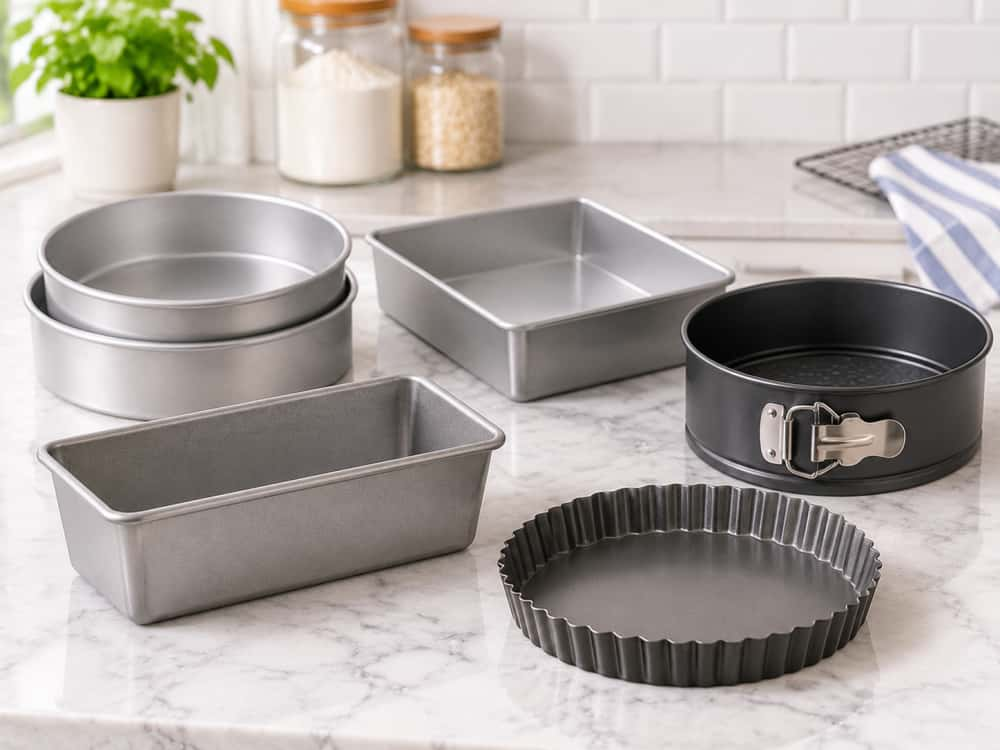
The four common types are round cake pans, square cake pans, loaf pans and springform pans. Round pans are popular for layer cakes, square pans work well for brownies and snack cakes, loaf pans are suitable for pound cakes and quick breads, and springform pans are especially useful for cheesecakes and delicate desserts that are difficult to turn out of a fixed-sided pan.
1. Round Cake Pans
Round cake pans are among the most widely used types of cake pans. They typically feature a flat base and straight or slightly sloped sides, making them suitable for baking individual cake layers and single-layer desserts.
Because round cakes are easy to stack, frost and decorate, these pans are especially popular for birthday cakes, celebration cakes and multi-layer desserts.
Common Uses of Round Cake Pans
- Layer cakes: Bake two or more cake layers that can be stacked with frosting, cream or filling.
- Birthday cakes: Create classic round cakes for celebrations and special occasions.
- Single-layer cakes: Bake simple chocolate, vanilla, butter or sponge cakes.
- Specialty desserts: Prepare certain cheesecakes, tortes and other round desserts when the recipe calls for a fixed-sided pan.
Common Round Cake Pan Sizes
Round cake pans are available in different diameters and depths. Some commonly used sizes include:
| Pan Size | Approximate Metric Size | Typical Applications |
|---|---|---|
| 6-inch round | 15 cm | Small cakes, mini layer cakes and smaller batches. |
| 8-inch round | 20 cm | Small to medium layer cakes and everyday baking. |
| 9-inch round | 23 cm | Classic layer cakes and family-sized desserts. |
| 10-inch round | 25 cm | Larger cakes and recipes designed for wider layers. |
These are common nominal diameters, not universal standards. Pan depth and actual internal dimensions can vary by manufacturer.
Advantages of Round Cake Pans
- Suitable for a wide range of traditional cake recipes.
- Easy to stack into multiple layers.
- Convenient for frosting, decorating and serving.
- Available in many sizes, depths and materials.
What to Consider When Choosing a Round Cake Pan
Choose a diameter and depth that match your recipe. If you are making layered cakes, using matching pans helps create layers with consistent dimensions. A sturdy pan with a stable base and evenly finished sides is also useful for repeat baking.
2. Square Cake Pans
Square cake pans have a flat base and four straight sides. They are practical for baking cakes that are cut into individual portions, making them useful for family desserts, parties, bakeries and food-service applications.
Compared with round pans, square pans make it easier to cut evenly sized rectangular or square portions with relatively little leftover cake around the edges.
Common Uses of Square Cake Pans
- Brownies: A popular choice for baking and portioning brownies.
- Snack cakes: Suitable for simple cakes served directly from the pan or cut into squares.
- Layer cakes: Can be used to create square cake layers for modern celebration cakes.
- Bar desserts: Useful for blondies, dessert bars and other baked treats.
- Small batch baking: Practical for recipes designed for compact square pans.
Common Square Cake Pan Sizes
| Pan Size | Approximate Metric Size | Typical Applications |
|---|---|---|
| 8 x 8 inches | 20 x 20 cm | Small cakes, brownies and dessert bars. |
| 9 x 9 inches | 23 x 23 cm | Family-sized snack cakes and brownies. |
| 10 x 10 inches | 25 x 25 cm | Larger batches and square cakes. |
Advantages of Square Cake Pans
- Easy to portion into evenly sized squares.
- Useful for brownies, bars and everyday cakes.
- Convenient for stacking and storing in many kitchen cabinets.
- Can be used for both sweet and savory baked recipes, depending on the pan and recipe.
Square vs. Rectangular Cake Pans
Square and rectangular cake pans are related but serve slightly different purposes. Square pans are often used for smaller batches and compact cakes, while rectangular pans, such as a 9 x 13-inch pan, are commonly used for sheet cakes, larger dessert portions and family-sized recipes.
If you regularly bake large batches or sheet cakes, a rectangular pan can be a useful addition to a basic bakeware collection.
3. Loaf Pans
Loaf pans are deep rectangular pans designed to produce baked goods with a traditional loaf shape. Their taller sides help contain the batter as it rises, making them suitable for cakes and quick breads with a denser texture.
Although they are often associated with bread baking, loaf pans are also widely used for sweet recipes such as banana bread, pound cake and lemon loaf cake.
Common Uses of Loaf Pans
- Banana bread: One of the most popular uses for a loaf pan.
- Pound cake: Suitable for dense, rich cake batters.
- Fruitcake: Useful for traditional fruit-based loaf cakes.
- Lemon loaf cake: Creates a neat rectangular shape for glazing and slicing.
- Quick breads: Suitable for recipes such as zucchini bread and other quick-bread varieties.
Common Loaf Pan Sizes
| Pan Size | Approximate Metric Size | Typical Applications |
|---|---|---|
| 8.5 x 4.5 inches | 22 x 11 cm | Smaller loaves and compact quick breads. |
| 9 x 5 inches | 23 x 13 cm | Common size for banana bread and loaf cakes. |
| 10 x 5 inches | 25 x 13 cm | Larger loaves and recipes designed for more batter. |
Loaf pan dimensions are often measured across the top, so the usable base area may be smaller because the sides can slope inward. Always check the manufacturer's stated capacity and compare it with the recipe.
Advantages of Loaf Pans
- Designed for tall, rectangular baked goods.
- Suitable for both sweet and savory recipes.
- Convenient for slicing and portioning.
- Available in different lengths, depths and materials.
What to Consider When Choosing a Loaf Pan
Capacity is particularly important when selecting a loaf pan. A pan that is too small may overflow as the batter rises, while an oversized pan may produce a flatter loaf with a different baking time and texture.
For recipes with a longer baking time, choose a pan with suitable construction and follow the recipe's instructions for checking doneness in the center.
4. Springform Pans
Springform pans are designed with removable sides and a detachable base. A metal clasp or locking mechanism holds the sidewall in place during baking. Once the cake has cooled sufficiently, the clasp can be released so the sides separate from the cake without requiring it to be turned upside down.
This design makes springform pans especially useful for delicate desserts that may crack, break or lose their shape when removed from a conventional fixed-sided pan.
Common Uses of Springform Pans
- Cheesecakes: Particularly useful for baked cheesecakes that need to retain their smooth sides and shape.
- Delicate tortes: Helps release cakes that are difficult to invert.
- Crumb cakes: Suitable for certain cakes with delicate toppings or fillings.
- Ice cream cakes: Useful for desserts that need to retain their shape when removed from the pan.
- Layered desserts: Can be used for recipes that benefit from a removable sidewall.
How Does a Springform Pan Work?
- Place the removable base into the side ring.
- Close the metal clasp to secure the sides around the base.
- Prepare the pan according to the recipe, which may include greasing or lining the base.
- Pour in the batter or prepared filling.
- Bake according to the recipe instructions.
- Allow the cake to cool as directed before releasing the clasp.
- Carefully lift away the side ring while keeping the cake supported by the base if necessary.
Advantages of Springform Pans
- Removable sides make delicate cakes easier to release.
- Useful for cheesecakes and desserts that should not be inverted.
- Can create clean, attractive sides for presentation.
- Available in different diameters and depths.
Are Springform Pans Leakproof?
Not necessarily. The removable base and sidewall create a joint that may allow thin batter or liquid to escape, particularly if the pan is not assembled correctly or the seal is imperfect.
For recipes with a thin batter or water bath, check the pan's design and manufacturer instructions. Wrapping the outside with suitable foil may help reduce water entering the pan during a water bath, but it does not turn every springform pan into a completely leakproof product.
5. Round vs. Square vs. Loaf vs. Springform Pans
Each cake pan type has a different purpose. The following comparison makes it easier to identify the most suitable option for common baking tasks.
| Cake Pan Type | Typical Shape | Best For | Main Advantage | Key Consideration |
|---|---|---|---|---|
| Round Pan | Circular | Layer cakes, birthday cakes and sponge cakes. | Easy to stack, frost and decorate. | Choose matching diameters and suitable depth for layered recipes. |
| Square Pan | Square | Brownies, snack cakes and dessert bars. | Convenient for portioning into even pieces. | Check pan area and depth when matching a recipe. |
| Loaf Pan | Deep rectangle | Banana bread, pound cake and quick breads. | Creates a traditional tall loaf shape. | Capacity and depth affect the finished loaf and baking time. |
| Springform Pan | Usually round, with removable sides. | Cheesecakes, tortes and delicate desserts. | Removable sides make release easier. | Check the clasp and base seal, especially for liquid batters. |
6. How to Choose the Right Cake Pan Size
Choosing the correct pan size is just as important as choosing the right shape. A cake pan that is too small may cause batter to overflow, while a pan that is too large can produce a thinner cake that bakes more quickly than expected.
Check the Recipe's Pan Size
Whenever possible, use the pan size specified in the recipe. Pay attention to both diameter or length and width, as well as the pan's depth.
Understand Pan Capacity
Two pans with the same top dimensions may have different capacities if their depths or sidewall shapes differ. When comparing pans, check the stated volume or measure the usable capacity if necessary.
Consider the Batter Depth
The depth of the batter influences how heat moves through the cake. A deeper cake generally needs more time for the center to finish baking than a thinner cake made from the same batter.
Adjust Baking Time Carefully
If you use a different pan from the one specified in a recipe, do not assume the original baking time will remain accurate. Start checking for doneness earlier or later as appropriate, and use the recipe's recommended visual or internal doneness cues.
7. What Materials Are Cake Pans Made Of?
Besides shape and size, material is another important factor when choosing cake pans. Common options include aluminum, carbon steel, aluminized steel, stainless steel and silicone. Each material has different characteristics.
| Material | Common Characteristics | Potential Advantages | Things to Consider |
|---|---|---|---|
| Aluminum | Lightweight and conducts heat efficiently. | Useful for many traditional cake pans and consistent baking performance. | Can dent or scratch; surface treatment and care instructions matter. |
| Carbon Steel | Rigid metal material commonly used for bakeware. | Provides structural strength and is suitable for many everyday baking applications. | Coating quality and maintenance affect release and durability. |
| Aluminized Steel | Steel substrate with an aluminum-based coating. | Combines a strong structure with useful heat-transfer characteristics. | Check coating condition and manufacturer's care guidance. |
| Stainless Steel | Corrosion-resistant metal alloy. | Durable and resistant to rust under suitable conditions. | Heat distribution and baking performance depend on construction and thickness. |
| Silicone | Flexible elastomer used for molds and bakeware. | Flexible release and convenient storage. | Use on a stable baking tray when needed and follow the product's temperature limits. |
Material alone does not determine baking performance. Thickness, color, coating, surface finish and overall construction also influence how a cake pan performs.
For a more detailed discussion of silicone bakeware, food-contact considerations and product selection, see our related baking molds and bakeware collection.
8. How to Prepare and Care for Different Cake Pans
Proper preparation and care can help maintain cake pans and make baked goods easier to release.
Before Baking
- Check the recipe to see whether the pan should be greased, floured or lined with parchment paper.
- Make sure the pan is clean and dry before adding batter.
- For springform pans, check that the base is correctly positioned and the clasp is securely closed.
- Use a stable baking tray underneath flexible silicone molds when necessary.
- Avoid filling pans beyond the level recommended by the recipe.
After Baking
- Allow cakes to cool for the time recommended in the recipe before removing them from the pan.
- Use suitable utensils that will not damage the pan's surface or coating.
- Clean the pan according to the manufacturer's instructions.
- Avoid abrasive cleaning tools on nonstick or coated surfaces.
- Dry pans thoroughly before storage when required by the material and product instructions.
Storage Tips
Store cake pans in a dry, organized space. Nest pans carefully to reduce scratching, especially when they have nonstick coatings. Avoid placing heavy cookware on flexible silicone molds in a way that may permanently deform them.
9. How to Choose Cake Pans for Retail and Wholesale Business
For kitchenware importers, wholesalers, retailers and private-label brands, selecting cake pans involves more than choosing popular shapes. A well-planned bakeware range should cover different baking needs while maintaining consistent product quality.
Build a Practical Product Range
A balanced cake pan collection can include:
- Round cake pans: Offer common diameters for layer cakes and everyday baking.
- Square and rectangular pans: Cover brownies, snack cakes and sheet cake applications.
- Loaf pans: Include popular capacities for banana bread, pound cake and quick breads.
- Springform pans: Provide removable-side designs for cheesecakes and delicate desserts.
- Specialty molds: Add heart-shaped, novelty or other decorative designs to expand the range.
Evaluate Product Quality
When sourcing cake pans, consider the following factors:
- Material specifications: Confirm the base material, coating type and relevant product specifications.
- Dimensions and capacity: Check internal dimensions, depth, usable volume and manufacturing tolerances.
- Surface finish: Evaluate smoothness, coating consistency and the quality of edges and corners.
- Structural strength: Check whether the pan maintains its shape during normal handling and intended use.
- Release performance: Assess how easily baked products can be removed when the pan is prepared as instructed.
- Cleaning requirements: Confirm whether the product is suitable for hand washing or dishwasher use.
- Packaging: Choose packaging that protects the product and supports retail display, storage and transportation.
Consider OEM and ODM Customization
For brands developing their own bakeware collections, customization can help differentiate products in competitive markets. Depending on manufacturing capabilities, options may include:
- Custom pan dimensions, shapes and depths.
- Different materials, finishes and coating options.
- Custom colors and coordinated bakeware collections.
- Private-label branding and packaging design.
- Product sets combining different pan types and sizes.
- Customized retail packaging for different sales channels.
Before confirming a bulk order, request samples and evaluate the finished product under its intended baking and cleaning conditions. Compliance documentation should also match the actual product, materials and target market.
Frequently Asked Questions About Types of Cake Pans
1. What are the four main types of cake pans?
Four common types are round cake pans, square cake pans, loaf pans and springform pans. Round pans are popular for layer cakes, square pans are useful for brownies and snack cakes, loaf pans are designed for loaf-shaped cakes and quick breads, and springform pans are especially useful for cheesecakes and delicate desserts.
2. What type of cake pan is best for layer cakes?
Round cake pans are a popular choice for traditional layer cakes because they produce circular layers that are easy to stack, frost and decorate. Square pans can also be used when a square layer cake is desired.
3. What is the difference between a round cake pan and a springform pan?
A standard round cake pan has fixed sides and a fixed base. A springform pan has removable sides secured by a locking mechanism, making it easier to release delicate cakes without turning them upside down. Springform pans are particularly useful for many cheesecake recipes.
4. Can I use a square cake pan instead of a round cake pan?
Sometimes. The substitution depends on the pan dimensions, depth and capacity. For example, an 8-inch square pan has a similar base area to a 9-inch round pan, but the shape and batter depth may still differ. Baking time and finished cake thickness may change, so check the recipe carefully.
5. What size round cake pan is most common?
Eight-inch and nine-inch round cake pans are both common in home baking. The best size depends on the recipe, serving requirements and desired cake height.
6. What is a loaf pan used for?
A loaf pan is used for rectangular baked goods such as banana bread, pound cake, fruitcake, lemon loaf and other quick breads. Its deeper sides help contain batter as it rises.
7. Are springform pans only used for cheesecake?
No. Although springform pans are especially popular for cheesecake, they can also be used for certain tortes, crumb cakes, ice cream cakes and other desserts that are difficult to remove from a fixed-sided pan.
8. Which material is best for cake pans?
There is no single best material for every recipe. Aluminum, carbon steel, aluminized steel, stainless steel and silicone all have different properties. Consider heat performance, durability, release requirements, cleaning instructions and the intended baking application before choosing.
9. Do springform pans leak?
Some springform pans may leak because the removable base and sidewall are joined rather than permanently sealed. The risk depends on the design, fit and condition of the pan. Check the manufacturer's instructions when using thin batters or preparing a water bath.
10. How many cake pans should a beginner have?
A practical starter collection may include one or two round pans, one square or rectangular pan and one loaf pan. A springform pan is a useful addition if you frequently bake cheesecakes or delicate desserts.
Looking for Custom Cake Pans and Bakeware for Your Brand?
Whether you are a kitchenware importer, wholesaler, retailer or private-label baking brand, choosing the right combination of cake pans can help you build a more competitive bakeware collection.
Kitlucy supports kitchenware product development and OEM/ODM customization for global buyers. Contact our team to discuss cake pan shapes, materials, sizes, colors, product sets and customized packaging solutions.
Related Blogs