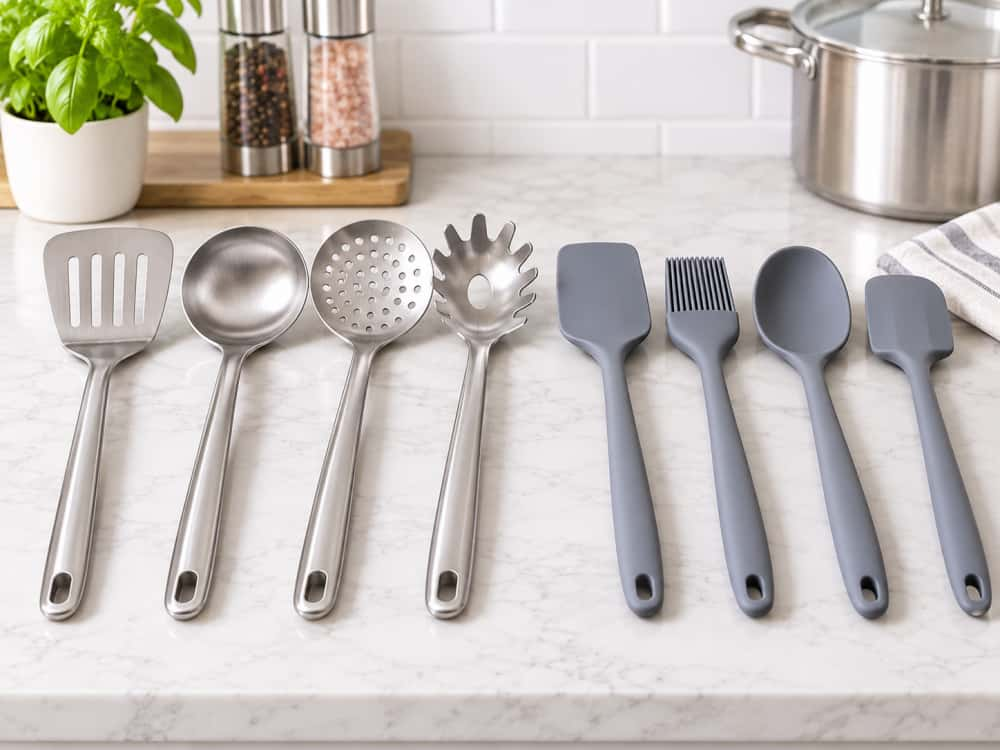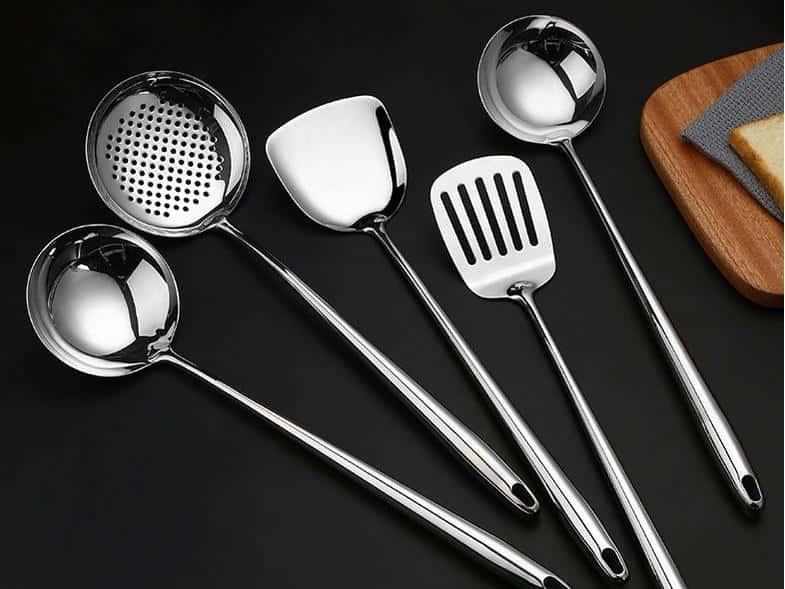


Why Are Silicone Utensils So Popular in Modern Kitchens?
Why Are Silicone Utensils So Popular in Modern Kitchens?
Silicone kitchen utensils have become a familiar part of modern kitchens, from everyday home cooking to professional food preparation. Their popularity comes from a practical combination of heat resistance, flexibility, nonstick cookware compatibility, and versatile designs.
As more consumers choose nonstick cookware, easy-care kitchen accessories, and coordinated utensil sets, silicone has become an important material in the global kitchenware market. But what actually makes silicone utensils different from traditional nylon, plastic, and stainless steel tools?
Understanding their material properties, practical advantages, and limitations can help consumers choose better cooking tools. It also helps kitchenware brands, retailers, and wholesalers identify the features that matter when developing a silicone utensil product range.
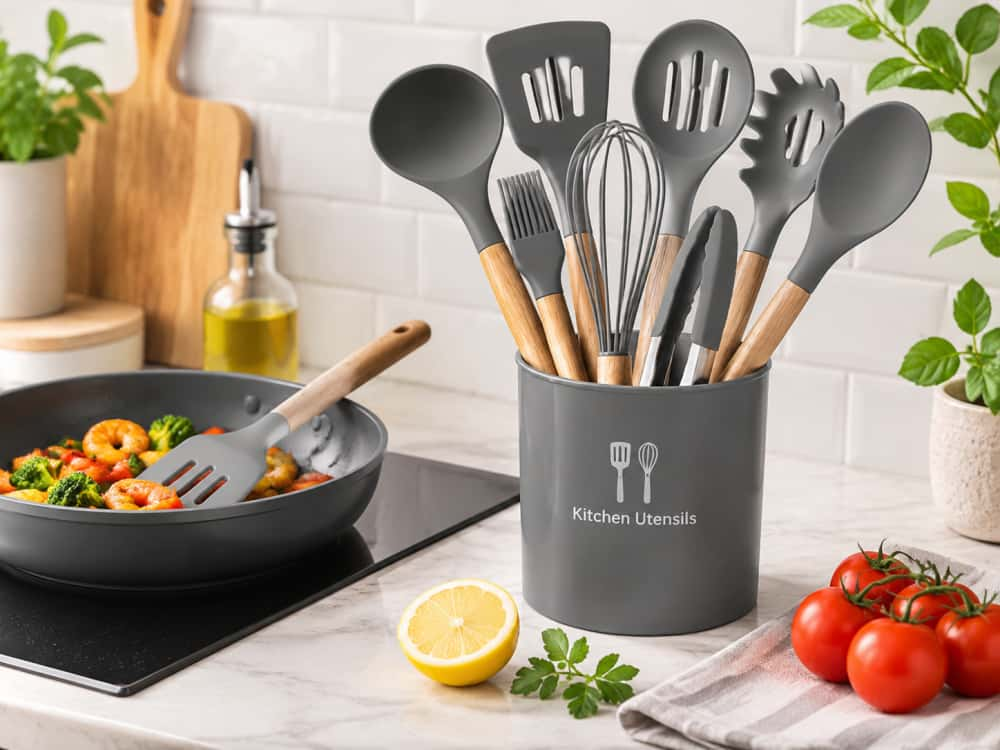
Silicone utensils are popular because they combine flexibility, heat resistance, and a soft contact surface that is suitable for many nonstick cookware applications. They are also available in different colors, shapes, and set configurations, making them practical for everyday cooking and attractive for modern kitchenware collections.
However, product quality matters. Food-contact compliance, actual temperature limits, material construction, and manufacturing quality should all be checked before choosing a silicone utensil.
1. What Are Silicone Kitchen Utensils?
Silicone kitchen utensils are cooking tools made with silicone elastomers, a family of synthetic materials based on silicon, oxygen, carbon, and hydrogen. Unlike ordinary rigid plastics, silicone can remain flexible while maintaining useful physical properties across a relatively wide temperature range.
Depending on the product design, silicone may be used as the entire utensil body or as a functional coating or head combined with another material.
Common silicone kitchen utensils include:
- Silicone spatulas: Useful for mixing, folding, scraping bowls, and handling soft ingredients.
- Cooking spoons: Designed for stirring sauces, soups, and other dishes.
- Turners: Used for flipping eggs, pancakes, and other foods.
- Whisks: Silicone-coated wires can help reduce direct contact between metal and cookware.
- Tongs: Silicone tips provide a softer grip when handling food.
- Basting brushes: Useful for applying oil, butter, sauces, and marinades.
- Ladles: Designed for serving soups, sauces, and liquids.
Many modern products combine silicone heads with stainless steel cores, reinforced nylon structures, or other handle materials. This allows manufacturers to balance flexibility, strength, appearance, and cost.
2. Heat Resistance for Everyday Cooking
Why Temperature Resistance Matters
Cooking utensils regularly come into contact with hot pans, cooking oils, steam, and heated food. A material that softens, deforms, or degrades under excessive heat may become unsuitable for its intended use.
Silicone is popular partly because quality silicone materials can maintain their flexibility and structure over a relatively broad temperature range. This makes them useful for many everyday cooking tasks, including stirring, sautéing, mixing, and baking preparation.
How Much Heat Can Silicone Utensils Withstand?
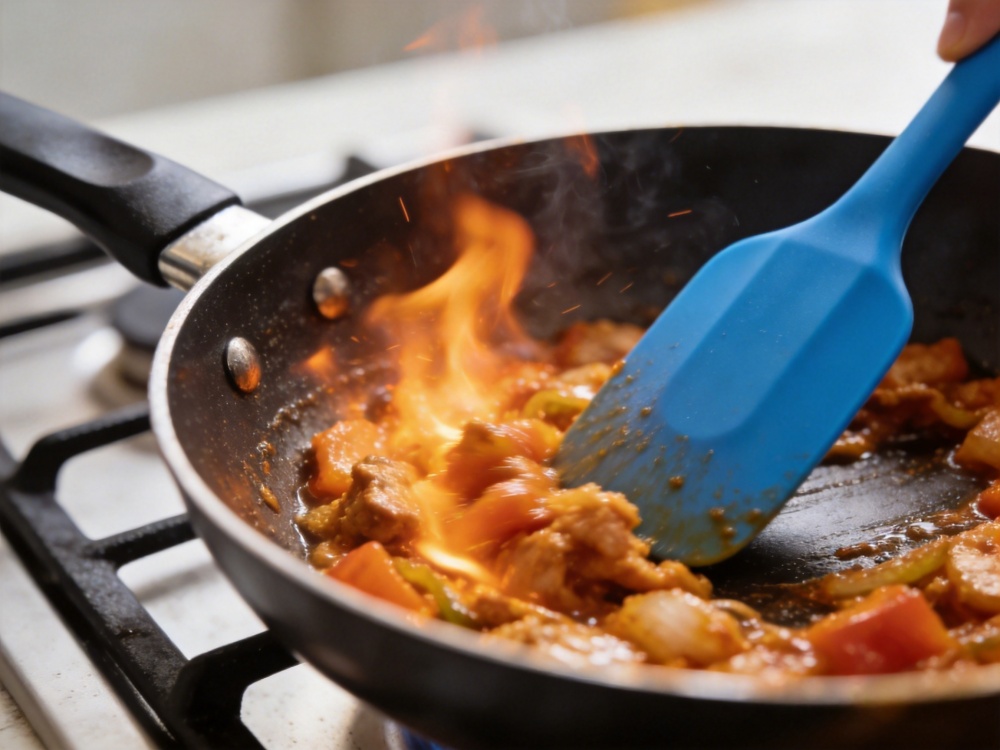
Many food-contact silicone utensils are marketed with maximum temperature ratings around 200–230°C (392–446°F). However, there is no single temperature limit that applies to every silicone utensil.
The actual limit depends on the silicone formulation, product construction, exposure time, and the materials used in the handle or internal structure.
For example, a silicone spatula with a stainless steel core and a plastic handle may have different temperature limitations for different components.
3. Gentle on Nonstick Cookware
One of the biggest reasons consumers choose silicone utensils is their compatibility with many nonstick cookware surfaces.
Nonstick pans often have coatings that can be damaged by rough handling or contact with hard, sharp utensils. Silicone is softer than stainless steel and generally provides a gentler contact surface when used correctly.
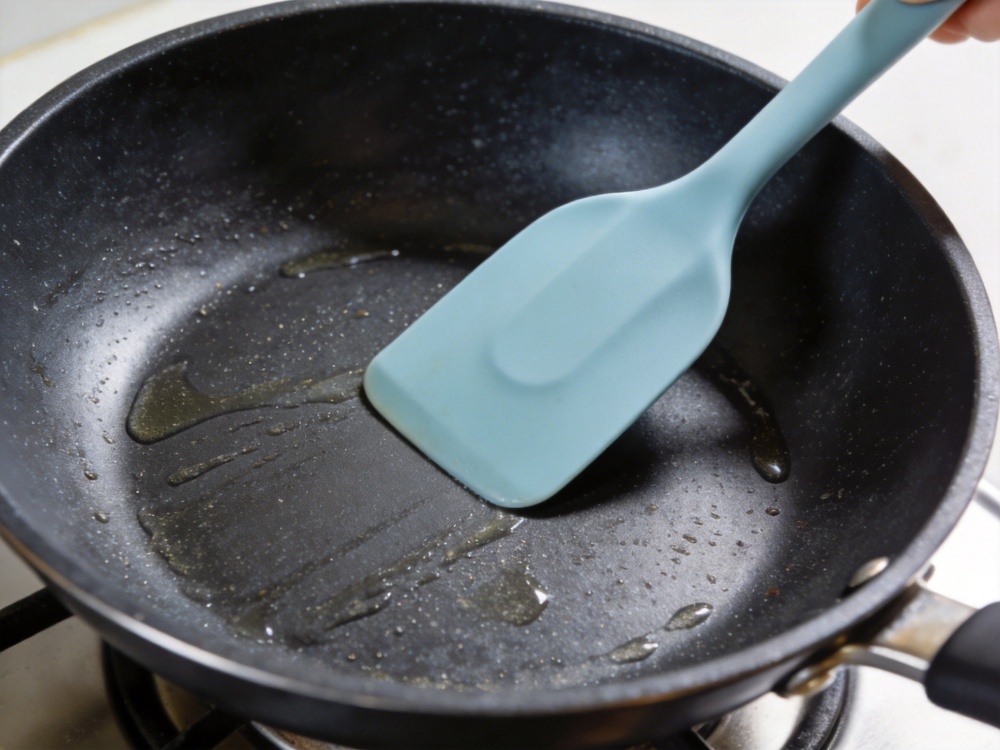
Common advantages include:
- Gentler contact: Soft silicone edges are less likely to scratch nonstick coatings during normal use.
- Flexible scraping: Spatula edges can follow the curves of pans and mixing bowls.
- Reduced noise: Silicone generally makes less noise than metal utensils when contacting cookware.
- Versatile use: Suitable for many coated pans, baking trays, and mixing containers.
Silicone does not make cookware completely scratch-proof. Damaged utensils, embedded food particles, or hard internal components exposed through worn silicone can still cause surface damage. Regularly inspect utensils and replace products that have become cracked, torn, or worn.
4. Food-Contact Safety and Material Quality
Food-contact safety is an important consideration when choosing silicone kitchen utensils. However, the word "silicone" alone does not guarantee that a finished product is suitable for every food-contact application.
Quality silicone formulations can be designed for repeated food contact and everyday cooking. Their suitability depends on the raw materials, manufacturing process, curing conditions, and compliance of the finished product with the applicable regulations.
What Should Consumers and Buyers Check?
- Food-contact compliance: Look for relevant documentation for the destination market, such as applicable FDA requirements in the United States or EU food-contact requirements in Europe.
- Material traceability: Ask manufacturers about the silicone formulation and raw material specifications.
- Odor and appearance: Strong persistent odors, uneven coloring, or visible manufacturing defects may indicate a product-quality issue and deserve further investigation.
- Temperature rating: Check whether the stated heat resistance applies to the complete utensil or only its silicone component.
- Construction quality: Inspect seams, joints, exposed internal structures, and areas where food residue could accumulate.
You may also see silicone utensils described as BPA-free. While this may be included in product marketing, BPA is not the primary material-quality question for silicone. More useful checks include food-contact compliance, formulation quality, and finished-product testing.
For more kitchen utensil material comparisons, read our guide to black kitchen utensils vs. colorful kitchen utensils.
5. Easy to Clean and Maintain
Silicone utensils are generally convenient to clean because their non-porous surfaces do not readily absorb water. Many designs can be washed with ordinary dish soap and warm water, while products labeled dishwasher-safe can also be cleaned in a dishwasher.
Practical maintenance advantages include:
- Simple daily cleaning: Food residues can usually be removed with warm water and dish soap.
- Low moisture absorption: Silicone itself does not absorb water like many porous materials.
- Odor management: Quality silicone generally resists moisture absorption, although oily or strongly flavored foods may leave odors if utensils are not cleaned properly.
- Dishwasher compatibility: Many silicone utensils are dishwasher-safe, depending on their complete construction.
For better results, wash utensils promptly after use, especially after preparing oily sauces, tomato-based foods, or strongly flavored ingredients. Allow them to dry completely before storage.
If a utensil contains a wooden handle, plastic component, or detachable metal structure, follow the manufacturer's cleaning instructions rather than assuming that the entire product is dishwasher-safe.
6. Flexible Designs and Comfortable Cooking
Silicone offers a different cooking experience from rigid metal or plastic utensils. Its flexibility makes it particularly useful for tasks that require scraping, folding, mixing, or handling delicate ingredients.
Better Bowl and Pan Scraping
Flexible silicone spatula edges can follow the inside curves of mixing bowls and cookware. This helps collect cake batter, sauces, cream, and other ingredients with less waste.
Useful for Baking and Delicate Foods
Silicone utensils are commonly used for folding cake batter, mixing dough, stirring custards, and handling soft foods. Their flexible edges can help users work with ingredients without applying unnecessary pressure.
Different Designs for Different Cooking Tasks
Manufacturers can adjust the thickness, shape, firmness, and flexibility of silicone utensil heads to suit different functions.
- Thin, flexible edges for scraping bowls.
- Wider heads for folding and mixing.
- Reinforced structures for stirring thicker mixtures.
- Flexible tips for handling delicate foods.
This versatility is one reason silicone works well across a wide range of kitchen utensil categories.
7. Modern Colors and Kitchen Design Appeal
Silicone is not only a functional kitchenware material. Its flexibility in color and product design has also made it popular in lifestyle-oriented kitchenware collections.
A Wide Range of Color Options
Silicone utensils are available in black, gray, white, beige, pastel shades, and brighter colors. This gives kitchenware brands more opportunities to develop coordinated utensil sets for different consumer preferences.
Popular design directions include:
- Neutral colors: Beige, cream, gray, and white for minimalist kitchens.
- Dark tones: Black and charcoal for a modern, understated look.
- Pastel colors: Soft pink, sage green, and light blue for lifestyle-oriented collections.
- Coordinated sets: Matching spatulas, spoons, turners, whisks, and other tools in one color theme.
Color consistency, surface appearance, and handle design all influence how a silicone utensil set looks as a complete retail product.
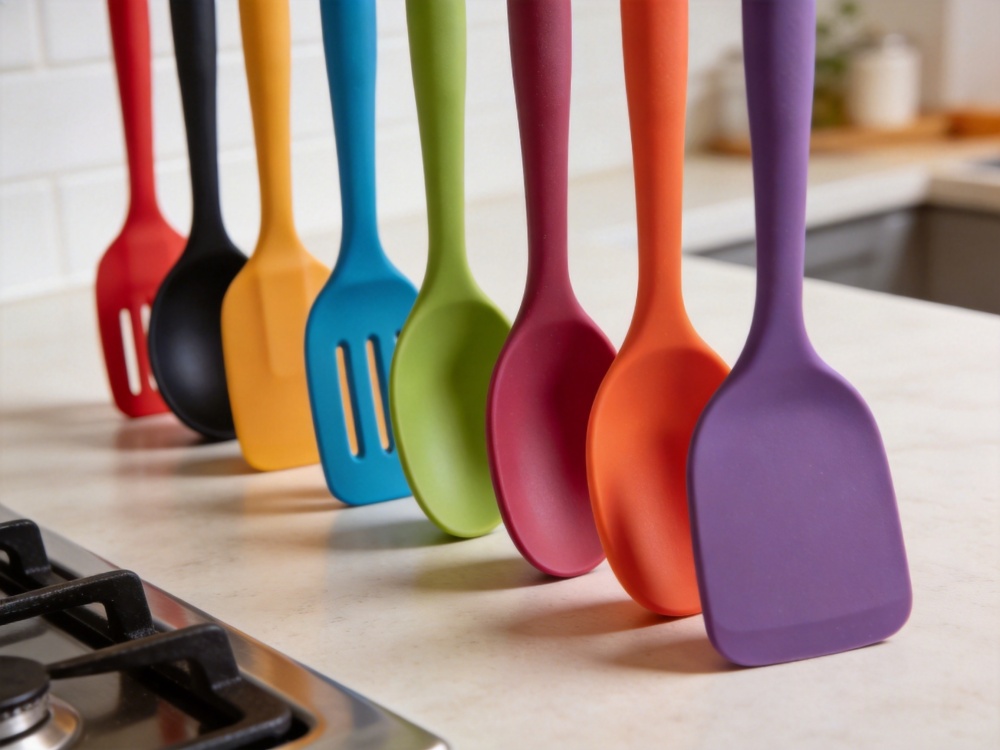
For retailers and kitchenware brands, silicone kitchen utensil sets provide opportunities to create coordinated collections for different retail channels and consumer groups.
8. Silicone vs. Nylon vs. Stainless Steel Utensils
Silicone is not necessarily the best material for every cooking task. Nylon and stainless steel also have their own advantages, and the right choice depends on the intended application.
| Feature | Silicone | Nylon | Stainless Steel |
|---|---|---|---|
| Heat resistance | Generally high; depends on formulation and construction | Varies by polymer and product rating | Generally very high |
| Nonstick cookware compatibility | Very good when properly designed | Good when edges are smooth | Not recommended for most coated surfaces |
| Flexibility | High | Low to moderate | Low |
| Scraping performance | Excellent for flexible edges | Depends on shape and stiffness | Limited flexibility |
| Structural rigidity | Usually requires reinforcement for some designs | Moderate to high | High |
| Cleaning | Generally easy | Generally easy | Generally easy |
| Typical applications | Spatulas, scrapers, turners, baking tools | Turners, spoons, lightweight cooking tools | Whisks, ladles, tongs, heavy-duty tools |
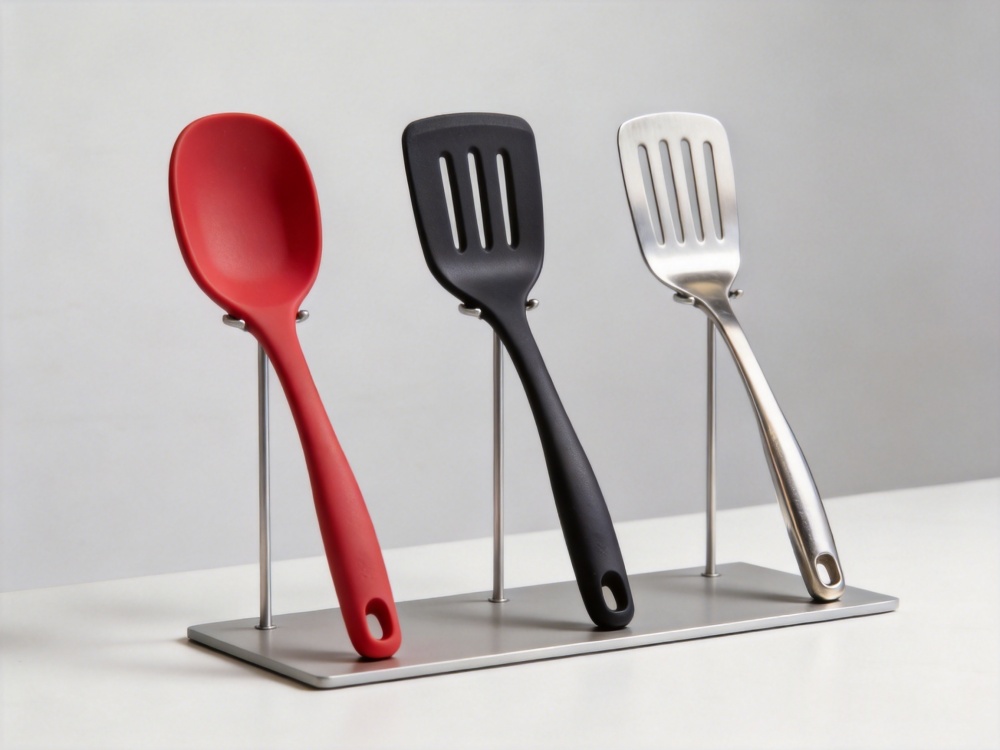
For many modern kitchens, a combination of materials can be more practical than choosing only one. Silicone works well for flexible, nonstick-friendly tools, while stainless steel provides strength and rigidity for other utensil designs.
For a more detailed comparison, buyers can also explore different kitchen utensil set options when developing a coordinated product range.
9. Why Silicone Kitchen Utensils Are Attractive to Retailers and Brands
The popularity of silicone utensils is also relevant from a business perspective. Their combination of functional benefits and visual customization opportunities makes them suitable for different retail channels.
Product Differentiation Through Design
Silicone allows manufacturers to develop different head shapes, colors, textures, and handle combinations. Retailers can use these features to create product lines with distinct visual identities.
Flexible Product Set Configurations
Silicone utensils can be sold individually or combined into coordinated sets. Depending on the target market, a set may include spatulas, spoons, turners, whisks, ladles, and tongs.
Suitable for Private-Label Kitchenware
For private-label brands, silicone utensils offer opportunities for product and packaging customization, including:
- Customized colors and coordinated product collections.
- Different utensil combinations and set quantities.
- Handle styles and material combinations.
- Customized retail packaging and brand presentation.
- Product specifications for different retail markets.
However, successful product development still depends on more than appearance. Buyers should assess material compliance, temperature performance, structural strength, and consistency between samples and mass production.
10. How to Choose High-Quality Silicone Utensils
Not all silicone utensils offer the same performance. When comparing products, consumers and professional buyers should look beyond color and price.
Check the Material and Food-Contact Documentation
Ask whether the silicone material and finished product meet the relevant food-contact requirements for the intended sales market. Request supporting documentation rather than relying only on descriptions such as "food-grade" or "BPA-free."
Check the Temperature Rating
Confirm the manufacturer's recommended operating temperature. If the utensil combines silicone with plastic, nylon, wood, or stainless steel, check the limitations of the complete product.
Inspect the Construction
Look for secure connections between the head and handle, consistent silicone coverage, smooth edges, and a stable internal structure. For one-piece designs, check for uneven thickness, cracks, and visible defects.
Evaluate Firmness and Flexibility
A good silicone spatula should have enough flexibility to scrape a bowl effectively without being so soft that it bends excessively under normal use. Different utensil types require different levels of stiffness.
Check Cleaning and Maintenance Requirements
Confirm whether the product is dishwasher-safe and whether any components need special care. Detachable heads, wooden handles, and mixed-material constructions may have different cleaning requirements.
11. Common Questions About Silicone Kitchen Utensils
Are silicone utensils safe for cooking?
Quality silicone utensils designed for food contact are generally suitable for cooking when used according to their manufacturer's instructions. Buyers should check relevant food-contact compliance documentation, material quality, and the temperature rating of the complete product.
Do silicone utensils melt?
Silicone is generally more heat resistant than many ordinary plastic materials, but it is not heat-proof. Excessive temperatures, prolonged contact with hot surfaces, or direct exposure to flames can damage silicone utensils. Always follow the stated temperature limit.
Are silicone utensils better than nylon?
Silicone generally offers greater flexibility and is often better suited to scraping bowls and working with nonstick cookware. Nylon can provide more rigidity for certain utensil designs. The better material depends on the cooking task and product construction.
Can silicone utensils go in the dishwasher?
Many silicone utensils are dishwasher-safe, but this depends on the complete product construction. Check the manufacturer's instructions, especially for utensils with wooden handles, plastic components, or detachable parts.
Do silicone utensils scratch nonstick pans?
Properly designed silicone utensils are generally gentle on nonstick cookware because their contact surfaces are softer than metal. However, worn or damaged utensils, exposed internal components, and trapped hard particles can still scratch cookware.
Why do some silicone utensils have a stainless steel core?
A stainless steel core can improve structural strength and help a utensil maintain its shape under pressure. The silicone outer layer provides a softer contact surface for cookware and food. Buyers should inspect whether the core is fully covered and securely integrated.
How long do silicone kitchen utensils last?
Their lifespan depends on material quality, frequency of use, heat exposure, cleaning habits, and product construction. Replace utensils that show cracks, tears, permanent deformation, or exposed internal structures.
Do silicone utensils absorb food odors?
Silicone itself is non-porous, but oily residues and strongly flavored ingredients can leave odors on a utensil if it is not cleaned thoroughly. Washing promptly with dish soap and warm water can help reduce odor buildup.
Conclusion: Why Silicone Utensils Continue to Grow in Popularity
Silicone utensils have earned a place in modern kitchens because they offer a useful combination of heat resistance, flexibility, nonstick cookware compatibility, and convenient maintenance.
Their versatility also makes them suitable for different cooking tasks, from mixing and scraping to stirring and serving. For consumers, they offer practical everyday cooking benefits. For kitchenware brands and retailers, their range of colors, shapes, and set configurations creates opportunities for differentiated product collections.
The most important consideration is product quality. Choosing appropriate food-contact materials, checking temperature specifications, and evaluating construction are essential for developing reliable silicone kitchen utensils.
Looking for Custom Silicone Kitchen Utensils?
Kitlucy provides kitchenware product solutions for global wholesalers, retailers, and private-label brands. If you are developing a silicone utensil collection, our team can help discuss product combinations, color options, packaging, and OEM customization requirements.
Explore our kitchen utensil sets and OEM kitchenware solutions.
Further Reading and Technical References
Related Blogs