

Are Stainless Steel Kitchen Utensils Dishwasher Safe?
Stainless steel kitchen utensils are popular because they are durable, corrosion-resistant, easy to clean, and suitable for many everyday cooking tasks. But when it comes to cleaning, one common question is: Are stainless steel kitchen utensils dishwasher safe?
In many cases, yes. Solid stainless steel utensils can generally be washed in a dishwasher when the product is designed and labeled for machine washing. However, not every stainless steel kitchen tool is suitable for the same cleaning conditions. Handle materials, coatings, joints, decorative finishes, and the quality of the stainless steel can all affect dishwasher compatibility.
1. Why Are Stainless Steel Kitchen Utensils Usually Dishwasher-Safe?
Stainless steel is widely used in kitchen utensils because it combines mechanical strength with resistance to corrosion. Its corrosion resistance comes mainly from chromium in the alloy.
When chromium-containing stainless steel is exposed to oxygen, a thin, protective chromium-rich oxide layer forms on its surface. This passive layer helps protect the underlying metal from corrosion and can regenerate when the surface is exposed to oxygen under suitable conditions.
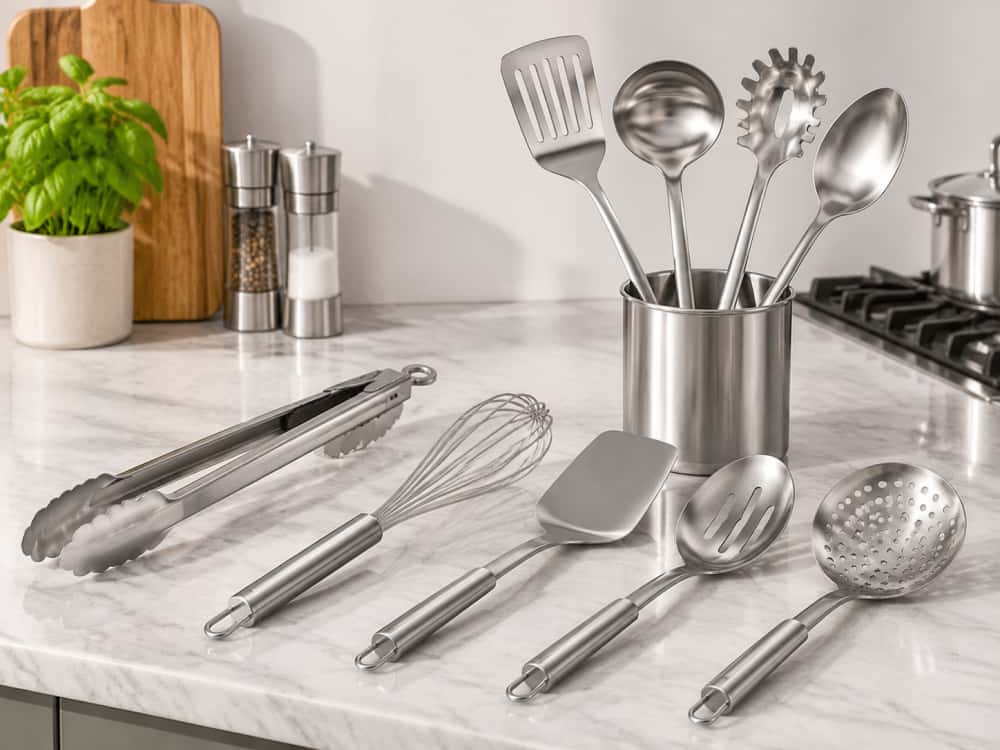
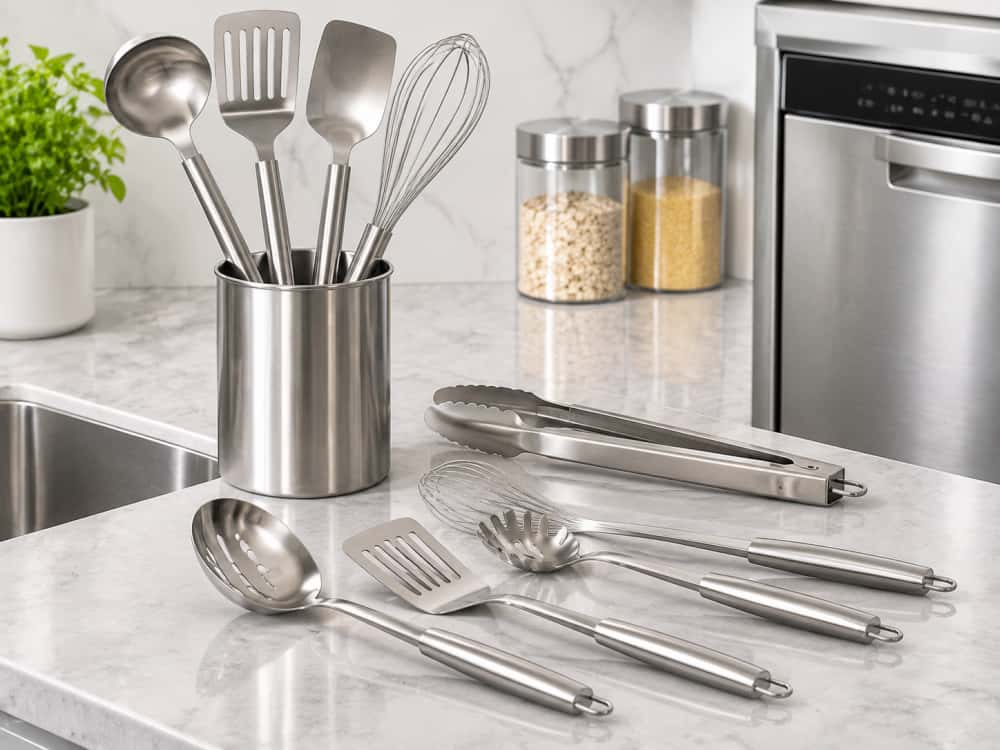
This is why stainless steel is commonly used for products such as:
- Cooking spoons and serving spoons
- Soup ladles and skimmers
- Kitchen tongs
- Whisks and egg beaters
- Stainless steel spatulas and turners
- Potato mashers
- Slotted spoons and pasta servers
- Measuring spoons and kitchen accessories
These products can usually withstand normal dishwasher cleaning when they are made from suitable materials and have a dishwasher-compatible design.
However, stainless steel is corrosion-resistant, not completely corrosion-proof. Strong detergents, chlorides, food residues, prolonged moisture, and contact with dissimilar metals can cause staining or corrosion under certain conditions.
2. Are All Stainless Steel Kitchen Utensils Dishwasher-Safe?
No. The word "stainless steel" describes the material used for a product, but it does not automatically mean that the entire utensil is dishwasher-safe.
A kitchen utensil may contain several different materials and components. The stainless steel working end might tolerate dishwasher conditions, while its handle, coating, adhesive, or decorative finish may not.
| Utensil Construction | Dishwasher Compatibility | What to Consider |
|---|---|---|
| One-piece stainless steel | Generally suitable if labeled dishwasher-safe | Check the manufacturer's instructions and finish requirements. |
| Stainless steel with wooden handle | Usually hand wash | Heat, moisture, and detergents may damage or dry out the wood. |
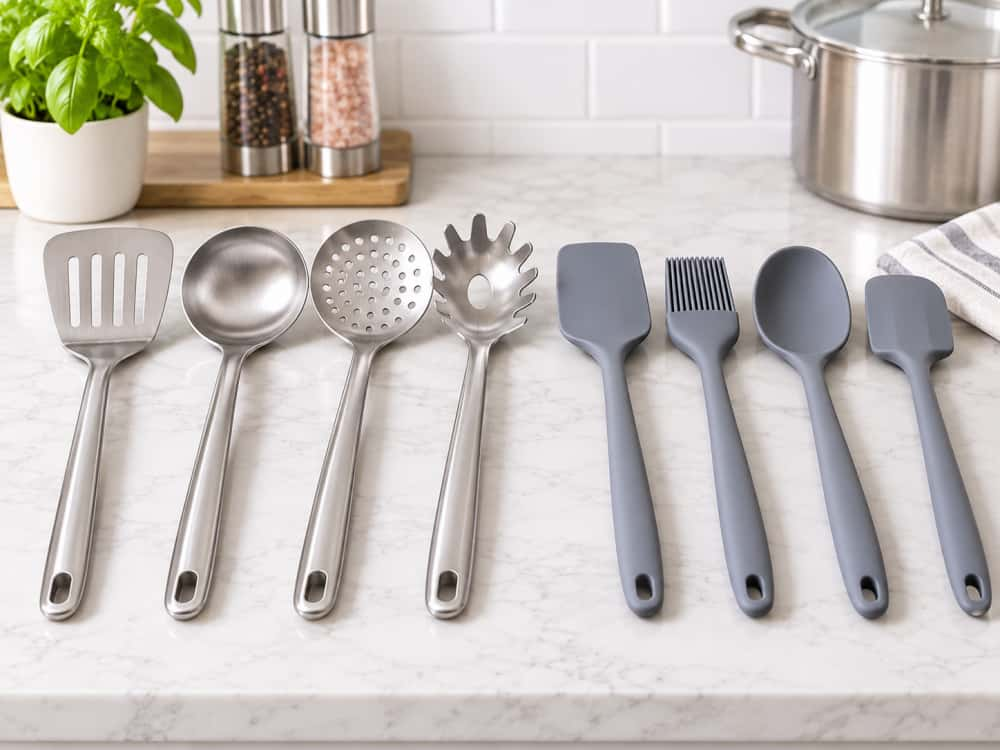
| Stainless steel with plastic handle | Depends on the plastic and construction | High temperatures and repeated detergent exposure may affect some plastics. |
| Stainless steel with silicone handle | Depends on the silicone and assembly | Check heat resistance, attachment method, and the complete product instructions. |
| Stainless steel with nonstick coating | Depends on the coating and product design | Repeated machine washing may affect some coatings or decorative finishes. |
| Stainless steel with glued or bonded components | Requires manufacturer confirmation | Heat and water exposure may weaken unsuitable adhesives or joints. |
The most reliable approach is to check the care label, packaging, product specifications, or manufacturer's instructions. If dishwasher compatibility is not confirmed, hand washing is the safer choice.
3. Does Stainless Steel Grade Affect Dishwasher Safety?
Yes. Stainless steel grades have different chemical compositions and corrosion resistance. This can influence how well a utensil performs in the humid, hot, detergent-rich environment inside a dishwasher.
Two commonly used stainless steel grades in kitchen products are 304 and 430.
304 Stainless Steel
304 stainless steel is an austenitic chromium-nickel stainless steel. It is widely used in kitchenware because of its good general corrosion resistance, formability, and durability.
For kitchen utensils, 304 stainless steel is often selected for products that require good resistance to food-related corrosion and repeated cleaning.
430 Stainless Steel
430 stainless steel is a ferritic chromium stainless steel. It generally contains less nickel than 304 and is magnetic in its usual condition.
It is used in some kitchenware applications because of its corrosion resistance, formability, and cost considerations. However, its corrosion performance differs from 304 and depends on the specific environment, finish, and product design.
| Feature | 304 Stainless Steel | 430 Stainless Steel |
|---|---|---|
| Steel family | Austenitic | Ferritic |
| Typical composition | Chromium and nickel | Chromium, with little or no intentional nickel addition |
| Magnetic behavior | Usually non-magnetic or weakly magnetic, depending on processing | Generally magnetic |
| Corrosion resistance | Generally higher in many common kitchen environments | Good in suitable conditions, but generally less resistant than 304 in many chloride-containing environments |
| Kitchen applications | Utensils, food-contact components, and kitchen tools | Selected utensils, kitchen components, and other household products |
Does 304 stainless steel guarantee dishwasher safety? No. Even 304 can develop stains or localized corrosion if exposed to aggressive cleaning chemicals, concentrated chlorides, prolonged dampness, or unsuitable cleaning conditions.
Similarly, a 430 stainless steel utensil is not automatically unsuitable for dishwashers. Its compatibility depends on the product design, surface finish, cleaning conditions, and manufacturer's testing.
For buyers, the correct approach is to evaluate the complete product rather than choosing a stainless steel grade based on its name alone.
4. Which Stainless Steel Kitchen Utensils Can Go in the Dishwasher?
Many everyday stainless steel cooking tools are designed for dishwasher cleaning. The following examples can help explain what to check before loading them.
Stainless Steel Cooking Spoons and Ladles
Solid stainless steel cooking spoons, serving spoons, and soup ladles are generally suitable for dishwashers when the manufacturer confirms machine-wash compatibility.
They are relatively easy to clean because they usually have simple construction without complicated joints or soft components.
Stainless Steel Kitchen Tongs
Many stainless steel tongs are dishwasher-safe. However, some models include silicone tips, plastic grips, locking mechanisms, or spring components.
Check whether the complete tong assembly is designed for dishwasher use. If the product has detachable silicone or plastic parts, follow the manufacturer's cleaning instructions.
Stainless Steel Whisks
Stainless steel whisks are often dishwasher-compatible, especially models with fully stainless steel construction. However, the handle may contain plastic, silicone, or bonded components.
Pay attention to the area where the wires connect to the handle, because food residues and moisture can collect around poorly designed joints.
Stainless Steel Spatulas and Turners
Solid stainless steel spatulas and turners can often be cleaned in the dishwasher. Models with wooden handles, coated surfaces, or mixed-material construction may require hand washing.
For utensils with a thin working edge, arrange them carefully to avoid scratching other items or damaging the dishwasher rack.
Stainless Steel Measuring Spoons
Most one-piece stainless steel measuring spoons are easy to clean and may be dishwasher-safe. Products with engraved markings, painted measurements, connecting rings, or decorative finishes should be checked individually.
Stainless Steel Kitchen Knife Components
Some stainless steel kitchen knives are labeled dishwasher-safe, but this does not mean every knife should be machine-washed.
Knife blades can develop staining or pitting under unfavorable dishwasher conditions, and handles may be damaged by heat or detergent. Hand washing and immediate drying are often recommended for better long-term care, particularly for knives with wooden handles or specialized finishes.
5. Why Can Stainless Steel Utensils Rust or Stain in a Dishwasher?
It may seem surprising to find rust spots on a stainless steel utensil after washing it in a dishwasher. However, stainless steel is not completely immune to corrosion.
Several factors can contribute to discoloration, staining, or localized corrosion.
5.1 Prolonged Exposure to Moisture
Leaving stainless steel utensils in a closed dishwasher for a long time after a cycle can expose them to warm, humid conditions. Moisture trapped between utensils or around joints can increase the risk of staining and corrosion.
Remove utensils promptly after the cycle and allow them to dry completely before storage.
5.2 Strong or Unsuitable Detergents
Some dishwasher detergents contain ingredients that can be aggressive toward metal surfaces under certain conditions. Excessive detergent, unsuitable chlorine-containing products, or undissolved detergent granules may contribute to staining and corrosion.
Use a detergent recommended for your dishwasher and follow the dosage instructions.
5.3 Salt and Acidic Food Residues
Food residues containing salt, vinegar, tomato sauce, citrus juice, and other acidic ingredients can affect stainless steel if they remain on the surface for extended periods.
Rinse utensils when they are heavily soiled or when they cannot be washed immediately.
5.4 Contact with Other Metals
Stainless steel utensils may develop rust-colored marks when they come into contact with rusting carbon steel, cast iron, damaged cookware, or other corroding metal objects.
These marks can sometimes be transferred onto the stainless steel surface without indicating that the utensil itself is deeply corroded.
5.5 Surface Damage and Manufacturing Quality
Scratches, rough finishes, embedded iron particles, and manufacturing contamination can affect corrosion performance.
Good manufacturing practices include suitable material selection, clean processing equipment, controlled surface finishing, and appropriate inspection.
If deep pits, cracks, or recurring corrosion appear, the utensil should be assessed rather than repeatedly cleaned and returned to food use without checking its condition.
6. How to Wash Stainless Steel Kitchen Utensils in a Dishwasher
Following a few simple steps can help keep dishwasher-safe stainless steel utensils clean and in good condition.
Step 1: Remove Excess Food Residue
Remove large food particles before loading the utensils. Pay particular attention to salt, acidic sauces, sticky food, and residues that may become trapped around joints or handles.
Step 2: Separate Different Materials
Avoid unnecessary contact between stainless steel utensils and silver-plated items, carbon steel objects, or other metals that may cause discoloration or transfer corrosion products.
Keep delicate coated or decorative products separate when required by the manufacturer's instructions.
Step 3: Load Utensils Correctly
Arrange utensils so that water can circulate freely around them. Avoid overcrowding and prevent pieces from being tightly nested together.
Use the cutlery basket or designated utensil rack where appropriate. Follow the dishwasher manufacturer's loading instructions, particularly for sharp items.
Step 4: Use a Suitable Detergent and Cycle
Choose a detergent and wash cycle compatible with the utensils and the dishwasher. Avoid excessive detergent and unsuitable cleaning products.
If the product has special coatings, colored finishes, or mixed-material handles, check whether a lower-temperature or gentler cycle is recommended.
Step 5: Remove and Dry Promptly
Once the cycle is complete, remove the utensils rather than leaving them in a warm, humid dishwasher for an extended period.
If water spots remain, wipe the utensils with a clean, soft cloth before storage.
7. How to Clean Stainless Steel Utensils by Hand
Hand washing is a good alternative when a utensil is not labeled dishwasher-safe or when you want to preserve a special finish or handle material.
- Rinse the utensil to remove loose food particles.
- Wash with warm water and mild dish soap.
- Use a soft sponge or non-abrasive cleaning brush.
- Pay attention to joints, edges, and areas where food may collect.
- Rinse thoroughly to remove soap residue.
- Dry with a clean, soft cloth before storing.
Avoid steel wool, harsh abrasive pads, and chlorine bleach unless the manufacturer specifically approves a particular cleaning product. These can damage the surface or increase the risk of corrosion.
For stubborn discoloration, use a cleaner specifically formulated for stainless steel and follow its label directions. Do not assume that every stain is rust or that aggressive scrubbing is the best solution.
8. How to Prevent Rust and Discoloration on Stainless Steel Utensils
Good daily care is usually more effective than trying to remove corrosion after it appears.
- Wash promptly: Do not leave salty, acidic, or greasy food residues on utensils for long periods.
- Use suitable detergent: Follow the dishwasher and utensil manufacturer's recommendations.
- Avoid prolonged soaking: Extended exposure to water and food residues can contribute to staining and pitting.
- Do not overload the dishwasher: Allow water to circulate around each item.
- Separate incompatible metals: Avoid direct contact with rusting carbon steel, cast iron, and silver-plated items when recommended.
- Remove utensils promptly: Do not leave them in a warm, damp dishwasher for extended periods.
- Dry before storage: Store clean utensils in a dry environment.
- Protect special finishes: Follow specific care instructions for coated, colored, or decorative products.
9. What Does Dishwasher-Safe Mean for Kitchen Utensil Manufacturers?
For kitchenware manufacturers, dishwasher-safe is more than a product description. It is a performance claim that should be supported by appropriate product evaluation.
A stainless steel utensil may have a corrosion-resistant working end but still experience problems if its handle, coating, joints, or surface finish cannot withstand repeated dishwasher conditions.
Material Selection
Manufacturers should select stainless steel grades according to the product's intended use, cost target, corrosion requirements, and manufacturing process.
Material selection should also consider the complete product construction. A utensil with a stainless steel head and a plastic or silicone handle requires evaluation of both materials.
Surface Finish and Corrosion Resistance
Surface quality influences cleanability, appearance, and corrosion performance. Manufacturers should control polishing, grinding, cleaning, and handling processes to reduce surface defects and contamination.
Where appropriate, suitable cleaning or passivation processes may be used as part of stainless steel manufacturing and finishing.
Handle and Joint Construction
For multi-material utensils, the connection between the stainless steel component and the handle deserves special attention.
Potential issues include:
- Water entering gaps between the handle and metal component.
- Adhesive or bonding materials degrading under repeated washing.
- Plastic handles deforming under unsuitable temperatures.
- Wooden handles swelling, cracking, or losing their finish.
- Coatings or decorative surfaces fading or peeling.
Dishwasher Compatibility Testing
Manufacturers and brands should establish suitable test conditions based on the intended market, product construction, and relevant testing methods.
Evaluation may include repeated washing cycles, appearance checks, corrosion assessment, coating condition, handle integrity, and functional inspection.
Testing should represent the complete finished product, not just a separate stainless steel sample. The number of cycles and acceptance criteria should be defined by the applicable test method or buyer specification.
Clear Product Care Instructions
Packaging and product information should clearly state whether an item is dishwasher-safe, hand-wash-only, or subject to specific washing conditions.
For example, a stainless steel utensil with a wooden handle should not be marketed with the same care instructions as a one-piece stainless steel utensil unless the complete product has been evaluated and approved for the same cleaning conditions.
10. What Should Wholesale Buyers Check Before Ordering Dishwasher-Safe Utensils?
For importers, wholesalers, retailers, and private-label kitchenware brands, dishwasher compatibility can influence customer satisfaction, product returns, and brand reputation.
Before placing an order, buyers should consider the following points:
1. Confirm the Material Specification
Ask the supplier to identify the stainless steel grade used for the main working component and any other metal parts. Avoid relying only on general descriptions such as "high-quality stainless steel."
2. Check the Complete Product Construction
Confirm whether the utensil is made from one piece of stainless steel or includes plastic, silicone, wood, coatings, adhesives, or other materials.
These components may have different washing requirements.
3. Request Dishwasher Testing Information
If dishwasher-safe performance is important to your product positioning, ask the supplier for relevant test reports or documented evaluation results.
Confirm the test conditions, including washing temperature, detergent, cycle conditions, number of cycles, and inspection criteria. A general statement that a product is dishwasher-safe is less useful without supporting details.
4. Inspect Appearance After Repeated Washing
Check for discoloration, rust spots, surface pitting, coating damage, fading, deformation, and changes around handle connections.
5. Evaluate Packaging and Care Instructions
Make sure the product packaging communicates the correct cleaning method. If a utensil is only suitable for hand washing, this should be clearly stated to prevent misunderstandings after purchase.
6. Discuss OEM and ODM Customization
For private-label projects, buyers may customize utensil shapes, handle materials, colors, surface finishes, logo placement, product combinations, and packaging.
However, customization should not compromise dishwasher compatibility. Any changes to handle materials, coatings, adhesives, or construction may require the product to be evaluated again.
11. Frequently Asked Questions
Are all stainless steel kitchen utensils dishwasher-safe?
No. Many solid stainless steel utensils are dishwasher-safe, but products with wooden handles, certain plastics, coatings, adhesives, or mixed-material construction may require hand washing. Always check the manufacturer's care instructions.
Can 304 stainless steel utensils go in the dishwasher?
Many 304 stainless steel utensils are suitable for dishwasher cleaning. However, the grade alone does not guarantee that the complete product is dishwasher-safe. Handle materials, surface finishes, product construction, detergent, and washing conditions also matter.
Can 430 stainless steel utensils go in the dishwasher?
Some 430 stainless steel utensils are designed for dishwasher use. Compatibility depends on the product design, surface condition, washing environment, and manufacturer's instructions. Do not assume that every 430 stainless steel product has the same dishwasher performance.
Why do stainless steel utensils rust in the dishwasher?
Rust spots or corrosion may result from prolonged moisture, aggressive detergents, concentrated salt or food residues, contact with other corroding metals, or surface contamination. Stainless steel is corrosion-resistant but not completely immune to corrosion.
Can stainless steel utensils with plastic handles go in the dishwasher?
It depends on the plastic material, handle construction, and manufacturer's testing. Some plastic handles can tolerate dishwasher conditions, while others may deform, fade, or become damaged after repeated exposure to heat and detergents.
Can stainless steel utensils with wooden handles go in the dishwasher?
Hand washing is generally recommended for wooden-handled utensils. Repeated exposure to hot water, moisture, and detergents can cause wood to swell, dry out, crack, or lose its finish.
Should stainless steel utensils be dried after dishwasher cleaning?
Drying is recommended, especially if the utensils are stored immediately after washing or if water spots are visible. Removing excess moisture helps maintain appearance and reduces the risk of staining during storage.
Can dishwasher detergent damage stainless steel?
Unsuitable or excessive detergent, especially products containing aggressive ingredients under unfavorable conditions, may contribute to discoloration or corrosion. Follow the dishwasher manufacturer's dosage instructions and the utensil manufacturer's care guidance.
Is hand washing better than using a dishwasher for stainless steel utensils?
Not necessarily. Dishwasher cleaning is convenient for products designed for machine washing. Hand washing is a better choice for utensils with delicate finishes, wooden handles, or components that are not approved for dishwasher use. It can also help preserve the appearance of some products.
How can I tell if a stainless steel utensil is dishwasher-safe?
Check the product label, packaging, care instructions, or manufacturer's product specifications. If dishwasher compatibility is not clearly confirmed, contact the manufacturer or choose hand washing.
Looking for Stainless Steel Kitchen Utensils for Your Brand?
Dishwasher compatibility is an important consideration when developing a kitchen utensil collection. Material selection, handle construction, surface finish, quality control, and product care instructions all influence the final product experience.
Kitlucy works with business buyers exploring kitchenware product development and customization. If you are sourcing stainless steel cooking utensils, developing a private-label collection, or planning an OEM/ODM project, contact our team to discuss your requirements.
Explore Customization Contact Our TeamRelated Blogs