Cutting Board with Juice Groove: Benefits, Best Materials & Buying Guide (2026)
Cutting Board with Juice Groove: Benefits, Best Materials & Buying Guide (2026)
A cutting board with juice groove is one of the most popular upgrades in today's kitchenware market. While the design may seem simple—a shallow channel carved around the edge of the board—it provides significant practical benefits for both home cooks and professional chefs.
Whether you're carving a roasted turkey, slicing juicy tomatoes, or preparing raw chicken, a juice groove helps collect excess liquids before they spill onto your countertop. This keeps your workspace cleaner, reduces cleanup time, and can even improve food safety by containing meat juices during food preparation.
In recent years, cutting boards with juice grooves have become top-selling products across North America, Europe, and many other global markets. Consumers increasingly prefer multifunctional kitchen tools that improve convenience without adding complexity. As a result, manufacturers, wholesalers, and retailers are expanding their product lines with groove-equipped cutting boards made from wood, plastic, bamboo, and composite materials.
If you're wondering whether a juice groove is worth having—or you're sourcing cutting boards for your brand—this guide will explain everything you need to know, including the advantages, materials, best use cases, maintenance tips, and buying recommendations.

A cutting board with a juice groove is designed to capture liquids released while cutting meat, poultry, fruits, and vegetables. It keeps countertops cleaner, improves food preparation efficiency, and reduces the chance of cross-contamination, making it one of the most practical cutting board designs available today.
What Is a Cutting Board with a Juice Groove?
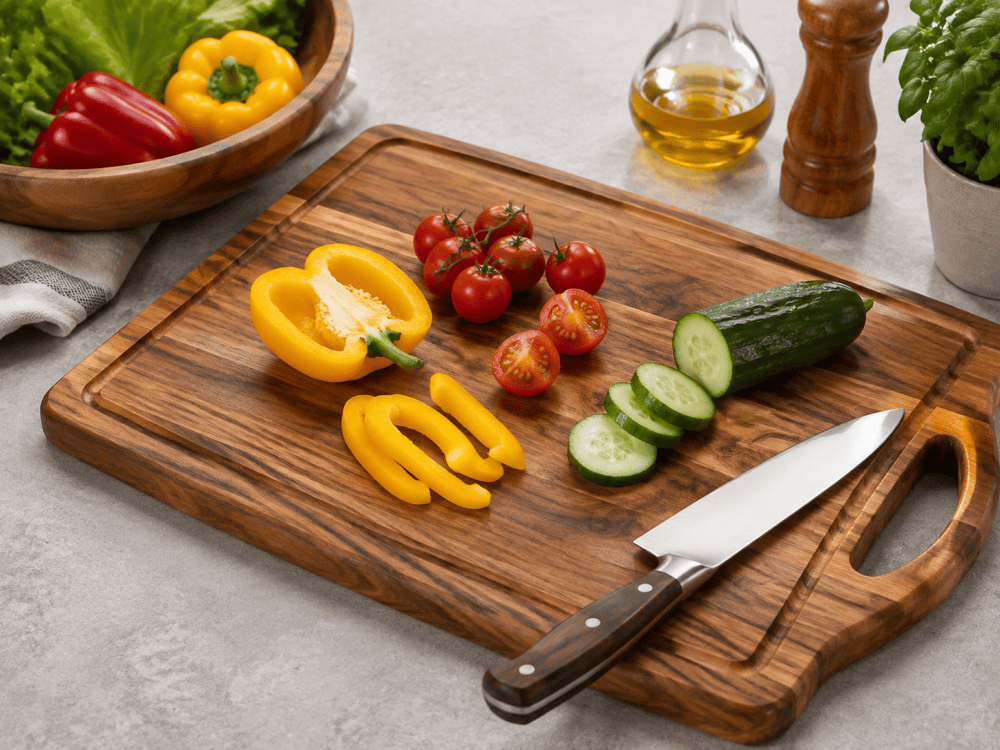
A cutting board with a juice groove features a recessed channel running around the perimeter of the board. This channel is specifically engineered to collect liquids released during cutting instead of allowing them to flow onto kitchen counters.
The groove is usually positioned a short distance from the edge, creating a raised cutting surface in the center while surrounding it with a shallow reservoir capable of holding meat juices, fruit juice, or excess water.
Although the concept is simple, the design greatly improves kitchen cleanliness and makes handling juicy ingredients much easier.
Common Foods That Produce Excess Liquid
- Raw chicken
- Turkey
- Beef brisket
- Roast beef
- Steak
- Pork loin
- Watermelon
- Pineapple
- Tomatoes
- Citrus fruits
Without a juice groove, these liquids often run off the board and create unnecessary messes around the workspace.
How Does a Juice Groove Work?
The juice groove works by taking advantage of gravity. As liquid flows across the cutting surface, it naturally moves toward the lowest point—the recessed channel surrounding the board.
Instead of spilling over the edge, the liquid remains trapped inside the groove until the cutting process is complete.
This seemingly minor feature can make a significant difference during meal preparation, especially when carving large pieces of meat or cutting juicy produce.
A properly designed juice groove is deep enough to collect liquids efficiently without reducing the usable cutting surface. Premium manufacturers carefully balance groove width and depth to maximize functionality while maintaining cutting space.
Why Cutting Boards with Juice Grooves Are So Popular
Consumer demand for cutting boards with juice grooves has increased steadily because buyers increasingly value kitchen tools that combine convenience, cleanliness, and professional functionality.
Compared with traditional flat cutting boards, juice groove designs solve one of the most common problems encountered during food preparation: liquid overflow.
For retailers and kitchenware brands, this added functionality creates stronger product differentiation while increasing perceived value.
Benefits of Using a Cutting Board with a Juice Groove
1. Keeps Countertops Clean
The biggest advantage of a juice groove is its ability to prevent liquids from flowing onto kitchen countertops.
Whether you're slicing oranges or carving roast chicken, the groove captures excess liquid before it reaches surrounding surfaces.
This reduces cleanup time and keeps your workspace organized throughout the cooking process.
2. Reduces Cross-Contamination
Raw meat often releases juices that may contain bacteria. A juice groove helps contain these liquids on the cutting board instead of allowing them to spread across countertops or nearby utensils.
Although proper sanitation is still essential, containing liquids in one place contributes to a cleaner food preparation environment.
3. Improves Carving Performance
When carving cooked meats such as turkey, brisket, or roast beef, collected juices stay inside the groove instead of running onto the dining table.
This creates a cleaner presentation and also allows flavorful juices to be reserved for gravies or sauces if desired.
4. Better for BBQ Preparation
Outdoor grilling and barbecue cooking often involve handling large cuts of meat with significant amounts of juice.
A cutting board with a juice groove makes transferring grilled food easier while minimizing messy spills around the grill station.
5. Creates a More Comfortable Cooking Experience
Small design improvements often have a noticeable impact on everyday cooking.
By eliminating puddles of juice and reducing cleanup, a groove-equipped cutting board makes meal preparation more enjoyable for beginners and experienced cooks alike.
Juice Groove vs Flat Cutting Board
Many buyers wonder whether a juice groove is truly necessary or simply a cosmetic feature.
The answer depends on how the cutting board will be used.
| Feature | Juice Groove Board | Flat Cutting Board |
|---|---|---|
| Collects Liquids | ★★★★★ | ★☆☆☆☆ |
| Meat Preparation | ★★★★★ | ★★★☆☆ |
| Fruit Preparation | ★★★★★ | ★★★☆☆ |
| Dry Food Preparation | ★★★★☆ | ★★★★★ |
| Countertop Cleanliness | ★★★★★ | ★★☆☆☆ |
| Cleaning Convenience | ★★★★☆ | ★★★★★ |
Flat cutting boards remain excellent for bread, pastries, herbs, and dry ingredients. However, for foods that release significant amounts of liquid, a juice groove offers clear advantages.
Best Foods to Prepare on a Juice Groove Cutting Board
Not every food requires a juice groove, but certain ingredients benefit greatly from the added liquid containment.
Ideal Foods
- Roast turkey
- Whole chicken
- BBQ brisket
- Steak
- Pork shoulder
- Salmon
- Watermelon
- Pineapple
- Tomatoes
- Oranges and grapefruits
These foods release enough liquid that a traditional flat cutting board often cannot contain the mess.
Best Materials for Cutting Boards with Juice Grooves
The effectiveness of a juice groove doesn't depend solely on its design. The cutting board material also plays a major role in durability, hygiene, maintenance, and overall user experience.
Today, manufacturers offer juice groove cutting boards in several materials, each designed to meet different cooking styles, budgets, and market demands.
The best material depends on how the board will be used. Wooden boards are ideal for carving and presentation, while food-grade plastic boards are preferred for commercial kitchens because they are lightweight, hygienic, and easy to sanitize.
Wood Cutting Boards with Juice Grooves
Wood remains one of the most popular materials for premium cutting boards. Its natural appearance, durability, and knife-friendly surface make it a favorite among home cooks and professional chefs alike.
Advantages
- Elegant natural appearance
- Gentle on knife edges
- Excellent carving performance
- Premium product positioning
- Suitable for serving food directly
Disadvantages
- Requires regular maintenance
- Should not be soaked in water
- Needs occasional mineral oil treatment
Popular Wood Species
- Acacia
- Maple
- Walnut
- Beech
- Teak
Wooden cutting boards with deep juice grooves are particularly popular for carving steaks, roasted turkey, brisket, and other large cuts of meat.
Plastic (PE) Cutting Boards with Juice Grooves
Food-grade polyethylene (PE) cutting boards are widely used in restaurants, hotels, food processing facilities, and commercial kitchens.
Compared with wood, PE boards are lighter, easier to sanitize, and require very little maintenance.
Advantages
- Easy to clean
- Dishwasher safe (depending on size)
- Moisture resistant
- Affordable
- Suitable for high-volume food preparation
Disadvantages
- Knife marks appear over time
- Less decorative than wood
- Can become scratched after years of heavy use
For OEM buyers and wholesalers, PE cutting boards are among the most popular products because they combine functionality with competitive pricing.
Bamboo Cutting Boards with Juice Grooves
Bamboo has become increasingly popular among environmentally conscious consumers.
Technically a fast-growing grass rather than hardwood, bamboo offers an attractive balance between sustainability and affordability.
Advantages
- Renewable material
- Lightweight
- Natural appearance
- Competitive price
Limitations
- Harder surface may dull knives slightly faster than hardwood
- Requires proper drying after washing
Stainless Steel Cutting Boards with Juice Grooves
Although less common than wood or plastic, stainless steel cutting boards have gained popularity in professional kitchens because of their exceptional hygiene and durability.
Many premium models now include integrated juice grooves for meat preparation and commercial food processing.
Advantages
- Outstanding hygiene
- Extremely durable
- Highly resistant to mold
- Easy to sanitize
- Excellent corrosion resistance
Limitations
- Higher cost
- May not be suitable for every type of kitchen knife
Material Comparison
| Material | Durability | Hygiene | Maintenance | Best For |
|---|---|---|---|---|
| Acacia Wood | ★★★★★ | ★★★★☆ | Moderate | Premium home kitchens |
| Maple Wood | ★★★★★ | ★★★★☆ | Moderate | Professional carving |
| PE Plastic | ★★★★☆ | ★★★★★ | Easy | Commercial kitchens |
| Bamboo | ★★★★☆ | ★★★★☆ | Easy | Eco-friendly households |
| Stainless Steel | ★★★★★ | ★★★★★ | Very Easy | Commercial food preparation |
Who Should Buy a Cutting Board with a Juice Groove?
While almost every kitchen can benefit from a juice groove, certain users will notice the greatest improvements.
Home Cooks
Families preparing meat several times a week will appreciate cleaner countertops and easier cleanup.
BBQ Enthusiasts
Juice groove cutting boards are almost essential for slicing brisket, ribs, steak, pork shoulder, and smoked meats.
Professional Chefs
Commercial kitchens value juice grooves because they help control liquids during high-volume food preparation.
Catering Companies
Large meat carving stations benefit from reduced mess and better food presentation.
Retail Buyers
Functional upgrades such as juice grooves help products stand out in competitive kitchenware markets and often justify higher retail prices.
Consumers increasingly prefer cutting boards with multiple functional features, including juice grooves, non-slip feet, integrated handles, and reversible designs. These value-added features improve customer satisfaction and increase perceived product quality.
When a Flat Cutting Board May Be Better
Despite the advantages of juice grooves, they are not necessary for every cooking task.
A traditional flat cutting board is often more practical when preparing dry ingredients.
Better Uses for Flat Boards
- Bread
- Pizza dough
- Pastries
- Cookies
- Herbs
- Garlic
- Onions
- Cheese
Because no liquids are involved, the extra groove provides little benefit and slightly reduces the available cutting surface.
How Juice Groove Cutting Boards Are Manufactured
The precision of a juice groove has a significant impact on both appearance and functionality.
Modern manufacturers use advanced production equipment to ensure consistent groove dimensions across every cutting board.
Step 1 — Material Preparation
Wood, PE plastic, bamboo, or stainless steel sheets are selected according to product specifications.
Step 2 — CNC Cutting or Injection Molding
Wooden boards are typically machined using CNC routers, while plastic boards are commonly produced through precision injection molding.
Step 3 — Groove Milling
Computer-controlled equipment creates the perimeter groove with consistent depth and width.
Step 4 — Edge Finishing
Sharp edges are rounded to improve user comfort and safety.
Step 5 — Surface Polishing
Wooden boards are sanded smooth, while plastic boards receive surface finishing to remove production marks.
Step 6 — Quality Inspection
Each board is inspected for:
- Groove consistency
- Surface smoothness
- Flatness
- Dimensional accuracy
- Overall appearance
Why Retail Buyers Prefer Juice Groove Cutting Boards
From a commercial perspective, juice groove cutting boards offer more than practical benefits—they also create stronger product differentiation.
Compared with basic flat boards, groove-equipped models often command higher retail prices while delivering greater perceived value.
For OEM manufacturers and private-label brands, this makes them an attractive product category with broad appeal across home kitchens, BBQ enthusiasts, and professional food service markets.
As consumer demand shifts toward multifunctional kitchen tools, cutting boards with integrated features such as juice grooves, non-slip bases, built-in handles, and reversible surfaces continue to outperform traditional designs in many international markets.
How to Clean a Cutting Board with a Juice Groove
While a juice groove helps keep countertops clean during food preparation, it also requires slightly more attention during cleaning. Food particles, grease, and meat juices can collect inside the channel, so proper maintenance is essential for hygiene and long-term durability.
Always clean a juice groove immediately after preparing raw meat or seafood. Allowing liquids to dry inside the groove makes cleaning more difficult and may encourage bacterial growth.
For Wooden Cutting Boards
- Rinse away food debris with warm water.
- Wash using mild dish soap and a soft sponge.
- Use a small brush or toothbrush to clean inside the groove.
- Rinse thoroughly.
- Dry immediately with a clean towel.
- Stand the board upright until completely dry.
To keep wooden boards in excellent condition, apply food-grade mineral oil every few weeks. This helps prevent cracking and protects the wood from excessive moisture.
For Plastic Cutting Boards
- Wash with warm soapy water.
- Scrub the groove using a soft cleaning brush.
- Sanitize with diluted white vinegar or food-safe sanitizer if needed.
- Many PE cutting boards are dishwasher safe (always check the manufacturer's instructions).
For Bamboo Cutting Boards
Bamboo boards should be cleaned similarly to wooden boards. Avoid prolonged soaking, as excessive moisture may shorten the board's lifespan.
Common Mistakes When Using Juice Groove Cutting Boards
Although juice groove cutting boards are easy to use, several common mistakes can reduce their effectiveness.
Ignoring the Groove During Cleaning
The groove should receive the same attention as the cutting surface. Food residue trapped inside may become a source of bacteria if not removed properly.
Using the Wrong Board for Every Task
Juice groove boards are ideal for meat, poultry, and juicy fruits, but a flat cutting board may be more convenient for bread, pastries, or dry ingredients.
Buying an Extremely Shallow Groove
If the groove is too shallow, it may overflow before collecting enough liquid.
Choosing an Overly Narrow Groove
Narrow grooves can be difficult to clean and may trap food particles more easily.
Ignoring Board Thickness
Thicker cutting boards generally provide better stability, especially during heavy chopping or carving.
A groove depth of approximately 5–8 mm (0.2–0.3 in) offers a good balance between liquid capacity and usable cutting surface for most household applications.
How to Choose the Best Cutting Board with a Juice Groove
If you're shopping for a new cutting board or sourcing products for your business, consider the following factors before making a purchase.
1. Material
- Wood — premium appearance and knife-friendly surface.
- Food-grade PE plastic — hygienic and easy to maintain.
- Bamboo — sustainable and affordable.
- Stainless steel — maximum hygiene for commercial use.
2. Groove Design
A well-designed groove should be wide enough to collect liquids without taking away too much cutting space.
3. Size
| Board Size | Recommended Use |
|---|---|
| Small (Under 30 cm) | Fruit and quick preparation |
| Medium (30–40 cm) | Everyday household cooking |
| Large (Over 40 cm) | Meat carving, BBQ, family meals |
4. Thickness
A thicker board is generally more stable and durable, making it better suited for heavy-duty food preparation.
5. Non-Slip Features
Rubber feet or anti-slip edges improve stability and reduce movement during cutting.
6. Food Safety Certifications
Choose cutting boards manufactured with food-contact materials that comply with recognized standards such as:
- FDA
- LFGB
- BPA-Free (for plastic products)
Market Trend: Functional Cutting Boards Continue to Grow
Modern consumers increasingly expect kitchen tools to offer more than basic functionality. As a result, cutting boards have evolved from simple chopping surfaces into multifunctional kitchen accessories.
Some of today's best-selling cutting boards combine multiple features, including:
- Juice grooves
- Built-in handles
- Reversible cutting surfaces
- Anti-slip feet
- Grinding areas for garlic or ginger
- Integrated storage trays
For manufacturers and retailers, these value-added features improve product differentiation while meeting the growing demand for convenient, user-friendly kitchen tools.
Frequently Asked Questions
What is a juice groove on a cutting board?
A juice groove is a recessed channel around the edge of a cutting board that collects liquids released during food preparation.
Are cutting boards with juice grooves worth it?
Yes. They help reduce countertop mess, improve cleanliness, and make carving meat much easier.
Which foods benefit most from a juice groove?
Raw meat, poultry, roast beef, steak, watermelon, tomatoes, citrus fruits, and other juicy ingredients.
Can bacteria grow inside the groove?
If not cleaned properly, food residue may accumulate. Regular cleaning with warm water and soap prevents this problem.
Are juice groove cutting boards dishwasher safe?
Most plastic cutting boards are dishwasher safe. Wooden and bamboo boards should be washed by hand.
What is the best material for a juice groove cutting board?
Wood is excellent for carving and presentation, while PE plastic is ideal for hygiene and commercial kitchens.
How deep should a juice groove be?
Most quality cutting boards feature grooves between 5 and 8 mm deep, providing sufficient capacity without sacrificing cutting space.
Can I use a juice groove board for vegetables?
Absolutely. It is especially useful for tomatoes, cucumbers, and other vegetables that release moisture.
Does a juice groove make cleaning harder?
Only slightly. Using a small cleaning brush makes it easy to remove residue from the channel.
Should every kitchen have one?
Most households benefit from owning both a flat cutting board and a juice groove cutting board, allowing each to be used for its most suitable tasks.
Conclusion
A cutting board with a juice groove is far more than a simple design upgrade. It offers practical advantages that improve cleanliness, reduce spills, enhance food safety, and create a more enjoyable cooking experience.
Whether you're preparing juicy fruits, carving a holiday turkey, slicing grilled steaks, or working in a busy commercial kitchen, a properly designed juice groove helps contain liquids exactly where they belong.
When choosing a cutting board, consider the material, groove depth, board size, thickness, and overall construction quality. A well-made juice groove cutting board can provide years of reliable performance while making everyday food preparation cleaner, safer, and more efficient.
Explore Premium Cutting Boards with Juice Grooves
Kitlucy offers a wide selection of cutting boards featuring precision-designed juice grooves, food-grade materials, and OEM/private-label manufacturing services for global brands, wholesalers, and retailers.
Browse Our Cutting Board Collection:
//www.kitlucy.com/cutting-boards.html
Need OEM or Wholesale Solutions?
Related Blogs