Double Sided Cutting Board: Benefits, Best Materials & Buying Guide (2026)
Double Sided Cutting Board: Benefits, Best Materials & Buying Guide (2026)
A double sided cutting board, also known as a reversible cutting board or two sided cutting board, has become one of the fastest-growing categories in today's kitchenware market. Designed with two functional cutting surfaces, it offers greater flexibility, improved food safety, and better kitchen organization compared to traditional single-sided cutting boards.
As home cooks become more aware of cross-contamination risks and professional kitchens continue to prioritize food hygiene, double sided cutting boards are increasingly replacing conventional chopping boards. Instead of using multiple cutting boards for different ingredients, users can simply flip the board over to prepare another type of food, saving both time and valuable kitchen space.
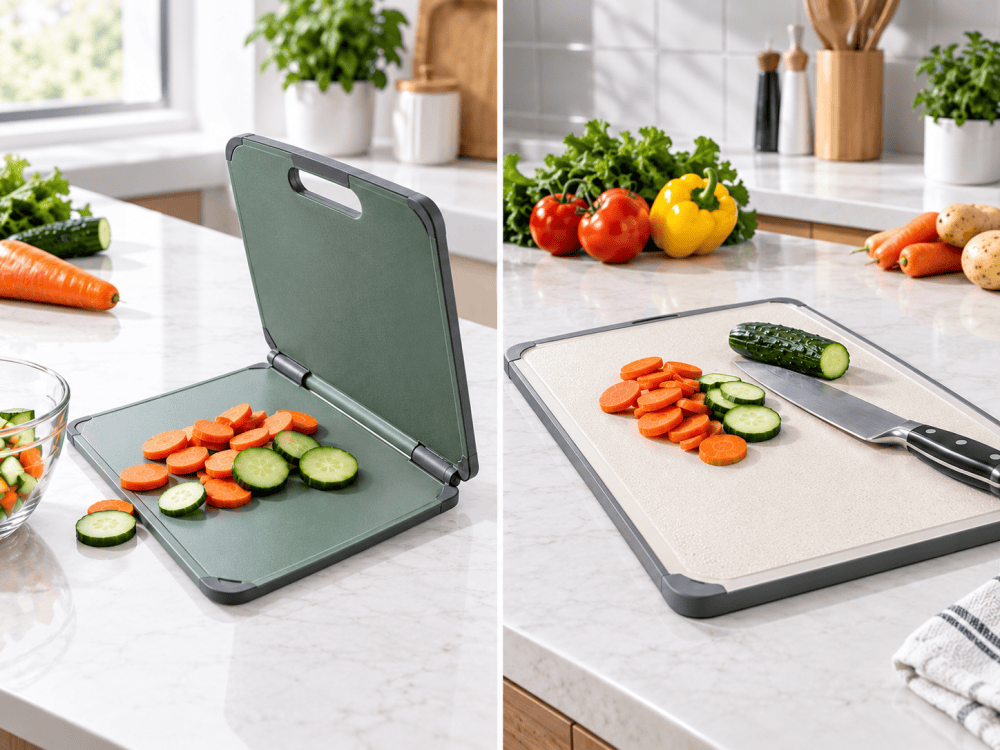
Many modern designs go even further by combining different materials on each side. For example, one surface may feature food-grade stainless steel for handling raw meat, while the opposite side uses BPA-free PP or PE plastic for cutting fruits and vegetables. Other models include anti-slip edges, juice grooves, built-in handles, or foldable designs, making them even more versatile.
For manufacturers, distributors, and private-label brands, double sided cutting boards represent a growing market opportunity. Consumers are increasingly willing to pay more for multifunctional kitchen tools that improve convenience without sacrificing safety.
In this comprehensive guide, you'll learn how double sided cutting boards work, their advantages over traditional boards, the best materials available, buying considerations, maintenance tips, and why they continue to gain popularity worldwide.
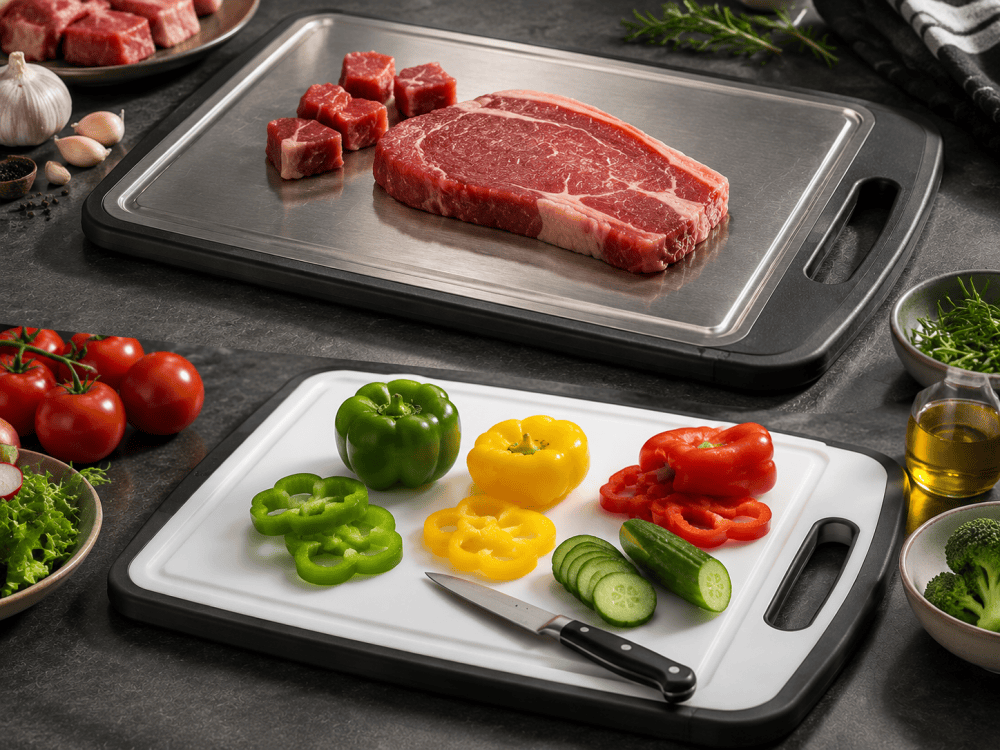
A double sided cutting board features two usable cutting surfaces that allow different foods to be prepared separately. By assigning one side for raw meat and the other for vegetables, fruits, or cooked foods, users can reduce cross-contamination while improving kitchen efficiency and organization.
What Is a Double Sided Cutting Board?
A double sided cutting board is a reversible cutting board that provides two independent food preparation surfaces within a single product. Unlike traditional chopping boards that have only one working side, these boards are designed to be flipped over depending on the ingredient being prepared.
Although both sides may appear similar at first glance, many premium products are intentionally engineered with different textures, materials, or functions to maximize versatility.
Common Double Sided Cutting Board Designs
- Two identical cutting surfaces for general food preparation
- One smooth side and one textured side
- Stainless steel on one side with food-grade plastic on the other
- Wood on one side and composite material on the opposite side
- Color-coded surfaces for separating different food categories
- One side with a juice groove and one flat side
These designs allow users to dedicate specific surfaces to different ingredients, reducing food safety risks while increasing convenience.
How Does a Double Sided Cutting Board Improve Food Safety?
One of the biggest advantages of a reversible cutting board is its ability to help prevent cross-contamination.
Cross-contamination occurs when bacteria from raw meat, poultry, or seafood transfer to foods that will not be cooked, such as salads, fruits, or bread.
By assigning each side of the cutting board to a different food category, the risk of transferring harmful bacteria is significantly reduced.
Many professional kitchens designate one side of a reversible cutting board for raw meat and the opposite side for vegetables or cooked foods. This simple habit helps maintain a cleaner and safer food preparation environment.
Typical Food Separation Using a Double Sided Cutting Board
| Cutting Board Side | Recommended Foods |
|---|---|
| Side A | Raw beef, chicken, pork, seafood |
| Side B | Vegetables, fruits, bread, cheese, cooked foods |
This separation method is widely recommended in both home kitchens and commercial food service environments.
Why Double Sided Cutting Boards Are Becoming More Popular
Consumer preferences have shifted dramatically over the past few years. Rather than purchasing multiple specialized kitchen tools, many households now prefer products that combine several functions into one practical design.
A double sided cutting board perfectly reflects this trend. It reduces clutter, improves food preparation efficiency, and supports better hygiene—all while occupying the same storage space as a traditional board.
Retailers have also noticed the growing demand. Functional cutting boards featuring reversible surfaces, juice grooves, anti-slip feet, and integrated handles consistently outperform basic models in many international markets.
Main Advantages of Double Sided Cutting Boards
1. Better Food Hygiene
The primary reason consumers choose a double sided cutting board is improved hygiene. Separating raw ingredients from ready-to-eat foods helps reduce bacterial transfer during meal preparation.
2. Faster Meal Preparation
Instead of washing one board before switching ingredients, users simply flip the board over and continue cooking. This improves workflow and saves valuable preparation time.
3. Saves Kitchen Space
Because one cutting board performs the work of two, it reduces the need to store multiple boards. This is particularly useful in apartments, RV kitchens, dormitories, and other compact cooking spaces.
4. More Organized Cooking Workflow
Designating one side for meat and the other for produce creates a more structured cooking routine and minimizes confusion during busy meal preparation.
5. Greater Product Value
Compared with traditional chopping boards, reversible cutting boards offer additional functionality without requiring significantly more storage space, making them attractive to both consumers and retailers.
Double Sided Cutting Board vs Single Sided Cutting Board
| Feature | Double Sided | Single Sided |
|---|---|---|
| Food Separation | ★★★★★ | ★★☆☆☆ |
| Cross-Contamination Control | ★★★★★ | ★★★☆☆ |
| Kitchen Organization | ★★★★★ | ★★★☆☆ |
| Space Saving | ★★★★★ | ★★☆☆☆ |
| Overall Versatility | ★★★★★ | ★★★☆☆ |
Although both types of cutting boards perform basic chopping tasks effectively, double sided cutting boards provide greater flexibility for everyday cooking and are increasingly preferred by modern households.
Best Materials for Double Sided Cutting Boards
The performance of a double sided cutting board depends not only on its reversible design but also on the materials used. Different materials offer varying levels of durability, hygiene, knife friendliness, maintenance, and cost, making them suitable for different users and kitchen environments.
Today, manufacturers produce reversible cutting boards using wood, food-grade plastics, bamboo, composite materials, and even stainless steel. Some premium models combine two different materials into one board to maximize functionality.
When choosing a double sided cutting board, don't focus only on appearance. The material determines how hygienic, durable, and easy to maintain the board will be over years of daily use.
Food-Grade PE Plastic Cutting Boards
High-density polyethylene (PE) is one of the most widely used materials for commercial cutting boards. It is lightweight, durable, moisture-resistant, and easy to sanitize, making it a popular choice for restaurants, hotels, catering companies, and food-processing facilities.
Advantages
- Excellent hygiene
- Moisture resistant
- Dishwasher safe (depending on size)
- Easy to sanitize
- Affordable production cost
- Suitable for high-volume commercial kitchens
Limitations
- Knife marks develop over time
- Less decorative than natural wood
PP Plastic Double Sided Cutting Boards
Polypropylene (PP) is another common material used for household cutting boards. Compared with PE, PP is slightly harder and often used in lightweight, colorful, and modern kitchen products.
Many foldable cutting boards and multifunctional kitchen boards are manufactured using BPA-free PP.
Best For
- Daily household cooking
- Compact kitchens
- Travel and RV kitchens
- Foldable cutting board designs
Wooden Double Sided Cutting Boards
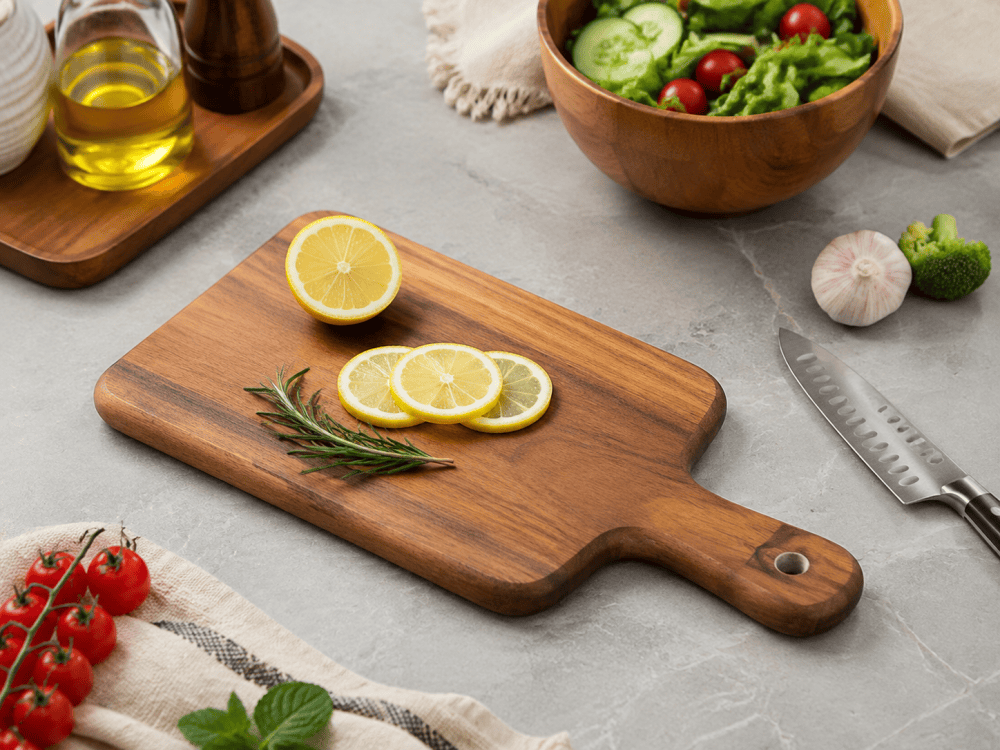
Wood remains one of the most popular materials for premium cutting boards because it combines beauty, durability, and a knife-friendly cutting surface.
Premium hardwoods such as acacia, maple, walnut, and beech are commonly used for reversible cutting boards intended for carving and serving.
Advantages
- Elegant natural appearance
- Comfortable cutting experience
- Helps protect knife edges
- Premium market positioning
- Suitable for serving food directly
Maintenance
Wooden boards should be hand-washed, dried immediately, and periodically treated with food-grade mineral oil to maintain their appearance and prevent cracking.
Bamboo Double Sided Cutting Boards
Bamboo has become increasingly popular because it is a fast-growing, renewable material. It provides an eco-friendly alternative to hardwood while remaining affordable for consumers.
Advantages
- Sustainable material
- Lightweight
- Affordable
- Modern appearance
Limitations
- Harder than many hardwoods
- Requires proper drying after washing
Composite Cutting Boards
Composite cutting boards combine wood fibers with food-safe resins to create a dense, durable surface that requires less maintenance than traditional wood.
These boards are increasingly found in premium kitchenware collections because they combine attractive appearance with excellent performance.
Advantages
- Highly durable
- Resistant to moisture
- Easy to maintain
- Modern appearance
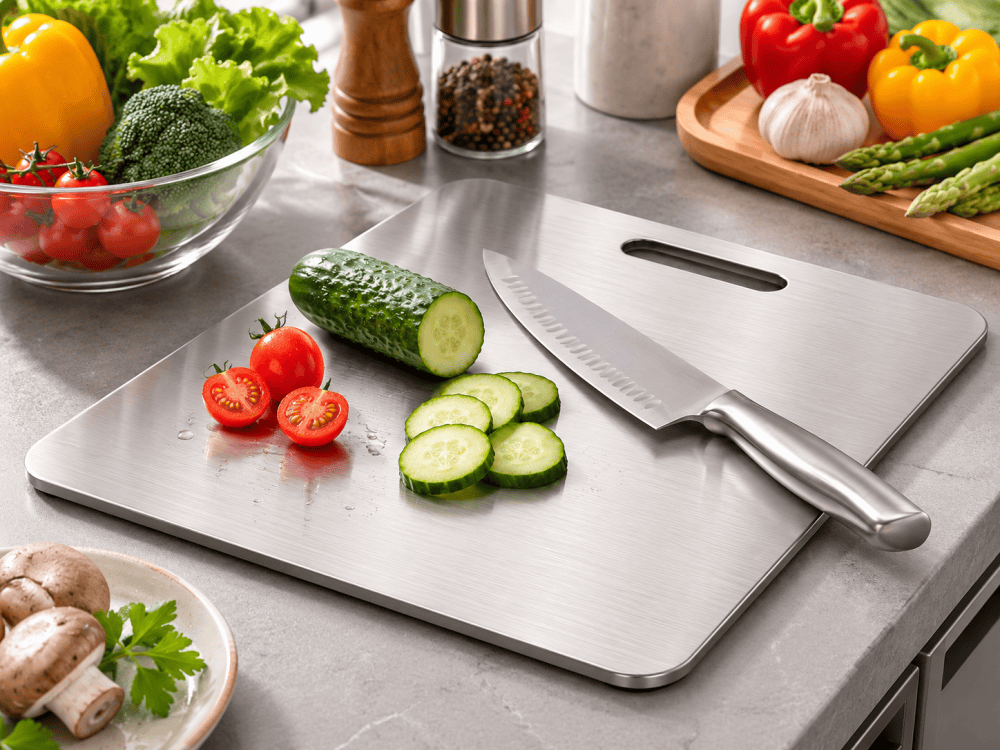
Stainless Steel Double Sided Cutting Boards
One of the fastest-growing innovations in kitchenware is the stainless steel and PP double sided cutting board.
Typically, one side features food-grade stainless steel for cutting raw meat or seafood, while the opposite side uses BPA-free PP plastic for fruits, vegetables, and cooked foods.
This combination delivers exceptional hygiene while protecting knives during everyday food preparation.
Advantages
- Outstanding hygiene
- Easy to sanitize
- Corrosion resistant
- Long service life
- Excellent for separating food types
Material Comparison
| Material | Durability | Hygiene | Maintenance | Best Application |
|---|---|---|---|---|
| PE Plastic | ★★★★☆ | ★★★★★ | Easy | Commercial kitchens |
| PP Plastic | ★★★★☆ | ★★★★★ | Easy | Home kitchens |
| Wood | ★★★★★ | ★★★★☆ | Moderate | Premium households |
| Bamboo | ★★★★☆ | ★★★★☆ | Moderate | Eco-friendly markets |
| Composite | ★★★★★ | ★★★★★ | Easy | Premium cookware brands |
| Stainless Steel + PP | ★★★★★ | ★★★★★ | Very Easy | Professional kitchens |
Which Side Should You Use?
To maximize food safety, many users assign each side of the board to a specific food category.
| Board Side | Recommended Foods |
|---|---|
| Side A | Raw meat, poultry, seafood |
| Side B | Vegetables, fruits, bread, cheese, cooked foods |
This simple habit helps reduce the risk of bacterial transfer and keeps meal preparation organized.
Who Benefits Most from a Double Sided Cutting Board?
Home Cooks
Families preparing multiple meals each day appreciate the convenience of having two preparation surfaces without storing multiple boards.
Professional Chefs
Commercial kitchens use reversible cutting boards to improve workflow and maintain food safety standards during high-volume food preparation.
BBQ Enthusiasts
One side can be dedicated to trimming raw meat, while the opposite side is reserved for slicing cooked brisket, steak, ribs, or roasted poultry.
Small Kitchens
A double sided cutting board saves valuable storage space while offering the functionality of two separate boards.
Retail Buyers & OEM Brands
Functional kitchen products continue to attract consumer attention. Double sided cutting boards provide higher perceived value, making them an excellent product for private-label and wholesale markets.
Consumers increasingly prefer multifunctional kitchen tools that combine hygiene, convenience, and space-saving design. Double sided cutting boards are one of the fastest-growing categories within modern kitchen accessories.
Key Buying Factors
Before purchasing or sourcing a double sided cutting board, consider the following features:
- Food-grade materials (PE, PP, wood, bamboo, stainless steel)
- Appropriate board thickness for stability
- Non-slip feet or rubber edges
- Comfortable carrying handles
- Juice groove (optional)
- Dishwasher compatibility (plastic boards)
- FDA, LFGB, or BPA-Free certifications
- OEM and private-label customization options
Choosing the right combination of material, size, and functional features ensures long-lasting performance while meeting the needs of different users and markets.
How to Clean and Maintain a Double Sided Cutting Board
Proper cleaning is essential to maximize the lifespan of a double sided cutting board and maintain a hygienic food preparation environment. Because both surfaces are used for different ingredients, each side should be cleaned thoroughly after every use.
Even if you only used one side of the board, it's a good habit to rinse and inspect both sides before storing it. This helps prevent moisture buildup and accidental contamination during the next use.
For Plastic (PE & PP) Cutting Boards
- Remove food residue with warm running water.
- Wash both sides using mild dish soap and a soft sponge.
- Use a small brush to clean around handles, grooves, or textured areas.
- Rinse thoroughly.
- Dry completely with a clean towel or air dry vertically.
Many food-grade plastic cutting boards are dishwasher safe, but users should always follow the manufacturer's care instructions.
For Wooden Cutting Boards
- Wash by hand immediately after use.
- Never soak in water for long periods.
- Dry thoroughly with a towel.
- Store upright in a well-ventilated area.
- Apply food-grade mineral oil every 3–4 weeks.
For Stainless Steel Cutting Boards
Stainless steel surfaces are extremely easy to sanitize. Simply wash with warm soapy water, rinse thoroughly, and wipe dry to prevent water spots.
Common Mistakes to Avoid
Although reversible cutting boards are simple to use, a few common mistakes can reduce their effectiveness and shorten their service life.
Using Both Sides for the Same Food
The biggest advantage of a double sided cutting board is food separation. Using both sides interchangeably defeats this purpose.
Not Cleaning Between Uses
Switching from raw meat to vegetables without washing the board can still result in cross-contamination.
Ignoring Deep Knife Marks
Over time, knife grooves can trap bacteria and food particles. Replace the board if deep cuts become difficult to clean.
Storing While Wet
Moisture trapped between the board and countertop may encourage bacterial growth or damage wooden materials.
Choosing the Wrong Material
Select the board based on your cooking habits. Commercial kitchens often prefer PE or stainless steel, while home users may prefer wood or PP plastic.
How Double Sided Cutting Boards Are Manufactured
Understanding the manufacturing process helps buyers evaluate product quality and supplier capabilities.
- Selection of food-grade raw materials.
- Precision molding or machining.
- Surface finishing and texturing.
- Anti-slip edge installation (if applicable).
- Quality inspection.
- Food-contact safety testing.
- Packaging and shipment.
OEM manufacturers may also provide custom colors, logos, packaging, surface textures, handles, and private-label branding for global customers.
2026 Market Trends for Double Sided Cutting Boards
The cutting board market continues to evolve as consumers seek smarter and more hygienic kitchen solutions. Functional designs are replacing traditional single-purpose boards.
Some of the fastest-growing product trends include:
- Stainless steel + PP double sided cutting boards
- Double sided boards with integrated juice grooves
- Foldable cutting boards with food transfer features
- Anti-slip rubber edge designs
- Color-coded food safety systems
- Eco-friendly bamboo and recycled materials
- Multi-functional cutting boards with built-in grinders or storage trays
For brands and distributors, offering innovative cutting board designs can increase product differentiation and meet growing consumer expectations.
Frequently Asked Questions
What is a double sided cutting board?
A double sided cutting board is a reversible chopping board with two usable cutting surfaces for preparing different types of food.
Is a double sided cutting board better than a regular cutting board?
For most households, yes. It improves food safety, saves space, and increases kitchen efficiency.
Which side should be used for raw meat?
Many users dedicate one side exclusively to raw meat, poultry, or seafood and reserve the other side for vegetables and cooked foods.
Can bacteria spread between both sides?
If the board is cleaned properly after each use, cross-contamination risks are greatly reduced.
Are double sided cutting boards dishwasher safe?
Most PE and PP plastic boards are dishwasher safe. Wooden and bamboo boards should always be hand washed.
Which material lasts the longest?
High-quality hardwood, composite materials, and stainless steel generally offer the longest service life when properly maintained.
Can I use one side for bread?
Yes. Many households dedicate one surface to bread, cheese, fruits, or cooked foods.
Do professional chefs use reversible cutting boards?
Yes. Many commercial kitchens use reversible cutting boards to improve workflow and comply with food safety practices.
How often should I replace my cutting board?
Replace the board when deep knife grooves, cracks, warping, or permanent stains become difficult to clean.
Are double sided cutting boards worth buying?
Absolutely. They provide greater versatility, improved hygiene, and better value than traditional single-sided cutting boards.
Conclusion
A double sided cutting board is one of the most practical upgrades for today's kitchen. By combining two functional cutting surfaces into a single product, it improves food safety, saves storage space, streamlines meal preparation, and reduces the risk of cross-contamination.
Whether you are a home cook, professional chef, retailer, or wholesale buyer, choosing the right reversible cutting board means considering material quality, board thickness, surface design, anti-slip features, and food safety certifications.
As demand continues to grow for multifunctional kitchen accessories, double sided cutting boards are expected to remain one of the fastest-growing categories in the global kitchenware market. Investing in a high-quality model ensures years of reliable performance while creating a cleaner, safer, and more efficient cooking experience.
Looking for Premium Double Sided Cutting Boards?
Kitlucy manufactures high-quality double sided cutting boards in PP, PE, bamboo, and stainless steel combinations. We provide OEM, ODM, and private-label services for wholesalers, distributors, retailers, and global kitchenware brands.
Explore Our Cutting Board Collection:
//www.kitlucy.com/cutting-boards.html
Contact Us for OEM & Wholesale Solutions:
Related Blogs