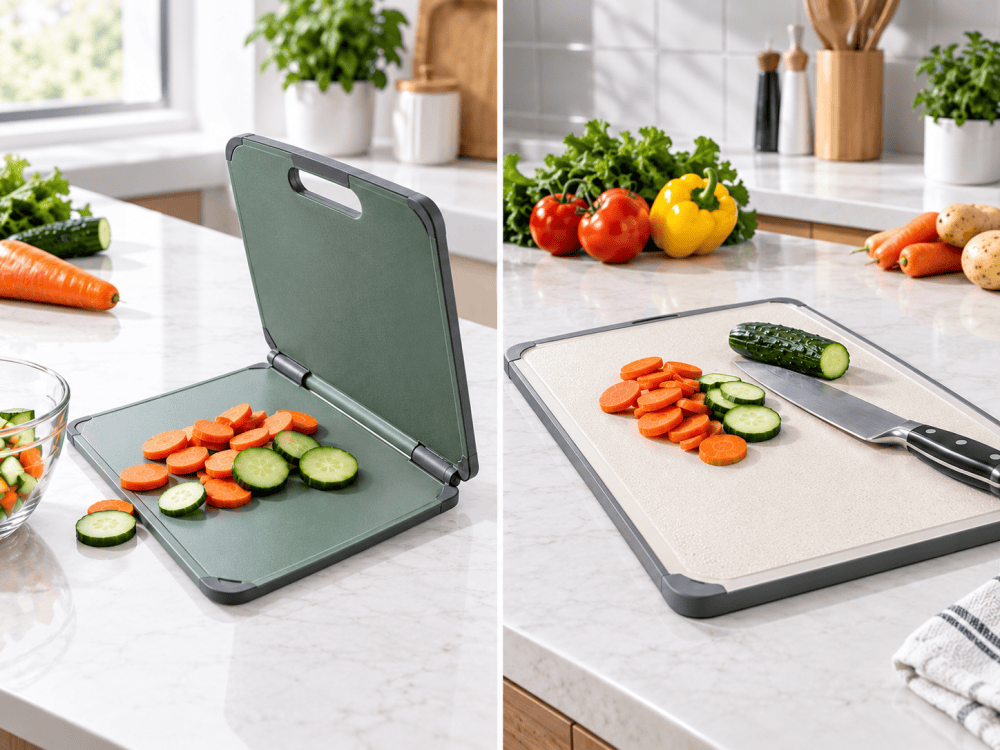
Metal Cutting Board Pros and Cons: Are Metal Cutting Boards Good?
Metal Cutting Board Pros and Cons: Are Metal Cutting Boards Good?
A complete guide to metal cutting boards, including durability, hygiene, knife dulling, safety, stainless steel, titanium, and how to choose the right board.
Metal cutting boards have become increasingly popular among consumers looking for durable, easy-to-clean, and modern alternatives to traditional wood and plastic boards. Stainless steel and titanium boards are especially attracting attention because they are non-porous, resistant to moisture, and designed to last for years without cracking, warping, or absorbing odors.
However, one important question remains: are metal cutting boards good for everyday food preparation?
The answer depends heavily on what you expect from a cutting board. Metal boards offer excellent durability and hygiene benefits, but their hard cutting surfaces can create important disadvantages, especially for kitchen knives.
Many consumers searching for a metal cutting board are also asking:
- What are the metal cutting board pros and cons?
- Are metal cutting boards good for everyday use?
- Do metal cutting boards dull knives?
- Are metal cutting boards safe for food preparation?
- Are stainless steel cutting boards better than titanium boards?
- What should you look for when choosing the best metal cutting boards?
This guide takes an objective look at these questions and compares the advantages and disadvantages of metal cutting boards with wood and plastic alternatives.

Metal cutting boards are highly durable, non-porous, and easy to clean, making them attractive for users who prioritize hygiene and low maintenance. However, metal is generally less knife-friendly than wood or plastic. The hard surface can cause faster knife edge wear, so metal boards are usually better suited to specific tasks or users rather than serving as the ideal primary cutting surface for every kitchen.
What Is a Metal Cutting Board?
A metal cutting board is a food preparation surface made from metal rather than traditional materials such as wood, plastic, bamboo, rubber, or composite materials.
The most common types include:
- Stainless steel cutting boards
- Titanium cutting boards
- Titanium-coated metal cutting boards
- Other specialty metal cutting surfaces
Most metal cutting boards are designed with a smooth, non-porous surface that does not absorb moisture or food odors easily. Unlike wooden boards, they generally do not require oiling, and unlike plastic boards, they do not develop the same type of deep knife grooves over time.
These properties have helped metal cutting boards become a popular category among consumers looking for products that appear more durable and hygienic than traditional cutting board materials.
Why Are Metal Cutting Boards Becoming Popular?
Several factors are driving interest in metal boards.
- Growing demand for easy-to-clean kitchen products
- Interest in non-porous food preparation surfaces
- Premium and modern kitchen design trends
- Demand for long-lasting alternatives to plastic boards
- Growing interest in titanium and stainless steel kitchenware
However, durability and hygiene are only part of the story. A cutting board must also work well with knives, remain stable during food preparation, and provide a comfortable cutting experience.
That is why understanding the complete metal cutting board pros and cons is more important than simply comparing material strength.
Metal Cutting Board Pros and Cons Overview
| Advantages | Disadvantages |
|---|---|
| Extremely durable and long-lasting | Hard surface can increase knife edge wear |
| Non-porous and resistant to moisture absorption | Less knife-friendly than wood and many plastic boards |
| Easy to clean and maintain | Can produce loud noise during chopping |
| Resistant to odors and many stains | Smooth surfaces may become slippery |
| Does not require regular oiling | Some designs may slide on countertops |
| Modern and premium appearance | Higher price than many standard plastic boards |
| Resists warping and cracking | Can feel harsh during extended cutting sessions |
The biggest advantage of metal is that the board itself can remain in good condition for a long time. The biggest disadvantage is that this durability may come at the expense of knife edge retention.
Are Metal Cutting Boards Good?
Are metal cutting boards good? They can be good for certain users and applications, but they are not automatically the best choice for every kitchen.
Metal boards perform especially well when the user's main priorities are:
- Easy cleaning
- Resistance to moisture
- Odor resistance
- Long-term durability
- Minimal maintenance
For example, someone who wants a board that does not need oiling and does not easily absorb liquids may appreciate the benefits of metal.
However, users who prioritize knife protection may prefer wood, rubber, or softer high-quality plastic boards. A cutting surface should not only survive repeated knife contact; it should also help protect the knife edge during normal use.
A metal cutting board is designed to resist damage from knives, moisture, and daily cleaning. But because the board itself has very little "give," the knife edge absorbs more of the impact during cutting compared with softer materials.
Therefore, metal cutting boards are best evaluated as a specialized material choice rather than a universal replacement for wood or plastic.
Metal Cutting Board Pros: The Main Advantages
1. Excellent Durability
One of the biggest advantages of a metal cutting board is durability.
Wood can eventually crack, warp, or split when exposed to excessive moisture. Plastic can develop deep knife marks and become heavily worn after frequent use. A high-quality metal surface is far more resistant to these forms of physical damage.
Metal cutting boards are generally valued for their ability to resist:
- Warping
- Cracking
- Splitting
- Moisture damage
- Persistent odors
For buyers who are primarily looking for a long-lasting kitchen product, this is one of the strongest reasons to consider metal.
2. Non-Porous Surface
Metal surfaces are generally non-porous, meaning they do not absorb liquids in the same way that untreated or damaged wood can.
This can make a metal cutting board attractive when preparing foods such as:
- Raw meat
- Seafood
- Vegetables
- Fruit
- Strong-smelling ingredients such as garlic or onions
Because the surface does not easily absorb food odors or moisture, cleaning can be relatively simple after normal food preparation.
However, non-porous does not mean that no cleaning is required. Food residue can still remain on any cutting surface, so metal boards should always be properly washed and dried after use.
3. Easy Cleaning and Low Maintenance
Compared with many wooden cutting boards, metal cutting boards require relatively little maintenance.
Wood boards often benefit from regular conditioning with food-safe mineral oil to reduce dryness and help maintain the material. Metal boards do not require this type of routine treatment.
For most products, basic maintenance involves:
- Washing after use
- Removing food residue
- Rinsing thoroughly
- Drying before storage
This makes metal boards appealing to consumers who prefer low-maintenance kitchen products.
4. Strong Resistance to Odors and Stains
Food odors can sometimes remain in plastic or wood cutting boards, particularly when ingredients with strong aromas are prepared frequently.
A smooth metal surface is generally easier to wash thoroughly and is less likely to retain odors compared with porous or heavily grooved materials.
Metal boards may also provide good resistance to common food stains, helping them maintain a clean appearance over time.
5. No Risk of Wood Splitting or Warping
Wooden cutting boards are popular because they are attractive and knife-friendly, but wood requires careful moisture management.
Improper cleaning or repeated soaking can eventually contribute to:
- Warping
- Cracking
- Splitting
- Raised grain
Metal does not respond to water in the same way. This makes metal cutting boards particularly attractive to consumers who want a board that does not require special care after washing.
6. Modern Premium Appearance
Another advantage is aesthetics.
Stainless steel and titanium surfaces can create a clean, modern appearance that matches contemporary kitchen appliances and minimalist kitchen designs.
For premium kitchenware brands, metal cutting boards may also offer a strong visual differentiation point compared with standard plastic boards.
Depending on the material and finish, metal boards can be positioned as:
- Premium kitchen accessories
- Modern food preparation tools
- Minimalist kitchen products
- Specialty gift items
- Long-life alternatives to conventional boards
Are Metal Cutting Boards Hygienic?
Metal cutting boards can be easy to clean because their surfaces are non-porous and resistant to moisture absorption.
This means liquids and food odors are less likely to penetrate into the material itself. Unlike heavily worn plastic boards, metal boards also do not develop the same type of soft, deep cutting grooves that may make some surfaces harder to clean thoroughly.
However, hygiene depends on more than the material alone.
For a cutting board to remain safe for food preparation, users should still:
- Wash the board after each use
- Clean thoroughly after raw meat or seafood
- Prevent cross-contamination between raw and ready-to-eat foods
- Keep the board surface and surrounding work area clean
- Follow appropriate food safety and sanitation practices
In other words, a metal cutting board may provide an easy-to-clean surface, but the material itself does not replace proper kitchen hygiene.
Stainless Steel vs Titanium Metal Cutting Boards: A Brief Overview
The two most common categories of metal cutting boards are stainless steel and titanium.
| Feature | Stainless Steel | Titanium |
|---|---|---|
| Durability | Excellent | Excellent |
| Weight | Generally heavier | Generally lighter for its strength |
| Corrosion Resistance | Excellent with suitable stainless grades | Excellent |
| Maintenance | Low | Low |
| Price Level | Generally more affordable | Usually premium |
| Knife Surface | Hard | Hard |
Both materials share many of the same advantages, including durability, low maintenance, and a non-porous surface.
However, the specific performance of a board can vary depending on the exact material grade, thickness, surface treatment, and whether the product is made from solid metal or uses a metal coating.
This distinction is important when comparing metal cutting boards, especially because products marketed as "titanium" may not all use the same material construction.
Metal Cutting Board Cons: What Should You Know Before Buying?
Although metal cutting boards offer excellent durability and easy maintenance, they also have several important disadvantages.
The biggest concern is not usually whether the board itself will last. The more important question is how the hard cutting surface affects knife performance and the overall cutting experience.
1. Metal Cutting Boards Can Be Hard on Knives
The most important disadvantage of a metal cutting board is its potential impact on knife edges.
Wood and many high-quality plastic cutting boards provide some flexibility when a knife contacts the surface. Metal is much harder and offers very little cushioning.
When the knife edge repeatedly contacts a hard surface, more of the impact is concentrated on the edge itself. Over time, this can contribute to faster edge wear compared with cutting on softer materials.
This is the main reason why many users ask:
- Do metal cutting boards dull knives?
- Are metal cutting boards bad for knives?
- Are stainless steel cutting boards knife-friendly?
- Are titanium cutting boards better for knife edges?
Do Metal Cutting Boards Dull Knives?
Yes, metal cutting boards can dull knives faster than wood and many plastic cutting boards.
However, the amount of knife wear can vary depending on several factors:
- The type of metal used for the cutting board
- The surface finish and texture
- The hardness and geometry of the knife blade
- How often the board is used
- The cutting technique used
- The amount of chopping force applied
It is important to understand that a knife edge is extremely thin. Even if a cutting board appears smooth and does not visibly damage the knife, repeated impact against a hard surface can gradually reduce edge sharpness.
A metal cutting board may be extremely resistant to knife damage, but that does not mean it is gentle on the knife. A good cutting board should balance durability with knife-edge protection.
Why Do Metal Cutting Boards Affect Knife Sharpness?
When cutting food, the knife blade travels downward until the edge contacts the cutting board.
On a softer cutting surface, the material may provide slight cushioning or allow the blade edge to contact the surface with less impact.
On metal, the surface has very little give.
This can result in:
- Higher impact on the knife edge
- Faster edge wear over repeated use
- More frequent sharpening requirements
- A greater risk of microscopic edge deformation on very fine knife edges
This does not mean that one use of a metal cutting board will immediately ruin a knife. The concern is primarily about repeated, long-term use.
Which Knives May Be Most Affected?
Some knives may be more sensitive to hard cutting surfaces than others.
| Knife Type | Potential Concern on Metal |
|---|---|
| High-end chef's knives | Frequent sharpening may be required |
| Japanese-style knives | Fine edges may benefit from softer cutting surfaces |
| Thin slicing knives | Hard contact may affect delicate edge geometry |
| Heavy-duty kitchen knives | More durable but still subject to edge wear |
| Low-cost utility knives | Replacement or sharpening may be more frequent |
For users who invest heavily in premium kitchen knives, wood or knife-friendly synthetic cutting boards are generally a more practical choice for everyday chopping.
Are Metal Cutting Boards Good for Knives?
If knife protection is your main priority, metal cutting boards are generally not the best option for frequent cutting.
A metal board may still be used for certain tasks, but it is difficult to recommend it as the primary cutting surface for users who want to maximize knife-edge life.
For example, metal may be more suitable for:
- Temporary food preparation
- Specialty kitchen applications
- Tasks involving less frequent knife use
- Users who prioritize low maintenance over knife-edge retention
For heavy daily chopping, however, softer cutting surfaces are usually more knife-friendly.
Other Disadvantages of Metal Cutting Boards
2. They Can Be Noisy During Chopping
Metal cutting surfaces can produce more noise than wood or plastic when a knife repeatedly contacts the board.
The sound may be especially noticeable when:
- Chopping vegetables quickly
- Using a heavy chef's knife
- Cutting hard ingredients
- Preparing large quantities of food
For some users, this may not be important. However, for people who cook frequently, the harder and louder cutting experience may become less comfortable over time.
3. Smooth Metal Surfaces Can Be Slippery
Some metal cutting boards have a smooth surface that can allow food to move during preparation.
This can depend on the design and surface finish. A highly polished surface may behave differently from a textured or brushed metal surface.
When choosing a metal board, look for features that improve stability, such as:
- Non-slip feet
- Textured surface areas
- Raised edges
- Rubber or silicone corner grips
- Stable board thickness
A cutting board should remain securely in place during use. A durable board that slides across the countertop can create an unnecessary safety problem.
4. Some Metal Boards Can Be Heavy
Metal cutting boards can weigh more than standard plastic boards, especially when made with thicker materials.
The additional weight may improve stability, but it can also make the board less convenient for:
- Daily washing
- Moving around the kitchen
- Storage in small spaces
- Users who prefer lightweight kitchen tools
Stainless steel boards may be particularly heavy compared with thin plastic boards. Titanium can provide a different balance between strength and weight, although titanium products are often positioned at a higher price level.
5. Premium Metal Boards Can Be Expensive
One of the main disadvantages of the best metal cutting boards is price.
Basic plastic cutting boards are widely available at affordable prices. Wooden boards can range from affordable to premium depending on the species and construction.
Metal cutting boards, particularly titanium products, may have a significantly higher price because of:
- Material costs
- Manufacturing processes
- Surface finishing
- Premium product positioning
Before purchasing a metal board, it is important to consider whether the additional durability and appearance justify the cost for your intended use.
Stainless Steel vs Titanium Cutting Boards
Stainless steel and titanium are the two metal materials most commonly associated with metal cutting boards. Although they share several benefits, they are not identical.
Stainless Steel Cutting Boards
Stainless steel cutting boards are generally valued for their durability, corrosion resistance, and familiar appearance.
Main advantages include:
- Excellent durability
- Strong corrosion resistance
- Easy cleaning
- Wide material availability
- Premium modern appearance
Potential disadvantages include:
- Higher weight
- Hard cutting surface
- Potential knife dulling
- Noise during chopping
Titanium Cutting Boards
Titanium cutting boards are often marketed as premium kitchen products because titanium is known for its high strength-to-weight ratio and corrosion resistance.
Potential advantages include:
- Excellent corrosion resistance
- High strength
- Premium product positioning
- Potentially lighter weight compared with some steel designs
However, titanium cutting boards also have an important limitation: they still provide a hard cutting surface compared with wood and plastic.
Therefore, switching from stainless steel to titanium does not automatically solve the knife-friendliness issue.
Do not choose a metal cutting board based only on whether it is labeled "titanium" or "stainless steel." Check the actual product construction, material composition, thickness, surface finish, stability, and intended use.
Metal Cutting Board vs Wood vs Plastic
The best way to understand metal cutting boards is to compare them directly with the most common cutting board materials.
| Feature | Metal | Wood | Plastic |
|---|---|---|---|
| Durability | Excellent | High | Medium |
| Knife Friendliness | Low to Medium | Excellent | Good |
| Water Resistance | Excellent | Medium | Excellent |
| Maintenance | Low | Higher | Low |
| Cleaning Convenience | Easy | Moderate | Easy |
| Noise During Cutting | High | Low | Low |
| Resistance to Warping | Excellent | Moderate | Good |
| Price Range | Medium to Premium | Medium to Premium | Affordable to Medium |
Metal vs Wood Cutting Boards
Wood remains one of the best options for users who prioritize knife-edge protection.
A quality wooden cutting board can provide:
- A more forgiving cutting surface
- Better knife-edge retention
- A quieter cutting experience
- A traditional kitchen appearance
However, wood requires more maintenance and should not be soaked in water. Depending on the type of wood and construction, it may also require regular conditioning.
Metal offers the opposite trade-off: less maintenance and greater resistance to moisture, but a harder cutting surface.
Metal vs Plastic Cutting Boards
Plastic cutting boards remain popular because they are lightweight, affordable, easy to clean, and relatively knife-friendly.
Compared with metal, plastic boards may be better for:
- Daily household cooking
- Frequent chopping
- Commercial food preparation
- Users who want affordable replacements
However, plastic boards can develop knife grooves over time and may eventually need replacement when heavily worn.
A metal board may last longer, but the long lifespan of the board should be considered together with the potential cost of more frequent knife sharpening.
Are Metal Cutting Boards Safe?
High-quality metal cutting boards manufactured from suitable food-contact materials can be safe for normal food preparation.
However, the safety of a cutting board depends on several factors:
- Material composition
- Surface finishing
- Food-contact compliance
- Manufacturing quality
- Board stability during use
- Proper cleaning and sanitation
Consumers should avoid assuming that every product marketed as a "metal cutting board" has the same quality or material construction.
Before purchasing, it is useful to check whether the manufacturer provides clear information about:
- The type of metal used
- Whether the board is solid metal or metal-coated
- Food-contact material suitability
- Cleaning recommendations
- Product testing or compliance documentation
Stability Is Also a Safety Issue
A cutting board should not slide during food preparation.
Because some metal surfaces can be smooth and heavy, a well-designed product should include stability features such as non-slip feet or a textured base.
Never use a cutting board that moves excessively during chopping.
What Is the Best Use for a Metal Cutting Board?
Metal cutting boards are not necessarily the best primary cutting surface for every task. However, they may be useful for users who value durability and low maintenance.
They may be suitable for:
- Users who prefer non-porous kitchen surfaces
- Low-maintenance kitchen setups
- Premium or modern kitchen environments
- Occasional food preparation
- Users who are comfortable sharpening knives more frequently
For users who frequently use expensive or very sharp knives, wood or knife-friendly synthetic boards may remain the more practical everyday option.
Who Should Choose a Metal Cutting Board?
A metal cutting board can be a good choice for users who place more importance on durability, easy cleaning, and low maintenance than maximum knife-edge protection.
The following users may benefit most from a metal cutting board:
1. Users Who Want a Low-Maintenance Cutting Surface
Metal boards do not require the regular oiling and conditioning associated with many wooden cutting boards.
For consumers who want a cutting surface that is easy to wash and does not require special maintenance, metal may be an attractive option.
2. Users Who Prioritize Moisture Resistance
Unlike wood, metal does not absorb water in the same way. This can make it attractive for users who frequently prepare wet ingredients or want a board that is highly resistant to moisture-related damage.
3. Users Looking for a Long-Lasting Kitchen Product
A high-quality metal cutting board can offer a very long service life when properly manufactured and used.
It can be attractive for consumers who are tired of replacing plastic boards because of heavy knife wear or replacing wooden boards because of cracking and warping.
4. Premium Kitchenware Buyers
Metal cutting boards can also appeal to consumers looking for modern and premium kitchen accessories.
The clean metallic appearance of stainless steel or titanium can complement:
- Modern kitchens
- Minimalist kitchen interiors
- Stainless steel appliances
- Premium kitchenware collections
- High-end kitchen gift sets
Who May Prefer Other Cutting Board Materials?
Metal cutting boards are not the ideal choice for every user.
The following users may prefer wood, plastic, rubber, or other knife-friendly materials.
Professional Chefs and Heavy Users
Professional kitchens and serious home cooks often use knives for extended periods every day.
Because repeated contact with a hard metal surface can increase knife-edge wear, a softer cutting surface may provide a better balance between hygiene, efficiency, and knife maintenance.
Premium Knife Owners
Users who own expensive chef's knives, Japanese-style knives, or knives with very fine edges may want to avoid using a metal board as their primary cutting surface.
Wood and other knife-friendly cutting board materials are generally better suited for protecting finely sharpened edges.
Users Looking for a Quiet Cutting Experience
Metal cutting boards can create more noise when knives repeatedly contact the surface.
If a quiet and soft cutting experience is important, wood or high-quality plastic boards may be more comfortable for everyday use.
Best Metal Cutting Boards: What Should You Look For?
When searching for the best metal cutting boards, it is important to look beyond product appearance.
Not all metal cutting boards use the same materials or construction methods. Product quality can vary significantly depending on material composition, thickness, surface finishing, and stability design.
1. Check the Actual Material
First, determine exactly what material the board is made from.
Common descriptions include:
- Stainless steel
- Titanium
- Titanium-coated metal
- Multi-layer metal construction
Buyers should not assume that every product marketed as a titanium cutting board is made from a solid piece of titanium.
For premium products, clear and transparent material information is important.
2. Look for Food-Contact Material Information
The metal and surface treatment should be suitable for food-contact applications.
Buyers should pay attention to:
- Material grade
- Surface treatment
- Food-contact compliance
- Manufacturing quality
For wholesale and private-label buyers, material documentation can be especially important when sourcing products for different international markets.
3. Evaluate the Surface Finish
The surface finish affects both appearance and usability.
A highly polished surface may look premium, but a board should also provide practical stability during food preparation.
Possible surface options include:
- Brushed metal finishes
- Matte surfaces
- Lightly textured finishes
- Polished surfaces
The ideal surface should balance easy cleaning with practical food preparation performance.
4. Check Board Thickness
Thickness affects the stability, weight, and overall feel of a metal cutting board.
| Thickness Type | Potential Advantage | Potential Limitation |
|---|---|---|
| Thin Board | Lightweight and easy to store | May feel less stable |
| Medium Thickness | Balanced weight and stability | Depends on material and construction |
| Thick Board | More stable and substantial | Heavier and more difficult to store |
For everyday use, a balanced design is generally more practical than simply choosing the thickest possible board.
5. Prioritize Non-Slip Design
A metal cutting board should remain stable during food preparation.
Look for features such as:
- Silicone feet
- Rubber anti-slip pads
- Textured bottom surfaces
- Stable board weight
- Secure countertop contact
This is particularly important because smooth metal surfaces can become slippery when moisture is present.
6. Choose the Right Size
The best size depends on the intended application.
| Board Size | Best For |
|---|---|
| Small | Fruit, snacks, and quick food preparation |
| Medium | Daily household cooking |
| Large | Large ingredients and meal preparation |
Large boards provide more working space but can also become heavier and more difficult to clean and store.
Metal Cutting Board Buying Guide for Wholesale Buyers
For wholesalers, retailers, distributors, and private-label kitchenware brands, metal cutting boards can represent a premium product opportunity.
However, because the product category is different from traditional plastic and wooden cutting boards, clear market positioning is important.
Understand the Target Customer
Potential customer groups may include:
- Premium kitchenware consumers
- Modern home design buyers
- Consumers interested in titanium products
- Low-maintenance kitchen product buyers
- Specialty kitchen gift markets
Develop a Clear Product Story
Metal cutting boards are often positioned around:
- Durability
- Modern appearance
- Easy cleaning
- Non-porous surfaces
- Long service life
However, responsible product communication should also avoid making unrealistic claims about knife performance.
Because consumers are increasingly asking “do metal cutting boards dull knives?”, product descriptions should explain how hard cutting surfaces differ from traditional wood and plastic materials.
Consider Customization Opportunities
For private-label programs, possible customization options may include:
- Custom board dimensions
- Material selection
- Surface finishes
- Brand logos
- Custom packaging
- Retail gift boxes
For B2B buyers, product development should focus on both appearance and practical kitchen usability.
Frequently Asked Questions About Metal Cutting Boards
Are metal cutting boards good?
Metal cutting boards can be good for users who prioritize durability, easy cleaning, and low maintenance. However, their hard surfaces are generally less knife-friendly than wood and many plastic cutting boards.
Do metal cutting boards dull knives?
Yes, repeated cutting on a metal surface can cause faster knife-edge wear compared with softer materials such as wood or plastic. The exact impact depends on the board material, knife type, and frequency of use.
Are metal cutting boards safe?
High-quality metal cutting boards made with suitable food-contact materials can be safe for food preparation. Buyers should consider the material, surface treatment, manufacturing quality, and product stability.
Are stainless steel cutting boards better than wood?
It depends on the user's priorities. Stainless steel offers better moisture resistance and lower maintenance, while wood is generally more knife-friendly and provides a softer cutting experience.
Are titanium cutting boards better for knives?
Titanium cutting boards are still hard compared with wood and plastic. Although product performance can vary depending on construction and surface finish, titanium should not automatically be considered as knife-friendly as softer cutting board materials.
What are the main advantages of metal cutting boards?
The main advantages include excellent durability, easy cleaning, moisture resistance, odor resistance, low maintenance, and a modern appearance.
What are the biggest disadvantages of metal cutting boards?
The biggest disadvantages are potential knife dulling, increased noise during cutting, possible slipping, higher weight, and premium pricing for some products.
What is the best material for everyday cutting?
For most everyday knife work, wood and high-quality plastic remain practical choices because they provide a better balance between durability, hygiene, affordability, and knife-edge protection.
Final Verdict: Are Metal Cutting Boards Worth Buying?
Metal cutting boards offer some impressive advantages. They are durable, moisture resistant, easy to clean, and require very little maintenance compared with many wooden cutting boards.
For consumers looking for a long-lasting and modern kitchen product, a well-designed metal cutting board can be an attractive option.
However, the most important disadvantage should not be ignored: metal is generally a harder cutting surface than wood or plastic and may cause faster knife-edge wear.
For this reason, metal cutting boards are best considered a specialized option rather than the perfect replacement for every traditional cutting board.
Choose a metal cutting board if your top priorities are durability, moisture resistance, easy cleaning, and low maintenance. Choose wood or a knife-friendly plastic board if protecting your kitchen knives is more important for your everyday cooking routine.
The best choice ultimately depends on how you use your kitchen knives, how often you prepare food, and which combination of durability, hygiene, maintenance, and knife protection matters most to you.
Looking for Reliable Cutting Board Solutions?
Kitlucy provides professional kitchenware solutions for global brands, wholesalers, retailers, and distributors. Our cutting board range includes practical options designed for different kitchen applications, material preferences, and market requirements.
Whether you are sourcing cutting boards for retail, private-label programs, or custom kitchenware projects, we can support product development based on your target market and requirements.
Explore our Cutting Board Collection or learn more about our OEM & Custom Kitchenware Solutions.
Looking for Custom Cutting Board Solutions?
Kitlucy supports global brands and wholesale buyers with cutting board sourcing, private-label development, customized materials, product design, packaging, and OEM kitchenware solutions.
Related Blogs