Is Hard Maple Good for Cutting Boards? Complete Guide
Is Hard Maple Good for Cutting Boards? Complete Guide
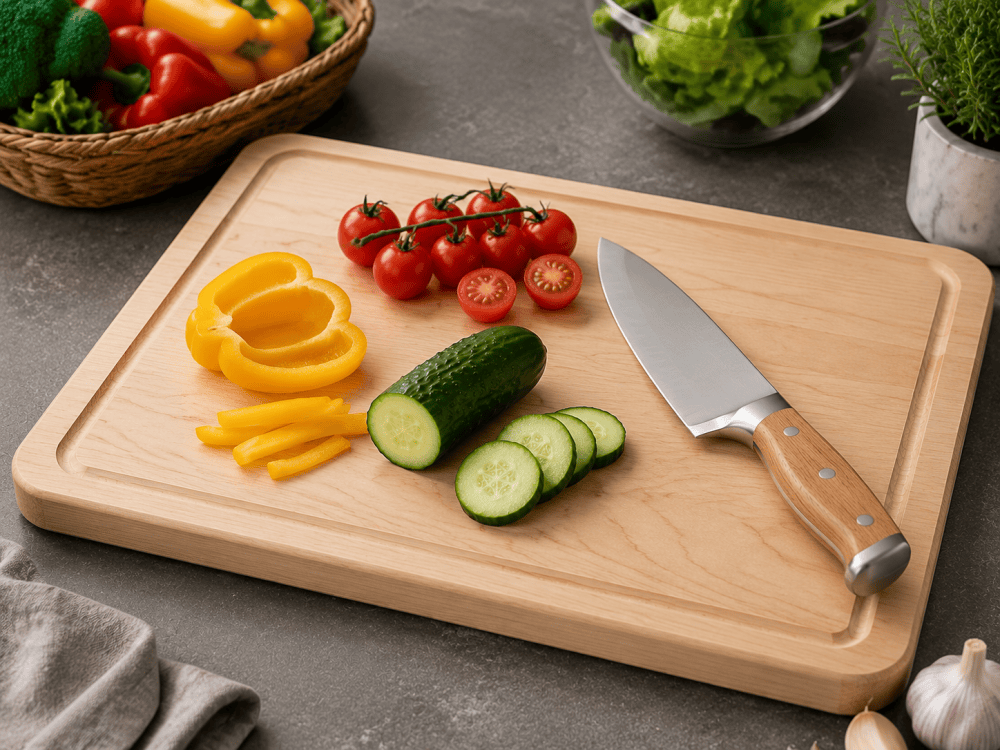
Hard maple is one of the most popular hardwoods used for kitchen cutting boards, butcher blocks, and food preparation surfaces. Its combination of durability, moderate hardness, fine grain structure, and clean appearance makes it a common choice for both household and professional kitchen products.
But is hard maple actually good for cutting boards?
The answer is generally yes. A well-made hard maple cutting board can provide a durable and knife-friendly surface for everyday food preparation. However, the construction method, board thickness, grain orientation, finishing process, and maintenance routine all affect the final performance.
Hard maple is also commonly described as rock maple or sugar maple. This is why buyers searching for a hard rock maple cutting board may encounter products made from the same or closely related hardwood category.
In this guide, we will examine hard maple cutting boards from both a consumer and B2B kitchenware perspective, including durability, hardness, food safety, knife performance, end grain construction, maintenance, and material selection.

Hard maple is generally a good material for cutting boards because it provides a durable, relatively hard, and stable surface while remaining more knife-friendly than many harder materials such as stone, glass, or metal. For buyers looking for a long-lasting wooden cutting board, hard maple is one of the most established hardwood options.
What Is Hard Maple?
Hard maple refers primarily to the wood of the sugar maple tree, scientifically known as Acer saccharum. It is also commonly called sugar maple or rock maple in the woodworking and furniture industries.
Compared with many softer hardwoods, hard maple has a relatively high density and hardness. This gives it good resistance to dents, scratches, and everyday wear.
These characteristics make hard maple suitable for products that require a combination of strength and a relatively smooth working surface.
Hard Maple vs Soft Maple
One important distinction for buyers is the difference between hard maple and soft maple.
Although both belong to the maple family, soft maple generally has lower hardness and density than hard maple. When a product is specifically marketed as a hard maple wood cutting board, buyers should verify the actual wood species rather than assuming that every maple cutting board uses hard maple.
| Feature | Hard Maple | Soft Maple |
|---|---|---|
| Hardness | Higher | Lower |
| Density | Higher | Lower |
| Durability | Excellent | Good |
| Scratch Resistance | High | Moderate |
| Cutting Board Suitability | Excellent | Good |
| Typical Positioning | Premium / Professional | Mid-range |
Why Is Hard Maple Good for Cutting Boards?
The popularity of hard maple cutting boards comes from the balance between hardness and usability.
A cutting board needs to be hard enough to resist excessive knife marks and surface damage, but it should not be so hard that it rapidly damages or dulls kitchen knives.
Hard maple provides a useful middle ground.
1. High Durability
One of the biggest advantages of a hard maple cutting board is its durability.
The dense wood structure provides good resistance to dents and scratches generated by repeated food preparation. With appropriate thickness and construction, a hard maple board can remain functional for many years.
This makes hard maple attractive for:
- Home kitchen cutting boards
- Professional food preparation
- Butcher blocks
- Restaurant preparation areas
- Premium kitchenware collections
- Long-term household kitchen products
2. Good Balance Between Hardness and Knife Friendliness
Hardness is an important consideration when choosing a cutting board.
A surface that is too soft may develop deep knife grooves quickly. On the other hand, extremely hard surfaces such as glass, stone, and metal can be harsh on knife edges.
Hard maple sits between these extremes.
Its relatively firm surface provides good resistance to wear while still offering a more forgiving cutting experience than many non-wood materials.
A good cutting board should not simply be the hardest material available. The ideal surface balances durability with enough resilience to reduce unnecessary stress on the knife edge.
3. Fine and Relatively Uniform Grain
Hard maple has a relatively fine and uniform grain structure. This contributes to its smooth appearance and makes it suitable for precision woodworking and kitchen products.
For cutting board manufacturers, consistent grain structure can also provide an attractive visual appearance after sanding and finishing.
4. Neutral and Versatile Appearance
Hard maple typically has a light, clean appearance ranging from creamy white to light golden tones.
This neutral color makes it easy to integrate into different kitchen styles.
For kitchenware brands, the appearance can also be an advantage because hard maple can be positioned as:
- Natural kitchenware
- Premium wooden kitchenware
- Minimalist kitchen products
- Traditional butcher block products
- Eco-conscious kitchen collections
Hard Maple Cutting Board Hardness
Hardness is one of the most important characteristics when evaluating a wooden cutting board.
Hard maple has a Janka hardness rating of approximately 1,450 lbf. This places it among the harder commonly used domestic hardwoods.
Its relatively high hardness helps the board resist surface damage while still remaining substantially more suitable for knife work than extremely hard cutting surfaces such as glass or stone.
What Does Hardness Mean for a Cutting Board?
A harder board generally provides better resistance to dents and visible knife marks. However, hardness should never be evaluated independently.
For cutting boards, buyers should consider several properties together:
- Wood hardness
- Wood density
- Grain orientation
- Board thickness
- Surface finishing
- Moisture stability
- Manufacturing quality
This is particularly important when comparing a standard hard maple board with an hard maple end grain cutting board. The same wood species can behave differently depending on how the grain is oriented within the product.
Is Hard Maple Food Safe for Cutting Boards?
Another common search question is is hard maple food safe for cutting boards?
Hard maple is widely used for food preparation surfaces and wooden cutting boards. However, food-contact safety depends on more than the wood species itself.
Manufacturers should consider the entire product, including the wood source, adhesives, coatings, finishes, manufacturing process, and intended food-contact application.
For commercial sourcing, buyers should evaluate the complete cutting board specification rather than relying only on the name "hard maple." Wood selection, adhesive systems, surface treatments, and manufacturing controls all contribute to the finished product's suitability.
Why Hard Maple Is Popular for Food Preparation
- Dense hardwood structure
- Relatively smooth surface after proper finishing
- Good durability for repeated use
- Suitable for traditional wooden cutting board construction
- Widely recognized in professional woodworking and food preparation applications
Hard Maple vs Other Cutting Board Materials
Hard maple is not automatically the best cutting board material for every application. Its advantages become clearer when compared with other common materials.
| Material | Durability | Knife Friendliness | Moisture Resistance | Maintenance | Typical Positioning |
|---|---|---|---|---|---|
| Hard Maple | High | Excellent | Medium | Medium | Premium Wood |
| Walnut | High | Excellent | Medium | Medium | Premium Wood |
| Bamboo | High | Medium | Medium | Medium | Eco / Mid-range |
| Plastic | Medium | Good | High | Low | Mass Market |
| Glass | Very High | Low | High | Low | Specialty |
For buyers who want a traditional wooden cutting board with strong durability and good knife performance, hard maple remains a compelling option.
Why Is Hard Maple So Popular for Cutting Boards?
Hard maple is one of the most widely used hardwoods for premium cutting boards, especially in North American kitchenware markets. Its combination of hardness, durability, relatively fine grain, and moderate moisture resistance makes it a practical choice for both household and professional food preparation.
When searching for a hard maple cutting board, buyers may also encounter terms such as hard rock maple, sugar maple, maple wood, and end grain maple. These terms can describe different products or constructions, so understanding the material is important before making a purchase.
Hard Maple vs. Hard Rock Maple
The terms hard maple and hard rock maple are commonly used when discussing cutting board materials. In the North American market, hard maple generally refers to the wood species commonly known as sugar maple or rock maple.
Hard maple is valued for its relatively high hardness and fine, closed grain. This allows it to withstand repeated cutting while providing a stable surface for kitchen knives.
When sourcing a hard maple cutting board, buyers should confirm the exact wood species, grade, moisture content, construction method, and finishing treatment rather than relying only on the word “maple” in a product description.
Hard Maple Cutting Board: Key Material Properties
| Property | Hard Maple Performance | Why It Matters |
|---|---|---|
| Hardness | High | Provides good resistance to cutting and surface wear |
| Grain Structure | Fine and relatively uniform | Creates a smooth cutting surface |
| Durability | High | Suitable for frequent kitchen use |
| Moisture Resistance | Moderate | Requires proper drying and maintenance |
| Knife Friendliness | Good | Offers a balance between durability and blade protection |
| Appearance | Light and clean | Fits modern and traditional kitchen designs |
Is Hard Maple Good for Cutting Boards?
Yes. Hard maple is a good material for cutting boards because it offers a useful balance of hardness, durability, grain structure, and knife performance.
Compared with very soft woods, hard maple provides better resistance to dents and deep knife marks. At the same time, it is generally more suitable for knife use than extremely hard materials such as glass, stone, or metal.
This makes a hard maple wood cutting board a versatile choice for everyday food preparation, particularly when the board is properly manufactured and maintained.
1. Good Balance Between Hardness and Knife Protection
A cutting board needs to be hard enough to withstand repeated cutting but not so hard that it unnecessarily accelerates knife edge damage.
Hard maple provides a relatively firm cutting surface while still offering more forgiveness than very hard non-wood materials. This is one reason hardwood cutting boards remain popular among home cooks and knife users.
2. Fine Grain for a Smooth Cutting Surface
Hard maple has a relatively fine and uniform grain structure. When properly sanded and finished, it creates a smooth surface that is comfortable for chopping, slicing, and food preparation.
The relatively consistent appearance also makes hard maple attractive for premium kitchenware products where both performance and visual quality are important.
3. Strong Resistance to Daily Wear
A quality hard maple board can withstand frequent cutting and repeated kitchen use. Its high hardness helps reduce excessive denting compared with softer woods.
For households that prepare vegetables, meat, fruit, bread, and other ingredients regularly, this durability can contribute to a longer usable product life.
Hard Maple End Grain Cutting Board vs. Edge Grain
Not all hard maple cutting boards have the same construction. One of the most important differences is the direction of the wood grain.
A hard maple end grain cutting board is constructed so that the ends of the wood fibers form the primary cutting surface. In contrast, edge-grain boards expose the long edges of the wood fibers.
| Construction | Cutting Surface | Main Advantage | Typical Positioning |
|---|---|---|---|
| End Grain | Wood fiber ends | Excellent durability and knife-friendly cutting feel | Premium |
| Edge Grain | Long wood fibers | Good durability with simpler construction | Mid-Range |
| Face Grain | Flat surface of wood | Simple production and attractive appearance | Entry to Mid-Range |
Why Choose an End Grain Hard Maple Cutting Board?
An end grain hard maple cutting board can provide excellent durability for frequent food preparation. The vertical orientation of the wood fibers allows the knife edge to interact differently with the surface compared with a traditional face-grain board.
End grain construction is particularly attractive for premium kitchenware brands because it combines material performance with a distinctive visual pattern.
- High resistance to surface wear
- Premium visual appearance
- Good cutting performance
- Suitable for heavy household use
- Strong positioning in premium kitchenware markets
For premium hard maple cutting boards, end grain construction can create a stronger product proposition than material selection alone. Buyers should evaluate wood grade, grain orientation, thickness, moisture control, surface finishing, and edge construction together.
Is Hard Maple Food Safe for Cutting Boards?
Hard maple is widely used for food-contact applications, including cutting boards, butcher blocks, and other kitchen products. However, food safety depends on the complete product rather than simply the name of the wood species.
For commercial sourcing, manufacturers and buyers should consider:
- Wood species and material traceability
- Moisture content and drying process
- Adhesive compliance for laminated boards
- Food-contact-safe finishing materials
- Surface sanding and finishing quality
- Manufacturing and hygiene controls
For solid wood cutting boards, the finishing treatment is especially important. A food-contact-appropriate oil or finish can help protect the wood surface while maintaining its natural appearance.
Hard Maple vs. Beech Cutting Boards
One common question from buyers is: which is harder, maple or beech cutting boards?
Hard maple and beech are both popular hardwood materials for cutting boards. Their exact performance depends on the specific species, grade, moisture content, and manufacturing process.
| Feature | Hard Maple | Beech |
|---|---|---|
| Hardness | High | High |
| Grain | Fine and relatively uniform | Fine and relatively uniform |
| Knife Compatibility | Good | Good |
| Durability | High | High |
| Color | Light cream to pale brown | Light cream to pinkish brown |
| Market Positioning | Premium / Professional | Mid-Range / Premium |
For buyers comparing maple and beech, there is no single material that is best for every application. Hard maple is particularly attractive when a premium appearance, high durability, and strong North American market recognition are important.
What Makes a High-Quality Hard Maple Cutting Board?
Material selection is only one part of cutting board quality. A well-designed hard maple cutting board should also have appropriate construction and finishing.
Wood Grade and Selection
Consistent wood quality helps manufacturers achieve a more uniform appearance and reduce defects such as large knots, cracks, or unstable sections.
Moisture Content
Proper moisture control is essential for wood cutting boards. Excessive moisture or uneven drying can contribute to warping, cracking, or dimensional changes during storage and use.
Board Thickness
Thickness affects stability, weight, durability, and shipping cost. Thicker boards are generally positioned as premium products, while thinner boards may be more suitable for lightweight retail products.
Surface Finishing
A smooth, properly finished cutting surface improves the user experience and helps reduce unnecessary moisture penetration. The finishing material should also be appropriate for the intended food-contact application.
How to Care for a Hard Maple Cutting Board
Even a high-quality hard maple cutting board requires proper care. Although hard maple is durable, it is still a natural wood material and can be affected by prolonged exposure to water, heat, and excessive moisture.
1. Wash the Board After Use
Clean the cutting board promptly after preparing food. Use warm water, a mild dish soap, and a soft sponge to remove food residue.
Avoid leaving a hard maple board submerged in water for extended periods. Prolonged soaking can allow moisture to penetrate the wood and may contribute to swelling, cracking, or warping.
2. Dry It Thoroughly
After washing, wipe the surface dry and allow the board to air-dry completely before storage.
Standing the board vertically can improve air circulation around the surface and help reduce moisture accumulation.
3. Apply Food-Safe Wood Oil When Needed
Regular conditioning can help maintain the appearance and surface condition of a hard maple wood cutting board.
Food-contact-appropriate mineral oil or a suitable board conditioner can be applied when the wood begins to look dry or feels rough.
4. Avoid Excessive Heat and Moisture
Hard maple cutting boards should not be exposed to unnecessary heat or prolonged moisture. Unless the product is specifically designed and tested for it, placing a solid wood cutting board in a dishwasher is generally not recommended.
The most important maintenance principle for a hard maple cutting board is simple: clean it promptly, dry it thoroughly, and condition the wood periodically when needed.
How Long Does a Hard Maple Cutting Board Last?
The service life of a hard maple cutting board depends on its thickness, construction, manufacturing quality, frequency of use, and maintenance.
A properly manufactured hardwood board can remain functional for many years when it is regularly cleaned, dried, and maintained.
End grain construction can be particularly attractive for users who want a durable premium board for frequent food preparation.
However, no wood cutting board should be considered maintenance-free. Regular inspection is important to identify:
- Deep cracks
- Severe warping
- Deep knife grooves
- Loose laminated sections
- Persistent stains or odors
When a board becomes excessively damaged or difficult to clean effectively, replacement may be more appropriate than continued use.
Hard Maple Cutting Board for Different Kitchen Applications
Hard maple is versatile enough to serve several kitchen applications, but product design should match the intended use.
For Everyday Home Cooking
A medium-sized hard maple cutting board can be suitable for routine preparation of vegetables, fruit, meat, bread, and other ingredients.
For home users, a balance between board thickness, working area, weight, and storage space is often more important than choosing the thickest possible board.
For Premium Kitchenware Collections
An end grain hard maple cutting board can be positioned as a premium kitchenware product because of its construction, natural appearance, durability, and traditional butcher-block aesthetic.
Brands can further differentiate these products through:
- Custom dimensions
- Rounded edges
- Integrated handles
- Juice grooves
- Custom engraving
- Gift packaging
For Commercial and Professional Use
Hard maple can also be considered for commercial food preparation products where a durable natural wood surface is preferred. However, commercial buyers should always evaluate the applicable hygiene, sanitation, and food-contact requirements for their target market.
Hard Maple Cutting Board vs. Other Popular Materials
Choosing the best cutting board depends on the balance between knife performance, durability, maintenance, appearance, and price.
| Material | Knife Friendliness | Durability | Maintenance | Typical Positioning |
|---|---|---|---|---|
| Hard Maple | Good | High | Medium | Premium / Everyday |
| Beech | Good | High | Medium | Mid-Range / Premium |
| Acacia | Good | High | Medium | Premium / Decorative |
| Bamboo | Medium | High | Medium | Eco / Entry-Level |
| HDPE Plastic | Good | Medium-High | Low | Commercial / Mass Market |
Hard maple is particularly attractive when buyers want the natural appearance and traditional cutting experience of hardwood without moving to an extremely soft wood surface.
What Should B2B Buyers Consider When Sourcing Hard Maple Cutting Boards?
For importers, wholesalers, retailers, and kitchenware brands, sourcing a hard maple cutting board involves more than selecting a wood species.
1. Confirm the Wood Species
Buyers should confirm whether the product uses hard maple rather than simply a generic “maple” description. Different maple species can have different hardness, grain characteristics, appearance, and commercial positioning.
2. Evaluate Construction
Ask whether the product is face grain, edge grain, or end grain. Construction has a direct impact on product appearance, durability, manufacturing cost, and retail positioning.
3. Check Moisture and Dimensional Stability
Wood moisture control is an important manufacturing consideration. Properly dried material can help reduce dimensional changes during transportation and normal kitchen use.
4. Review Surface Finishing
For food-contact products, buyers should confirm that the surface treatment is appropriate for the intended application and target market.
5. Consider Packaging and Shipping
Hardwood cutting boards are generally heavier than thin plastic boards. Product dimensions, thickness, packaging protection, carton quantity, and shipping costs should therefore be considered during product development.
6. Plan the Product Positioning
A basic face-grain board and a premium end-grain hard maple cutting board can target very different customers.
| Product Type | Target Market | Potential Positioning |
|---|---|---|
| Thin Hard Maple Board | Mass Retail | Natural Everyday Kitchenware |
| Edge Grain Board | Mid-Range Retail | Durable Hardwood Cutting Board |
| End Grain Hard Maple Board | Premium Retail | Professional / Premium Kitchenware |
| Customized Maple Board | Private Label Brands | OEM / Gift / Promotional |
Frequently Asked Questions About Hard Maple Cutting Boards
Is hard maple good for cutting boards?
Yes. Hard maple is a popular cutting board material because it combines high durability, a relatively fine grain structure, good knife compatibility, and an attractive natural appearance.
Is hard maple food safe for cutting boards?
Hard maple is widely used for food-contact kitchen products. However, food safety depends on the complete product, including the wood, adhesives if used, finishing materials, manufacturing process, and applicable food-contact requirements.
What maple is best for cutting boards?
Hard maple, commonly associated with sugar maple or rock maple in North American markets, is a popular choice for cutting boards because of its hardness, durability, and relatively fine grain.
What is a hard maple end grain cutting board?
An end grain hard maple cutting board is constructed with the ends of the wood fibers forming the primary cutting surface. This construction is commonly associated with premium butcher-block-style boards and is valued for durability and cutting performance.
Is hard maple harder than beech?
Hard maple and beech are both relatively hard hardwoods used for cutting boards. Their exact hardness depends on the species and material specification, so buyers should compare the actual wood grade and product construction rather than relying only on the common wood name.
Can hard maple cutting boards be put in the dishwasher?
Most solid hard maple cutting boards are not designed for prolonged dishwasher exposure. High heat and repeated moisture changes may contribute to warping, cracking, or other dimensional changes.
How do you maintain a hard maple cutting board?
Clean the board promptly after use, avoid prolonged soaking, dry it thoroughly, and periodically apply a suitable food-contact wood conditioner when the surface becomes dry.
Conclusion: Is Hard Maple a Good Cutting Board Material?
Hard maple is a strong choice for cutting boards when durability, knife compatibility, natural appearance, and long-term usability are important.
A high-quality hard maple cutting board can provide a reliable cutting surface for everyday kitchens, while an end grain hard maple cutting board can offer a more premium product experience for serious home cooks and kitchenware brands.
However, material selection should always be considered together with grain construction, wood quality, moisture control, surface finishing, thickness, and intended application.
For consumers, hard maple is particularly suitable for those who want a durable natural hardwood cutting board with a clean and classic appearance. For B2B buyers, it can also be an attractive material for premium, private-label, and customized kitchenware collections.
Hard maple offers a practical balance between durability and knife-friendly performance. For buyers looking for a premium natural wood cutting board, the combination of hard maple material and end grain construction can provide a strong product proposition.
Looking for Custom Hard Maple Cutting Board Solutions?
Kitlucy provides professional cutting board solutions for kitchenware brands, wholesalers, retailers, and distributors. From wood and plastic cutting boards to customized OEM and private label products, we support different market requirements with flexible product development and manufacturing solutions.
Related Blogs