Is Walnut Good for Cutting Boards? Pros, Cons & Buying Guide
Is Walnut Good for Cutting Boards? Pros, Cons & Buying Guide
If you are choosing a wooden cutting board, you may have come across walnut as a premium kitchenware material. With its rich brown color, attractive grain, and relatively moderate hardness, walnut has become a popular choice for both everyday cutting boards and high-end kitchen accessories.
But is walnut good for cutting boards? In most cases, yes. Walnut offers a useful balance between durability, appearance, and knife friendliness. However, it is not necessarily the best choice for every kitchen or every buyer.
This guide explains the advantages and disadvantages of walnut cutting boards, how a walnut end grain cutting board compares with other constructions, whether black walnut is suitable for food preparation, and how walnut compares with maple for cutting board applications.
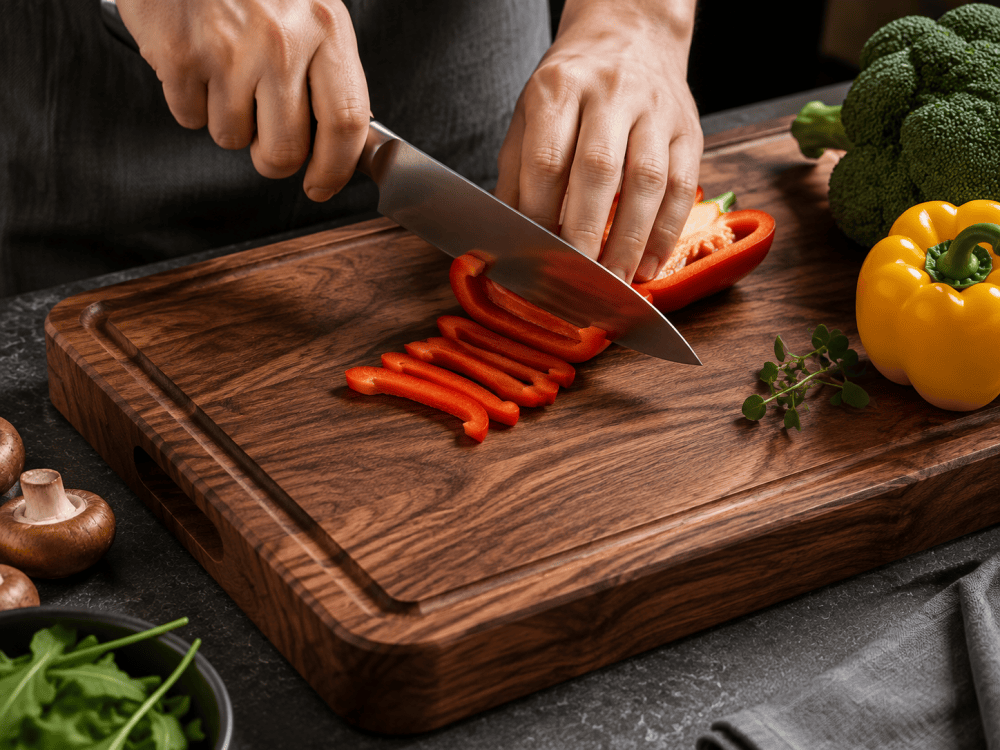
Walnut is a very good material for cutting boards because it combines good durability with a relatively knife-friendly surface. It is especially attractive for premium kitchens, serving boards, and end grain cutting boards. The main disadvantages are its higher price, softer surface compared with maple, and the need for regular maintenance.
What Makes Walnut a Good Material for Cutting Boards?
Walnut is a hardwood commonly selected for premium woodworking and kitchen products. Its appeal comes from the combination of natural appearance and practical performance.
For cutting boards, three characteristics are particularly important: hardness, grain structure, and dimensional stability.
A cutting board needs to be hard enough to withstand repeated knife contact, but an excessively hard surface can be less forgiving to knife edges. Walnut sits on the softer side of commonly used cutting-board hardwoods, which is one reason it is often considered knife-friendly.
At the same time, walnut provides enough strength for normal chopping, slicing, and food preparation. This makes it suitable for consumers who want a board that feels substantial without using an extremely hard cutting surface.
Walnut Cutting Board Pros
1. Knife-Friendly Cutting Surface
One of the biggest advantages of a walnut cutting board is its relatively moderate hardness. Compared with harder woods such as hard maple, walnut generally provides a more forgiving surface for knife edges.
This characteristic is particularly attractive to home cooks who use high-quality chef's knives or other sharp kitchen knives and want to minimize unnecessary wear during everyday preparation.
This does not mean walnut can never affect knife sharpness. Every cutting surface contributes some degree of wear. However, walnut is generally considered a good compromise between durability and knife friendliness.
2. Rich Natural Appearance
Walnut is recognized for its deep brown color and distinctive natural grain. Its darker appearance gives a cutting board a more premium and sophisticated look than many lighter wood species.
This makes a walnut cutting board suitable not only for food preparation but also for serving and kitchen display.
For lifestyle-oriented kitchenware brands, the visual appeal of walnut can be an important selling point because the board can function as both a practical kitchen tool and a decorative accessory.
3. Good Balance of Durability and Usability
A good cutting board needs to withstand repeated knife contact without becoming excessively hard or uncomfortable to use.
Walnut provides a practical balance. It is durable enough for everyday food preparation while remaining softer than harder cutting-board woods such as maple.
This balance is one reason walnut is frequently used for premium cutting boards and butcher blocks.
4. Suitable for End Grain Construction
Walnut works particularly well in walnut end grain cutting board designs.
In an end grain board, the exposed ends of the wood fibers face upward toward the knife. This construction changes how the blade interacts with the wood and can help create a durable, knife-friendly cutting surface.
End grain construction is also visually distinctive. The exposed grain can create checkerboard, striped, or other decorative patterns, making walnut especially attractive for premium kitchenware products.
Suggested Alt Text: Walnut end grain cutting board showing natural wood grain
5. Works Well for Premium Kitchenware
The combination of natural color, wood grain, and practical performance gives walnut strong positioning in the premium kitchenware market.
A walnut cutting board can be marketed as an everyday preparation tool, a serving board, a butcher block, or a decorative kitchen accessory depending on its dimensions and construction.
Walnut Cutting Board Cons
Although walnut has many advantages, it is not a perfect material. Buyers should understand its limitations before choosing a walnut cutting board.
1. Higher Cost Than Many Alternative Materials
Walnut is often positioned above entry-level materials such as bamboo and many plastic cutting boards. Premium walnut boards can also cost more than standard wood boards because of material selection, construction, finishing, and craftsmanship.
For consumers, the higher price may be justified by the appearance and performance. For B2B buyers, however, material cost needs to be considered alongside target retail price and market positioning.
2. Softer Than Hard Maple
Walnut's moderate hardness is an advantage for knife friendliness, but it also means that the surface can show knife marks sooner than harder woods.
Hard maple is commonly selected when maximum surface durability is a priority. Walnut is often preferred when buyers want a softer, more visually distinctive board.
Therefore, the choice between walnut and maple depends on the intended balance between knife friendliness, durability, appearance, and product positioning.
3. Requires Regular Maintenance
Like most quality wooden cutting boards, walnut boards require more maintenance than many plastic alternatives.
Regular cleaning and conditioning help protect the wood from excessive drying and moisture changes. Food-grade mineral oil is commonly used to condition wooden cutting boards, while some products are finished with food-safe waxes as an additional moisture barrier.
4. Dark Wood Can Hide Some Surface Changes
The dark color of walnut is visually attractive, but it can make certain surface changes less obvious. Buyers should therefore pay attention to deep knife grooves, cracks, or areas that become excessively dry rather than relying only on appearance.
Walnut Cutting Board Pros and Cons at a Glance
| Feature | Walnut Cutting Board |
|---|---|
| Knife Friendliness | High |
| Durability | Good to High |
| Surface Hardness | Moderate |
| Appearance | Premium, dark natural grain |
| Maintenance | Regular conditioning recommended |
| Price Positioning | Mid to Premium |
| Serving Use | Excellent |
| End Grain Construction | Highly Suitable |
Is Black Walnut Good for Cutting Boards?
Black walnut cutting boards are a popular option for buyers looking for a darker, premium-looking wooden cutting board.
Black walnut is particularly attractive because of its deep brown tones and natural grain variations. These characteristics can create a distinctive appearance without relying on artificial colors or decorative coatings.
For kitchenware brands, black walnut can therefore support premium product positioning and gift-oriented collections.
However, buyers should still evaluate the actual wood quality, construction, moisture control, surface finishing, and food-contact suitability rather than choosing a board based solely on the wood species.
Is a Walnut End Grain Cutting Board Better?
A walnut end grain cutting board can be an excellent choice when durability, knife friendliness, and premium appearance are all important.
End grain construction places the wood fibers vertically relative to the cutting surface. When a knife contacts the board, the blade interacts with the ends of the fibers rather than cutting across the long grain.
This construction is widely associated with durable, knife-friendly cutting surfaces and is commonly used for premium butcher blocks and cutting boards.
However, end grain boards are typically more complex to manufacture and may be heavier and more expensive than simpler edge-grain or face-grain designs.
If your priority is a premium board for frequent chopping and long-term use, a walnut end grain cutting board is worth considering. If you prioritize lower weight, simpler construction, or lower production cost, an edge-grain walnut board may be more appropriate.
Walnut vs Maple Cutting Board: Which Is Better?
One of the most common comparisons buyers make is walnut vs maple. Both are premium hardwoods widely used for butcher blocks and high-end cutting boards, but they offer different strengths.
Hard maple is generally chosen for maximum durability, while walnut is often preferred for its darker appearance and slightly more forgiving cutting surface.
| Feature | Walnut | Hard Maple |
|---|---|---|
| Color | Dark Brown | Light Cream |
| Knife Friendliness | Excellent | Very Good |
| Durability | High | Very High |
| Surface Hardness | Moderate | Higher |
| Premium Appearance | Excellent | Excellent |
| Maintenance | Regular Oiling | Regular Oiling |
Choose walnut if you prefer a darker premium appearance and slightly gentler knife feel. Choose maple if maximum surface durability is your highest priority.
Why Walnut and Maple End Grain Cutting Boards Are Popular
The keyword walnut and maple end grain cutting board has become increasingly popular because this combination blends the strengths of two premium hardwoods.
A walnut-and-maple end grain board typically uses:
- Hard maple for durability
- Walnut for visual contrast
- End grain construction for premium performance
- Decorative checkerboard or border designs
This combination has become common in premium butcher blocks because it creates both functional and visual value. According to
Walnut End Grain Cutting Board vs Edge Grain
Another important buying decision is choosing between an edge grain walnut board and a walnut end grain cutting board.
| Feature | End Grain | Edge Grain |
|---|---|---|
| Knife Feel | Softer | Firmer |
| Durability | Excellent | High |
| Appearance | Checkerboard Pattern | Linear Grain |
| Weight | Heavier | Lighter |
| Price | Higher | Lower |
End grain construction is often considered the premium choice because the knife contacts the ends of the wood fibers instead of cutting across the grain. Professional woodworkers frequently recommend end grain boards for heavy chopping because they provide excellent durability while remaining relatively gentle on knives.
Black Walnut Cutting Board: Why It Is So Popular
A black walnut cutting board has become one of the most desirable premium cutting boards because of its distinctive appearance.
Compared with lighter woods, black walnut offers:
- Rich chocolate-brown color
- Elegant grain patterns
- Premium kitchen styling
- Excellent serving board potential
- Strong gift-market appeal
Many premium manufacturers position black walnut cutting boards as heirloom-quality kitchen products designed for both everyday cooking and countertop display.
Suggested Alt Text: Black walnut cutting board with premium end grain pattern
Walnut vs Bamboo Cutting Board
Many consumers compare walnut with bamboo because both are natural materials.
| Feature | Walnut | Bamboo |
|---|---|---|
| Knife Friendliness | Excellent | Moderate |
| Durability | High | High |
| Appearance | Premium Dark Wood | Natural Light Bamboo |
| Sustainability | Good | Excellent |
| Price Position | Premium | Entry–Mid |
Professional knife experts often recommend walnut or maple over bamboo when preserving knife sharpness is important because bamboo tends to be harder on blades.
Walnut vs Acacia Cutting Board
Walnut and acacia are both premium-looking hardwoods, but they appeal to slightly different buyers.
| Feature | Walnut | Acacia |
|---|---|---|
| Color | Dark Brown | Golden Brown |
| Grain | Fine | More Varied |
| Knife Feel | Excellent | Very Good |
| Serving Appeal | Excellent | Excellent |
Walnut generally appeals more to buyers seeking a darker luxury aesthetic, while acacia often attracts consumers who prefer more dramatic natural grain variation.
Can You Use a Walnut Cutting Board for Raw Meat?
Yes. A properly maintained walnut cutting board can be used for raw meat preparation, but food safety practices remain essential.
Best practices include:
- Wash immediately after use.
- Dry the board thoroughly.
- Use separate boards when appropriate for different food categories.
- Condition the wood regularly.
Many experienced cooks use separate cutting boards for raw meat and ready-to-eat foods to reduce cross-contamination risks, regardless of whether the board is made from walnut, maple, or plastic.
How to Care for a Walnut Cutting Board
Proper maintenance can significantly extend the life of a walnut cutting board.
Daily Cleaning
- Wash with warm water and mild soap.
- Never soak the board.
- Dry immediately after cleaning.
Regular Conditioning
When the wood begins to look dry, apply food-grade mineral oil or a suitable board conditioner to help protect the surface from moisture loss.
Storage
Store the board in a dry, well-ventilated location. Avoid leaving it near strong heat sources or in standing water.
B2B Buying Guide: Choosing Walnut Cutting Boards for Retail
For wholesalers, distributors, and private-label brands, walnut offers strong premium positioning. Buyers should evaluate:
- Wood species consistency
- Moisture content control
- End grain or edge grain construction
- Food-safe finishing
- Packaging quality
- Customization options
- Private-label capability
Premium markets often respond well to walnut because it combines functionality with luxury appearance, making it suitable for gift collections, lifestyle brands, and upscale kitchenware retailers.
Walnut cutting boards can be customized with laser engraving, juice grooves, handles, rubber feet, gift packaging, and private-label branding, making them highly suitable for premium retail collections.
How to Choose the Best Walnut Cutting Board
Not every walnut cutting board offers the same performance. The material is important, but construction, thickness, finishing, and intended use can significantly affect the overall quality of the product.
If you are looking for the best walnut cutting board for everyday cooking or premium kitchenware retail, consider the following factors.
1. Choose the Right Construction
For frequent chopping and heavy food preparation, an end grain construction can be an excellent option. A walnut end grain cutting board provides a substantial cutting surface and can offer a premium combination of durability, appearance, and knife-friendly performance.
Edge grain and face grain walnut boards can also be good choices when a lighter, thinner, or more affordable product is preferred.
2. Check the Board Thickness
Thickness affects stability, weight, durability, and overall product positioning.
A thicker walnut board generally feels more substantial and stable during cutting, while a thinner board may be easier to handle and store. The ideal thickness depends on whether the product is designed for everyday preparation, serving, gifting, or premium culinary use.
3. Look for Properly Finished Surfaces
A high-quality walnut cutting board should have a smooth, well-finished cutting surface without rough areas or sharp edges.
For food-contact applications, buyers should also confirm that the finishing materials are appropriate for the intended market and use.
4. Consider Practical Features
Additional features can make a walnut cutting board more convenient for consumers.
- Juice grooves for meat and fruit preparation
- Non-slip feet for improved stability
- Integrated handles for carrying
- Rounded edges for comfortable handling
- Engraving or branding for gift products
- Custom packaging for retail presentation
5. Consider the Intended Market
A compact walnut board may be suitable for apartment kitchens or gift collections, while a large black walnut cutting board can be positioned as a premium countertop or serving product.
For B2B buyers, product dimensions and construction should be matched with the target retail price, packaging requirements, shipping costs, and customer expectations.
Best Uses for Walnut Cutting Boards
Walnut cutting boards are versatile enough to serve several kitchen and lifestyle applications.
| Application | Why Walnut Works Well |
|---|---|
| Vegetable Preparation | Knife-friendly surface and good durability |
| Fruit Preparation | Easy to use and attractive for countertop display |
| Bread Preparation | Stable cutting surface and premium appearance |
| Meat Preparation | Suitable when properly cleaned and maintained |
| Cheese & Charcuterie | Excellent natural appearance and serving appeal |
| Gift Market | Premium appearance and customization potential |
Walnut Cutting Boards for Premium Retail Markets
The visual characteristics of walnut make it particularly attractive for premium kitchenware collections. Unlike many basic plastic or entry-level cutting boards, walnut products can be presented as both functional kitchen tools and lifestyle products.
For retailers, a walnut cutting board can therefore occupy several product categories at the same time:
- Premium kitchenware
- Wooden kitchen accessories
- Serving boards
- Housewarming gifts
- Wedding gifts
- Chef and cooking gifts
- Home décor accessories
A strong product presentation can emphasize the natural walnut grain, craftsmanship, end grain construction, food preparation functionality, and long-term care characteristics.
Can Walnut Cutting Boards Be Customized?
Yes. Walnut is well suited to customized kitchenware products, especially for private-label and premium retail programs.
Depending on the manufacturing process, customization options may include:
- Custom dimensions
- Custom thickness
- Laser engraving
- Logo branding
- Juice grooves
- Handle designs
- Custom edge profiles
- Gift boxes
- Private-label packaging
For brands targeting premium kitchenware markets, combining a black walnut cutting board with custom engraving and gift packaging can create a differentiated product line.
Frequently Asked Questions About Walnut Cutting Boards
Is walnut good for cutting boards?
Yes. Walnut is considered a very good material for cutting boards because it offers a useful balance of durability, knife friendliness, natural appearance, and usability. It is particularly suitable for premium household kitchens and serving applications.
Is walnut better than maple for a cutting board?
Neither material is universally better. Walnut is generally preferred when knife friendliness and a dark premium appearance are important, while hard maple is often selected for greater surface hardness and durability. The best choice depends on the intended use and buyer preference.
Is a walnut end grain cutting board worth it?
A walnut end grain cutting board can be worth considering for buyers who want a premium, durable cutting surface with a distinctive appearance. End grain construction is also commonly associated with a more knife-friendly cutting experience.
Are black walnut cutting boards safe?
A properly manufactured and finished black walnut cutting board can be suitable for food preparation. However, buyers should consider the wood quality, finishing materials, manufacturing process, and intended food-contact requirements rather than judging safety by wood species alone.
Do walnut cutting boards dull knives?
Walnut is relatively knife-friendly compared with many harder cutting surfaces. Normal knife use will still gradually wear a blade, but walnut is generally considered a good choice when minimizing unnecessary knife wear is important.
Can you put a walnut cutting board in the dishwasher?
Wooden walnut cutting boards should generally not be placed in a dishwasher. High temperatures, prolonged water exposure, and rapid drying can contribute to warping, cracking, or other structural problems.
How often should you oil a walnut cutting board?
The frequency depends on usage and environmental conditions. When the surface begins to look dry or loses its conditioned appearance, applying a suitable food-grade mineral oil or board conditioner can help maintain the wood.
Is walnut good for an end grain cutting board?
Yes. Walnut is well suited to end grain construction. Its attractive color also creates strong visual contrast when combined with lighter woods such as maple.
What is the difference between walnut and black walnut cutting boards?
The term walnut can refer to several walnut species, while black walnut commonly refers to American black walnut. Buyers should confirm the exact wood species and source when comparing products because color, grain, hardness, and availability can vary.
Walnut Cutting Board: Final Verdict
So, is walnut good for cutting boards? For most home kitchens and premium kitchenware applications, the answer is yes.
Walnut offers a strong combination of:
- Knife-friendly performance
- Good durability
- Rich natural color
- Distinctive grain patterns
- Premium market positioning
- Excellent serving and gifting potential
Its main disadvantages are its relatively higher cost, softer surface compared with harder woods such as maple, and the maintenance required for long-term performance.
For buyers seeking the best combination of premium appearance and cutting performance, a walnut end grain cutting board is one of the strongest options to consider. For retailers, walnut cutting boards can also provide a valuable premium product category with opportunities for customization, private labeling, and gift-oriented packaging.
Walnut is not simply a decorative wood. When properly selected, constructed, finished, and maintained, it can provide a durable and knife-friendly cutting surface while offering the premium appearance that many consumers look for in modern kitchenware.
Looking for Custom Walnut Cutting Boards?
Kitlucy develops and supplies wooden cutting boards for kitchenware brands, wholesalers, retailers, and distributors. Different materials, sizes, shapes, constructions, finishes, branding methods, and packaging solutions can be developed according to market requirements.
Whether you are looking for walnut cutting boards, end grain cutting boards, premium wooden boards, or customized private-label products, our team can support product development and wholesale sourcing.
Related Blogs