How to Find a Reliable Cutting Board Manufacturer for Your Business
How to Choose a Reliable Cutting Board Manufacturer for Wholesale Business
Choosing the right cutting board manufacturer is one of the most important decisions for kitchenware brands, wholesalers, retailers, and importers. A reliable supplier can provide stable product quality, competitive pricing, professional customization services, and long-term supply support.
With increasing demand for food-safe and functional kitchen products, buyers are looking for more than just a cutting board supplier. They need an experienced manufacturing partner who understands material selection, international certifications, OEM development, and quality control.
This guide explains how to find a reliable cutting board manufacturer, what factors to evaluate, and how to reduce risks when sourcing cutting boards for global markets.
Why Choosing the Right Cutting Board Manufacturer Matters
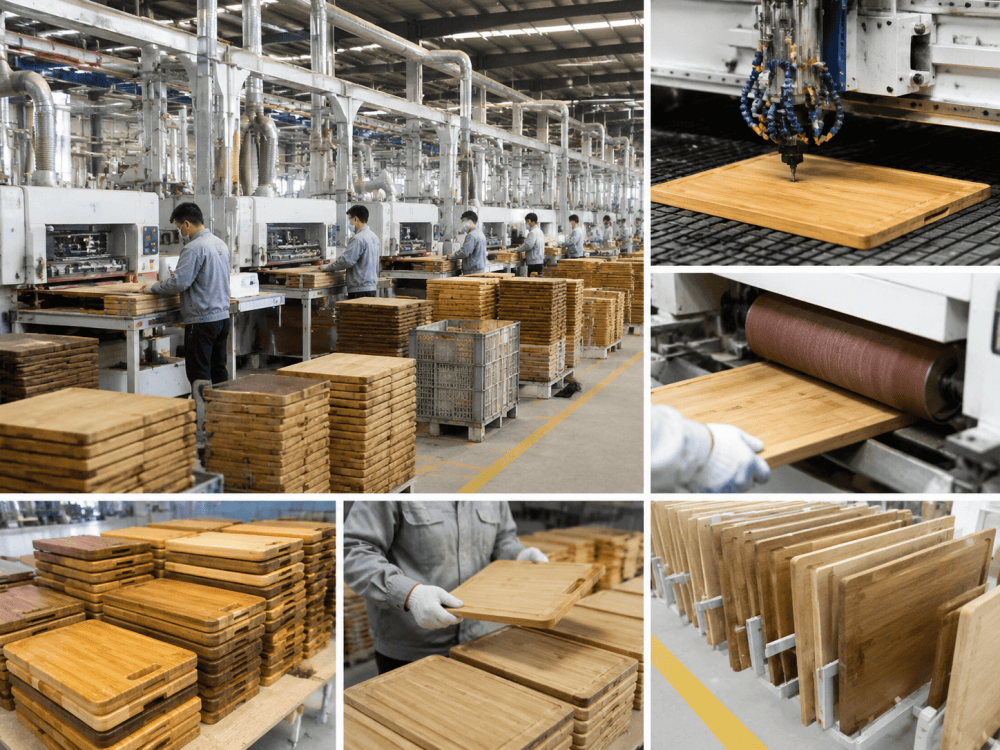
A cutting board manufacturer directly affects your product quality, customer satisfaction, brand reputation, and business profitability.
Working with an unreliable supplier may result in problems such as inconsistent materials, poor workmanship, delayed delivery, failed certification tests, and increased after-sales costs.
A professional cutting board manufacturer should provide not only products, but also complete solutions including material selection, product customization, quality inspection, packaging, and export support.
What Types of Cutting Boards Can Manufacturers Supply?
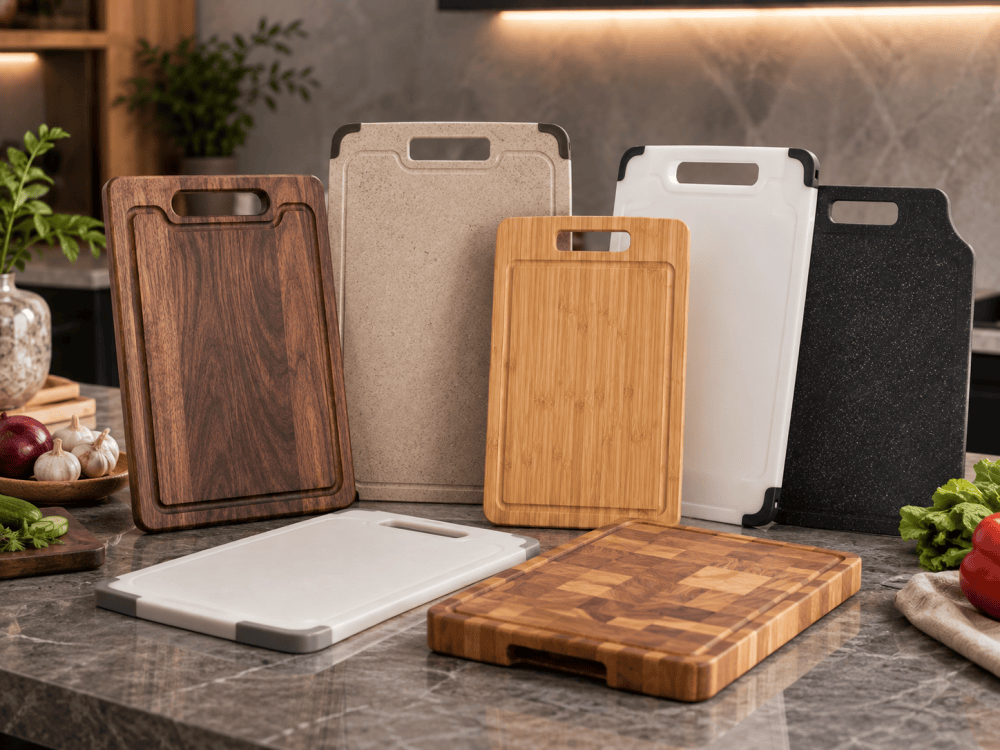
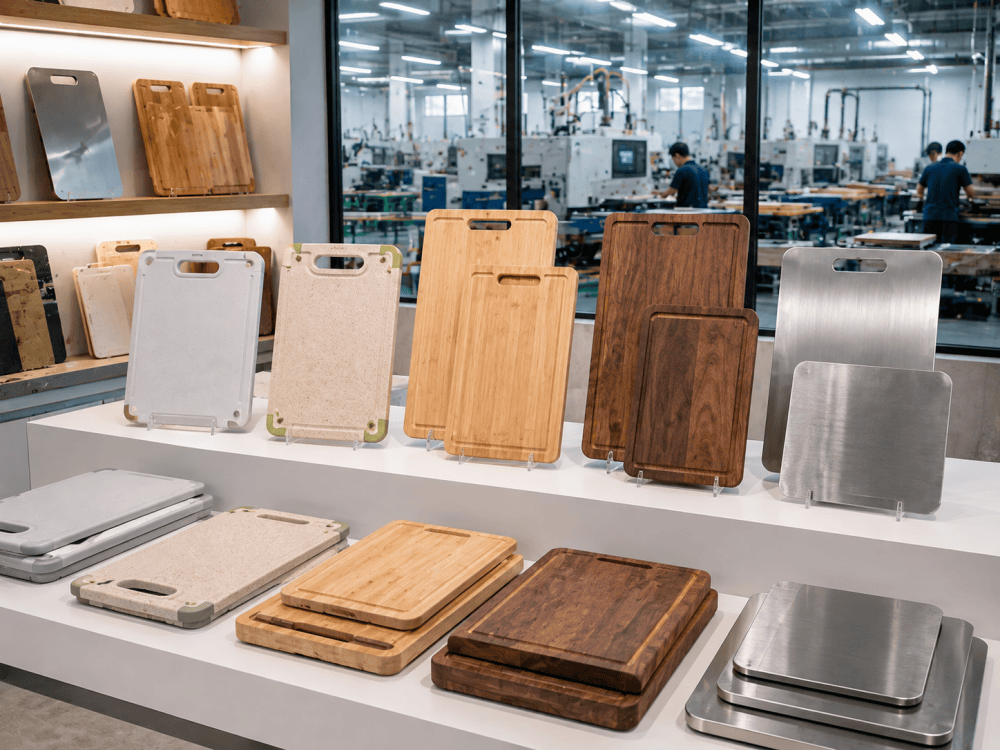
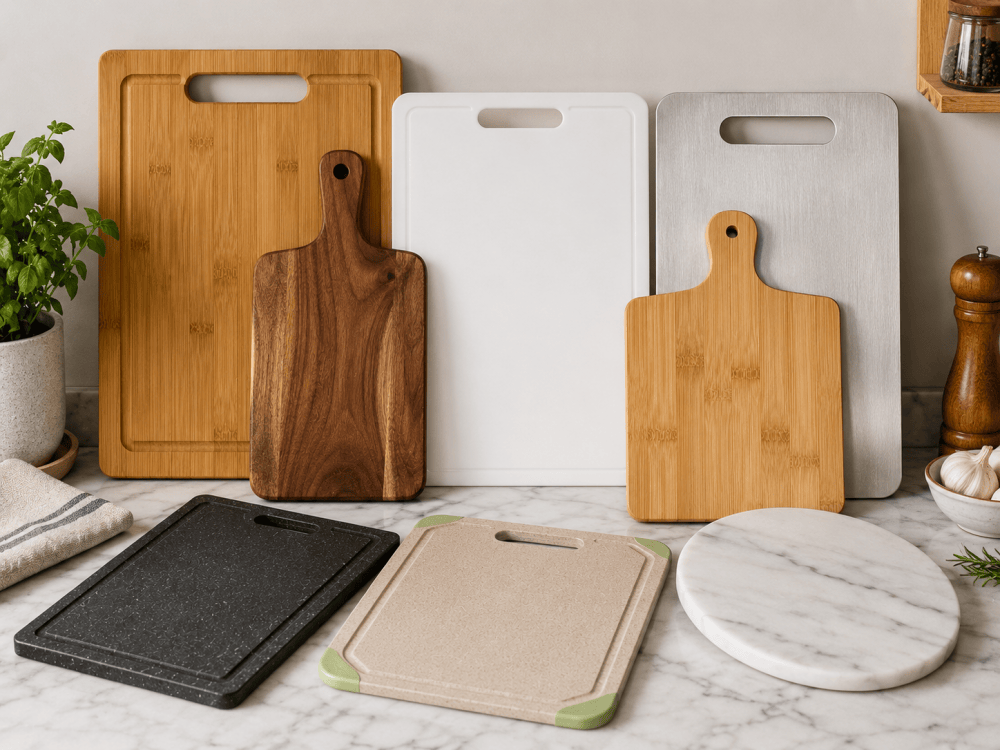
A capable cutting board manufacturer should offer different materials and designs to meet various market requirements, from household retail products to commercial kitchen solutions.
Plastic Cutting Boards
Plastic cutting boards made from PE or PP materials are widely used in home kitchens, restaurants, and food service industries.
Their advantages include durability, easy cleaning, lightweight structure, and excellent cost performance, making them popular among wholesale buyers.
Wood and Bamboo Cutting Boards
Wooden and bamboo cutting boards are popular in premium kitchenware markets because of their natural appearance and eco-friendly image.
Manufacturers should provide proper surface treatment and food-contact compliance to ensure safety and durability.
Functional Cutting Boards
Modern buyers increasingly prefer value-added designs instead of traditional flat boards.
- Non slip cutting boards
- Cutting boards with juice groove
- Double sided cutting boards
- Foldable cutting boards
- Custom shape cutting boards
Key Factors to Evaluate a Cutting Board Manufacturer
1. Manufacturing Experience
Experience is one of the most important indicators when selecting a cutting board supplier.
Manufacturers with years of production experience usually have better knowledge of raw materials, production processes, quality standards, and international market requirements.
2. Food-Grade Material Compliance
Since cutting boards directly contact food, material safety is critical.
Reliable manufacturers should be able to provide food-grade materials and compliance documents such as FDA, LFGB, or other market-specific certifications.
3. OEM and Customization Capability
For brands and wholesalers, customization capability is an important factor when choosing a cutting board manufacturer. A professional supplier should be able to support OEM and private label projects based on different market requirements.
Common customization services include:
- Custom cutting board shapes and sizes
- Private logo printing or laser engraving
- Customized colors and materials
- Retail packaging design
- Product development based on market trends
4. Production Capacity and Supply Stability
A reliable cutting board manufacturer should have sufficient production capacity to support both small wholesale orders and large-scale distribution projects.
Before cooperation, buyers should understand the supplier’s production capability, lead time, monthly output, and ability to handle peak season demand.
5. Quality Control System
Quality control is essential for maintaining consistent product performance. Professional manufacturers should have inspection procedures throughout the entire production process.
| Quality Control Stage | Inspection Focus |
|---|---|
| Raw Material Inspection | Material safety, thickness, color consistency |
| Production Inspection | Size accuracy, surface quality, processing defects |
| Finished Product Inspection | Appearance, durability, packaging quality |
| Before Shipment | Quantity check and export standard confirmation |
Important Questions to Ask a Cutting Board Manufacturer
Before placing an order, buyers should evaluate suppliers carefully. Asking the right questions can help identify professional manufacturers and avoid sourcing risks.
| Question | Why It Matters |
|---|---|
| Are you a factory or trading company? | Understand production capability and supply chain control |
| What cutting board materials do you specialize in? | Confirm product expertise and manufacturing experience |
| Can you provide FDA or LFGB compliance? | Ensure products meet export market requirements |
| Do you support OEM and private label? | Evaluate customization capability |
| What is your MOQ and production lead time? | Check whether the supplier matches your business model |
| Can you provide samples before bulk orders? | Verify product quality before cooperation |
How to Verify a Cutting Board Manufacturer Before Cooperation
Check Factory Background
Before cooperation, buyers should review the manufacturer's company history, production facilities, export experience, and customer markets.
Manufacturers with stable export experience usually understand international packaging requirements, quality standards, and shipping procedures better.
Request Product Samples
Samples are one of the best ways to evaluate a supplier’s actual production quality.
Buyers should check:
- Material quality and thickness
- Surface smoothness
- Edge finishing
- Anti-slip performance
- Overall durability
Review Certifications and Documents
For food-contact products, compliance documentation is extremely important.
Depending on the target market, buyers may need:
- FDA food-contact compliance
- LFGB certification
- Material safety reports
- Factory quality documents
Common Problems When Sourcing Cutting Boards
Low Material Quality
Some suppliers reduce costs by using lower-grade materials, which may affect durability, safety, and customer satisfaction.
Working with manufacturers that control raw material selection can significantly reduce quality problems.
Limited Product Development Ability
Kitchenware trends change quickly. Manufacturers without product development capability may struggle to provide innovative designs.
A strong supplier should be able to recommend new designs such as:
- Space-saving cutting boards
- Multifunctional cutting boards
- Eco-friendly materials
- Smart kitchen storage designs
Poor Communication and Delivery Management
Clear communication is essential for international sourcing. Slow response times or unclear production schedules can create unnecessary risks.
Reliable manufacturers usually provide professional communication, clear timelines, and transparent order management.
Why Choose China Cutting Board Manufacturers?
China has become one of the world's major kitchenware manufacturing centers, offering strong production capabilities, complete supply chains, and competitive pricing advantages.
For international buyers, working with experienced China cutting board manufacturers can provide access to a wider product range, flexible customization options, and efficient OEM solutions.
Complete Manufacturing Supply Chain
China's kitchenware industry has developed a mature supply chain covering raw materials, mold development, production processing, packaging, and export logistics.
This allows manufacturers to provide more efficient production solutions and support customized cutting board projects for different markets.
Flexible OEM and Private Label Services
Many Chinese cutting board manufacturers support OEM and ODM cooperation, helping brands create unique products according to their positioning.
Customization options may include:
- Custom shapes and dimensions
- Different material combinations
- Customized colors and patterns
- Brand logos and packaging
- New product development
Competitive Manufacturing Costs
Compared with many other manufacturing regions, China offers competitive production costs while maintaining large-scale manufacturing efficiency.
This makes Chinese suppliers an attractive choice for wholesalers, retailers, and global kitchenware brands looking for reliable long-term partnerships.
Current Trends in Cutting Board Manufacturing
The cutting board market is continuously evolving. Modern consumers are looking for products that combine safety, functionality, and attractive design.
Functional Cutting Board Designs
Traditional cutting boards are being upgraded with additional features that improve user experience.
Popular designs include:
- Non-slip cutting boards
- Double sided cutting boards
- Cutting boards with juice grooves
- Foldable cutting boards
- Storage-friendly designs
Food Safety and Certified Materials
Food safety has become a major purchasing factor in global markets. Buyers increasingly prefer manufacturers that use food-grade materials and provide compliance documentation.
Materials commonly selected for export cutting boards include:
- PE (Polyethylene)
- PP (Polypropylene)
- Bamboo
- Natural wood
- Composite materials
Eco-Friendly Cutting Board Solutions
Sustainability is becoming increasingly important in kitchenware markets. Many brands are exploring renewable or recyclable materials to meet consumer expectations.
Manufacturers with experience in eco-friendly materials can help brands develop products that match future market trends.
How to Choose the Best Cutting Board Manufacturer for Your Business
Selecting the right supplier requires more than comparing prices. Buyers should evaluate the complete value a manufacturer can provide.
| Evaluation Factor | What Buyers Should Check |
|---|---|
| Manufacturing Experience | Years in production, export markets, customer experience |
| Product Range | Material options, designs, functional features |
| Quality Control | Inspection system and consistency management |
| Certification Support | FDA, LFGB, and food-contact compliance |
| Customization Ability | OEM, private label, packaging solutions |
Frequently Asked Questions
What should I look for in a cutting board manufacturer?
A reliable cutting board manufacturer should have production experience, stable quality control, food-grade material compliance, OEM capability, and strong export experience.
What certifications are important for cutting boards?
FDA and LFGB food-contact compliance are commonly requested certifications for cutting boards exported to international markets. Requirements may vary depending on the destination country.
Can cutting board manufacturers customize products?
Yes. Professional manufacturers usually provide OEM and private label services, including custom sizes, materials, colors, logos, and packaging.
What is the best material for wholesale cutting boards?
The best material depends on the target market. PE and PP cutting boards are popular for commercial use, while wood and bamboo cutting boards are preferred for premium household markets.
How can I reduce sourcing risks when buying cutting boards?
Buyers can reduce risks by checking factory background, requesting samples, confirming certifications, reviewing quality systems, and maintaining clear communication with suppliers.
Conclusion
Finding a reliable cutting board manufacturer is essential for building a successful kitchenware business. The right supplier can provide stable quality, competitive pricing, customization support, and long-term cooperation opportunities.
When selecting a manufacturer, buyers should focus on more than cost alone. Production experience, food safety compliance, quality control, and OEM capabilities are key factors that determine supplier reliability.
By partnering with an experienced cutting board manufacturer, brands, wholesalers, and distributors can develop competitive products and meet growing global demand for functional and safe kitchen tools.
Looking for a Reliable Cutting Board Manufacturer?
We provide food-grade cutting boards with OEM and private label services, supporting global brands, wholesalers, and distributors with customized designs, stable quality, and professional manufacturing solutions.
Contact us to discuss your cutting board project and explore customized kitchenware solutions.
Related Blogs