Top 15 Cutting Board Manufacturers in the USA 2026
Top 15 Cutting Board Manufacturers in the USA 2026
The cutting board market in the United States includes manufacturers, kitchenware brands, custom suppliers, and commercial foodservice companies serving a wide range of customers. These include home kitchens, restaurants, hotels, foodservice businesses, retailers, distributors, and private-label kitchenware brands.
For B2B buyers, choosing the right cutting board supplier involves much more than comparing product appearance. Material selection, product durability, food-contact requirements, customization capabilities, production capacity, packaging, minimum order quantities, quality control, and supply chain reliability can all affect the final sourcing decision.
In this guide: We introduce 15 notable cutting board manufacturers, brands, and suppliers serving the U.S. market in 2026. The list covers wooden, bamboo, plastic, composite, commercial-grade, and custom cutting board solutions, with a focus on factors that matter to wholesale buyers, retailers, foodservice companies, and private-label brands.

Important note: The U.S. cutting board market includes domestic manufacturers, U.S.-based kitchenware brands, custom suppliers, and companies that work with manufacturing partners. Therefore, this article uses "manufacturers and suppliers" in a broader B2B sourcing context. Not every company listed below produces every cutting board product domestically in the United States.
Table of Contents
- Quick Comparison of Top Cutting Board Manufacturers
- How We Selected These Companies
- Top 15 Cutting Board Manufacturers and Suppliers
- Which Cutting Board Material Is Best for B2B Buyers?
- What to Look for in a Cutting Board Manufacturer
- OEM vs. ODM Cutting Board Manufacturing
- USA vs. China Cutting Board Manufacturers
- Cutting Board Manufacturer Buying Checklist
- Cutting Board Trends in 2026
- Frequently Asked Questions
Quick Comparison: Top Cutting Board Manufacturers in the USA
The following table provides a quick overview of the companies covered in this guide. Product focus, materials, and customization capabilities vary by company, so buyers should review each supplier according to their own sourcing requirements.
| Company | Main Materials | Product Focus | Customization | Best For |
|---|---|---|---|---|
| John Boos & Co. | Hardwood | Cutting Boards, Butcher Blocks | Selected Products | Premium & Commercial |
| CuttingBoard.com | Bamboo, Hardwood, HDPE | Custom Cutting Boards | High | Custom Projects |
| Totally Bamboo | Bamboo, Birch, Acacia | Retail Cutting Boards | Selected Products | Retail & Gift |
| The Boardsmith | Hardwood | Premium Cutting Boards | Selected Products | Premium Kitchenware |
| JK Adams | Wood, Bamboo | Kitchen Boards & Accessories | Selected Products | Kitchen & Retail |
| Proteak | Teak | Teak Cutting Boards | Selected Products | Premium Wood Products |
| Epicurean | Paper Composite | Composite Cutting Boards | Brand Specific | Modern Kitchenware |
| Dexas | Plastic & Composite | Kitchen Cutting Boards | Selected Products | Retail Kitchenware |
| San Jamar | Plastic / Foodservice Materials | Commercial Cutting Boards | Commercial Programs | Foodservice |
| Carlisle FoodService Products | Plastic & Commercial Materials | Foodservice Boards | Commercial Programs | Restaurants & Foodservice |
| Winco | Plastic, Wood & Other Materials | Commercial Kitchen Products | Limited | Foodservice |
| Ironwood Gourmet | Wood | Wooden Cutting Boards | Selected Products | Retail & Home Kitchen |
| Earlywood | Hardwood | Handcrafted Kitchenware | Selected Products | Premium & Artisan |
| Virginia Boys Kitchens | Hardwood | Wooden Cutting Boards | Selected Products | Wood Kitchenware |
| Maple Landmark | Maple & Hardwood | Wooden Kitchen Products | Selected Products | Made-in-USA Wood Products |
How We Selected These Cutting Board Manufacturers
There is no single standard definition of a "cutting board manufacturer" in the U.S. market. Some companies operate their own manufacturing facilities, while others combine domestic product development, manufacturing partnerships, distribution, and wholesale services.
For this reason, this list focuses on companies that have a meaningful presence in the U.S. cutting board and kitchenware market and are relevant to buyers looking for established brands, custom products, commercial solutions, wholesale products, or private-label sourcing opportunities.
The main factors considered include:
- Cutting board product range
- Material selection
- Manufacturing or sourcing capabilities
- Product quality and market positioning
- Customization potential
- Wholesale or commercial availability
- Product specialization
- Suitability for retail, foodservice, or private-label buyers
Top 15 Cutting Board Manufacturers and Suppliers
John Boos & Co.
John Boos & Co. is one of the best-known American names in cutting boards, butcher blocks, commercial kitchen equipment, and wood kitchen surfaces. Founded in 1887, the company has developed a long-standing presence in professional and residential kitchen products.
Its cutting boards and butcher blocks are particularly relevant to buyers looking for premium hardwood products and professional kitchen solutions. The company offers a range of wood products designed around durability, functionality, and traditional craftsmanship.
Main materials: Maple, walnut and other hardwoods.
Best for: Premium retail, restaurants, professional kitchens, butcher blocks, and high-end kitchenware.
Visit John Boos & Co. Official Website
Hardwood Butcher Blocks Commercial PremiumCuttingBoard.com
CuttingBoard.com focuses heavily on custom cutting boards and custom wood and plastic products. Its product range includes bamboo, hardwood, HDPE, pull-out cutting boards, sink-cover boards, and other customized board solutions.
The company is particularly relevant to buyers that require specific dimensions, materials, or project-based cutting board solutions. Custom products can be useful for kitchen manufacturers, hospitality projects, specialty retailers, and other applications where standard retail sizes may not be sufficient.
Main materials: Bamboo, maple, walnut, teak, cherry, HDPE, and composite materials.
Best for: Custom projects, hospitality, kitchen manufacturers, interior projects, and buyers requiring non-standard sizes.
Visit CuttingBoard.com Official Website
Custom Bamboo Hardwood HDPETotally Bamboo
Totally Bamboo is a U.S.-based kitchenware brand with a strong focus on bamboo cutting boards and sustainable kitchen products. The company has built its product range around bamboo and expanded into cutting boards, serving boards, utensils, bowls, and other kitchen accessories.
Its cutting board range includes traditional bamboo boards as well as decorative, shaped, engraved, and destination-themed products. This makes the company particularly relevant to retailers looking for visually distinctive products with strong gift and lifestyle appeal.
Main materials: Bamboo, birch, acacia and other natural materials.
Best for: Retailers, gift shops, kitchenware stores, lifestyle brands, and wholesale buyers.
Visit Totally Bamboo Official Website
Bamboo Retail Gift Market Eco-FriendlyThe Boardsmith
The Boardsmith is known for premium handcrafted wooden cutting boards designed for serious home cooks and professional-style kitchens. Its products emphasize solid hardwood construction, craftsmanship, durability, and long-term use.
The company's positioning provides a useful benchmark for premium cutting board brands that compete through material quality, craftsmanship, product design, and customer experience rather than mass-market pricing.
Main materials: Domestic hardwoods such as walnut, maple, and cherry.
Best for: Premium kitchenware, chef-focused products, specialty retailers, and high-end consumers.
Visit The Boardsmith Official Website
Premium Hardwood HandcraftedJK Adams
JK Adams is an established American kitchenware company offering wooden kitchen tools, cutting boards, bakeware-related products, and other cooking accessories. Its wooden cutting boards are positioned toward consumers and retailers looking for traditional kitchen products with a strong craftsmanship element.
For B2B buyers, JK Adams provides a useful benchmark for the traditional American wood kitchenware segment and demonstrates how cutting boards can be positioned as part of a broader kitchen product collection.
Main materials: Wood and bamboo.
Best for: Kitchenware retailers, specialty stores, and traditional wood kitchen products.
Visit JK Adams Official Website
Wood Kitchenware RetailProteak
Proteak is recognized for teak kitchen products, including cutting boards and butcher blocks. Teak is valued for its natural durability, attractive grain, and moisture-related performance, making it a popular material for premium kitchenware.
Teak cutting boards can occupy a premium position between conventional hardwood boards and more design-focused kitchen accessories. This makes teak an interesting material for brands looking to differentiate their product assortment.
Main material: Teak.
Best for: Premium kitchenware brands, retailers, gift markets, and consumers seeking natural wood products.
Visit Proteak Official Website
Teak Premium Natural WoodEpicurean
Epicurean is known for cutting boards made from paper-based composite materials. The brand provides an alternative to conventional wood and plastic boards and has built its product positioning around lightweight construction, durability, and contemporary kitchen design.
Composite cutting boards can be particularly interesting for kitchenware brands looking for differentiated materials rather than competing only in traditional wood or plastic categories.
Main material: Paper composite.
Best for: Modern kitchenware, premium retail, design-focused brands, and consumers seeking alternatives to traditional materials.
Visit Epicurean Official Website
Composite Modern Design RetailDexas
Dexas develops kitchen and household products with a strong focus on practical design. Its kitchen product range includes cutting boards and preparation tools using plastic and other functional materials.
For buyers researching mass-market kitchenware, Dexas provides an example of how cutting boards can be integrated with broader kitchen gadget and food-preparation product categories.
Main materials: Plastic and composite materials.
Best for: Retail kitchenware, practical kitchen products, and mass-market channels.
Plastic Kitchen Gadgets RetailSan Jamar
San Jamar is a commercial foodservice equipment and kitchen products brand serving professional food preparation environments. Its product portfolio includes cutting boards designed for commercial kitchen applications.
Commercial cutting boards differ from many consumer products because buyers may prioritize durability, standardized dimensions, color coding, sanitation practices, and operational efficiency.
Main materials: Commercial-grade plastic and foodservice materials.
Best for: Restaurants, foodservice operations, institutional kitchens, and commercial food preparation.
Visit San Jamar / CFS Brands Official Website
Foodservice Commercial Restaurant PlasticCarlisle FoodService Products
Carlisle FoodService Products is a major supplier serving the commercial foodservice market. Its product portfolio covers food preparation, storage, serving, sanitation, and other professional kitchen applications.
For cutting board buyers, commercial foodservice suppliers such as Carlisle are relevant when durability, standardized sizes, color coding, and compatibility with professional kitchen workflows are more important than decorative design.
Main materials: Plastic and commercial-grade materials.
Best for: Restaurants, catering companies, institutional kitchens, hotels, and foodservice distributors.
Visit Carlisle FoodService Products Official Website
Commercial Foodservice RestaurantWinco
Winco is a well-established supplier of commercial kitchen equipment and supplies. Its product portfolio includes food preparation tools and cutting boards designed for professional kitchen environments.
The company's positioning demonstrates the importance of standardized, functional, and cost-effective products for restaurant and foodservice buyers.
Main materials: Plastic, wood, and other kitchenware materials.
Best for: Restaurants, catering, foodservice distributors, and commercial kitchens.
Commercial Foodservice WholesaleIronwood Gourmet
Ironwood Gourmet focuses on wooden kitchenware and serving products, including cutting boards and preparation surfaces. The brand emphasizes the natural appearance of wood and combines functional kitchen products with decorative presentation.
This type of product positioning is particularly relevant to retailers that want cutting boards to function as both kitchen tools and serving accessories.
Main materials: Acacia and other hardwoods.
Best for: Retail stores, home kitchen brands, gift channels, and lifestyle retailers.
Visit Ironwood Gourmet Official Website
Acacia Wood Serving BoardsEarlywood
Earlywood is a Colorado-based wood kitchenware company known for handcrafted wooden kitchen tools and specialty kitchen products. Its approach focuses on natural hardwoods, craftsmanship, and distinctive product design.
For brands studying the premium wooden kitchenware segment, Earlywood demonstrates how material selection and recognizable design can help differentiate products in a crowded market.
Main materials: Hardwood.
Best for: Premium retailers, specialty kitchenware stores, artisan-style brands, and design-conscious buyers.
Visit Earlywood Official Website
Hardwood Premium ArtisanVirginia Boys Kitchens
Virginia Boys Kitchens focuses on handcrafted wooden kitchen products, including cutting boards, butcher blocks, serving boards, and other wood kitchen accessories.
The company represents the growing market for American-style handcrafted wood kitchenware, where consumers and retailers value natural materials, distinctive grain patterns, and handmade characteristics.
Main materials: Walnut, maple, cherry, and other hardwoods.
Best for: Premium wood kitchenware, specialty retailers, gifts, and handcrafted product segments.
Visit Virginia Boys Kitchens Official Website
Hardwood Handcrafted PremiumMaple Landmark
Maple Landmark is an American wood products manufacturer known for producing a wide range of wooden products. Its capabilities and product philosophy make it relevant to buyers interested in American-made wooden kitchen and household products.
The company is particularly representative of the small-to-medium American wood manufacturing sector, where domestic craftsmanship and wood product expertise can be important differentiators.
Main material: Maple and other hardwoods.
Best for: Wooden kitchenware, specialty retailers, gift products, and buyers interested in U.S.-made wood products.
Visit Maple Landmark Official Website
Maple Wood Made in USAWhich Cutting Board Material Is Best for B2B Buyers?
The best cutting board material depends on the target market, price point, usage environment, product positioning, and manufacturing requirements. Different materials provide different advantages for retailers, kitchenware brands, restaurants, and commercial buyers.
| Material | Main Advantages | Common Applications | Best B2B Positioning |
|---|---|---|---|
| Wood | Natural appearance, premium feel, and traditional kitchen appeal | Home kitchens, restaurants, gifts | Premium kitchenware |
| Bamboo | Lightweight, attractive appearance, and renewable material positioning | Home kitchens, retail, gifts | Eco-conscious retail |
| PP Plastic | Lightweight, practical, easy to maintain, and cost-effective | Home and commercial kitchens | Mass-market & wholesale |
| HDPE | Durable, non-porous, and commonly used in commercial food preparation | Restaurants, foodservice | Commercial kitchen |
| Composite | Modern appearance, lightweight construction, and differentiated material positioning | Premium home kitchens | Design-focused brands |
| Teak | Durable, attractive grain, and premium natural appearance | Home kitchens and serving | Premium natural products |
What Should You Look for in a Cutting Board Manufacturer?
For retailers and private-label brands, selecting a cutting board supplier requires a different approach than choosing a board for personal use. A reliable B2B supplier should be evaluated across several areas.
1. Material Options
Check whether the manufacturer can provide the materials required for your target market, such as PP, HDPE, bamboo, wood, composite, or other food-contact materials.
2. Size and Shape Customization
Custom sizes and shapes can help retailers differentiate their products. Common customization options include rectangular boards, round boards, square boards, reversible boards, handle designs, hanging holes, juice grooves, and integrated compartments.
3. Surface Design
The cutting surface can be customized through texture, color, engraving, printing, grooves, edge finishing, and other design features.
4. Branding and Private Label
For private-label kitchenware brands, manufacturers should be able to support logo application, packaging customization, barcode labeling, instruction cards, and other brand requirements.
5. MOQ
Minimum order quantity is one of the most important considerations for B2B buyers. MOQ can vary significantly depending on material, size, tooling, customization, packaging, and production requirements.
6. Quality Control
A professional cutting board supplier should have consistent standards for dimensions, surface finish, material quality, color consistency, packaging, and final inspection.
For international buyers, it is also useful to confirm the supplier's export experience, documentation, packaging standards, production lead times, and ability to support the destination market.
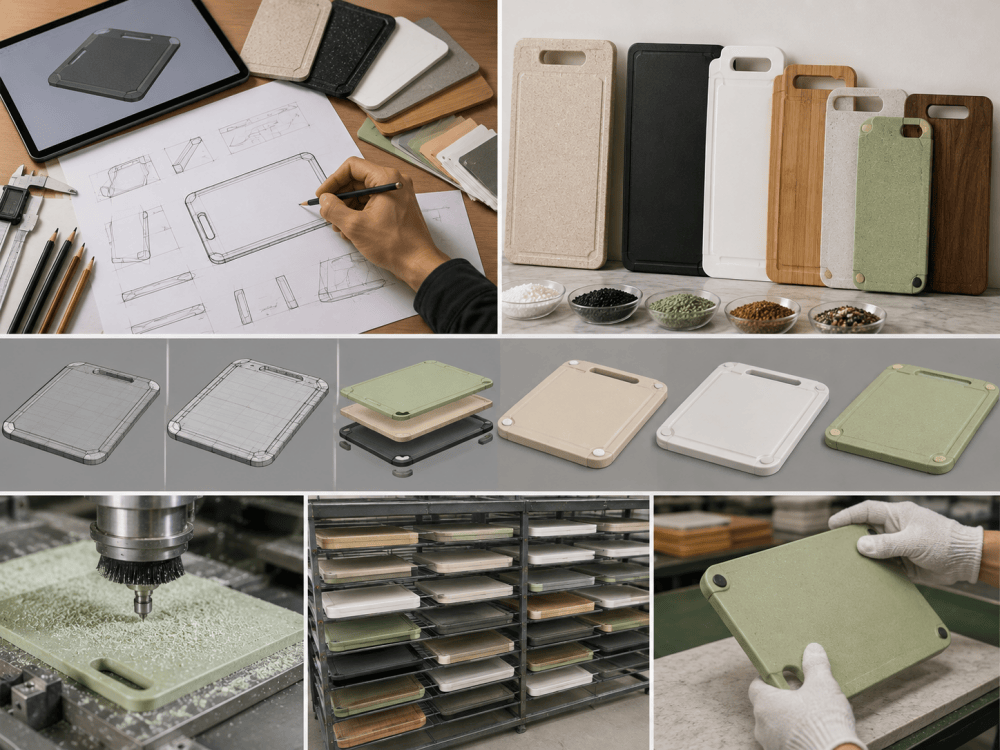
OEM vs. ODM Cutting Board Manufacturing
OEM and ODM manufacturing can both be useful for kitchenware brands, but they serve different purposes.
| Feature | OEM | ODM |
|---|---|---|
| Product Design | Buyer provides design or specifications | Manufacturer provides existing designs or develops a design |
| Customization | High | Medium to High |
| Development Time | Usually longer | Usually faster |
| Best For | Established brands with specific product concepts | Retailers and brands looking for faster product development |
| Typical Requirements | Drawings, specifications, samples | Product selection and customization requirements |
For brands that already have a detailed product concept, OEM manufacturing can provide greater control over product specifications. For companies looking to develop products more quickly, ODM can provide an existing product foundation that can then be customized for a particular market or brand.
For more information about kitchenware customization, you can explore Kitlucy's OEM and ODM kitchenware solutions.
USA vs. China Cutting Board Manufacturers: Which Is Better?
There is no universal answer. The best sourcing location depends on the buyer's order volume, target price, product complexity, customization requirements, lead time, and target market.
Advantages of U.S.-Based Suppliers
- Shorter domestic delivery times for U.S. buyers
- Easier communication for U.S.-based retailers
- Potential access to domestic manufacturing
- Strong positioning for American-made products
- Potential suitability for smaller specialty projects
Advantages of Overseas Manufacturers
- Competitive manufacturing costs
- Large-scale production capabilities
- Broad material and product options
- Flexible OEM and ODM development
- Experience in mass-market kitchenware production
- Ability to combine multiple kitchenware categories in one sourcing program
For brands that need large-volume production, extensive customization, or multiple kitchenware categories from one supplier, overseas OEM and ODM manufacturers can also be an important part of the sourcing strategy.
Cutting Board Manufacturer Buying Checklist for 2026
Before placing a bulk order, buyers should evaluate the supplier from both product and business perspectives.
- Define the target market and product positioning.
- Select the appropriate cutting board material.
- Confirm food-contact material requirements.
- Determine board size and thickness.
- Decide whether the board should be reversible.
- Consider juice grooves and drainage design.
- Define handle, hanging hole, or storage requirements.
- Confirm logo and branding requirements.
- Request packaging customization options.
- Confirm MOQ and production lead time.
- Request product samples before mass production.
- Confirm quality inspection standards.
- Evaluate shipping and logistics requirements.
- Compare total landed cost rather than unit price alone.
Cutting Board Trends to Watch in 2026
1. More Material Choices
Consumers and retailers are increasingly exposed to wood, bamboo, plastic, composite, silicone, stainless steel, and other alternative materials. This gives kitchenware brands more opportunities to create differentiated product lines.
2. Sustainable Materials
Bamboo and responsibly sourced wood continue to attract attention from brands looking to develop environmentally conscious kitchen products. For manufacturers, material sourcing and transparent product information can become important parts of product positioning.
3. Multi-Functional Designs
Cutting boards are increasingly designed to serve multiple purposes, including food preparation, serving, storage, draining, and presentation. Multi-functional products can also help retailers create higher-value kitchenware collections.
4. Private Label Kitchenware
Retailers and online brands continue to use private-label products to build differentiated kitchenware collections. Cutting boards are relatively easy to integrate into larger kitchen tool product lines and can be developed in different materials, sizes, colors, and price levels.
5. Custom Shapes and Branding
Engraving, unique shapes, color combinations, printed logos, and customized packaging can help brands create products that are more recognizable in retail and e-commerce channels.
Looking for more cutting board information? Explore related Kitlucy content about cutting board materials, safety, sizing, and kitchenware sourcing to better understand how different products can fit your target market.
For B2B buyers interested in customized kitchenware, visit our OEM & ODM Kitchenware page to learn more about product development and customization options.

Frequently Asked Questions
Some notable companies serving the U.S. cutting board market include John Boos & Co., CuttingBoard.com, Totally Bamboo, The Boardsmith, JK Adams, Proteak, Epicurean, and a range of commercial foodservice suppliers. The best option depends on material, price point, customization requirements, order volume, and intended application.
Common materials include hardwood, bamboo, PP plastic, HDPE, composite materials, and teak. Each material has different characteristics in terms of durability, maintenance, appearance, knife interaction, price, and target application.
Yes. Depending on the manufacturer, customization may include size, thickness, shape, color, surface texture, juice grooves, handles, engraving, logos, packaging, and other product details.
There is no universal MOQ. It depends on material, product design, customization, packaging, tooling, and production requirements. Buyers should request a quotation based on the exact product specifications and expected order volume.
U.S.-based suppliers can be attractive for domestic distribution, specialty products, and American-made positioning. Overseas manufacturers may provide stronger cost advantages, broader OEM and ODM capabilities, and large-scale production options. Buyers should compare quality, MOQ, lead time, customization, logistics, and total landed cost.
Start by defining your target market, material, size, price point, expected order volume, packaging, and customization requirements. Then compare supplier capabilities, samples, quality control, MOQ, production lead time, relevant compliance requirements, and total landed cost.
Final Thoughts
The U.S. cutting board market includes everything from traditional hardwood manufacturers and handcrafted workshops to commercial foodservice suppliers and modern kitchenware brands.
For buyers, the best cutting board manufacturer is not necessarily the largest company. The right supplier should match the buyer's product positioning, target price, material requirements, order volume, customization needs, and distribution strategy.
For retailers and kitchenware brands, working directly with an experienced OEM or ODM manufacturer can provide additional flexibility when developing private-label cutting boards. Instead of selecting only from existing products, buyers can customize materials, dimensions, shapes, colors, packaging, branding, and product functions according to their target market.
Looking for a Custom Cutting Board Manufacturer?
Kitlucy provides OEM and ODM solutions for cutting boards and kitchen tools, helping brands develop customized products for retail, wholesale, and private-label markets.
From material selection and product design to customization, packaging, and bulk production, our team can support different kitchenware sourcing requirements.
Explore OEM & ODM SolutionsRelated Blogs