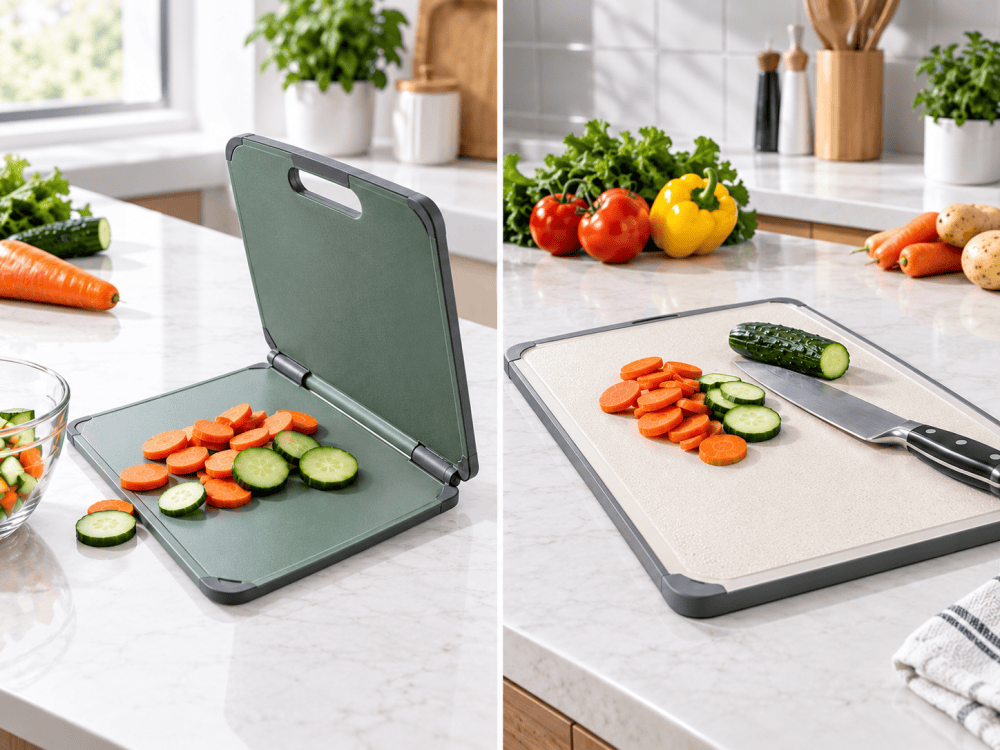
How to Remove Stains from Plastic Cutting Boards: Complete Cleaning Guide
How to Remove Stains from Plastic Cutting Boards: Complete Cleaning Guide
Plastic cutting boards are one of the most popular choices in modern kitchens because they are lightweight, affordable, easy to clean, and suitable for everyday food preparation. However, after repeated use, many plastic cutting boards develop stubborn stains from colorful foods such as tomatoes, turmeric, berries, beetroot, and spices.
These stains can make a cutting board look old and unhygienic, even when it has been properly washed after each use. Many people wonder: How can you remove stains from a plastic cutting board? Are stained plastic cutting boards still safe? Should you replace them?
This guide explains the most effective methods to clean stained plastic cutting boards, remove discoloration, prevent future stains, and extend the lifespan of your cutting board.

Why Do Plastic Cutting Boards Get Stained?
Plastic cutting boards are usually made from food-grade materials such as HDPE (High-Density Polyethylene) or polypropylene. Although these materials are durable and non-porous, their surfaces can still develop visible stains after long-term use.
The main reason is that food pigments and oils can become trapped inside tiny knife marks created during cutting.
Most stains on plastic cutting boards are cosmetic and do not automatically mean the board is unsafe. However, deep scratches combined with poor cleaning habits may increase the risk of bacteria buildup.
Common Foods That Cause Plastic Cutting Board Stains
| Food Type | Common Stain Color | Why It Stains |
|---|---|---|
| Tomatoes | Red / Orange | Natural pigments and acidity penetrate scratches. |
| Turmeric | Yellow | Strong curcumin pigment easily attaches to plastic surfaces. |
| Beetroot | Purple / Red | Highly concentrated natural color compounds. |
| Berries | Blue / Purple | Anthocyanin pigments leave visible marks. |
| Raw Meat | Pink / Brown | Protein residue and juices can discolor surfaces. |
| Coffee & Tea | Brown | Tannins create long-lasting discoloration. |
Are Stained Plastic Cutting Boards Unsafe?
A common misunderstanding is that a stained plastic cutting board must be dangerous. In reality, discoloration alone does not always indicate contamination.
High-quality food-grade plastic cutting boards, especially HDPE boards, are non-porous and designed for safe food preparation. Surface stains are often caused by food pigments rather than harmful substances.
However, you should pay attention to the condition of the board.
A Stained Cutting Board Is Usually Safe If:
- The surface is smooth and intact.
- There are no deep cracks.
- The board is cleaned after every use.
- There is no unpleasant odor.
- The material remains stable and durable.
You Should Consider Replacing It If:
- Deep knife grooves are difficult to clean.
- The surface becomes rough or damaged.
- The board develops permanent odors.
- Cracks appear around the edges.
- The plastic begins to break down.
How Plastic Cutting Board Materials Affect Staining
Not all plastic cutting boards perform the same. The material structure, density, and manufacturing process influence stain resistance.
HDPE Plastic Cutting Boards
HDPE is one of the most widely used materials for professional and household cutting boards. It offers excellent durability, moisture resistance, and knife-friendly performance.
Because HDPE has a dense molecular structure, it provides better stain resistance compared with lower-quality plastics.
- Excellent durability
- Food-safe and non-toxic
- Easy to sanitize
- Suitable for commercial kitchens
Polypropylene (PP) Cutting Boards
PP cutting boards are lightweight and affordable. They are commonly used for household products and portable cutting boards.
However, softer PP materials may develop scratches more easily, which can make stains more noticeable over time.
- Lightweight design
- Affordable price
- Suitable for daily kitchen use
- May show scratches faster
Composite Plastic Cutting Boards
Some modern cutting boards combine plastic with other materials to improve appearance, durability, or environmental performance.
These boards may offer improved stain resistance depending on their surface treatment and manufacturing quality.
| Material | Stain Resistance | Durability | Best Application |
|---|---|---|---|
| HDPE | ★★★★★ | ★★★★★ | Professional & home kitchens |
| PP | ★★★☆☆ | ★★★★☆ | Everyday household use |
| Composite Plastic | ★★★★☆ | ★★★★☆ | Modern kitchen products |
Why Are Some Plastic Cutting Board Stains Difficult to Remove?
Many users find that normal dish soap removes food residue but cannot eliminate deep discoloration. This happens because stains are not always located only on the surface.
1. Knife Scratches Trap Food Pigments
Every cutting motion creates tiny marks on the surface. Over time, these small grooves collect pigments from foods.
2. Oil-Based Stains Are More Resistant
Foods containing oils, spices, and natural pigments can bond more strongly with plastic surfaces.
3. Heat Can Set Stains Permanently
High temperatures may cause certain pigments to become more difficult to remove, especially when stained boards are exposed to hot water or heat repeatedly.
4. Incomplete Cleaning Allows Buildup
If a cutting board is only rinsed without proper washing, food residue can accumulate and create darker stains over time.
Can You Restore a White Plastic Cutting Board?
Yes. Many stained white plastic cutting boards can be restored using proper cleaning methods.
White boards often show stains more clearly than colored boards, but they are also easier to evaluate visually. Professional kitchens often use white HDPE cutting boards because cleanliness can be monitored more easily.
Commercial kitchens often use color-coded plastic cutting boards to separate food categories and improve hygiene management.
8 Proven Ways to Remove Stains from Plastic Cutting Boards
Different stains require different cleaning methods. Fresh tomato juice, turmeric, grease, or raw meat residue each respond differently to household cleaners. Below are the most effective methods recommended by professional kitchens and food safety experts.
1. Baking Soda Paste (Best All-Around Method)
Baking soda is one of the safest and most effective cleaners for removing everyday stains from plastic cutting boards. Its mild abrasive action lifts pigments without damaging food-grade plastic.
How to Use:
- Mix 3 tablespoons of baking soda with a small amount of water.
- Create a thick paste.
- Spread it evenly over stained areas.
- Let it sit for 15–30 minutes.
- Scrub gently using a soft brush or sponge.
- Rinse thoroughly with warm water.
Best for: Tomato stains, berry stains, light discoloration, everyday maintenance.
2. White Vinegar for Odor and Light Stains
White vinegar is excellent for removing odors while helping dissolve mild stains and food residue.
Instructions:
- Spray undiluted white vinegar onto the cutting board.
- Allow it to sit for 10–15 minutes.
- Wipe clean and rinse with warm water.
Best for: Odors, raw meat residue, light stains.
Combining vinegar with baking soda (used one after the other, not mixed together) can improve overall cleaning results.
3. Lemon and Salt (Natural Whitening Method)
Lemon juice contains natural acids that help break down food pigments, while coarse salt provides gentle scrubbing power.
Steps:
- Sprinkle coarse salt over the stained area.
- Cut a lemon in half.
- Rub the lemon directly onto the salt.
- Leave for 20 minutes.
- Rinse thoroughly.
Best for: Surface stains, mild yellowing, odor removal.
4. Hydrogen Peroxide for Deep Stains
Hydrogen peroxide is highly effective at lifting deep organic stains while also helping sanitize the board.
Instructions:
- Pour 3% hydrogen peroxide over the board.
- Allow it to sit for 10–15 minutes.
- Scrub lightly.
- Rinse well before reuse.
Best for: Blood stains, meat residue, older discoloration.
5. Diluted Bleach Solution (For Heavy Discoloration)
For heavily stained plastic cutting boards, a diluted bleach solution can restore appearance while disinfecting the surface.
Recommended Ratio:
- 1 tablespoon household bleach
- 1 gallon (3.8 L) of water
Soak the board for 2–5 minutes, rinse thoroughly, and allow it to air dry completely before use.
Best for: Severe staining and sanitizing.
Note: Never use concentrated bleach directly on food-contact surfaces.
6. Dishwasher Cleaning
If your plastic cutting board is labeled dishwasher safe, running it through a high-temperature dishwasher cycle can remove grease, food particles, and many surface stains.
However, repeated dishwasher cleaning may gradually increase knife marks over many years of use.
Best for: Daily cleaning and sanitizing.
7. Sunlight Whitening
Natural sunlight contains ultraviolet (UV) rays that can help reduce discoloration on white plastic cutting boards.
How to Use:
- Clean the board first.
- Place it outdoors in direct sunlight.
- Leave it for several hours.
- Bring it inside once dry.
This method works gradually and is especially useful for yellowing caused by age.
8. Magic Eraser (For Cosmetic Marks)
Melamine foam cleaning pads (often sold as Magic Erasers) can remove stubborn surface discoloration without harsh chemicals.
Use only gentle pressure to avoid excessive abrasion.
Best for: Cosmetic marks and light staining.
Cleaning Methods Comparison
| Cleaning Method | Removes Stains | Removes Odors | Disinfects | Food Safe |
|---|---|---|---|---|
| Baking Soda | ★★★★★ | ★★★★☆ | ★★☆☆☆ | ★★★★★ |
| White Vinegar | ★★★☆☆ | ★★★★★ | ★★★☆☆ | ★★★★★ |
| Lemon + Salt | ★★★★☆ | ★★★★☆ | ★★☆☆☆ | ★★★★★ |
| Hydrogen Peroxide | ★★★★★ | ★★★★☆ | ★★★★★ | ★★★★☆ |
| Diluted Bleach | ★★★★★ | ★★★★★ | ★★★★★ | ★★★★☆ |
| Dishwasher | ★★★☆☆ | ★★★★☆ | ★★★★☆ | ★★★★★ |
| Sunlight | ★★★☆☆ | ★★☆☆☆ | ★★☆☆☆ | ★★★★★ |
| Magic Eraser | ★★★★☆ | ☆☆☆☆☆ | ☆☆☆☆☆ | ★★★★☆ |
Which Method Works Best for Different Types of Stains?
| Type of Stain | Best Cleaning Method |
|---|---|
| Tomato Sauce | Baking Soda + Lemon |
| Turmeric | Hydrogen Peroxide |
| Beetroot | Bleach Solution |
| Raw Meat | Hydrogen Peroxide + Vinegar |
| Coffee / Tea | Baking Soda Paste |
| Grease | Dish Soap + Baking Soda |
Cleaning Mistakes to Avoid
Even the best cleaning products cannot restore a cutting board if it is damaged by improper care. Avoid these common mistakes:
- Using steel wool or metal scrubbers that scratch the surface.
- Leaving food residue on the board overnight.
- Using undiluted bleach directly on the board.
- Storing the board while still wet.
- Ignoring deep knife grooves where bacteria may accumulate.
For routine maintenance, clean your plastic cutting board immediately after each use with warm water and dish soap. Perform a deep cleaning with baking soda or hydrogen peroxide once every two to four weeks, depending on how often the board is used.
How to Prevent Plastic Cutting Boards from Staining
While it's impossible to prevent every stain, proper care can significantly reduce discoloration and extend the life of your plastic cutting board.
1. Clean the Board Immediately After Use
Don't let food juices or spices sit on the board for long periods. Prompt washing prevents pigments from settling into knife marks.
2. Use Separate Cutting Boards
Assign different cutting boards for raw meat, vegetables, fruits, and cooked foods. This not only reduces staining but also helps prevent cross-contamination.
3. Deep Clean Regularly
Even if your board looks clean, perform a deep cleaning every 2–4 weeks using baking soda or hydrogen peroxide to remove invisible grease and pigment buildup.
4. Avoid Excessive Heat
Do not place plastic cutting boards on hot stovetops or expose them to prolonged high temperatures, as heat can set stains permanently and may warp the board.
5. Choose High-Quality HDPE Boards
Premium HDPE cutting boards are more resistant to scratches and staining than lower-density plastics, making them a better long-term investment.
Applying a food-safe mineral oil is recommended for wooden cutting boards, but it is generally unnecessary for plastic cutting boards. Instead, focus on regular cleaning and timely replacement when deep grooves develop.
How Often Should You Deep Clean a Plastic Cutting Board?
| Usage Frequency | Recommended Deep Cleaning |
|---|---|
| Occasional home use | Once a month |
| Daily household cooking | Every 2–3 weeks |
| Large family meal prep | Every 1–2 weeks |
| Commercial kitchens | Weekly or as required by food safety regulations |
Regular deep cleaning helps maintain hygiene, removes stubborn stains, and reduces the buildup of bacteria in surface scratches.
When Should You Replace a Plastic Cutting Board?
Cleaning can restore many stained cutting boards, but no cleaning method can repair physical damage. If the board has become heavily worn, replacement is the safest option.
| Condition | Replace? |
|---|---|
| Light cosmetic stains | ❌ No |
| Deep knife grooves | ✅ Yes |
| Cracks or chips | ✅ Yes |
| Persistent odor after cleaning | ✅ Yes |
| Warped board | ✅ Yes |
| Minor surface scratches | ❌ No |
Most high-quality HDPE plastic cutting boards can last for several years with proper care, while heavily used commercial boards may need replacement more frequently.
Plastic vs Wood Cutting Boards: Which Stains More Easily?
| Feature | Plastic Cutting Board | Wood Cutting Board |
|---|---|---|
| Stain Visibility | Higher (especially white boards) | Lower |
| Ease of Cleaning | Excellent | Moderate |
| Dishwasher Safe | Usually Yes | No |
| Moisture Resistance | Excellent | Moderate |
| Maintenance Required | Low | Regular oiling |
| Professional Kitchen Use | Very Common | Less Common |
Plastic cutting boards tend to show stains more visibly than wooden boards, but they are generally easier to sanitize and maintain. For this reason, they remain the preferred choice in restaurants, food processing facilities, and commercial kitchens.
Frequently Asked Questions
Why won't stains come off my plastic cutting board?
Food pigments may have penetrated knife scratches or bonded with grease on the surface. Deep cleaning with baking soda, hydrogen peroxide, or a diluted bleach solution is often required.
Can baking soda remove cutting board stains?
Yes. Baking soda is one of the safest and most effective methods for removing everyday stains while protecting the plastic surface.
How do you remove turmeric stains from a plastic cutting board?
Hydrogen peroxide or a diluted bleach solution is usually the most effective way to remove turmeric stains, which are known for their strong yellow pigments.
Is it safe to use bleach on a plastic cutting board?
Yes, when properly diluted and thoroughly rinsed. Follow food safety guidelines and never use concentrated bleach directly on food-contact surfaces.
Can stained plastic cutting boards grow bacteria?
Stains themselves do not cause bacterial growth. However, deep grooves and cracks can trap food residue, making thorough cleaning more difficult.
How can I whiten a white plastic cutting board?
Use baking soda, hydrogen peroxide, or sunlight exposure to gradually restore the board's original appearance.
Can I put a plastic cutting board in the dishwasher?
Most HDPE and polypropylene cutting boards are dishwasher safe. Always check the manufacturer's care instructions before placing them in the dishwasher.
What's the best plastic material for cutting boards?
HDPE (High-Density Polyethylene) is widely regarded as the best material because it offers excellent durability, stain resistance, food safety, and easy cleaning.
How long do plastic cutting boards last?
With proper care, a high-quality plastic cutting board can last several years. Replace it when deep grooves, cracks, or permanent odors develop.
How can I prevent future stains?
Clean the board immediately after use, avoid prolonged contact with strongly pigmented foods, and perform regular deep cleaning.
Conclusion
Plastic cutting boards are valued for their durability, affordability, and ease of maintenance, but even the best boards can develop stains over time. Fortunately, most discoloration can be removed using simple household ingredients such as baking soda, vinegar, lemon, or hydrogen peroxide.
The key to keeping your cutting board looking clean and performing safely is regular maintenance, prompt cleaning after each use, and replacing the board when deep grooves or structural damage appear. Choosing a high-quality HDPE cutting board also helps reduce staining and extends the product's service life.
Whether you're a home cook, professional chef, or kitchenware buyer, understanding how to clean and maintain plastic cutting boards will help ensure better food safety, improved hygiene, and longer-lasting performance.
Looking for Premium Plastic Cutting Boards?
Kitlucy manufactures high-quality food-grade plastic cutting boards for home kitchens, restaurants, retailers, and global distributors. We offer OEM and ODM services, including custom sizes, colors, logos, packaging, and private-label solutions.
👉 Explore our full range of cutting boards:
Plastic Cutting Boards Collection →
Need a quotation or want to discuss your OEM project?
Contact the Kitlucy Team →
Our experienced team is ready to help you develop customized cutting board solutions tailored to your market and brand.
Related Blogs