Measuring Cups vs. Kitchen Scales: Which Is Better for Baking?
Measuring Cups vs. Kitchen Scales: Which Is Better for Baking?
Accurate measurements can make a noticeable difference in baking. Whether you are preparing cookies, cakes, bread, or pastries, the amount of each ingredient affects the texture, consistency, and final result. Two common tools for measuring ingredients are measuring cups and kitchen scales, but they work in different ways.
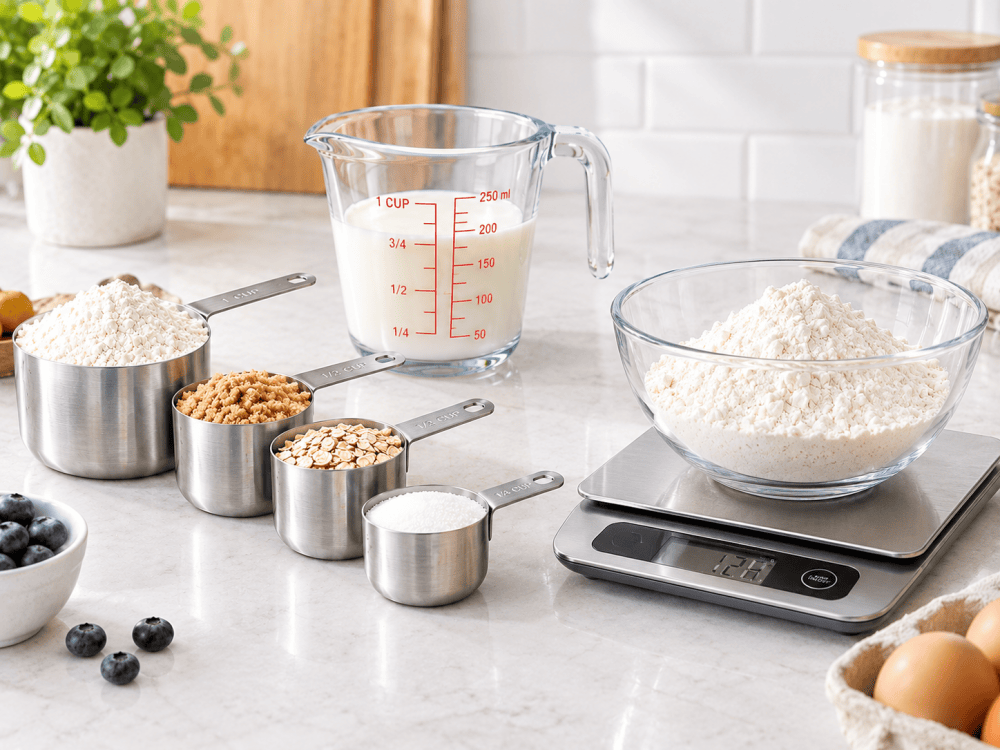
Measuring cups determine volume, while kitchen scales measure weight. Understanding the difference can help you follow recipes more consistently, avoid common measuring mistakes, and choose the right tool for your baking routine.
Kitchen scales are generally better for precise baking because they measure ingredient weight directly and reduce variations caused by scooping or packing. They are especially useful for flour, bread dough, and recipes that require consistent results.
Measuring cups are convenient for everyday cooking and baking. They are easy to use, require no batteries, and work well when a recipe provides volume measurements and the ingredients are measured correctly.
For most home bakers, using both tools offers the greatest flexibility. A kitchen scale is valuable for precision, while measuring cups remain practical for quick, everyday measurements.
1. What Are Measuring Cups?
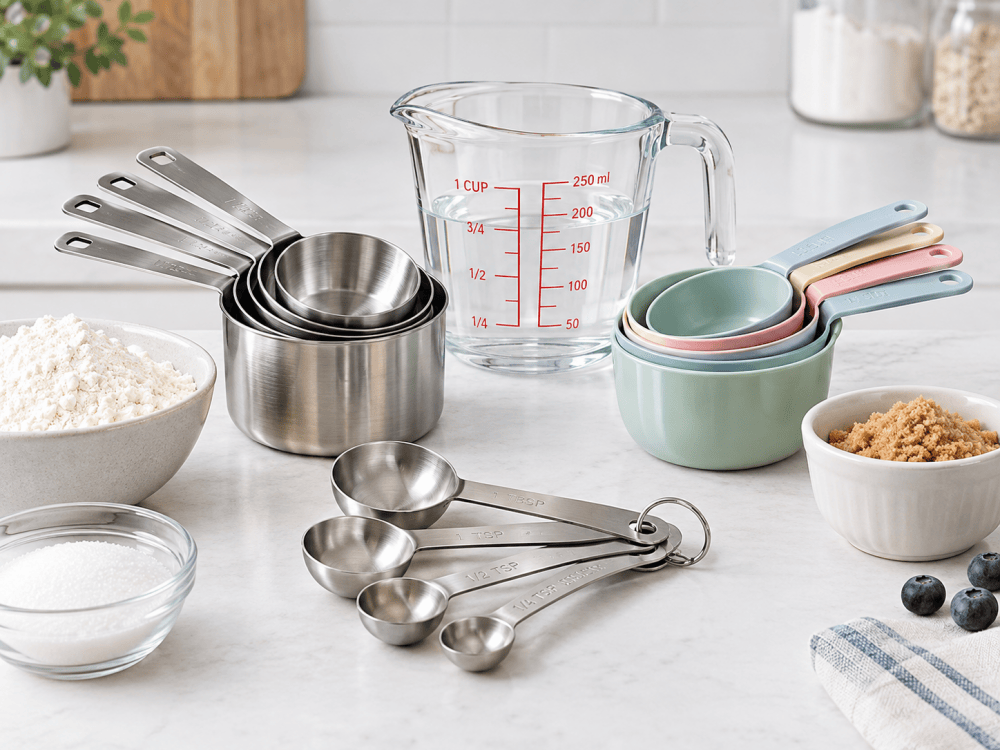
Measuring cups are kitchen tools designed to measure ingredients by volume. They are commonly used in home cooking and baking and are available in different capacities, materials, and designs.
Dry measuring cups typically come in sets with individual capacities such as 1 cup, 1/2 cup, 1/3 cup, and 1/4 cup. Liquid measuring cups usually feature graduated markings and a pouring spout, making it easier to measure and transfer liquids.
Advantages of Measuring Cups
- Easy to use: Most people can use measuring cups with little preparation.
- Convenient: They are useful for quick measurements during cooking and baking.
- Affordable: Basic measuring cup sets are generally accessible to home cooks.
- Easy to store: Many sets nest together to save kitchen space.
- Widely compatible: They work naturally with recipes that specify cups, tablespoons, or other volume units.
Limitations of Measuring Cups
Measuring cups can be less consistent when ingredients have different densities or are packed differently. For example, a cup of flour can weigh more or less depending on how the flour is scooped, settled, or compressed.
This variation matters in baking, where the ratio of flour, liquid, sugar, fat, and leavening ingredients can influence the final texture. Measuring cups are useful, but the measuring technique must be consistent.
2. What Is a Kitchen Scale?
A kitchen scale measures the weight of ingredients rather than their volume. Digital kitchen scales commonly display measurements in grams and ounces, allowing bakers to follow recipes that specify ingredient weights.
Many digital scales include a tare function. This lets you reset the displayed weight to zero after placing a bowl or container on the platform, so you can weigh ingredients without including the container.
Advantages of Kitchen Scales
- Greater consistency: Weight measurements reduce variation caused by ingredient packing.
- Precise portions: Digital displays make it easier to measure specific quantities.
- Fewer measuring tools: One scale can measure many different ingredients.
- Convenient mixing: Ingredients can often be weighed directly into the same bowl using the tare function.
- Useful for larger batches: Weight-based measurements can make scaling recipes more straightforward.
Limitations of Kitchen Scales
A kitchen scale may require batteries or charging, depending on the model. Users also need to understand the displayed units and follow recipes that provide weight measurements or use reliable conversions.
A scale does not automatically make every recipe more accurate. The result still depends on the quality of the scale, the measurement units, and the accuracy of the recipe itself.
3. Measuring Cups vs. Kitchen Scales: Key Differences
The main difference is the type of measurement each tool provides. Measuring cups measure volume, while kitchen scales measure weight. These measurements are related, but they are not interchangeable without considering the ingredient.
| Feature | Measuring Cups | Kitchen Scales |
|---|---|---|
| Measurement type | Volume | Weight |
| Typical units | Cups, tablespoons, milliliters on some models | Grams, ounces, and sometimes pounds |
| Accuracy in baking | Depends on ingredient density and measuring technique | Generally more consistent when used correctly |
| Ease of use | Simple for recipes using volume measurements | Requires reading the display and selecting the correct unit |
| Cleanup | May require cleaning several cups | Ingredients can often be weighed in one bowl |
| Power requirements | None | Digital models typically require batteries or charging |
| Storage | Sets may nest together | Usually stored as one compact device |
| Best suited for | Convenient everyday volume measurements | Consistent ingredient portions and precise baking |
Remember: A cup is a unit of volume, while a gram is a unit of mass. One cup of flour does not weigh the same as one cup of sugar or one cup of water. Use ingredient-specific weight conversions rather than assuming all ingredients have the same cup-to-gram ratio.
4. Why Are Kitchen Scales Often Better for Baking?
Baking relies on the balance of ingredients. Small measurement differences can affect moisture, structure, sweetness, and texture. A kitchen scale helps reduce one common source of variation: inconsistent ingredient volume.
More Consistent Flour Measurements
Flour is particularly sensitive to measuring technique. Scooping flour directly from a bag can compress it into the cup, while spooning it into the cup and leveling the surface can produce a different weight.
When a recipe specifies flour by weight, a kitchen scale allows you to measure the stated amount directly without estimating how tightly the flour has been packed.
Better Control Over Recipe Ratios
Recipes for bread, pizza dough, pastries, and other baked goods often benefit from consistent ingredient ratios. Weighing ingredients makes it easier to reproduce those ratios from one batch to the next.
Easier Recipe Scaling
Weight measurements are also convenient when increasing or decreasing a recipe. If you need to prepare a larger batch, you can calculate ingredient quantities by weight without repeatedly filling multiple measuring cups.
5. When Are Measuring Cups the Better Choice?
Although kitchen scales offer advantages for precision, measuring cups remain practical tools. They can be the better choice when convenience is more important than exact weight measurements.
- Everyday cooking: Measuring rice, oats, or other ingredients for routine meals.
- Recipes written in cups: Following familiar recipes without converting every ingredient to grams.
- Quick preparation: Measuring small quantities without setting up a scale.
- Liquid measurements: Using a transparent liquid measuring cup to read volume and pour ingredients.
- Simple kitchen setups: Measuring ingredients without relying on batteries or electronic displays.
For the best results, use the measuring method specified by the recipe whenever possible. If a recipe provides volume measurements, use a suitable measuring cup and follow a consistent technique.
6. How to Convert Measuring Cups to Grams
There is no single conversion from cups to grams that works for every ingredient. The weight of one cup depends on the ingredient's density and how it is measured.
For example, a cup of all-purpose flour, a cup of granulated sugar, and a cup of water have different weights. Even the weight of flour can vary depending on the measuring method.
If you need to convert a recipe from volume to weight, use a reliable conversion for the specific ingredient. When possible, follow a tested recipe that already provides measurements in grams.
Tips for Accurate Ingredient Conversion
- Identify the exact ingredient used in the recipe.
- Check whether the recipe specifies sifted, packed, melted, or prepared ingredients.
- Use an ingredient-specific conversion rather than a universal cup-to-gram value.
- Choose either volume or weight measurements and follow that method consistently.
- For repeatable baking results, record successful measurements by weight.
7. How to Use a Kitchen Scale for Baking
A digital kitchen scale is straightforward to use once you understand its basic functions. Follow these steps to measure ingredients efficiently.
- Place the scale on a stable surface. Keep it level and away from edges where it could be knocked over.
- Select the correct unit. Choose grams or ounces according to the recipe.
- Place a mixing bowl on the scale. Wait for the display to stabilize.
- Press the tare button. Reset the display to zero so the bowl's weight is excluded.
- Add the first ingredient. Stop when the display reaches the required weight.
- Tare again before adding another ingredient. Repeat as needed if the recipe allows ingredients to be weighed directly into the same bowl.
Always check the scale's capacity and precision before use. For small quantities such as yeast or salt, the scale must be suitable for the amount being measured.
8. How to Choose the Right Measuring Tools for Your Kitchen
The best measuring tools depend on the types of recipes you prepare, how often you bake, and the level of consistency you want.
Choose Measuring Cups If You:
- Usually follow recipes that use cups or other volume units.
- Prefer simple, quick measurements for everyday cooking.
- Want an affordable set that is easy to store.
- Frequently measure liquids using a graduated measuring cup.
Choose a Kitchen Scale If You:
- Bake bread, pastries, or other recipes that benefit from precise ratios.
- Want more consistent flour and sugar measurements.
- Frequently scale recipes up or down.
- Prefer measuring several ingredients in one bowl.
Should You Own Both?
For many home kitchens, owning both measuring cups and a kitchen scale is a practical solution. Measuring cups provide convenience for everyday preparation, while a scale helps improve consistency when precision matters.
A useful kitchen setup can include a dry measuring cup set, a transparent liquid measuring cup, measuring spoons, and a digital kitchen scale. Each tool serves a different purpose and can complement the others.
9. Considerations for Kitchenware Brands and Wholesale Buyers
For kitchenware retailers, distributors, and private-label brands, measuring cups and kitchen scales serve related but distinct product needs. Understanding how customers use these tools can help build a more useful kitchen measurement assortment.
- Product assortment: Consider dry measuring cup sets, liquid measuring cups, measuring spoons, and complementary measuring tools.
- Material selection: Evaluate stainless steel, plastic, and glass options according to intended use, durability, appearance, and target price.
- Usability: Assess capacity markings, handle comfort, pouring performance, storage convenience, and ease of cleaning.
- Target customers: Consider the different needs of casual home cooks, frequent bakers, and users who prioritize precise ingredient measurements.
- Packaging and presentation: Make the included pieces, capacities, materials, and intended applications clear to buyers.
- Quality requirements: Verify measurement consistency, material suitability, and applicable food-contact requirements for the intended market.
Frequently Asked Questions
1. Are kitchen scales more accurate than measuring cups?
Kitchen scales generally provide more consistent ingredient measurements by weight when used correctly. Measuring cups can also work well, but results may vary with ingredient density and measuring technique.
2. Should I weigh flour or measure it in a cup?
Weighing flour is generally more consistent because the amount that fits into a cup depends on how the flour is scooped and packed. If you use measuring cups, spoon the flour in loosely and level the top unless the recipe specifies another method.
3. How many grams are in one cup?
The weight of one cup depends on the ingredient. Flour, sugar, and water have different densities, so use a reliable ingredient-specific conversion or a recipe that provides measurements in grams.
4. Can I bake without a kitchen scale?
Yes. Many recipes are designed to use measuring cups and spoons. Follow the recipe's measuring instructions carefully and use consistent techniques. A scale is helpful but not essential for every home baking task.
5. Is a digital kitchen scale worth buying for baking?
A digital kitchen scale can be a worthwhile addition if you bake frequently, want more consistent results, or prepare recipes that use ingredient weights. It can also simplify measuring multiple ingredients in one bowl.
6. Can I use measuring cups and a kitchen scale together?
Yes. You can use a scale for ingredients that require precise weight measurements and measuring cups for recipes or tasks where volume is convenient. The two tools complement each other.
7. What measuring tools are best for beginner bakers?
A basic dry measuring cup set, a liquid measuring cup, and measuring spoons provide a useful starting point. Adding a digital kitchen scale can help beginners learn consistent ingredient measurement as they explore more baking recipes.
Final Thoughts
Measuring cups and kitchen scales both have a place in the kitchen, but they serve different purposes. Measuring cups offer convenience for everyday cooking and recipes written in volume units, while kitchen scales generally provide greater consistency when measuring ingredients by weight.
If you bake frequently, a kitchen scale is a valuable tool for measuring flour, managing recipe ratios, and reproducing results. Measuring cups remain useful for quick preparation and liquid measurements. For a flexible kitchen setup, using both tools is often the most practical choice.
Explore Kitchenware Solutions with Kitlucy
Discover practical kitchenware for everyday cooking, food preparation, and baking. Explore Kitlucy's product range to find tools that support a convenient and well-organized kitchen.
Explore KitlucyRelated Blogs