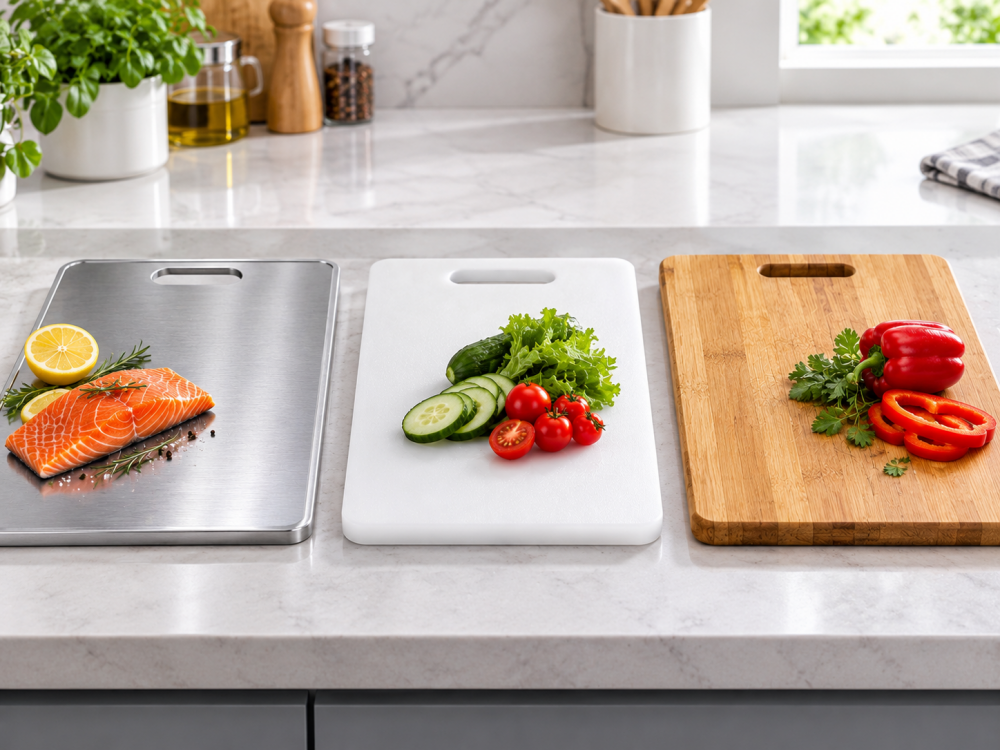
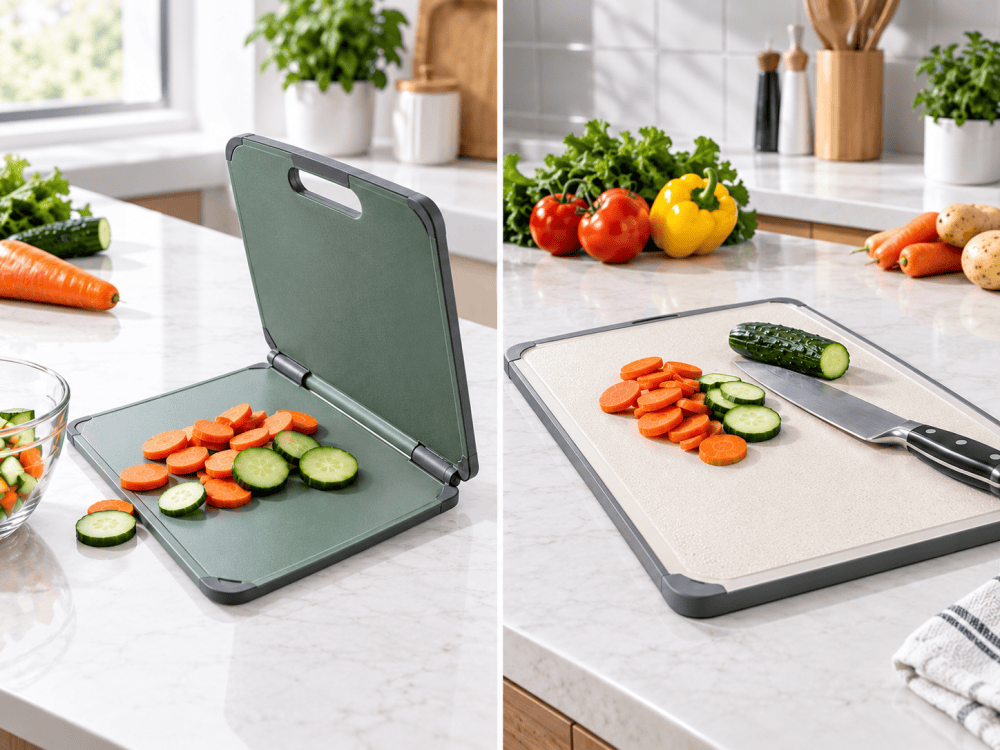
How to Clean and Maintain an Aluminum Cutting Board: A Complete Guide
How to Clean and Maintain an Aluminum Cutting Board: A Complete Guide
How do you clean and maintain an aluminum cutting board? Start by removing food residue, washing the surface with warm water and a mild dishwashing detergent, rinsing thoroughly, and drying it with a clean cloth. Avoid abrasive pads, harsh chemicals, and prolonged contact with acidic or salty substances unless the manufacturer confirms they are suitable for the specific board. Always follow the care instructions for the aluminum alloy and surface finish.
Aluminum cutting boards are metal food-preparation surfaces that require different care from conventional wood or plastic cutting boards. Their cleaning requirements depend on the aluminum alloy, surface treatment, product construction, and intended use.
Whether you are evaluating an aluminum cutting board for a kitchen, commercial food-preparation environment, or product-sourcing project, proper cleaning and maintenance can help preserve the surface and make it easier to inspect for wear or damage.
In this guide, you will learn how to clean an aluminum cutting board step by step, remove common stains, reduce the risk of surface damage, and identify when a board may no longer be suitable for food preparation.
How Often Should You Clean an Aluminum Cutting Board?
An aluminum cutting board intended for food preparation should be cleaned after every use and whenever the type of food being prepared changes in a way that could cause cross-contamination.
For example, after preparing raw meat, poultry, seafood, vegetables, or other ingredients, clean the board before using it for another food. If the board is used in a commercial kitchen, follow the applicable food-safety procedures for cleaning and sanitizing food-contact surfaces.
| Situation | Recommended Action |
|---|---|
| After routine food preparation | Remove residue, wash, rinse, and dry. |
| After handling raw meat or seafood | Clean and sanitize using a method suitable for the product and required food-safety procedures. |
| After contact with acidic foods | Clean promptly and avoid leaving food residue on the surface. |
| After contact with salty ingredients | Remove residue promptly and rinse thoroughly. |
| Before storage | Ensure the surface is clean and completely dry. |
| When discoloration or surface damage appears | Inspect the material and finish before further food-contact use. |
How to Clean an Aluminum Cutting Board Step by Step
Step 1: Remove Food Residue
Remove leftover food, crumbs, oils, and other visible residue from the board. Use a soft scraper or non-abrasive utensil if necessary.
Avoid scraping the surface aggressively with a steel blade or other hard tool, as this may leave additional marks or damage a surface treatment.
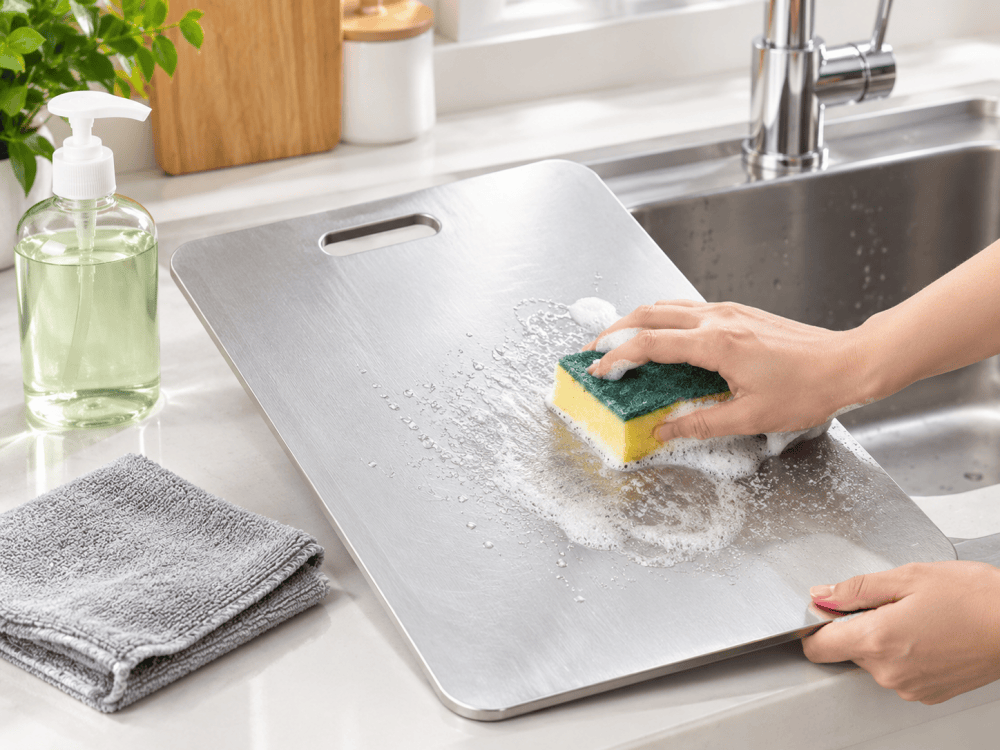
Step 2: Wash with Warm Water and Mild Detergent
Use warm water and a mild dishwashing detergent that is compatible with the board's material and finish.
Clean the entire food-contact surface, including corners, edges, grooves, and other areas where food particles may collect. A soft sponge or cloth is usually a sensible starting point.
Do not assume that every aluminum board can tolerate the same detergents, cleaning chemicals, or water temperatures. Follow the manufacturer's instructions, particularly if the product is anodized or coated.
Step 3: Rinse Thoroughly
Rinse the board with clean water to remove detergent and loosened food residue.
Pay particular attention to edges, textured areas, and any joints or attached components. Residual detergent can affect the surface or leave unwanted residues if the board is not rinsed properly.
Step 4: Sanitize When Required
Cleaning removes food residue and dirt. Sanitizing is a separate step intended to reduce microorganisms to an appropriate level.
When sanitizing is required, use a product and procedure suitable for the specific food-contact surface. Follow the sanitizer label for concentration, contact time, rinsing requirements, and other conditions of use.
Do not use bleach, acidic cleaners, or other chemical treatments on aluminum without confirming compatibility with the alloy and finish. Certain chemicals can discolor, corrode, or otherwise damage aluminum.
Step 5: Dry the Board Completely
After washing and rinsing, dry the board with a clean, soft cloth. If the manufacturer permits air-drying, place it in a clean area with sufficient airflow.
Make sure the board is dry before storing it. Drying also makes it easier to inspect the surface for discoloration, scratches, corrosion, or coating damage.
What Should You Avoid When Cleaning an Aluminum Cutting Board?
Aluminum is not compatible with every cleaning product or abrasive method. The wrong cleaning technique can change its appearance or damage the surface.
| Avoid | Why It Matters | Better Approach |
|---|---|---|
| Steel wool and harsh abrasive pads | May scratch or alter the surface finish. | Start with a soft cloth or non-abrasive sponge. |
| Strong acidic cleaners | May react with aluminum or damage certain finishes. | Use a compatible mild detergent unless the manufacturer specifies otherwise. |
| Strong alkaline cleaners | Can attack aluminum under certain conditions. | Check the manufacturer's approved cleaning products. |
| Prolonged contact with acidic or salty food | May increase the risk of surface reactions or corrosion. | Remove food residue and clean promptly. |
| Unapproved dishwasher cleaning | Detergents, heat, and contact with other items may damage some aluminum products. | Use a dishwasher only if the manufacturer explicitly permits it. |
| Unverified chemical sanitizers | Some formulations may be incompatible with the alloy or finish. | Confirm compatibility and follow approved use instructions. |
Important: These are general precautions for aluminum surfaces. The exact care requirements depend on the product. Anodized, coated, and untreated aluminum may respond differently to cleaning chemicals and abrasion.
How to Remove Stains from an Aluminum Cutting Board
Before treating a stain, identify what may have caused it. Food residue, mineral deposits, surface oxidation, and corrosion are not the same problem and should not automatically be treated with the same cleaning method.
How to Remove Food Stains
For ordinary food stains, begin with warm water, mild detergent, and a soft sponge. Allow the detergent to loosen the residue before wiping the surface.
Avoid immediately using strong acids, abrasive powders, or aggressive scrubbing. If a stain remains, consult the manufacturer's approved cleaning instructions.
How to Remove Grease and Oil
Grease and oil can usually be addressed with a suitable dishwashing detergent designed to remove fats. Wash the surface thoroughly, rinse it well, and inspect it under good lighting.
If the surface still feels oily, repeat the cleaning process rather than using an unapproved solvent or strong industrial degreaser.
How to Handle White or Dull Marks
White or dull marks may be associated with mineral deposits, surface oxidation, cleaning residue, or changes in the finish. Their appearance alone does not establish the cause.
Clean the surface using the manufacturer's recommended method. If the marks persist or the finish appears uneven, check the product specifications before attempting any polishing or chemical treatment.
How to Deal with Dark Spots or Suspected Corrosion
Dark spots can have several causes, including food residue, surface contamination, oxidation, or corrosion. Do not assume that every dark mark is harmless or that every mark can be removed safely.
If the surface has pitting, deep discoloration, rough patches, flaking, or suspected coating damage, stop using it for food preparation until its condition and suitability have been assessed.
Can You Use Vinegar or Baking Soda on an Aluminum Cutting Board?
Do not automatically use vinegar or baking soda to clean an aluminum cutting board.
Vinegar is acidic, and acidic substances can react with aluminum under some conditions. Baking soda is alkaline, and alkaline cleaners can also affect aluminum depending on their concentration, contact time, temperature, and the surface finish.
Although these household products are commonly recommended for cleaning other kitchen surfaces, that does not mean they are suitable for every aluminum alloy or coating.
For routine maintenance, begin with a mild, compatible detergent. Use a stronger cleaning method only when the board manufacturer confirms that it is suitable.
Can You Put an Aluminum Cutting Board in the Dishwasher?
Only if the manufacturer explicitly states that the specific product is dishwasher-safe.
Dishwasher detergents can be strongly alkaline, and the combination of detergent chemistry, heat, moisture, and contact with other items may affect some aluminum surfaces.
An anodized or coated board may have different care requirements from an untreated aluminum board. Even products made from the same general material may have different dishwasher instructions.
If the care label does not clearly confirm dishwasher compatibility, hand-washing with a suitable detergent is the more cautious approach.
How to Prevent Corrosion and Surface Damage
Proper maintenance starts with reducing unnecessary exposure to conditions that may damage the material or its finish.
- Clean food residue promptly after use.
- Avoid leaving acidic or salty ingredients on the surface for extended periods.
- Use compatible detergents and cleaning tools.
- Rinse away detergent and food residue thoroughly.
- Dry the board before storage.
- Avoid unapproved chemical treatments and abrasive polishing.
- Follow the manufacturer's guidance for anodized or coated surfaces.
- Inspect the board regularly for pitting, roughness, deep scratches, and finish deterioration.
These precautions can help maintain the surface, but they cannot restore a severely damaged coating or reverse all forms of corrosion.
How to Store an Aluminum Cutting Board
Storage is another part of proper cutting-board maintenance. A clean, dry board should be stored in a location where its surface will not be unnecessarily scratched, contaminated, or exposed to incompatible chemicals.
Keep the Surface Dry
Dry the board before storing it. Avoid trapping moisture between the board and another surface, particularly if the product has joints, attachments, or a finish that requires specific care.
Prevent Scratches During Storage
If boards are stacked, use a storage arrangement that reduces direct abrasion between their surfaces. Avoid placing heavy or sharp kitchen tools directly on the board.
Keep It Away from Incompatible Chemicals
Do not store the board in direct contact with cleaning chemicals, strong acids, strong alkalis, or other substances that may damage its material or finish.
When Should You Replace an Aluminum Cutting Board?
Cleaning can remove residue, but it cannot make every damaged surface suitable for continued food contact.
Inspect the board regularly and stop using it for food preparation if you find any of the following:
- Deep pitting or significant corrosion
- Sharp burrs or edges that may cause injury
- Peeling or flaking of a surface coating
- Deep damage that cannot be cleaned effectively
- Persistent contamination that cannot be removed using approved procedures
- Structural damage, severe bending, or loose components
- Unexplained deterioration that raises concerns about food-contact suitability
If the board is coated or anodized and the treatment is damaged, ask the manufacturer whether it remains suitable for its intended use. Do not assume that polishing or sanding it will restore the original food-contact properties.
Aluminum Cutting Board Maintenance Checklist
| Maintenance Task | When | Purpose |
|---|---|---|
| Remove food residue | After every use | Reduce residue and contamination. |
| Wash and rinse | After every use | Remove grease, food particles, and detergent residue. |
| Sanitize when required | According to the intended food use and applicable procedures | Support appropriate food-safety practices. |
| Dry thoroughly | Before storage | Reduce prolonged moisture exposure and simplify inspection. |
| Inspect the surface | Regularly | Identify scratches, pitting, corrosion, or finish damage. |
| Review cleaning instructions | Before using a new chemical or cleaning method | Avoid incompatible treatments. |
What Should B2B Buyers Check When Sourcing Aluminum Cutting Boards?
For kitchenware importers, wholesalers, retailers, and private-label brands, cleaning and maintenance requirements should be considered during product selection, not only after the product reaches the customer.
Before placing an order, ask the supplier about the following:
- Material specification: Exact aluminum alloy and any additional materials used in the finished product.
- Surface finish: Whether the surface is untreated, anodized, coated, or otherwise treated.
- Food-contact suitability: Documentation appropriate to the target market and intended conditions of use.
- Cleaning compatibility: Approved detergents, sanitizers, and cleaning procedures.
- Dishwasher instructions: Whether dishwasher use is explicitly permitted for the exact product.
- Quality inspection: Checks for surface defects, sharp edges, finish consistency, and structural issues.
- Care instructions: Clear maintenance guidance that can be included with retail packaging.
- Customization: Available sizes, shapes, packaging, labeling, and other feasible specifications.
A supplier should be able to explain the product's intended use and provide supporting specifications. Avoid relying on broad statements such as “rustproof,” “food-safe,” or “dishwasher-safe” without confirming what they mean for the exact product.
Can Kitlucy Support Cutting Board OEM and ODM Projects?
Kitlucy is a kitchenware brand under DKS-Group and offers OEM and ODM services for kitchenware products. For a cutting-board project, buyers can discuss requirements such as material, dimensions, shape, color, logo, product sets, and packaging, subject to product feasibility.
If your project involves an aluminum cutting surface, confirm the intended application, exact alloy, surface treatment, food-contact requirements, and cleaning instructions before approving samples or production.
These details help align product specifications, quality control, and customer-facing care instructions.
Looking for a Cutting Board Supplier for Your Brand?
Kitlucy supports customized kitchenware projects for wholesale, OEM, and private-label buyers. Discuss your target product, material, dimensions, packaging, and order requirements with the team.
Frequently Asked Questions
How do you clean an aluminum cutting board?
Remove food residue, wash the board with warm water and a compatible mild detergent, rinse thoroughly, and dry with a clean cloth. Follow the manufacturer's instructions for the specific alloy and finish.
How do you maintain an aluminum cutting board?
Clean it after use, avoid prolonged contact with acidic or salty foods, use compatible cleaning products, dry it before storage, and inspect it regularly for corrosion or surface damage.
Can you use vinegar to clean an aluminum cutting board?
Do not use vinegar unless the manufacturer confirms that it is compatible with the specific board. Its acidity can react with aluminum under certain conditions.
Can you use baking soda on an aluminum cutting board?
Do not assume baking soda is suitable for every aluminum board. Alkaline substances can affect aluminum depending on the conditions of use and surface finish. Follow the manufacturer's cleaning instructions.
Can an aluminum cutting board go in the dishwasher?
Only when the manufacturer explicitly confirms that the specific product is dishwasher-safe. Dishwasher detergents and operating conditions may damage some aluminum surfaces or finishes.
How do you remove oxidation from an aluminum cutting board?
First identify whether the mark is oxidation, food residue, mineral deposits, or corrosion. Use only a cleaning method approved for the product. Deep pitting, severe corrosion, or damaged coatings require further assessment rather than aggressive polishing.
Does aluminum need to be oiled like a wooden cutting board?
Generally, aluminum does not require the routine mineral-oil treatment used for some wooden cutting boards. Follow the product manufacturer's instructions, especially if the surface has a special finish.
When should you stop using an aluminum cutting board?
Stop using it for food preparation if it has deep pitting, severe corrosion, peeling coating, sharp burrs, structural damage, or contamination that cannot be removed with approved cleaning procedures.
Final Takeaway
The best way to clean and maintain an aluminum cutting board is to use a compatible mild detergent, rinse thoroughly, dry the surface, and avoid unapproved abrasives or chemicals.
Because aluminum alloys and surface treatments vary, there is no single cleaning method that is appropriate for every product. Check the manufacturer's instructions before using vinegar, baking soda, strong cleaners, sanitizers, or a dishwasher.
For food-contact use, regular inspection is just as important as cleaning. If the board develops significant corrosion, pitting, sharp edges, or coating damage, assess its suitability before continuing to use it.
Related Blogs