Stainless Steel vs. Plastic Measuring Cups: Pros and Cons
Measuring cups are essential tools for everyday cooking and baking. Whether you are measuring flour for bread, sugar for cookies, or water for a sauce, the right measuring cup helps make ingredient preparation more convenient and consistent.
Two common options are stainless steel measuring cups and plastic measuring cups. Stainless steel is valued for its sturdy construction and long-term durability, while plastic is lightweight, versatile, and often more affordable. However, the best choice depends on how you cook, the ingredients you measure, and the design of the measuring cup.
In this guide, we compare stainless steel vs. plastic measuring cups, explain their main advantages and disadvantages, and share practical tips for choosing the right option for home kitchens, baking, and commercial kitchenware sourcing.
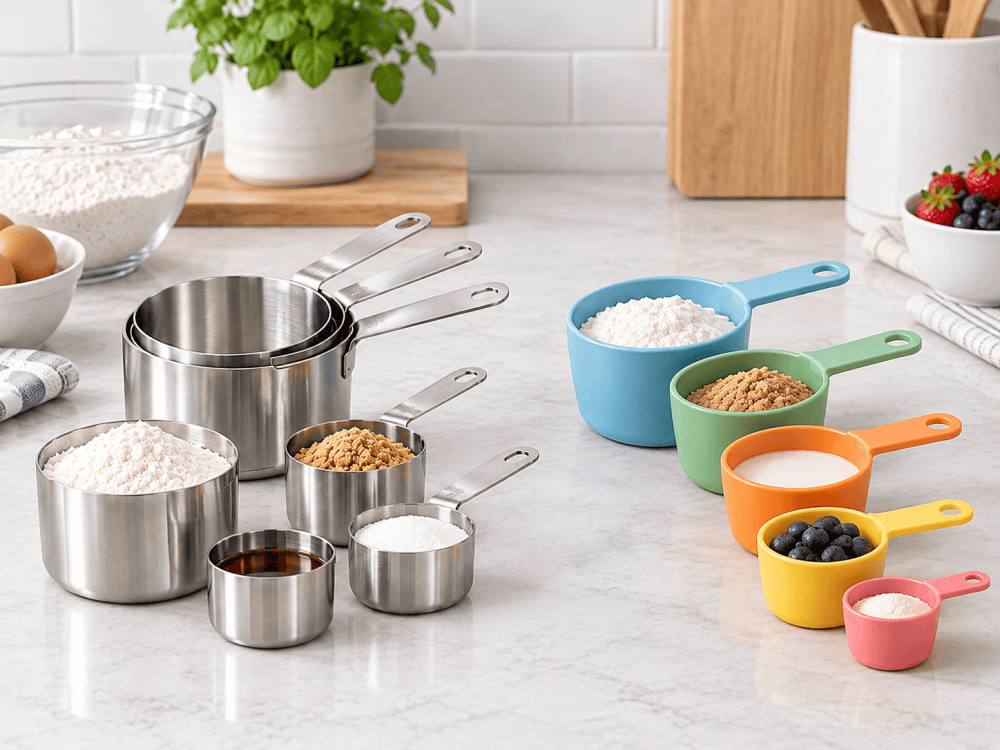
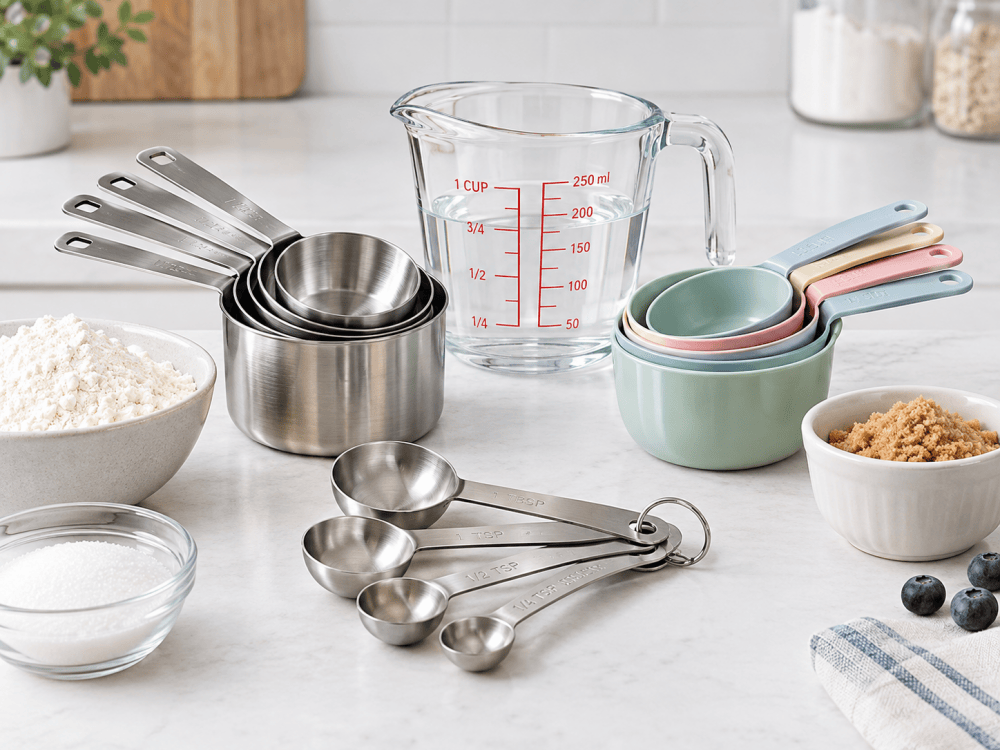
Stainless steel measuring cups are a strong choice for durability, repeated use, and measuring dry ingredients. Plastic measuring cups are lightweight, often more budget-friendly, and can be transparent for easier liquid-level reading. For the best results, compare the material, measurement markings, cup design, and care instructions rather than choosing by material alone.
What Is the Difference Between Stainless Steel and Plastic Measuring Cups?
The main difference is the material, but the measuring cup's design is equally important. Stainless steel measuring cups are commonly sold as individual, fixed-capacity cups for dry ingredients. Plastic measuring cups can be fixed-capacity cups or transparent containers with graduated measurement lines for liquids.
These designs serve slightly different purposes. Individual dry measuring cups are typically filled and leveled, while liquid measuring cups are filled to a marked line and read at eye level when appropriate.
| Feature | Stainless Steel Measuring Cups | Plastic Measuring Cups |
|---|---|---|
| Durability | Generally resistant to cracking and everyday wear | Can scratch, crack, or warp depending on material and use |
| Weight | Usually heavier than comparable plastic cups | Generally lightweight and easy to handle |
| Visibility | Opaque; contents cannot be seen through the sides | May be transparent, translucent, or opaque |
| Measurement markings | May be engraved, stamped, or otherwise marked | May be molded, printed, or marked in other ways |
| Staining and odors | Usually resists staining and odor retention | Some plastics may stain or retain odors over time |
| Initial cost | Often higher, depending on construction and finish | Often lower, depending on design and quality |
| Common applications | Dry ingredients, portioning, frequent use | Dry ingredients, liquids, everyday cooking and baking |
Performance varies by product quality, construction, measurement design, and care instructions. Neither material guarantees measuring accuracy on its own.
Stainless Steel Measuring Cups: Pros and Cons
Stainless steel measuring cups are popular with frequent home cooks, baking enthusiasts, and professional kitchens that need measuring tools for repeated use. Their rigid construction and metal finish make them a practical option for many dry-ingredient measuring tasks.
Pros of Stainless Steel Measuring Cups
- Durable construction: Quality stainless steel cups generally resist cracking and warping during normal use. They are well suited to repeated scooping and leveling of dry ingredients.
- Good resistance to stains and odors: Stainless steel typically does not retain food odors or stains as readily as some plastics. This is useful when switching between ingredients with strong colors or aromas.
- Long-lasting measurement markings: Engraved or stamped markings can remain legible longer than surface printing that wears away. Check the marking method when comparing products.
- Easy routine cleaning: Smooth stainless steel surfaces are generally straightforward to wash. Dishwasher compatibility still depends on the product's construction and the manufacturer's instructions.
- Useful for dry ingredients: Individual cups with flat rims make it convenient to measure flour, sugar, oats, rice, and other dry ingredients by filling and leveling.
- Nesting storage options: Many sets are designed to nest together, helping keep several cup sizes organized in a drawer or cabinet.
Cons of Stainless Steel Measuring Cups
- Higher upfront cost: Stainless steel sets may cost more than basic plastic alternatives, particularly when they feature thicker material, refined finishes, or upgraded handles.
- Contents are not visible: The opaque walls make it difficult to view a liquid level from the side. A transparent graduated cup is often more convenient for measuring larger amounts of liquid.
- Potential for dents: Strong impacts can dent a metal cup. If a dent changes the rim or shape, the cup may no longer measure reliably.
- Heavier handling: Metal cups generally weigh more than comparable plastic cups. This may matter when tools are used repeatedly throughout a long preparation shift.
- Handles and joints still matter: A metal cup is not automatically well made. Inspect handle attachment, rim finishing, and overall construction when selecting a set.
Consider stainless steel measuring cups if you frequently measure dry ingredients, prefer a durable tool, and want measurement markings that are less likely to wear away when properly maintained.
Plastic Measuring Cups: Pros and Cons
Plastic measuring cups are available in many shapes, colors, capacities, and price ranges. Some are designed as fixed-capacity cups for dry ingredients, while others have transparent walls, graduated markings, and pouring spouts for liquids.
Pros of Plastic Measuring Cups
- Lightweight and convenient: Plastic cups are easy to lift, carry, and handle. Their lower weight can be helpful when measuring ingredients repeatedly.
- Often budget-friendly: Many plastic sets have a lower purchase price, making them attractive for first-time buyers, family kitchens, and operations that need multiple sets.
- Transparent options: Clear plastic measuring cups let users view liquid levels through the side. Graduated markings and a suitable pouring spout can make measuring and transferring liquids easier.
- Wide design selection: Plastic can be produced in different colors, shapes, and capacities. This provides flexibility for product development and kitchen organization.
- Less likely to dent: Plastic will not dent in the same way as metal, although it can crack, scratch, or deform under certain conditions.
- Comfortable handling: Depending on the shape and handle design, plastic cups can be comfortable for everyday cooking, baking, and portioning.
Cons of Plastic Measuring Cups
- Possible warping or cracking: Some plastic products can deform under excessive heat or crack after impact, repeated use, or aging.
- Staining and odor retention: Certain plastics can retain colors or odors from ingredients such as tomato-based mixtures, spices, or strongly flavored foods.
- Measurement markings may wear: Printed markings can fade through repeated washing and abrasion. Molded or otherwise durable markings may last longer, depending on design and material.
- Scratch sensitivity: Some plastics scratch more easily than stainless steel. Deep scratches, cracks, or difficult-to-clean damage are reasons to inspect and replace a cup.
- Heat limitations vary: Different plastics have different temperature limits. Do not assume a measuring cup is suitable for hot ingredients, microwave use, or high-temperature dishwashing unless the manufacturer confirms it.
- Material selection matters: Buyers should check that the product is intended for food contact and suitable for the ingredients, temperatures, and cleaning conditions involved.
Plastic measuring cups are worth considering when low weight, transparent liquid measurement, color options, and a lower purchase price are priorities. Choose a product with suitable food-contact documentation and clear care instructions.
Stainless Steel vs. Plastic Measuring Cups: Which Is More Accurate?
Neither stainless steel nor plastic is automatically more accurate. Measuring accuracy depends on the cup's actual capacity, dimensional consistency, shape, measurement markings, and how the user fills or reads it.
A well-made plastic cup can measure accurately, just as a well-made stainless steel cup can. The more important question is whether the cup maintains its shape and whether the intended measurement remains easy to read during regular use.
Measurement Markings
Stainless steel cups may have engraved or stamped size markings, while plastic cups may use molded or printed markings. Engraved metal markings can resist ordinary surface wear, but plastic cups with durable molded markings can also be practical.
For either material, check that capacity labels are clear, consistent, and appropriate for the market where the product will be sold.
Choosing the Right Measuring Method
- Dry ingredients: Fixed-capacity cups with a flat rim are convenient for filling and leveling ingredients such as flour and sugar.
- Liquids: A transparent graduated cup with a suitable spout makes it easier to read the liquid level and pour accurately.
- Precision baking: A digital kitchen scale can improve consistency when a recipe depends on ingredient weight, especially for flour and other dry ingredients.
For more detail on choosing the right measuring design, read our guide to dry vs. liquid measuring cups.
Which Measuring Cups Are Easier to Clean?
Both stainless steel and plastic measuring cups can be easy to clean when they have smooth surfaces and a simple design. Actual cleaning performance depends on the product, the ingredients being measured, and the washing method.
Cleaning Stainless Steel Measuring Cups
- Wash with suitable dish soap and warm water after use.
- Pay attention to seams, handle connections, and any areas where ingredients may collect.
- Dry as recommended by the manufacturer to maintain the finish.
- Confirm dishwasher compatibility before placing the cups in a dishwasher.
Cleaning Plastic Measuring Cups
- Wash promptly after measuring sticky, oily, strongly colored, or aromatic ingredients.
- Use a non-abrasive cleaning method to reduce unnecessary scratching.
- Inspect for deep scratches, cracks, clouding, or deformation that interferes with cleaning or measurement.
- Follow the product's stated temperature limits and dishwasher instructions.
For commercial use, establish a consistent washing and sanitizing procedure based on the applicable food-safety requirements and the manufacturer's instructions. The material alone does not guarantee that a utensil is hygienic.
Stainless Steel vs. Plastic Measuring Cups for Baking
Baking often requires repeatable measurements, particularly when working with flour, sugar, leavening agents, and liquids. The most useful measuring cup depends on the ingredient and how the recipe specifies its quantity.
For Flour, Sugar, and Other Dry Ingredients
Stainless steel measuring cup sets are a practical option for measuring dry ingredients. Individual cups with flat rims make it easy to fill the cup and level the excess. Plastic dry measuring cups can perform the same task when their shape and capacity are well designed.
For Water, Milk, Oil, and Other Liquids
A transparent plastic measuring cup with graduated markings is often convenient because the liquid level can be viewed from the side. A stainless steel cup can still hold liquid, but its opaque walls make visual level checking less convenient.
For Repeated or High-Volume Baking
Consider capacity consistency, marking durability, handle strength, cleaning requirements, and storage efficiency. If recipes require highly repeatable results, weighing ingredients can help reduce variation associated with volume-based measurement.
How to Choose Measuring Cups for Home or Commercial Use
The best measuring cup is not simply the one made from the more expensive material. Start by identifying how the cups will be used, then compare capacity, design, and maintenance requirements.
For Home Kitchens
- Choose a set with the capacities you use most frequently.
- Look for clearly marked sizes and comfortable handles.
- Consider nesting sets if drawer space is limited.
- Choose transparent graduated cups if you regularly measure liquids.
- Check the cleaning and temperature instructions before buying.
For Restaurants and Foodservice
- Prioritize durable construction for frequent handling.
- Check whether measurement markings are likely to remain legible with repeated cleaning.
- Choose designs that are easy to inspect and clean.
- Evaluate replacement costs, storage, and the availability of individual sizes.
- Verify food-contact suitability and relevant documentation for the intended market.
For Brands, Wholesalers, and Retailers
When sourcing measuring cups, product specifications should extend beyond the choice between stainless steel and plastic. The capacity range, marking method, finish, packaging, and intended customer group all affect the product's market position.
- Material specifications: Confirm the exact material and grade where applicable, along with intended food-contact use.
- Capacity and consistency: Define nominal capacities and the required inspection or verification process.
- Design and usability: Review handle shape, rim finish, nesting, pouring features, and storage needs.
- Marking durability: Specify whether markings are engraved, stamped, molded, printed, or applied by another process.
- Quality control: Establish acceptance criteria for dimensions, finish, appearance, and functionality.
- Packaging and customization: Evaluate retail presentation, set configuration, labeling, and private-label requirements.
Clear product specifications help buyers compare quotations on a like-for-like basis and reduce the risk of receiving products that do not match their intended application.
Stainless Steel vs. Plastic Measuring Cups: Final Comparison
| Buying Priority | Option to Consider | Why |
|---|---|---|
| Frequent measuring of dry ingredients | Stainless steel or quality plastic dry measuring cups | Fixed capacities and level rims support convenient portioning |
| Viewing liquid levels | Transparent plastic measuring cup | Clear walls and graduated markings make liquid levels easier to see |
| Low product weight | Plastic | Usually lighter than comparable stainless steel cups |
| Long-term resistance to ordinary wear | Quality stainless steel | Generally resists cracking and warping better under normal use |
| Lower initial purchase price | Plastic | Many basic plastic options are budget-friendly |
| Long-lasting markings | Compare marking methods | Engraved, stamped, or molded markings may resist wear better than some printed finishes |
| Custom colors and product variations | Often plastic, depending on design | Plastic offers flexibility in colors and shapes |
Frequently Asked Questions
Are stainless steel measuring cups better than plastic?
Stainless steel measuring cups are generally a good choice for durability and repeated use. Plastic measuring cups can be more affordable and lighter, and transparent models are useful for measuring liquids. The better choice depends on the intended task and product quality.
Are plastic measuring cups accurate?
Yes. A properly manufactured plastic measuring cup can be accurate. Check its capacity, shape, and markings, and replace it if warping, cracking, or worn markings interfere with reliable measurement.
Do stainless steel measuring cups rust?
Stainless steel is designed to resist corrosion, but corrosion resistance depends on the steel grade, surface condition, and exposure to certain environments. Follow the manufacturer's cleaning and care instructions, and inspect products for signs of corrosion or damage.
Can plastic measuring cups measure hot liquids?
Some plastic measuring cups are designed for certain hot-liquid applications, while others are not. Check the manufacturer's stated temperature limits and intended use before measuring hot ingredients.
Are stainless steel measuring cups dishwasher-safe?
Many stainless steel measuring cups are dishwasher-safe, but this is not guaranteed for every product. Handles, coatings, finishes, and construction can affect cleaning recommendations, so check the manufacturer's instructions.
Which measuring cups are best for flour?
Fixed-capacity dry measuring cups with flat rims are convenient for measuring flour. Both stainless steel and plastic versions can work well. For more consistent baking results, consider weighing flour with a digital kitchen scale when the recipe provides a weight.
Which measuring cups are best for liquids?
Transparent graduated measuring cups are often convenient for liquids because the user can see the liquid level and pour through a spout. The cup should have clear markings and be used according to its intended measurement method.
What should buyers look for when sourcing measuring cups?
Buyers should review material specifications, capacity consistency, measurement markings, handle construction, cleaning instructions, food-contact suitability, packaging, and quality-control requirements. The right specification depends on the target market and intended use.
Conclusion
When comparing stainless steel vs. plastic measuring cups, there is no single material that is best for every kitchen. Stainless steel offers a durable option for frequent use, especially when measuring dry ingredients. Plastic provides lightweight handling, a wide range of designs, and transparent options that can make measuring liquids more convenient.
For home cooks, the most practical choice depends on cooking habits, storage space, and the ingredients measured most often. For brands and wholesalers, material selection should be supported by clear capacity specifications, reliable markings, appropriate food-contact documentation, and consistent quality control.
By evaluating the intended use and product design alongside material, buyers can choose measuring cups that better meet their needs for everyday cooking, baking, and kitchenware retail.
Looking for Custom Kitchenware Solutions?
Kitlucy supports kitchenware sourcing and customization projects for brands, wholesalers, and retailers. Share your product requirements to discuss suitable designs, specifications, and private-label opportunities.
Related Blogs