

Stainless Steel vs. Plastic Measuring Spoons: Pros and Cons
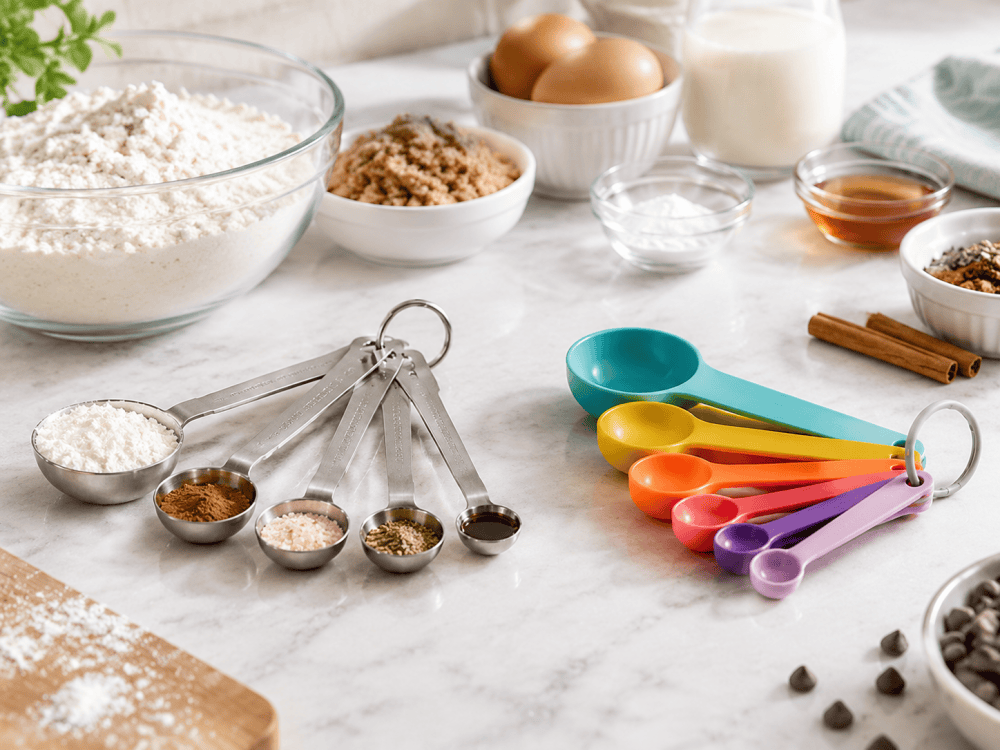
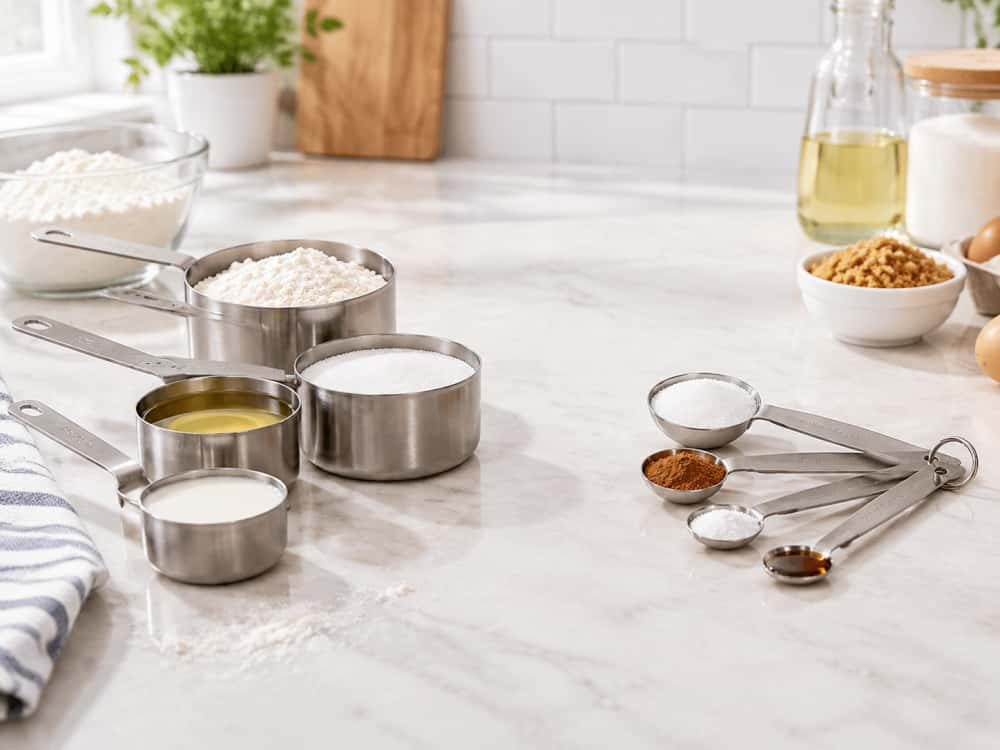
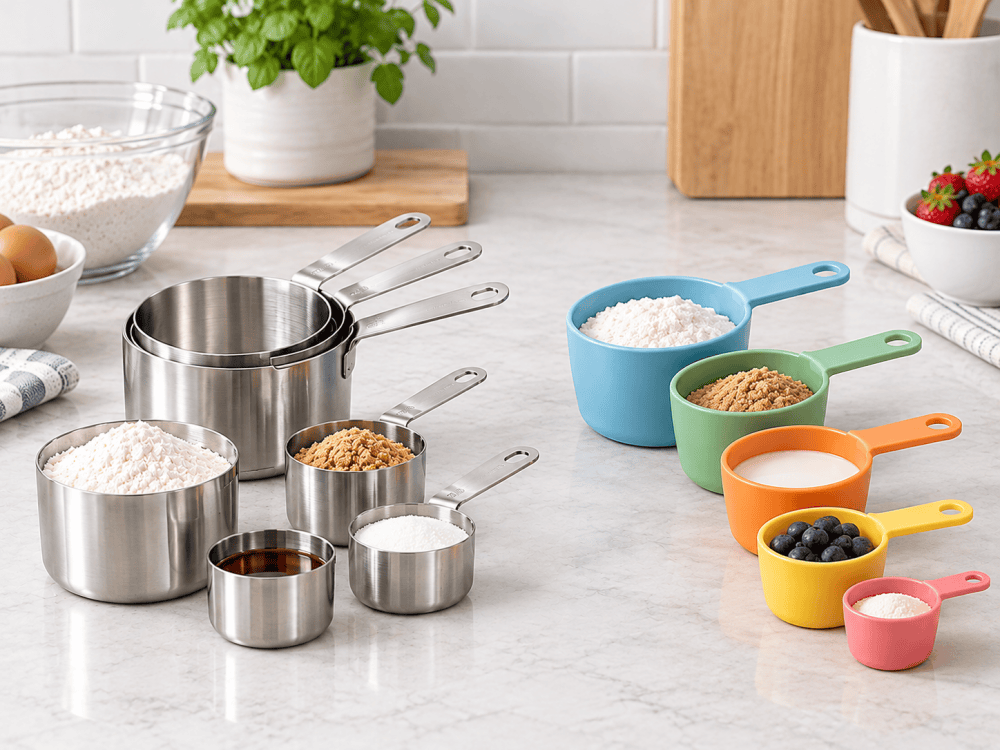
Measuring spoons are essential tools for baking, cooking, and preparing recipes. Although stainless steel and plastic measuring spoons can both measure small quantities of ingredients, they differ in durability, maintenance, cost, and everyday convenience. Understanding these differences can help you choose the right set for your kitchen or product range.
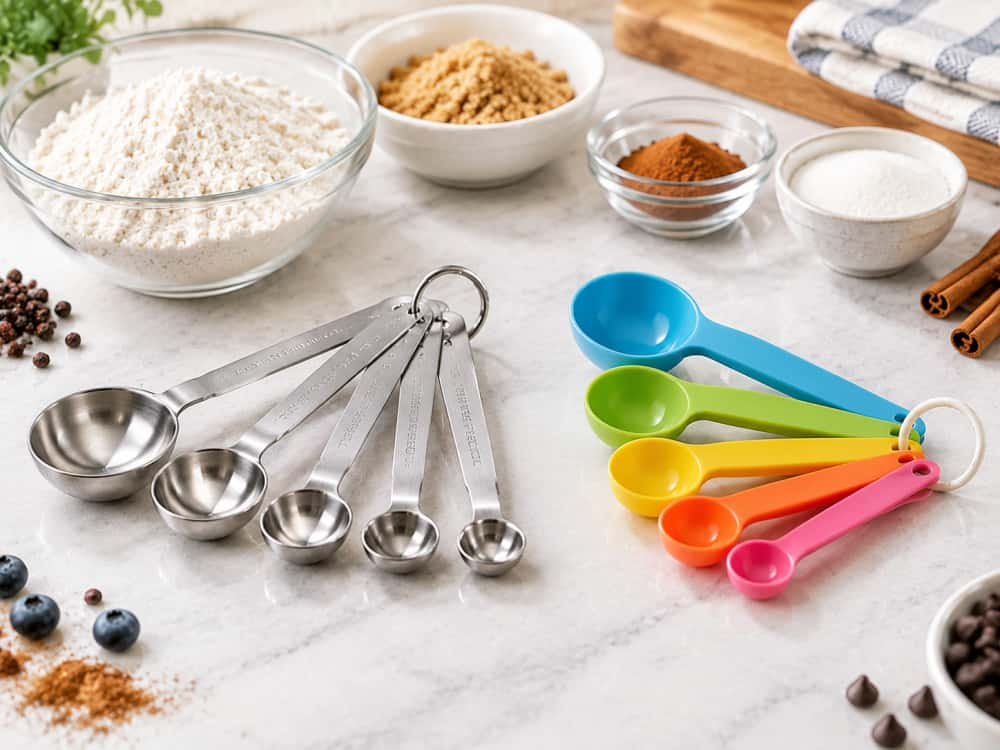
Quick Answer: Stainless steel measuring spoons are generally the better choice for long-term durability, resistance to staining, and frequent use. Plastic measuring spoons are lightweight, often more affordable, and available in a wide range of colors. For home baking and professional kitchens, stainless steel is a strong all-around option; for budget-friendly sets, color-coded tools, and lightweight everyday use, plastic may be the better fit.
The best choice also depends on the quality of the materials, spoon design, measurement markings, and how the spoons will be cleaned and stored.
1. Stainless Steel vs. Plastic Measuring Spoons: Key Differences
The main difference between stainless steel and plastic measuring spoons is the material itself. Stainless steel offers a rigid metal construction, while plastic provides a lighter and often more colorful alternative. Both can measure ingredients accurately when properly manufactured, but their performance over time can vary.
| Feature | Stainless Steel Measuring Spoons | Plastic Measuring Spoons |
|---|---|---|
| Durability | Generally durable and resistant to everyday wear | Depends on plastic type, thickness, and construction |
| Weight | Usually heavier than plastic | Lightweight and easy to handle |
| Staining and odors | Generally resistant to staining and odor absorption | Some plastics may retain stains or odors from strongly colored ingredients |
| Measurement accuracy | Accurate when the spoon capacity and shape are correctly manufactured | Equally capable of accurate measurement when correctly manufactured |
| Cleaning | Often easy to clean; dishwasher suitability depends on the product | Easy to rinse; dishwasher suitability depends on the plastic and manufacturer’s instructions |
| Design options | Classic metallic appearance, often with engraved markings | Many colors, shapes, and handle designs |
| Cost | Often higher upfront, depending on steel grade and construction | Often economical, especially for basic sets |
| Best suited for | Frequent baking, long-term household use, and premium kitchenware sets | Budget-conscious kitchens, color-coded sets, and lightweight everyday use |
Note: These are general material comparisons. Actual performance depends on product quality, design, material grade, and care instructions.
2. Stainless Steel Measuring Spoons: Pros and Cons
Stainless steel measuring spoons are popular with home bakers and frequent cooks because they combine a rigid structure with a simple, practical design. They are particularly useful for measuring dry ingredients, spices, extracts, and small quantities of liquid.
Advantages of Stainless Steel Measuring Spoons
- Long-lasting construction: Quality stainless steel spoons can withstand regular use without easily bending or cracking under normal handling.
- Good resistance to stains and odors: Stainless steel generally handles ingredients such as turmeric, paprika, coffee, and vanilla better than many plastics that can retain discoloration or odors.
- Easy maintenance: Smooth metal surfaces are typically straightforward to wash, rinse, and dry.
- Clear, durable markings: Engraved measurement markings can remain legible longer than printed markings, depending on the manufacturing process.
- Suitable for frequent use: A well-made set is a practical choice for people who bake or cook regularly.
- Premium appearance: The metallic finish works well in coordinated kitchen tool sets and higher-end retail collections.
Disadvantages of Stainless Steel Measuring Spoons
- Higher initial cost: Stainless steel sets may cost more than basic plastic alternatives, particularly when made with thicker metal or more refined finishes.
- More weight: Some users prefer lighter tools, especially when storing or carrying a complete measuring set.
- Potential for scratches: Metal surfaces can develop scratches or scuffs through contact with other utensils during storage.
- Quality still matters: Poorly finished edges, weak connecting rings, or unclear capacity markings can reduce usability even when the product is made of stainless steel.
- Dishwasher suitability varies: Many stainless steel sets are dishwasher-safe, but the product’s instructions should always be checked, particularly for mixed-material handles or finishes.
Best for: Frequent bakers, home cooks who value durability, and buyers looking for reusable measuring tools with a classic metallic appearance.
3. Plastic Measuring Spoons: Pros and Cons
Plastic measuring spoons are widely used in everyday kitchens because they are lightweight, convenient, and available at different price points. They can also be designed in bright colors, making it easier to distinguish between utensils or organize a kitchen drawer.
Advantages of Plastic Measuring Spoons
- Lightweight handling: Plastic spoons are easy to pick up, carry, and use, making them convenient for everyday cooking.
- Budget-friendly options: Basic plastic sets are often an economical choice for households, starter kitchens, and promotional product programs.
- Color variety: Different colors can help users organize utensils, identify sets, or create a coordinated kitchen collection.
- Comfortable handle designs: Plastic can be molded into different handle shapes and textures for a comfortable grip.
- No metallic finish: Plastic provides a different visual style for buyers who prefer colorful or minimalist non-metal kitchen tools.
- Flexible product development: Manufacturers can explore different colors, shapes, and handle designs depending on the selected plastic and production process.
Disadvantages of Plastic Measuring Spoons
- Potential for wear or deformation: Some plastic spoons may warp, crack, or become brittle over time, depending on the material, thickness, and conditions of use.
- Possible staining: Certain plastics may discolor after repeated contact with ingredients such as curry powder, tomato products, or strongly colored spices.
- Odor retention: Some plastic formulations can retain odors more readily than stainless steel, especially after repeated use with aromatic ingredients.
- Markings may wear: Printed measurements can fade with repeated washing or abrasion. Molded or otherwise durable markings may last longer.
- Heat limitations: Plastic products have material-specific temperature limits. They should not be exposed to heat beyond the manufacturer's stated limits.
- Quality varies considerably: A low-cost set may have rough edges, inconsistent capacities, or handles that are less sturdy than those of a better-designed product.
Best for: Budget-conscious households, lightweight kitchen tool collections, color-coded utensils, and buyers who prioritize design variety and affordability.
4. Which Material Is More Accurate for Measuring Ingredients?
Neither stainless steel nor plastic automatically guarantees better measuring accuracy. Accuracy depends primarily on whether each spoon has the correct capacity, a consistent shape, clearly defined fill level, and reliable manufacturing tolerances.
For example, a stainless steel tablespoon with an incorrectly formed bowl can measure less accurately than a well-made plastic tablespoon. Material alone is not enough to determine whether a measuring spoon will produce consistent results.
When comparing products, look at the following details:
- Correct capacities: Each spoon should match its stated measurement, such as 1 tablespoon, 1 teaspoon, 1/2 teaspoon, or 1/4 teaspoon.
- Consistent bowl shapes: Differences in depth, width, or capacity can affect how ingredients are measured.
- Readable markings: Measurement labels should be easy to identify during use and remain legible over time.
- Practical design: A spoon that can be filled and leveled easily is more convenient for repeatable measurements.
- Quality control: Buyers sourcing measuring spoons in bulk should confirm the specifications and inspection procedures used for production.
For baking recipes that require a high degree of consistency, selecting well-made spoons and using the same measuring technique each time is more important than choosing metal over plastic alone.
5. Which Measuring Spoons Are Easier to Clean?
Both stainless steel and plastic measuring spoons can be easy to clean. The better option depends on the product's construction, surface finish, and compatibility with the intended cleaning method.
Cleaning Stainless Steel Measuring Spoons
Stainless steel generally has a smooth, nonporous surface that is easy to wash with warm water and dish soap. It is also typically resistant to staining from common cooking ingredients. Drying the spoons after washing can help keep them looking their best, particularly when water spots are a concern.
For sets connected by a ring, check the connection points for trapped flour, sugar, or other residue. Follow the manufacturer's instructions before placing the set in a dishwasher.
Cleaning Plastic Measuring Spoons
Plastic spoons can also be washed easily with warm water and dish soap. However, certain plastics may retain odors or stains after repeated use. Prompt cleaning after measuring strong spices, oils, or colored ingredients can help reduce residue and discoloration.
Do not assume that every plastic measuring spoon is dishwasher-safe. Check the product's care instructions and avoid temperatures beyond its stated limits.
Cleaning tip: For either material, use a suitable cleaning method, rinse thoroughly, and allow the spoons to dry before storing them. Replace any spoon that has developed cracks, sharp edges, or damage that interferes with cleaning or accurate measurement.
6. Stainless Steel vs. Plastic Measuring Spoons for Baking
For baking, measuring spoons are commonly used for baking powder, baking soda, salt, vanilla extract, spices, and small amounts of liquid. Both materials can work well, but certain features may make one more suitable for your routine.
Choose Stainless Steel If You:
- Bake frequently and want a durable set for repeated use.
- Prefer measurement markings that can be engraved or otherwise made resistant to fading.
- Regularly measure strongly colored or aromatic ingredients.
- Want a classic metal appearance that coordinates with other kitchen tools.
- Prefer a rigid spoon bowl that holds its shape during use.
Choose Plastic If You:
- Prefer a lightweight set that is easy to handle.
- Want colorful spoons for organizing ingredients or identifying individual tools.
- Need an economical option for a starter kitchen or everyday household use.
- Prefer molded handle shapes or a particular color scheme.
- Have confirmed that the selected plastic is suitable for its intended food-contact use and cleaning conditions.
Our practical recommendation: If you bake regularly and expect to use the same measuring spoons for years, a well-made stainless steel set is often a sensible investment. If affordability, light weight, and color choice are your priorities, a quality plastic set can also be a good option.
For either material, accurate capacities, durable markings, smooth finishing, and clear care instructions should guide the final decision.
7. What Should You Look for When Buying Measuring Spoons?
Before purchasing a measuring spoon set, consider more than its material. A thoughtfully designed set should be easy to use, simple to clean, and suitable for the ingredients and recipes you prepare most often.
1. A Useful Range of Sizes
Many everyday sets include 1 tablespoon, 1 teaspoon, 1/2 teaspoon, and 1/4 teaspoon. Some sets offer additional capacities or metric measurements. Choose a size range that matches your recipes and the needs of your intended users.
2. Clear, Long-Lasting Measurement Markings
Markings should be easy to read without repeatedly checking which spoon you are holding. Engraved or molded markings may offer better long-term legibility than some printed alternatives, although the quality of the actual manufacturing process matters.
3. Bowl Shape and Handle Design
A spoon with a practical bowl shape can make it easier to scoop dry ingredients and measure small amounts of liquid. Handles should be comfortable to hold and sturdy enough for normal use. Narrow or elongated designs may also be useful for reaching into certain spice jars.
4. Material and Food-Contact Suitability
For stainless steel, check the specified grade and finish rather than assuming that all metal products are identical. For plastic, confirm the actual material and its suitability for the intended food-contact conditions. Product documentation should match the target market and intended use.
5. Storage and Set Construction
Some measuring spoon sets use a removable ring to keep the spoons together, while others nest or stack for compact storage. Consider whether the connection is easy to use and whether the design leaves areas that are difficult to clean.
6. Care Instructions and Product Quality
Review dishwasher compatibility, temperature limitations, finish durability, and the manufacturer's cleaning recommendations. For bulk purchasing, request samples and check the actual product before confirming a large order.
8. Wholesale Sourcing: Stainless Steel or Plastic Measuring Spoons?
For retailers, importers, distributors, and private-label brands, the choice between stainless steel and plastic measuring spoons also affects product positioning, packaging, pricing, and customer expectations.
Rather than selecting a material based on price alone, buyers should evaluate the intended retail market, product specifications, expected usage, and quality-control requirements.
Consider Stainless Steel for:
- Mid-range and premium kitchenware collections.
- Coordinated baking utensil and measuring tool sets.
- Products where a metallic finish and long-term everyday use are key selling points.
- Retail ranges that prioritize durable construction and clearly defined measurement markings.
Consider Plastic for:
- Entry-level kitchen tool sets and price-sensitive retail ranges.
- Color-coordinated or color-coded product collections.
- Lightweight sets designed for general household use.
- Private-label programs that require specific colors, handle designs, or coordinated product styling.
Questions to Ask a Measuring Spoon Supplier
- What material grade or plastic type is used for each component?
- What are the capacity specifications and dimensional tolerances for each spoon?
- Are the measurement markings engraved, molded, printed, or applied using another process?
- What cleaning methods and temperature limits are specified for the product?
- What food-contact documentation is available for the intended market and use?
- Can the supplier support custom colors, packaging, logo application, or private-label development?
- What sample approval and quality inspection procedures are available before mass production?
Food-contact compliance should be evaluated against the requirements of the destination market and the actual materials used. For example, buyers selling into the United States should consider applicable FDA food-contact requirements, while buyers serving European markets should review relevant EU requirements and applicable national guidance. A supplier's general statement about compliance is not a substitute for documentation that covers the specific product and its intended use.
Before placing a bulk order, evaluate samples for measurement consistency, surface finish, marking legibility, handle strength, cleaning performance, packaging, and overall workmanship. This helps buyers compare products based on practical quality rather than appearance alone.
9. Frequently Asked Questions
Are stainless steel measuring spoons better than plastic?
Stainless steel measuring spoons are often preferable for frequent use because they are generally durable and resistant to staining and odors. Plastic measuring spoons are lighter and often more affordable. The better option depends on your budget, preferred design, and expected use.
Do stainless steel measuring spoons measure more accurately?
Not necessarily. Accuracy depends on the spoon's actual capacity, shape, manufacturing tolerances, and measurement markings. A properly manufactured plastic spoon can be just as accurate as a stainless steel spoon of the same stated capacity.
Can plastic measuring spoons go in the dishwasher?
Some can, but dishwasher compatibility varies by plastic type and product construction. Always follow the manufacturer's care instructions rather than assuming that every plastic measuring spoon is dishwasher-safe.
Do stainless steel measuring spoons rust?
Quality stainless steel offers corrosion resistance, but it is not completely immune to corrosion under every condition. Material grade, surface condition, exposure to certain chemicals, and care practices can affect performance. Follow the manufacturer's cleaning and storage guidance.
Which measuring spoons are better for spices?
Both materials can work for spices. Stainless steel is generally resistant to staining and odor retention, while plastic offers lightweight handling and color options. Clean spoons promptly after use, especially with strongly colored or aromatic spices.
What sizes should a measuring spoon set include?
A common set includes 1 tablespoon, 1 teaspoon, 1/2 teaspoon, and 1/4 teaspoon. Depending on the market and intended recipes, additional sizes or metric measurements may be useful.
What should wholesale buyers check before ordering measuring spoons?
Buyers should check material specifications, measurement capacities, marking durability, construction quality, cleaning instructions, food-contact documentation, packaging options, and sample consistency. Customization and minimum order quantities should also be confirmed with the supplier.
10. Final Verdict: Which Measuring Spoon Material Should You Choose?
Stainless steel and plastic measuring spoons can both be practical kitchen tools, but they serve slightly different priorities.
Choose stainless steel if durability, resistance to staining, a classic appearance, and frequent use are your main considerations. A quality set can be a dependable option for regular cooking and baking.
Choose plastic if you prefer lightweight tools, a lower initial cost, color variety, or flexible design options. Look for a well-made product with accurate capacities, durable markings, and clearly stated care instructions.
Ultimately, the best measuring spoons are not simply the ones made from a particular material. They are the ones that combine reliable measurements, practical design, appropriate food-contact materials, and quality construction for the way they will be used.
Explore Kitchenware Solutions with Kitlucy
Looking for practical kitchen tools for everyday cooking, baking, or product development? Explore Kitlucy's kitchenware range and contact our team to discuss product information, sourcing needs, and potential customization options.
Explore Kitlucy Contact Our TeamRelated Blogs