Why Stainless Steel Kitchen Utensils Are Durable: Benefits, Materials, Care & Buying Guide
Why Stainless Steel Kitchen Utensils Are Durable: Benefits, Materials, Care & Buying Guide
Stainless steel kitchen utensils have been a staple in both professional and home kitchens for decades. From restaurant chefs to home cooks, millions of people rely on stainless steel cooking tools because they offer exceptional strength, heat resistance, hygiene, and long-term durability.
Unlike plastic utensils that can warp under high temperatures or wooden utensils that require regular maintenance, stainless steel kitchen utensils are built to withstand years of daily use with minimal care. Their ability to resist rust, corrosion, stains, and impact makes them one of the most reliable choices for modern kitchens.
Whether you're purchasing a complete stainless steel utensil set, sourcing products for a retail business, or simply upgrading your cooking tools, understanding why stainless steel is so durable can help you make a smarter investment.
In this comprehensive guide, you'll learn how stainless steel utensils are manufactured, which steel grades are best, how they compare with silicone and nylon alternatives, and how to maintain them for decades of reliable performance.
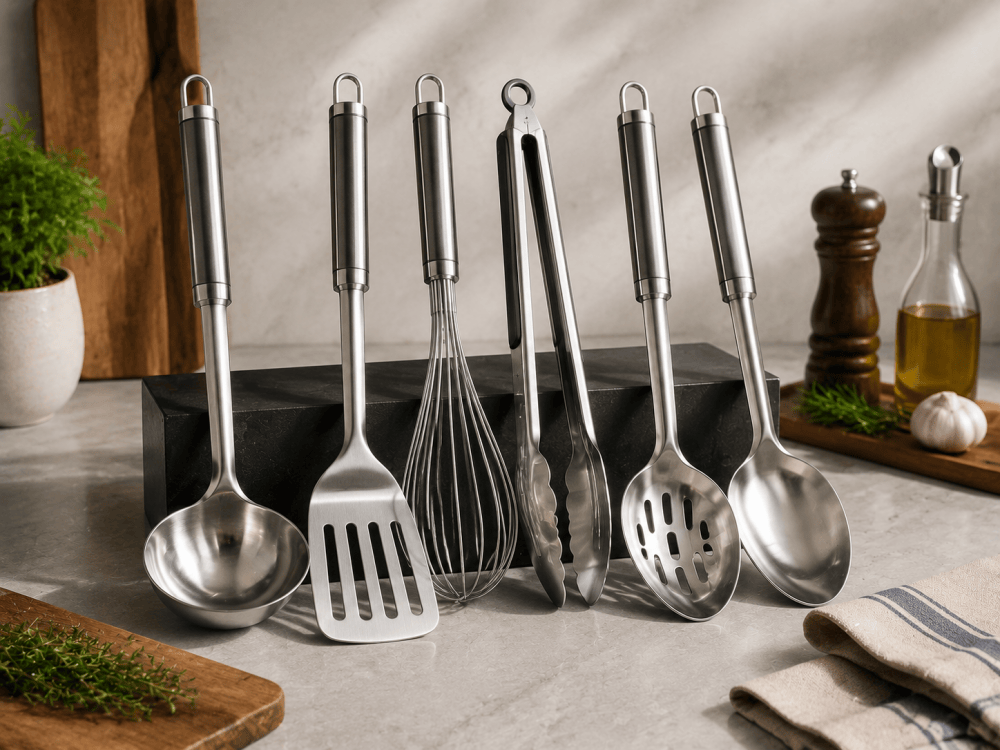
Stainless steel kitchen utensils are durable because they combine high mechanical strength, corrosion resistance, excellent heat tolerance, and outstanding wear resistance. Premium grades such as 304 stainless steel can withstand years of daily cooking without rusting, cracking, or deforming, making them a favorite choice in both home and commercial kitchens.
What Are Stainless Steel Kitchen Utensils?
Stainless steel kitchen utensils are cooking and serving tools manufactured primarily from corrosion-resistant stainless steel alloys. These utensils are designed for food preparation, cooking, baking, grilling, and serving while maintaining their strength even under demanding kitchen conditions.
Unlike coated metals or ordinary carbon steel, stainless steel contains chromium, which forms a thin protective oxide layer on the surface. This invisible layer continuously protects the metal from rust and corrosion, even after years of exposure to moisture and food acids.
Modern stainless steel kitchen utensil sets typically include a wide variety of cooking tools suitable for everyday use.
Common Stainless Steel Kitchen Utensils
- Cooking spatulas
- Slotted turners
- Solid serving spoons
- Slotted spoons
- Soup ladles
- Pasta servers
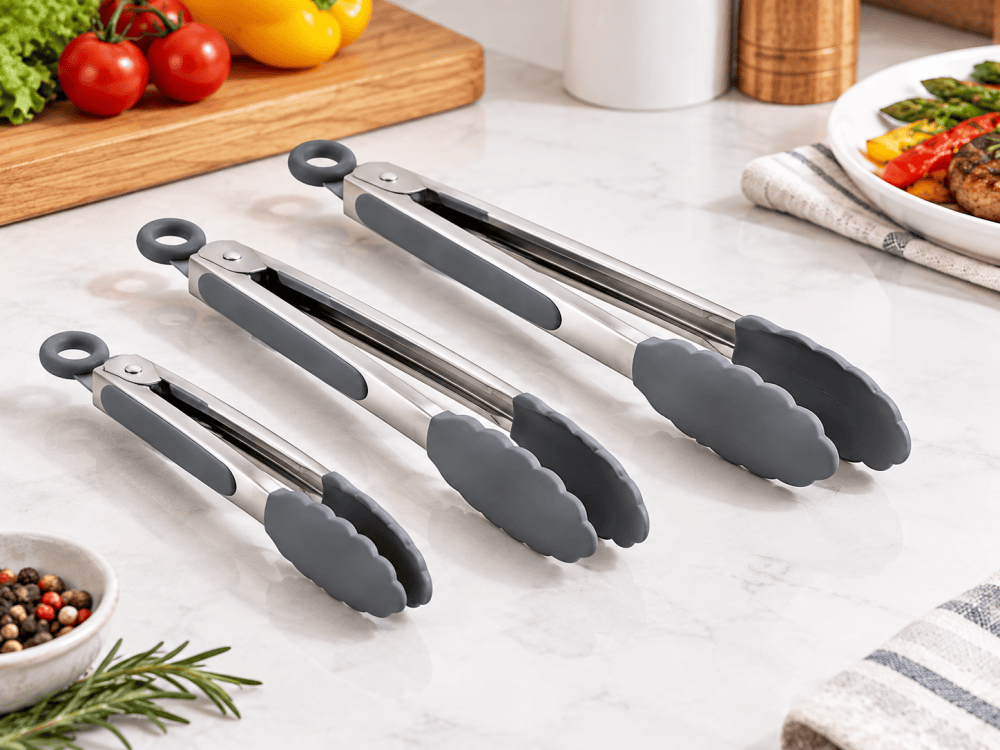
- Kitchen tongs
- Whisks
- Skimmers
- Potato mashers
- Basting brushes with stainless steel handles
- Serving forks
Many manufacturers also combine stainless steel heads with silicone or wooden handles to improve comfort and compatibility with non-stick cookware.
Why Stainless Steel Kitchen Utensils Are So Durable
The outstanding durability of stainless steel utensils is the result of both material science and advanced manufacturing processes. Several unique properties work together to create tools capable of lasting for many years.
1. Excellent Corrosion Resistance
One of the biggest reasons stainless steel remains popular is its exceptional resistance to corrosion.
Kitchen utensils are constantly exposed to:
- Water
- Steam
- Salt
- Cooking oils
- Acidic foods
- Dishwashing detergents
Ordinary steel would quickly rust under these conditions. Stainless steel, however, naturally resists corrosion because chromium reacts with oxygen to create a microscopic protective oxide film that prevents moisture from attacking the underlying metal.
This protective layer also repairs itself when scratched, allowing stainless steel utensils to remain attractive even after years of regular use.
2. High Mechanical Strength
Stainless steel is significantly stronger than plastic, silicone, or bamboo when subjected to heavy cooking tasks.
It can easily withstand:
- Mixing thick dough
- Stirring dense soups
- Lifting heavy cuts of meat
- Turning large steaks
- Serving large portions
Its excellent tensile strength means the utensil maintains its shape without bending or breaking under normal cooking conditions.
3. Outstanding Heat Resistance
Another reason stainless steel kitchen utensils last so long is their ability to tolerate extremely high temperatures.
Unlike plastic or nylon utensils that may soften or melt, stainless steel remains stable even when exposed to intense cooking heat.
This makes stainless steel ideal for:
- Deep frying
- High-temperature stir-frying
- Outdoor grilling
- Cast iron cookware
- Commercial kitchens
Even after repeated exposure to heat, stainless steel utensils rarely warp or lose their structural integrity.
Professional restaurant kitchens almost exclusively use stainless steel utensils because they can tolerate continuous high-temperature cooking while maintaining their strength, appearance, and hygiene.
4. Exceptional Wear Resistance
Kitchen utensils are constantly exposed to friction during cooking, stirring, scraping, and serving.
Stainless steel offers excellent wear resistance, allowing the surface to remain smooth even after years of repeated contact with food and cookware.
This durability reduces maintenance costs while keeping utensils looking professional for much longer.
5. Impact Resistance
Accidental drops are common in busy kitchens.
Compared with ceramic, plastic, or wooden utensils, stainless steel is highly resistant to impact damage.
Dropping a stainless steel ladle or serving spoon onto a hard kitchen floor typically causes little or no permanent damage.
6. No Cracking or Splitting
Wooden utensils may crack as they absorb and release moisture over time. Plastic handles can become brittle with age, especially after repeated dishwasher cycles.
Stainless steel avoids these problems because it does not absorb water and maintains its structural integrity regardless of humidity or temperature changes.
Common Stainless Steel Grades Used for Kitchen Utensils
Not all stainless steel is identical. Different grades offer varying levels of corrosion resistance, durability, and cost.
The three most common grades used in kitchen utensils are 304, 430, and 201 stainless steel.
| Steel Grade | Corrosion Resistance | Durability | Typical Applications |
|---|---|---|---|
| 304 Stainless Steel | ★★★★★ | ★★★★★ | Premium kitchen utensils, cookware, food-contact products |
| 430 Stainless Steel | ★★★★☆ | ★★★★☆ | Economical utensil sets, kitchen accessories |
| 201 Stainless Steel | ★★★☆☆ | ★★★★☆ | Budget household products |
304 Stainless Steel
304 stainless steel is widely regarded as the premium choice for kitchen utensils.
Its advantages include:
- Excellent corrosion resistance
- Outstanding durability
- Food-safe composition
- Easy cleaning
- Long service life
Most high-end kitchen utensil sets use 304 stainless steel because it performs exceptionally well in both home and commercial kitchens.
430 Stainless Steel
430 stainless steel contains less nickel than 304, making it a more economical option.
Although its corrosion resistance is slightly lower, it still performs very well in typical household environments and is commonly used in mid-range kitchen utensil collections.
201 Stainless Steel
201 stainless steel is often chosen for budget-friendly products because of its lower manufacturing cost.
While it offers good strength, it is less resistant to corrosion than 304 stainless steel and may not be the best option for humid environments or heavy commercial use.
Why Professional Kitchens Prefer Stainless Steel
Restaurants, hotels, catering companies, and commercial food manufacturers depend heavily on stainless steel utensils because they satisfy demanding operational requirements.
Professional chefs appreciate stainless steel because it offers:
- Long service life
- Excellent hygiene
- Fast cleaning
- High heat resistance
- Reliable strength under continuous use
- Professional appearance
For businesses, investing in high-quality stainless steel utensils also reduces replacement costs over time, making them one of the most cost-effective kitchen tool investments available.
Stainless Steel vs Other Kitchen Utensil Materials
Although stainless steel is one of the most popular materials for kitchen utensils, it is not the only option available. Modern kitchens also use silicone, nylon, wood, and bamboo utensils, each offering different advantages depending on the cooking task.
Understanding the differences between these materials helps consumers choose the right utensil set for their cookware, cooking style, and maintenance preferences.
Rather than relying on a single material, many professional chefs recommend combining stainless steel utensils with silicone cooking tools. Stainless steel provides superior strength for heavy-duty cooking, while silicone protects delicate non-stick cookware.
Stainless Steel vs Silicone Kitchen Utensils
Silicone has become increasingly popular over the past decade, especially in home kitchens using non-stick cookware. However, stainless steel continues to dominate commercial kitchens because of its exceptional durability.
| Feature | Stainless Steel | Food-Grade Silicone |
|---|---|---|
| Durability | ★★★★★ | ★★★★☆ |
| Heat Resistance | ★★★★★ | ★★★★★ |
| Strength | ★★★★★ | ★★★☆☆ |
| Scratch-Free on Non-Stick Pans | No | Yes |
| Professional Kitchens | Excellent | Good |
| Service Life | 10+ Years | 5–8 Years |
Choose stainless steel if you:
- Cook with cast iron or stainless steel cookware
- Need maximum durability
- Cook frequently at high temperatures
- Want professional-grade utensils
Choose silicone if you:
- Use non-stick cookware daily
- Prefer flexible cooking tools
- Need soft edges for delicate foods
Stainless Steel vs Nylon Kitchen Utensils
Nylon utensils are commonly found in entry-level utensil sets because they are affordable and lightweight. However, their lifespan is generally much shorter than stainless steel.
| Feature | Stainless Steel | Nylon |
|---|---|---|
| Durability | ★★★★★ | ★★★☆☆ |
| Heat Resistance | ★★★★★ | ★★★★☆ |
| Warp Resistance | Excellent | Moderate |
| Cleaning | Easy | Easy |
| Commercial Use | Excellent | Limited |
Repeated exposure to temperatures above 200°C (392°F) may cause nylon utensils to soften or warp. Stainless steel, by comparison, maintains its strength even during intensive cooking.
Stainless Steel vs Wooden Kitchen Utensils
Wooden utensils have a timeless appearance and remain popular among home cooks. However, they require significantly more maintenance than stainless steel.
| Feature | Stainless Steel | Wood |
|---|---|---|
| Water Resistance | ★★★★★ | ★★★☆☆ |
| Maintenance | Low | High |
| Dishwasher Safe | Yes | No |
| Heat Resistance | ★★★★★ | ★★★★☆ |
| Service Life | 10+ Years | 5–8 Years |
Wood is ideal for protecting cookware but requires regular oiling to prevent cracking and moisture absorption. Stainless steel is a better choice for users seeking minimal maintenance.
Are Stainless Steel Kitchen Utensils Safe?
One of the biggest reasons stainless steel remains popular is its outstanding food safety.
High-quality stainless steel is considered one of the safest materials for direct food contact because it:
- Does not release harmful chemicals during cooking
- Resists corrosion and rust
- Does not absorb food odors
- Will not stain easily
- Is easy to sanitize
- Maintains its integrity after repeated heating
Premium manufacturers typically use food-contact stainless steel grades such as 304 stainless steel that comply with international safety standards.
Why Stainless Steel Is More Hygienic
Hygiene is a critical factor in both commercial kitchens and home cooking.
Unlike porous materials such as unfinished wood, stainless steel has a smooth, non-porous surface that does not easily trap bacteria, grease, or food particles.
This makes cleaning significantly easier while reducing the risk of cross-contamination.
Benefits of Non-Porous Surfaces
- Less bacterial growth
- No moisture absorption
- No lingering food odors
- Easy disinfection
- Suitable for raw meat preparation
The smooth surface of stainless steel allows restaurants and commercial kitchens to maintain higher hygiene standards, which is one reason stainless steel remains the industry standard worldwide.
Heat Resistance of Stainless Steel Kitchen Utensils
Cooking often involves prolonged exposure to high temperatures, especially when frying, grilling, or using cast iron cookware.
Stainless steel performs exceptionally well under these conditions because it maintains its structural integrity without melting, softening, or deforming.
| Material | Approximate Heat Resistance |
|---|---|
| 304 Stainless Steel | 800°C+ |
| Food-Grade Silicone | 230°C / 446°F |
| Nylon | 180–210°C |
| Wood | Approx. 200°C (Indirect Heat) |
| Plastic | 100–120°C |
Because stainless steel tolerates much higher temperatures than other materials, it is the preferred choice for grilling, barbecue tools, commercial cookware, and heavy-duty cooking applications.
How Stainless Steel Kitchen Utensils Are Manufactured
The durability of stainless steel utensils is not determined solely by the steel grade. Advanced manufacturing processes also play a major role in creating long-lasting kitchen tools.
1. Material Selection
Manufacturers begin by selecting high-quality stainless steel sheets or tubes, typically using 304 or 430 stainless steel depending on the product positioning.
2. Precision Stamping
Large hydraulic presses stamp the steel into the required shapes with consistent dimensions and smooth edges.
3. Forming and Bending
The stamped components are bent and formed into spoons, ladles, turners, or other utensil shapes using precision tooling.
4. Welding
For multi-piece utensils, handles and working heads are securely welded to create a strong, stable structure.
5. Surface Polishing
Polishing removes manufacturing marks while improving appearance and corrosion resistance.
Common surface finishes include:
- Mirror polish
- Satin finish
- Brushed finish
- Matte finish
6. Quality Inspection
Finished utensils undergo inspections for:
- Surface defects
- Sharp edges
- Handle strength
- Dimensional accuracy
- Corrosion resistance
Mirror Finish vs Satin Finish Stainless Steel
Premium kitchen utensils generally feature either a mirror-polished or satin-brushed finish.
| Finish | Advantages | Best For |
|---|---|---|
| Mirror Polish | Elegant appearance, easy cleaning | Premium household kitchens |
| Satin Finish | Scratch resistant, professional look | Restaurants and commercial kitchens |
Best Applications for Stainless Steel Kitchen Utensils
Because of their exceptional strength and durability, stainless steel utensils perform well in a wide variety of cooking environments.
- Home kitchens
- Professional restaurants
- Hotels
- Catering companies
- Commercial food processing
- Outdoor BBQ cooking
- Camping kitchens
- Buffet service
Whether flipping steaks on a barbecue grill, serving soup in a busy restaurant, or preparing family dinners at home, stainless steel kitchen utensils provide reliable performance that lasts for many years.
How to Clean Stainless Steel Kitchen Utensils
One of the biggest advantages of stainless steel kitchen utensils is how easy they are to clean. Unlike porous materials such as wood or bamboo, stainless steel has a smooth, non-absorbent surface that resists stains, odors, and bacterial buildup.
Proper cleaning not only keeps utensils looking polished but also helps preserve their corrosion resistance and extends their service life.
Wash stainless steel utensils shortly after use to prevent food residue from drying on the surface. Prompt cleaning reduces staining and makes maintenance much easier.
Daily Cleaning Steps
- Rinse utensils with warm water immediately after cooking.
- Wash using mild dish soap and a soft sponge.
- Remove grease thoroughly.
- Rinse with clean water.
- Dry with a soft towel to prevent water spots.
These simple steps are sufficient for everyday cleaning and help maintain the utensil's polished appearance.
Removing Burnt Food Residue
For stubborn food deposits or burnt residue:
- Soak the utensil in warm water for 15–30 minutes.
- Add a small amount of baking soda.
- Use a non-abrasive sponge to remove residue.
- Rinse and dry completely.
Avoid using steel wool, as it may scratch polished surfaces.
Removing Water Spots
Mineral deposits from hard water can leave white spots on stainless steel.
To restore the shine:
- Apply white vinegar with a soft cloth.
- Wipe gently.
- Rinse thoroughly.
- Dry immediately.
Vinegar safely dissolves mineral deposits without damaging the stainless steel surface.
Are Stainless Steel Kitchen Utensils Dishwasher Safe?
Most high-quality stainless steel kitchen utensils are dishwasher safe. Their corrosion-resistant properties allow them to withstand repeated washing cycles without significant damage.
However, hand washing is still recommended for premium mirror-polished utensils because it helps maintain their appearance for many years.
| Cleaning Method | Recommendation |
|---|---|
| Hand Washing | ★★★★★ Best for long-term appearance |
| Dishwasher | ★★★★☆ Safe for most products |
How to Store Stainless Steel Kitchen Utensils
Proper storage protects utensils from unnecessary scratches while keeping your kitchen organized.
Popular storage solutions include:
- Countertop utensil holders
- Drawer organizers
- Wall-mounted hanging rails
- Magnetic kitchen racks
- Rotating utensil caddies
Ensure utensils are completely dry before storing them to maintain their polished finish.
Common Mistakes That Shorten the Lifespan of Stainless Steel Utensils
Although stainless steel is extremely durable, improper use can reduce its lifespan and affect its appearance.
Using Abrasive Cleaning Pads
Steel wool and harsh scouring pads may leave visible scratches on polished surfaces.
Leaving Food Residue Overnight
Highly acidic foods such as tomato sauce or vinegar-based dishes may cause discoloration if left on utensils for extended periods.
Using Chlorine-Based Cleaners
Strong chlorine cleaners can damage the protective chromium oxide layer, increasing the risk of corrosion.
Improper Storage
Throwing utensils loosely into crowded drawers may cause scratches and cosmetic wear.
Buying Low-Quality Stainless Steel
Inferior steel grades may corrode more easily and have a shorter service life. Choosing reputable manufacturers and food-grade materials is always recommended.
A well-manufactured 304 stainless steel kitchen utensil set may last well over 10 years with proper care, making it one of the most cost-effective kitchen investments.
How to Choose the Best Stainless Steel Kitchen Utensil Set
Not every utensil set offers the same quality. When comparing products, pay attention to the following factors.
1. Stainless Steel Grade
Look for food-grade stainless steel such as:
- 304 Stainless Steel (Premium)
- 430 Stainless Steel (Good Value)
2. Construction Quality
Choose utensils with:
- Thick stainless steel
- Smooth polished edges
- Strong welded joints
- Comfortable ergonomic handles
3. Surface Finish
Mirror-polished finishes provide a premium appearance, while satin finishes better hide fingerprints and scratches.
4. Complete Set Configuration
A practical kitchen utensil set typically includes:
- Turner
- Slotted Turner
- Solid Spoon
- Slotted Spoon
- Soup Ladle
- Pasta Server
- Kitchen Tongs
- Whisk
- Skimmer
- Storage Holder
5. Food Safety Certifications
Reliable manufacturers usually comply with international food-contact standards such as:
- FDA
- LFGB
- DGCCRF
- BPA-Free (for mixed-material handles)
Frequently Asked Questions
Why are stainless steel kitchen utensils so durable?
Stainless steel combines corrosion resistance, high strength, heat resistance, and impact resistance, allowing utensils to maintain their performance for many years.
Is 304 stainless steel better than 430?
Yes. 304 stainless steel provides superior corrosion resistance and is generally considered the best material for premium kitchen utensils.
Can stainless steel utensils rust?
High-quality stainless steel rarely rusts under normal household use. Proper cleaning and drying further reduce the risk of corrosion.
Do stainless steel utensils scratch cookware?
Yes. Stainless steel may scratch non-stick coatings, so silicone utensils are recommended for non-stick cookware.
Are stainless steel utensils dishwasher safe?
Most stainless steel utensils are dishwasher safe, although hand washing helps preserve mirror-polished finishes.
How long do stainless steel kitchen utensils last?
With proper care, high-quality stainless steel utensils can easily last 10–20 years or even longer.
What is the safest stainless steel for food contact?
304 stainless steel is widely recognized as one of the safest and most reliable materials for food-contact kitchen products.
Can stainless steel utensils be used for BBQ grilling?
Absolutely. Their excellent heat resistance makes them ideal for grilling, barbecuing, and outdoor cooking.
Do stainless steel utensils absorb food odors?
No. Stainless steel is non-porous and does not retain odors or stains when cleaned properly.
Are stainless steel utensil sets worth buying?
Yes. Their durability, hygiene, professional appearance, and low maintenance make them one of the best long-term investments for any kitchen.
Conclusion
Stainless steel kitchen utensils have earned their reputation as one of the most durable and dependable choices for modern kitchens. Their exceptional resistance to rust, corrosion, heat, impact, and daily wear makes them suitable for everything from everyday family meals to demanding commercial food preparation.
Compared with plastic, nylon, or wooden alternatives, stainless steel offers a longer service life, easier maintenance, and superior hygiene. Premium grades such as 304 stainless steel deliver outstanding performance for years, making them a smart investment for homeowners, restaurants, retailers, and professional chefs alike.
When selecting a stainless steel kitchen utensil set, prioritize food-grade materials, high-quality construction, ergonomic design, and reputable manufacturers. With proper care, these utensils can remain reliable companions in your kitchen for decades.
Upgrade to Premium Stainless Steel Kitchen Utensils
At Kitlucy, we manufacture high-quality stainless steel kitchen utensils designed for durability, food safety, and everyday performance. Our product range includes cooking utensil sets, serving tools, BBQ accessories, and OEM/private-label solutions for distributors and global brands.
Explore Our Kitchen Utensil Collection:
//www.kitlucy.com/kitchen-utensils.html
Looking for OEM or Wholesale Stainless Steel Kitchen Utensils?
Related Blogs